@sshd_config@FoxNews But it's clear that the Founding Fathers had developed independent views yet while still retaining a Christian core foundation. Far from a perfect start for America.
@sshd_config@FoxNews Quotes need to be examined in contexts. Since the vast majority of colonists were from Anglican Church England, where the state was a church and the king its leader, the US between the north border of Florida and Canada was rooted in this Protestant form of Christianity.
REPORTER: "Pope Leo said yesterday, and I quote him, 'God does not listen to the prayer of those who waged war.' Can you comment on that?"
KAROLINE LEAVITT: "Our nation was a nation founded 250 years ago, almost, on Judeo-Christian values. And we’ve seen, presidents, we’ve seen, the leaders of the Department of War, and we’ve seen our troops go to prayer, during the most turbulent times in our nation’s history."
"I don’t think there’s anything wrong with our military leaders or with the president calling on the American people to pray for our service members and those who are serving our country overseas. In fact, I think it’s a very noble thing to do."
@PeterDClack Water vapor is most present in the first mile of altitude while the GHG heat block is between miles 7-10. They are two separate phenomena. It makes more sense to think of WV as a surface storage or retention of heat rather than a high block acting as a barrier to heat escape.
Water vapour is the world's only true 'warming' gas in the sense of supporting a moist, habitable planet.
It exists everywhere there is water - including the oceans, which occupy 71% of the Earth's surface. Water vapour dominates the atmosphere in the tropics, subtropics, and mid-latitudes. It saturates the air wherever it rains or snows and follows the trade winds that permanently encircle the globe.
In most regions, water vapour reaches concentrations of 40,000 ppm. By contrast, CO2 is a mere 420 ppm. This is the definition of a 'trace gas'; 4 molecules in every 10,000.
For context, our atmosphere is 78% Nitrogen and 21% Oxygen. CO2 makes up only 0.042%. Yet, we are told this trace gas is the 'primary control knob' for global temperature. Such language is riddled with assumptions.
Water vapour provides up to 70% of atmospheric heat retention. Deserts are the only places where it is largely absent - and predictably, these are the only places where temperatures plummet rapidly the moment the sun sets.
Deserts cover about 20% of the world's land area. Since land is only 28% of the Earth, deserts represent just 5.6% of the total surface. Only in this tiny fraction of the world does CO2 even attempt to 'lead'.
Water vapour has been intentionally overlooked by the global warming haberdashery.
When you look at the math and the physics of the open atmosphere, the CO2 narrative loses its footing. #ClimateScience#WaterVapour#GlobalGreening
@archeohistories According to the Bible God delivers wicked peoples to civilizational defeat. They are slaughtered by plagues, killed in wars or taken captive (in slavery) by conquerors. We will be very fortunate if the American turn to wickedness does not result in disaster.
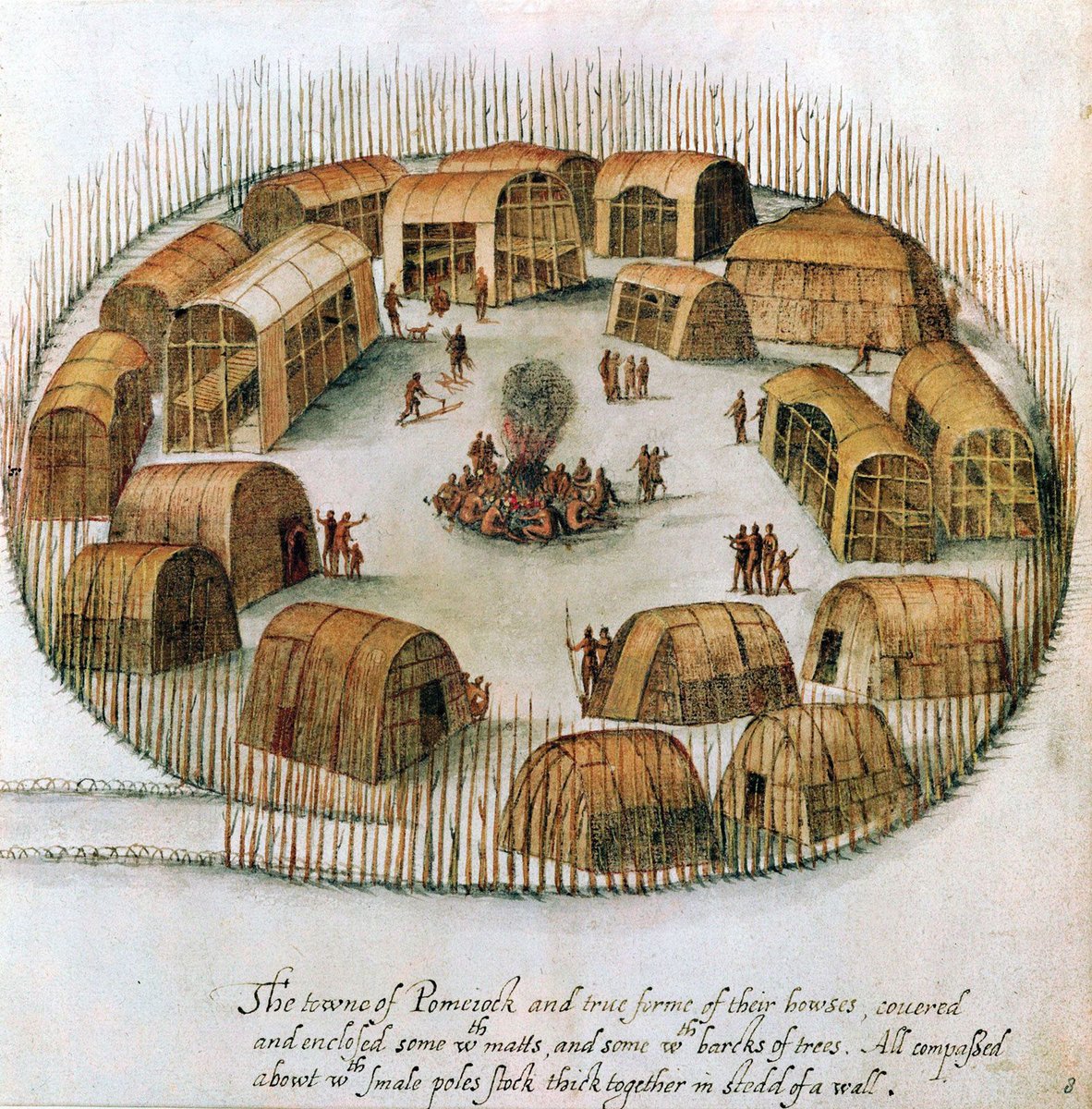
Native Americans resisted the efforts of the Europeans to gain more land and control during the colonial period, but they struggled to do so against a sea of problems, including new diseases, the slave trade, and an ever-growing European population.
During the colonial period, Native Americans had a complicated relationship with European settlers. They resisted the efforts of the Europeans to gain more of their land and control through both warfare and diplomacy. But problems arose for the Native Americans, which held them back from their goal, including new diseases, the slave trade, and the ever-growing European population in North America.
In the 17th century, as European nations scrambled to claim the already occupied land in the “New World,” some leaders formed alliances with Native American nations to fight foreign powers. Some famous alliances were formed during the French and Indian War of 1754–1763. The English allied with the Iroquois Confederacy, while the Algonquian-speaking tribes joined forces with the French and the Spanish. The English won the war, and claimed all of the land east of the Mississippi River. The English-allied Native Americans were given part of that land, which they hoped would end European expansion—but unfortunately only delayed it. Europeans continued to enter the country following the French and Indian War, and they continued their aggression against Native Americans. Another consequence of allying with Europeans was that Native Americans were often fighting neighboring tribes. This caused rifts that kept some Native American tribes from working together to stop European takeover.
Native Americans were also vulnerable during the colonial era because they had never been exposed to European diseases, like smallpox, so they didn’t have any immunity to the disease, as some Europeans did. European settlers brought these new diseases with them when they settled, and the illnesses decimated the Native Americans—by some estimates killing as much as 90 percent of their population. Though many epidemics happened prior to the colonial era in the 1500s, several large epidemics occurred in the 17th and 18th centuries among various Native American populations. With the population sick and decreasing, it became more and more difficult to mount an opposition to European expansion.
Another aspect of the colonial era that made the Native Americans vulnerable was the slave trade. As a result of the wars between the European nations, Native Americans allied with the losing side were often indentured or enslaved. There were even Native Americans shipped out of colonies like South Carolina into slavery in other places, like Canada.
These problems that arose for the Native Americans would only get worse in the 19th century, leading to greater confinement and the extermination of Native people. Unfortunately, the colonial era was neither the start nor the end of the long, dark history of treatment of Native Americans in the United States.
#archaeohistories
@histories_arch When u study Bible history u find God often delivers the wicked into bondage or death. The Israelites for example took the Promised Land but later lost it to enemy attack. Those not killed in war were carried away as slaves.
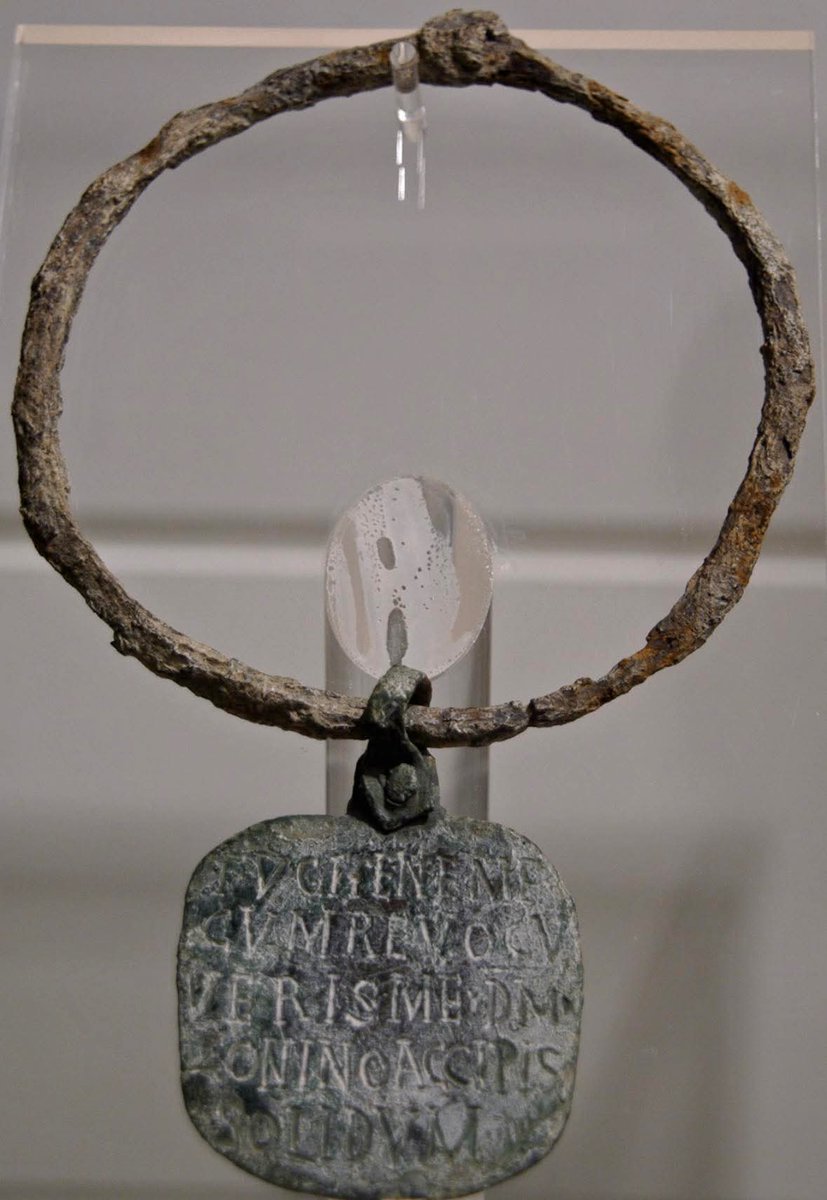
Roman slave collar with tag inscribed: “I have fled, seize me and return me to Zoninus for 1 gold coin.” The only known example discovered with its tag still attached....
This iron collar was meant for slaves in the Roman Empire. It has a bronze tag with an inscription that reads: “Fugi. Tene me. Cum revocaveris me, dabis solidum unum Zonino.” Translated, it means: “I have fled. Seize me. If you return me, you will receive one gold coin from Zoninus.” The tag served both as an identification marker and a bounty notice, ensuring that any attempt at escape was met with constant risk of capture.
Slavery was central to Roman society, with enslaved people working in households, workshops, fields, and mines. Collars like this, sometimes called vincula servorum (“chains of slaves”), were a brutal tool of control and dehumanization. They reduced a person’s identity to property, publicly displaying both their enslaved status and their owner’s authority.
What makes this artifact extraordinary is its survival in complete form, with both the iron collar and bronze tag still together. It offers rare, tangible evidence of the realities of slavery in the ancient world, beyond the accounts left by Roman writers.
#archaeohistories
A significant stratospheric warming will occur in the coming days, which will substantially weaken the polar vortex (the video shows its development over the next 14 days). 🧐 It will split into two smaller cells, one of which will gradually dissipate. Such a weak polar vortex may allow further pronounced intrusions of Arctic air into the mid-latitudes during February. 🥶
A mysterious object resembling a giant bird with outstretched wings has once again been spotted in images of the Sun, according to a report from the Solar Astronomy Laboratory of the Space Research Institute (IKI) of the Russian Academy of Sciences on February 3, 2026.The image was captured on February 2, 2026, using the LASCO coronagraph aboard the SOHO spacecraft. It shows a striking plasma structure of enormous scale — its apparent "wingspan" vastly exceeds the diameter of Earth multiple times over.A similar phenomenon was previously recorded in May 2025, when an unusual feature resembling a bird (or even a spacecraft with a fiery trail) appeared in LASCO imagery and sparked widespread discussion. Scientists noted at the time that such sharply defined and expressive plasma formations in the solar corona are extremely rare."There is still an opinion that this could be a galactic particle," the laboratory's official statement remarked, leaving room for intrigue and lighthearted speculation in scientific circles.In reality, these shapes are typically complex manifestations of solar activity: prominences, coronal mass ejections, or intricate magnetic field configurations that briefly align into such dramatic silhouettes. Optical artifacts or cosmic ray traces are also possible, though the symmetry and clarity here make it particularly eye-catching.Earlier, leading IKI RAS researcher Nathan Eismont explained how powerful solar flares and coronal mass ejections can affect human health on Earth — through geomagnetic storms, radio disruptions, and potential biological impacts.For now, the "Sun bird of 2026" remains a captivating cosmic enigma — and a vivid reminder of just how dynamic and unpredictable our star continues to be, even under constant high-tech surveillance.
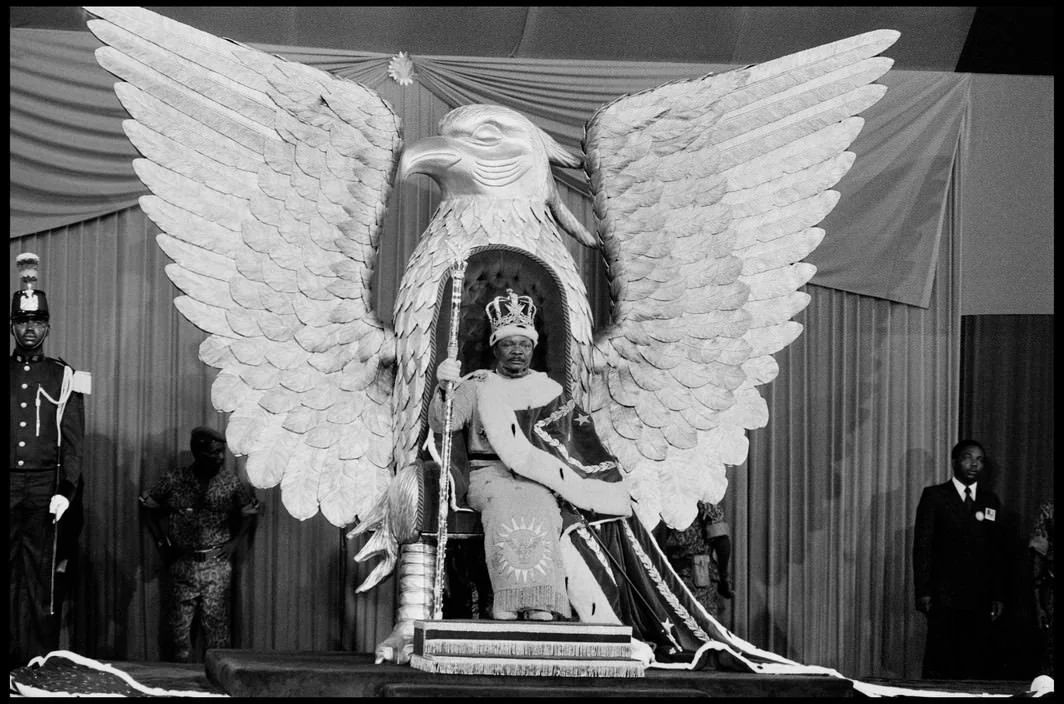
"Emperor" Jean-Bedel Bokassa , seated on his golden throne for his coronation, Bangui, Central African Republic - December 4, 1977
More rare historical photos: bit.ly/44OpIzi
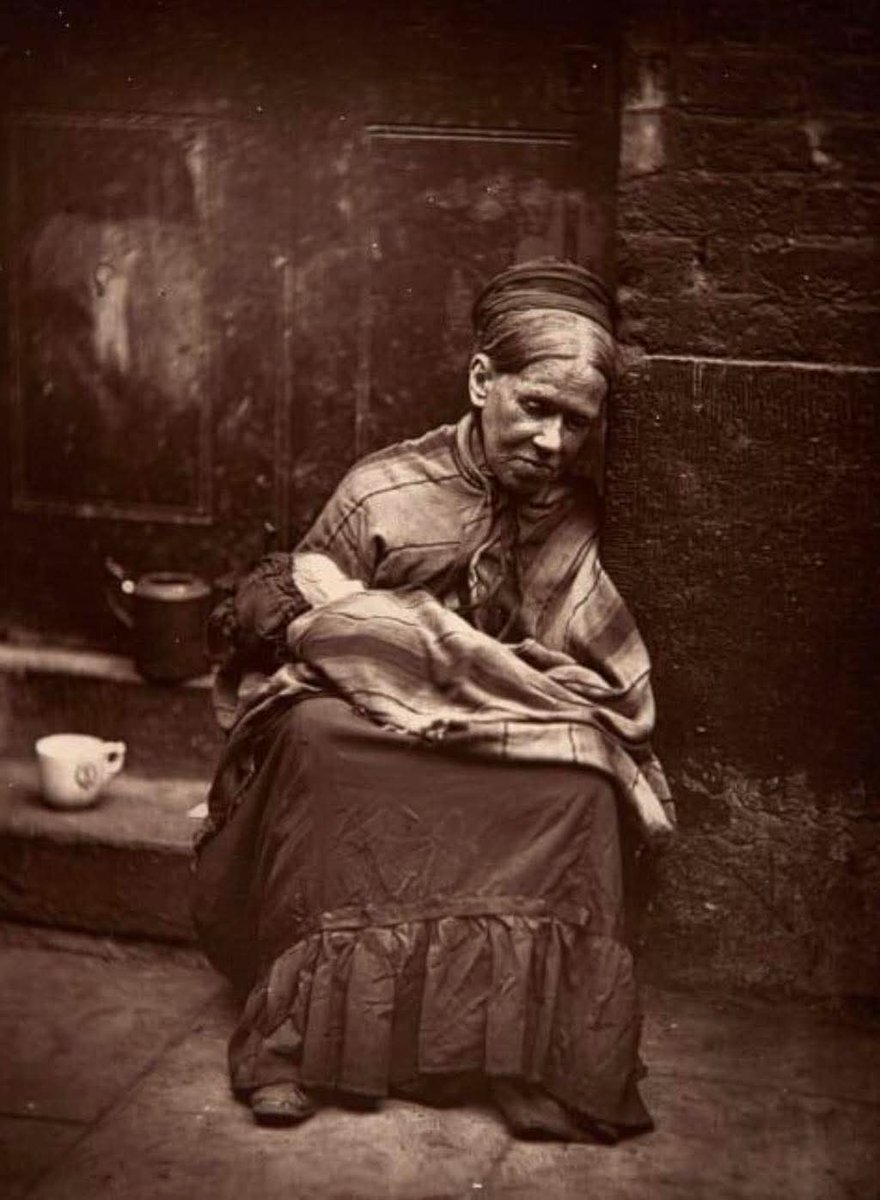
@archeohistories She had no children to care for her in loving gratitude? The reason she did not remarry? This situation begs for research. Her gaze of hopelessness betrays her knowledge that she's headed for the grave, soon, on the starvation diet she's fed. Very sad!
At the windswept northern frontier of the Roman Empire, Housesteads Roman Fort stands as a remarkably preserved glimpse into ancient military life. Constructed around AD 122 during the reign of Emperor Hadrian, this fort was part of the defensive network along Hadrian’s Wall, built to mark and guard the empire’s edge in Britain. Among its most fascinating remains are the communal latrines—stone-built and surprisingly sophisticated facilities that speak to Roman priorities of hygiene and practicality, even in remote outposts.
The latrines were strategically located at the lowest point of the fort, allowing waste to be carried away efficiently via a drainage system fed by rainwater or small aqueducts. The design included stone benches with keyhole-shaped openings and a shared sponge-cleaning trough, evidence of the Romans’ communal approach to sanitation and their advanced engineering. It’s a rare and intact example of Roman sanitation, offering invaluable insight into daily life for the soldiers stationed there.
Today, Housesteads is considered the most complete Roman fort in Britain, and its latrines are among the best-preserved features. Though centuries have passed, the stonework still hints at the routines of those who lived and served on the empire’s edge. These remains remind us that Roman influence extended not only through military power but through infrastructure, discipline, and a surprising attention to cleanliness in even the harshest conditions.
#archaeohistories
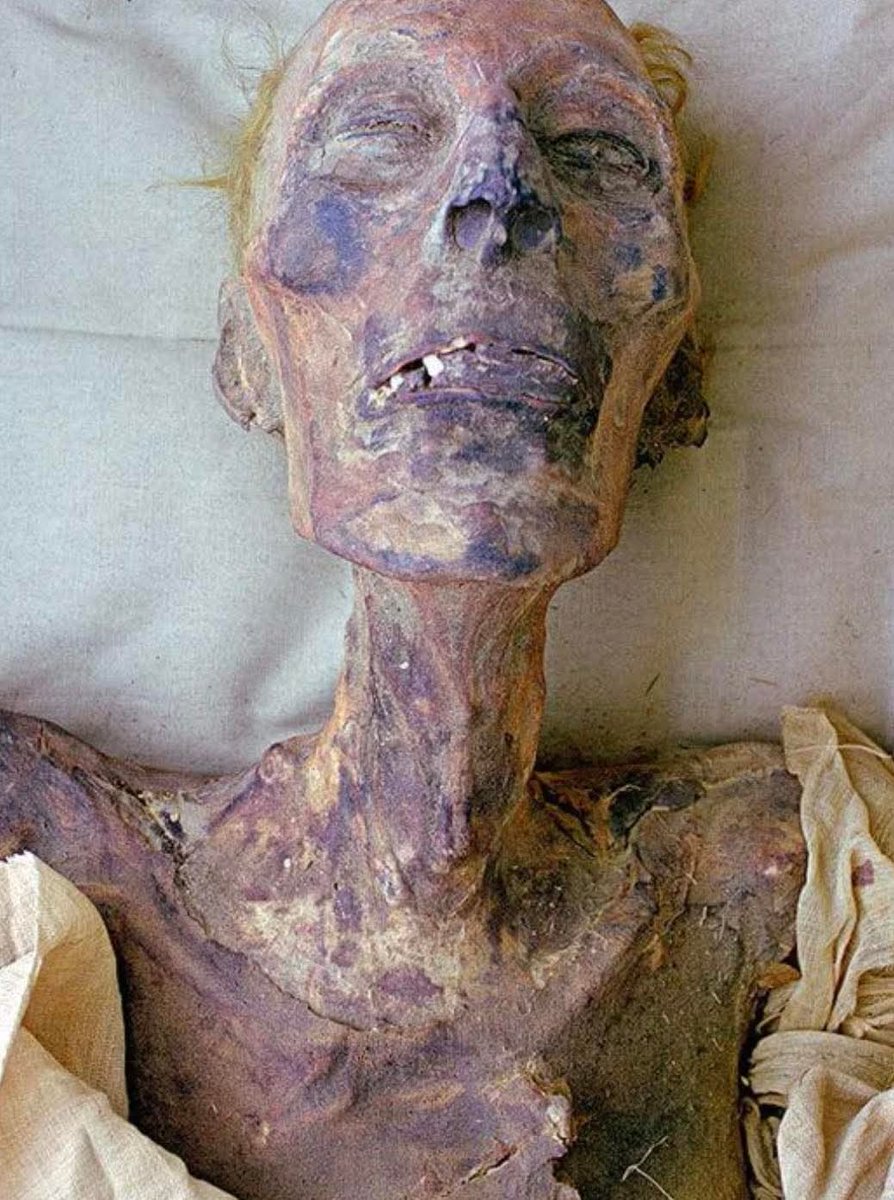
The Mummy of Ramesses II, also known as Ramesses the Great ....
Ramesses was one of the most powerful and long reigning rulers in ancient Egyptian history. Ramesses II ruled for approximately 66 years during the 13th Century BC, and became a symbol of imperial strength, monumental architecture, and divine kingship. He led numerous military campaigns, most famously against the Hittites at the Battle of Kadesh, and commissioned an extraordinary number of temples, statues, and monuments across Egypt, including Abu Simbel and the Ramesseum.
The condition of his mummy reflects both advanced embalming practices and the turbulent history of royal burials in ancient Egypt. Like many pharaohs, Ramesses II was reburied multiple times by priests attempting to protect his remains from tomb robbers. His body was eventually hidden in a royal cache at Deir el Bahari, where it remained undisturbed for centuries before its rediscovery in the 19th century.
Modern scientific studies have revealed remarkable details about his life. Analysis suggests he lived into his late 80s or early 90s, an exceptional lifespan for the ancient world. His preserved facial features closely resemble statues made during his reign, offering a rare and direct link between ancient art and the physical reality of one of history’s most famous rulers.
In 1976, Ramesses II’s mummy was flown to France for conservation and was issued an official Egyptian passport that listed his occupation as “King (deceased).”
#archaeohistories
Oliver Cromwell remains one of the most divisive figures in British history. When he died of natural causes in 1658, he was buried with full state honors in Westminster Abbey, remembered by supporters as a powerful leader of the English Commonwealth. Yet his legacy would be violently reshaped just three years later. In 1661, following the Restoration of the monarchy under King Charles II, Cromwell was posthumously condemned for his role in the execution of Charles I. His body was exhumed, dragged to Tyburn, publicly hanged in chains, and then beheaded in an act of symbolic royal vengeance.
Cromwell’s severed head was placed on a spike above Westminster Hall, where it remained on display for roughly 25 years. Exposed to the elements and public scorn, it served as a stark warning to any who might challenge the restored crown. Eventually, a storm dislodged the head, ending its time as a state symbol—but beginning a far stranger chapter. Rather than being laid to rest, the head entered private hands, passing between collectors, appearing in sideshows, and even being examined by phrenologists fascinated by its supposed insights into character.
For more than three centuries, the head of Oliver Cromwell existed as both historical artifact and macabre legend, reflecting the deep political divisions and shifting attitudes of Britain itself. What began as an act of posthumous punishment evolved into a haunting reminder of a turbulent era. Finally, in 1960, the long and unsettling journey ended when Cromwell’s head was quietly buried at Sidney Sussex College, Cambridge—bringing closure to one of the strangest afterlives in British history.
#archaeohistories
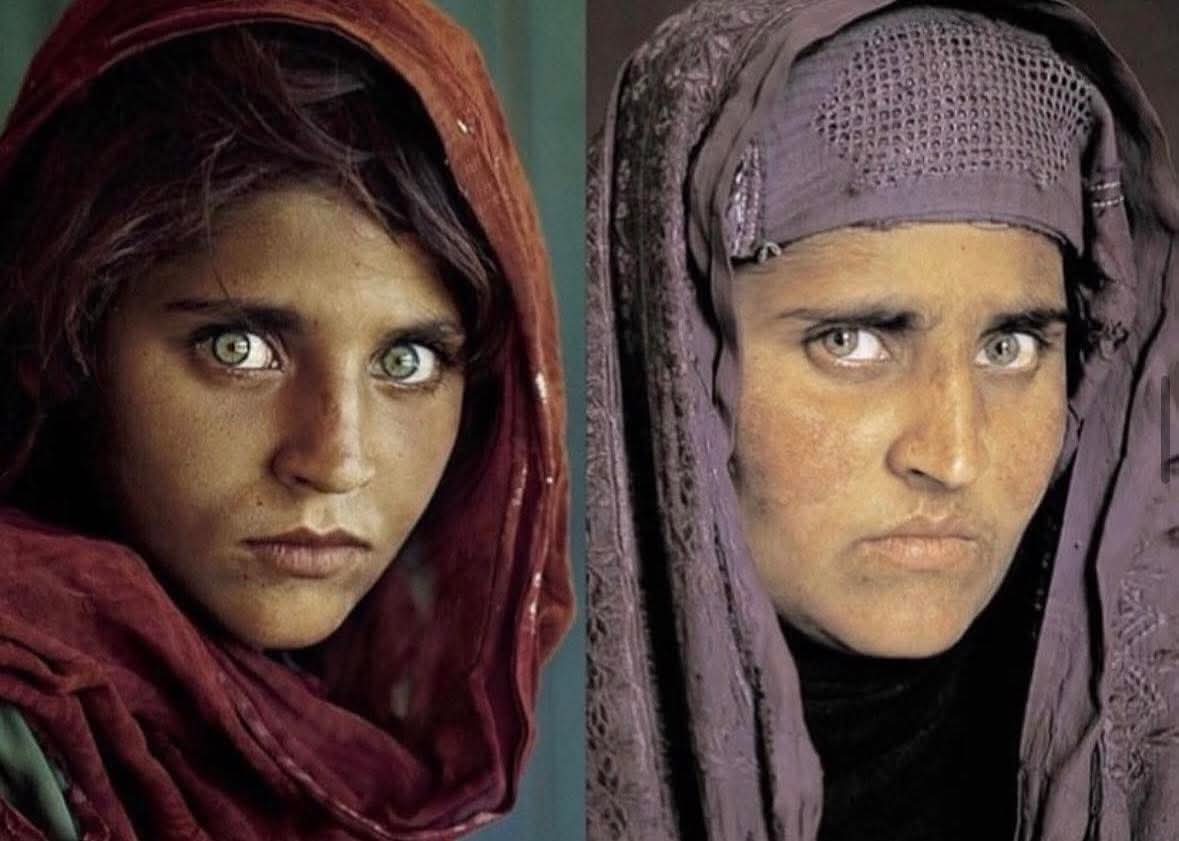
@archeohistories She appears in a state of shock in both pictures. Hard life of a Muslim woman. Had her clitorus cut off while young-probably not long before the first pic. Then treated worse than a dog, as a mere penis receptacle, enduring multiple painful childbirths without adequate care.
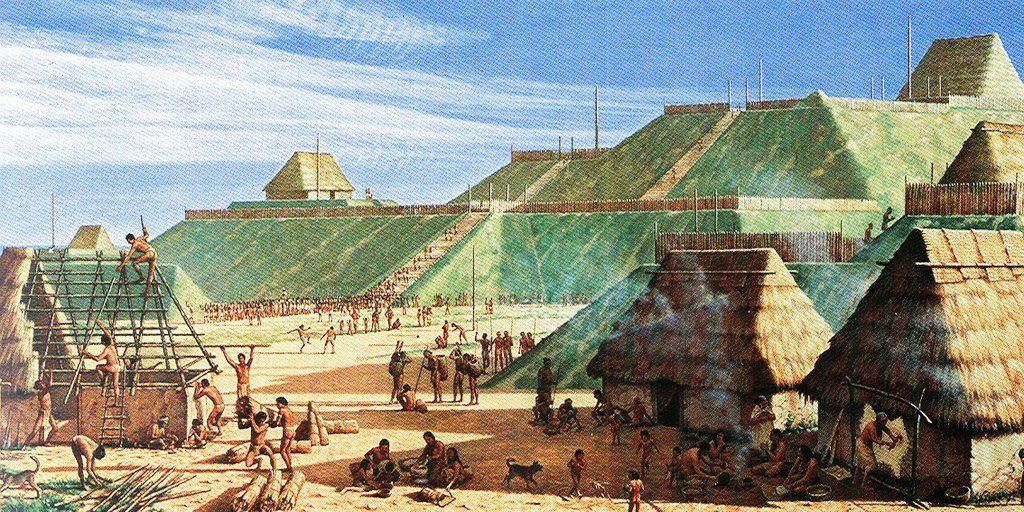
@brettachapman It's significant that live sacrifices of many young women, usually by strangulation, to the Devil (idolatry)-the bodies of whom are buried in a mound at Cahokia-are rarely heard of-indicating a prodigious attempt to bury the truth about the vicious savagery of American Indians.
Cahokia was larger than most European cities and was the capital of a great Indigenous nation, built 1000 years ago by a great society that included my own Dhegihan speaking Ponca ancestors. Few people know of this because Native American history has been erased from US history!
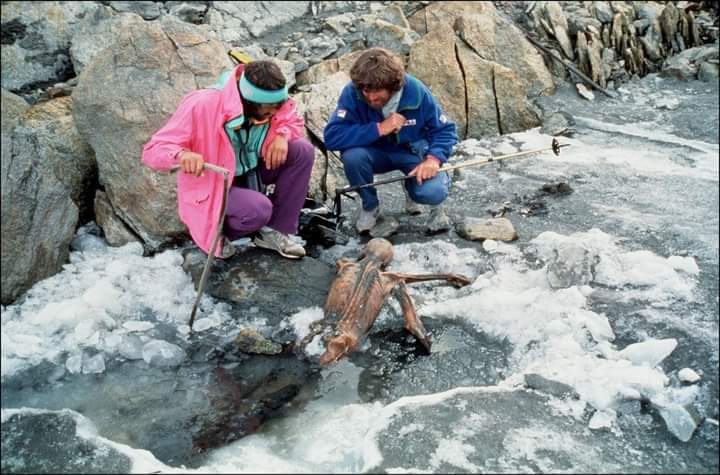
Ötzi, an ancient mummified human body that was found by a German tourist, Helmut Simon, on the Similaun Glacier in the Tirolean Ötztal Alps, on the Italian-Austrian border, on September 19, 1991. Radiocarbon-dated to 3300 BC, the body is that of a man aged 25 to 35 who had been about 1.6m tall and had weighed about 50kg....
Initially it was thought that he had fallen victim to exposure or exhaustion while crossing the Alps and died of freezing, but X-ray examination in 2001 showed that an arrowhead was lodged in Iceman’s left shoulder, suggesting that he had likely bled to death after being shot. The small rocky hollow in which he lay down to die was soon covered (and protected) by glacial ice that happened to be melting 5300 years later when his body was discovered by modern humans. His nickname, Ötzi, stems from the Ötztal Alps, where he was found.
It was at first believed that the Iceman was free of diseases, but in 2007, researchers discovered that his body had been infested with whipworm and that he had suffered from arthritis; neither of these conditions contributed to his death. He also at one time had broken his nose and several ribs. His few remaining scalp hairs provide the earliest archaeological evidence of haircutting, and short blue lines on his skin (lower spine, left leg and right ankle) have been variously interpreted as earliest known tattoos or as scars remaining from a Neolithic therapeutic procedure.
The various clothes and accoutrements found with him are truly remarkable, since they formed the gear of a Neolithic traveler. The Iceman’s basic piece of clothing was an unlined fur robe stitched together from pieces of ibex, chamois, and deer skin. A woven grass cape and a furry cap provided additional protection from the cold, and he wore shoes made of leather and stuffed with grass. The Iceman was equipped with a small copper-bladed ax and a flint dagger, both with wooden handles; 14 arrows made of viburnum and dogwood, two of which had flint points and feathers; a fur arrow quiver and a bow made of yew; a grass net that may have served as a sack; a leather pouch; and a U-shaped wooden frame that apparently served as a backpack to carry this gear. His scant food supply consisted of a sloeberry, mushrooms and a few gnawed ibex bones.
Ötzi and his artefacts have been exhibited at the South Tyrol Museum of Archaeology in Bolzano, Italy since 1998.
The mummy is stored in a specially devised cold cell and can be viewed through a small window. Ötzi’s numerous pieces of equipment and clothing have been painstakingly restored. Visitors have been amazed by the skills of Stone Age people. The mummy was dubbed Ötzi by the Austrian journalist Karl Wendl, who was looking for a catchy name. The name refers to the discovery site in the Ötztal Valley Alps.
The South Tyrol Museum of Archaeology belongs to the autonomous province of Bolzano and is associated with the South Tyrol Regional Museums.
📷 : First photo taken of Ötzi, on September 19, 1991.
#archaeohistories