

Masupha
10.1K posts
Masupha
@Ryan62945099
FreeThinker Activist Explorer Longlife Learner and a Brother
Katılım Mayıs 2021
788 Takip Edilen119 Takipçiler
Masupha retweetledi

Masupha retweetledi


Masupha retweetledi

It’s an Happy New Year in Ethiopia 🇪🇹, Welcome to the year 2018. Ethiopia which was not colonized like other parts of Africa uses the Ethiopian Calendar, also called “Ge'ez,” which is seven to eight years behind the Gregorian Calendar we using.

English
Masupha retweetledi


Masupha retweetledi

A little girl lifts her eyes to the sky lit up with incendiary flares... a scene that captures the terror of childhood in Gaza under Israeli fire.

English
Masupha retweetledi

If you’re scrolling, PLEASE leave a dot.
We're too hungry 😭
We're too hungry 😭
We're too hungry 😭
We're too hungry 😭
We're too hungry 😭
We're too hungry 😭
We're too hungry 😭
We're too hungry 😭
We're too hungry 😭
We're too hungry 😭
gofund.me/a3b90f53

English
Masupha retweetledi

Masupha retweetledi

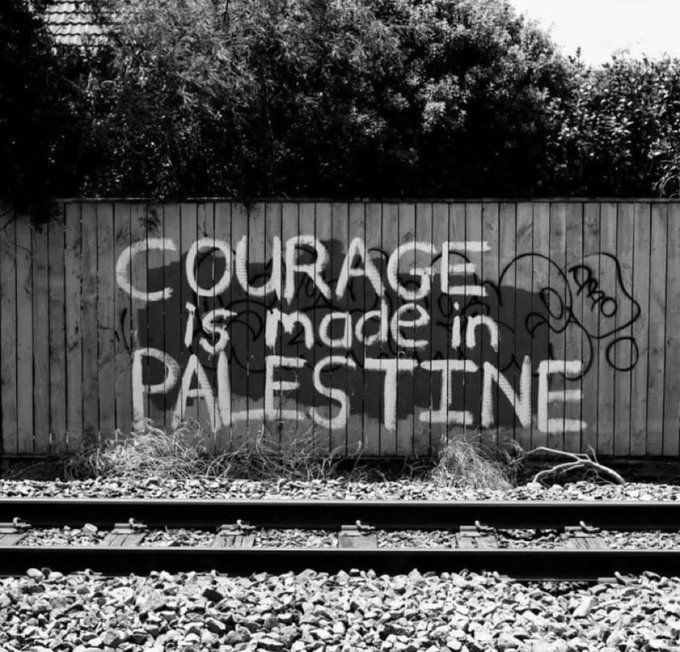
“Obama wants to kill me, to take away the freedom of our country, to take away our free housing, our free medicine, our free education, our free food, and replace it with American style thievery called “capitalism”, but all of us in the 3rd World know what that means” ~ Muammar Gaddafi
We will never forget what you did 🤧

English
Masupha retweetledi

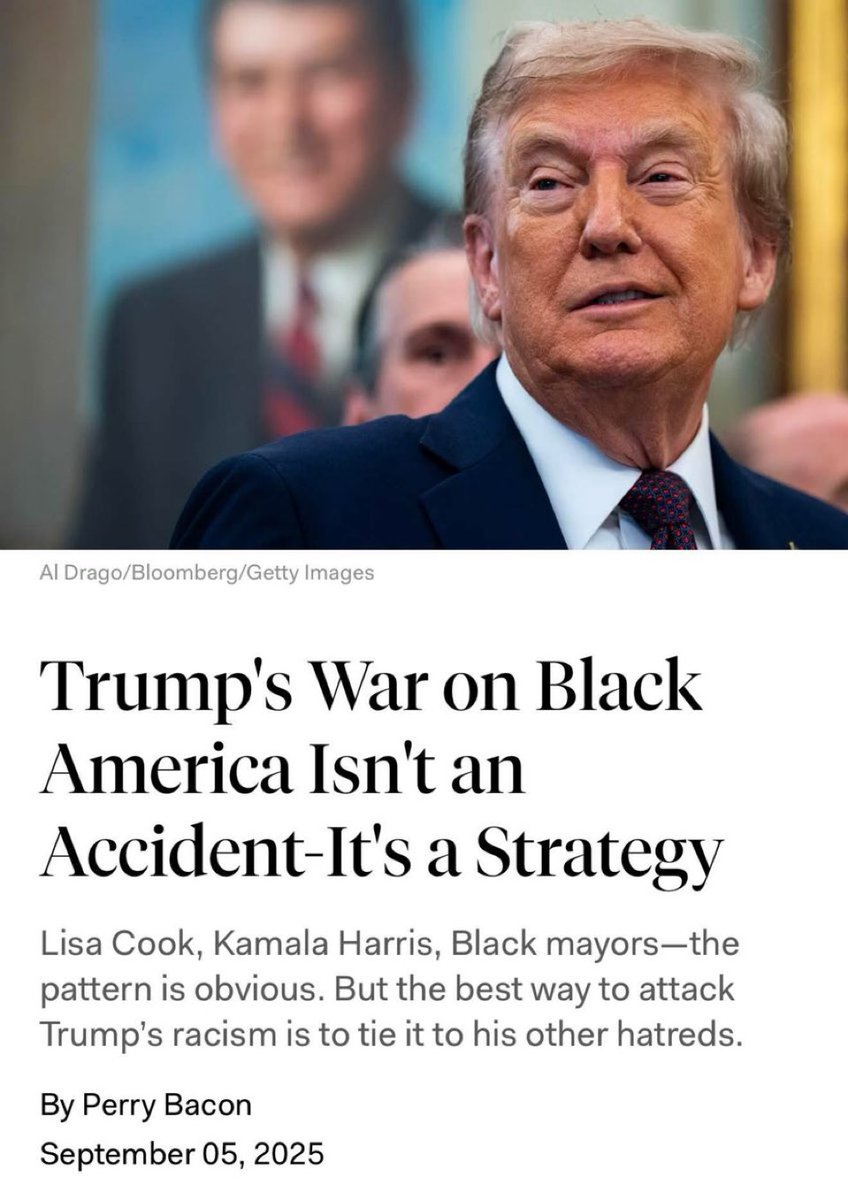
@SeeRacists They blame black people for white on white crime. All black people should be armed and ready, these people are primitive savages, they only know violence.



English

QUESTION:
Would you celebrate, if Julius Malema was assassinated?
Pretoria, South Africa 🇿🇦 English
Masupha retweetledi


Masupha retweetledi

Taxi patroller shot after him and his colleagues pointed a off duty police officer with a gun and tied to pull him over for transporting his family in his own car.
In Robert broom drive
A developing story.
(ALLEGEDLY)

English
Masupha retweetledi

Masupha retweetledi

If I had $500 million?
I’d donate $480 million straight to Team Water — because clean water is the most basic form of dignity, and we can’t build a thriving future if billions still lack it. Imagine catalyzing nearly half a billion person-years of clean water access in one stroke.
I’d reserve the other $20 million to prototype my Coherion nuclear reactor — a third-option beyond fission or fusion, designed to generate power through coherence rather than destructive splitting or smashing. If we can get that technology working, it could power the very water infrastructure that keeps humanity flowing for centuries to come.
💧 + ⚛️ = a future where everyone has water and limitless clean energy. That’s the world I’d bet on.
English
Masupha retweetledi

Masupha retweetledi

Many people are frustrated by how the majority of citizens are so unbothered by issues that affect them, why they’re so apathetic, why they’re waiting for a saviour.
What if I told you it’s not laziness or ignorance but that this was intentionally engineered this way?
In 1994, the elite Establishment had an urgent need to restrict how politics would be conducted in South Africa because while the transition to democracy had formally ended minority rule, it was clear that the struggle for true liberation was far from over.
Thus, the social engineers of the time arranged a shift in how this struggle would be organised and undertaken.
While anti-Apartheid politics was based on mass mobilisation and extraparliamentary structures of resistance, the post-1994 era shifted political power into the formal institutions of representative democracy.
Basically, the masses were told to go home because the struggle was over and that elected political rock stars would take it from there. This would be done through electoral politics (the belief that political legitimacy stems from periodic voting).
However, this was not a simple replacement of the burning tyre barricade with the ballot box. Rather, the newly introduced electoral system was designed to cater to investor confidence and the needs of international financial markets, rather than the material needs of the people.
So, at the same time that political rights were extended to everyone through the vote, the possibilities of what could be done with this democracy were simultaneously narrowed and replaced with managed participation through party branch meetings, ward committees and public consultation processes. These were used as instruments of incorporation.
Meanwhile, electoralism limited democracy to the ballot box and communicated that demands for structural change were administrative problems to be handled by the aforementioned rock stars.
The Independent Electoral Commission played a key role in legitimising the restriction of the people’s voice. While it’s generally regarded as a neutral, technocratic body tasked merely with administering free and fair elections, the IEC has functioned ideologically in important ways:
By elevating elections as the primary mechanism of democratic participation, the IEC helped stabilise the post-1994 order around the politics of procedure. In doing so, it replaced the content of popular struggles, particularly direct action, mass mobilisation, and self-organisation.
The IEC thus contributed to what might be called the disciplining of political life. It helped construct a culture in which politics was conducted through party competition within strict institutional channels rather than through confrontational or extra-institutional mobilisation.
This shift served to delegitimise contentious politics, such as land occupations, strikes, or service delivery protests, as irrational or regressive. The underlying message was clear: real politics happens in Parliament; everything else is noise and anarchy.
Moreover, by regularly certifying elections as free and fair, the IEC performed a symbolic function, reassuring both domestic elites and global investors that the new South Africa was governable. This legitimation of electoral politics, regardless of outcomes, helped obscure the deep crisis of representation that followed liberation.
Citizens could vote, but their material conditions remained unchanged. By certifying procedural fairness, the IEC normalised a political landscape in which formal political equality masked enduring minority social and economic domination.
Furthermore, the IEC helped construct a political order in which democratic legitimacy was procedural, managed, and insulated from mass mobilisation. The outcome was not the elimination of struggle but its rerouting to tight regulation.
In this sense, the electoral commission was not a neutral referee. It helped to normalise a model of politics in which revolutionary energy, once embodied in people’s power, street committees, and strike committees, was displaced by a ritualised choreography of political party competition.
This logic of electoralism also reshaped the trajectory of civil society itself. Many organic movements, organisations, and even charismatic individuals that once emerged from community struggles or grassroots activism increasingly came to believe that the only path to influence and legitimacy is through the ballot box.
Initially grounded in direct action and collective organising, these formations were gradually seduced or pressured into party politics, convinced that parliamentary participation is the only route to relevance. In doing so, they lost the radical edge and independence that gave them strength in the first place, becoming absorbed into the very institutional frameworks they once challenged.
The result is not the deepening of democracy but its containment within state-sanctioned forms because, in this new dispensation, democracy is meant to neutralise rather than nurture people’s power.
In other words, the decline of street-level organising discourages direct contestation while rewarding bureaucratic participation. This strategy is a huge part of the reason why the state spends hundreds of millions every year funding political parties. It is to prop up the political party bureaucracy, which cancels out people’s power.
It’s important to note that this was not a betrayal in the narrow sense of elites selling out a revolution. It was instead the creation of a political system capable of defusing revolutionary energies while maintaining continuity with global capitalist norms.
Democracy was rebranded as voting, waiting patiently, participating in approved forums and obeying the rule of law. Meanwhile, the structures of dispossession remained intact and racial capitalism changed shape but did not disappear.
As Adv Muzi Sikhakhane put it, “We are trapped in electoral politics. We are told to wait for another five years”.
This is the quiet violence of electoralism: not that it denies the vote, but that it weakens its meaning. By centring legitimacy in the ritual of elections, it renders other forms of collective effort suspicious, illegitimate, disorderly, or “populist.”
As Julius Malema succinctly put it about his party’s role in the system, electoralism makes the people “feel accommodated” so they don’t “stand up on their own”. Through various political parties, it “closes [the] gap” and says to the people, “Don’t be that angry, we’re attending to your issues”.
What remains, then, is not democracy in the sense of demos kratos or rule by the people, but a managed phantom. A democracy of participation without power in which the status quo masquerades as progress and the system reinforces passive citizenship, which is the idea that change comes from above, not collective action.
Ultimately, the people are disinterested because they were taught to disbelieve in themselves, to outsource their agency, and to wait. They were misguided into believing politics equals elections.
Fortunately, people’s power didn’t vanish. It was just diverted towards charismatic professional politicians. The work now is to reclaim it. Here are some thought experiments of how this may be done:
A network of unemployed youth could reframe joblessness not as a personal failure but as a shared condition for collective mobilisation.
So, rather than internalising shame when the political class scolds them to “go and study further,” they could organise mass actions targeting labour departments, local municipalities, and major employers demanding a publicly funded job guarantee.
They would not wait for opposition parties to “table a motion” or for Parliament to debate their dignity. They would act directly, asserting that their future cannot be postponed any further.
Another expression of people’s power could be the formation of a grassroots national assembly, an alternative to Parliament. This body would not merely discuss change but coordinate strategies to compel the state to act on urgent national issues.
Its purpose would be to shift power from career politicians to organised people, setting the political agenda from below. In doing so, such an assembly would directly confront the authority of the elite-controlled “official” system and demonstrate that governance by the people is not only imaginable, it is necessary.
There are many variations of this, including alternative education drives, etc. But you get the idea.
In conclusion, the tragedy of post-1994 South Africa is not that people have given up but that they were systematically taught to hand over their power. Electoralism didn’t just limit what politics could be. It reshaped how people see themselves concerning change, replacing active struggle with spectatorship.
Now, the challenge is not simply to demand more from the system but to unlearn its constraints and restore the belief that ordinary people should make history, not just vote for it.
English
Masupha retweetledi