
SAVI retweetledi
SAVI
2.9K posts



SAVI retweetledi

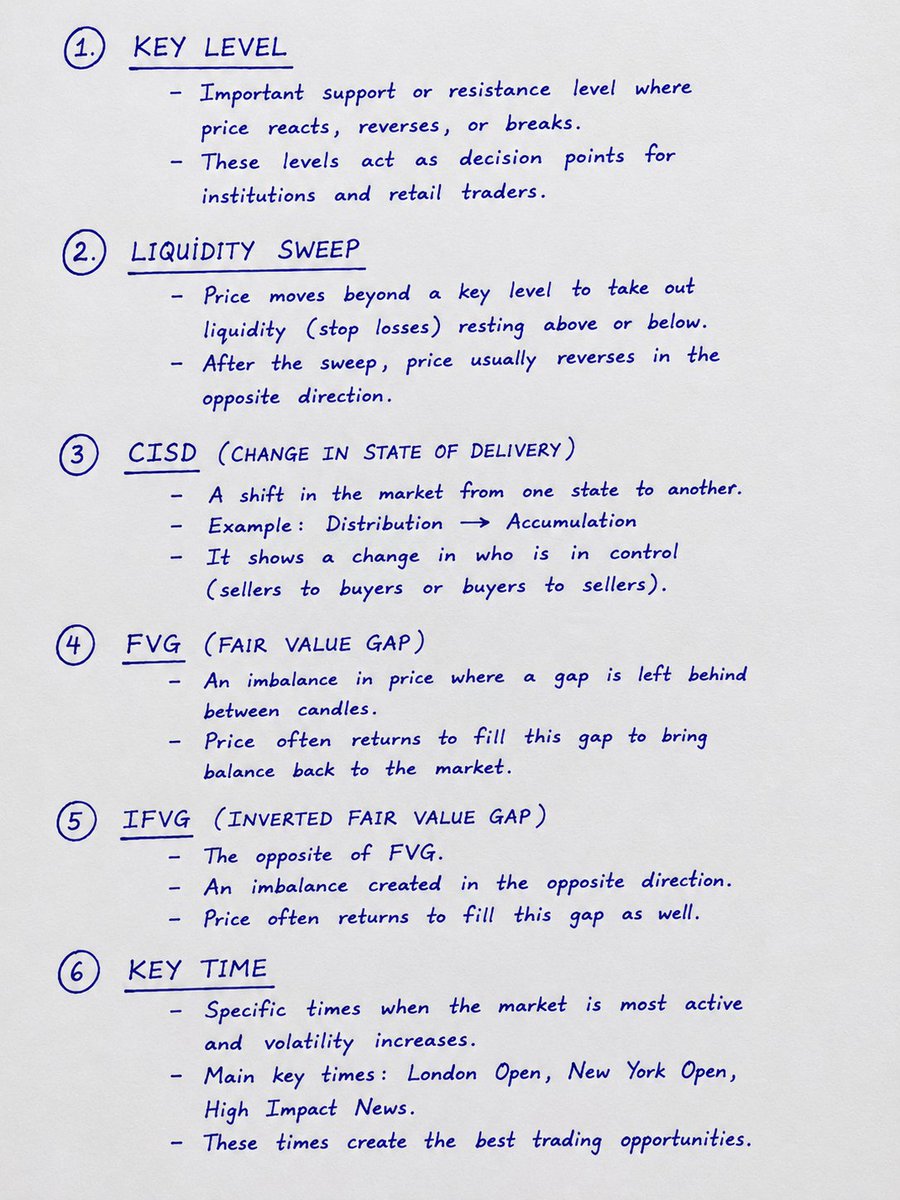
THE MARKET REPEATS. MOST TRADERS DON’T NOTICE IT.
I mainly post what the market repeatedly shows - Key Levels, Liquidity Sweeps, CISD, FVG/IFVG, DOL, and Key Time concepts.
These are not random observations. They are repeatable behaviors the market keeps printing over and over again. I simply document what price consistently reveals.
The market leaves clues before the move. I focus on those clues.
English
SAVI retweetledi

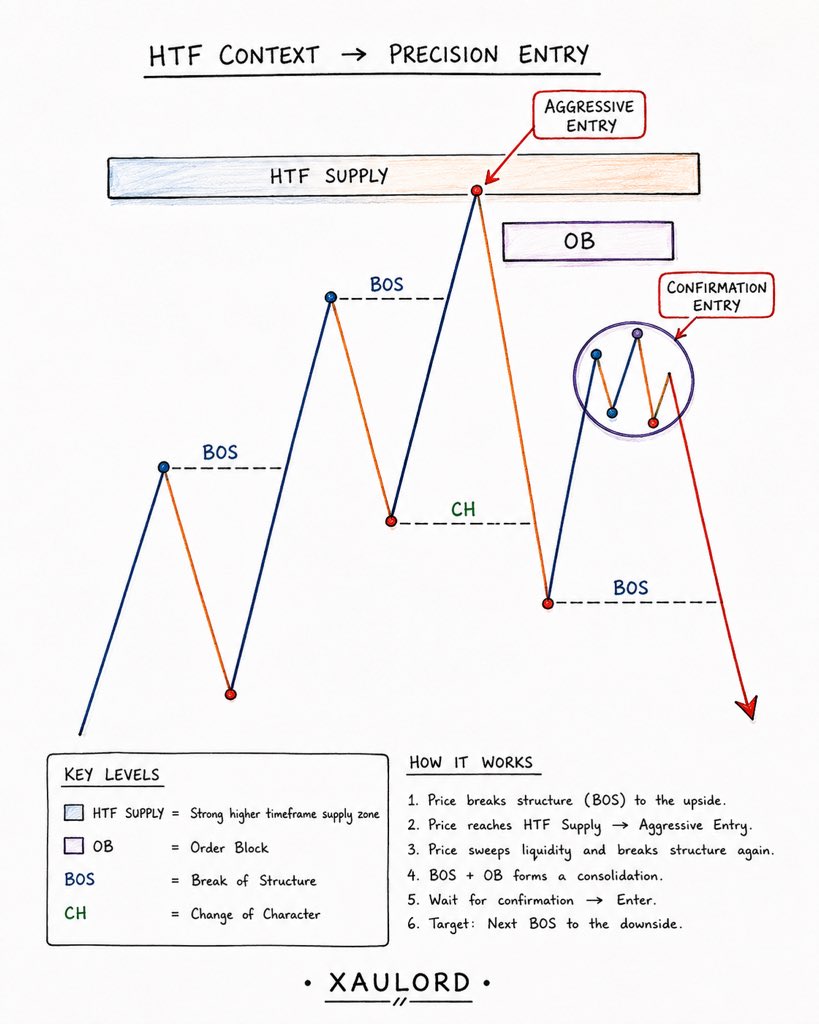
Most traders get trapped because they enter after the move
instead of understanding the structure behind the reversal.
Read the sequence carefully:
• HTF Supply gets tapped
• BOS confirms strength
• CH signals the shift
• OB forms the reaction zone
• Confirmation entry gives the safer execution
The market doesn’t reverse randomly.
It leaves footprints before every expansion move.
Master structure.
Master timing.
Stop chasing candles.
English
SAVI retweetledi

The Best Scalping Strategy
0:00 - Step 1: Mark the Daily Highs and Lows
0:43 - Step 2: The Scalping Setup
1:06 - Step 3: Entry
2:21 - Real Trade Examples
2:47 - Day 2 Examples
3:57 - Day 3 Examples
4:31 - Risk/Reward Results
English
SAVI retweetledi

📌 A complete trading roadmap
Structure. Risk management. Consistency

English
SAVI retweetledi

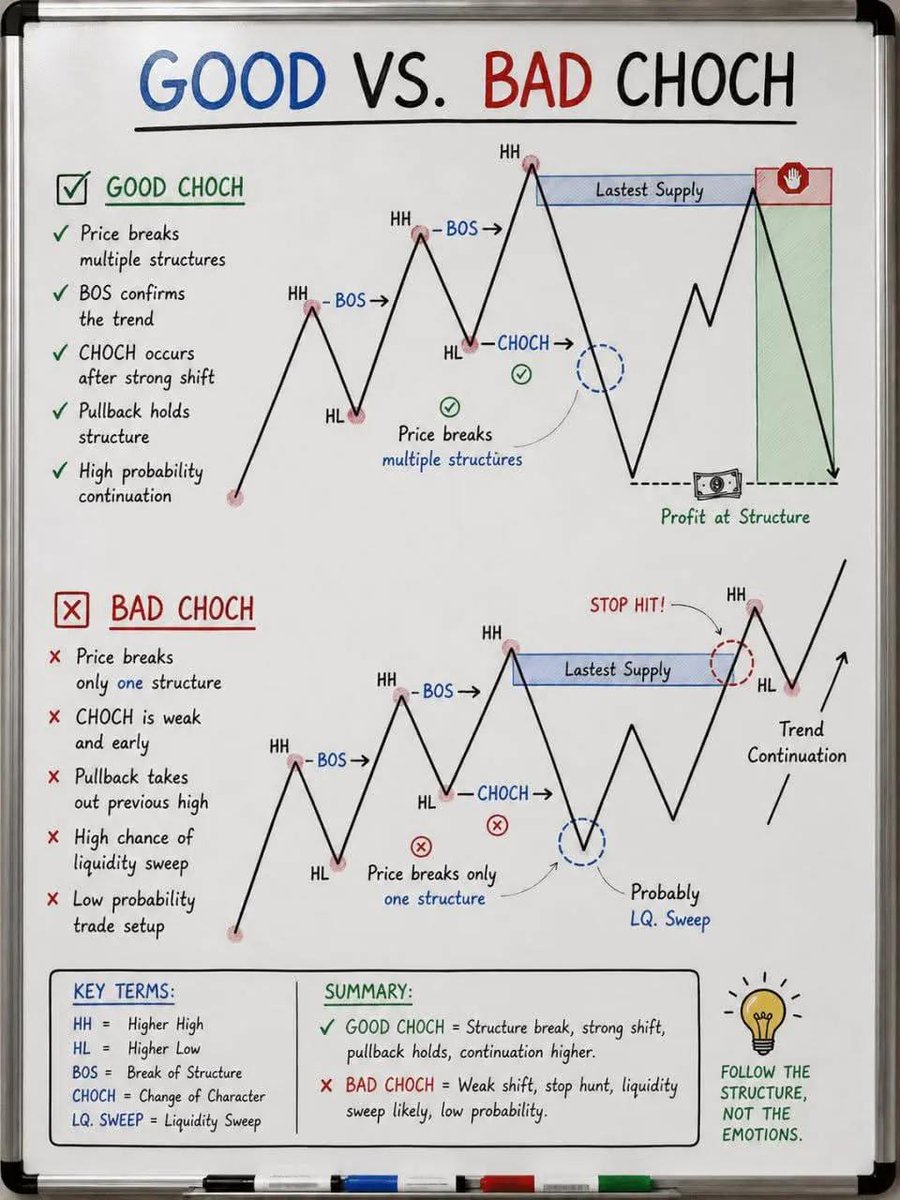
GOOD VS BAD CHOCH.
Not all Change of Character (CHoCH) setups are equal.
✅ GOOD CHOCH: multiple structure breaks, strong shift, pullback holds, continuation higher.
❌ BAD CHOCH: weak shift, only one break, pullback fails, liquidity sweep likely.
English
SAVI retweetledi

“Trade what the higher timeframe shows, execute on the lower timeframe confirms.
Alignment is your filter. Without it, you’re just guessing.”
#TimeFrameAlignment #RiskManagement #SmartTrading #Forextrade #TimeFrameAlignment #SniperEntry #ICTTrading #Precision


English
SAVI retweetledi

30 SMC terms you should know as a trader.
1. SMC: Smart Money Concepts
2. BOS:Break of structure.
3. CHOCH:Change of Character
4. MSS:Market Structure Shift
5. FVG: Fair Value Gap
6. BB: Breaker Block
7. OB: Order block
8. MB: Mitigation Block
9. LIQ: Liquidity
10. LS: Liquidity Sweep
11. EQH: Equal High
12. EQL: Equal Low
13. CRT: Candle Range Theory
14. TF: Timeframe
15. HTF: Higher Timeframe
16. LTF: Lower Timeframe
17. IMB: Imbalance
18. IDM: Inducement
19. POI: Point of Interest
20. P/D Arrays: Premium & Discount
21. OTE: Optimal Trade Entry
22. LO: London Open
23. NYO: New York Open
24. SSL: Sellside Liquidity
25. BSL: Buyside Liquidity
26. IRL: Internal Range Liquidity
27. ERL: External Range Liquidity
28. TP: Take Profits
29. SL: Stop Loss
30. BE: Break even.
what other SMC concepts do you think I missed out?
add them below 👇

English
SAVI retweetledi

This concept will helps you to understand how , why, and what market will going to due

English
SAVI retweetledi

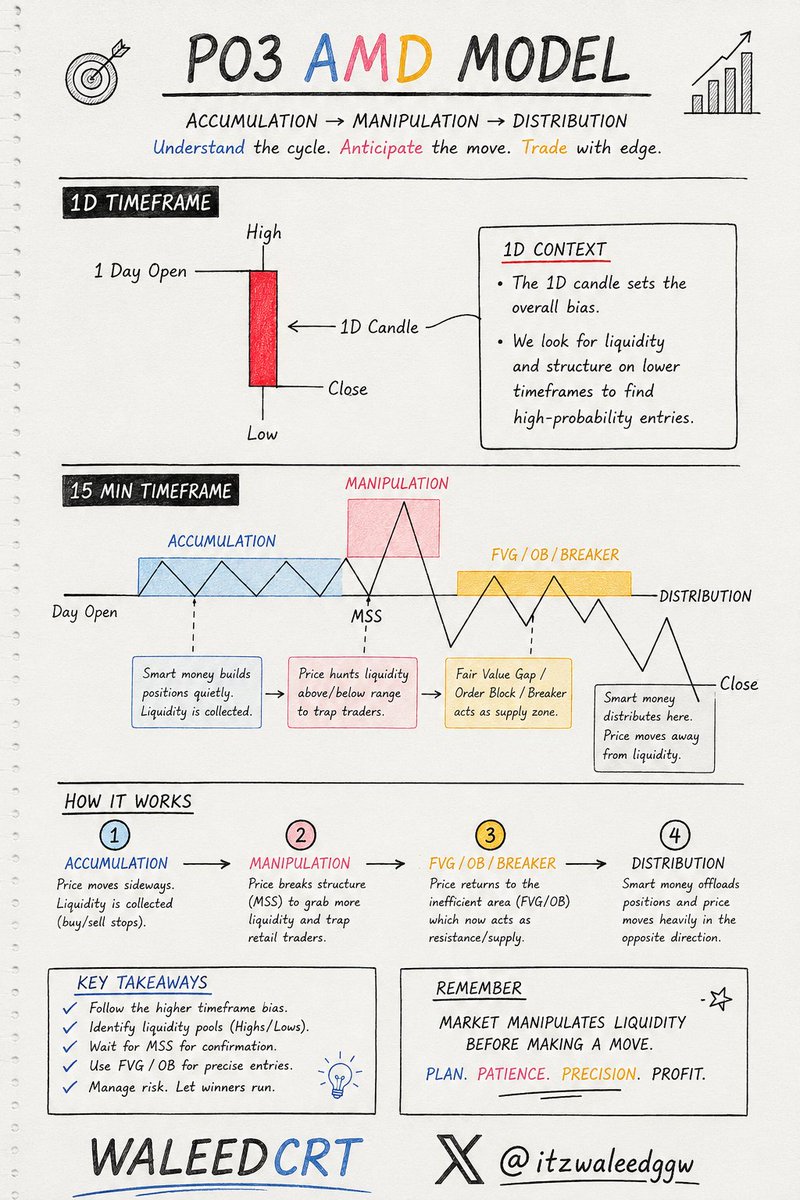
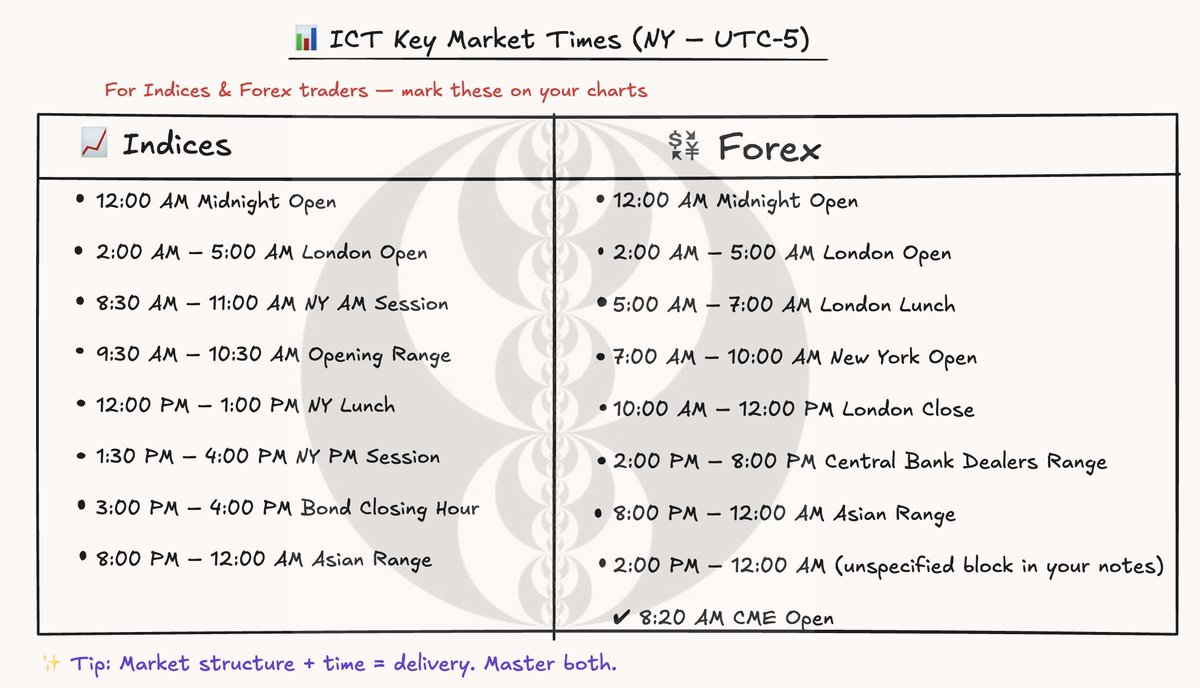
The ICT Time & Price Strategy (Educational Purposes) 🧵
🔹ICT High Probability Trading Windows !
🔹ICT PO3 - AMD

English
SAVI retweetledi


SAVI retweetledi
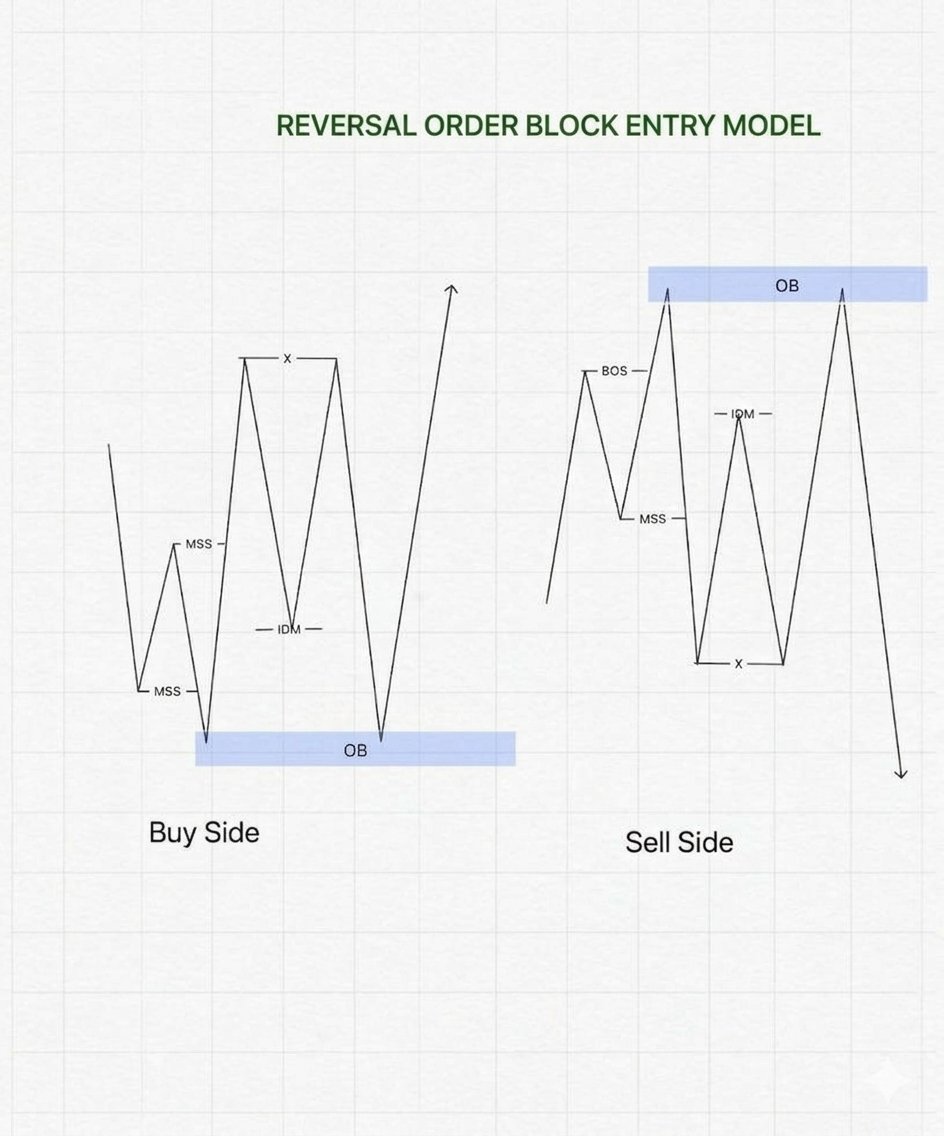
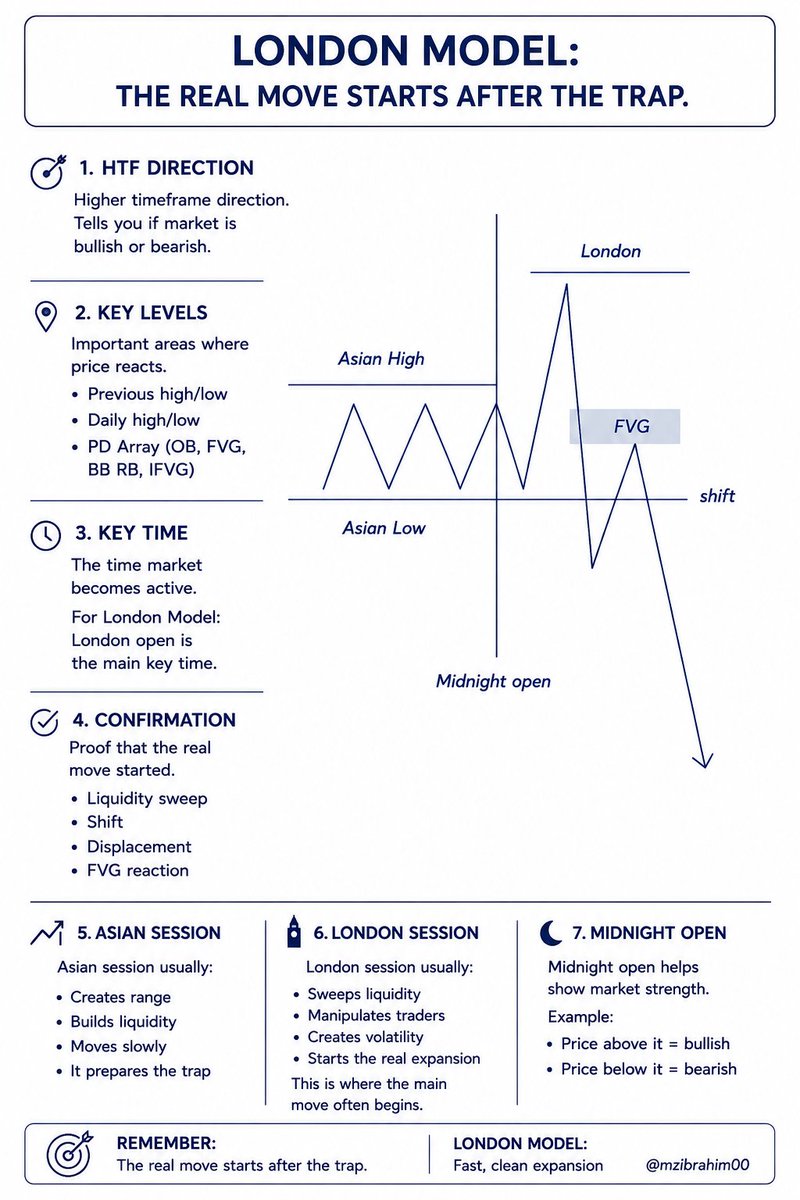
90% of traders focus on entries, but this model is built around timing, context, and confirmation. That’s the difference. 📈
The London Model is showing how to turn the Asian range into a high-probability setup during the London session.
🔹 Step 1 - HTF Bias:
Start with the higher timeframe direction. If your bias is wrong, the setup loses its edge.
🔹 Step 2 - Key Levels:
Mark important PD arrays, old highs/lows, and HTF levels. These become reaction points.
🔹 Step 3 - Timing:
The model focuses on 2AM–5AM EST, with the strongest window around 3AM–4AM EST - when London volatility usually expands.
🔹 Step 4 - Asian Range:
Price builds liquidity between Asian High and Asian Low. This range becomes the fuel.
🔹 Step 5 - Market Shift + Displacement:
After liquidity is taken, wait for market structure shift and displacement. No confirmation = no trade.
🔹 Step 6 - FVG / IFVG Entry:
Entry comes from the retrace into the imbalance after the shift - not from chasing price.
🎯 Target:
Aim for 1:2 or 1:3 RR - protecting risk while letting the move pay.
Trade the direction. Respect the time. Wait for confirmation. Let London do the work. ⚡

English
SAVI retweetledi

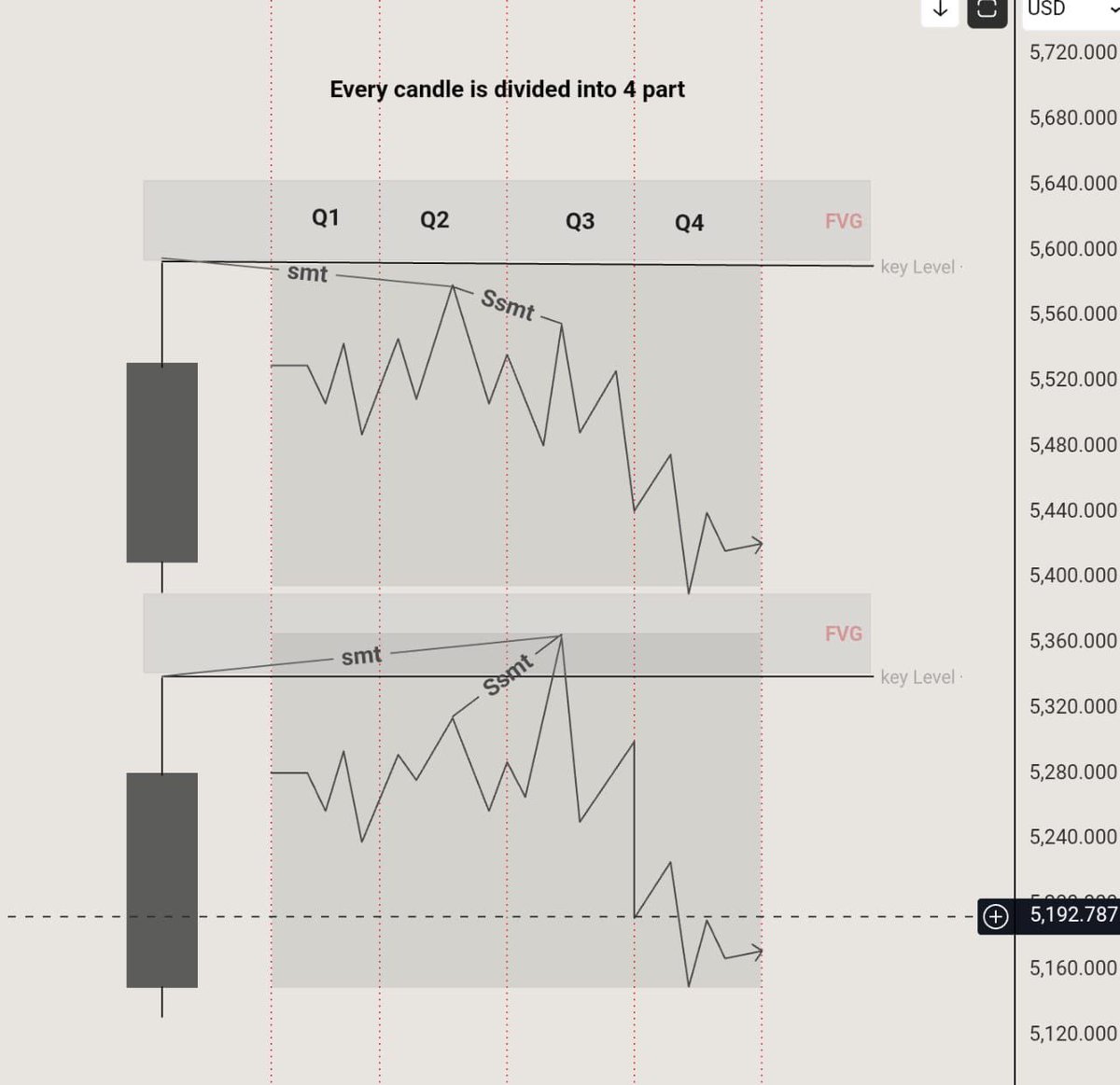
SMT = initial divergence.
SSMT = confirmation of that divergence.
English
SAVI retweetledi
SAVI retweetledi
Most traders don’t miss Turtle Soup because they can’t see liquidity.
They miss it because they enter without alignment.
No HTF PD zone.
No key level.
No patience.
They chase the sweep, and ignore the location.
Turtle Soup is not about the fakeout.
It’s about WHERE the fakeout happens.
BIAS HUNTER@BIASHUNTERFX
Most traders hunt entries on the lower timeframe and ignore where price is sitting on the higher timeframe. That’s why they get trapped. Monthly PD ➜ Daily TS Weekly PD ➜ 4H TS Daily PD ➜ 1H TS 4H PD ➜ 15M TS HTF gives the location. LTF gives the trigger. Master alignment, and Turtle Soup stops being a setup - it becomes precision.
English
SAVI retweetledi
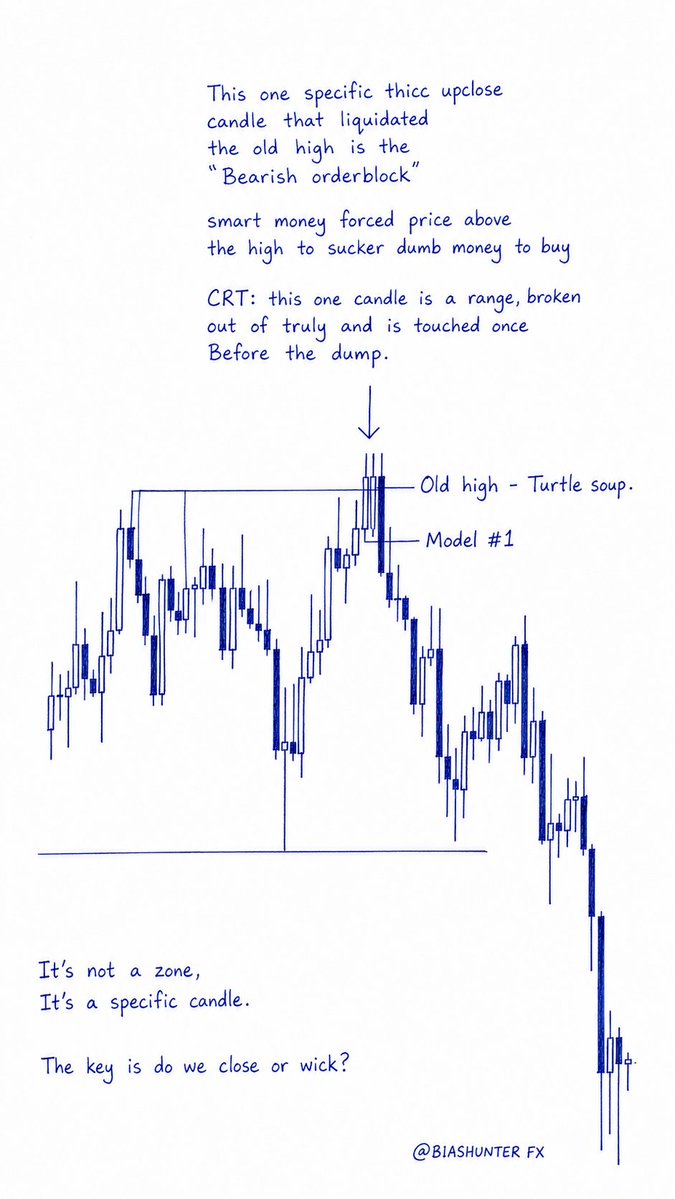
Most traders mark zones.
Professionals wait for the candle that hunted liquidity.
• Thick bullish candle stabbing old highs = bearish orderblock.
• Thick bearish candle stabbing old lows = bullish orderblock.
The sweep creates the trap.
The close confirms the intent.
English
SAVI retweetledi

INSTITUTIONAL PRICE ACTION BREAKDOWN
✔ QM STRUCTURE SHIFT
Spot the transition from HH to LL to catch early reversals.
✔ QML RETEST SETUP
Price often returns to the QML before the real move begins.
✔ IGNORED QM (IQM)
When the first QM fails, liquidity grabs create a cleaner second entry.
✔ RE‑ENTRY AT SMALL QM
A refined institutional entry inside the main QML zone.
✔ RULER METHOD
Use structural points to validate the true QML and avoid fakeouts.

English
SAVI retweetledi
Most traders hunt entries on the lower timeframe and ignore where price is sitting on the higher timeframe.
That’s why they get trapped.
Monthly PD ➜ Daily TS
Weekly PD ➜ 4H TS
Daily PD ➜ 1H TS
4H PD ➜ 15M TS
HTF gives the location.
LTF gives the trigger.
Master alignment, and Turtle Soup stops being a setup - it becomes precision.

English
SAVI retweetledi
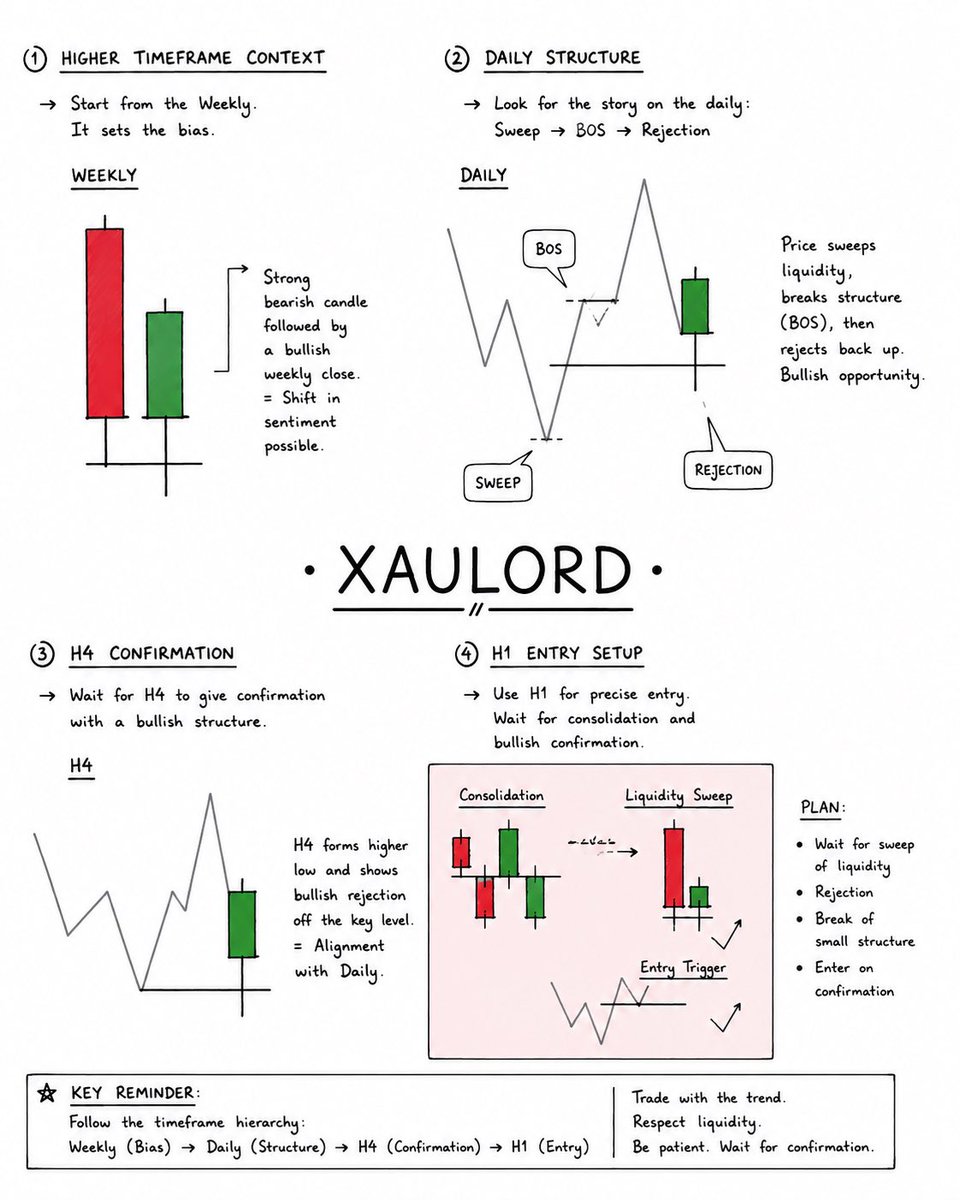
The biggest mistake traders make?
They enter on H1 without knowing what Weekly and Daily are doing. 📉🧠
Your entry timeframe means nothing without higher timeframe context.
My framework is simple:
1️⃣ Weekly → Defines the bias
2️⃣ Daily → Reveals the narrative
3️⃣ H4 → Gives confirmation
4️⃣ H1 → Precision entry
If all 4 align, the trade becomes high probability. 🎯
Most losses happen because traders are buying into higher timeframe sell pressure
or selling into higher timeframe demand.
The market rewards patience, not random entries.
Wait for:
• Liquidity sweep
• BOS
• Rejection
• Confirmation
Then execute with confidence.
Multi-timeframe analysis changed everything for me.
What timeframe do you trust the most for entries? 👇
English
SAVI retweetledi

