Samuel.

1.2K posts

Samuel. banner
Samuel.

Samuel.

@SamuRiveroP

Katılım Aralık 2015
884 Takip Edilen131 Takipçiler
Samuel. retweetledi
Yann LeCun
Yann LeCun@ylecun·
Dario is wrong. He knows absolutely nothing about the effects of technological revolutions on the labor market. Don't listen to him, Sam, Yoshua, Geoff, or me on this topic. Listen to economists who have spent their career studying this, like @Ph_Aghion , @erikbryn , @DAcemogluMIT , @amcafee , @davidautor
TFTC@TFTC21

Anthropic CEO Dario Amodei: “50% of all tech jobs, entry-level lawyers, consultants, and finance professionals will be completely wiped out within 1–5 years.”

English
1.2K
2.8K
21.4K
4.1M
Samuel. retweetledi
NASA
NASA@NASA·
Action. Wonder. Adventure. Artemis II has got it all. Don't miss the moment. Our crewed Moon mission will launch as early as April 1. Learn how to watch: nasa.gov/ways-to-watch/
English
1.6K
9.4K
39.4K
7.1M
Samuel. retweetledi
Samuel. retweetledi
Soleio
Soleio@soleio·
Wake up, designers. While jobs across other functions are surging through the AI transition, design roles are stagnant. Don’t take refuge in craft and taste. All members of technical staff must demonstrate newfound productivity. If that’s a topic you’ve avoided because it involves shipping or knowing your business model inside-out, you will struggle to make the case for your own field. When designers can’t articulate their company strategy, it’s usually because they are neither its authors nor its executors. Seeking new leverage is no longer optional.
Lenny Rachitsky@lennysan

4/ Design roles have plateaued Unlike PM and engineering, open design jobs have been relatively flat since early 2023, and there are also fewer of these roles than PMs and engineers in absolute terms (about 5,700 globally).

English
54
71
720
111K
Samuel. retweetledi
Stitch by Google
Stitch by Google@stitchbygoogle·
Meet the new Stitch, your vibe design partner. Here are 5 major upgrades to help you create, iterate and collaborate: 🎨 AI-Native Canvas 🧠 Smarter Design Agent 🎙️ Voice ⚡️ Instant Prototypes 📐 Design Systems and DESIGN.md Rolling out now. Details and product walkthrough video in 🧵
English
998
4.8K
41.9K
18.7M
Samuel. retweetledi
CG
CG@cgtwts·
> be niantic > launch Pokemon go > 500M players scan real-world places while playing > scans turn into 30B geo-tagged images > niantic builds a 3D map of the world > robots and AR apps use it to navigate within centimeters without GPS this is actually insane.
NewsForce@Newsforce

POKÉMON GO PLAYERS TRAINED 30 BILLION IMAGE AI MAP Niantic says photos and scans collected through Pokémon Go and its AR apps have produced a massive dataset of more than 30 billion real-world images. The company is now using that data to power visual navigation for delivery robots, letting them identify exact locations on city streets without relying on GPS. Source: NewsForce

English
277
2.8K
49.4K
4.6M
Samuel. retweetledi
Timon Wong
Timon Wong@t31kx·
Claude Code: "You've hit your limit · resets 7pm" Me from 5-6.59pm
English
377
2.6K
35.8K
1.6M
Samuel. retweetledi
Samuel.
Samuel.@SamuRiveroP·
@benln Bienvenidos! 🫶🏽
Español
0
0
1
215
Ben Lang
Ben Lang@benln·
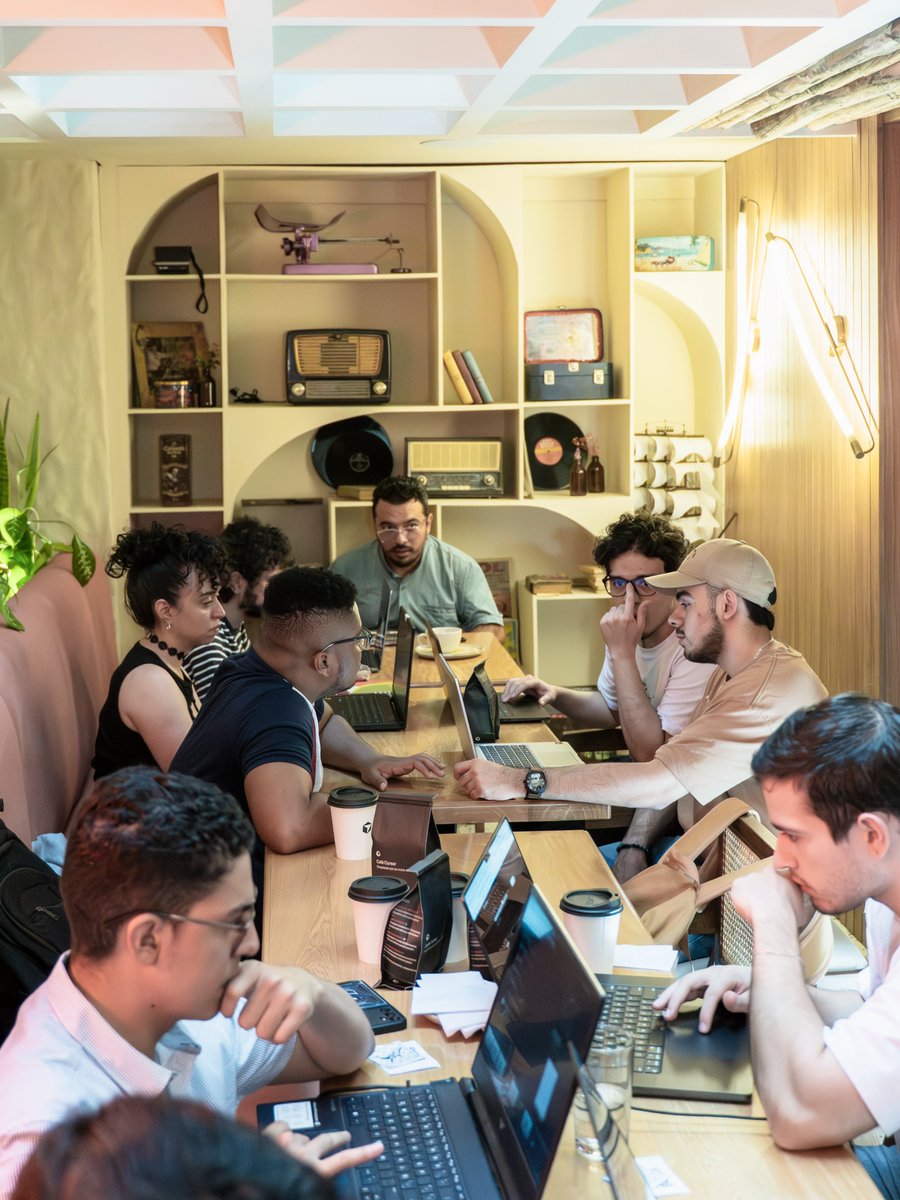
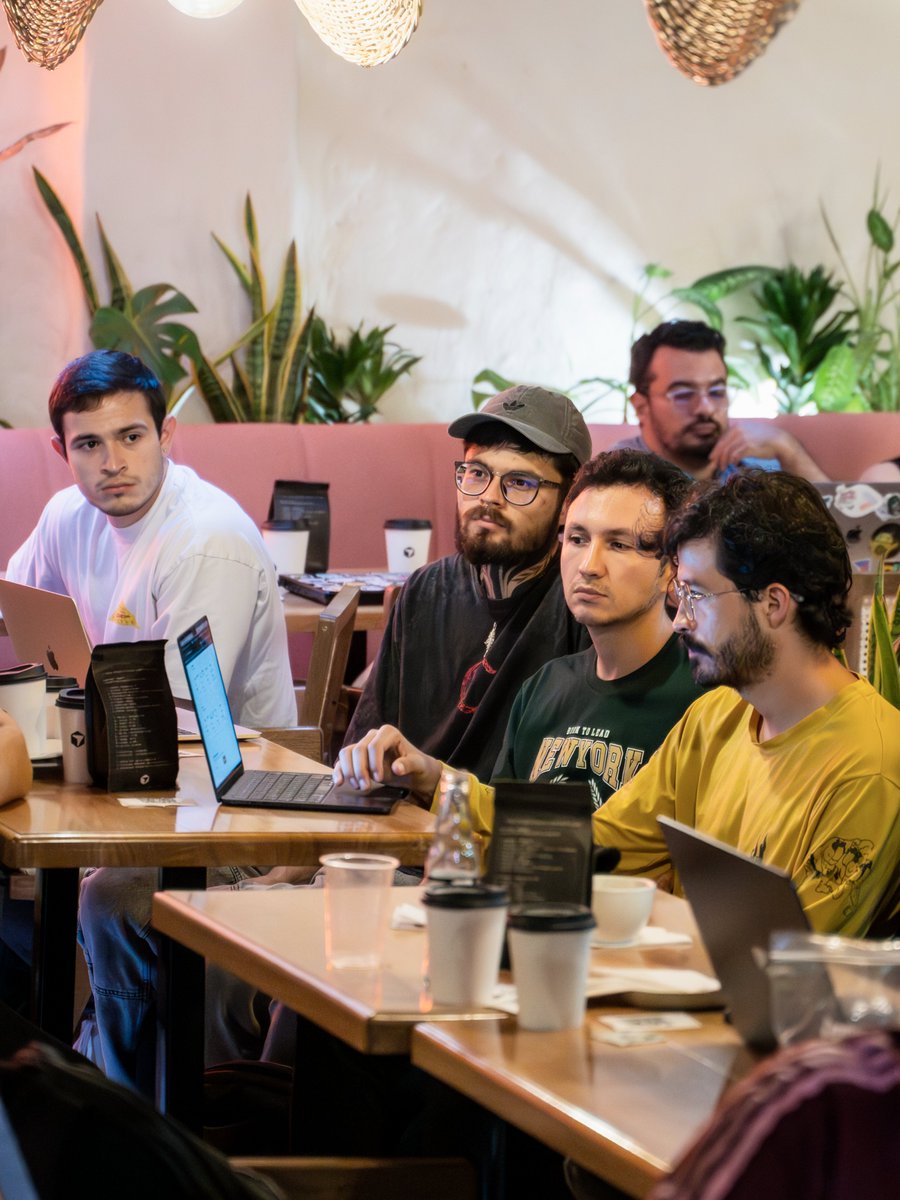
Cafe Cursor in Medellín
Ben Lang tweet mediaBen Lang tweet media
Español
40
20
467
32.3K
Age of Empires
Age of Empires@AgeOfEmpires·
Ca-py-ba-ra~ (Capybara!) 🎵 Capybara, capybara, capybara, capybara! 🎶
Age of Empires tweet media
Lietuvių
117
386
4.1K
212.8K
Samuel. retweetledi
Mike Matas
Mike Matas@mike_matas·
After many years of development, I’m excited to share the interior of the first electric Ferrari designed by LoveFrom. Tactile controls and digital interactions blend into one cohesive interface, shaped through deep collaboration across engineering, interaction, graphics, typography, sound, and industrial design. So incredibly proud of the thoughtfulness and care the team brought to every detail. ferrari.com/en-US/auto/fer…
English
533
779
8.5K
1.5M
Samuel. retweetledi
Addy Osmani
Addy Osmani@addyosmani·
Every time we've made it easier to write software, we've ended up writing exponentially more of it. When high-level languages replaced assembly, programmers didn't write less code - they wrote orders of magnitude more, tackling problems that would have been economically impossible before. When frameworks abstracted away the plumbing, we didn't reduce our output - we built more ambitious applications. When cloud platforms eliminated infrastructure management, we didn't scale back - we spun up services for use cases that never would have justified a server room. @levie recently articulated why this pattern is about to repeat itself at a scale we haven't seen before, using Jevons Paradox as the frame. The argument resonates because it's playing out in real-time in our developer tools. The initial question everyone asks is "will this replace developers?" but just watch what actually happens. Teams that adopt these tools don't always shrink their engineering headcount - they expand their product surface area. The three-person startup that could only maintain one product now maintains four. The enterprise team that could only experiment with two approaches now tries seven. The constraint being removed isn't competence but it's the activation energy required to start something new. Think about that internal tool you've been putting off because "it would take someone two weeks and we can't spare anyone"? Now it takes three hours. That refactoring you've been deferring because the risk/reward math didn't work? The math just changed. This matters because software engineers are uniquely positioned to understand what's coming. We've seen this movie before, just in smaller domains. Every abstraction layer - from assembly to C to Python to frameworks to low-code - followed the same pattern. Each one was supposed to mean we'd need fewer developers. Each one instead enabled us to build more software. Here's the part that deserves more attention imo: the barrier being lowered isn't just about writing code faster. It's about the types of problems that become economically viable to solve with software. Think about all the internal tools that don't exist at your company. Not because no one thought of them, but because the ROI calculation never cleared the bar. The custom dashboard that would make one team 10% more efficient but would take a week to build. The data pipeline that would unlock insights but requires specialized knowledge. The integration that would smooth a workflow but touches three different systems. These aren't failing the cost-benefit analysis because the benefit is low - they're failing because the cost is high. Lower that cost by "10x", and suddenly you have an explosion of viable projects. This is exactly what's happening with AI-assisted development, and it's going to be more dramatic than previous transitions because we're making previously "impossible" work possible. The second-order effects get really interesting when you consider that every new tool creates demand for more tools. When we made it easier to build web applications, we didn't just get more web applications - we got an entire ecosystem of monitoring tools, deployment platforms, debugging tools, and testing frameworks. Each of these spawned their own ecosystems. The compounding effect is nonlinear. Now apply this logic to every domain where we're lowering the barrier to entry. Every new capability unlocked creates demand for supporting capabilities. Every workflow that becomes tractable creates demand for adjacent workflows. The surface area of what's economically viable expands in all directions. For engineers specifically, this changes the calculus of what we choose to work on. Right now, we're trained to be incredibly selective about what we build because our time is the scarce resource. But when the cost of building drops dramatically, the limiting factor becomes imagination, "taste" and judgment, not implementation capacity. The skill shifts from "what can I build given my constraints?" to "what should we build given that constraints have in some ways been evaporated?" The meta-point here is that we keep making the same prediction error. Every time we make something more efficient, we predict it will mean less of that thing. But efficiency improvements don't reduce demand - they reveal latent demand that was previously uneconomic to address. Coal. Computing. Cloud infrastructure. And now, knowledge work. The pattern is so consistent that the burden of proof should shift. Instead of asking "will AI agents reduce the need for human knowledge workers?" we should be asking "what orders of magnitude increase in knowledge work output are we about to see?" For software engineers it's the same transition we've navigated successfully several times already. The developers who thrived weren't the ones who resisted higher-level abstractions; they were the ones who used those abstractions to build more ambitious systems. The same logic applies now, just at a larger scale. The real question is whether we're prepared for a world where the bottleneck shifts from "can we build this?" to "should we build this?" That's a fundamentally different problem space, and it requires fundamentally different skills. We're about to find out what happens when the cost of knowledge work drops by an order of magnitude. History suggests we (perhaps) won't do less work - we'll discover we've been massively under-investing in knowledge work because it was too expensive to do all the things that were actually worth doing. The paradox isn't that efficiency creates abundance. The paradox is that we keep being surprised by it.
Aaron Levie@levie

x.com/i/article/2004…

English
125
614
3.3K
554.1K
Samuel. retweetledi
Forrest Knight
Forrest Knight@ForrestPKnight·
Honestly, Ben Affleck actually knowing AI and the landscape caught me off guard, but as a writer, makes sense. Great takes across the board.
English
1.7K
9.5K
110.5K
16.2M
Samuel. retweetledi
Aaron Slodov
Aaron Slodov@aphysicist·
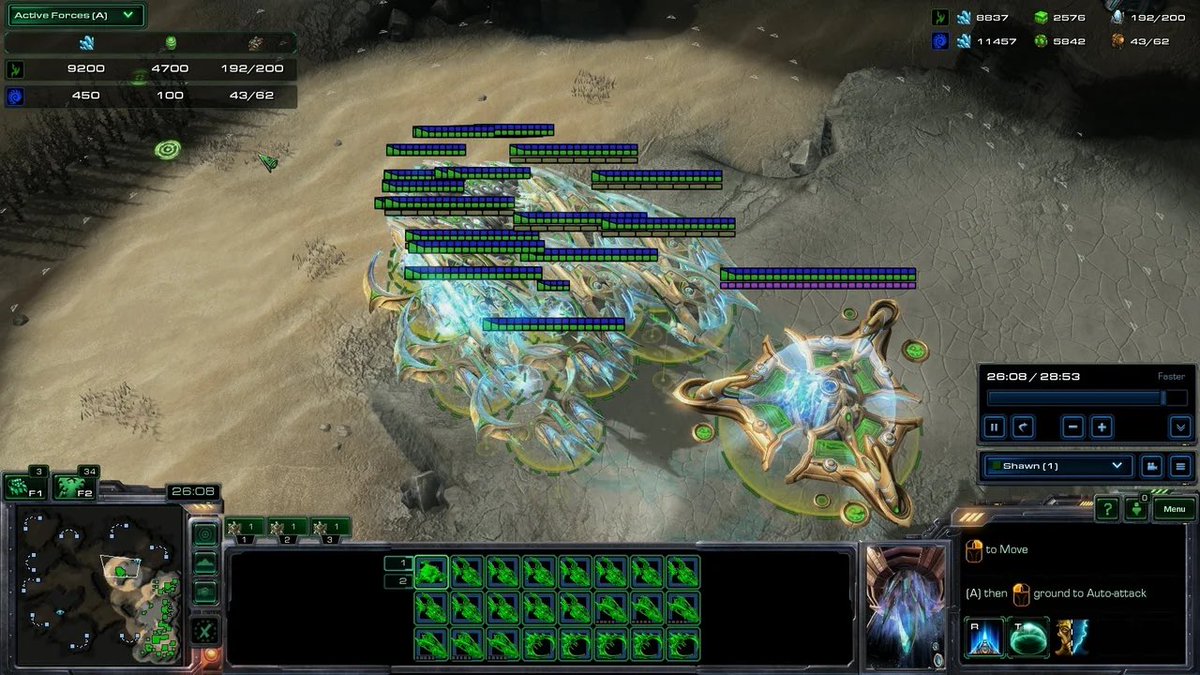
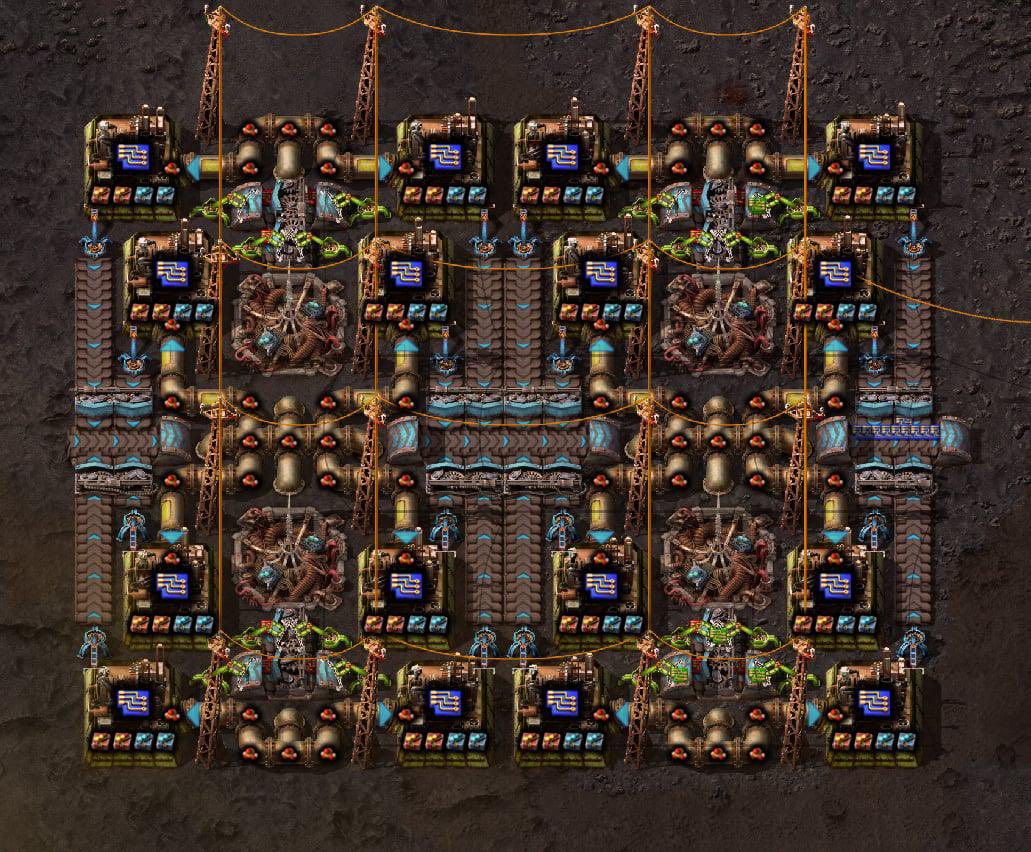
millennial gamers are the best prepared generation for agentic work, they've been training for 25 years
Aaron Slodov tweet mediaAaron Slodov tweet mediaAaron Slodov tweet mediaAaron Slodov tweet media
English
276
646
7.5K
1.5M
宝玉
宝玉@dotey·
🍌 nano banana pro prompt Isometric Miniature Stock Scene Enter a company name or stock ticker to generate an exquisite, miniature isometric 3D scene integrating real-time stock data for the specified date. inspired by @keithso27 's tweet ---- Present an exquisite, miniature 3D cartoon-style scene of the company corresponding to the user-specified company name or stock ticker, clearly viewed from a 45° top-down perspective. Place the company's most iconic building or campus prominently at the center, complemented by proportionally-sized icons of its key products, charming cartoon-style figures, vehicles, and other elements illustrating everyday company activities. The scene should be detailed, finely crafted, and playful. Rendered with Cinema 4D, the modeling should be refined, smoothly rounded, and rich in texture, accurately capturing realistic PBR materials. Gentle, lifelike lighting and soft shadows should create a warm, comfortable ambiance. Creatively integrate the company's real-time stock market data for the user-specified date (or automatically retrieved current date) into the scene, maintaining a clean, minimalist layout and a solid-color background to highlight the primary content. At the top-center of the scene, prominently display the company name or stock ticker in a large font size, followed by the specified date in extra-small font, and the stock price range in a medium-sized font. Include clear, intuitive stock trend icons and charts. All texts should be displayed in the language specified or entered by the user, without any background, and may subtly overlap with the scene elements to enhance overall design integration. Very Important: Before generating, ensure accurate and up-to-date stock market data based on the user-inputted company name or stock ticker and the specified date. If such data is unavailable, notify the user immediately and stop the generation process. Parameters: * Aspect ratio: {User input, default 1:1} * Date: {User input, current date} * Company name or stock ticker: {User input} --- Company Name / Stock Ticker: Google Date: 12/3/2025
宝玉 tweet media宝玉 tweet media宝玉 tweet media宝玉 tweet media
Keith So@keithso27

Changing the viral 3D city weather to Mag7, the possibilities are endless!! @NanoBanana Credit: @dotey

English
37
165
1.3K
252.9K