synapse feed

918 posts

synapse feed banner
synapse feed

synapse feed

@Synapse_feeds

Engineer | 10+ Years in Tech & counting | LLM Evaluation Practitioner | AI Trends, Systems & Insights

Noida, India Katılım Mayıs 2021
661 Takip Edilen521 Takipçiler
synapse feed retweetledi
Bull Theory
Bull Theory@BullTheoryio·
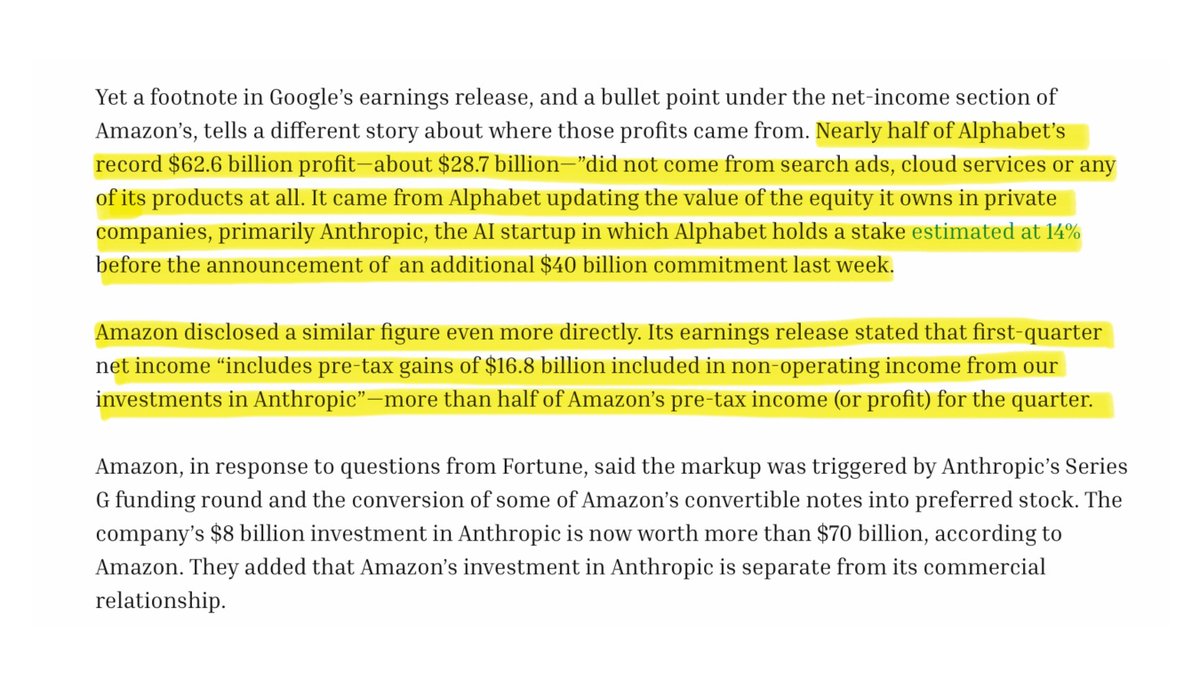
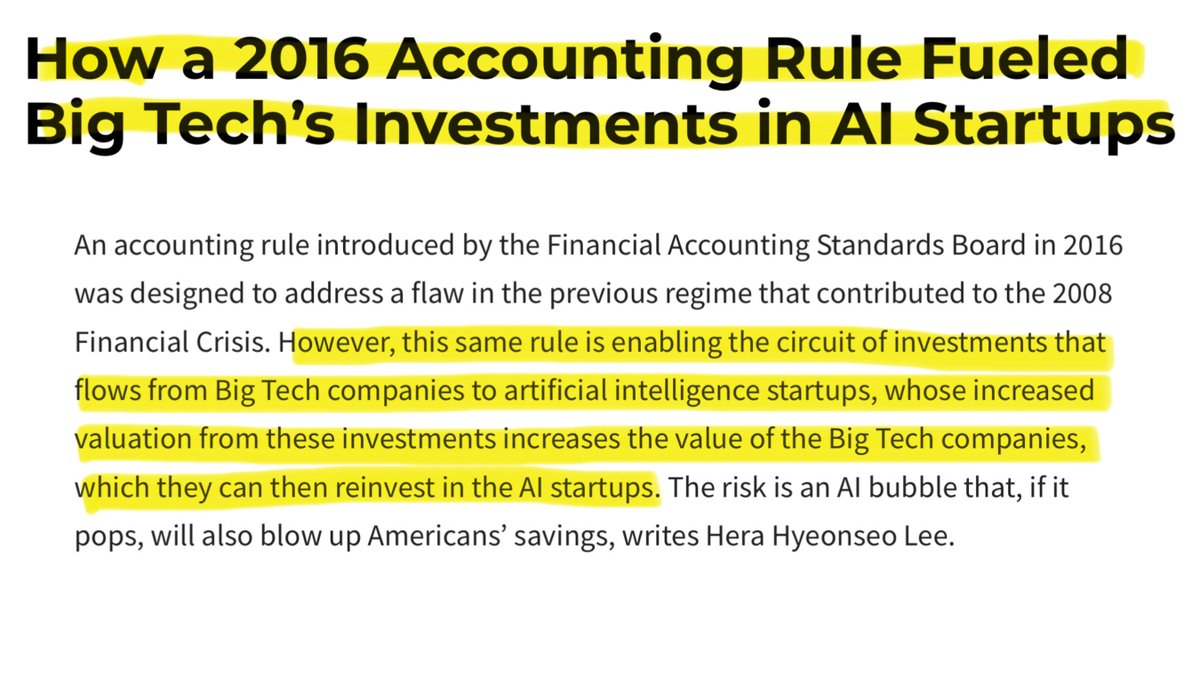
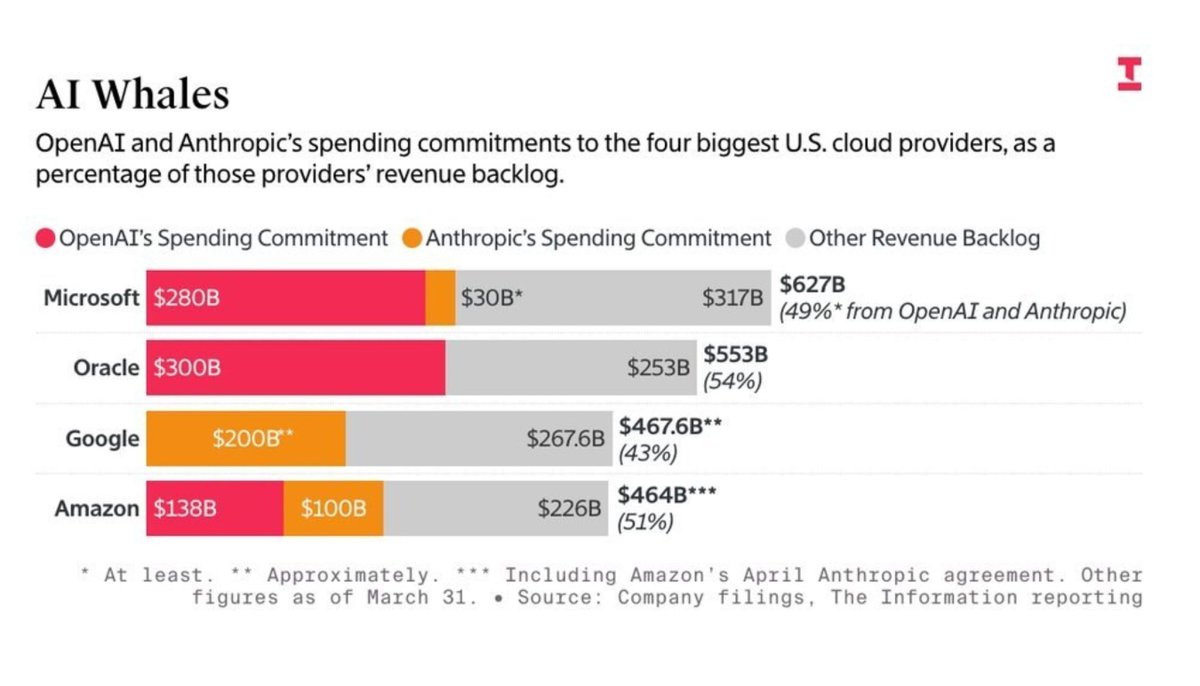
🚨 THE ENTIRE AI BOOM MIGHT BE BUILT ON FAKE REVENUE. Latest corporate filings show that OpenAI and Anthropic alone make up over half of the entire $2 trillion future cloud backlog held by Microsoft, Oracle, Google, and Amazon. This massive pipeline is actually being created through a circular accounting trick called a round trip revenue loop. But how it works ? A tech giant gives billions of dollars to an AI startup as an "investment". But hidden in the contract is a strict rule forcing the startup to hand that exact same money straight back to the tech giant to rent their computer servers. Look at the documented case of Microsoft and OpenAI. When Microsoft invested $13 billion into OpenAI, it didn't just give them cash; it gave them "cloud credits" to use Microsoft servers. OpenAI used those exact credits to train its AI models, and Microsoft then turned around and recorded that server usage as brand new "cloud revenue" from a customer. The tech giant is literally paying itself with its own money and calling it a sale. This is why OpenAI’s annual cloud bill has ballooned to over $60 billion, double its actual revenue of $25 billion, kept alive solely by this recycled funding loop. Anthropic runs the exact same play, spending $2.66 billion on Amazon Web Services in just nine months, which was basically 100% of all the money it earned at the time. This manufactured demand triggers a second accounting trick where tech giants book massive paper profits. Every time a startup gets a higher value from a new funding round, the tech giant updates the value of its investment on its books and counts that unearned paper gain as direct profit. In Q1 2026, Alphabet reported a record $62.6 billion profit, but $28.7 billion nearly half, was just a paper markup on its Anthropic investment. In the same quarter, Amazon reported $30.3 billion in profit, but $16.8 billion of it was just an Anthropic paper gain. While Amazon reported record profits, its actual free cash flow collapsed 95% to just $1.2 billion because it had to spend $44.2 billion in real cash to build physical data centers. This has created a massive danger where these giant companies rely heavily on just one or two unstable startups. Microsoft has 49% of its $627 billion future backlog tied to OpenAI, while Oracle has an incredible 54% of its entire $553 billion pipeline relying on OpenAI alone. This perfectly mirrors the 2001 dot-com crash when Global Crossing and Qwest Communications swapped identical fiber-optic network capacity with each other just to book fake sales. Qwest had to erase $1.4 billion in fake income, and Global Crossing went completely bankrupt. The only difference is that the dot-com swaps were illegal, but today's AI loop is fully legal under current accounting rules. This legal loop inflates tech company stock prices, forcing automatic retirement accounts and index funds to buy even more of these tech stocks. It is a self feeding loop where investments, sales, and stock prices all go up on paper without the AI technology ever making real cash profits.
Bull Theory tweet mediaBull Theory tweet mediaBull Theory tweet mediaBull Theory tweet media
English

322
958
3.6K
659.1K
synapse feed retweetledi
Alfie Carter
Alfie Carter@AlfieJCarter·
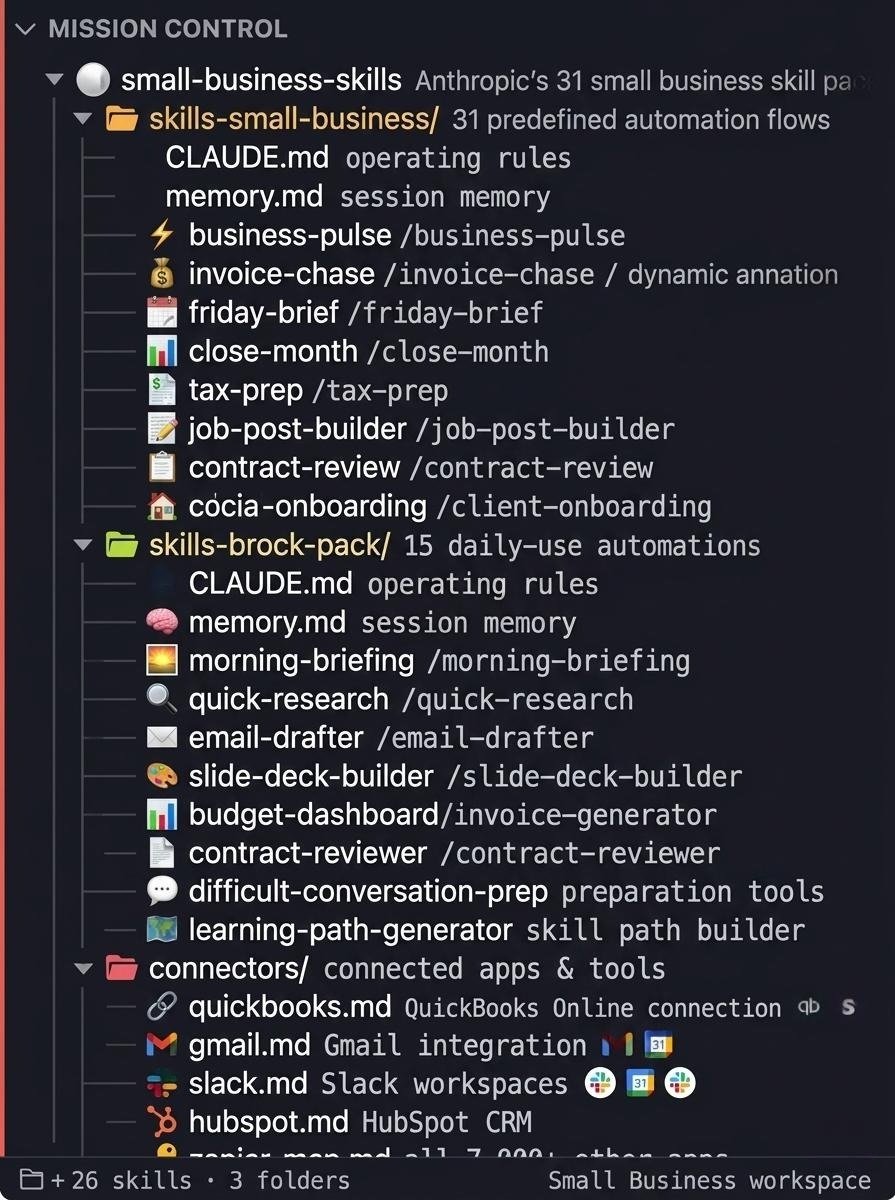
Claude For Small Business is INSANE. I've built a complete breakdown of all 31 Anthropic Small Business skills that maps every workflow, connector, and automation in under 10 minutes. The same skill stack that had 382,000 downloads on its first day. Financial operations, sales and client work, HR and hiring, marketing and growth, reporting and dashboards. Inside the breakdown: - All 31 skills organised by function with the 5 to run first - The 12 connector setup guide in priority order with permission settings for every sensitive action - Worked examples for Business Pulse, Invoice Chase, and Job Post Builder with real output shown Want a copy? Like + Comment "31" and I'll send it over ASAP (Must be following)
Alfie Carter tweet media
English
2.1K
445
4.3K
239.4K
synapse feed retweetledi
Hedgie
Hedgie@HedgieMarkets·
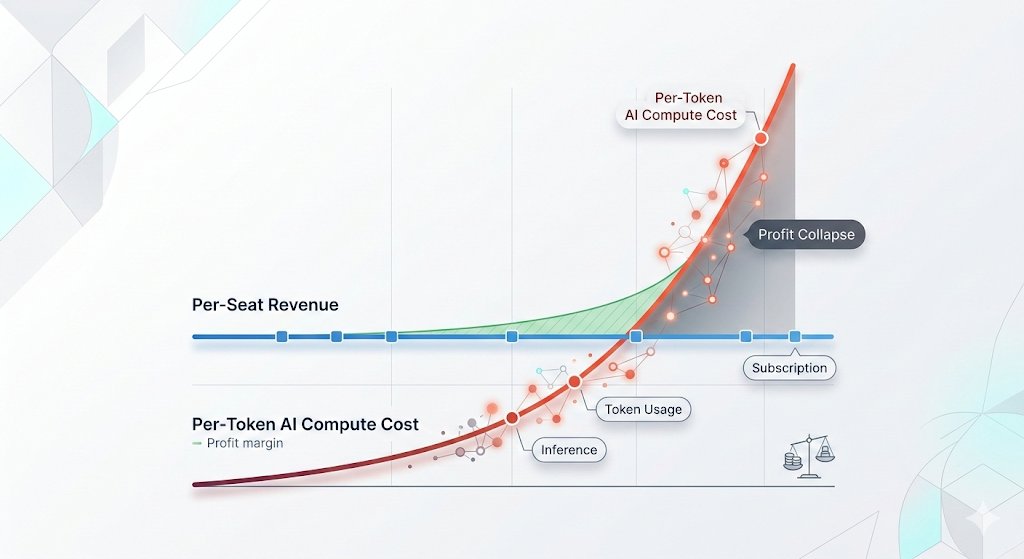
🦔Microsoft canceled its internal Claude Code licenses this week after token-based billing made the cost untenable, even for a company with effectively infinite cloud resources. Uber's CTO sent an internal memo warning the company burned through its entire 2026 AI budget in just four months. American AI software prices have jumped 20% to 37%, and GitHub (owned by Microsoft) is dropping flat-rate plans for usage-based billing across its products. My Take The AI subsidy era is ending in real time. The same company that put $13 billion into OpenAI and built the Azure infrastructure powering most of Anthropic's compute just looked at the bill from a competitor's coding tool and decided it was not worth paying. That is not a productivity failure on Anthropic's end. Token-based pricing is forcing every enterprise customer to confront the actual cost of running these models at scale, and the number turns out to be far higher than the flat-rate experiments suggested. This ties directly to my Gemini Flash post yesterday. Anthropic, OpenAI, and Google all raised effective prices in the last six months. Enterprises that built workflows assuming AI costs would keep falling are now watching annual budgets evaporate in months. Two outcomes look likely from here. Either enterprises scale back AI usage to fit budgets, which slows the revenue ramp the labs need to justify their valuations ahead of IPOs, or the labs cut prices and absorb the losses, which makes the unit economics worse at exactly the wrong moment. Both paths land in the same place, the numbers stop working, and somebody has to take the writedown. Hedgie🤗
Hedgie tweet media
English
1K
3.9K
19.3K
7.6M
synapse feed retweetledi
BladeoftheSun
BladeoftheSun@BladeoftheS·
Microsoft is having to cancel its internal AI usage because the cost is too high. This is despite Microsoft owning a large percentage of the company it gets its AI from. The end is coming and the AI collapse has begun.
English
231
1.4K
9.4K
274.4K
synapse feed retweetledi
Nandkishor
Nandkishor@devops_nk·
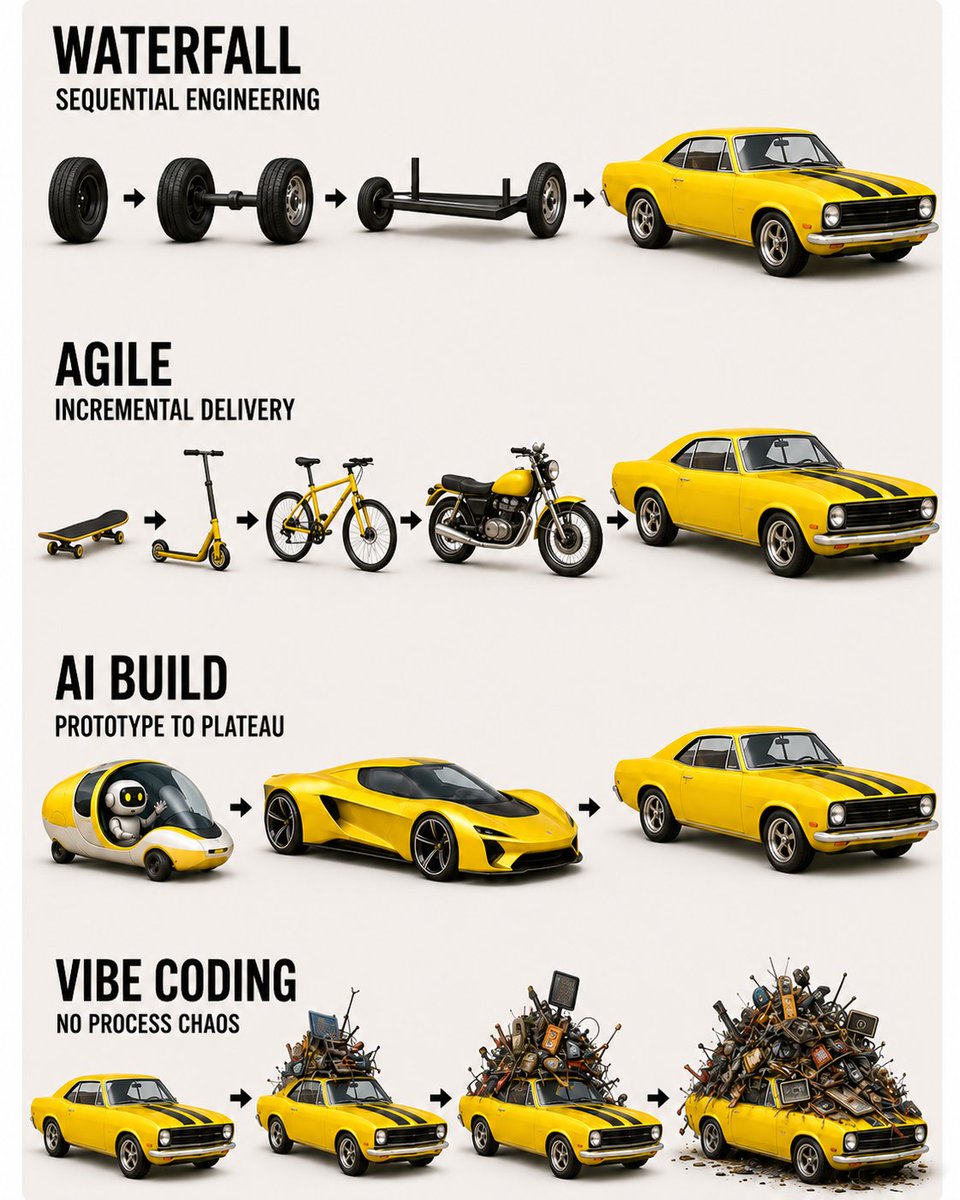
AI development in 2026: Waterfall → spends 18 months collecting requirements, making diagrams, and finally ships a perfectly documented product nobody needs anymore. Agile → ships something usable every sprint, but the PM still keeps asking “where’s the full product?” AI → gives you the entire product on day one - Frontend? Generated. - Backend APIs? Generated. - Dockerfile? Generated. - Terraform? Generated. Half the README? Hallucinated. Everything works surprisingly well until you open the codebase and find: - 14 duplicated functions - random deprecated packages - hardcoded API keys 3 different coding styles 8k token prompts committed to Git and one mysterious function nobody wants to touch because “it somehow works in prod” Modern development is slowly shifting from: “building everything manually” to: “shaping, validating, securing, optimizing, and taking ownership of AI-generated systems.” The scary part is not that AI writes code. The scary part is developers deploying systems they don’t fully understand because the demo worked once locally. Now the real engineering skills are: debugging, system design, observability, security reviews, infra knowledge, cost optimization, and knowing when the AI is confidently wrong. You can’t truly own a system you can’t explain.
Nandkishor tweet media
English
5
7
25
2.3K
synapse feed retweetledi
unusual_whales
unusual_whales@unusual_whales·
89% of leaders say AI has not improved their company's labor productivity, despite widespread adoption, per Gallup.
English
680
2K
15.6K
2M
synapse feed retweetledi
Andrej Karpathy
Andrej Karpathy@karpathy·
Personal update: I've joined Anthropic. I think the next few years at the frontier of LLMs will be especially formative. I am very excited to join the team here and get back to R&D. I remain deeply passionate about education and plan to resume my work on it in time.
English
7.8K
11.1K
148.4K
26.7M
synapse feed retweetledi
Nainsi Dwivedi
Nainsi Dwivedi@NainsiDwiv50980·
The guy who BUILT Claude Code is running 10–15 parallel AI agents like an engineering team. Not prompts. Systems. His secret isn’t some hidden feature. It’s a simple file: CLAUDE.md And it changes everything. Every time Claude makes a mistake → it writes a rule. Every correction → permanent memory. Every session → smarter than the last. > “Update your CLAUDE.md so you don’t make that mistake again.” That’s the loop. No repeated errors. No wasted tokens. No babysitting. Just compounding intelligence inside your own codebase. While most people: Rewrite the same prompts Fix the same bugs Start from zero every time He’s building a self-improving engineering system. And it gets crazier: • 10+ agents running in parallel • Research, coding, testing — all split into sub-agents • Clean context, zero clutter • Complex problems = more agents, not more thinking He hasn’t written SQL in 6+ months. Claude just pulls from BigQuery via CLI. This isn’t “AI-assisted coding.” This is AI orchestration. And the gap is already showing. Claude Code is now contributing to ~4% of all public GitHub commits. If you’re still using AI like a chatbot… You’re not behind. You’re playing a completely different game.
Nainsi Dwivedi tweet media
Suryansh Tiwari@Suryanshti777

x.com/i/article/2056…

English
32
141
723
104.9K
synapse feed retweetledi
Microsoft Learn
Microsoft Learn@MicrosoftLearn·
“Agentic AI” sounds abstract. It’s not: What is Agentic AI? It’s AI that understands your goal, breaks it into steps, and takes action across tools. It can plan, execute, and adapt like a digital teammate. What can it do, and not do? It can automate multi step tasks, use tools, connect to your apps, and make decisions based on your intent. It cannot override permissions, break org policies, or replace human judgment. How does it handle long term memory and planning? Agents track context, progress, and decisions so they can continue a task without starting over. They remember what is done and what comes next, which helps them plan across multiple asks. How do agent memory and user memory work together? User memory stores what you want remembered: preferences, details, working style. Agent memory stores what the agent needs to finish a task: steps, context, progress. Together they keep work consistent and personalized. How does it work with Microsoft Entra? Agents use your Entra identity to check permissions before acting. They only access the data and tools you are already allowed to use, and every step is authenticated and logged.
English
20
42
360
20.5K
synapse feed retweetledi
Microsoft Learn
Microsoft Learn@MicrosoftLearn·
We’re introducing a new GitHub Certified: Agentic AI Developer (GH-600). As AI agents become part of modern development workflows, this role-based certification focuses on how developers and teams operate, supervise, and integrate agents across the SDLC. If you’re already working with tools like GitHub Copilot or exploring agent-driven workflows, we’d love your input. Learn more and get involved. msft.it/6013vRHHZ
Microsoft Learn tweet media
English
111
544
3.5K
1.9M
synapse feed retweetledi
Big Brain AI
Big Brain AI@realBigBrainAI·
Jensen Huang, NVIDIA CEO: "It even runs large language models" — a $249 AI computer that fits on your desk.
English
177
874
9.3K
1.2M
synapse feed retweetledi
Andrew Ng
Andrew Ng@AndrewYNg·
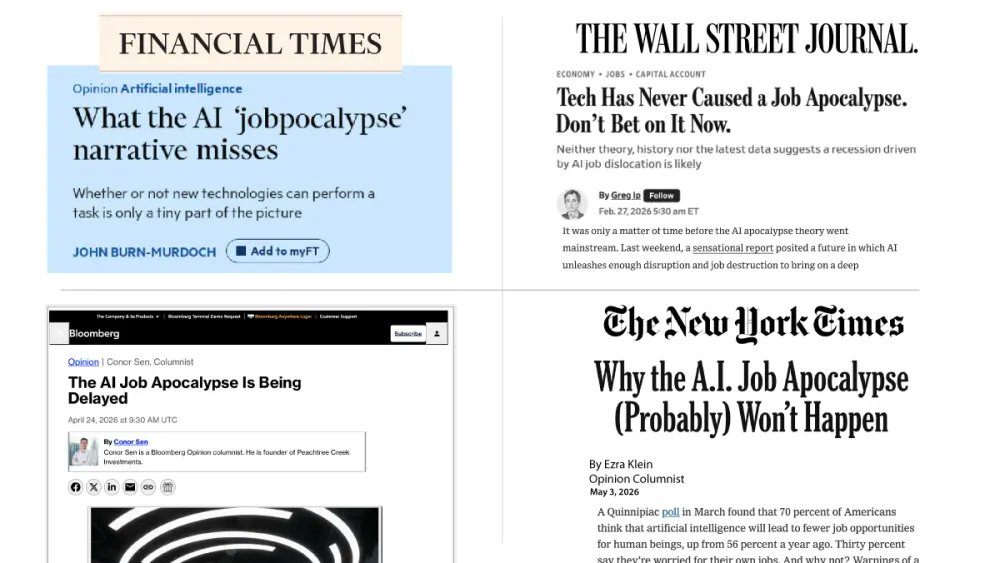
There will be no AI jobpocalypse. The story that AI will lead to massive unemployment is stoking unnecessary fear. AI — like any other technology — does affect jobs, but telling overblown stories of large-scale unemployment is irresponsible and damaging. Let’s put a stop to it. I’ve expressed skepticism about the jobpocalypse in previous posts. I’m glad to see that the popular press is now pushing back on this narrative. The image below features some recent headlines. Software engineering is the sector most affected by AI tools, as coding agents race ahead. Yet hiring of software engineers remains strong! So while there are examples of AI taking away jobs, the trends strongly suggest the net job creation is vastly greater than the job destruction — just like earlier waves of technology. Further, despite all the exciting progress in AI, the U.S. unemployment rate remains a healthy 4.3%. Why is the AI jobpocalypse narrative so popular? For one thing, frontier AI labs have a strong incentive to tell stories that make AI technology sound more powerful. At their most extreme, they promote science-fiction scenarios of AI “taking over” and causing human extinction. If a technology can replace many employees, surely that technology must be very valuable! Also, a lot of SaaS software companies charge around $100-$1000 per user/year. But if an AI company can replace an employee who makes $100,000 — or make them 50% more productive — then charging even $10,000 starts to look reasonable. By anchoring not to typical SaaS prices but to salaries of employees, AI companies can charge a lot more. Additionally, businesses have a strong incentive to talk about layoffs as if they were caused by AI. After all, talking about how they’re using AI to be far more productive with fewer staff makes them look smart. This is a better message than admitting they overhired during the pandemic when capital was abundant due to low interest rates and a massive government financial stimulus. To be clear, I recognize that AI is causing a lot of people’s work to change. This is hard. This is stressful. (And to some, it can be fun.) I empathize with everyone affected. At the same time, this is very different from predicting a collapse of the job market. Societies are capable of telling themselves stories for years that have little basis in reality and lead to poor society-wide decision making. For example, fears over nuclear plant safety led to under-investment in nuclear power. Fears of the “population bomb” in the 1960s led countries to implement harsh policies to reduce their populations. And worries about dietary fat led governments to promote unhealthy high-sugar diets for decades. Now that mainstream media is openly skeptical about the jobpocalypse, I hope these stories will start to lose their teeth (much like fears of AI-driven human extinction have). Contrary to the predictions of an AI jobpocalypse, I predict the opposite: There will be an AI jobapalooza! AI will lead to a lot more good AI engineering jobs, and I’m also optimistic about the future of the overall job market. What AI engineers do will be different from traditional software engineering, and many of these jobs will be in businesses other than traditional large employers of developers. In non-AI roles, too, the skills needed will change because of AI. That makes this a good time to encourage more people to become proficient in AI, and make sure they’re ready for the different but plentiful jobs of the future! [Original text in The Batch newsletter.]
Andrew Ng tweet media
English
584
1.2K
5.4K
791.8K
synapse feed retweetledi
lucas
lucas@lucasMnts·
We replaced standups with agents. Now our Zoom burn is 237k per month. We reduced engineering meetings by 100% by replacing every employee with an AI agent that attends meetings for them. Then we realized the agents were also sending agents. By Tuesday, our 12 person startup had 4,812 employees, none of whom had shipped anything, but all of whom had amazing async updates. It’s all good though because morale is up 37% and no one has spoken to another human in 2 weeks.
English
11
42
494
33.1K
synapse feed retweetledi
Official Layoff
Official Layoff@LayoffAI·
LAYOFF ALERT: GITLAB 🚨 GitLab announced a restructuring that will flatten management, cut its country footprint by 30 percent, and reorganize R&D into 60 autonomous teams. CEO Bill Staples called it an investment in the “agentic era.” Total cuts to be announced June 2.
Official Layoff tweet media
English
44
88
625
413K
synapse feed retweetledi
snoopy jpg
snoopy jpg@snoopy_dot_jpg·
this will end in tears btw
snoopy jpg tweet media
English
170
46
1.4K
189.1K
synapse feed retweetledi
BRICS News
BRICS News@BRICSinfo·
JUST IN: 🇨🇳 Chinese court rules companies cannot legally fire employees simply to replace them with cost-saving artificial intelligence.
BRICS News tweet mediaBRICS News tweet media
English
525
3.8K
24.7K
2.6M
synapse feed retweetledi
Tyler
Tyler@rezoundous·
The only constant in life is rising AI cost.
English
33
8
87
6.2K
synapse feed
synapse feed@Synapse_feeds·
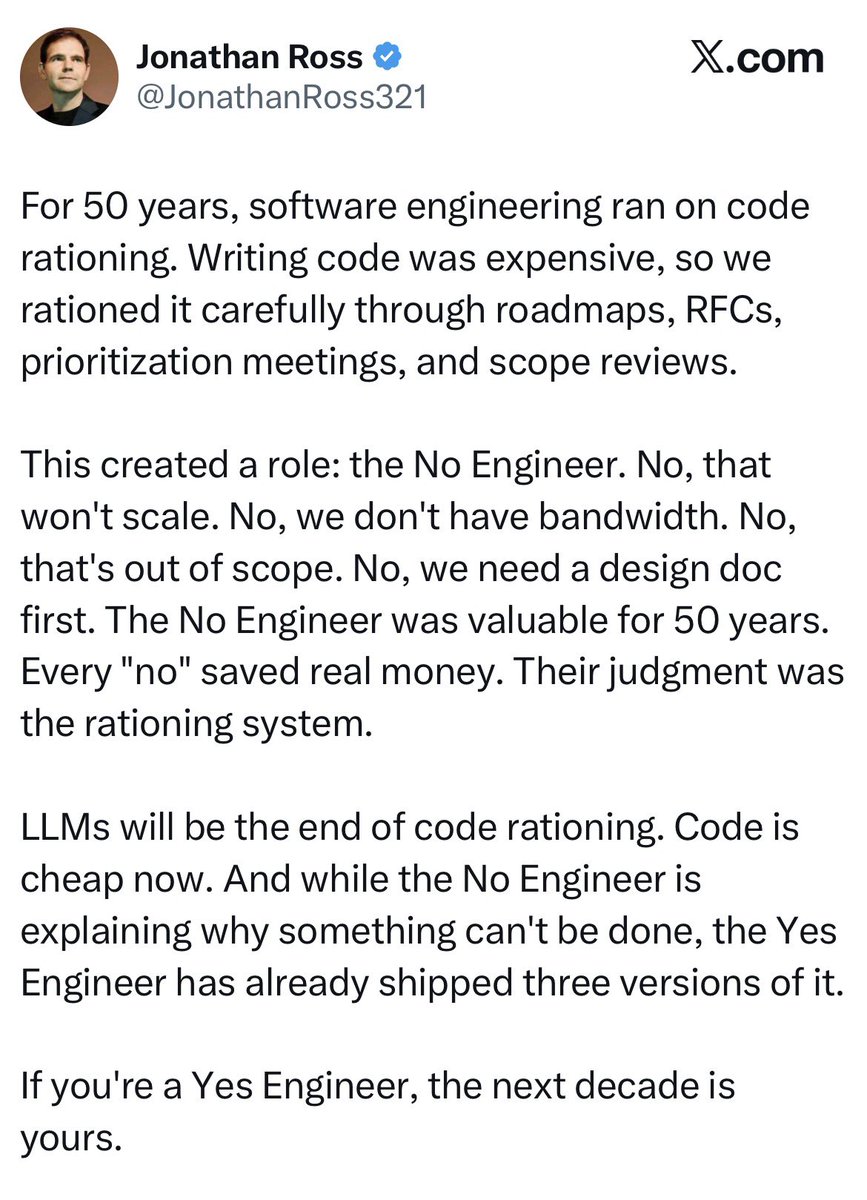
Bro didn’t even reach beta ?
synapse feed tweet media
English
0
0
7
56
synapse feed retweetledi
Boring_Business
Boring_Business@BoringBiz_·
CFOs realizing that their AI token budget is going to be higher than the salaries of the people they laid off
English
487
5.6K
49.7K
2.6M