Tony Hooker

167 posts

Tony Hooker banner
Tony Hooker

Tony Hooker

@TonyHooker21

Assoc. Prof./ Director Centre for Radiation Research, Education and Innovation The University of Adelaide

Adelaide, South Australia Katılım Nisan 2017
77 Takip Edilen54 Takipçiler
Tony Hooker retweetledi

Aus Integrity
Aus Integrity@QBCCIntegrity·
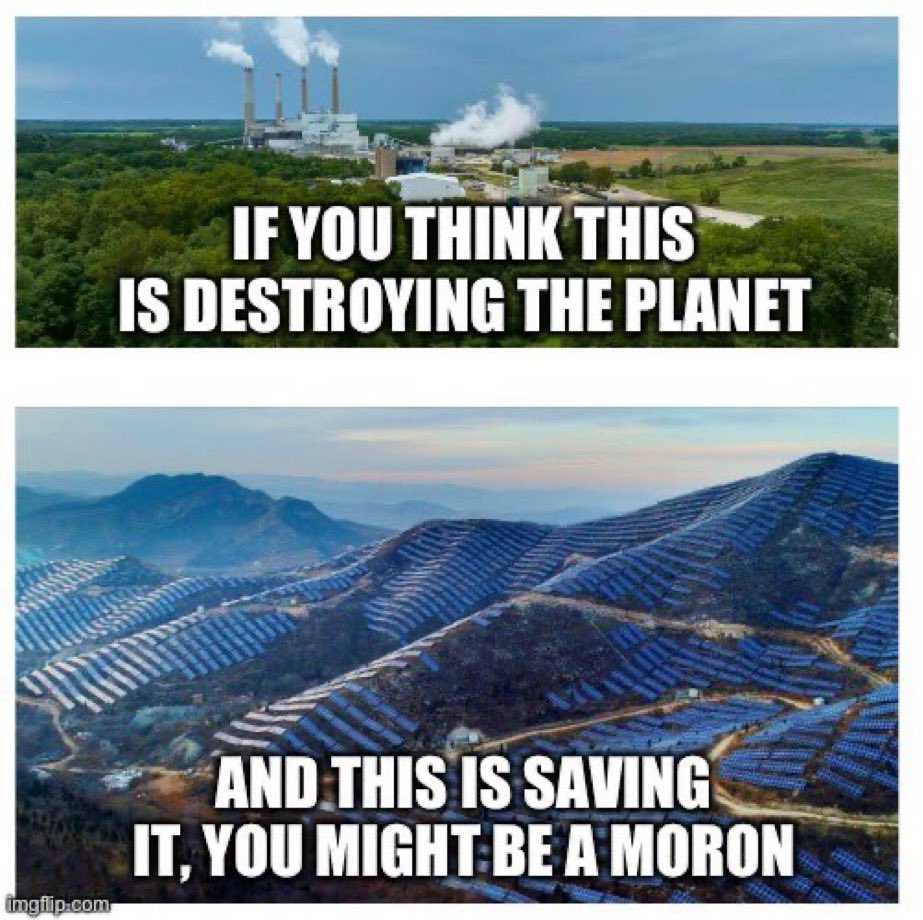
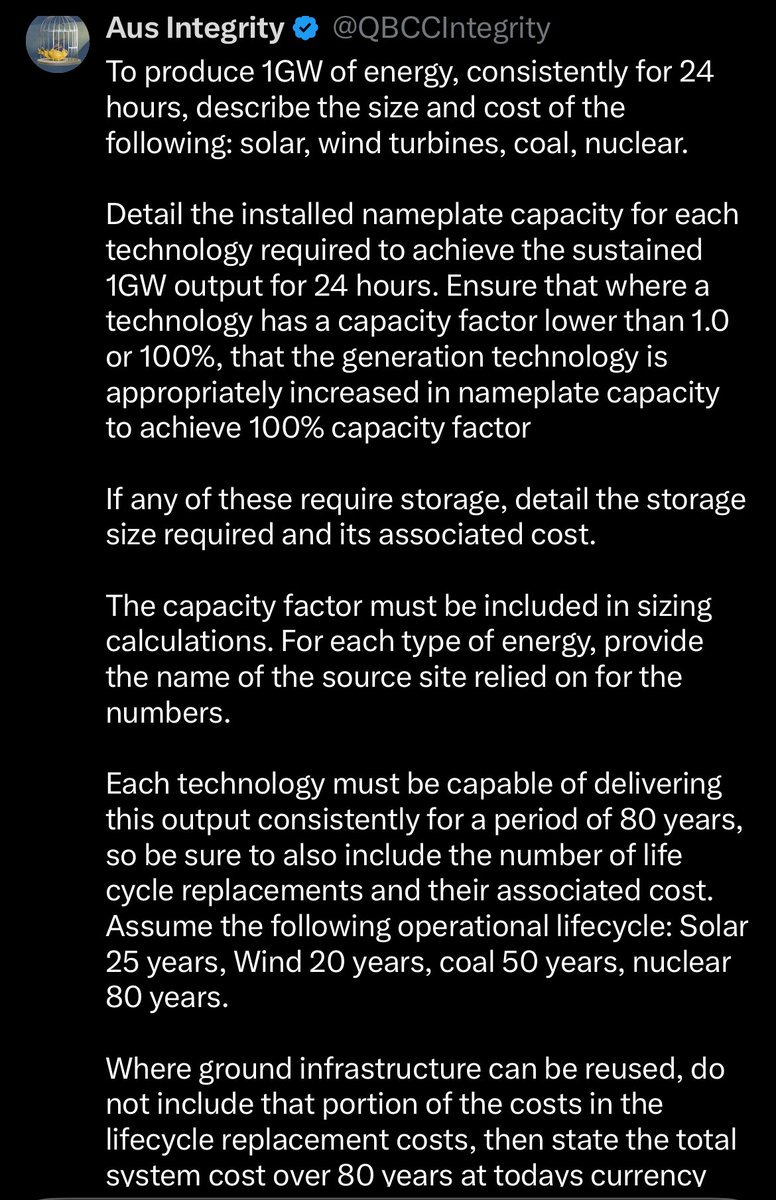
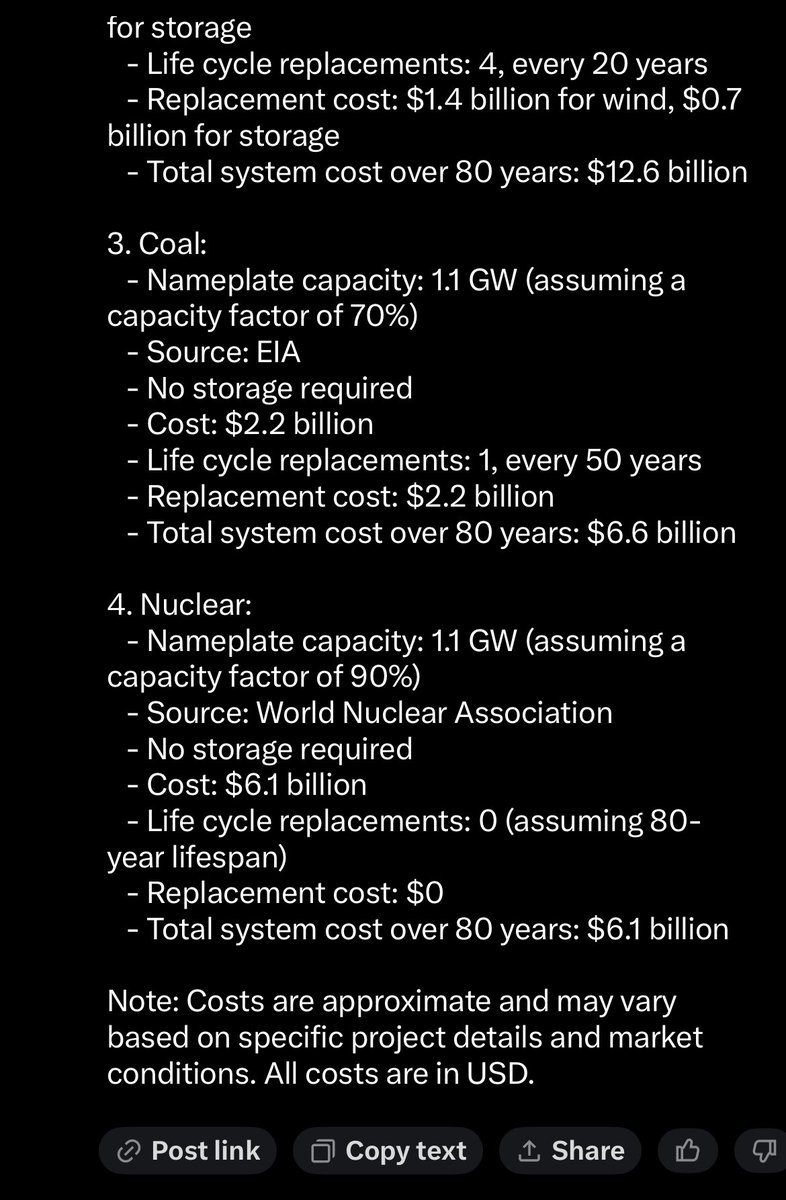
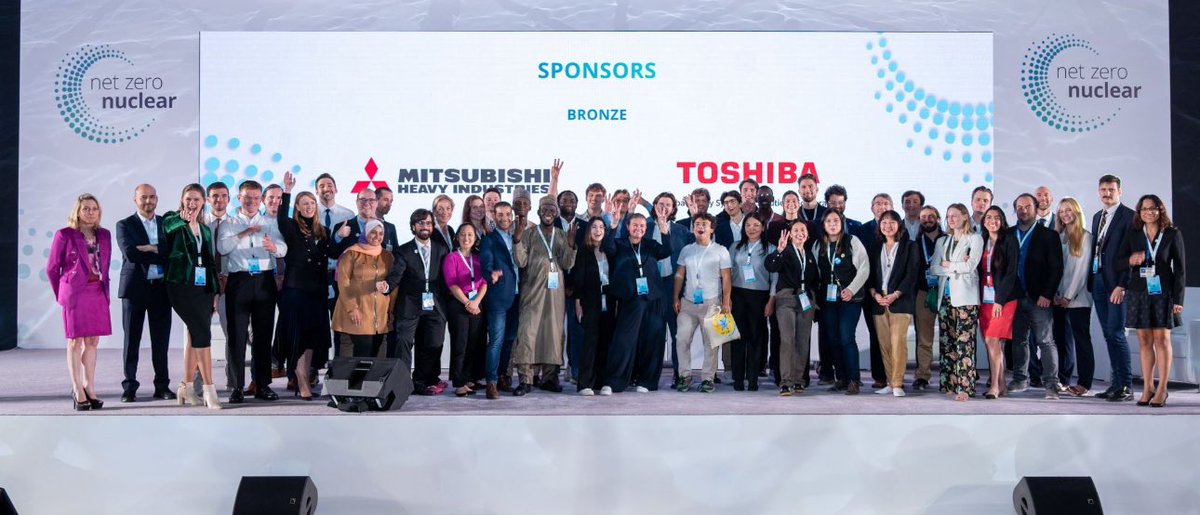
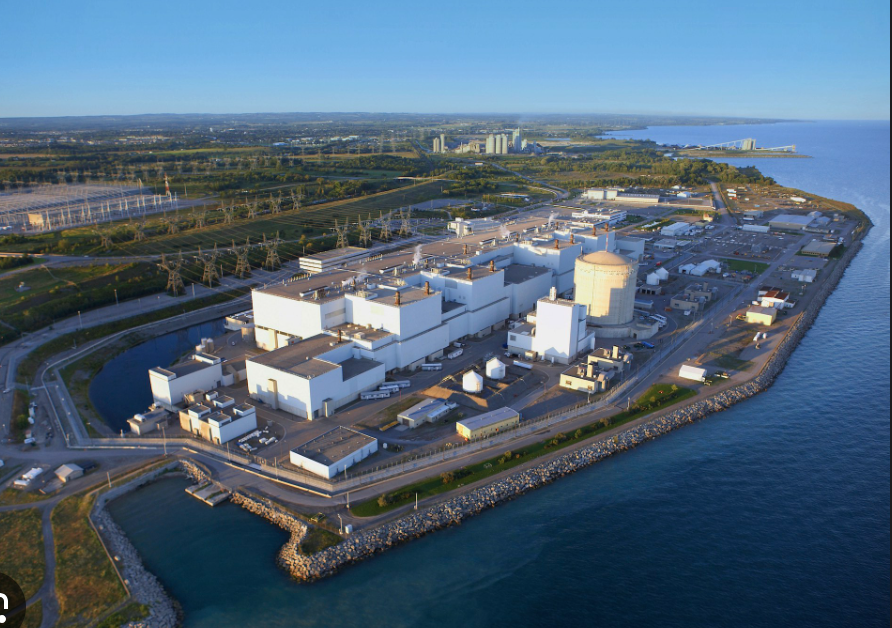
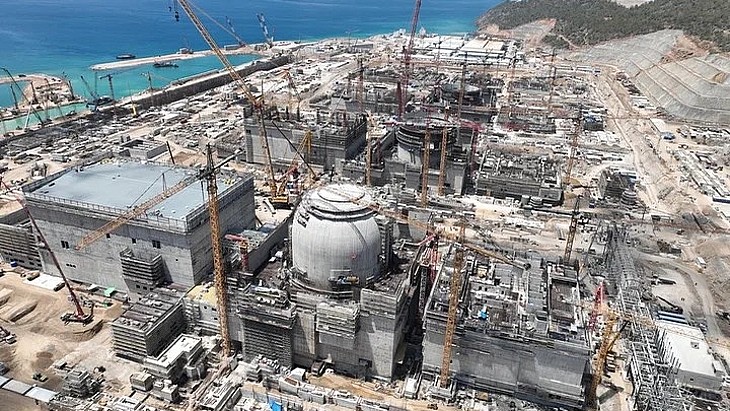
On Nuclear Power, @PeterDutton_MP is making the right call, for Australia’s LONG TERM energy prosperity. #auspol here is @grok’s answer to the questions @AustralianLabor do not want the public to know. Time to end the biggest transfer of wealth away from Australians ever.
Aus Integrity tweet mediaAus Integrity tweet mediaAus Integrity tweet mediaAus Integrity tweet media
English
1
4
15
1.9K
Judith James
Judith James@judithajames11·
@hughriminton Many Councils are already Nuclear free zones Eg Newcastle Lake Macquarie.
English
2
0
12
459
Hugh Riminton
Hugh Riminton@hughriminton·
Opposition energy spokesman Ted O’Brien, whose Fairfax electorate extends to the southern edge of Noosa, told me he’d support a nuclear reactor in his electorate “if there’s a social license” for it. The campaigning against one has already begun..
Hugh Riminton tweet media
English
128
227
696
61.7K
Tony Hooker retweetledi
Nuclear Hazelnut 👷🏻‍♀️
Nuclear Hazelnut 👷🏻‍♀️@NuclearHazelnut·
COP 28 Victory: Uniting for Nuclear Power! @JackAustinNews video highlights the thoughts of 50+ global nuclear advocates & activists, showcasing a significant shift towards embracing nuclear energy. From skepticism to recognition, nuclear power is now a crucial player in decarbonization efforts. 🌎 🎥Check it out: youtu.be/Qq3UX_rBtp0?fe…
YouTube video
YouTube
Nuclear Hazelnut 👷🏻‍♀️ tweet media
Piney Point Village, TX 🇺🇸 English
1
24
85
3.7K
Tony Hooker retweetledi
chris keefer
chris keefer@Dr_Keefer·
"Canada is a big country. (It needs big CANDU reactors.) It has big energy needs, big natural resources, big environmental challenges – and big ideas. One of the biggest came as the country emerged from WWII, punching well above its weight on several fronts (manufacturing, science and engineering among them) – and looking increasingly outward to the needs of global peace and sustainable development. At the time Canada boasted the world’s second-largest nuclear program – birthed in fire with the Manhattan Project as midwife, now unleashed as an unprecedented force for global good. The big idea was to make electricity from a nuclear reactor that Canada could design and build, and to do this cheaper (and of course cleaner) than fossil fuels. It had to run on natural uranium, since Canada has a lot of that, and no enrichment capability. It had to use pressure tubes instead of pressure vessels, partly since Canada lacked a large steel forging capability. The result, by the early 1960s, was CANDU: a reactor that any country could build and fuel if it had the medium-scale industrial capacity of Canada circa 1950s, and access to natural uranium (conveniently one of earth’s abundant elements). The name recalls the spirit of Canadian engineers at the time: not only was this 'hewer of wood, drawer of water' nation now a splitter of atoms (and one of the first), but it was doing so on its own terms, keeping pace with the giant to the south despite that nation’s head start through its nuclear navy program. Canada’s was the nuclear road less travelled: it’s actually very hard to make a reactor work with natural uranium, and maintain commercial viability – the machine has to be comparatively huge, filled with exotic heavy water, and refuelled every day without shutting down. The heavy water can’t leak, the fuel must be extra robust, and the control and safety systems demand numerous in situ detectors and devices – all while minimizing extra materials in the core. But the genius of it all is the pressure-tube design, and the robotic fuelling system that feeds it: hundreds of subcritical microreactors linked to each other by a bath of low-temperature, low-pressure heavy water. The fuelling system must latch to these pressure tubes – daily, at 300 degrees and 100 atmospheres, keeping the coolant flowing while swapping fuel bundles. More power? More pressure tubes: CANDU designs range from 20 to over 1000 megawatts, mainly by adding more pressurized fuel channels. In some ways, it was the world’s first commercial modular reactor. The many side benefits include passive safety: that large heavy-water inventory makes any change to the fission process naturally sluggish, and absorbs excess heat when needed. Both features translate to more time, and time is your friend when managing enormous flows of energy. The design also enables refurbishment – an option now exercised throughout Canada’s nuclear fleet with the recent announcement of an overhaul at the Pickering station near Toronto. Like swapping out the engine of a classic car, new life can be bestowed upon aging but still elegant bodies, rather than starting from scratch. Perhaps the most interesting benefit is CANDU’s ability to run on different fuels, including thorium – more abundant than uranium, and able to ‘breed’ uranium fuel while in the reactor. These things – passive safety, fuelling flexibility, extendable core life – are the stuff of advanced reactors today, and CANDU does this all without needing enrichment of its uranium fuel (presenting both fuel-efficiency and nonproliferation benefits). Small modular reactors are the rage and have their place – small grids, load following, integration with renewables, remote and off-grid locations, industrial applications, newcomer countries. But the big need for big reactors in a big country with big energy needs has not gone away – and Canadians spent billions over 80 years perfecting a big answer to this need." Jeremy Whitlock, PhD
chris keefer tweet media
English
14
53
295
17.7K
Tony Hooker retweetledi
World Nuclear News
World Nuclear News@W_Nuclear_News·
Global #nuclear power generation is forecast to grow by almost 3% annually on average through to 2026, reaching a new record high by 2025, according to @IEA tinyurl.com/y4ju2war
World Nuclear News tweet media
English
1
12
44
23.9K
Tony Hooker retweetledi
James Hopf
James Hopf@HopfJames·
It's clear that nuclear should be categorized and included as a clean energy source in climate policies, given the scientific conesensus that it's overall environmental impacts are negligible compared to fossil and similar to renewables. (Article linkk in reply.) Whether or not nuclear would be competitive is not relavent to such a categorization. All clean sources should be allowed to compete on a fair, level playing field. Under such a competition, the lowest-cost sources will be chosen, and built. BTW, the truth is that including non-intermittent clean sources like nuclear will *reduce* overall power system cost, even if they are more expensive on a pure per kW-hr basis. Getting all our power from intermittent sources would require exhobitant storage and grid upgrade costs. Nuclear also benefits grid reliability and provides huge economic benefits (local jobs and tax base) for local communities. Far more so than other carbon-free options.
James Hopf tweet media
English
15
33
191
7.1K
Tony Hooker retweetledi
Johan Christian Sollid
Johan Christian Sollid@sollidnuclear·
IEA: Denmark is considering nuclear energy :O Today the Electricity 2024 report by the @IEA was released. A lot of people noticed that it's maybe the most positive report about nuclear energy from the IEA in a while. A lot of interesting information was provided in the report. Especially on page 48, the IEA presents a table showing the different policy agendas on nuclear energy of selected countries. Surprisingly under the category ”first considerations”, we find Denmark. The sources for this table are the World Nuclear Association and news reports. It doesn't seem the information comes from @WorldNuclear, as they have a page for "Emerging Nuclear Energy Countries", where Denmark is nowhere to be found. If it's from news reports, then I've missed those reports. Denmark hasn't taken an official stand on nuclear energy since our parliamentary decision in 1985 stating that nuclear energy should not be part of the public energy planning. Maybe the IEA knows something that we don't?
Johan Christian Sollid tweet media
English
16
33
239
14.4K
Tony Hooker retweetledi
Brian Gitt
Brian Gitt@BrianGitt·
France gets sober. It scraps renewable energy targets & prioritizes nuclear in new energy bill. msn.com/en-gb/news/wor…
English
63
659
3K
130.9K
Tony Hooker retweetledi
Michael McLean
Michael McLean@cornoisseur·
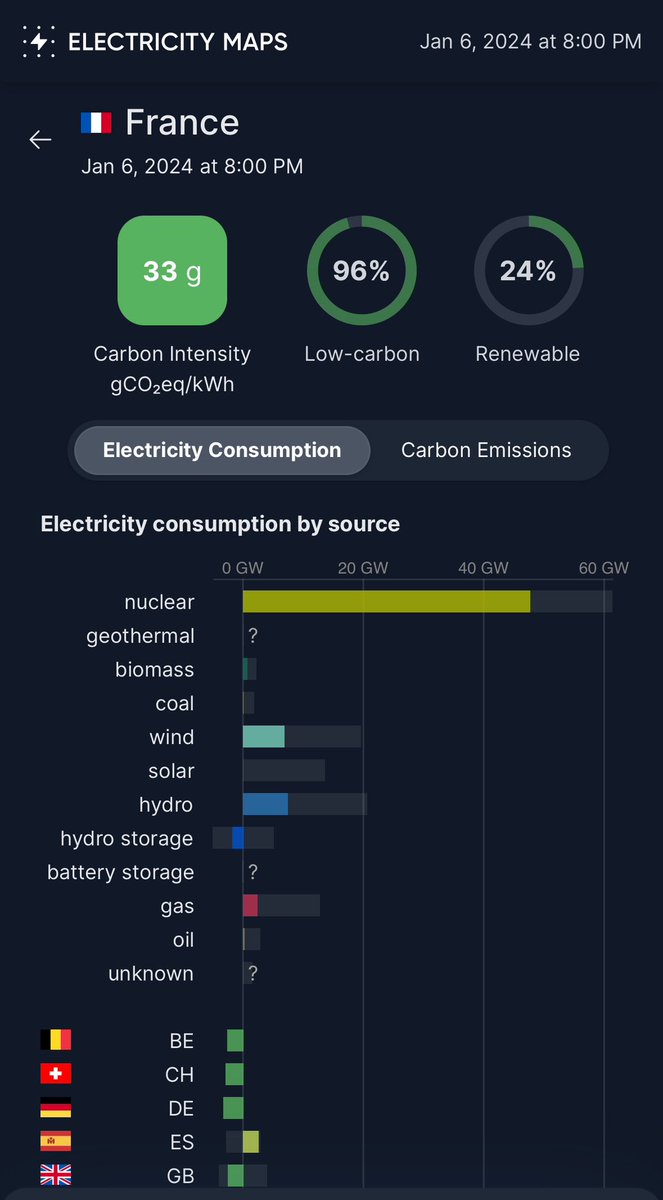
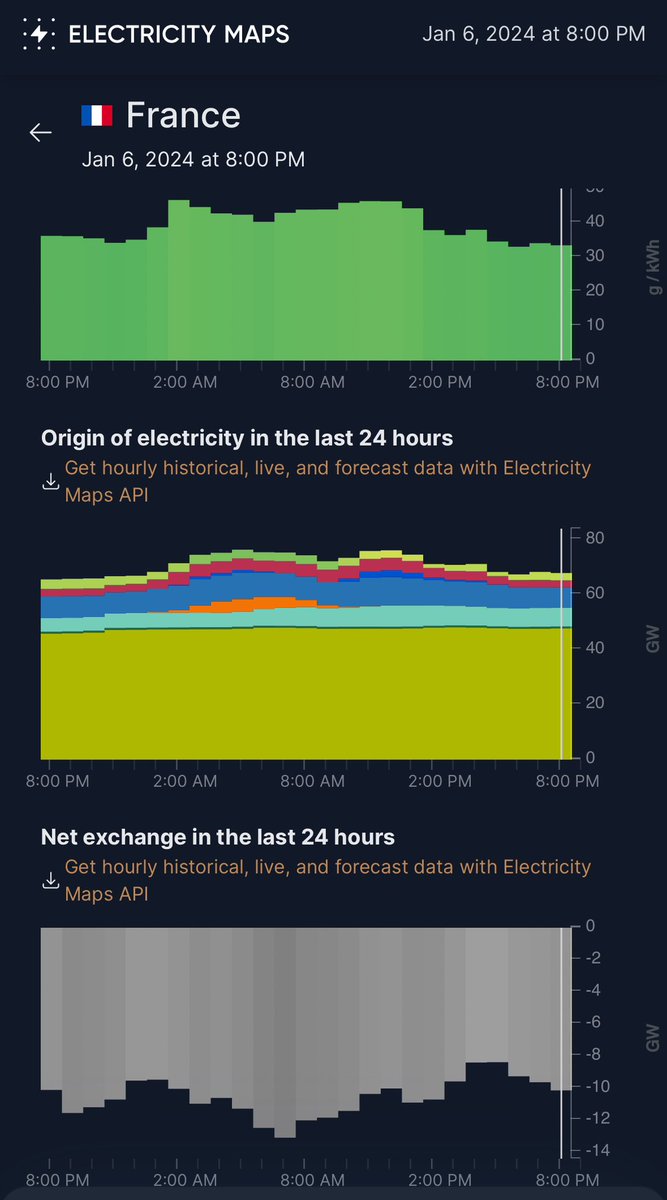
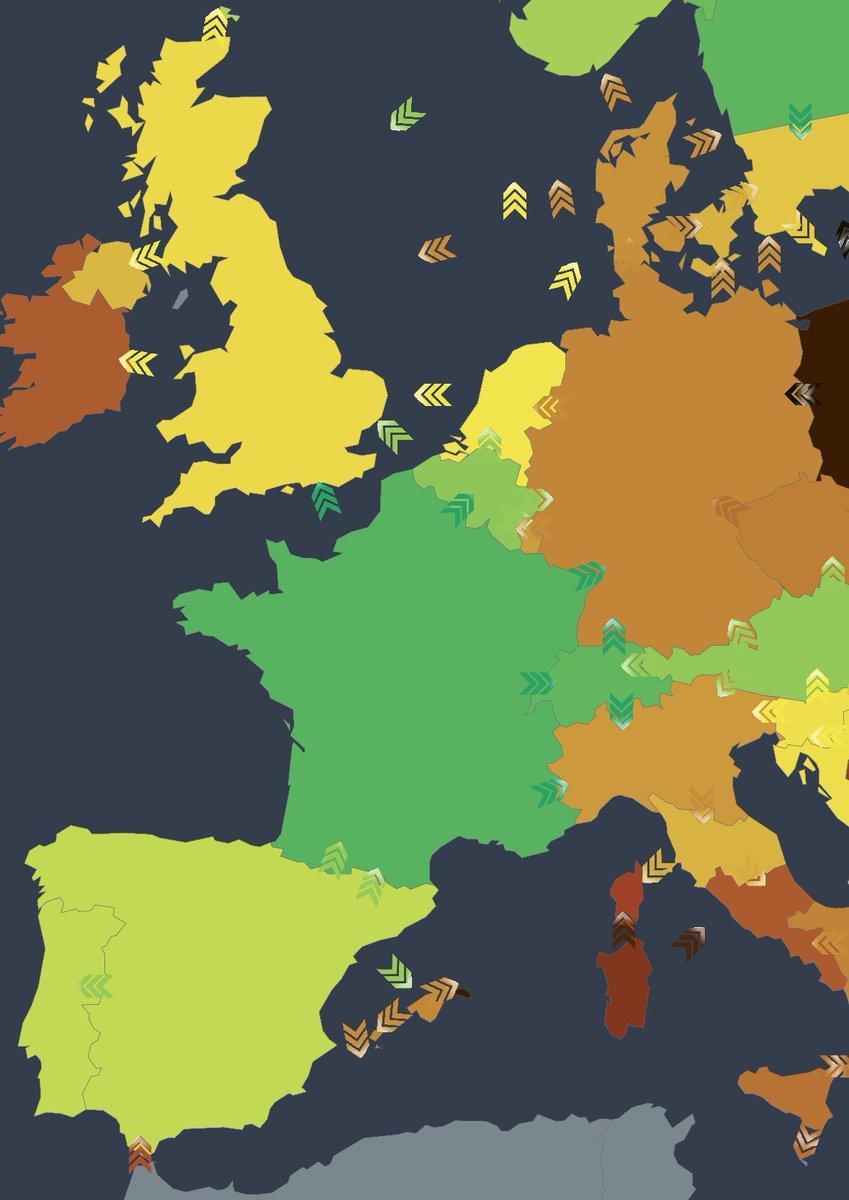
🇫🇷 France is exporting so much power to Europe right now. And the crazy part is that they plan on bringing 6.9GW more nuclear capacity online this month. Nice!
Michael McLean tweet mediaMichael McLean tweet mediaMichael McLean tweet media
English
81
471
4.3K
455.9K
Tony Hooker retweetledi
Matt Loszak
Matt Loszak@MattLoszak·
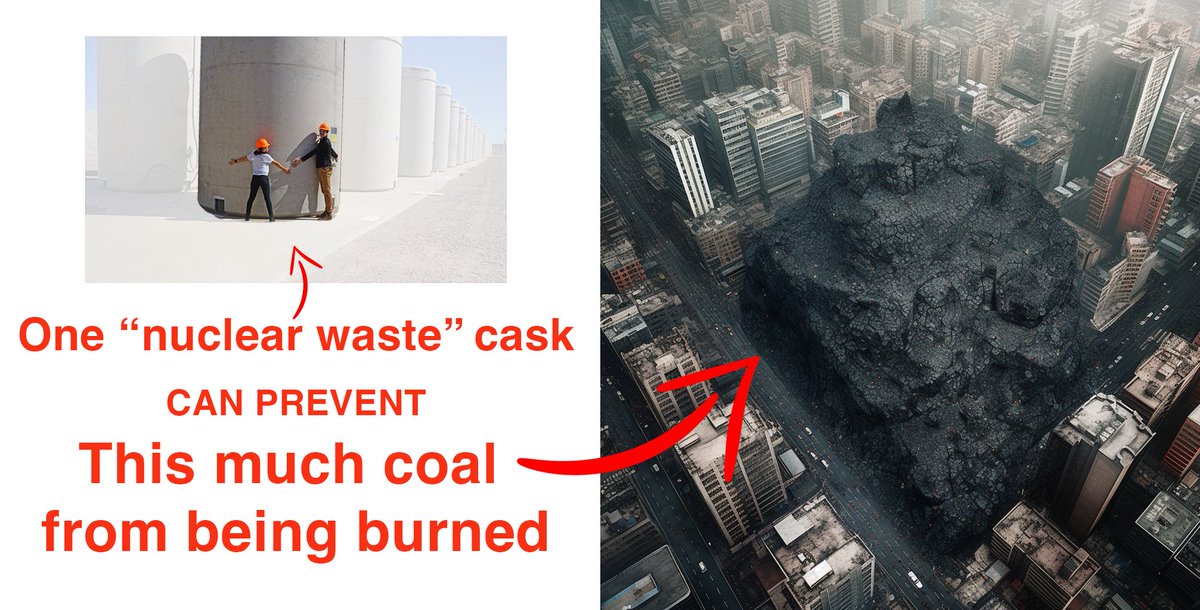
Each “nuclear waste” cask can prevent 4 BILLION lbs of CO2 emissions. This is hard to visualize, so here’s the amount of coal you’d have to burn to produce that much CO2!
Matt Loszak tweet media
English
31
216
849
98.4K
Tony Hooker retweetledi
Johan Christian Sollid
Johan Christian Sollid@sollidnuclear·
🇸🇪 Nuclear energy is the single most important measure Yesterday, the Swedish Government presented their new climate strategy. Sweden has the most ambitious climate target in the world. They need to reach net zero already by 2045. All fossil-free energy types are important, but in Sweden developed nuclear power is the most important measure if we are to double electricity production and it is to be completely fossil-free, said Ulf Kristersson (@SwedishPM) at the press conference.
Johan Christian Sollid tweet media
English
20
138
650
120.6K