Ali Javed

157 posts

Ali Javed

Ali Javed

@_ali_javed_

Founder & CEO @nousnetwork

New Delhi, India Katılım Ağustos 2018
44 Takip Edilen1.2K Takipçiler
Ali Javed retweetledi

nous
nous@nousnetwork·
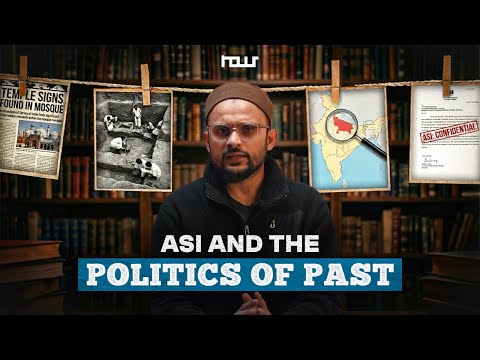
Inside the ASI: The Making of Hindutva Archaeology Ever wondered how archaeological discoveries shape India's political and legal narratives? This video breaks down the stark contrasts in how different historical sites are handled by the Archaeological Survey of India (ASI): • Keeladi vs. Sambhal: Why a highly advanced, scientific 2,000-year-old Sangam Age secular site in Keeladi (Tamil Nadu) faces funding delays, transfers, and rewriting [00:01:23], while sensitive mosque-temple disputes like the Sambhal Jama Masjid are fast-tracked and televised instantly [00:03:15]. • The Ayodhya Precedent: A deeper look into how the rushed 2003 ASI report on the Babri Masjid set a massive precedent [00:17:17], heavily weighing in judicial outcomes despite ambiguity and critique from prominent archaeologists [00:18:13]. • Weaponizing Archaeology: How strategic leaks and media disclosures of "temple traces" create concrete public perception long before formal, scientific reports are ever finalized [00:19:38]. Is history being objectively uncovered, or is it selectively curated to support modern-day narratives? - The Bhojshala Judgement & ASI Findings: Why this analysis is more vital than ever following the Madhya Pradesh High Court's landmark ruling. The court declared the Dhar complex a Hindu temple and halted Friday namaz, relying entirely on a 2,000+ page ASI scientific survey report which found:  • 94 stone sculptures and broken statues of Hindu deities (Shiva, Vishnu, Ganesha).  • Over 150 Sanskrit inscriptions and Devanagari shlokas dedicating the site to learning and Goddess Saraswati.  • Structural proof that the 11th-century Parmar-era structure was later modified into a mosque using pre-existing temple materials (including 106 pillars and lotus motifs).  Is India's historical and social fabric being systematically re-mapped through institutional archaeology? Watch the full investigation here: youtu.be/rdqbb_m2CAk
YouTube video
YouTube
English
1
7
10
421
Ali Javed retweetledi
nous
nous@nousnetwork·
Nellie Massacre 1983 was Assam’s darkest chapter. Ali Javed examines how the refugee crisis during the 1971 war evolved into a political and social fault line in Assam. Watch Here: zurl.co/HmCIY #Assam #Nellie #آسام_چناؤ #एनआरसी
English
0
5
7
191
Ali Javed
Ali Javed@_ali_javed_·
The Decolonial Inversion: Anatomy of the Neo-Hindutva Civilisational State is a long-form political essay in which I argue that India's alignment with the United States and Israel — its silence on Gaza, its validation of the strikes on Iran, its abandonment of a millennium of civilisational entanglement with the Persian world — is not a foreign policy choice but a structural inevitability generated by the ideological formation now governing the Indian state. The essay makes four contributions to the existing literature. First, it names and maps Neo-Hindutva as a distinct political formation — not a relapse into the communalism of an earlier era but an original Indian political species with its own metaphysical foundations, its own theory of history, its own political economy, and its own geopolitical logic. Where existing scholarship — Jaffrelot, Chatterjee, Thapar — has documented what Hindu nationalism does, this essay asks what it is: the five axioms, the four intellectual formations, the mechanisms by which it has become the constitutive logic of the Indian state rather than a movement within it. Second, it identifies two intellectual mechanisms — the Decolonial Inversion and the Shah Waliullah Trap — that explain why Neo-Hindutva is uniquely resistant to the critiques most commonly deployed against it. The Decolonial Inversion converts the dominant majority into the historical victim, making the anti-Muslim project immune to human rights challenge by recasting it as decolonisation. The Waliullah Trap forecloses the possibility of any Muslim identity — religious or secular, assimilated or devout — being recognised as fully loyal, by tracing every major tradition in South Asian Islamic thought to a single genealogy that has been retroactively criminalised. Third, it makes the geopolitical argument structurally rather than contingently: India's alignment with the US-Israel axis is not explained by shared strategic interests, which are real but insufficient, but by the fact that Zionism and Hindutva are, as far as the literature identifies, the only two political ideologies in the modern world to have successfully integrated divinity with territoriality into a functioning sovereign state — and that they share a common enemy map, a common immunisation strategy against human rights critique, and a century of intellectual genealogy running from Savarkar's explicit admiration for the Zionist project through to Modi's Knesset address two days before US-Israeli strikes on Iran began. Fourth, it opens the question of what a counter-theory adequate to this formation would require — arguing that the secular liberal response has failed because it vacated the metaphysical terrain where Neo-Hindutva actually operates, and that the necessary counter must be generative rather than defensive: recovering the Indo-Islamic synthesis as a co-constitutive achievement, and developing Islamic intellectual tradition not as a claim requiring special pleading but as a framework capable of providing solutions to shared human problems in a language any honest interlocutor can engage. Read the full article at nousnetwork.substack.com/p/the-decoloni…
Ali Javed tweet media
English
1
0
3
143
Ali Javed
Ali Javed@_ali_javed_·
Kerala is often called India’s “model state.” But does that model include Muslims or leave them behind? This article goes beyond the usual narrative. It looks at: Representation vs real power, Data on jobs, education, and land. The role of Gulf migration vs state support And how “inclusion” can still be conditional The picture that emerges is uncomfortable: ➡️ Progress exists ➡️ But equity does not Kerala may be better than the rest of India — but that doesn’t mean it is equal. Read the full analysis @nousnetwork nousnetwork.org/the-kerala-mus…
English
0
7
11
268
Ali Javed
Ali Javed@_ali_javed_·
For decades, the story of Muslims in Assam has been reduced to a single word - “outsiders.” But history tells a very different story. From centuries of integration to the politics of erasure, this article unpacks how a complex past has been simplified into a narrative of exclusion. Read here: nousnetwork.org/history-of-mus… Because what’s at stake is not just identity - but the rewriting of history itself.
English
0
1
3
135
Ali Javed retweetledi
Ghazala Wahab
Ghazala Wahab@ghazalawahab·
I spoke with @bushrakhanum86 on US' war against Iran and how Iran has dug in for a long haul. It's objectives are no longer national, but global, along with Russia and China. Do watch youtu.be/-Ru3xJy7vGc?si…
YouTube video
YouTube
English
1
8
13
1.2K
Ali Javed retweetledi
nous
nous@nousnetwork·
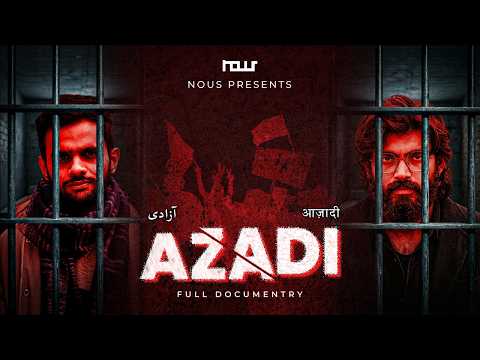
Six years. No trial. Student activists Umar Khalid and Sharjeel Imam remain behind bars. Is their crime dissent or an articulate Muslim voice? The full story, coming soon.
English
0
6
13
325
Ali Javed retweetledi
nous
nous@nousnetwork·
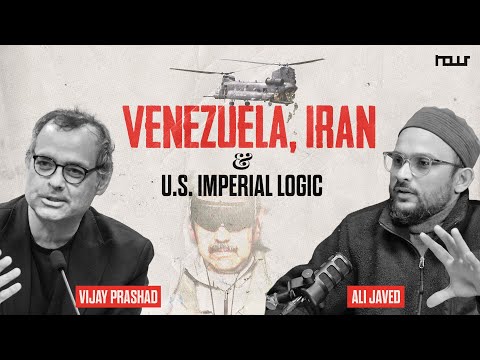
Dr. Vijay Prashad explains why Venezuela became a U.S. target after Hugo Chávez rejected the post–Cold War order, challenged oil interests, and redirected wealth toward social programs and regional solidarity.
English
1
6
17
1.4K
Ali Javed retweetledi
nous
nous@nousnetwork·
Origin of the Personal Law Board Maulana Khalid Saifullah Rahmani, president of AIMPLB, traces the origins of the All India Muslim Personal Law Board, situating its formation in the early 1970s amid anxieties over legal identity and state intervention. Full Video: zurl.co/zdtaw
English
0
3
4
175
Ali Javed retweetledi
nous
nous@nousnetwork·
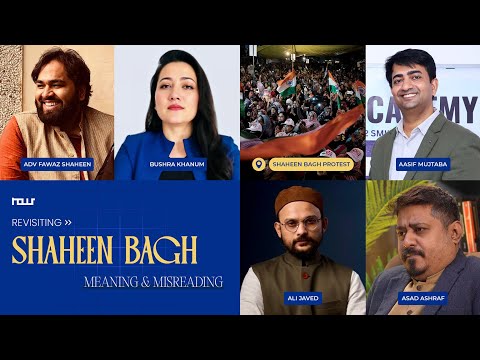
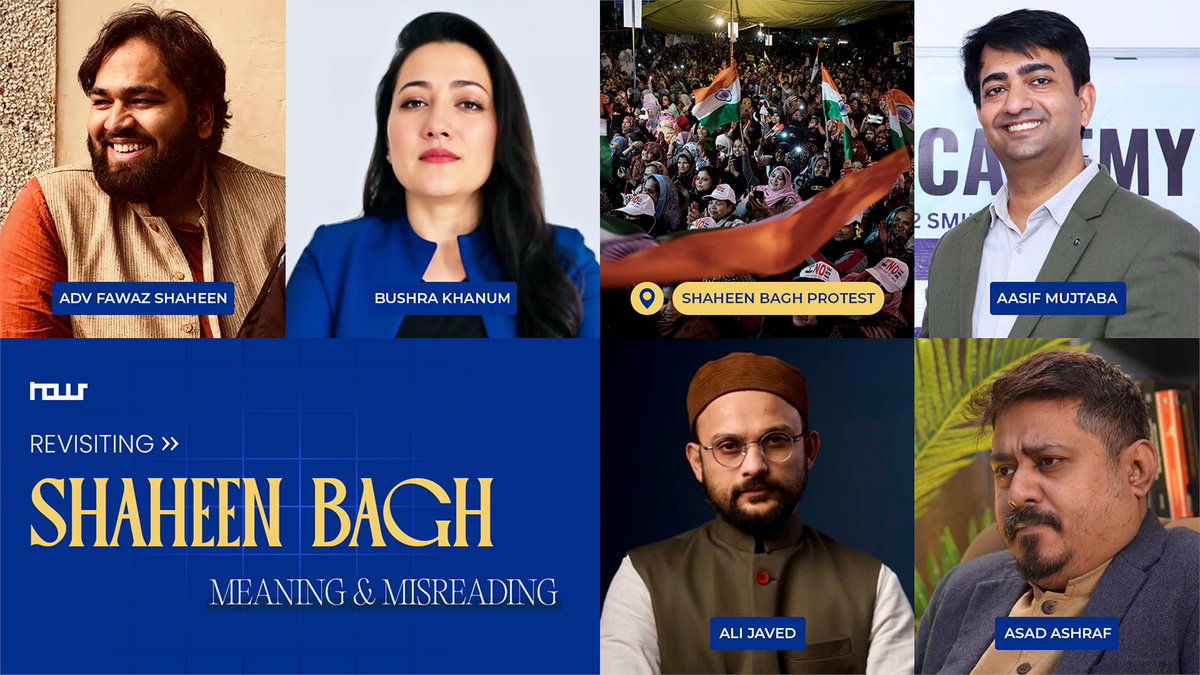
Shaheen Bagh was not just a protest against the CAA; it was a rupture in how Indian Muslims are seen, heard, and allowed to act politically. Beyond fear, symbolism, or spectacle, it marked a shift toward the assertion of agency by Muslim community that refused systemic marginalisation. Watch here: youtu.be/HGVa1mJqU7Q #ShaheenBagh #CAA #NRC #NPR #Jamia #AMU @_ali_javed_ @MujtabaAasif @Asad_Ashraf88 @bushrakhanum86 @Fawaz_Shaheen
YouTube video
YouTube
nous tweet media
English
2
6
11
274
Ali Javed retweetledi
nous
nous@nousnetwork·
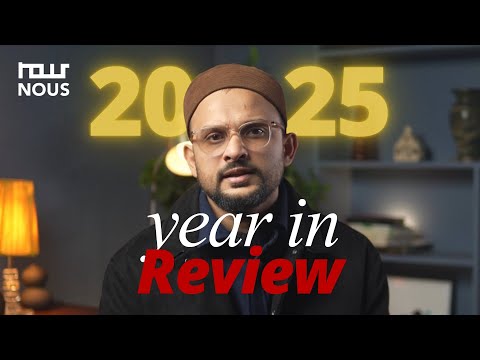
As we step into a new year, we’re grateful for your support in helping Nous build deeper, evidence-based public conversations on Indian Muslims, law, history, culture, and rights. In 2025, our work focused on restoring dignity through epistemic power—turning research and lived realities into public knowledge. Watch our Year-End Review: youtu.be/NA6T6R7TtZ8 Support Nous: nousnetwork.org/#/portal/ #2025InReview #Nous #PublicKnowledge #ThinkTank
YouTube video
YouTube
English
0
3
9
350
Ali Javed retweetledi
nous
nous@nousnetwork·
Draft Constitution had a proposal to grant reservation to all minorities in proportion to their population, but later removed with a promise. Says IPS Abdul Rahman in a conversation with Ali Javed. Full video: youtu.be/Y6BBN-zHHSs #DraftConstitution #MinorityRights #Reservation
YouTube video
YouTube
English
0
2
11
263