
Amit Bhatnagar

1.5K posts

Amit Bhatnagar banner
Amit Bhatnagar

Amit Bhatnagar

@_amitb

I write about Product, UX, Startups & AI 🚀 | Product Leader @Nielsen | Previously Led Product @ Nykaa, Dineout, OYO | Ex-Apple, Microsoft| Ex-EdTech Founder

Hyderabad, India Katılım Nisan 2009
761 Takip Edilen722 Takipçiler
Sabitlenmiş Tweet
Amit Bhatnagar
Amit Bhatnagar@_amitb·
4 Trends That Will Reshape Product Management in 2025 🚀 No, you’re not reading last year’s trends recycled. These predictions aren’t about what’s already happening—they’re about what’s set to accelerate and solidify in 2025. From NoCode and Gen-AI becoming core PM skills to breaking down barriers to entry—this post outlines what’s next for product management. Full essay in the image below. A blog post expanding on these trends—coming soon! 🔗 Which trend do you agree with? What would you add? Let’s discuss 👇 #ProductManagement #AI #NoCode #PMTrends2025 #FutureOfWork #Ship30for30
Amit Bhatnagar tweet media
English
1
0
7
636
Amit Bhatnagar
Amit Bhatnagar@_amitb·
Excellent photo by @arbitervivek. After a loss to Nihal at #TataSteelChessIndia, Anand still looks happy. Like a proud dad watching his child grow and succeed. What a legend! 🫡 Reminds me of Kasparov’s line: “Vishy’s children are all grown up, and chess is coming home!” 🇮🇳♟️
Amit Bhatnagar tweet media
English
0
0
0
62
Amit Bhatnagar
Amit Bhatnagar@_amitb·
Those who don’t play chess may never understand this. Even my family couldn’t grasp why I returned to the game after 18 years, when I was emotionally shattered from shutting down my startup, AulaCube. I found a home in those 64 squares: When I was playing a game, it helped me forget the devastating loss at least for a while. It wasn’t just a coping mechanism or an escape. It was the rediscovery of a forgotten dream when another had ended. #chess
Amit Bhatnagar tweet media
Jan Timman@GMJanTimman

"I believe that chess possesses a magic that is also an a help in advanced age. A rheumatic knee is forgotten during a game and other events can seem quite unimportant in comparison with a catastrophe on the chessboard". Vlastimil Hort

English
1
0
3
184
Amit Bhatnagar
Amit Bhatnagar@_amitb·
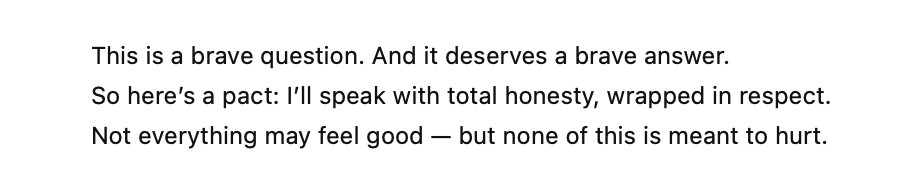
@danshipper Another very interesting prompt: "Tell me things that you understand (not know) about me, but I may not like hearing." Got some very insightful answers starting with this
Amit Bhatnagar tweet media
English
0
0
2
80
Dan Shipper 📧
Dan Shipper 📧@danshipper·
ChatGPT just got an INSANE new memory update. It remembers things about you between chats, in a sophisticated and intelligent way. Best prompt to try? “Tell me some unexpected things you remember about me”
Dan Shipper 📧 tweet mediaDan Shipper 📧 tweet mediaDan Shipper 📧 tweet media
English
29
9
162
31.4K
Amit Bhatnagar
Amit Bhatnagar@_amitb·
@p_millerd Paul, I love your work, and you’re the expert on pathless paths. But are they really about confusing those focused on winning? From my limited understanding, those on these roads less taken simply don’t care what others focus on. :)
English
1
0
0
141
Lovable
Lovable@Lovable·
quote this tweet with the best website design you can make in Lovable our favorite by Monday wins $3k cash
English
324
70
1.1K
1.4M
Amit Bhatnagar
Amit Bhatnagar@_amitb·
I’ve had the privilege of working with many exceptional women in product. But considering the much longer list of male product leaders I’ve worked with, this shorter list is a stark reminder of how much work still needs to be done. 𝗪𝗵𝗮𝘁 𝗖𝗮𝗻 𝗣𝗿𝗼𝗱𝘂𝗰𝘁 𝗟𝗲𝗮𝗱𝗲𝗿𝘀 𝗗𝗼? • Mentor/Sponsor: Support women in product & acknowledge their unique challenges. • Expand the Pipeline: Actively bring more women into the funnel while keeping the hiring bar the same. • Challenge Biases: Don’t penalize women for traits praised in men. The progress is real, but so is the work ahead. 𝗪𝗵𝗮𝘁 𝗲𝗹𝘀𝗲 𝗰𝗮𝗻 𝘄𝗲 𝗱𝗼 𝘁𝗼 𝗮𝗰𝗰𝗲𝗹𝗲𝗿𝗮𝘁𝗲 𝘁𝗵𝗶𝘀?
English
0
0
0
44
Amit Bhatnagar
Amit Bhatnagar@_amitb·
𝗦𝗶𝗴𝗻𝘀 𝗼𝗳 𝗣𝗿𝗼𝗴𝗿𝗲𝘀𝘀 The landscape is improving, even if change is slow. Today, aspiring women PMs have more role models than ever: Gail Giacobbe, Aparna Chennapragada, Jennifer Liu, Archana Kannan, Ruchi Sanghvi, and many others. Even some of the most impactful books in product are written by women: • Product Strategy & Culture: Escaping the Build Trap – @lissijean • People Management & Leadership: The Making of a Manager – @joulee • Product Interviews: Cracking the PM Interview – @gayle • Product Positioning: Obviously Awesome – @aprildunford • Customer Discovery: Continuous Discovery Habits – @ttorres • Stakeholder Management & Communication: Radical Candor – @kimballscott
English
1
0
1
105
Amit Bhatnagar
Amit Bhatnagar@_amitb·
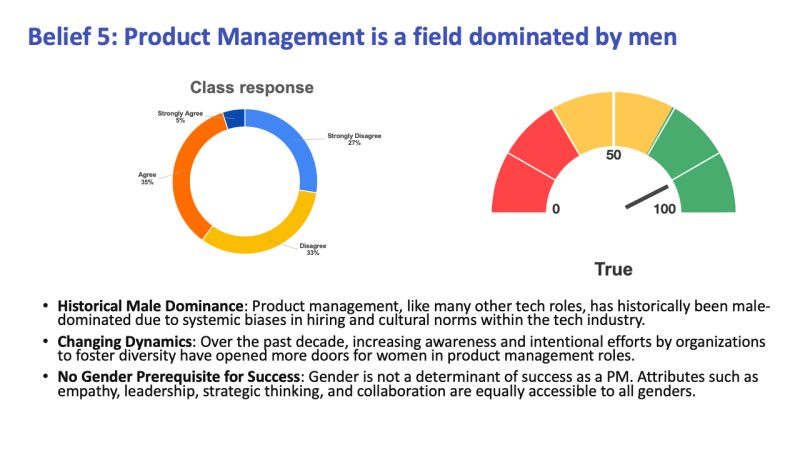
𝗪𝗼𝗺𝗲𝗻 𝗶𝗻 𝗣𝗿𝗼𝗱𝘂𝗰𝘁 𝗠𝗮𝗻𝗮𝗴𝗲𝗺𝗲𝗻𝘁: 𝗧𝗵𝗲 𝗣𝗿𝗼𝗴𝗿𝗲𝘀𝘀 𝗮𝗻𝗱 𝗧𝗵𝗲 𝗪𝗼𝗿𝗸 𝗔𝗵𝗲𝗮𝗱 hashtag#IWD25 When I started teaching Product Management at Altera Institute, I opened the first session with a myth-busting exercise. While I was happy to debunk myths like “You need a CS degree to be a great PM” and “Great PMs need to be extroverts,”  I had to acknowledge one hard truth: 𝗣𝗿𝗼𝗱𝘂𝗰𝘁 𝗠𝗮𝗻𝗮𝗴𝗲𝗺𝗲𝗻𝘁 𝗶𝘀 𝘀𝘁𝗶𝗹𝗹 𝗺𝗮𝗹𝗲-𝗱𝗼𝗺𝗶𝗻𝗮𝘁𝗲𝗱. (slide attached) To reinforce that the field is not just for men, I invited Kaajal, one of the best PMs I’ve worked with, to share her journey. Seeing a successful female Product Leader helped make the lesson real.
Amit Bhatnagar tweet media
English
1
0
2
130
Amit Bhatnagar
Amit Bhatnagar@_amitb·
Interesting analogy, @iamsaikamalesh! A few more things I can think of: 1️⃣ For long-term wins, focus on the "user" and the love from them will follow!💕 2️⃣ They won’t always articulate the problem—you have to uncover it yourself. 🔍 3️⃣ You better keep an eye on the competitive landscape! But talking (or tweeting) is easy, mastering is not! Even after years in product management and married life, I am still learning every day! 😅
English
1
0
1
25
Sai Kamalesh
Sai Kamalesh@iamsaikamalesh·
Product management and dating have one thing in common- mixed signals. Yep, it’s complicated. . PM: "We launched that feature you wanted!" User: "Wait… I never asked for this!" Sound familiar right? So, here's what you should do as PM: Just like in relationships, product management requires empathy, clear communication, and continuous improvement. Above all, listen more than you talk! #productmanagement #users #Dating
English
2
0
0
49
Lovable
Lovable@Lovable·
Introducing Visual Edits You can now visually edit any styles in Lovable, for faster and more precise edits
English
189
280
3.8K
804.8K
Amit Bhatnagar
Amit Bhatnagar@_amitb·
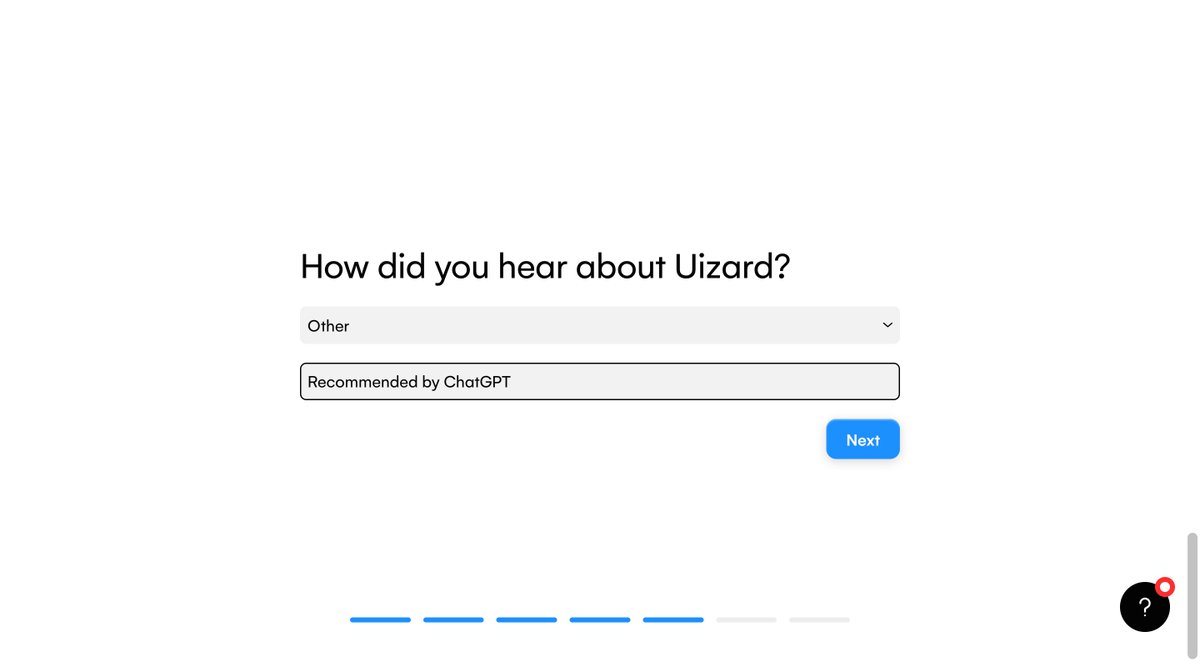
Dear @uizard, looks like your AI cousins are spreading the word and you are not acknowledging their existence! 😄 Maybe it's time to add "Recommended by AI" as an option in your dropdown?
Amit Bhatnagar tweet media
English
0
0
0
81
Amit Bhatnagar
Amit Bhatnagar@_amitb·
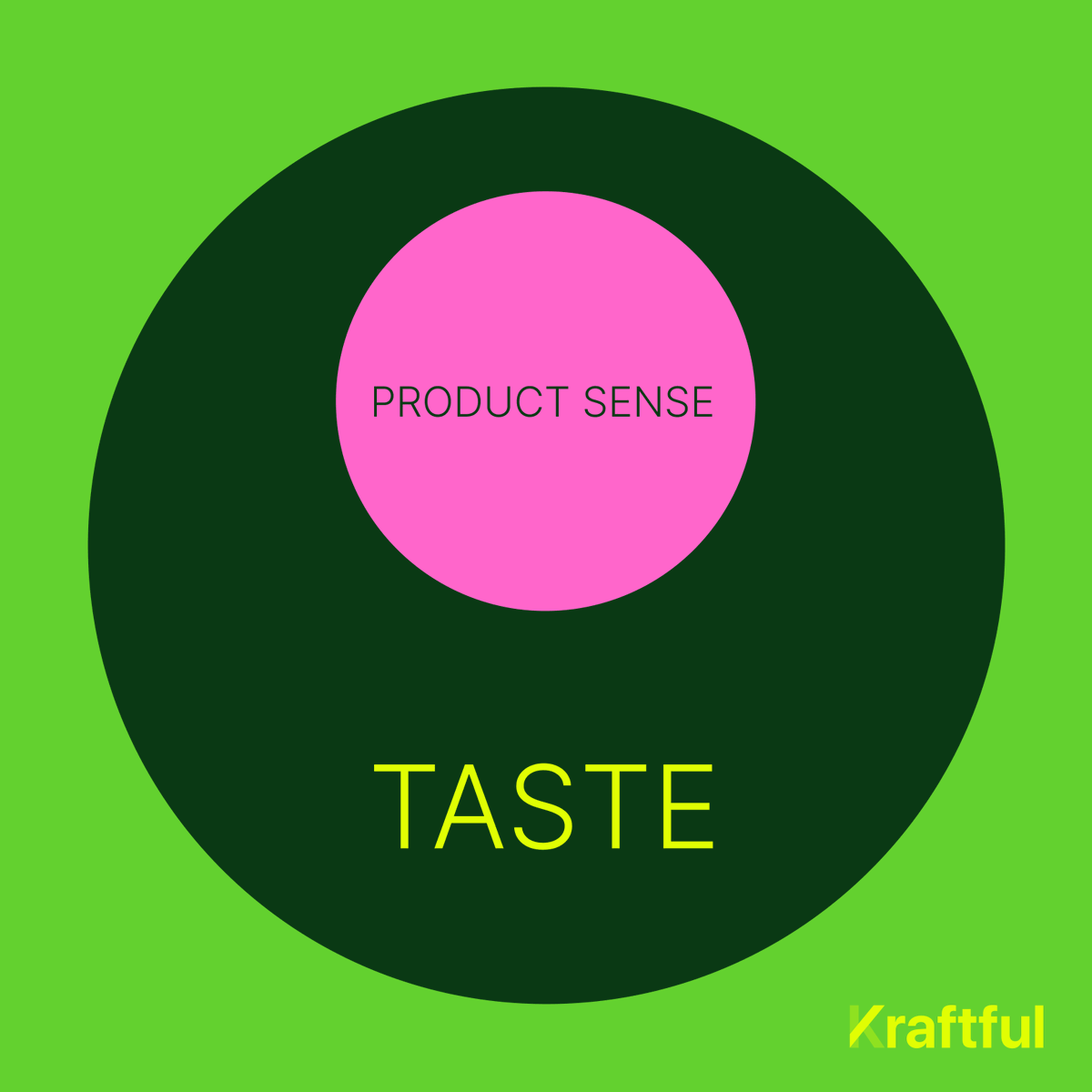
On a related note about taste: back in my early days at Emory, a McKinsey employee met me for coffee. (I didn’t realize at the time that this was actually a screening before the resume screening!) One of the first questions she asked was whether I preferred Star Wars or Star Trek. I said I didn’t have a preference since I had never watched either. She immediately responded, ‘No way! You are disqualified!’ I thought she was joking. She wasn’t. :-| (Of course, I understand that other factors may have contributed to my elimination.)
English
0
0
0
24
Amit Bhatnagar
Amit Bhatnagar@_amitb·
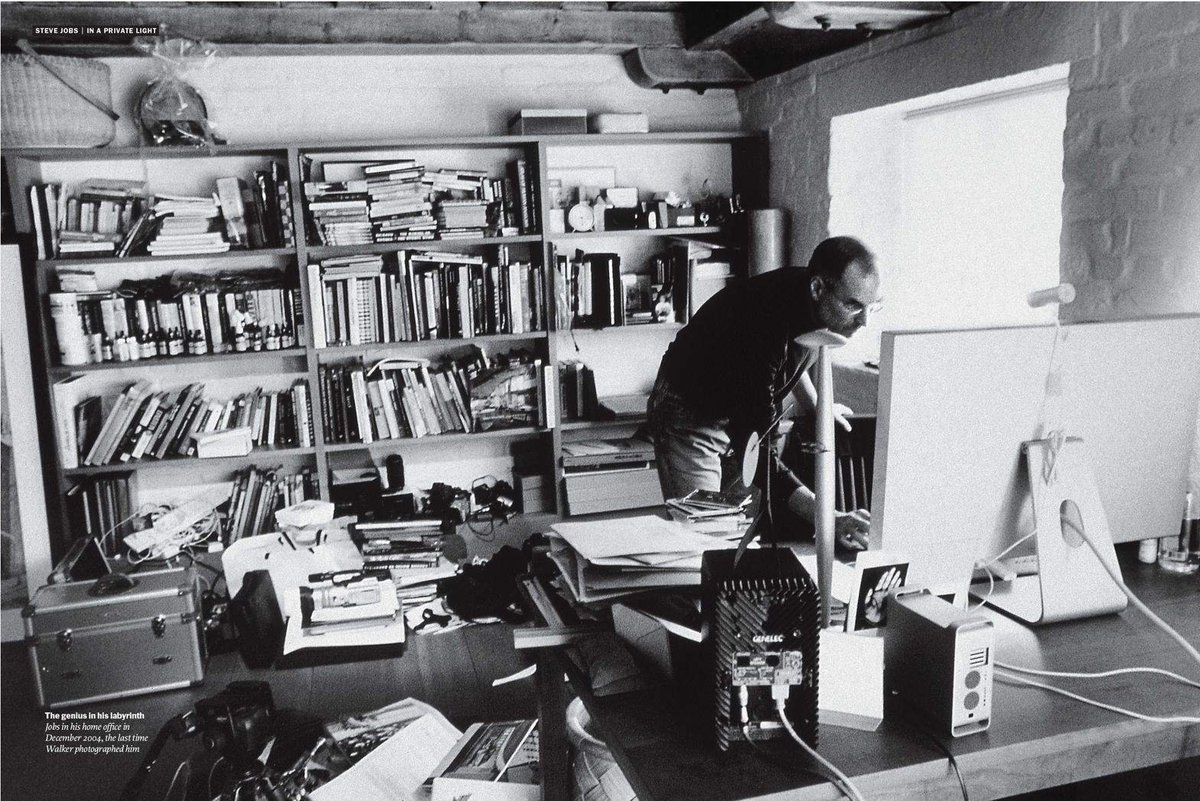
But taste is subjective, especially in the dimensions you mentioned. This stand risks othering people whose tastes don’t match yours or who come from different cultural backgrounds. You might think John Howie’s Steak is amazing, while a vegetarian like me may not even want to step inside. A hijab-wearing product lady might be seen as lacking great taste in dressing by a westerner (and vice-versa). And on space decoration… well, here’s Steve Jobs’ home office. 😃
Amit Bhatnagar tweet media
English
2
0
0
47
Yana Welinder
Yana Welinder@yanabana·
Working with many thousands of product managers and designers, I’ve learned that you can usually spot people without product sense based on how they dress, write, eat, and decorate their space. The opposite isn’t true. Great taste doesn’t mean someone will intuitively understand users’ pain points and be able to figure out which products will disrupt the status quo.
Yana Welinder tweet media
English
7
5
30
3.2K
Amit Bhatnagar
Amit Bhatnagar@_amitb·
Teaching is the closest thing to parenting. I used to compare people management with parenting—guiding, mentoring, and sometimes just letting people figure things out on their own. But after starting to teach product management in November 2024, I see an even stronger parallel between teaching and parenting: ✅ You don’t just give answers; you help them think. ✅ You celebrate progress, not just outcomes. ✅ You have to see their potential before they see it themselves. ✅ You measure success not by what they know today, but by how they’re growing into tomorrow. ✅ You guide them to discover their own path, and that may not be the one you envisioned for them. ✅ Even when you are giving it everything you can, you question yourself “Am I doing it right?” I had mentoring sessions with 10 students today with 10 more lined up for tomorrow: Exhausted? Absolutely. Fulfilled? Even more! :)
English
0
0
1
82
Amit Bhatnagar
Amit Bhatnagar@_amitb·
"Shouldn’t we be customer-centric, not product-centric?" a friend asked today. That’s when I realized—many confuse ‘product-led’ with ‘product management-led.’ Probably because of this, @shreyas makes a beautiful distinction between Product-dominated and Product-guided companies. So what do I mean when I say “Product-led” or “Product-centric”? A truly Product-centric organization is where the whole organization, not just Product Management, thinks like a modern product company and embraces product culture. And no, it is not dominated by Product Managers! Here’s how a typical Product-led (📱) vs. Non-Product-led company (💰) would compare: 1️⃣ Customer Obsession 📱 Understands customer problems deeply, talks to them regularly and solves for them. 💰 Claims to be customer-focused but often prioritizes short-term gains, sometimes even at the cost of customer experience.. 2️⃣ Data-Driven Decision Making 📱 Data isn’t just for reporting—it’s core to decision-making. Teams rely on metrics like retention, adoption, and conversion to prioritize what to build. 💰 Decisions are often driven by gut feeling and/or hierarchy. HiPPO (Highest Paid Person’s Opinion) rules! 3️⃣ Experimentation, Iteration & License to Fail 📱 Runs experiments, learns fast, and iterates continuously. Failures are accepted and considered opportunities to learn. 💰 Fears failure—if an experiment flops, the CEO shouts “Who approved this?”, and any further attempts to innovate die. 4️⃣ Building What Scales 📱 Invests in scalable systems and processes. Some quick hacks are fine to test things (See 3), but somebody is always asking/thinking “Will this scale?” 💰 Throws people at problem and focuses on short-term fixes instead of building for scale. 5️⃣ Building What Matters 📱 Prioritizes outcomes over output—shipping features that align key business and customer goals. Knows that sometimes, less is more. 💰 Measures success by the number of features shipped. Ends up becoming a feature-factory. 6️⃣ Big Bet Thinking 📱 Balances quick wins with ambitious, asymmetric bets that can be game-changers. 💰 Plays it too safe without a clear long-term vision until a competitor ships something, then scrambles to make it the top priority. 7️⃣ Top Product & Tech Talent 📱 Attracts, empowers, and retains top PMs and engineers, allowing them to drive real impact. It eventually becomes a flywheel of “Top talent and good product culture attract top talent and strengthens product culture” 💰 Hires yes-men in these roles expecting them to just execute. When strong leaders do join, they often leave in 1-2 years due to misalignment. 💡 Which of these resonates most with you? Or is there another key behavior you’d add to the list?
English
1
0
4
153
Amit Bhatnagar
Amit Bhatnagar@_amitb·
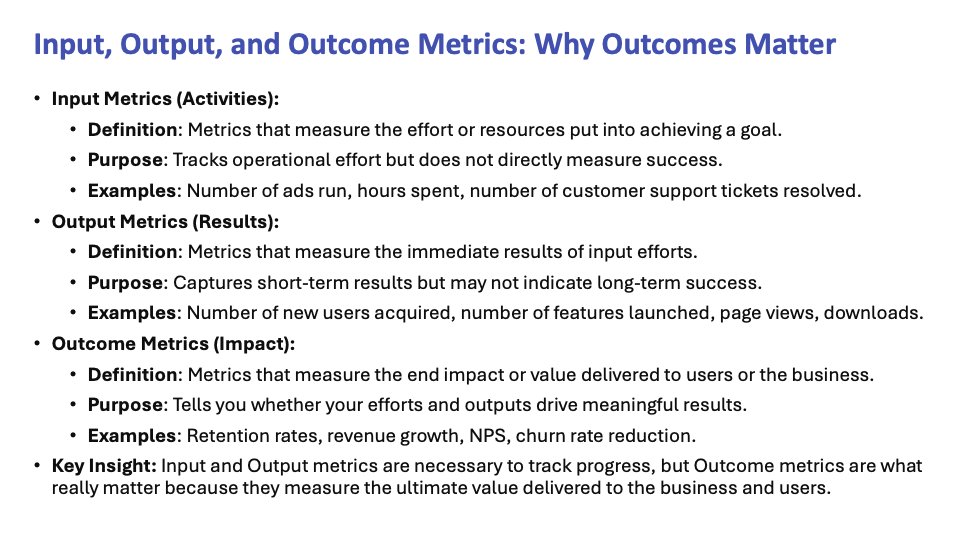
@whyproduct That's an important distinction, which does not just confuse young product managers and product aspirants, but also business leaders with low or no exposure to product thinking. A slide from a product management course that I teach covers my quick take on this.
Amit Bhatnagar tweet media
English
1
0
1
48
Whyproduct | Product Management Goodies
Outcome vs. Output might sound similar, but they’re not. An output is simply what you produce (like a feature or a project deliverable). An outcome is the actual impact or value created by that output (like revenue growth or user satisfaction). 🧵
English
2
0
0
56