Anno Christopher Kurth

19 posts

Anno Christopher Kurth

Anno Christopher Kurth

@ac_kurth

Computational neuroscientist | PostDoc @RIKEN_CBS working with @TAsabuki | Cortical circuits | Neural data |

Aachen, Deutschland Katılım Eylül 2022
334 Takip Edilen60 Takipçiler
Anno Christopher Kurth
Anno Christopher Kurth@ac_kurth·
Neurowissenschaftliche Forschung scheint durch Überinterpretation der in sehr spezifischen Kontexten erhobenen Daten anfällig dafür, für solche Ideologeme missbraucht zu werden. Gibt es hier strukturelle Parallelen zum Psychologismus(streit), mit einem biologistischen Einschlag?
Daniel-Pascal Zorn@Fionnindy

Die Epstein-Files zeigen übrigens auch, dass die dort involvierten Wissenschaftler unter ‚intellektuellem Austausch mit Epstein‘ vor allem ungehemmtes Incel-Gerede über grenzwertige und menschenverachtende Themen u. Ideologeme des 19. Jh. meinen. …

Deutsch
0
0
0
75
Anno Christopher Kurth retweetledi
Daniel-Pascal Zorn
Daniel-Pascal Zorn@Fionnindy·
Die Epstein-Files zeigen übrigens auch, dass die dort involvierten Wissenschaftler unter ‚intellektuellem Austausch mit Epstein‘ vor allem ungehemmtes Incel-Gerede über grenzwertige und menschenverachtende Themen u. Ideologeme des 19. Jh. meinen. …
Deutsch

1
51
398
33.3K
Anno Christopher Kurth retweetledi
Simone Azeglio
Simone Azeglio@simoneazeglio·
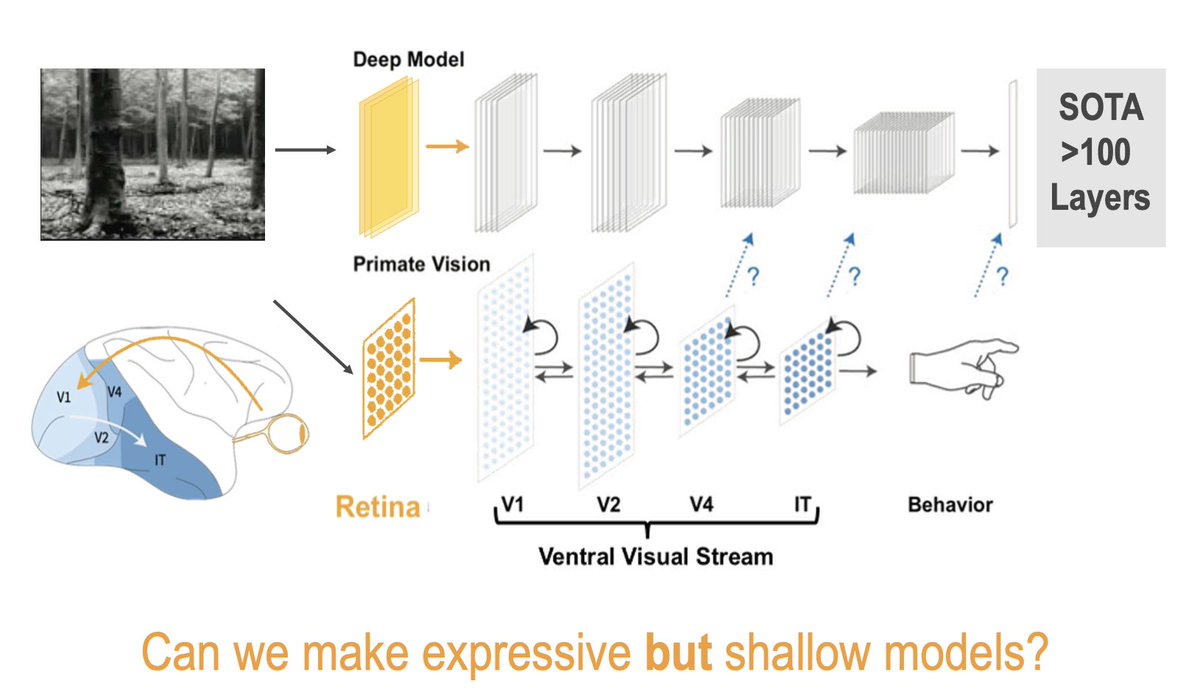
🧠🔬 Excited to share our #NeurIPS2025 paper: "Convolution Goes Higher-Order"! We asked: Can shallow networks be as expressive as deep ones? Inspired by biological vision, we introduce higher-order convolutions that capture complex image patterns standard CNNs miss. 🧵👇
Simone Azeglio tweet media
English
1
30
191
7.9K
Anno Christopher Kurth retweetledi
Toshitake Asabuki
Toshitake Asabuki@TAsabuki·
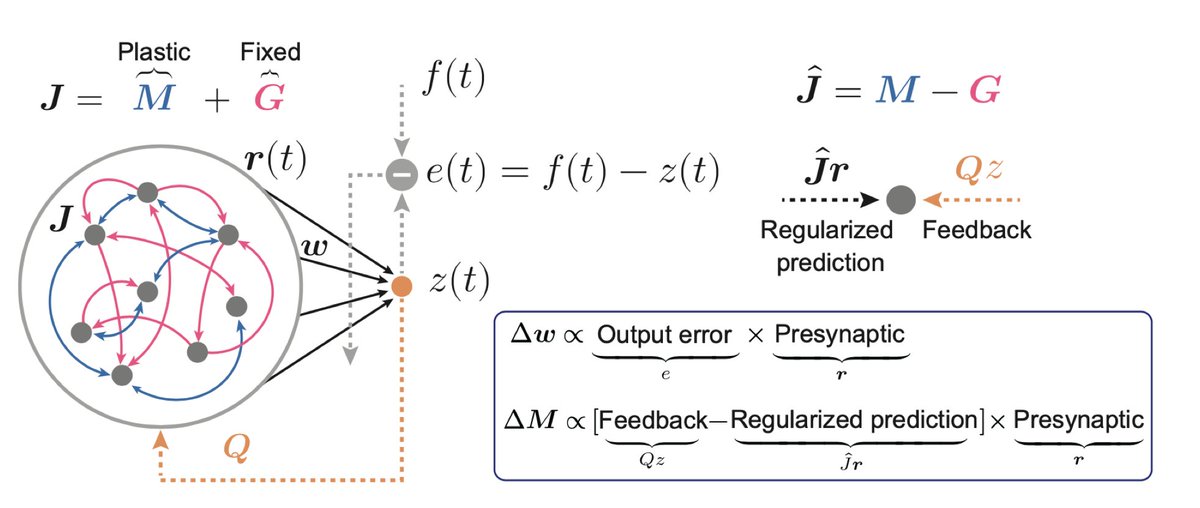
📜Out in Nat. Commun! We propose a novel framework called “predictive alignment”, which trains the chaotic RNN via a biologically plausible rule. Collaborated with @ClopathLab nature.com/articles/s4146…
English
0
26
121
7.1K
Anno Christopher Kurth retweetledi
Luiz Pessoa
Luiz Pessoa@PessoaBrain·
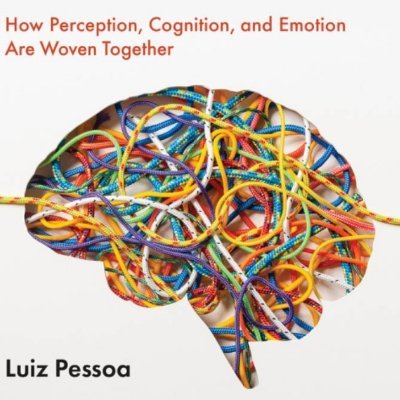
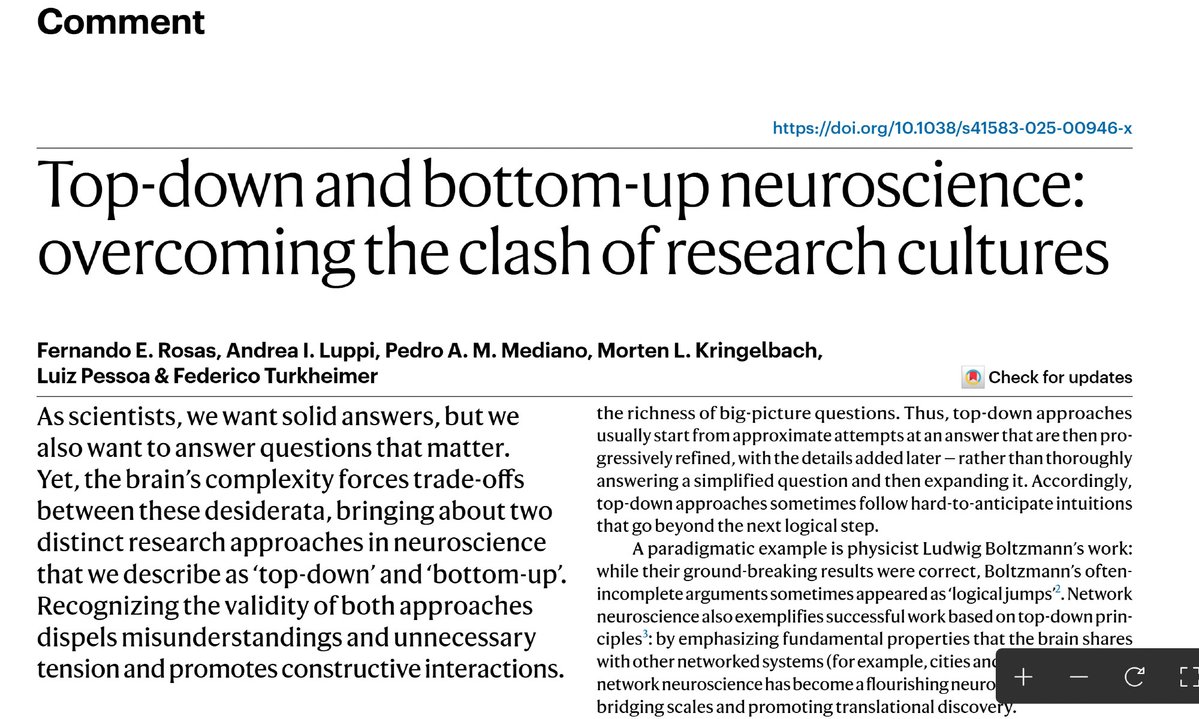
𝗧𝗼𝗽-𝗱𝗼𝘄𝗻 𝗮𝗻𝗱 𝗯𝗼𝘁𝘁𝗼𝗺-𝘂𝗽 𝗻𝗲𝘂𝗿𝗼𝘀𝗰𝗶𝗲𝗻𝗰𝗲: 𝗼𝘃𝗲𝗿𝗰𝗼𝗺𝗶𝗻𝗴 𝘁𝗵𝗲 𝗰𝗹𝗮𝘀𝗵 𝗼𝗳 𝗿𝗲𝘀𝗲𝗮𝗿𝗰𝗵 𝗰𝘂𝗹𝘁𝘂𝗿𝗲𝘀 nature.com/articles/s4158… Small contribution in piece by @_fernando_rosas and colleagues on how we need both types of research culture
Luiz Pessoa tweet media
English
7
74
368
21.5K
Anno Christopher Kurth retweetledi
Toshitake Asabuki
Toshitake Asabuki@TAsabuki·
🚀Out in PNAS! We find that recurrent networks trained with the predictive plasticity rules explain many features of prediction errors observed in experimental studies pnas.org/doi/10.1073/pn… @ClopathLab
English
0
26
86
8.1K
Anno Christopher Kurth retweetledi
Toshitake Asabuki
Toshitake Asabuki@TAsabuki·
Now in @eLife “Biologically plausible excitatory/inhibitory plasticity rules in recurrent spiking networks embed state-transition statistics into spontaneous activity.” doi.org/10.7554/eLife.… @ClopathLab
English
0
9
44
3.3K
Anno Christopher Kurth retweetledi
PRX Life
PRX Life@PRX_Life·
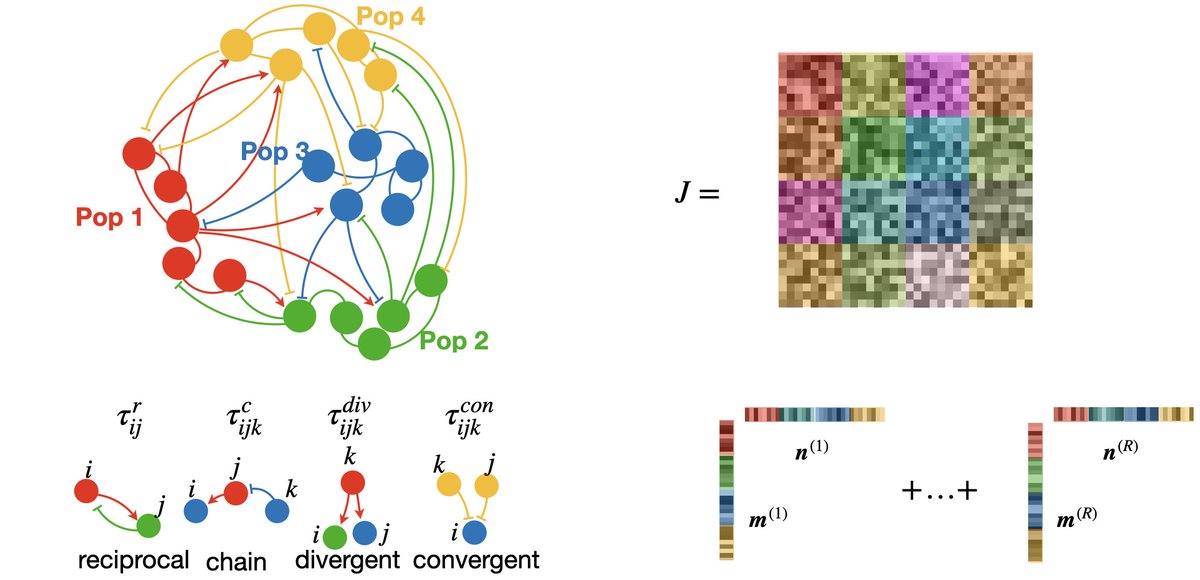
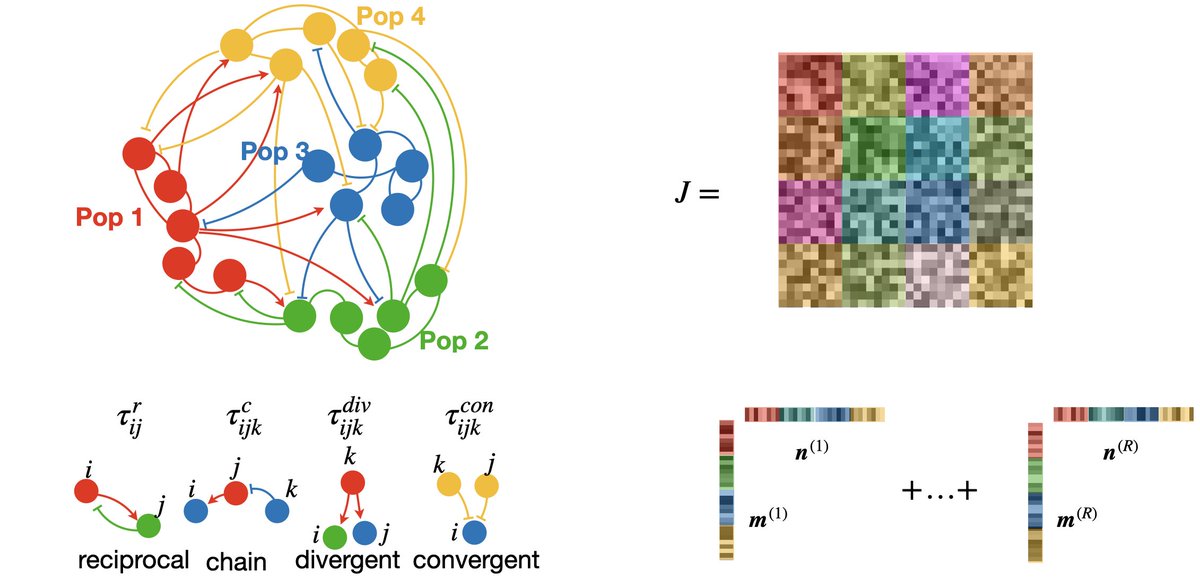
An analytical framework based on low-rank random matrix theory shows that specific connectivity patterns in #NeuralNetworks, such as chain motifs, strongly affect excitatory and inhibitory neuron balance and the network’s response to inputs. 🔗 go.aps.org/4j4VD25
PRX Life tweet media
English
0
7
21
1.4K
Anno Christopher Kurth retweetledi
PRX Life
PRX Life@PRX_Life·
A low-rank decomposition of the connectivity matrix reveals how local motifs — such as chain motifs — govern dynamics in excitatory-inhibitory networks, with implications for interpreting #optogenetic experiments. Read the paper: go.aps.org/4j4VD25
PRX Life tweet media
English
1
11
40
2.8K
Anno Christopher Kurth retweetledi
PRX Life
PRX Life@PRX_Life·
Scientists developed a measure that captures and compares the 2D structure of real, arbitrary matrices, demonstrating how it can robustly assess similarities and differences in synthetic network connectivity data and experimental data of brain activity. go.aps.org/42HyMF2
PRX Life tweet media
English
1
10
50
2K
Anno Christopher Kurth retweetledi
PRX Life
PRX Life@PRX_Life·
Singular angle similarity measures the similarity of real, arbitrary matrices accounting for their 2D structure, outperforming standard methods in analyzing synthetic networks and neural activity patterns. Read the paper: go.aps.org/42HyMF2
PRX Life tweet media
English
1
4
6
691