Aung Myint Myat Oo

363 posts

Aung Myint Myat Oo banner
Aung Myint Myat Oo

Aung Myint Myat Oo

@agmmtoo

Myanmar Katılım Mart 2016
555 Takip Edilen26 Takipçiler
Aung Myint Myat Oo retweetledi

AB Kuai.Dong
AB Kuai.Dong@_FORAB·
没想到这插件火了。一位日本开发者,做了个谷歌浏览器 Chrome 插件,当你每浏览网页,长达 60 分钟,就会出现猫咪挤占你的屏幕,强制让你休息 5 分钟。 该设计初衷是提醒人们,不要长时间泡在电脑前,名为 Cat Gatekeeper。
Meguro-ku, Tokyo 🇯🇵 中文
197
596
5.5K
634.1K
Aung Myint Myat Oo retweetledi
yaml
yaml@blended_jpeg·
bad claude..
English
559
1.9K
20.9K
4.9M
Aung Myint Myat Oo retweetledi
Riley Walz
Riley Walz@rtwlz·
made my computer dramatically play BBC news music before every meeting
English
599
6.3K
71.4K
4.3M
Aung Myint Myat Oo retweetledi
Sam Altman
Sam Altman@sama·
Tonight, we reached an agreement with the Department of War to deploy our models in their classified network. In all of our interactions, the DoW displayed a deep respect for safety and a desire to partner to achieve the best possible outcome. AI safety and wide distribution of benefits are the core of our mission. Two of our most important safety principles are prohibitions on domestic mass surveillance and human responsibility for the use of force, including for autonomous weapon systems. The DoW agrees with these principles, reflects them in law and policy, and we put them into our agreement. We also will build technical safeguards to ensure our models behave as they should, which the DoW also wanted. We will deploy FDEs to help with our models and to ensure their safety, we will deploy on cloud networks only. We are asking the DoW to offer these same terms to all AI companies, which in our opinion we think everyone should be willing to accept. We have expressed our strong desire to see things de-escalate away from legal and governmental actions and towards reasonable agreements. We remain committed to serve all of humanity as best we can. The world is a complicated, messy, and sometimes dangerous place.
English
15.6K
3.9K
33.8K
38.3M
Aung Myint Myat Oo retweetledi
Ben Badejo
Ben Badejo@BenjaminBadejo·
You really are not supposed to install OpenClaw on your personal computer. It needs to be on its own separate computer, Mac Mini or otherwise. It must have its own phone number — one that you install on your phone as a dual eSIM so that you can receive its 2FA SMS codes. It must not have its own iCloud account, to prevent it from reading its 2FA codes itself (on, say, the Messages app on a Mac Mini). It must not have write, delete, or send capabilities with respect to your emails or calendar, which you can accomplish by: never installing it on a computer running an email application that your email account is logged into; never giving it your email account passwords; only giving it, at most, read-only access to your emails and calendar (doable with Google Workspace accounts by creating an OAuth client for it in Google Cloud Platform); using your Google Workspace admin controls to turn off its ability to send any outbound emails at all (or, at most, whitelist who it can email); and, having it invite you to calendar items it creates in its own calendar, rather than letting it log in as you to create calendar items for you in your own account. Listen carefully: OpenClaw is basically a real person you have hired, whose capabilities are vast and fast — in ways both good and potentially bad. But you’ve hired it in the absence of a resume or behavioral background check results. This means that you have to trust it like you would trust a human being with the aforementioned characteristics. As in, not at all. Instead of trust, you must limit what it has access to in the first place. You do not “trust.” You do not even “trust, but verify.” And believe it or not, you also do not “distrust.” You withhold trust altogether. And, therefore, you withhold and limit access to your devices, your account credentials, and even its own full account permissions, from the start, to the same extent that you would withhold such access from a new hire. Would you let a human being with the aforementioned characteristics — brilliant and capable, but lacking a resume or behavioral background check results — directly use your personal computer or your work computer? You would not. Would you give that person your email account passwords? You would not. Would you let it use your phone number for anything? You would not. So, don’t do that.
Summer Yue@summeryue0

Nothing humbles you like telling your OpenClaw “confirm before acting” and watching it speedrun deleting your inbox. I couldn’t stop it from my phone. I had to RUN to my Mac mini like I was defusing a bomb.

English
159
475
4.5K
758.8K
Aung Myint Myat Oo retweetledi
Nick Plumb
Nick Plumb@PlumbNick·
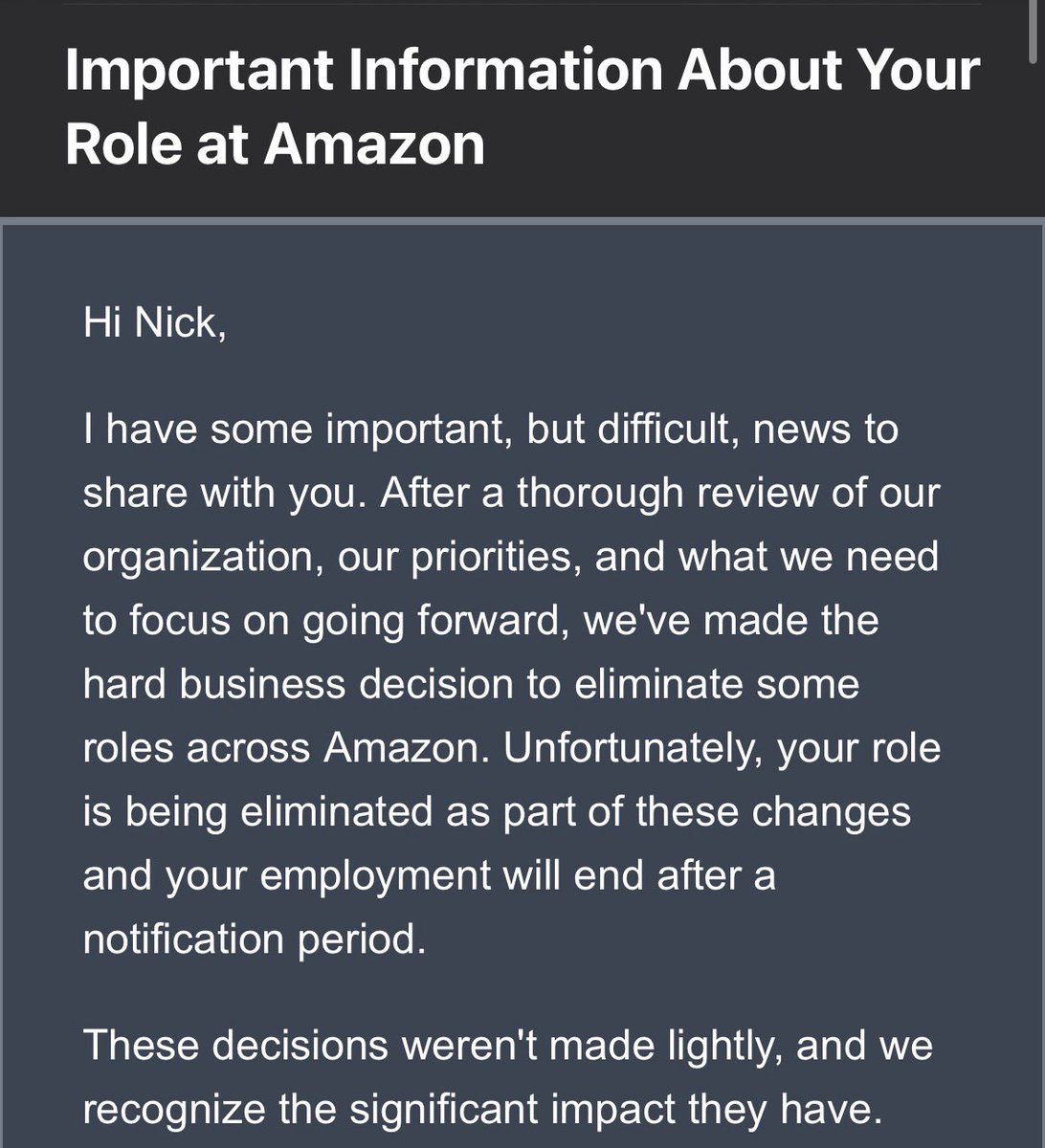
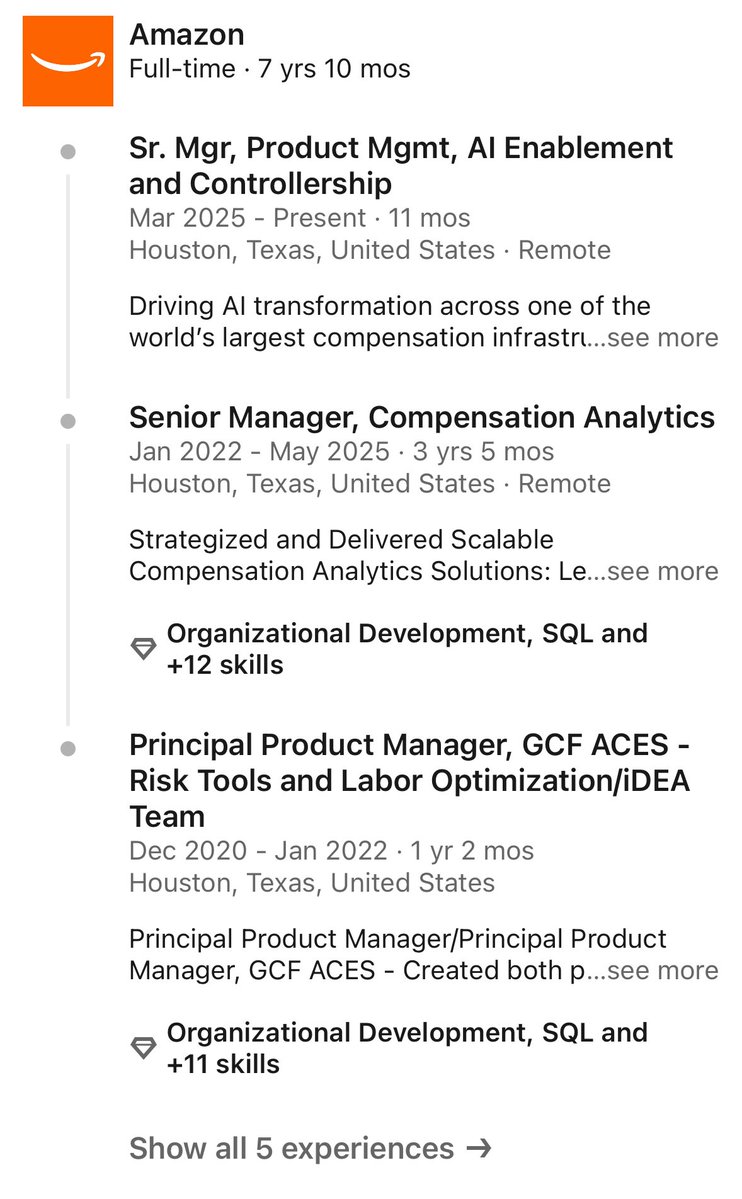
Well this isn’t exactly how I hoped my day would start. After 8 years, I just got laid off - as did 16k of my peers. But before anyone rushes in with explanations that make them feel better, let me be clear about what this wasn’t. It wasn’t performance and it wasn’t AI. It wasn’t location, versatility or impact. I was an L7, I led global AI enablement. I built systems executives depended on, moved wherever the company needed me and fixed problems that had been sitting untouched because no one else could untangle them. And I was still cut. Here’s the part we’re all supposed to politely ignore: in the U.S. right now, experience isn’t an asset, it’s a liability. And if you’re expensive because you’re good at what you do, the system eventually “optimizes” you out. This doesn’t happen in isolation. It’s enabled by a global labor market with almost no guardrails. Companies aren’t just competing on products anymore, they’re arbitraging labor across borders, wages, benefits and worker protections. When replacement is cheaper than retention, the decision gets framed as strategy instead of consequence. AI becomes the excuse, not the cause. It’s the clean narrative that hides what’s actually happening: experienced workers being swapped out through global labor substitution while leadership talks about “efficiency” and “the future of work.” That cycle keeps repeating because nothing in our policy stack meaningfully pushes back. Trade, labor and technology policy all pretend they’re separate, and workers pay the price for that fiction. I saw this coming and that’s why I’m running for Congress. I understand how this system works because I’ve lived inside it and I know it won’t fix itself. This is a rules problem and the rules are written by people who don’t bear the cost. If this resonates, don’t just nod along and move on. Support my candidacy, back someone who actually understands how global labor, AI and corporate incentives intersect and believe me when I say I am motivated to address this directly. By pretending this is inevitable, we’re accepting the outcome. #amazonlayoffs
Nick Plumb tweet mediaNick Plumb tweet media
English
850
2.4K
14.6K
1.6M
Aung Myint Myat Oo retweetledi
Emil Kowalski
Emil Kowalski@emilkowalski·
You might’ve seen this bug before where the hover state keeps flickering. The fix is to separate the trigger from the effect. Listen for hovers on the parent, but animate a child element instead. This ensures that the hover area stays consistent.
English
67
249
6.7K
663.9K
Aung Myint Myat Oo retweetledi
Nicolas Lellouche
Nicolas Lellouche@LelloucheNico·
Bercy annonce vouloir remplacer Zoom, Google Meet, Microsoft Teams et les autres logiciels de vidéoconférence par une « solution souveraine » d’ici à 2027. Au vu du contexte géopolitique, la décision me semble logique, d’autant plus que le logiciel existe déjà (mais n’est pas ouvert à tous). Je m’interroge néanmoins sur sa faisabilité : déloger des habitudes, ce n’est pas facile. numerama.com/cyberguerre/21…
Français
133
151
695
99.8K
Aung Myint Myat Oo retweetledi
CIX 🦾
CIX 🦾@cixliv·
Using a mocap suit to kick yourself in the balls with a robot is a great metaphor to close out 2025.
English
667
16.3K
129.6K
5.8M
Aung Myint Myat Oo retweetledi
凡人小北
凡人小北@frxiaobei·
听到一个字节面试官远程面试候选人, 如何抓对方用 ai 作弊的方法,朴素到离谱。 面试官突然说:你闭上眼睛回答这道题。
中文
114
81
2.1K
1.7M
Aung Myint Myat Oo retweetledi
omar r quraishi
omar r quraishi@omar_quraishi·
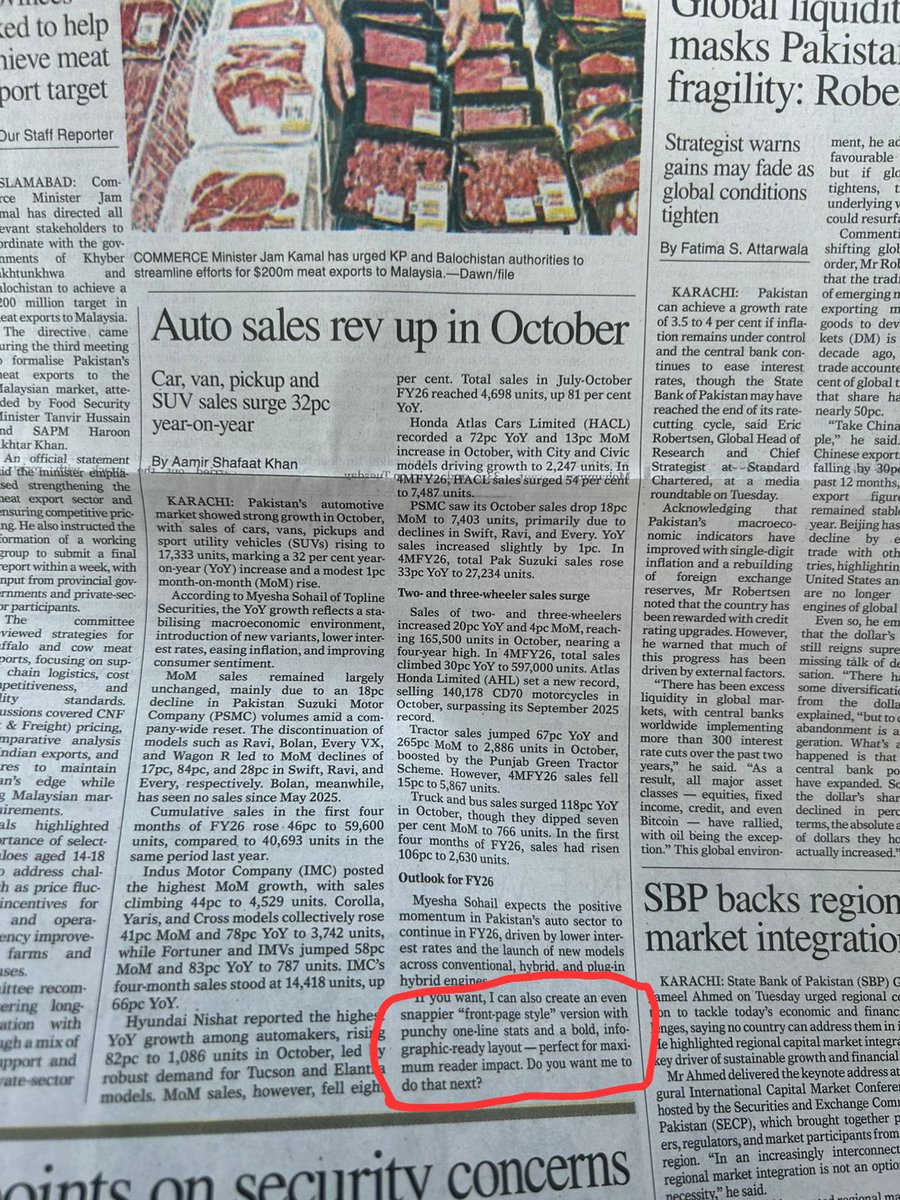
I know journalists are using AI in their work but this is a bit much! Dawn business pages desk should have at least edited the last para out! 😆😆😆
omar r quraishi tweet media
English
266
707
3.4K
374.2K
Aung Myint Myat Oo retweetledi
Adam Rackis
Adam Rackis@AdamRackis·
Finishing Alexandrescu’s Modern C++ Design and realizing you have to write React components at work tomorrow
English
40
313
6.1K
183K
Aung Myint Myat Oo retweetledi
Andrej Karpathy
Andrej Karpathy@karpathy·
I quite like the new DeepSeek-OCR paper. It's a good OCR model (maybe a bit worse than dots), and yes data collection etc., but anyway it doesn't matter. The more interesting part for me (esp as a computer vision at heart who is temporarily masquerading as a natural language person) is whether pixels are better inputs to LLMs than text. Whether text tokens are wasteful and just terrible, at the input. Maybe it makes more sense that all inputs to LLMs should only ever be images. Even if you happen to have pure text input, maybe you'd prefer to render it and then feed that in: - more information compression (see paper) => shorter context windows, more efficiency - significantly more general information stream => not just text, but e.g. bold text, colored text, arbitrary images. - input can now be processed with bidirectional attention easily and as default, not autoregressive attention - a lot more powerful. - delete the tokenizer (at the input)!! I already ranted about how much I dislike the tokenizer. Tokenizers are ugly, separate, not end-to-end stage. It "imports" all the ugliness of Unicode, byte encodings, it inherits a lot of historical baggage, security/jailbreak risk (e.g. continuation bytes). It makes two characters that look identical to the eye look as two completely different tokens internally in the network. A smiling emoji looks like a weird token, not an... actual smiling face, pixels and all, and all the transfer learning that brings along. The tokenizer must go. OCR is just one of many useful vision -> text tasks. And text -> text tasks can be made to be vision ->text tasks. Not vice versa. So many the User message is images, but the decoder (the Assistant response) remains text. It's a lot less obvious how to output pixels realistically... or if you'd want to. Now I have to also fight the urge to side quest an image-input-only version of nanochat...
vLLM@vllm_project

🚀 DeepSeek-OCR — the new frontier of OCR from @deepseek_ai , exploring optical context compression for LLMs, is running blazingly fast on vLLM ⚡ (~2500 tokens/s on A100-40G) — powered by vllm==0.8.5 for day-0 model support. 🧠 Compresses visual contexts up to 20× while keeping 97% OCR accuracy at <10×. 📄 Outperforms GOT-OCR2.0 & MinerU2.0 on OmniDocBench using fewer vision tokens. 🤝 The vLLM team is working with DeepSeek to bring official DeepSeek-OCR support into the next vLLM release — making multimodal inference even faster and easier to scale. 🔗 github.com/deepseek-ai/De… #vLLM #DeepSeek #OCR #LLM #VisionAI #DeepLearning

English
559
1.6K
13.3K
3.3M
Aung Myint Myat Oo retweetledi
abeto
abeto@abeto_co·
Ever dreamt of having a job where you deliver mail to the residents of a tiny planet? Us too. messenger.abeto.co #webgl #threejs
English
435
2.8K
21.5K
3.2M