🇨🇦 vexatious litigant

396 posts

🇨🇦 vexatious litigant banner
🇨🇦 vexatious litigant

🇨🇦 vexatious litigant

@ajohnston97629

Object oriented programming redistributes code and data around process memory in order to ruin processor cache coherency. Freedom for Ukraine 🇺🇦.

🍁 Katılım Aralık 2025
20 Takip Edilen16 Takipçiler
🇨🇦 vexatious litigant
🇨🇦 vexatious litigant@ajohnston97629·
@saltyAom That is like saying you need concrete proof that "something break" when I fire all the senior engineers. Look, you can live in a shanty town or you can have concrete buildings and plumbing. Either way nothing break right? The bun port is 60% pointless garbage, bruh.
English

0
0
0
76
SaltyAom
SaltyAom@saltyAom·
I think a lot of people are overreacting about Bun Rust rewrite I do understand the concern of vibe coding a million line and it’s good to be skeptical But as an engineer, I’ll need a concrete proof that something break before I make a strategic move
English
37
6
480
22.1K
🇨🇦 vexatious litigant
🇨🇦 vexatious litigant@ajohnston97629·
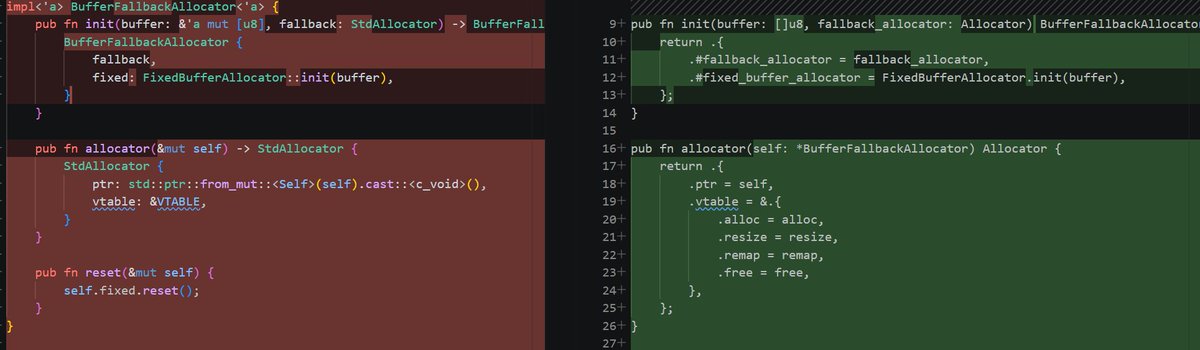
@bunjavascript Here is a diff from your zig -> rust port. These don't look like adult programming languages... They way you are using them. 50% of the port looks like Claude reinventing a kooky version of the standard library instead of calling it.
🇨🇦 vexatious litigant tweet media
English
0
0
0
292
🇨🇦 vexatious litigant
🇨🇦 vexatious litigant@ajohnston97629·
@jarredsumner I spend 50% of my C++ programming time telling Claude to clean up after itself... I spend the other half reminding it how to be a senior software engineer. By my calculations you have 6 months left of cleaning up slop.
English
0
0
0
76
Jarred Sumner
Jarred Sumner@jarredsumner·
We’re treating this codebase like it’s under way more scrutiny than before, because it is. A year ago, rewriting an entire 700k LOC codebase in a new language in 6 days was impossible. Today, it doesn’t sound like it should work. And yet, it works well.
English
11
4
457
27.1K
Jarred Sumner
Jarred Sumner@jarredsumner·
Bun in Rust is better than the original, and it’s going to keep getting better. We fixed a lot of bugs inherited from the original. We’re fuzzing a lot more.
Bun@bunjavascript

🤏 update:

English
68
46
1.8K
391.6K
🇨🇦 vexatious litigant
🇨🇦 vexatious litigant@ajohnston97629·
@lauriewired This is exactly the same as mmap()'ing your whole harddrive at the block layer and then hacking your ssd's firmware to offload operations. And no, you are talking crazy about a "remote atomic." Either your cores need to sync or they don't.
English
0
0
0
389
LaurieWired
LaurieWired@lauriewired·
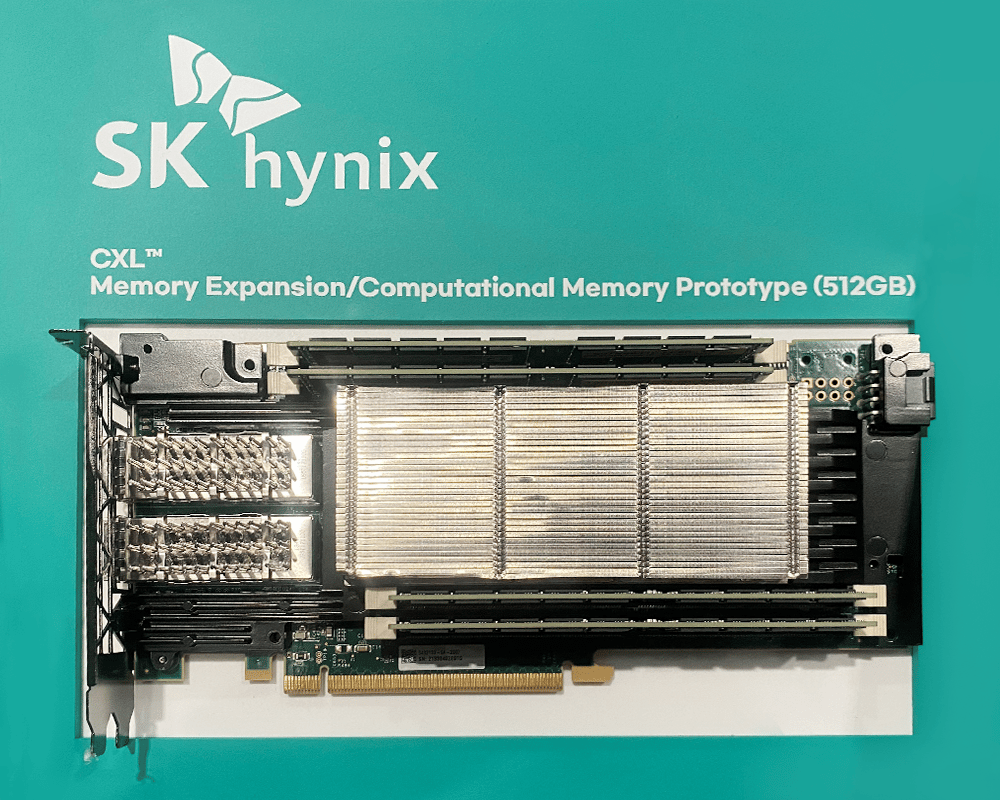
I just can’t get over how neat CXL type 3 is. Imagine having a 1TB bucket of memory. But! Instead of 1TB of DDR5, you have a tiered CXL accelerator. To the OS, it *looks* like regular memory, you address it in the same way. Maybe your accelerator is actually 100GB of DDR5, and ~1TB of high bandwidth flash. The first 100GB is your buffer, and a little controller slowly flushes it out. Many, many workloads are not hammering RAM enough for you to notice. Wait! You could get even more clever. With regular memory, bouncing cachelines between CPU cores is annoying. Often, you’ll program your way around this (avoiding a shared counter) by having each thread maintain a temporary local state with occasional global syncs. But, if we have a custom CXL 3 memory device, that slow global merge could be implemented in hardware instead. You’d never have to have cores fight over the same cacheline, because the shared-counter would be local to the CXL device! Aka, a remote atomic! This is essentially the concept of NDP (near-data processing), and of course there are much, much more fancy algorithms you can do with it, that’s just one example. But you can imagine, especially with database-style operations, how much bandwidth you could save not having to round-trip to the CPU and back for every operation. Imagine if your RAM could run a regex for you! We’re getting really close to that world.
LaurieWired tweet mediaLaurieWired tweet media
English
38
72
1.2K
81.4K
flux
flux@fluxdev3·
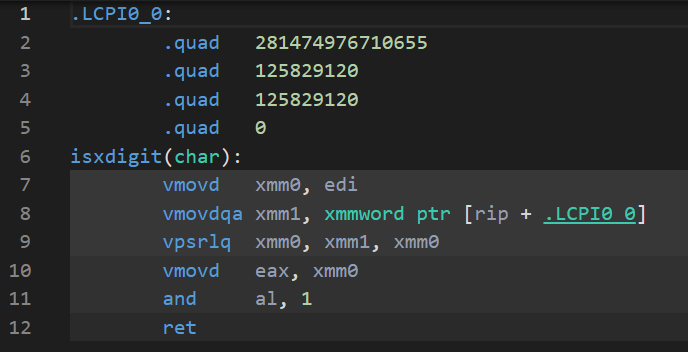
@ajohnston97629 @yutongwu111140 `isxdigit` is very likely using a LUT. The main memory fetch would be punishing but you would only pay this cost very occasionally and most of the time you'd have a <5 cycle cache fetch. I benchmarked isxdigit vs manually implemented LUT and the results are pretty much the same
English
4
0
0
42
Keruis
Keruis@yutongwu111140·
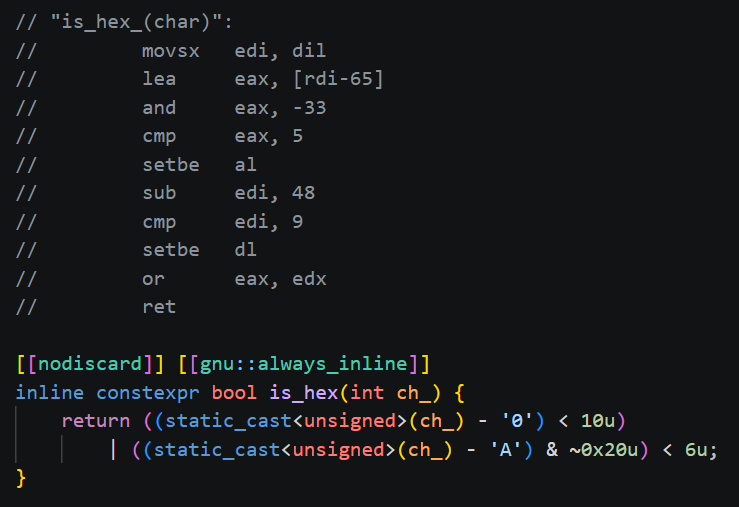
This code could be optimized into pure arithmetic, but I'm too lazy to change it
Keruis tweet media
English
8
1
33
3.5K
🇨🇦 vexatious litigant
🇨🇦 vexatious litigant@ajohnston97629·
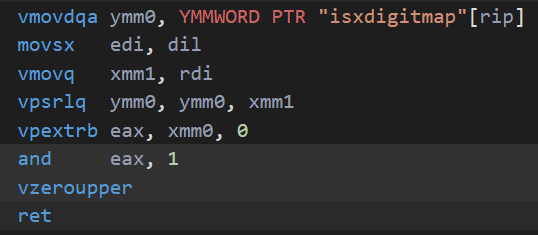
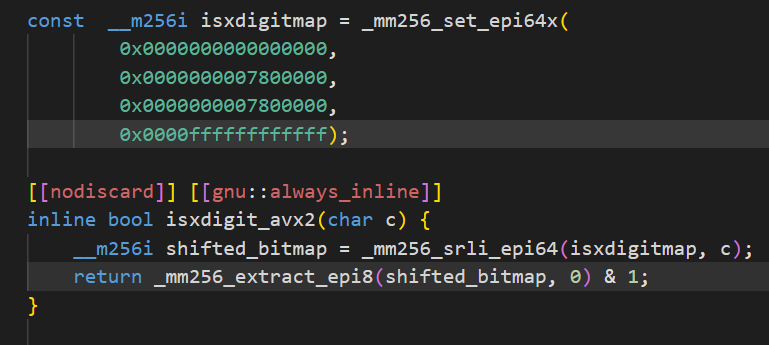
@fluxdev3 @yutongwu111140 That version has assembly set up and tear down that should go away in an inlined loop. The actual per character cost is 5 cpu cycles. (vpextrb is 2 cycles and "and" is free.)
🇨🇦 vexatious litigant tweet media
English
0
0
1
15
FFmpeg
FFmpeg@FFmpeg·
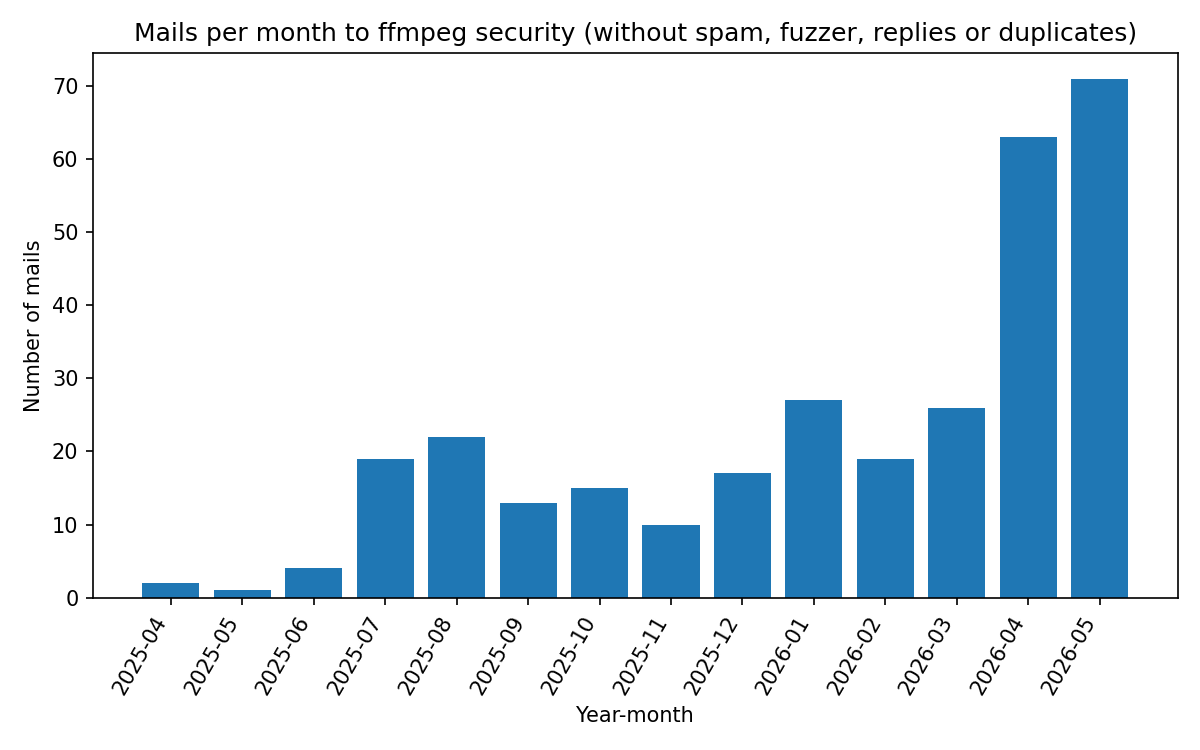
FFmpeg is critical infrastructure for a lot of big companies. The security-report workload is rising fast. It would be nice if donations, sponsorships, and code contributions kept pace.
FFmpeg tweet media
English
18
30
370
13.6K
🇨🇦 vexatious litigant
🇨🇦 vexatious litigant@ajohnston97629·
@fluxdev3 @yutongwu111140 This avoids a 10 cpu cycle pipeline stall from using a logical operator or a 100 cycle main memory cache miss from a lookup table. BUT IT DOESNT MATTER BECAUSE THE *LINKER* CAN INLINE THE STANDARD LIBRARY WHICH IS WELL WRITTEN: int isxdigit( int ch );
🇨🇦 vexatious litigant tweet media
English
1
0
0
112
flux
flux@fluxdev3·
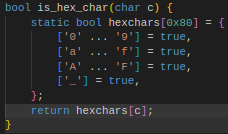
@yutongwu111140 For ASCII, just use a LUT. You won't miss 128 bytes of memory needed to store it.
flux tweet media
English
3
0
6
641
🇨🇦 vexatious litigant retweetledi
David T.S. Fraser
David T.S. Fraser@privacylawyer·
Fun fact for a Friday: Once your metadata has been preserved under Bill C-22 the Lawful Access Act (arguably to protect the children and find ticking bombs), it will be available for ANY kind of investigation and compellable in connection with civil litigation.
English
11
83
286
10.6K
sudox
sudox@kmcnam1·
sudox tweet media
ZXX
3
3
34
806
🇨🇦 vexatious litigant
🇨🇦 vexatious litigant@ajohnston97629·
@valigo please don't post about how we should just do dumb stuff because it hurts your fingers to type smart stuff.
English
0
0
0
215
Valentin Ignatev
Valentin Ignatev@valigo·
Ok here's real hot take - mmaped files are highly overrated, because modern OSes aggressively cache files in RAM for both read/write, so for most use-cases just reading entire file all at once is better than trying to be smart. With that said (lowering the hottness of the take I know weak Twitter game), I'm not saying that mmapping files and doing these page cache tricks is always useless - it just has more niche use cases than many people think. Dmitriy works on highly advanced batshit crazy file searcher, and if he uses memory mapped files it doesn't mean you should!
Dmitriy Kovalenko@neogoose_btw

Memory RSS is broken Users are noticing RAM usage, but they don't really care about it. Noone just knows about RssFile. This is funny becuase intensively used memory mapped file occupies actual physical RAM through the OS cache. But because this is not visible for the users in their RSS output -> they are fine with it. Physical memory footprint is absolutely the same while stability and safety of the whole solution is decreased we need a better observability at the OS level that will actually show how much of physical memory your process is occupying over time INCLUDING forked processes memory

English
19
2
123
20.5K
Keruis
Keruis@yutongwu111140·
null nullptr monostate nullopt void 0 empty_view Write whichever one you use
English
2
1
5
576
SudoX7
SudoX7@sudox7·
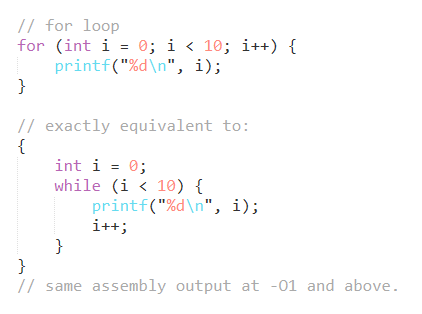
every for loop in C is syntactic sugar. the compiler sees a while loop. they produce identical machine code C has three loop constructs: for, while, do-while. at the assembly level there is one: a conditional jump the compiler doesn't care which one you wrote. it cares what the condition is and where to jump. every loop you've ever written becomes CMP, JNE, and a label
SudoX7 tweet media
English
16
15
127
25.5K
🇨🇦 vexatious litigant
🇨🇦 vexatious litigant@ajohnston97629·
@0xglitchbyte Object oriented programming redistributes code and data around process memory in order to ruin processor cache coherency. Freedom for Ukraine 🇺🇦.
English
0
0
0
54
Glitchbyte
Glitchbyte@0xglitchbyte·
Wise words
Glitchbyte tweet media
English
17
70
817
23.5K
Dmitriy Kovalenko
Dmitriy Kovalenko@neogoose_btw·
when you need to allocate a huge chunk of memory you can just ask your system to allocate the memory *the way OS expected it to be done* and not use a multi-thousand line stateful dependency that you call "allocator" because it will never return it back after you free
Dmitriy Kovalenko tweet media
English
4
2
85
6K
Boost C++ | Open Source Libraries
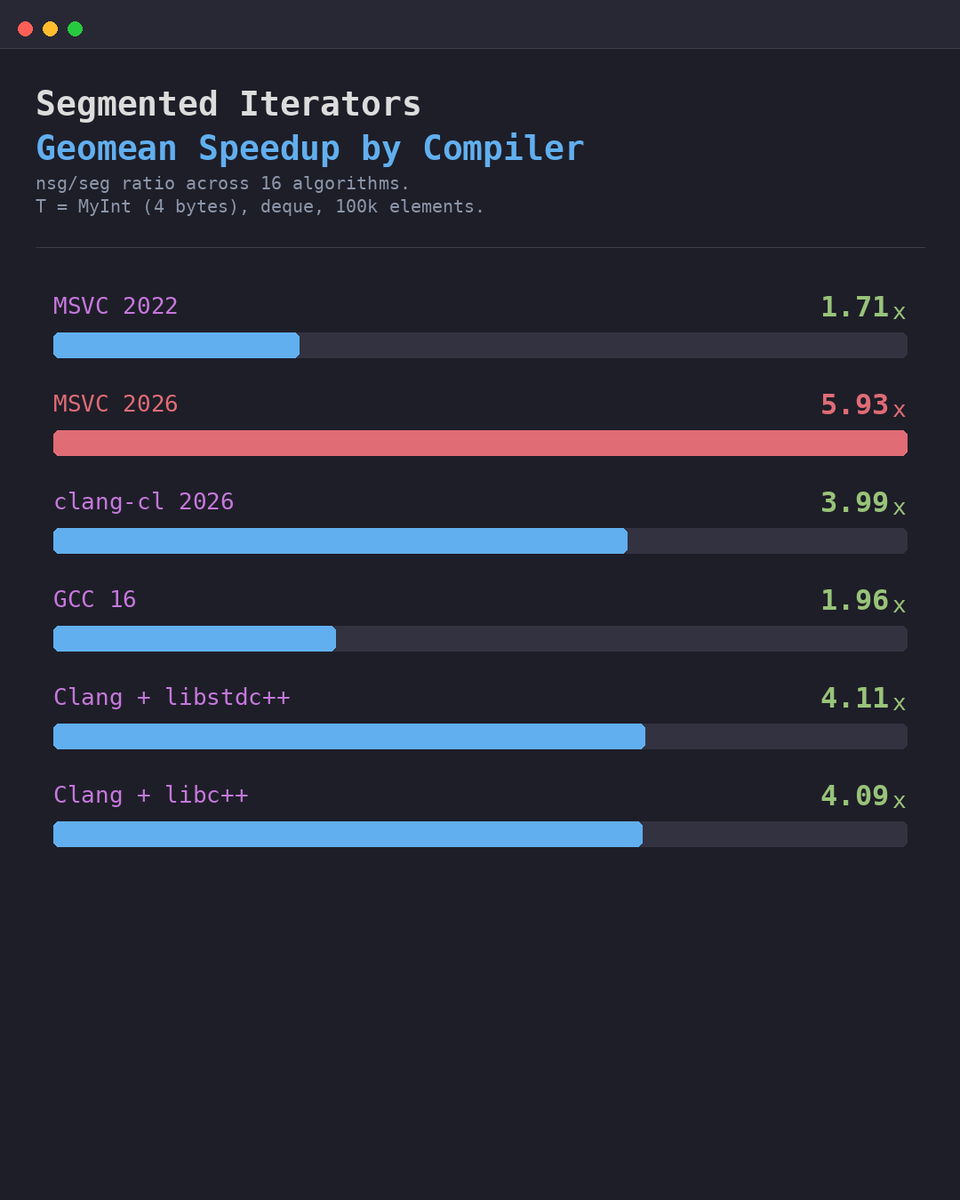
Boost.Container benchmarked segmented deque algorithms across six compiler configurations The spread: 1.71x to 5.93x geomean speedup The surprising part: adding #pragma unroll(4) boosts GCC by 60%. Clang regresses. MSVC ignores it entirely Your compiler choice matters more than you think
Boost C++ | Open Source Libraries tweet media
English
2
0
11
774
Boost C++ | Open Source Libraries
Same segmented algorithm. Same deque. Same data Six compilers. Wildly different results 🧵👇
English
1
1
21
3.2K
🇨🇦 vexatious litigant
🇨🇦 vexatious litigant@ajohnston97629·
@mu_chrinovic I consider it good practice to explicitly use the "ternary operator" when you are expecting branchless operation. This is because the most basic compiler should have explicit branchless support for that operator.
English
0
0
0
11
🇨🇦 vexatious litigant
🇨🇦 vexatious litigant@ajohnston97629·
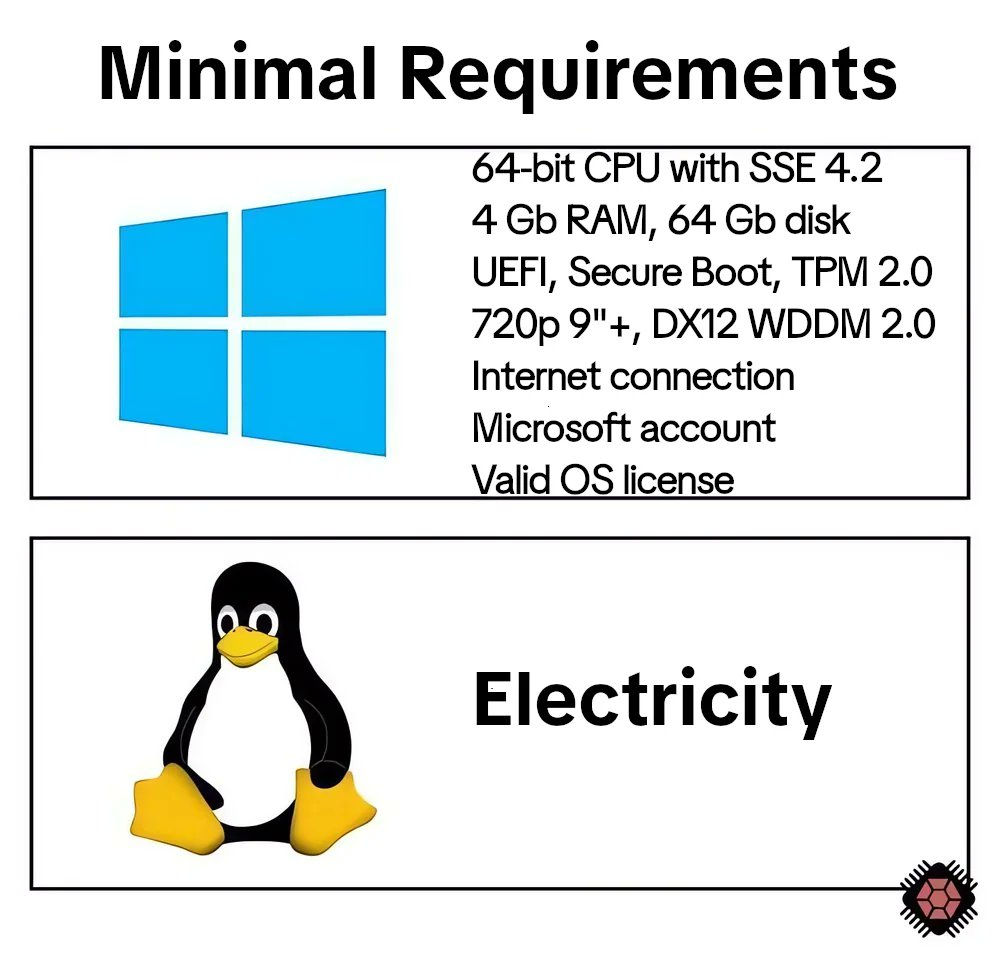
@sysxplore Linux developers have officially dropped support for 32-bit x86 CPUs, specifically the Intel 486 (and early 586/Pentium) processors.
English
0
0
2
329
sysxplore
sysxplore@sysxplore·
Minimal System Requirements
sysxplore tweet media
English
84
346
4.5K
75.7K