adam jamison

9.8K posts

adam jamison banner
adam jamison

adam jamison

@arrowlee4700

here for fun

Michigan, USA Katılım Eylül 2021
89 Takip Edilen1K Takipçiler
adam jamison retweetledi
Voices of WW2
Voices of WW2@VoicesofWW2·
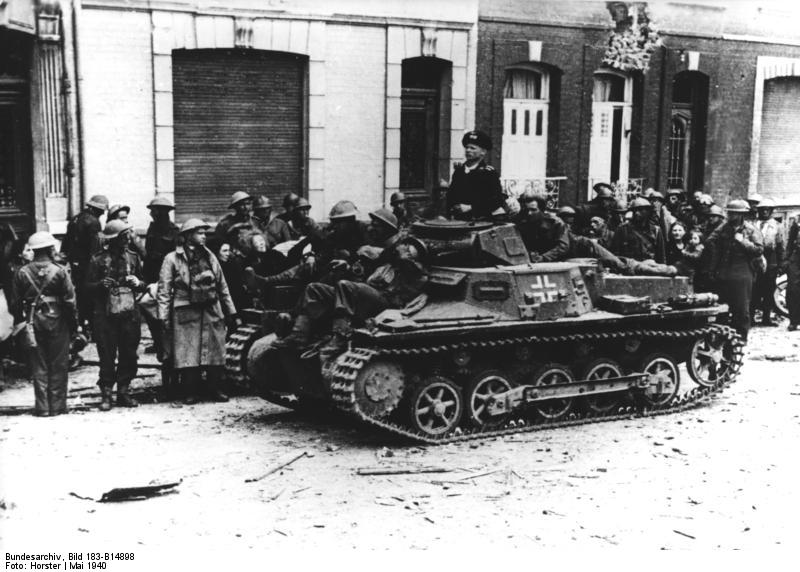
British prisoners of war in Calais, France, May 1940; note Panzer I light tank in foreground
Voices of WW2 tweet media
English
0
10
131
3.1K
adam jamison retweetledi
Voices of WW2
Voices of WW2@VoicesofWW2·
German 7 Panzer Division, France, 1940.
Voices of WW2 tweet media
Italiano
19
101
2.1K
41.2K
ReginaTanis
ReginaTanis@ReginaTanis·
Hit or type ❤️ if you’re 18+🔥💞
ReginaTanis tweet mediaReginaTanis tweet media
English
20
3
110
1.8K
adam jamison retweetledi
Voices of WW2
Voices of WW2@VoicesofWW2·
On May 22, 1940, the German army was winning the war so fast it scared Hitler. Heinz Guderian's panzers had broken out of the Ardennes ten days earlier, crossed the Meuse at Sedan against textbook military doctrine, and were now tearing across northern France toward the Channel coast at a speed that no army in history had ever sustained. On the morning of the 22nd, his XIX Panzerkorps struck north from Abbeville. Within forty eight hours his lead units would be looking at the sea. The strategic picture was almost too good to believe. The British Expeditionary Force, the best of the French army, and the entire Belgian army were being pressed against the coast from the south by Guderian and from the east by Bock's Army Group B. Nearly a million Allied soldiers were inside a shrinking pocket. If the Germans closed it, the war in the west was over. Guderian wanted to close it. So did his immediate superior, Ewald von Kleist. So did the chief of the army general staff, Franz Halder. They all understood that the panzers were one good day's drive from Dunkirk, the last functioning port the Allies had left, and that taking Dunkirk would mean capturing or killing the entire British army on the continent. Then, on May 24, the order came down from Hitler personally. Halt. The reasons for the halt order have been argued about for eighty five years. The traditional explanation is that Hermann Göring, jealous that the army was getting all the glory, told Hitler the Luftwaffe could finish off the pocket from the air. There is some truth to this. Göring did say that. Hitler did believe him. But there were other reasons too. The panzer divisions had been driving for two weeks without major maintenance. Their tank strength was down to roughly fifty percent. The ground around Dunkirk was marshy, cut by canals, terrible for armor. And Hitler, who had served as an infantryman in Flanders in the last war, knew exactly how that terrain swallowed mechanized forces. There was also a deeper anxiety. The campaign was going so well, so much faster than anyone in Berlin had projected, that Hitler did not trust it. He kept expecting a great French counterattack, a hammer blow into the long exposed flank of the panzer corridor. He wanted to consolidate. He wanted his army group commanders to slow down, regroup, and prepare for the second phase of the campaign against the rest of France. The halt lasted three days. By the time it was lifted, the British had organized a defensive perimeter around Dunkirk, the Royal Navy had begun assembling every vessel that could cross the Channel, and Operation Dynamo was underway. Between May 26 and June 4, 1940, 338,226 Allied soldiers were evacuated from the beaches and harbor of Dunkirk. The Germans captured 40,000 French troops who covered the rear. They did not capture the British army. If you want to identify the single decision that lost Germany the war, you can make a good case for the halt order. Without the BEF, Britain almost certainly cannot fight on into 1941. Without Britain fighting on, there is no Battle of Britain, no American supply route to Europe, no D-Day. The war either ends in 1940 with a negotiated peace, or it becomes a German-Soviet war fought entirely in the east. Guderian wrote in his memoirs that he received the halt order with "speechless amazement." He had Dunkirk in his sights. He could see it through binoculars. And he was being told to wait. The single most consequential traffic jam in military history started on May 22, 1940, when the panzers turned north. It ended when Hitler blinked.
Voices of WW2 tweet media
English
14
74
702
43.3K
adam jamison retweetledi
Voices of WW2
Voices of WW2@VoicesofWW2·
Operation Mercury: Invasion of Crete footage (1941)
English
0
23
235
9.9K
Alexus Rae
Alexus Rae@alexusraemedia·
I know this view would ruin your concentration
Alexus Rae tweet media
English
238
157
4.3K
40.7K
adam jamison retweetledi
Voices of WW2
Voices of WW2@VoicesofWW2·
Palls of smoke rising above the countryside, Crete, Greece, late May 1941
Voices of WW2 tweet media
English
1
9
149
3.3K
adam jamison retweetledi
MOON LOVER
MOON LOVER@M1ONLOVER·
MOON LOVER tweet media
ZXX
5
161
901
15.6K
adam jamison retweetledi
Voices of WW2
Voices of WW2@VoicesofWW2·
A group of British soldiers in a trench with fixed bayonets, Crete, Greece, late May 1941
Voices of WW2 tweet media
English
0
16
184
3.2K
adam jamison retweetledi
Military History Now
Military History Now@MilHistNow·
On this day in 1939, the Hitler-Mussolini partnership deepens with the signing of the 'Pact of Steel.' The agreement, which is built on military and political cooperation between Berlin and Rome, is supposed to last 10 years; it survives only four.
Military History Now tweet media
English
2
29
157
5.6K
adam jamison retweetledi
Military History Now
Military History Now@MilHistNow·
On this day in 1809, Napoleon's army is is defeated while trying to fight its way across the Danube River at Aspern-Essling near Vienna. It's the first time in over a decade that Bonaparte has lost a battle; it won't be the last.
Military History Now tweet media
English
3
22
193
8.1K
adam jamison retweetledi
Voices of WW2
Voices of WW2@VoicesofWW2·
21 May 1940 A German soldier poses next to a French Hotchkiss H39 from 1ère Section, 25ème Battalion de Char de Combat, 1ère Division Cuirassée, in Avesnes-sur-Helpe, France. May, 1940. On the night of May 16 the panzers of the 2nd Battalion of Pz.Rgt.25, spearheading Rommel’s 7th Panzer Division, reached the small town of Avesnes-sur-Helpe where they clashed with French units including what remained of the Hotchkiss H-39 tanks from the 25ème Battalion de Char de Combat. During the night the Germans pressed the attack losing several panzers in the process. As the hours passed the fighting grew heavier. Finally around 4 p.m. on May 17 Rommel sent several PzKpfw IVs from the west against the remaining French light tanks, thus crushing the last pockets of resistance. Only a handful of French tanks managed to escape south. The main road west, towards Landrecies, was now littered with destroyed tanks, vehicles, artillery pieces, dead soldiers and horses. The dead, men and beast, were quickly removed and the tanks pushed aside. The race to the Channel had to continue. During the following days, as the main battle moved west, German infantry and rear echelon units passed through Avesnes with many a soldier taking the opportunity for a quick photo next to the now dusty French tanks. The spot today in comments, the tank was next to the hedgerow, a few meters from the house. Original’s source unknown Color by Rui Candeias
Voices of WW2 tweet media
Français
2
28
447
13.4K
adam jamison retweetledi
BERETTA USA
BERETTA USA@Beretta_USA·
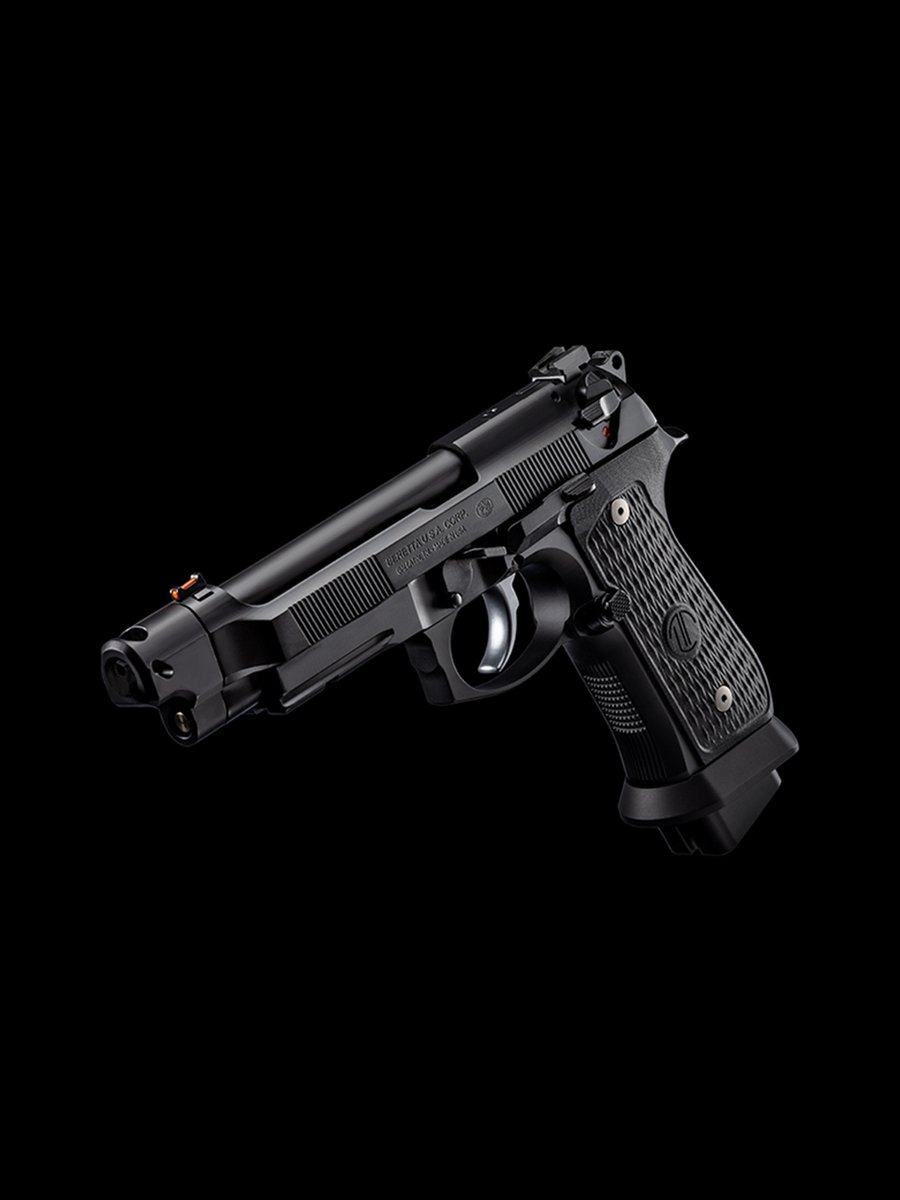
The new 92G Elite Combat LTT takes the legendary 92 platform even further. With a threaded barrel, Toni System compensator, and tuned ergonomics, it’s built for flatter shooting and faster follow-up shots. Competition setup or tactical build? @langdontactical #Beretta #92GEliteCombat #90Series #LangdonTactical
BERETTA USA tweet mediaBERETTA USA tweet mediaBERETTA USA tweet mediaBERETTA USA tweet media
English
77
649
4.7K
195.4K
adam jamison retweetledi
Voices of WW2
Voices of WW2@VoicesofWW2·
May 21, 1941. A British reconnaissance pilot lifts off from Scotland in a Spitfire stripped of its guns. In their place: cameras. He flies hundreds of miles across the North Sea, drops low over a quiet Norwegian fjord, snaps a few frames, and turns for home. What he photographed would change the war. Tucked into the shadow of the cliffs sat the Bismarck. Fifty thousand tons of steel. Eight 15 inch guns. The most powerful battleship Germany ever built, and one of the most feared warships on Earth. Her captain believed they had slipped into the fjord unseen. They had not. Within hours, every Royal Navy ship in the Atlantic was vectoring north. Three days later, Bismarck would obliterate HMS Hood in six minutes and kill 1,415 men. Three days after that, she was on the bottom of the Atlantic. One pilot. One photograph. The end of a battleship.
Voices of WW2 tweet mediaVoices of WW2 tweet media
English
13
78
853
44.4K
adam jamison retweetledi
Voices of WW2
Voices of WW2@VoicesofWW2·
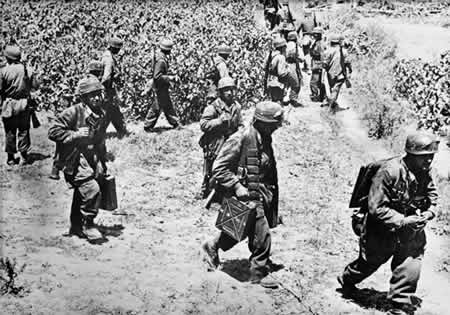
German paratroopers in Crete, Greece, late May 1941
Voices of WW2 tweet media
English
0
6
163
3.1K