and despite the assertions of certain Akhbārī scholars who described Shah Ismail and later Safavid rulers as mahdīs or precursors to the Qāʾim, these figures continue to be revered by many Shiʿis today...
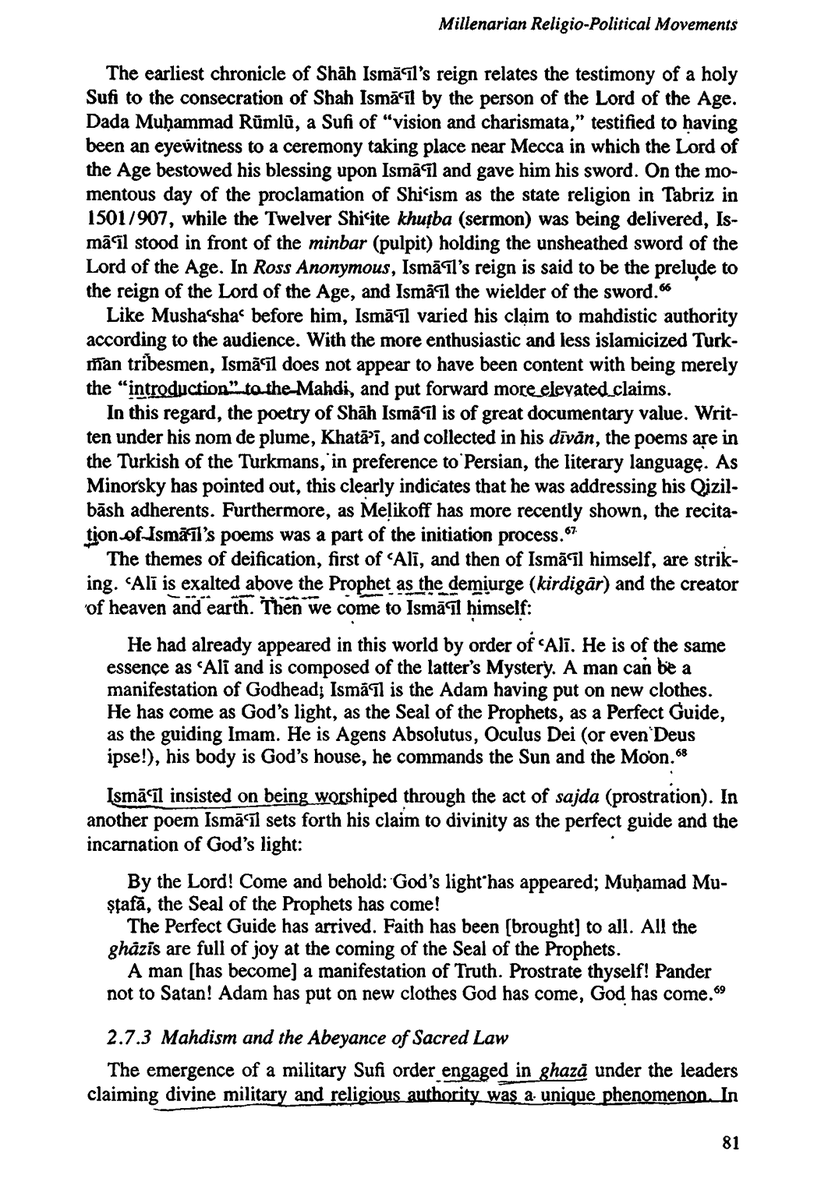
Apparently, Shah Ismail I claimed to have been directly appointed to his mission by the Twelfth Imam, who was even said to have bestowed upon him his sword. Furthermore, he presented himself as a mahdistic figure, advanced quasi-divine claims amounting to a form of apotheosis...
Wisdom is the practice of preparing and learning to die an intellectual death with the soul before one dies in the flesh. That is the غاية الحكيم (end-goal of the sage).
O ʿĪsā! Leave this world day by day.
- al-Kāfī, 8/132, no. 103, al-Amālī by al-Ṣadūq, no. 841
In some of the mystical books, it is attributed to the Prophet:
موتوا قبل أن تموتوا
“Die before you die.”
Preparing for death and learning to die
Plato The Metaphysician said:
κινδυνεύουσι γὰρ ὅσοι τυγχάνουσιν ὀρθῶς ἁπτόμενοι φιλοσοφίας λεληθέναι τοὺς ἄλλους ὅτι οὐδὲν ἄλλο αὐτοὶ ἐπιτηδεύουσιν ἢ ἀποθνῄσκειν τε καὶ τεθνάναι.
Other people are likely not to ...
theologically solve the issue of critical historians who have amply demonstrated that many of the stories in the Qurʾān were legends popular in the region or mythologized versions of some historical figures and events.
noted elsewhere, may also be read as conveying deeper metaphysical and spiritual realities rather than recounting a past historical occurrence as mentioned in the works of various mystical Ṣūfi and Shīʿī authors. This would seem to be a hermeneutic that would seek to ...
Qurʾānic stories and Historicity
Many philosophers and mystics have understood Qurʾānic narratives as conveying universal meanings that transcend their immediate historical context. These accounts are seen as addressing enduring features of the human condition, such that ...