

flo
11.5K posts


Google Gemini is the smartest AI right now.
But 90% of people prompt it like ChatGPT.
That's why I made the Gemini Mastery Guide:
→ How Gemini thinks differently
→ Prompts built for Gemini
→ 2000+ AI Prompts
Comment "Gemini" and I'll DM it free.
English


flo retweetledi
What is Pod Network? @poddotnetwork
I checked the whitepaper and came up with ⬇️…
Introduction
Every blockchain is built on blocks… except Pod. Pod is a new protocol developed to push latency to its limit by removing the very component that blockchains are named after. This is the block itself. So what happens when you take the block out of a blockchain? itself? This article explains the limitation that comes with block-based models of traditional blockchain networks and how Pod’s blockless design makes consensus faster and more efficient in performance.
- - - - - - - - - - - - - - - - - - - - - - - - -
A Brief History of Scaling
Since Bitcoin’s launch, blockchains have struggled with scalability. Bitcoin proved decentralized consensus could work but was limited to about 8 transactions per second. Early debates which focused on increasing block size led to splits in the community and ultimately, the creation of forks like Bitcoin Cash.
Ethereum expanded the possibilities with smart contracts, but congestion and high fees quickly showed the need for scaling also. Two approaches emerged: on-chain scaling, which changes the base layer (like Ethereum’s sharding plans), and off-chain scaling, which moves activity elsewhere while settling back on-chain (like Bitcoin’s Lightning Network and Ethereum rollups).
New Layer 1s such as Solana, Avalanche, and Near entered with designs optimized for speed and throughput. Solana, for example, uses Proof of History and parallel execution to process significantly more transactions per second. Today, scaling is about more than transaction speed and the struggle for the perfect balance between speed, decentralization and security continues.
- - - - - - - - - - - - - - - - - - - - - - - - -
What’s the Problem with Blocks (and Leaders)?
The current block system has a couple of disadvantages with respect to speed and scaling capabilities:
Latency Limitation
There is a fundamental latency limitation any consensus protocol has to face: confirmation cannot be faster than two network delays (2δ). You can think of “δ” as the delay that exists when a client first sends a transaction to the replicas, and then roughly the same delay again when replicas return confirmations to the client. Any decentralized network that wants to be censorship-resistant has to go through these delays if it is to keep its integrity.
The catch with block-based, leader-driven systems is that they don’t just deal with this natural bound, they stack extra waiting time on top of it. Leader election, block production, gossip, and voting all push confirmations further out than they need to be. @poddotnetwork is designed to work right at the 2δ limit but by also stripping out those layers so confirmation times run as close to the speed of physics as possible.
- - - - - - - - - - - - - - - - - - - - - - - - -
Consensus Overhead
Traditional blockchains rely on replicas or validators coordinating to agree on the next block. This coordination, often called consensus overhead, involves multiple rounds of message exchanges, voting, and verification. While this is very necessary for security, it adds significant delays to transaction confirmation. Even if the underlying network is fast, the back-and-forth required to establish agreement inflates network latency and limits the rate at which new transactions can be finalized.
- - - - - - - - - - - - - - - - - - - - - - - - -
Leader Selection Bottlenecks
Most blockchains appoint a temporary leader. Whether a miner in Proof-of-Work or a validator in Proof-of-Stake, to propose the next block. While this is efficient in theory, it creates a bottleneck: the entire network’s throughput depends on one party producing valid blocks on time. If the leader is slow, offline, or malicious, block production stalls, delaying every pending transaction. We have seen cases like this on Solana for example. This single-point dependency is an inherent weakness of leader-based systems.

English
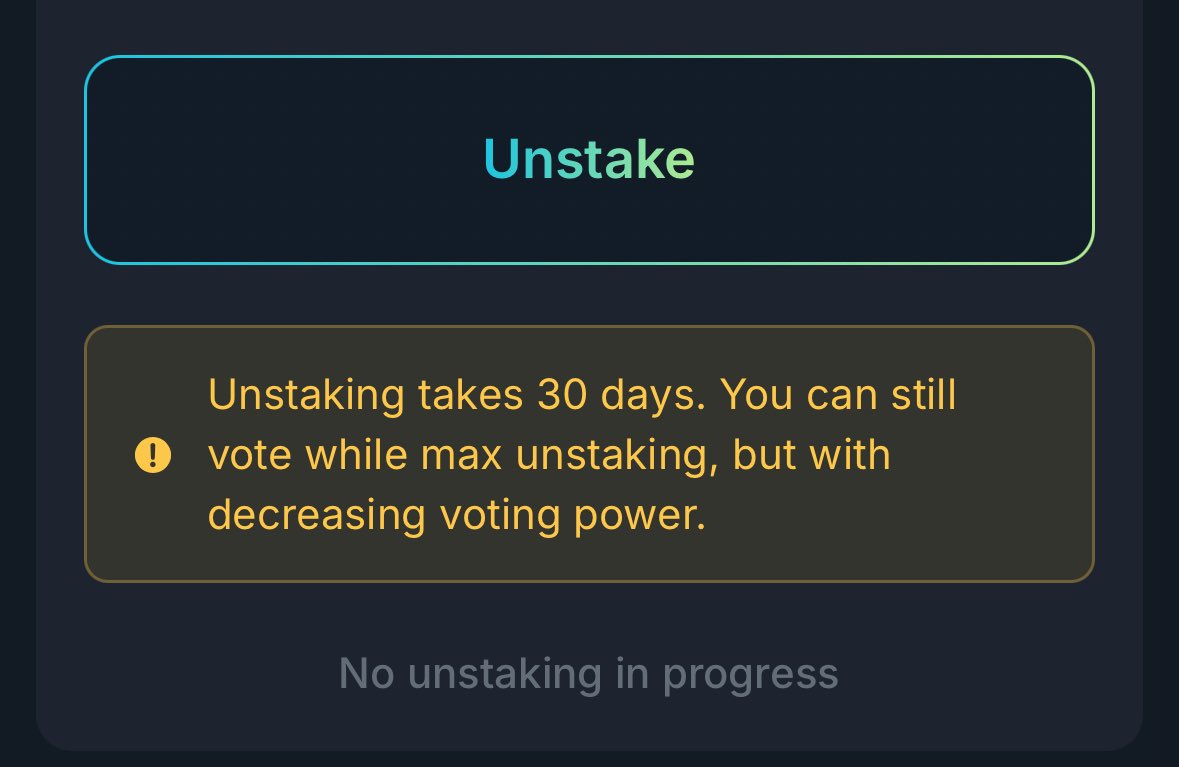
I staked some $JUP just to use one of their products thinking I can easily unstake and sell whenever I need money. 😭
RIP 😂.
English

I can't believe it's been 2 years.
Miss you so much🩷💀👑
@PSQFoundation

HANKO@hankobaggins
@pinkskullqueen I love you so much Bridget
English
flo retweetledi

Complete tasks, earn badges and earn your split of 20% of the $SNS supply today. LFG! 🔥
sns.id/lfg-campaign
English
flo retweetledi

I can’t say why exactly, but I need you to like and reply to this post.
English
flo retweetledi

🚨Dark Machine🚨
🚀The #1 Japanese GameFi x Network Anime🚀
Not just a game, not just an anime—it’s the synergy of both.
Year 2079💥. Underground mech battles rage for control of hyper-energy—while whispers of uncontrollable dark energy threaten to reshape the future.
For the first time, see it all come together- Anime x Game💥
English

intern is in the mood to grow the Solana pie.
tag someone that doesn't trade on Solana yet down below.
we'll DM them with a @jup_mobile invite with .1 SOL to get them started.
let's grow the best chain in the world, together 🥳
English
flo retweetledi

$GPS Candybomb is now LIVE - Deposit or trade to share 2,580,000 GPS airdrop!
🍬 Join now: bitget.com/events/candy-b…
Social giveaway: 400,000 GPS up for grabs!
🔹Follow @bitgetglobal @GoPlusSecurity
🔹RT with #GPSlistBitget
🔹Enter here: forms.gle/redpYcGVwTgk24…
🎁 1,000 winners will share the prize pool!

English
flo retweetledi

PSA. Please retweet
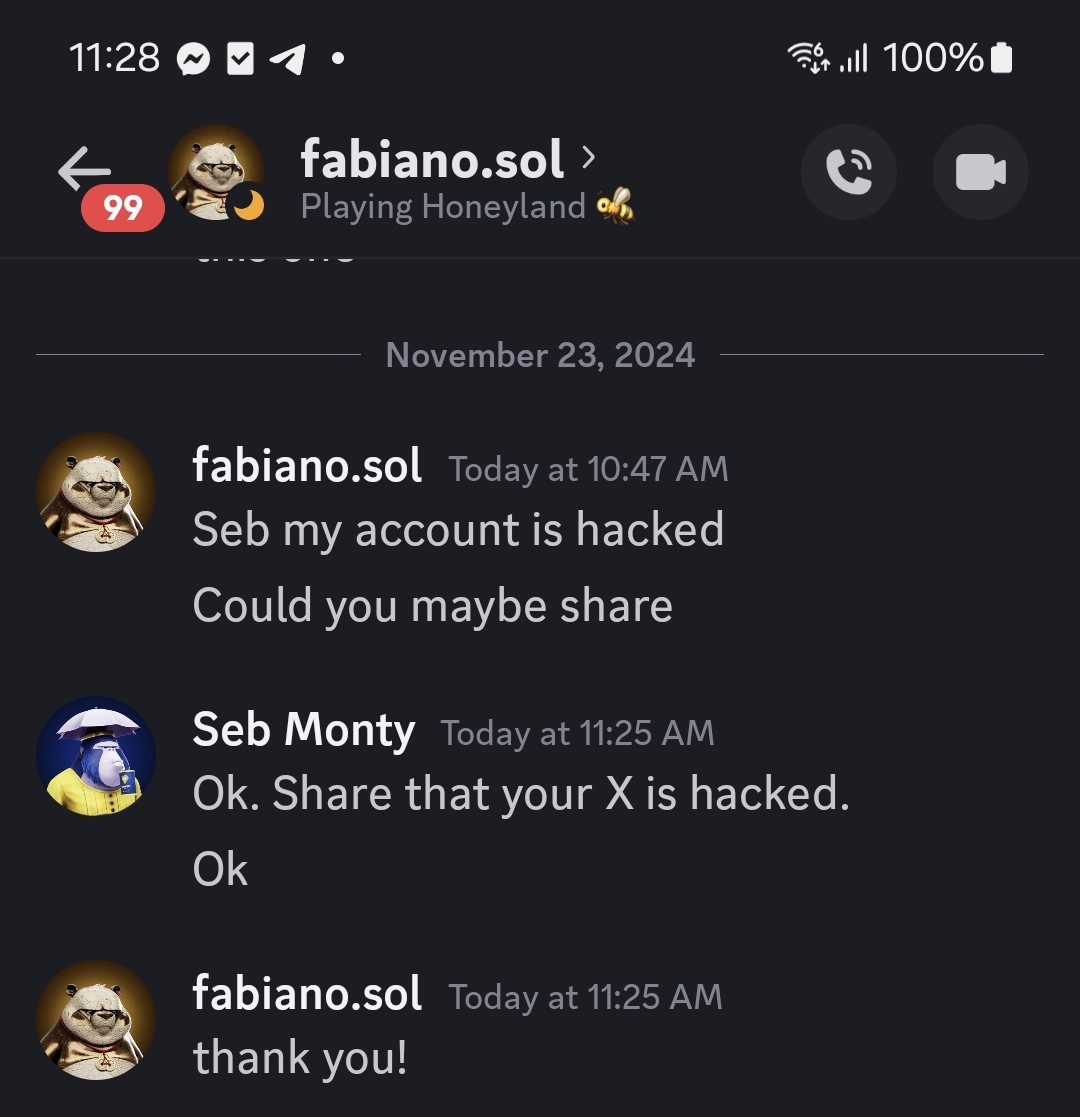
@FabianoSolana has had his X account locked out
He has a large audience so share this around. Don't interact with his posts until things are clear.
Possibly would be some tweet on a random memecoins or something, I imagine.
Instead, get some $SOL. DCA some $BONK and don't sleep, the market needs you hustling
#LetsBONK
English

I’ve spent 30 days designing a UNIQUE HERO SECTION for 30 different businesses.
This could absolutely change the way you look at WEB DESIGN.
I didn’t want to release this... but f*ck it, here it is—the COMPLETE FIGMA file!
FREE for 36 hours.
Like & reply “hero” and I’ll send it to you.
(Must follow for DM)
English
flo retweetledi

Implementing a STARK Verifier on Bitcoin
Computation can occur on Bitcoin while minimizing the amount of processing done directly through Bitcoin script……
Exploring how computation can be efficiently handled on Bitcoin while minimizing the actual computing done through Bitcoin script. The general strategy involves computation delegation, where the heavy lifting occurs off-chain (with potentially multiple contributors), and only the verification takes place on-chain using Bitcoin script.
English


Giving away 127 unique logos - the Figma file is yours for free.
Thousands of websites use these designs, and I want YOU to benefit from it too!
Who wants this?
Engage and comment “Wonderlist” to receive the link! (must be following)
English