Sabitlenmiş Tweet
dude•🪬
5.5K posts


dude•🪬
@Bradarmusic
Also produce music and design. 💫
london Katılım Haziran 2020
1.2K Takip Edilen213 Takipçiler



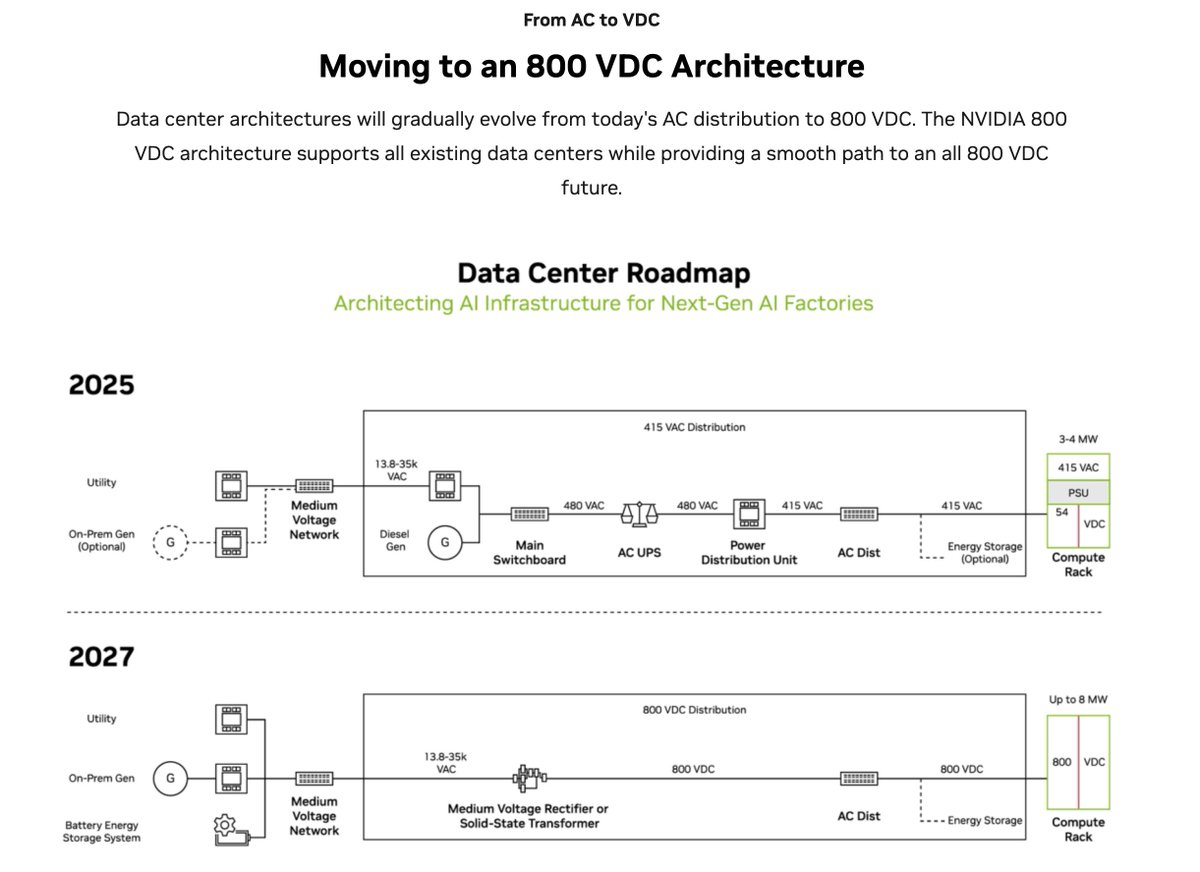
All right chat, crowdsourcing your #1 highest conviction (10x only) stock long for the Power Semi trade.
Especially given $NVDA pushing shift to 800 VDC.
Stuff like $NVTS or $WOLF, but high-beta, 10x potential only. Anywhere around the world.
What's your pick?
English
dude•🪬 retweetledi

Saw @ParadisLabs list of macro themes for AI infrastructure.
Mapped them against my own portfolio. Forced an honest gap analysis.
All 13 themes, what I own and what I’m missing. 🧵
Paradis Labs@ParadisLabs
Core Themes: CPU HBM/NAND Burn-in / test Glass core substrates ABF/InP substrates 800G/1.6T transceivers CW lasers/ELS SiPh foundry InP epi FAU SiC/GaN Fuel cells Transformers
English
dude•🪬 retweetledi

A team of researchers in New Zealand followed 1,037 babies from the day they were born for the next 45 years to find out what actually determines a successful adult life, and the strongest predictor they found had almost nothing to do with intelligence or family wealth.
The findings have been published in the most prestigious scientific journals in the world.
Almost no parent has heard of them.
His name is Avshalom Caspi.
Her name is Terrie Moffitt.
They are a husband and wife research team based at Duke University and King's College London, and the study they have spent their careers running is called the Dunedin Multidisciplinary Health and Development Study. It started in 1972 in a single hospital in Dunedin, New Zealand. Every baby born there in a 12-month window was enrolled. 1,037 of them. The study is still running today.
The retention rate is the part that should astonish anyone familiar with how research usually works. After more than 45 years, over 90 percent of the original participants are still being tracked. Most longitudinal studies lose half their sample inside ten years. The Dunedin team has lost almost nobody.
They measured everything. Blood. DNA. Brain scans. Income. Criminal records. Romantic relationships. Drug use. Dental health. Sleep. Mental health. Lung function. They flew participants who had moved abroad back to Dunedin every few years for a full day of assessments. Some of those people now live in seven different countries. They still show up.
For the first decade of life, the team did something nobody else was doing systematically. They measured each child's self-control. Not IQ. Not family income. Not parenting style. Self-control. They watched 3-year-olds in a research lab and rated their ability to wait, regulate frustration, follow instructions, and resist impulsive reactions. They added teacher ratings. They added parent ratings. They added the children's own self-reports as they grew older. They combined all of it into a single highly reliable score.
Then they did the thing nobody else had the patience to do. They waited.
When the data came in at age 32, the result was so consistent it should be illegal to teach a child without it.
The children who scored lowest on self-control at age 3 grew into adults with worse physical health, more substance dependence, lower incomes, more credit card debt, higher rates of single parenthood, more criminal convictions, and worse mental health than the children who scored highest. The pattern was not subtle. It was a clean gradient. Every step up in childhood self-control produced a measurable step up in adult outcomes across every domain the team could measure.
The detail that should disturb every parent reading this is what happened when the researchers controlled for the obvious objections.
When they controlled for IQ, the effect held.
When they controlled for family income and social class, the effect held.
When they compared siblings inside the same family, the sibling with lower self-control still had worse adult outcomes than the sibling with higher self-control. Same parents. Same house. Same dinner table. The trait was running independently of everything researchers expected to explain it.
The paper landed in the Proceedings of the National Academy of Sciences in 2011. The title was as plain as it gets. "A gradient of childhood self-control predicts health, wealth, and public safety." It has been cited thousands of times since. Almost no policy maker has acted on it.
The reason most people resist this finding is that it sounds like a sentence handed down before the child could speak. If the trait that determines your adult life is locked in by age 3, the rest of your life is a formality.
The Dunedin researchers say that is the wrong way to read the data.
They found something else in the same paper that almost nobody quotes. Some of the children whose self-control scores improved between childhood and adolescence ended up with adult outcomes far better than their early scores predicted. The trait is not destiny. It is a muscle. Children who learned to wait, regulate, and resist between ages 5 and 15 caught up with kids who started ahead.
Self-control is the one childhood trait nobody seems to teach on purpose anymore. Schools focus on test scores. Parents focus on activities. Coaches focus on performance. The part of the brain that decides between five seconds from now and five years from now is left to develop on its own, and the data shows it usually does not.
The most uncomfortable part of the research is the cost calculation Moffitt and Caspi ran. They estimated that if a country could move the bottom 20 percent of children up one rung on the self-control ladder, it would measurably reduce healthcare spending, welfare dependency, and incarceration costs at the national level. The intervention is cheaper than almost any other public health investment available. Almost no country has tried it at scale.
The reason adults struggle with money, weight, addiction, and relationships is rarely intelligence. It is the gap between what you want right now and what you want in ten years, and which side of that gap your nervous system is built to listen to.
Most people lost that fight at age 4 and never went back to learn the technique.
You were not behind because life dealt you a bad hand.
You were behind because the part of you that decides between right now and the rest of your life was never taught how to choose. The good news is the muscle is still there. Almost nobody trains it after age 10.
You can be the one who does.

English
dude•🪬 retweetledi

This has a clinical name. Revenge bedtime procrastination. And the ADHD version runs on a completely different mechanism than the neurotypical one.
A neurotypical person stays up late because they want more leisure time. The ADHD brain stays up because it spent every drop of dopamine it had on executive function during the day. Sitting in meetings, managing transitions, filtering impulses, remembering the thing you were supposed to remember. That burns through dopamine the way sprinting burns through glycogen. By 10pm the tank is empty.
But here's where it gets counterintuitive. The exhaustion is physical. The dopamine deficit is neurological. Those are two separate systems. Your muscles want sleep. Your prefrontal cortex is starving for the stimulation it was denied all day because it spent 14 hours on task-switching and impulse control instead of anything that actually felt rewarding.
The phone at midnight is the brain trying to collect what it's owed. Low-effort, high-stimulation content. Scrolling, short videos, rabbit holes. The exact profile of activity that delivers dopamine without requiring the executive function you already depleted.
The sleep researchers call this a "self-regulation failure." It's closer to a debt collection. You borrowed against your own reward system to function all day. The bill comes due at midnight. And the brain will not let you sleep until it gets paid.
🍂@Lovandfear
ADHD people being mentally and physically exhausted but still staying up because they didn't get enough "me time" after surviving the whole day.
English
dude•🪬 retweetledi


Some books from where I took ideas for this article:
- The Wealth of Nations
- Zen and the art of Motorcycle Maintenance.
- Jefferson’s bio & his writings.
- Jeff Bezos’s shareholder letters.
- The Origin of Species.
- Notes from Underground.
- Deep Simplicity.
- Conditioned Reflexes.
- Built from Scratch.
- Fingerprints of the Gods.
- Cicero’s speeches.
- Snowball, Buffett’s bio.
- Poor Charlie’s Almanack.
- Ice Age.
- The Principia.
- Newton’s correspondence.
- Darwin’s autobio.
- Scale.
- Michael Mauboussin’s articles.
- Buffett’s shareholder letters.
- Sam Walton’s autobio.
Giuliano@Giuliano_Mana
English
dude•🪬 retweetledi
dude•🪬 retweetledi

最可怕的不是他5个月32倍,是他把投研这件事外包给了AI
最近X上有个很火的美股交易员👉,「前 RISC-V Foundation 成员,AI 研究科学家;现在的工作是——交易那些没人注意到的瓶颈。」
看起来就是一个喜欢在网上吹牛的散户,对吧?直到我看到了他2026年5月晒出的那张收益截图。
2026年至今(5个半月):+3,152.77%。
不是32%。是32倍。
而且这已经是「回撤之后」的数字。他在2025年7月才注册这个账号,到2025年底的半年里已经做到了630%的回报。
他买了23只股票。没有一只涨幅低于100%。涨得最多的那一只,翻了84倍。
如果你2026年1月1日给他1万美金,到5月20日,你可以拿回32.5万美金。10万进去,325万出来。
涨得最少的一只,翻了一倍。涨得最多的那一只,翻了84倍。
所以我把他这几个月的推特全部扒了一遍,发现这个人不是传统意义上的「基本面研究」。
他做的事情,我称之为——
「AI驱动的全球供应链瓶颈套利」。
👉23只股票,23次提前预知市场
这23只股票有一个共同特点:它们都不是什么明星股,全是你可能从没听过名字的公司。
但恰恰是这些没人注意的公司,每一只都精准地卡在AI产业链的「咽喉」位置——一旦断货,整个行业都得停下来等。
他看的是更底层的问题:如果AI继续扩张,哪一环会先不够用?
AI产业链的第一层瓶颈,比如GPU、HBM、电力、数据中心,已经被所有人盯烂了。真正能出超额收益的,往往是第二层、第三层:光模块、激光器、InP衬底、SOI晶圆、外延设备、晶圆级测试、IC载板、特殊玻纤。
最典型的是 AXTI。Serenity 在 Reddit / WSB 上发过一篇很夸张的帖子,把 AXTI 写成整个西方AI建设的“单点故障”:不是因为它名字响,而是因为 InP 衬底和上游材料卡在光通信、硅光、CPO这条线上。
👉他到底怎么实现的:普通人用AI看研报,他用AI制造研究差
很多人一听“AI投资”,脑子里想的是:问ChatGPT买什么股票,问DeepSeek这家公司好不好,问Perplexity总结一下财报。
这基本没用。因为同一个问题,所有人都能问,所有人都能得到差不多的答案。Serenity 的用法更像是把AI当成一整个投研助理团。
1. 先让AI拆产业链,而不是让AI推荐股票
如果全球AI数据中心继续扩张,从GPU、HBM、网络、光模块、衬底、外延、测试、封装、PCB、玻纤到电力,分别会卡在哪里?这个问题一变,答案就完全不一样,你会得到一张产业链地图
。
2. 再让AI沿着每个环节找供应商
比如你拆到光通信,就继续问:光模块里最难扩的是哪一段?激光器供应商有哪些?InP衬底谁供?外延片谁做?这些公司是上市公司吗?市值多大?过去有没有进入核心客户供应链?
3. 然后让AI做交叉验证,而不是只听一个故事
这个瓶颈会不会被替代?这家公司有没有产能?客户有没有验证?收入什么时候可能体现?有没有被稀释风险?有没有地缘风险?有没有管理层问题?估值是不是已经透支三年?
真正值得学的是问题 。
Serenity 这件事给普通人最残酷的提醒是:AI没有让投资变简单,AI只是把“研究量”的上限抬高了。
他的核心方法论可以压成五句话:
先确认超级趋势,不在小风口里找幻觉。
把趋势拆成物理供应链,不停留在概念层。
找第二层、第三层瓶颈,不追已经被充分定价的龙头。
用AI扩大检索、整理和反证能力,不让AI直接替你拍脑袋。
最后用人的产业理解和风险纪律决定仓位,而不是让模型替你冲。
Serenity在字典上是「宁静、安详」。
真正的宁静,不是不关心外界。而是当整个市场都在为「英伟达又涨了」而喧嚣、为「某某概念又火了」而狂热的时候——你却安静地坐在那里,看着一张全球供应链的地图,思考一个问题:
「如果AI继续扩张——下一个会被卡住的环节,在哪里?」
这个问题,才是他5个月32倍的真正秘密。

中文
@aleabitoreddit Dont get too defensive bro. Ignore all that, this just makes you look bad - you’re goated 👊
English
I love how pointing out that ideas and market percentage validation.
Matter more than net worth.
Triggered all the “trust me I’m rich” grifters selling expensive paywalls or courses.
It’s good retail is starting to wake up if the older models feel threatened.
English

@aleabitoreddit Well since you replied to me directly I do agree % returns speak to the validity of the thesis, while a dollar amount speaks to the actual conviction of the investor. As for your returns, run the ytd returns for your picks when you had a 10k following Vs 100k that chase😊
English
I don't post dollar amounts because they don't matter.
What matters is return %. Speaking of that...
YTD: 3840.39%.
I'm probably the only one in the world. Who called out multiple names that 10x'd in a short timeframe.
Do you remember these thesis anon?
1. $AXTI
2. $SIVE
3. $AAOI
4. $LITE
5. $IQE
6. $AEHR
7. $CRCL
8. $EWY
9. Unimicron
10. Nitto Boseki
11. $OSS
12. $GDRZF
13. $RPI
14. $SOI
15. $ALRIB
16. $SNDK
17. $SIMO
18. $VPG
19. $TSEM
20. $ARM
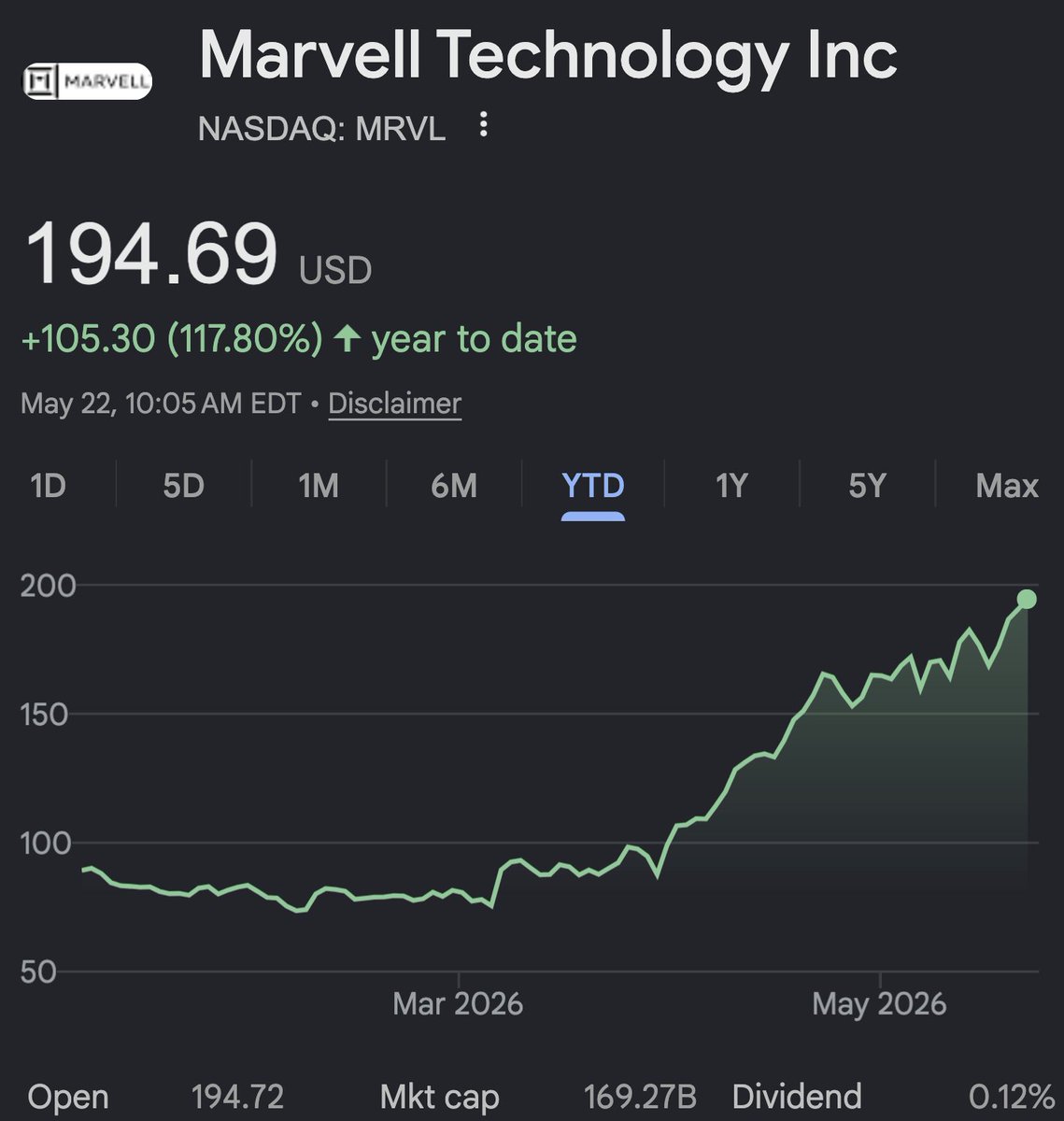
21. $MRVL
22. $INTC
23. $LPK
24. $NBIS
25. $MU
They're all up 100-1000%+, because...
1. I post a thesis.
2. People can see how the stock performs months later.
3. They turn out right (thesis validation) because they're up hundreds of percent + hold their returns.
I really dislike the traditional X influencer who shows large dollar amounts or fancy watches/cars/private jets.
Then use that to get more by selling expensive subscriptions rather than through market returns.
So trying to set a new trend off pure information discovery/synthesis from free thesis posts and the results that follow in terms of return percentages.
TLDR: Market returns in terms of percentages matter the most to validate a thesis.
Not the dollar amount made.

krasko@krasko1199362
@aleabitoreddit Notice there's no dollar amount attributed
English
@PrivCreditGuy @nortonbreads @aleabitoreddit There’s no telegram for serenity that’s fake bs bring peddled
English

@nortonbreads @aleabitoreddit His telegram is prolly printing 😂
English

@can Gee, our loss, I guess. We'll just have to persevere without low IQ Indians and Chinese spies somehow.
English

china could drop a nuke in silicon valley and still wouldn’t do this much damage
Homeland Security@DHSgov
An alien who is in the U.S. temporarily and wants a Green Card must return to their home country to apply. This policy allows our immigration system to function as the law intended instead of incentivizing loopholes. The era of abusing our nation’s immigration system is over.
English
dude•🪬 retweetledi

this is like actually terrifying...
Shipper@shipper_now
BREAKING: Today, we closed the chapter on vibe coding. I just witnessed my Mac erase a $31B company in 186 seconds. This is beyond insane.
English
dude•🪬 retweetledi

This is great writing and what high-quality recruiting looks like today.
Some notes on what I love... It's very easy to read and not trying to sound fancy. It uses basic words. You should write how you speak!
It's humble, including some numbers, but not trying to overhype. There's a level of comfort in himself and his ideas you can feel.
It makes you root for him and his background. You might even relate to some of the examples (I also learned video editing at a young age). People want to work with people they like.
It uses humor without being over the top. This makes it feel written by a human and not some AI slop.
"I don’t care if you are broke film student who works at Starbucks or an OpenAI researcher getting paid a milli by Papa Sam."
Finally, one of my favorite parts is just cutting the normal resume / application crap and going straight to what you've built.
"Do not send me your resume. If you wanna do design here, show me a design for Clicky. If you wanna be a filmmaker here, great, record a video for Clicky and show me."
Nice work @FarzaTV!

Farza 🇵🇰🇺🇸@FarzaTV
I am building a team. If you're really really really good at building stuff, design, filmmaking, writing, pushing the models to their limits, or just making people care about a product at mass, certainly reach out. Let's collab + make stuff. Details: docs.google.com/document/d/1sf…
English
dude•🪬 retweetledi

Big fan of teaching more people the basics of using Claude Code in an accessible way.
So much of the world has not yet used agents. There's a lot of opportunity to level the playing field and expand access.
itay shmool 🇮🇱☮️✨️@IShmool
I built "zero2claude", a free course that takes people from zero terminal experience to shipping with Claude Code. The curriculum goes from absolute zero → software basics → Claude Code fundamentals → advanced usage. No shortcuts, no assumptions. 17,000+ students. 7 languages. ~500 active hourly. No marketing. No ads. Pure word of mouth. The entire platform? Built and operated by one person with Claude Code. Lighthouse audit: ✅ Performance : 96 ✅ Accessibility : 100 ✅ Best Practices : 100 ✅ SEO : 100 Production stats: ~6.4M requests/day. 74 req/sec sustained. <0.003% error rate. Claude Code doesn't just write code. It builds production-grade, scalable products. The best way to grow Claude Code adoption isn't to simplify the tool. It's to level up the people. Give fishing rods, not fish. Free. No paywall. My contribution to the community. Link in the comments 👇
English
dude•🪬 retweetledi

Earlier this year I was getting frustrated with Claude's charts, fed this book to claude and had it generate a Tufte skill. Instantly got simpler/more beautiful visualizations.
gist.github.com/aparente/e48c3…
Anjney Midha@AnjneyMidha
if you run an ai lab, pls ensure your team has read this before putting any charts out into the world
English

dude•🪬 retweetledi

Boris Cherny, the creator of Claude Code at Anthropic, just explained why most people aren't getting real results from Claude
in this podcast he breaks down exactly how most people never actually set up Claude:
- the 14% you lose to CLAUDE.md before typing a word
- the features that change how Claude thinks before you type a word
- the settings 95% of users have never opened
- the workflows hiding behind one toggle
if you've been using Claude for more than a month and never left the chat window, you have at least 30 untouched features. probably 38
instead of another show tonight, watch this
make sure to bookmark it before it gets lost in your feed
my breakdown of all 40 features is below
Khairallah AL-Awady@eng_khairallah1
English
dude•🪬 retweetledi