Abelard Lindsay
767 posts

Abelard Lindsay
@ciltep
I am the creator of the CILTEP stack. Software engineering. Medical research. Transhumanism. Making people smarter by designing better nootropics.


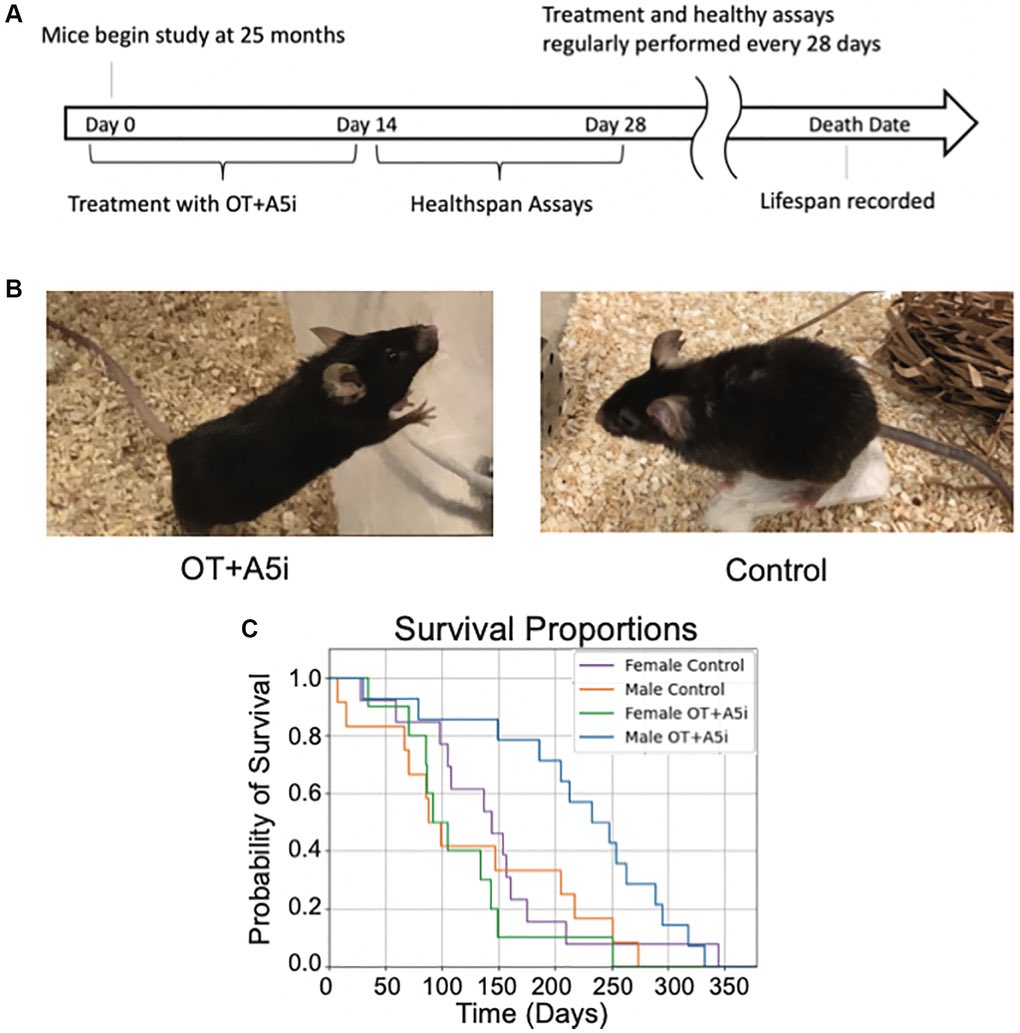
David Sinclair's lab may have just found the $100 pill that reverses aging. Over the holidays, his team ran what he calls a "hail mary experiment." They gave old mice a "longevity" cocktail three times a week for 4 weeks. He didn't reveal what's in it - only that it contained molecules that work on the four longevity pathways that control the epigenome. They weren't expecting any significant results. Yet every treated mice came back physiologically younger while the controls didn't. Biological age clocks confirmed the reversal. This changes the trajectory for longevity medicine. The gene therapy his company is taking into human trials costs over $10 million to manufacture per batch. It requires a direct injection into the target organ. These oral molecules cost roughly $100 for a month's course. If they're able to put these molecules into a pill that patients can take instead of them using a multi-million dollar gene therapy, they'd save a ton of money. "Imagine in 10 years you just take a pill for 4 weeks and you get younger. That's what we're headed towards. I can see how this is going to happen." The proof of concept exists in animals. Now it's a race to get it into humans. — David Sinclair (@davidasinclair) on Peter Diamandis' (@PeterDiamandis) Moonshots podcast PS. David Sinclair is speaking at SynBioBeta on May 6th this year, discussing the science of slowing and reversing aging. If longevity is the world you're in, the investors, partners, and scientists shaping this space will be in the room. You won't want to miss it: syntheticbiologysummit.com/tickets?utm_so…


In my talk, I mentioned that selegiline's neurotoxicity blockade could extend beyond the substantia nigra and brain . . . that it might well protect the neurons involved in hearing. I noted my hearing being uncharacteristically acute, understanding conversations outside with windows closed and so forth. This may be why: when neurons encounter various stresses, including stress injury from loud noise, they often respond by initiating apoptosis and clearance. Sure enough, here's a recent paper on this very topic: pmc.ncbi.nlm.nih.gov/articles/PMC79… pubmed.ncbi.nlm.nih.gov/33799684/