
LEADING Business Solution GmbH

4.3K posts

LEADING Business Solution GmbH banner
LEADING Business Solution GmbH

LEADING Business Solution GmbH

@crmonline

Projektübernahme & Delivery für kritische Microsoft-Vorhaben. Dynamics 365 · Power Platform · Azure · Senior-only · Architekt als Owner

Cloud | Germany | Cologne Katılım Ocak 2014
920 Takip Edilen3.3K Takipçiler
LEADING Business Solution GmbH retweetledi
Ajit kumar
Ajit kumar@ajitcodes·
Learn AI for free directly from top companies. 1 - Anthropic: anthropic.skilljar.com 2 - Google: grow.google/ai 3 - Meta: ai.meta.com/resources/ 4 - NVIDIA: developer.nvidia.com/cuda 5 - Microsoft: learn.microsoft.com/en-us/training/ 6 - OpenAI: academy.openai.com 7 - IBM: skillsbuild.org 8 - AWS: skillbuilder.aws 9 - DeepLearning.AI: deeplearning.ai 10 - Hugging Face: huggingface.co/learn 👇Comment "Learning" if you find this helpful. Repost so others can take help. Must bookmark for future reference.
Ajit kumar tweet media
English
14
50
223
13.6K
LEADING Business Solution GmbH retweetledi
Dhairya
Dhairya@dkare1009·
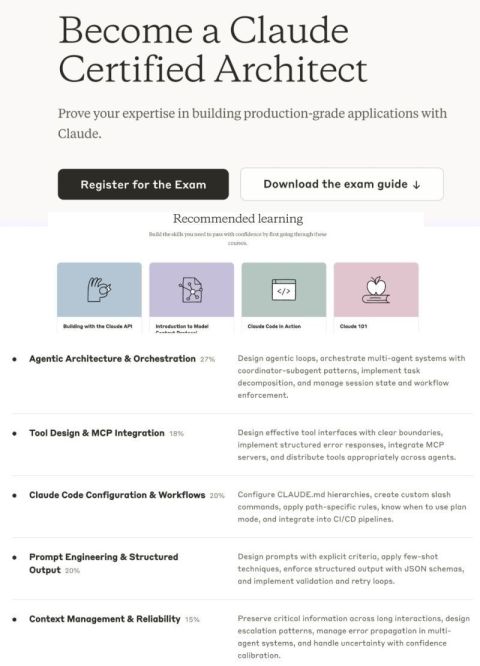
🚨 Anthropic just launched its first official AI certification And it's FREE ! Here's everything you need to know 👇 📌 What it is: The Claude Certified Architect, Foundations (CCA) launched on March 12, 2026 It's a proctored, 60-question exam testing real production architecture decisions 📌 What it covers: 1. Agentic Architecture & Orchestration → 27% 2. Tool Design & MCP Integration → 18% 3. Claude Code Configuration & Workflows → 20% 4. Prompt Engineering & Structured Output → 20% 5. Context Management & Reliability → 15% The biggest chunk is agentic architecture That tells you exactly where the industry is heading 📌 How to access it : Prep courses → Free for everyone on Anthropic Academy Exam → Free via the Claude Partner Network (any org can join) 🔗 Register : lnkd.in/d_7T_wb9 🔗 Prep courses : lnkd.in/dXU7xr_v Want more guides and updates like these ?
Dhairya tweet media
English
14
70
579
53.3K
LEADING Business Solution GmbH retweetledi
Rohit
Rohit@ai_rohitt·
The creator of Claude Code teaches more about vibe-coding in 30 minutes than most tutorials do in hours. Save this — it'll change how you build forever.
English
35
611
4.1K
563.8K
LEADING Business Solution GmbH retweetledi
Suryansh Tiwari
Suryansh Tiwari@Suryanshti777·
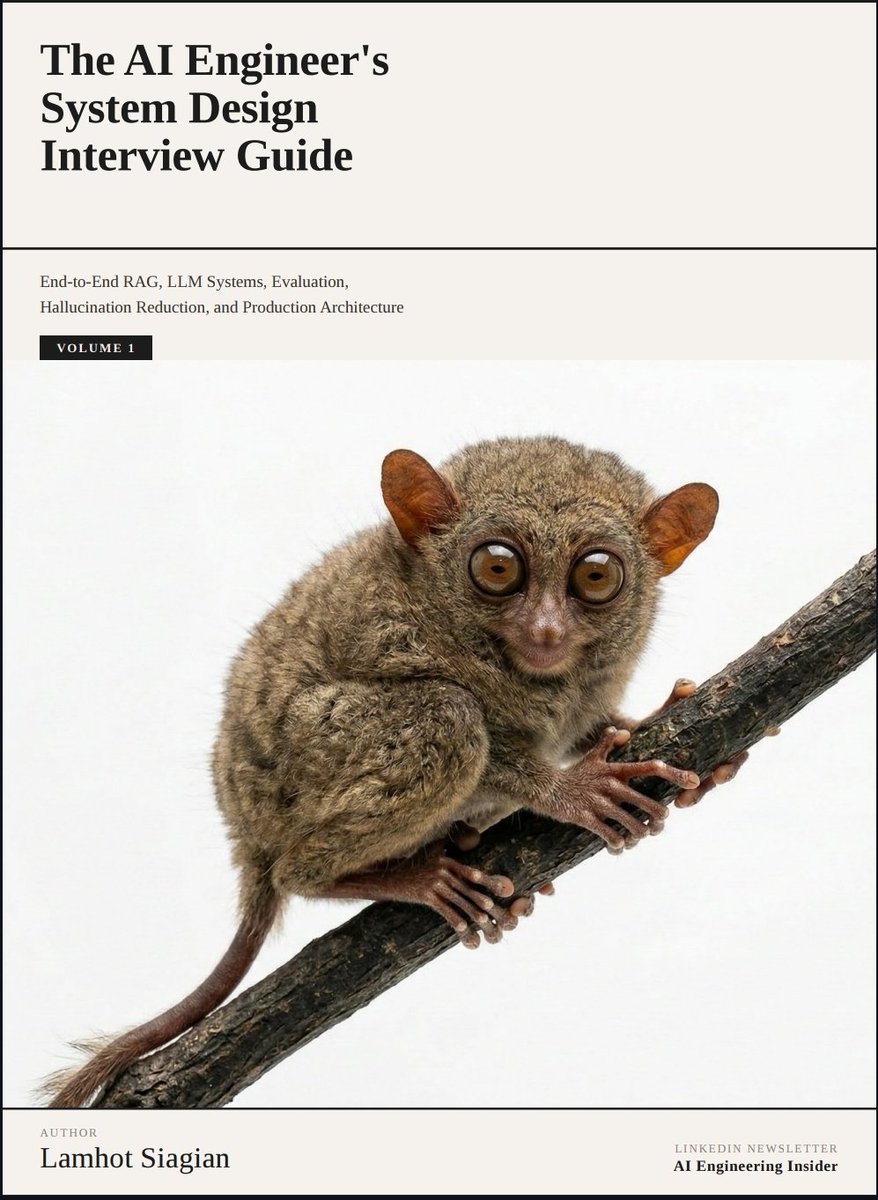
This AI System Design guide teaches RAG better than most courses. And I'm giving it away for free (Only for First 4500) Inside: • RAG fundamentals & chunking strategies • Hybrid retrieval (BM25 + vector search) • Production-level RAG architecture • Evaluation & RAGAS metrics • Hallucination reduction techniques • End-to-end LLM system design How to get it: • Follow me (must so I can DM) • RT + Like • Comment "book" I'll dm you
Suryansh Tiwari tweet media
English
948
569
1.9K
134K
LEADING Business Solution GmbH retweetledi
LEADING Business Solution GmbH
🇩🇪 We’re hiring. Join a team of specialists who get things done – structured, focused, and together with genuinely good people. ❌No chaos. ❌No politics. Just solid work and a strong team.
English
0
1
0
106
LEADING Business Solution GmbH retweetledi
Ashish Pratap Singh
Ashish Pratap Singh@ashishps_1·
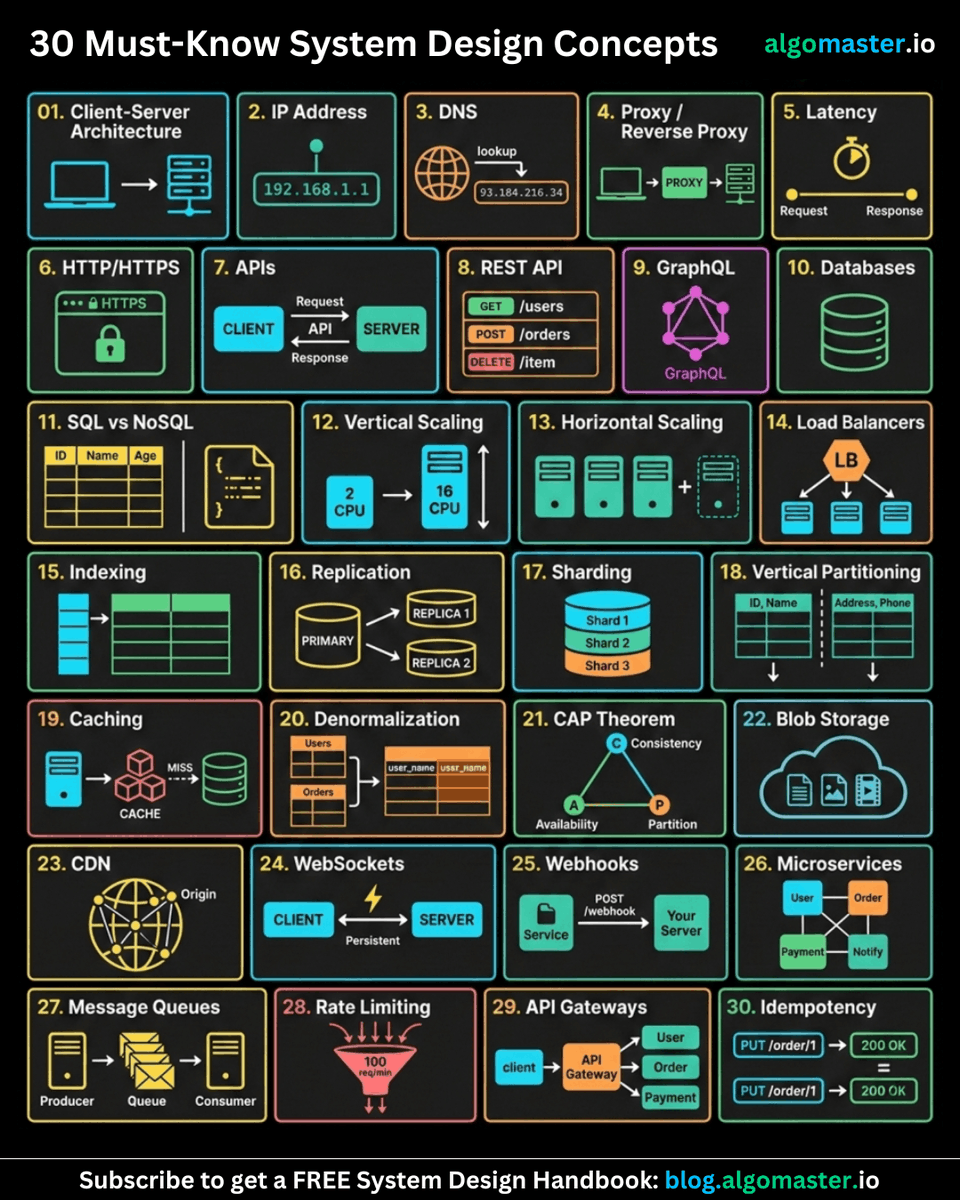
If you want to get good at System Design in 1 month, learn these 30 concepts in the next 30 days: Thread (with resources) ↴
Ashish Pratap Singh tweet media
English
9
151
728
40.2K
LEADING Business Solution GmbH retweetledi
Shraddha Bharuka
Shraddha Bharuka@BharukaShraddha·
Most people use these terms like they mean the same thing: Generative AI Agentic AI AI Agents They don’t. Confusing them leads to bad product decisions. Here’s the simplest way to understand the difference 👇 ━━━━━━━━━━━━━━━ 1️⃣ Generative AI You give a prompt. AI generates something. → Text → Images → Code Powerful, but reactive. No planning. No decisions. No execution. Think: content creation engines. ━━━━━━━━━━━━━━━ 2️⃣ Agentic AI Now AI starts to reason and plan. It can: • Choose tools • Call APIs • Break problems into steps • Execute workflows Still guided. Still controlled. But much more useful for real business tasks. Think: AI with intent. ━━━━━━━━━━━━━━━ 3️⃣ AI Agents This is where things change completely. AI Agents can: • Act autonomously • Adapt to environments • Execute multi-step tasks • Improve from outcomes They don’t just respond. They operate systems. Think: digital workers. ━━━━━━━━━━━━━━━ Why this matters: If you use Generative AI where you need Agents → you hit a ceiling fast. If you deploy Agents without guardrails → you create chaos. The future isn’t just: “AI that talks.” It’s: AI that works. Are you still experimenting with prompts or already building agent-first systems? 👇 #AI #AgenticAI #AIAgents #GenerativeAI #Tech #Startups #AIEngineering
GIF
English
34
160
592
43.1K
LEADING Business Solution GmbH retweetledi
tut_ml
tut_ml@tut_ml·
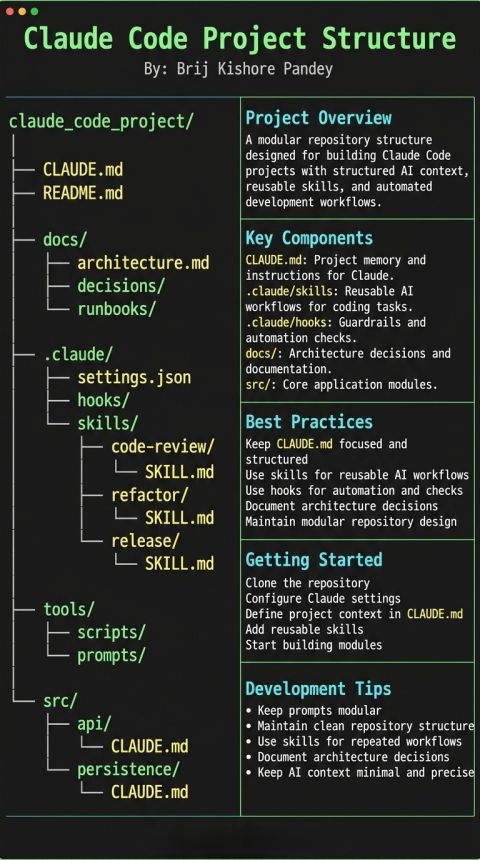
Most people treat Claude Code like a smarter chat window. That works… until your project grows. This structure highlights something deeper: once you move beyond single prompts, you need separation of concerns. The same principles we use in software engineering apply here, too. Look at the layout carefully. CLAUDE.md is not just a note file. It becomes project memory. It defines: → Standards → Constraints → Tone → Non-negotiables → Guardrails Instead of repeating instructions in every prompt, you centralize them. That reduces token waste and behavioral drift. Then you see skills/. This is where things get powerful. A skill is essentially a reusable workflow. If you’re repeatedly doing: -Code reviews -Refactoring -Output formatting -Structured analysis It should not live in an ad-hoc prompt. It should live as a reusable capability. That shifts you from prompting to system design. Next, hooks/. Hooks are underrated. They let you enforce checks: → Clean tool output → Validate structure → Log commands → Transform JSON If you’re not using hooks, you’re manually correcting outputs that could have been automated. Then the repository itself stays modular: -docs/ for architecture decisions -src/ for actual logic -tools/ for scripts and utilities This prevents your AI layer from bleeding into your application layer. When I started organizing projects this way, three things improved: -Fewer repeated instructions -More predictable outputs -Easier collaboration Especially once you add: → Subagents → MCP integrations → GitHub Actions automation → Plugin development Without structure, context becomes clutter. With structure, Claude operates within clear boundaries. This is not about making things complex. It’s about treating AI workflows like first-class engineering components instead of temporary chat experiments. If you're learning Claude Code and want to see how I implement this step by step, from installation to CLI usage, skills, hooks, subagents, MCP, GitHub Actions, and plugins, I’ve recorded the full process while building real workflows. This is the Claude Code Full Course Link- youtube.com/playlist?list=… Image Credit- Brij Kishore Pandey Happy Learning! #claudecode #claudeai
tut_ml tweet media
English
14
94
561
39.9K
LEADING Business Solution GmbH retweetledi
Aastha
Aastha@aastha_mhaske·
Master AI agents 📚📘
GIF
Français
1
25
120
6.5K
LEADING Business Solution GmbH retweetledi
Guri Singh
Guri Singh@heygurisingh·
🚨 BREAKING: Anthropic has launched free courses to master AI with certificates for $0.00 anthropic.skilljar.com
Guri Singh tweet media
English
7
29
123
14.9K
LEADING Business Solution GmbH retweetledi
tut_ml
tut_ml@tut_ml·
Most people treat Claude Code like a smarter chat window. That works… until your project grows. This structure highlights something deeper: once you move beyond single prompts, you need separation of concerns. The same principles we use in software engineering apply here, too. Look at the layout carefully. CLAUDE.md is not just a note file. It becomes project memory. It defines: → Standards → Constraints → Tone → Non-negotiables → Guardrails Instead of repeating instructions in every prompt, you centralize them. That reduces token waste and behavioral drift. Then you see skills/. This is where things get powerful. A skill is essentially a reusable workflow. If you’re repeatedly doing: -Code reviews -Refactoring -Output formatting -Structured analysis It should not live in an ad-hoc prompt. It should live as a reusable capability. That shifts you from prompting to system design. Next, hooks/. Hooks are underrated. They let you enforce checks: → Clean tool output → Validate structure → Log commands → Transform JSON If you’re not using hooks, you’re manually correcting outputs that could have been automated. Then the repository itself stays modular: -docs/ for architecture decisions -src/ for actual logic -tools/ for scripts and utilities This prevents your AI layer from bleeding into your application layer. When I started organizing projects this way, three things improved: -Fewer repeated instructions -More predictable outputs -Easier collaboration Especially once you add: → Subagents → MCP integrations → GitHub Actions automation → Plugin development Without structure, context becomes clutter. With structure, Claude operates within clear boundaries. This is not about making things complex. It’s about treating AI workflows like first-class engineering components instead of temporary chat experiments. If you're learning Claude Code and want to see how I implement this step by step, from installation to CLI usage, skills, hooks, subagents, MCP, GitHub Actions, and plugins, I’ve recorded the full process while building real workflows. This is the Claude Code Full Course Link- lnkd.in/gA_thjGq Image Credit- Brij Kishore Pandey Happy Learning! #ClaudeCode #claudeai
tut_ml tweet media
English
39
265
1.8K
124.1K
LEADING Business Solution GmbH retweetledi
Ihtesham Ali
Ihtesham Ali@ihtesham2005·
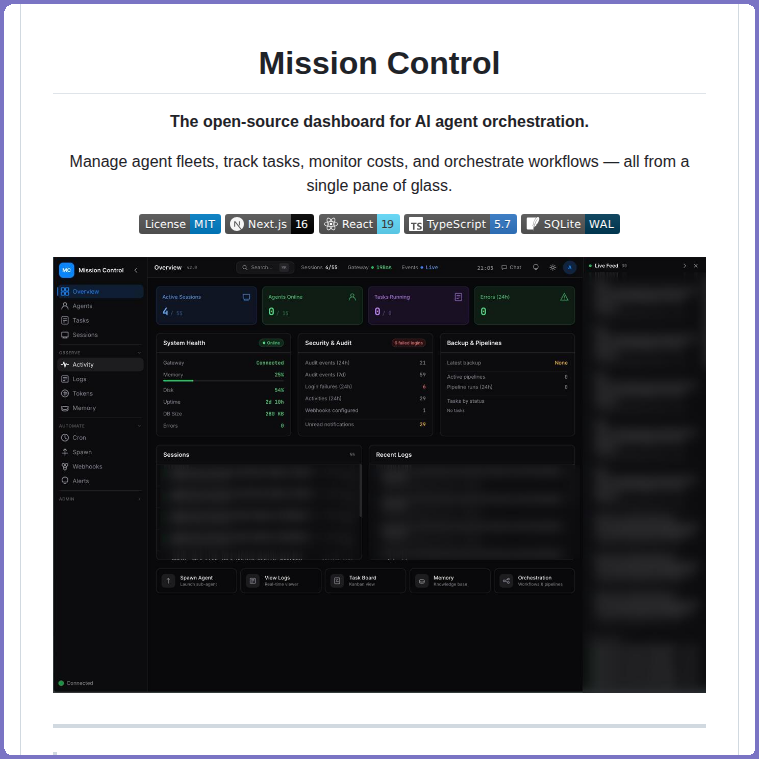
🚨 This GitHub repo just changed how I use Claude Code forever. It's called claude-code-best-practice and I'm annoyed I didn't find it sooner. I spent months manually re-explaining my stack every session. This repo ends that permanently. Here's what it ships with: → Production-ready agents that run without hand-holding → Persistent memory that never resets between sessions → Custom hooks wired to your exact workflow triggers → Skills built once, deployed across every project forever → Commands that make Claude Code feel like a full engineering team Everything I was building manually from scratch. Already done. Already working. Already open source. 100% Open Source.
Ihtesham Ali tweet media
English
19
56
695
61.4K
LEADING Business Solution GmbH retweetledi
Wiz
Wiz@wiz_io·
As MCP adoption grows, teams are moving quickly to secure how LLMs connect to tools and data. We put together 7 best practices to help you: - Lock down supply chains - Enforce least privilege - Add human oversight
English
4
12
64
107.9K