Dave Hodson retweetledi
Dave Hodson
7.4K posts

Dave Hodson
@davehod
Dir of Eng @ Google Cloud. Entrepreneur (https://t.co/Hyct9JqRYm, MessageCast). Prior:MSFT/Skype/AMZN. StartX. First Round. Marathons. Mentor. Investor. Advisor
Palo Alto, CA Katılım Mart 2007
2K Takip Edilen858 Takipçiler

@yoda Export you last 1000 songs. Import to ChatGPT and ask it to create a new playlist based off your songs. Say to add in songs that aren't your playlist too. Import that back to Spotify.
English

@biancoresearch Every 0.01% more (every basis point) is a billion dollars more in interest we have to pay
English

@levie Least privilege access (LPA) is going to become a big deal, perhaps the number one factor in the success (or failure) of agents.
English

AI Agents are *the* big topic for enterprises right now. In most conversations with IT leaders, this is the main thing they are figuring out strategies for.
There is a lot of excitement and momentum, and equally a realistic sense of the work that’s ahead. Here are some of the major topics that come up when companies start to think about deploying AI Agents at scale:
1. Agent interoperability: enterprises don’t have their data in just one environment. Salesforce may have their CRM records, Box their documents, Workday their HR data, or ServiceNow their HR and IT workflows; and plenty of Agentic use-cases will span these systems. As an industry we will need to design more interaction patterns for how AI Agents talk to each other and exchange data in the future.
2. Over-permissioned systems: lots of enterprises deal with the fact that software has “overshared” information over the years. This is fine when a human can’t possibly find everything across the tools, but a huge liability when Agents can get access to nearly anything, instantly, and return them to a user. Software products will have to take permissions and access controls more seriously, and we may need new AI Agent permission paradigms to help customers deal with this.
3. Data needs to be in an AI-ready environment: decades of technology being adopted in an enterprise means decades of systems that have important data but are not in environments that AI Agents can easily talk to. There will need to be a continued modernization push to modern, cloud environments, as retrofitting these systems will almost certainly not work.
4. Compliance: given we’re insanely early in the adoption of AI, most industries still haven’t figured out their official stance on where AI can provide suggestions or make decisions. Most regulated industries (like healthcare, life sciences, or financial services) are still in the early innings of developing shared standards for this, and some will need regulatory clarity to be able to do far more.
5. AI Agents executing the work: for a while the standard has been to have a human in the loop when AI is invoked in a workflow. But this becomes increasingly impractical for all steps of the work as workflows become more agentic. Companies will have to go through their own processes for setting their own policies on how much and when you can hand off to an AI Agent.
6. AI model quality: we continue to see rapid breakthroughs from the latest AI models on performance and capabilities, but for certain high value workflows we’re still not 100% there. For instance, you wouldn’t want to vibe code huge pieces of software for a production system, or rely only on AI for mission critical decisions fully just yet. This means we still need constant progress in the model space to get us there.
7. Change management: this will probably realistically take the longest. You can’t take a process that’s been run for decades or a century and expect it to radically transform overnight. In particular, most companies still are working what the best order is of deploying AI to get the biggest impact relative to the change required.
8. Business models of AI Agents: at the moment AI Agents still have a variety of business models being tested. Customers can somewhat feel that we’re early as an industry in getting to the ultimate pricing model of agents, and more stability here will likely go a long way.
In all, enterprises are rapidly trying to figure out this space, but the tech industry as well will need to continue to make major progress on these topics to accelerate the transformation. Exciting times ahead!
English

@michaelbatnick Tuesday TCAF. Josh. Oh my. Argentina and J curve — Milei wasn’t a tariff guy. Josh lost the plot.
English
Dave Hodson retweetledi

Caltrain deputy director built himself an apartment (with kitchen & shower) inside the Burlingame train station with $42k of public funds (each invoice <$3k), and it took 3 years for it to be discovered.
I demand a short documentary about this! I haven’t seen footage anywhere
Mercury News@mercnews
Ex-Caltrain employee, contractor charged with building secret homes at train stations trib.al/oK3NRf0
English

@brettgoldstein thx for the anniversary shout out at tonight’s show. Perfect ending to a great day!
English
Dave Hodson retweetledi

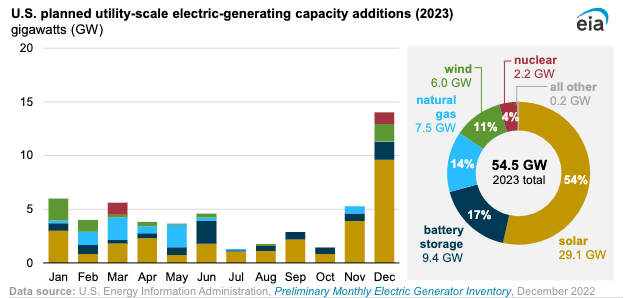
More batteries will be added to the U.S. grid in 2023 than in all previous years combined.
EIA forecast:
9.4 GW new capacity coming in 2023 vs
8.8 GW current total capacity
eia.gov/todayinenergy/…

English

@kelseyhightower Couldn't disagree more - factor in feature velocity/time to market, SLA/SLO, defense in depth etc etc and the monolith loses. No contest.
English

@Carnage4Life Pretty questionable source on the first video. Surprised you would post anything from that person.
English

@CaltrainAlerts and now adding insult to injury, we've pulled over same the Bullet that they told us not to wait for can pass us.
English

@CaltrainAlerts Still not moving in SF. Stuck before 22nd street going southbound. We all jumped on the local because they said the bullet would be 20 mins late. Get it together #caltrain.
English