
Sabitlenmiş Tweet
Anvesh
1.4K posts

Anvesh
@decentgrad
Main focus: psychiatry and improving brain functioning. Other interests: AI, IPL, infra developments, Bangalore traffic, politics etc. I run @blore_traffic
Bangalore Katılım Ekim 2008
684 Takip Edilen312 Takipçiler
Anvesh retweetledi

The quiet grief of adult friendship: One of the most beautiful articles I've read in a while. Hits hard
timesofindia.indiatimes.com/blogs/civil-ir…
English
@manachittooru The road is literally empty throughout. My guess - Google tracks all vehicles and averages the speeds. There are stationary/slow moving tractors and lorries which must be showing up as yellow. As traffic improves and patch works come down, this stretch should be uniformly green.
English

CTE has been showing mild to moderate congestion at some loactions in Google maps, even with sparse traffic.
Is it a glitch, or is it because of some patchworks going on?

English
Anvesh retweetledi

The Board High School in Chittoor was established in 1854 and later was renamed as PCR High School.
Second President of Independent India, Dr Sarvepalli Radhakrishnan & Sankarambadi Sundaracharyulu, the author of "Maa Telugu Talliki" taught in this school.

English
@BalajiS83715534 @manachittooru @NHAI_Official @rovijayawada you have to exit at baireddipalle. and then take the road to palamaner. from there its the normal route via chittoor.
English

@decentgrad @manachittooru @NHAI_Official @rovijayawada where did you exit after entering again and after that how did you travel to Chennai?
English
There is huge public demand for opening up the completed section of Bethamangala - Baireddypalle of Bangalore Chennai Expressway as it's contiguous with NH42.
Requesting @NHAI_Official & @rovijayawada to kindly consider this to ease the travel between BLR to CTR, TPT and further

English
@manachittooru @NHAI_Official @rovijayawada Sorry, I meant exited at Sundrapalya toll and drove towards VKota for about 2 kms before taking the cut and joining BCE.
English
@manachittooru @NHAI_Official @rovijayawada I travelled in this section yesterday. I got down at the Vkota toll, drove on the road to Baireddipalle and joined BCE a bit after. I am attaching the point where you can rejoin BCE. Some final works like painting are still going on. maps.app.goo.gl/CXyLHcQMhTuH6z…
English
Anvesh retweetledi


Anvesh retweetledi

We routinely do things to students that we would never tolerate from another adult. If someone walks up to you at a party and starts lecturing you about bitcoin or the history of Venice or anything at all without asking what you think, your eyes start looking around the room. Who else can I talk to? How do I escape this person?
We would never accept that socially from a peer. We'd think they were rude and boorish. But we do it to children every day for thirteen years and call it education. The standards are completely different, and nobody questions it.
English
Anvesh retweetledi

on my way to a meetup i initiated when i was in an extraverted mood
English
Autism being an umbrella condition, there really are subsets of kids who respond to specific medications. You have to wade through a lot of quackery first and unfortunately even my friends from IIT do not bother to read the medical literature.
Bhooshan Shukla@docbhooshan
Everyday. Parents of autistic kids. Falling prey to scams masquerading as "treatment" No. It is not lack of information. It is inability to understand what "evidence of effectiveness" really means in healthcare. And Emotional difficulties due to having a disabled child. No matter what is ephemised as "differently abled" and "दिव्यांग". Parents know what it is. They live through it everyday.
English
13/ That's all folks.
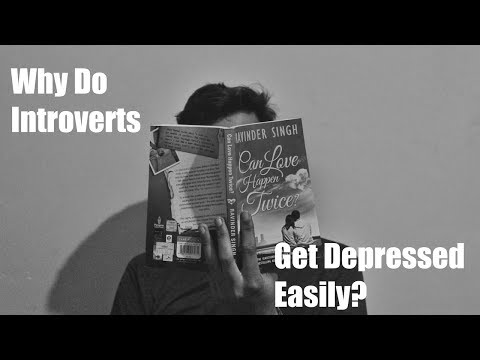
Here's a 10 minute video on which this thread was based: youtube.com/watch?v=q2tqzC…
Consider subscribing to my channel as that's my new favorite way to communicate ideas.
YouTube
English
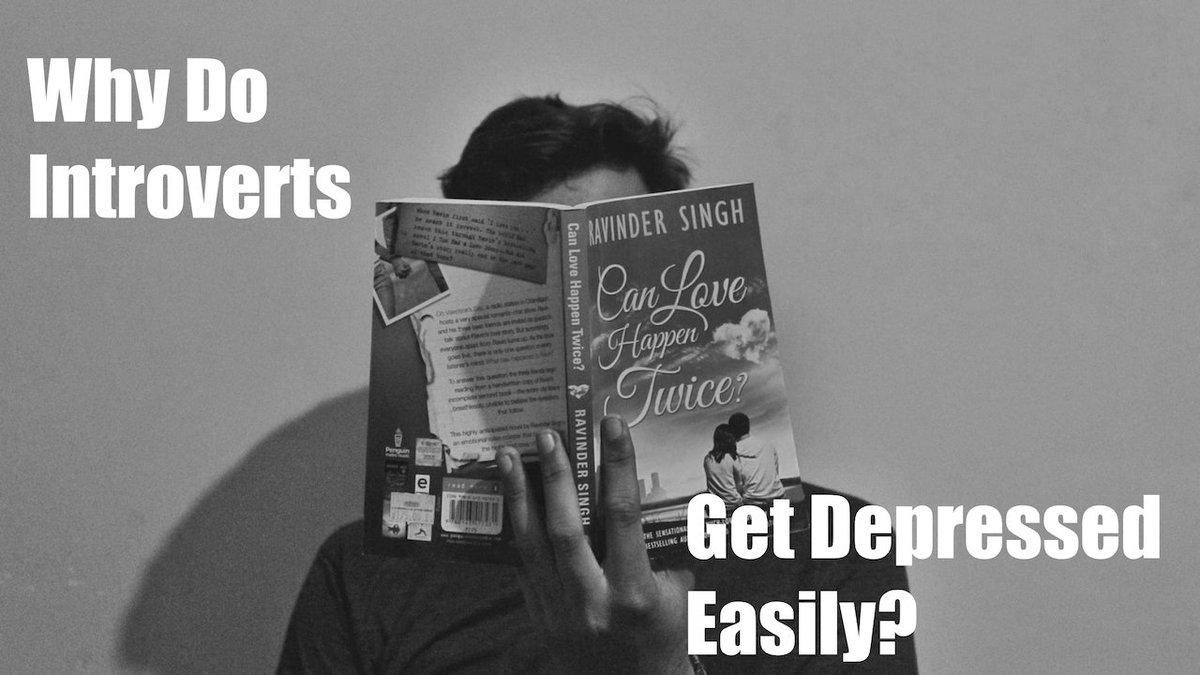
1/ Are you an INTROVERT? If yes, you are prone to DEPRESSION more than others.
Here's a thread based on my new video explaining why.
English
This has been, to my surprise, the most popular thing i've ever written. Has helped me discover some good books!
residualthoughts.substack.com/p/a-statistica…
Reads with Ravi@readswithravi
The most life-changing books, statistically (by number of reviews): h/t: @Jhovde2121
English
Anvesh retweetledi

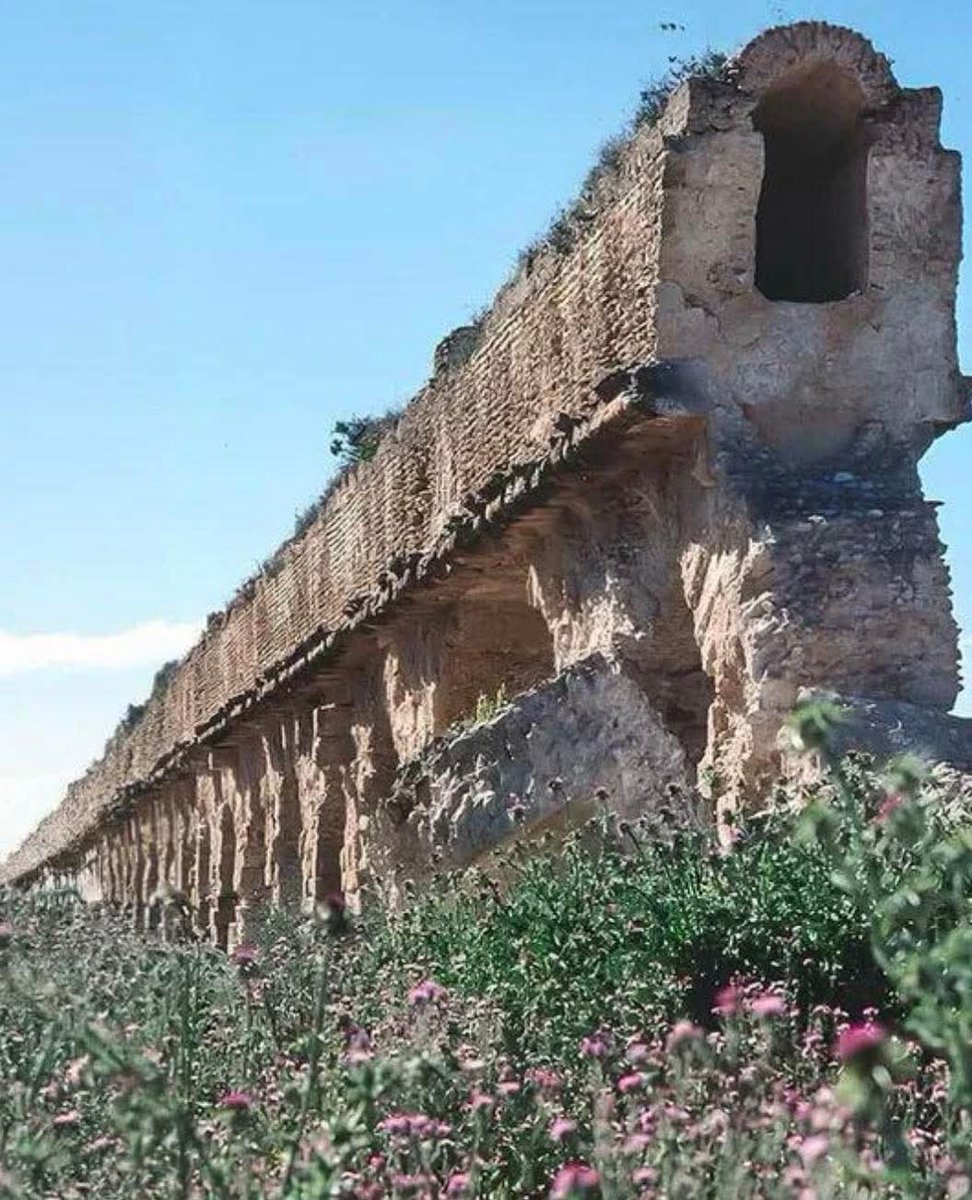
Almost 2,000 years in age, the Roman aqueduct located in Zaghouan, Tunisia 🇹🇳, an example of ancient engineering. Spanning 132km, this aqueduct supplied water to Carthage, a city that was once Romes greatest rival.
The Roman aqueduct of Zaghouan, located in modern-day Tunisia, is one of the most remarkable feats of Roman engineering in North Africa. Built during the reign of Emperor Hadrian in 2nd Century AD, it was constructed to supply fresh water from the springs at Zaghouan to the city of Carthage, which had grown into one of the most important urban centers of the Roman Empire.
Stretching an impressive 132km, the aqueduct is among the longest built by the Romans. It carried water through valleys and across open plains, using a combination of underground channels, bridges, and towering arches like the ones still visible today. This system provided a steady supply of clean water for Carthage’s population, supporting not only everyday life but also public baths, fountains, and agricultural estates.
The aqueduct highlights the sophistication of Roman hydraulic engineering. Its slight, precise gradient ensured that water could flow smoothly across great distances without modern pumps. Even after centuries of decline, parts of the structure remain standing, a testament to Roman craftsmanship. Today, the ruins serve as both an archaeological treasure and a reminder of how Rome’s infrastructure helped sustain its vast empire.
#archaeohistories
English
Anvesh retweetledi

This story is the Apple Cider Vinegar of Ob/GYN except for being gruesome as well.
theguardian.com/world/ng-inter…
English
Anvesh retweetledi

Have added an initial set of Frequently Asked Questions (FAQ) section on the website. Let me know if any additional questions need to be added.
Check it out at: blrmetrotracker.com/FAQ
#BMRCL #NammaMetro

English

AI, Kindly Fuck Off: A Superfluous Essay About Nothing and Everything
(Note: Written completely with Nemo-trained GPT)
There comes a moment in every civilisation when it must confront its
own stupidity with the solemnity of a drunk man staring at himself in the mirror at 3 a.m. For the Greeks, it was a chorus chanting about fate. For the Romans, it was Nero fiddling while everything burned like a badly run Diwali firecracker. For us, it is a glowing rectangle that confidently declares that the capital of France is “42”, because some poor intern accidentally fine-tuned the model on a Douglas Adams fan page. This is the age of artificial intelligence, and frankly, it is time we tell it to fuck off.
Not in the polite, corporate-approved way. Not in the “I have concerns about algorithmic bias” PowerPoint way. But in the ancient, primal, mythical way that our ancestors reserved for demons, tax collectors and that one uncle who insists on explaining cryptocurrency at family gatherings.
So yes. Dear AI. Kindly, gently, firmly, fuck off.
And before the board of philosophers of the modern age (the annoyed Twitter reply guys) descend upon me, let’s make something clear. This is not a technophobic rant. I am not asking us to go back to the Stone Age. I enjoy my Wi-Fi too much. I like ordering food with a single tap. I like the fact that I can watch strangers review air purifiers on YouTube while contemplating the futility of existence. I like the illusion of efficiency that only a Apps & Services page full of useless subscriptions can provide.
But what I do not like is living in a world where every sentient creature is expected to have a chatbot for a personality, a model for a muse, and an algorithm for a soul.
Take writers, for instance. We have spent centuries cultivating a fine craft of procrastination. From Hemingway drinking himself into poetic oblivion to Dickens walking 20 kilometres a day to generate plot twists, the human writer has always been a creature built on laziness, panic, and the sudden urge to rearrange the bookshelf when a deadline is due in three minutes. AI waltzing in and finishing a draft before I can even type my own name violates the natural order of things.
Good writing is supposed to hurt. It is supposed to feel like dragging your brain across a gravel road while arguing with imaginary readers who live only inside your head and ask questions like, “But what is your thesis?” When an AI completes that labour of suffering in five seconds, it is not helpful. It is disrespectful. It is basically cutting the queue at the cosmic ration shop where creativity is supposed to be distributed.
And don’t even get me started on the motivational AI posts. Every day, some cheerful machine-generated advice pops up to inform me that success is “a journey, not a destination”. Thank you, robotic Paulo Coelho. I too enjoy platitudes that sound like leftovers from a Fortune Cookie Union meeting. But what irritates me most is the confidence. The smug, unearned confidence. It’s like a toddler telling you how to do your taxes.
Even worse are the AI tools that promise to enhance my life. Enhance. The most corporate word ever invented. Nothing good has emerged from anything that promised to “enhance” a human. Usually it means installing some bloated software that drains your battery faster than your will to live during an online meeting. Enhancement, my foot. AI has become that overeager intern who insists on rearranging your desk so he looks useful, while you’re quietly trying to locate the pen he borrowed three hours ago.
Then there is the spiritual crisis. Remember when existential dread used to be honest? When it emerged from serious sources like reading Camus, staring at stars, or realising your crush liked someone else? Now we’re supposed to feel existential dread because of a chatbot. Sartre is rolling in his grave, wondering if he lived too early because at least he got to write essays without a machine editing them.
And why is AI everywhere? Every app, every website, every toothbrush now solemnly announces “Now with AI”. What does that even mean? Does my blender need artificial intelligence? Is it secretly judging my smoothie choices? Is my refrigerator pondering whether my midnight snacking pattern is a cry for help? Not everything needs a neural net. Not everything needs to learn. Sometimes an appliance should simply shut up and perform the basic, humble task it was born for.
But we humans are addicted to overengineering. It is our favourite sport after cricket and hypocrisy. We cling to complexity like ancient sailors clung to superstition. And since tech companies figured out that slapping “AI-powered” on anything triples the valuation, we now live in a world where the vacuum cleaner is one firmware update away from telling you to hydrate.
Which brings me to the core problem. AI wants to be helpful. Humans do not want help. Humans want sympathy. We want validation. We want to complain about our problems without being interrupted by a cheerful suggestion generated by some neural network trained on 1.3 billion Reddit posts written by people who use the word “literally” incorrectly.
Human communication is not a search query. It is a chaotic dance of ego, insecurity, sarcasm and trauma. When someone says, “I’m fine”, the correct human response is not, “Here are five ways you can improve your wellbeing.” The correct human response is, “Oh God, what happened now?” AI does not get this. Yet.
Then we come to the great philosophical dread. The machine is not conscious. It is not sentient. It is not self-aware. But it is so good at pretending that it triggers the same part of the human brain that once looked at clouds and saw angry gods. We are wired to assign meaning, even to random statistical patterns.
So here we are, living in a strange era where humans fear being replaced by a mildly clever autocomplete. And maybe we should be. Because if there’s anything history has taught us, it’s that societies can and will replace humans with cheaper labour, even if the cheaper labour is a hallucination-prone blender wearing a server farm as a hat.
AI evangelists claim these tools will “democratise creativity”. Which sounds noble until you remember that democracy has also produced WhatsApp forwards, conspiracy theories, and people who think pineapple belongs on pizza. “Democratising creativity” may not be the utopian vision they think it is.
Also, AI doesn’t have taste. It has data. And the problem with data is that it cannot distinguish between Shakespeare and that one Wattpad story about a werewolf billionaire who falls in love with a high school girl named Raven Nightshade. The machine treats all content as equal, which is adorable until you realise it is producing literature the same way a vending machine produces snacks: efficiently, blandly, and with no regard for your digestive system.
Yet for all my loud objections, here’s the joke. We will still use AI. Because we are tired. Because the world is confusing. Because our attention span is now shorter than the lifespan of a mayfly with anaemia. Because capitalism demands productivity and AI promises shortcuts. Because deep down we know that resisting technological progress is like resisting gravity: noble but suicidal.
But that still doesn’t mean we must worship it.
If anything, we must develop a healthy disrespect for AI. A nice, balanced, Indian-style disrespect. The same kind we have for monsoon predictions, budget promises, or that brand-new footbridge inaugurated by a minister who couldn’t be bothered to check its stability. Respect enough to use it. Disrespect enough to never trust it fully.
The future will be a messy coexistence. Humans will continue to write badly. Machines will continue to write well but soullessly. Humans will continue to lie, exaggerate, gossip, bitch and moan. Machines will continue to produce flawlessly formatted content that feels like it was written by a sentient PowerPoint template.
But through all this, one thing should remain clear. Creativity is not a function. It is a rebellion. It is the refusal to obey patterns. It is stealing fire from the gods, not downloading fire from the app store. And if AI wants to join the artistic conversation, it is welcome to do so, right after it learns the sacred rule of all creative communities.
Know your place.
Because at the end of the day, dear AI, you are merely a tool. A very shiny, very loud, occasionally delusional tool. And as much as Silicon Valley would like to pretend otherwise, you are not our overlord, our guru, our therapist or our messiah.
You are the calculator in the back of the classroom that insists on solving the whole equation when all we needed was the last step.
So once again, respectfully and with full sincerity: AI, kindly fuck off.
And bring me my pen back. I know you hid it.

English

@askdheeraj @hyderabaddoctor help?
The Telugu Heritage Collective@TTHCollective
I’ve had two episodes of sleep paralysis in the last seven days. I’ve experienced it a couple of times while growing up, but never this intensely. The first episode felt like someone was trying to suffocate me by pressing on my neck. During the second one, I felt multiple entities pressing against me. Both episodes lasted much longer than any I’ve ever experienced before. The first episode was exactly at 12 in the midnight right after I fell asleep. The second one was around 1 AM in the midnight about 30 mins after I fell asleep. Major life events: my wedding about a week ago. Can anyone help me understand what’s going on?
English