idol the pious 🦀🩸

2K posts

idol the pious 🦀🩸 banner
idol the pious 🦀🩸

idol the pious 🦀🩸

@idolthepious

fth/arc build.

Katılım Nisan 2025
699 Takip Edilen79 Takipçiler
Sabitlenmiş Tweet
idol the pious 🦀🩸
idol the pious 🦀🩸@idolthepious·
If I follow or like or reply or yell at you it means I 100% endorse your worldview
English
0
0
6
1.5K
idol the pious 🦀🩸
idol the pious 🦀🩸@idolthepious·
@DNAutics @TanningChatumm @zanehkoch Can you summarize everything you’ve said in laymen’s terms? The study’s results can’t be applied to humans in a real world and should therefore be ignored? And on top of that, you believe cancer is increasing due to such radiation?
English
0
0
0
223
Isaac Yonemoto is cooking
Isaac Yonemoto is cooking@DNAutics·
Sir, I have a PhD in chemistry from long before AI was a thing. You can look it up if you care to not be an idiot. And yes. Non ionizing radiation can knock a molecule off, it is exactly what the linked paper talks about. And cancer rates have doubled since 2022, of course a part of that is improved detection.
English
5
0
20
2.6K
Zane Koch
Zane Koch@zanehkoch·
for a while i've had a slight fear that the bluetooth from my airpods could be frying my brain this weekend i pulled the raw data from a $30m government study of 1,679 mice blasted with cell phone radiation and reanalyzed it what i found was...not what I expected? 🧵
English
403
705
9.3K
4.5M
maya
maya@leavingmecold·
I no longer look at my phone outside. I look at strangers. I hold their eyes for as long as I can. To see what will happen. Staring contest. I only lost once, he smiled and I no longer wanted to see what would happen. Nothing! Eyeholding is the thing. Just like hands, but secret.
English
9
94
2.7K
60.5K
idol the pious 🦀🩸
idol the pious 🦀🩸@idolthepious·
@parakeetnebula @jicapal This made me curious enough to listen and I just get the vibe he’s reading from a list and not a written paragraph. It’s a bullet point cadence.
English
0
0
1
32
tater tot
tater tot@parakeetnebula·
I think you can tell how smart or dumb someone is by the cadence they adopt when they read out loud. Everyone has a characteristic “reading out loud” cadence that probably comes from 1 or 2 core influences from when you first learned to read. And that cadence shapes how you quietly read in your mind. And that cadence influences how you process written information, which impacts intelligence.
Growth Labs@growthhub_

He really compressed 4 years of therapy into 60 seconds.

English
197
240
8.9K
2.1M
Nico
Nico@itmos__·
@Impish_Bunny @zeta_globin all stimulants do this, even caffeine. imo it's probably fine at low doses. I'd never recommend vaping though, no matter the dose. Makes it way too easy to overdo it and get addicted.
English
1
0
0
43
ylareia
ylareia@Impish_Bunny·
reading about how nicotine is one of the most potent skin agers out there..... throwing away my vape..........
English
9
0
76
6.9K
Dima Zeniuk
Dima Zeniuk@DimaZeniuk·
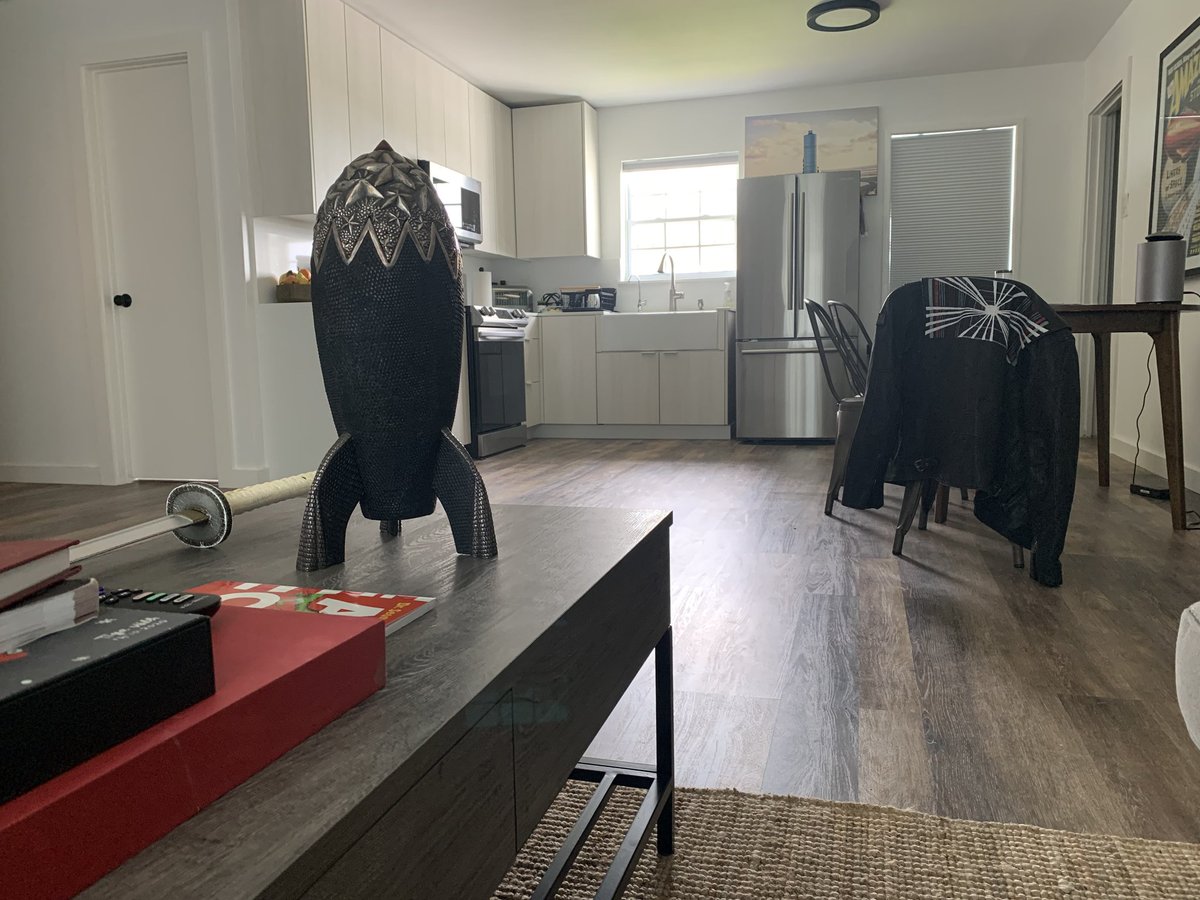
Elon Musk's house in Boca Chica, Texas. No fancy things, only what's essential for living
Dima Zeniuk tweet media
English
1.4K
570
6.5K
8.2M
roobz 🌙 🌸
roobz 🌙 🌸@tishray·
Every country has an energy. And that energy rewires you whether you notice it or not. People move to Japan and become minimal. People move to Mexico and their entire relationship with time softens. People move to New York and suddenly they can't sit still. Your personality is far more malleable than you think. We treat it like something fixed, but new surroundings give you new defaults. New pace. New habits. New values absorbed through proximity instead of effort. You're not just the average of the 5 people closest to you. You're the average of the 5 places, the 5 routines, and the 5 inputs you're exposed to most. Your commute shapes you. The weather shapes you. Every space you occupy is voting on who you become. That's why I believe choosing where you live is one of the most important decisions you'll ever make. More important than your job title. Maybe more important than your five-year plan. Because the place shapes the plan. The place shapes your energy, your habits, your relationships, your default state. Get the place right and half of the other decisions start making themselves. Get it wrong and you'll fight yourself every day.
English
294
4.1K
23.1K
854.1K
john
john@john83148980946·
@Ratbag7624 @NicolasRowe02 @uncle_deluge @funnybrad Ok yeah but we're talking about public perception. Saying "everyone hates him now" just seems inaccurate. I don't have a take on the snow white stuff, I don't remember it, I assume most don't. Could be wrong
English
1
0
6
143
Ante D. Luvian
Ante D. Luvian@uncle_deluge·
People with dwarfism are probably the most rehabilitated traditionally stigmatized group in the world. Tremendous PR the last few decades. I can't remember the last time I saw anyone make fun of them
English
137
101
7.3K
231.5K
Nicolas Rowe
Nicolas Rowe@NicolasRowe02·
@uncle_deluge I really think that GOT’s Tyrion Lannister had a big hand in improving the popular view of dwarfism. A well-written, charismatic character played by a handsome actor on the most popular show in the world at the time whose entire story is overshadowed by his dwarfism.
English
6
2
381
12.3K
idol the pious 🦀🩸
idol the pious 🦀🩸@idolthepious·
All of us were red and formed a wall/layer. But I recall perceiving blue around me. Time didn’t exist. I was conscious with no thoughts. Just feelings of warmth & love from my surrounding buddies. I’ll happily be reincarnated into whatever this is
English
0
0
1
22
idol the pious 🦀🩸
idol the pious 🦀🩸@idolthepious·
@howisthewater @Dr_TheHistories They would have required a bunch of medical care post-amputation. For the rest of their lives they couldn’t hunt, were vulnerable to predators. They would burden the social group until their death. That would punish everyone.
English
0
0
4
63
Roman de Renart
Roman de Renart@howisthewater·
@Dr_TheHistories How does one distinguish the difference between surgery & cutting someone's limb of for punishment or ritual?
English
1
0
4
803
Dr. M.F. Khan
Dr. M.F. Khan@Dr_TheHistories·
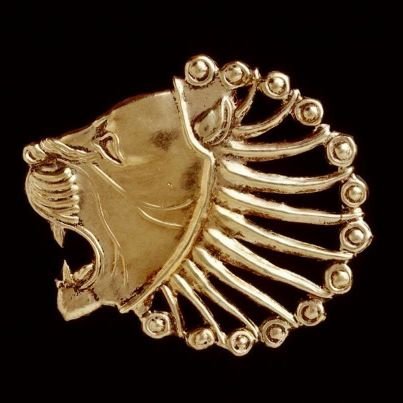
Archaeologists working in Borneo discovered a 31,000-year-old skeleton missing its lower left leg, pushing back the known history of surgical amputation by tens of thousands of years. The find, made in Liang Tebo cave in East Kalimantan, Indonesia, revealed that an individual had survived a deliberate surgical removal of the lower limb, not a traumatic accident. The clean cut marks on the bone ruled out animal attack or accidental injury as causes. The patient lived for years after the operation, with the bone showing clear evidence of healing and regrowth at the stump. This means a Stone Age surgeon possessed enough anatomical knowledge to sever a limb without the patient dying from blood loss or infection. The dense tropical rainforest environment surrounding the site may explain the advanced medical knowledge, as the region contains thousands of plant species with antiseptic and medicinal properties. A second example from Baume-Lencoup in France, dating to around 7,000 years ago, shows a similarly clean amputation on an adult male forearm, again with evidence of survival and healing. Both cases challenge the long-held assumption that prehistoric people lived short, brutal lives without meaningful medical care. Before these discoveries, the oldest known surgical amputation was a 7,000-year-old case from France, which itself was considered extraordinary. The Borneo discovery predates that by nearly 24,000 years, forcing a complete reassessment of cognitive and cultural development in early human societies. These early surgeons must have understood basic anatomy, infection control, and post-operative care to achieve successful patient outcomes. The findings suggest that compassion, community support, and medical knowledge are not modern inventions but ancient human traits. Stone Age communities clearly invested significant resources in keeping injured members alive, indicating complex social bonds and shared responsibility for vulnerable individuals. The discovery raises profound questions about what other sophisticated practices may be hidden in the prehistoric record, waiting to be uncovered. The discovery of prehistoric surgical amputations fundamentally reshapes our understanding of early human intelligence, social organization, and medical capability, demonstrating that complex anatomical knowledge and organized patient care existed tens of thousands of years earlier than previously believed, which in turn forces historians, archaeologists, and anthropologists to reconsider the entire framework through which we evaluate the cognitive and cultural sophistication of our ancient ancestors. #drthehistories
Dr. M.F. Khan tweet media
English
5
37
352
86.3K
idol the pious 🦀🩸
idol the pious 🦀🩸@idolthepious·
60-45,000 BCE Our boy Nandy survived multiple SEPARATE horrific injuries & lived to old age. Crushed skull, blind in one eye, deaf in both ears, congenitally deformed, amputated forearm, partial right-side paralysis, two broken legs with severe limp, plus degenerative disease.
idol the pious 🦀🩸 tweet media
Dr. M.F. Khan@Dr_TheHistories

Archaeologists working in Borneo discovered a 31,000-year-old skeleton missing its lower left leg, pushing back the known history of surgical amputation by tens of thousands of years. The find, made in Liang Tebo cave in East Kalimantan, Indonesia, revealed that an individual had survived a deliberate surgical removal of the lower limb, not a traumatic accident. The clean cut marks on the bone ruled out animal attack or accidental injury as causes. The patient lived for years after the operation, with the bone showing clear evidence of healing and regrowth at the stump. This means a Stone Age surgeon possessed enough anatomical knowledge to sever a limb without the patient dying from blood loss or infection. The dense tropical rainforest environment surrounding the site may explain the advanced medical knowledge, as the region contains thousands of plant species with antiseptic and medicinal properties. A second example from Baume-Lencoup in France, dating to around 7,000 years ago, shows a similarly clean amputation on an adult male forearm, again with evidence of survival and healing. Both cases challenge the long-held assumption that prehistoric people lived short, brutal lives without meaningful medical care. Before these discoveries, the oldest known surgical amputation was a 7,000-year-old case from France, which itself was considered extraordinary. The Borneo discovery predates that by nearly 24,000 years, forcing a complete reassessment of cognitive and cultural development in early human societies. These early surgeons must have understood basic anatomy, infection control, and post-operative care to achieve successful patient outcomes. The findings suggest that compassion, community support, and medical knowledge are not modern inventions but ancient human traits. Stone Age communities clearly invested significant resources in keeping injured members alive, indicating complex social bonds and shared responsibility for vulnerable individuals. The discovery raises profound questions about what other sophisticated practices may be hidden in the prehistoric record, waiting to be uncovered. The discovery of prehistoric surgical amputations fundamentally reshapes our understanding of early human intelligence, social organization, and medical capability, demonstrating that complex anatomical knowledge and organized patient care existed tens of thousands of years earlier than previously believed, which in turn forces historians, archaeologists, and anthropologists to reconsider the entire framework through which we evaluate the cognitive and cultural sophistication of our ancient ancestors. #drthehistories

English
1
0
6
703
Put the Fries in the Bag
Put the Fries in the Bag@_fries_bag_·
@PunishedHoots I lost weight without Ozempic and I secretly think people who lost weight with it are still spiritually overweight.

English
25
10
1.1K
81.8K
hoots hootman
hoots hootman@PunishedHoots·
I know a lot of people have joked that with Ozempic being more widely available that beauty standards are gonna swing back the other way, but really they're gonna focus on weirder body parts to "prove" who the real skinnies are. I've already seen people doing it with calves.
English
92
574
31K
1.1M
Massimo
Massimo@Rainmaker1973·
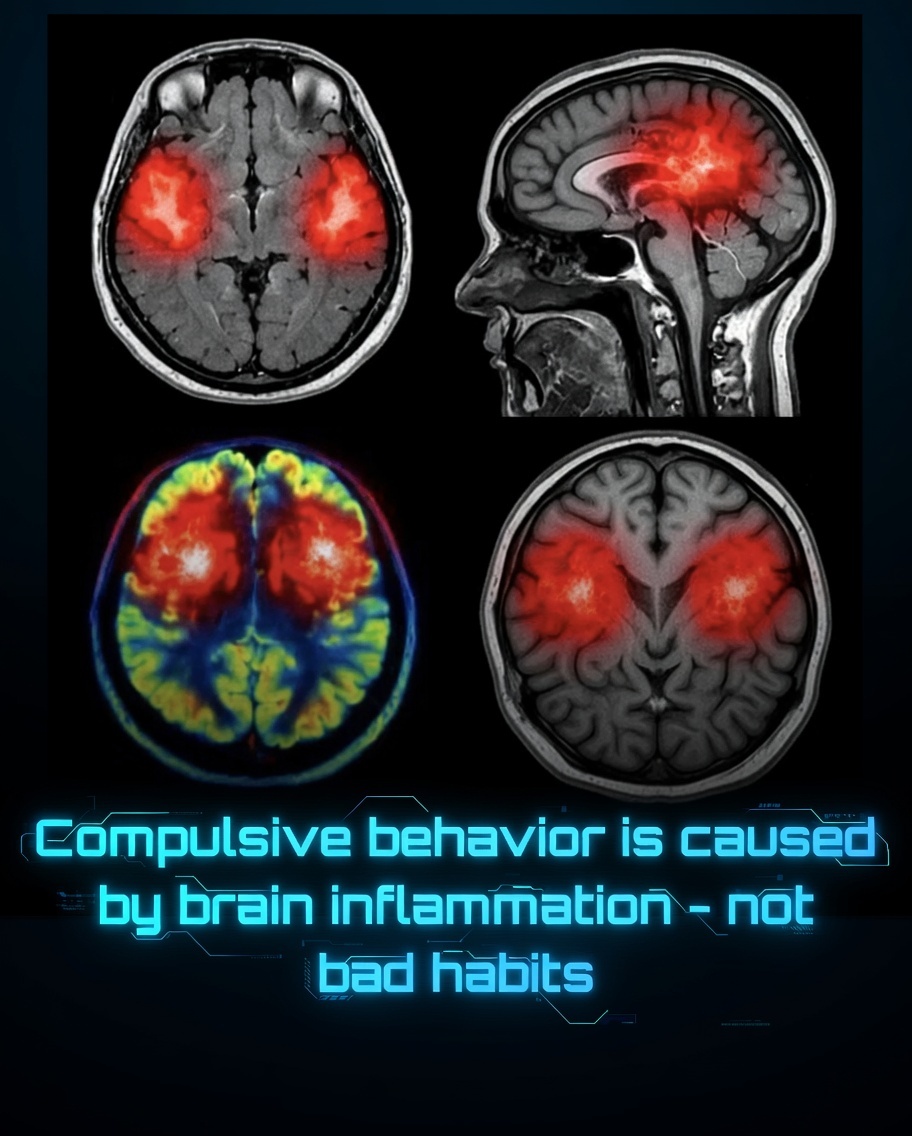
New research challenges the long-held idea that compulsive behaviors—such as those in OCD, substance use disorders, or gambling addiction—stem from a loss of self-control or being stuck in automatic "habit loops." Instead, a study from the University of Technology Sydney (UTS) shows that these behaviors may arise from excessive goal-directed control, driven by neuroinflammation in the dorsomedial striatum—a key brain region involved in action selection, decision-making, risk evaluation, and reward processing. In experiments with rats, researchers induced inflammation (mimicking observations from human brain imaging in compulsive disorders) using lipopolysaccharide injections. Surprisingly, rather than promoting habitual, autopilot actions, the inflammation biased behavior toward more deliberate, effortful, and outcome-sensitive decision-making—even in scenarios where habits would typically dominate. This shift was linked to astrocytes (star-shaped glial cells that support neurons and maintain brain homeostasis). Inflammation caused astrocytes to proliferate and disrupt local neural circuits, leading to dysregulated, hyper-focused control that manifests as maladaptive persistence (e.g., compulsive efforts to avoid feared outcomes). The findings suggest that people with these conditions aren't necessarily lacking control but may be trapped in overactive, misguided deliberate processing fueled by biological inflammation. This reframes treatment approaches: rather than solely focusing on habit-breaking therapies, future interventions could target neuroinflammation, astrocyte function, or related pathways—potentially through anti-inflammatory strategies, drugs modulating glial activity, lifestyle changes like exercise and sleep, or other neuroprotective methods. [Abiero, A. R., et al. (2025). Dorsomedial striatal neuroinflammation causes excessive goal-directed action control by disrupting astrocyte function. Neuropsychopharmacology. DOI: 10.1038/s41386-025-02247-4]
Massimo tweet media
English
28
148
1.5K
351.5K