Mohamed Ikram
981 posts

Mohamed Ikram
@ikramn
Music Producer | Engineer | Fine Artist
Katılım Mayıs 2009
295 Takip Edilen1.4K Takipçiler

@ESAmaldives @NCA_MDV @YouthGovMv @MMuizzu I was told by current NCA management that this was a gavaidhu drafted and passed by former government. That they are just enforcing it. Is that true? @yumna_maumoon @ikramn
English

I’m honestly shocked and frustrated that a solo artist like myself, with years dedicated to elevating Maldivian music, faces this band-only restriction. It feels like a step backward for an institution meant to champion all artists.
@NCA_MDV
@YouthGovMv
@MMuizzu

English
Mohamed Ikram retweetledi

The final takeaway from the 10th World Summit Report is that culture is a shared responsibility and that international collaboration across borders, industries, and creative disciplines is imperative.
Read the report: artsummit.org/summit-report
#ArtSummitKorea @ARKOARKO

English
Mohamed Ikram retweetledi

" This album carries stories of getting lost and finding light. Tomorrow, we share them with you"
#OdysseysOfMusafir #fasylive #musafir
English
Mohamed Ikram retweetledi

"MUSAFIR – The Journey Begins..."
Winds of truth, echoes of longing, and footsteps into the unknown.
A soundscape forged in fire, faith, and freedom.
🎵 Odysseys of Musafir — coming soon.
#MusafirAlbum #OdysseysOfMusafir #TheJourneyBegins
#fasylive
English
Mohamed Ikram retweetledi

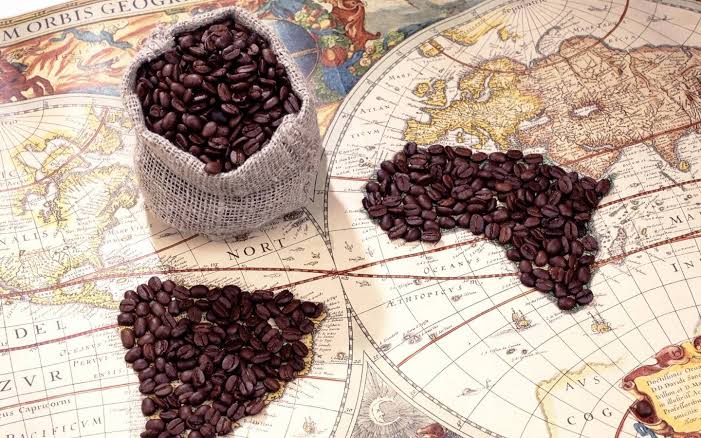
According to some legend, that one day a shepherd boy from Kefa in southwestern Ethiopia noticed an unusual behaviour in his goats. They were docile animals, but that day, after eating reddish fruits of some bushes, they seemed more perky, almost agitated. Intrigued, he tried a few berries, and felt the thrill of a caffeine rush. Sensation was a novelty, since he had never tried an intoxicant before. Not even alcohol, which Islam categorizes as forbidden, a capital offence along with adultery, fornication, slander, grand larceny and murder, ranked 13 in a list of 20 greatest sins.
We don’t know when this happened, but we do know that by the 1400s, a brown liquid called k’hawah (reinvigorating) was being brewed in nearby Islamic Sufi Monasteries, where monks used it to keep awake during all-night prayer meetings. It was a thick bitter drink, made from boiling roasted and powdered coffee beans in a small amount of water. Around 100 years later it was being enjoyed by Muslim people of Middle East, North Africa, Persia and south India, eventually reaching Balkans through Ottoman Empire.
In 1570 CE, a venetian botanist called Prospero Alpini drank concoction in Egypt, a mere 50 years before, sugar had been added to brew. He brought it back to Venice and sold it in his pharmacy. Coffee became such a rage that Venetian authorities tried to put a stop to its sales, inviting Pope Clement VII to ban its use. He had a couple of cups, felt rush and instead of a ban he decided to bless it, thereby making it a Christian drink. This started a European-wide trade handled primarily by venetians, who shipped the beans in precious wooden, silver and Murano glass boxes.
Aound 1616 CE, formidable traveler Pietro della Valle drank it while visiting Holy Land. His letters describe a hot, thick, perfumed black liquid called khave, enjoyed by Muslims at end of their meal. He called it a magic drink, able to keep him awake at night. Some of his letters were addressed to a Neapolitan friend, who had heard of a similar drink in Venice and was already intrigued. He sent an emissary to Holy Land, who came back with a recipe and some beans. He drank poultice and decided to improve it by dripping hot water through the powder. Innovation was so appreciated that it spread to Venice, where first proper coffee shop opened in 1647 CE. It was a simple affair, serving only coffee, but it became so popular that soon enough city was invaded by similar shops.
In 1652 CE, first British coffee house opened in Oxford, and in 1683, same happened in Vienna, where milk was added for first time by an Italian capuchin monk. Hence name cappuccino, though froth was added later when first steam machine was made.
In 1686 CE, an Italian from Sicily opened famous Café Procope in Paris, serving also pastries and ice cream. Philosophers, politicians and men of letters such as Molière, Descartes and Voltaire became assiduous patrons and coffee started to be known as an intellectual stimulant. Italian artists agreed.
In 1750 CE, Carlo Goldoni wrote a comedy called La Bottega del Caffe’, Coffee Shop and in 1765 CE, Pietro Verri founded a philosophical-literary magazine simply called Il Caffè. These publications made drink even more famous, soon part and parcel of Italian social structure.
First design for an industrial coffee machine was registered in Turin in 1884 CE, and included a gas stove under a boiler where water was always hot. A prototype was created in 1901 by a company called ‘La Pavoni’, which, in 1939, produced first industrial water-pressure coffee-maker able to brew a denser liquid with a bit of froth.
First stove-top machine destined for home market, meanwhile, was designed a bit earlier, in 1933, by a man called Alfonso Bialetti. He called it Moka Express, from famous Yemeni port Mokha where best-tasting coffee is still reputed to come from.
📷© Crema Coffee Garage
#archaeohistories

English
Mohamed Ikram retweetledi

Tedry e annanee anekkaa ves aa ingilaabakaa eku: 7 minute ge emme manzarakun ekan yageenvey | Dhauru dhauru.com/post/living/26…
Eesti