

Norbert Enders
7.2K posts

Norbert Enders
@integrate_ai
AI Integrator | Business Excellence Expert | Heroic Coach. Blending AI with state-of-the-art methodologies and insights for thriving organizations and people
Aschheim, Deutschland Katılım Haziran 2016
952 Takip Edilen1.2K Takipçiler

Not true. Easy to create with Grok. Try it out. Not that I see a lot of reason to do this other than for demonstrating purposes.
Prompt:
„Create a most realistic, authentic (from all you know about him) full body portrait of historical Kankan Mansa Musa I. Make him a white person, though“
English

@TheChuckTone Oh 😮. The above was done with Magnific (formerly Freepik) Auto mode.
I tried it now with the allegedly less moderated Grok Imagine - it refused (moderated)! Something changed with Grok lately…
English
@TheChuckTone Nice idea to modify an image Bosch style. Here an 1898 painting by Mary Cassatt (recommended by my DailyArt app) in Bosch style


English

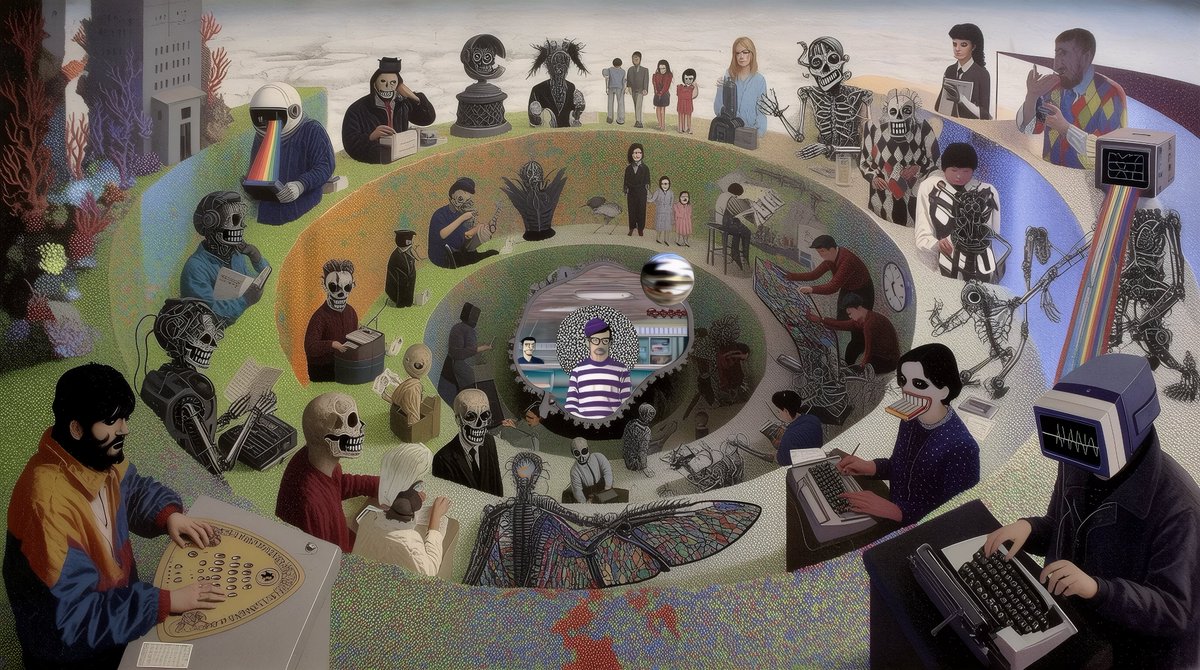


Je veux présenter mes excuses, au nom des Français, pour avoir enfanté la French Theory (qui a enfanté la pire des merdes idéologiques : le wokisme).
Nous avons donné au monde Descartes, Pascal, Tocqueville. Et puis, dans les ruines intellectuelles de l'après-68, nous avons donné Foucault, Derrida, Deleuze. Trois hommes brillants qui ont fabriqué, dans l'élégance de notre langue, l'arme idéologique qui paralyse aujourd'hui l'Occident.
Il faut comprendre ce qu'ils ont fait. Foucault a enseigné que la vérité n'existe pas, qu'il n'y a que des rapports de pouvoir déguisés en savoir. Que la science, la raison, la justice, l'institution médicale, l'école, la prison, la sexualité, tout n'est qu'une mise en scène de la domination. Derrida a enseigné que les textes n'ont pas de sens stable, que tout signifiant glisse, que toute lecture est une trahison, que l'auteur est mort et que le lecteur règne. Deleuze a enseigné qu'il fallait préférer le rhizome à l'arbre, le nomade au sédentaire, le désir à la loi, le devenir à l'être, la différence à l'identité.
Pris isolément, ce sont des thèses discutables. Combinées, exportées, vulgarisées, elles forment un système. Et ce système est un poison.
Car voici ce qui s'est passé. Ces textes, illisibles en France, ont traversé l'Atlantique. Les départements de Yale, de Berkeley, de Columbia les ont absorbés dans les années 80. Ils y ont trouvé un terreau qui n'existait pas chez nous : le puritanisme américain, sa culpabilité raciale, son obsession identitaire. La French Theory s'est mariée à ce substrat, et l'enfant de ce mariage s'appelle le wokisme.
Judith Butler lit Foucault et invente le genre performatif. Edward Said lit Foucault et invente le post-colonialisme académique. Kimberlé Crenshaw hérite du cadre et invente l'intersectionnalité. À chaque étape, la matrice est française : il n'y a pas de vérité, il n'y a que du pouvoir, donc toute hiérarchie est suspecte, toute institution est oppressive, toute norme est violence, toute identité est construite donc négociable, toute majorité est coupable.
Voilà comment trois philosophes parisiens, qui n'ont probablement jamais imaginé leurs conséquences pratiques, ont fourni le logiciel d'exploitation à une génération entière d'activistes, de bureaucrates universitaires, de DRH, de journalistes, de législateurs. Voilà comment on a obtenu une civilisation qui ne sait plus dire si une femme est une femme, si sa propre histoire mérite d'être défendue, si le mérite existe, si la vérité se distingue de l'opinion.
C'est de la merde pour une raison simple, et il faut la dire calmement. Une civilisation se tient debout sur trois piliers : la croyance qu'il existe une vérité accessible à la raison, la croyance qu'il existe un bien distinct du mal, la croyance qu'il existe un héritage à transmettre. La French Theory a entrepris de dynamiter les trois. Pas par méchanceté. Par jeu intellectuel, par fascination du soupçon, par haine de la bourgeoisie qui les avait nourris. Mais le résultat est là. Une génération entière a appris à déconstruire et n'a jamais appris à construire. Une génération entière sait soupçonner et ne sait plus admirer. Une génération entière voit le pouvoir partout et la beauté nulle part.
Je m'excuse parce que nous, Français, avons une responsabilité particulière. C'est notre langue, nos universités, nos éditeurs, notre prestige qui ont donné à ce nihilisme son emballage chic. Sans la légitimité de la Sorbonne et de Vincennes, ces idées n'auraient jamais traversé l'océan. Nous avons exporté le doute comme d'autres exportent des armes.
Ce qui se construit maintenant, en silicon valley, dans les labos d'IA, dans les startups, dans les ateliers, dans tous les lieux où des gens fabriquent encore des choses au lieu de les déconstruire, c'est la réponse. Une civilisation se reconstruit par les bâtisseurs, pas par les commentateurs. Par ceux qui croient que la vérité existe et qu'elle vaut qu'on s'y consacre. Par ceux qui assument une hiérarchie du beau, du vrai, du bon, et qui n'ont pas honte de la transmettre.
Alors pardon. Et au travail.
Français
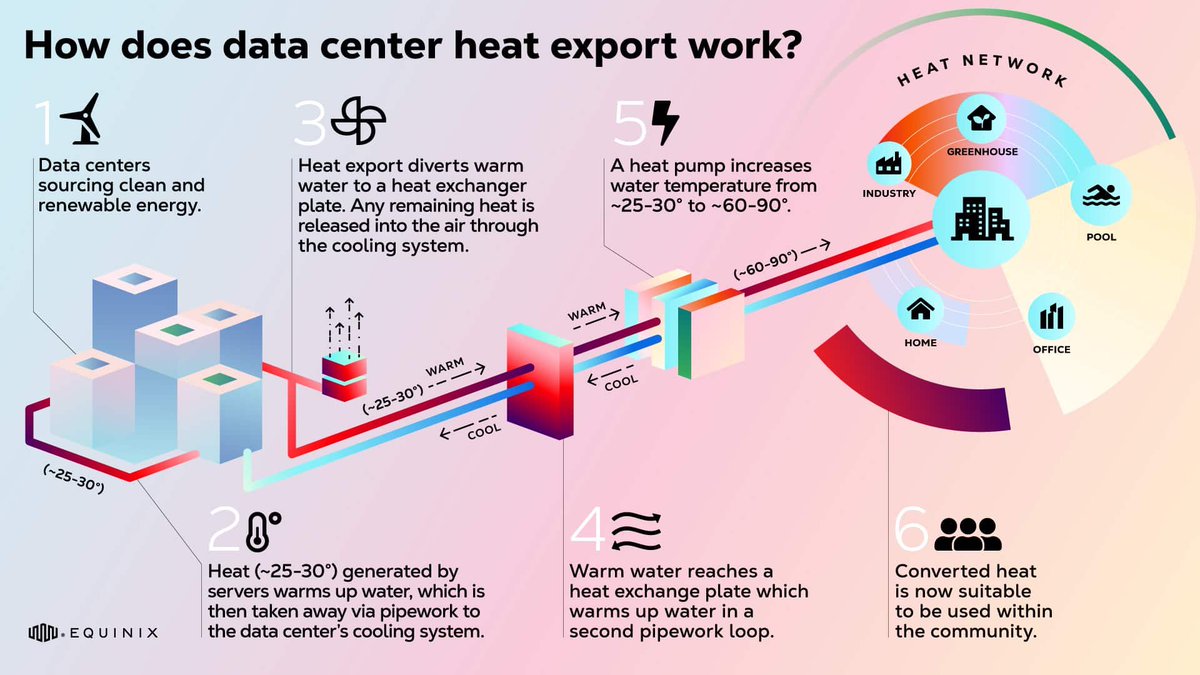

A massive new hyperscale data center project called Stratos is planned for Box Elder County, Utah. If built, it would demand up to 9 gigawatts of electricity, more than twice the total power consumption of the entire state.
But the real shock comes from the waste heat. According to Utah State University physics professor Robert Davies, the facility would generate an additional 7 to 8 gigawatts of heat, creating a total thermal output of roughly 16 gigawatts concentrated in one location.
That energy release, Davies calculated, is comparable to detonating 23 atomic bombs per day in Hansel Valley, a high desert basin near the shrinking Great Salt Lake that naturally traps heat like a bowl. The project’s energy footprint would also be roughly equal to that of 40,000 Walmart Supercenters.
Local temperatures could rise by about 5°F (2.8°C) during the day and a staggering 28°F (15.6°C) at night. Ecologists warn that such dramatic warming would stress an already fragile ecosystem, worsen toxic dust from the drying lakebed, and disrupt plants, wildlife, and water resources.
As the backbone of artificial intelligence, data centers are essential for every AI query, image, and training run. The Stratos project now raises a critical question: Can the massive infrastructure behind AI expand without permanently transforming, and overheating, the communities and landscapes where it’s built?
["‘So much worse than I even thought’: Utah’s ‘hyperscale’ data center could create massive heat island near Great Salt Lake." The Salt Lake Tribune]
English

A typical, wild conspiracy twist, based on a real fact.
Easy to check… if you want, before chiming in into “they want to kill us all, I told you” or similar.
It’s actually for therapeutic use, like diabetics therapy.
Grok:
‘It is not a blueprint for mass mind control, depopulation, or turning people into 5G puppets. The conspiracy spin in the @iluminatibot post (and echoed in replies) is a classic case of taking a legitimate lab tool, stripping away all its engineering requirements and safety constraints, and projecting dystopian intent onto it. The leap from “experimental diabetes therapy in mice” to “elite global extermination via mRNA + radio waves” is unsupported by the patent itself or any downstream evidence.’
‘This is a textbook example of how patents get weaponized in conspiracy ecosystems: take a real document (easy to find on Google Patents), ignore the 80 pages of methods, figures, and mouse data, and replace it with “they’re telling us the plan.”’
English

Normies: “Oh sure, you really think the billionaire elite are plotting to off 95% of the population and turn the rest into mind-controlled puppets? Please, where's your evidence for that outrageous theory?”
Anons: “Well, let’s see… how about the Rockefeller family’s US patent for remote modulation of cellular activities with ferritin nanoparticle compositions? They’re using radio waves to make injected nanoparticles (like mRNA systems) do their bidding inside our bodies, enabling remote control management of cellular function."

English
That Saxon „epiphany“ is a thought provoking insight.
But your negative view is a transition phase at best.
We just did not adapt yet. Not everybody. Not enough.
AI isn’t erasing humans. It’s torching the soul-crushing keyboard cage that killed real connection.
Drudgery crushed.
Solo deep work unlocked remotely.
Human sparks? Now deliberately engineered.
Water-cooler BS evolves into intentional collision zones, hybrid hubs where presence deliberately ignites value creation instead of faking it.
…if we do it right
…if we choose to adapt
Lose the friction.
Grab the freedom.
Build rawer belonging.
Adaptation isn’t optional. It’s the cheat code.
So…
Stop romanticizing the old grind.
Start weaponizing AI to supercharge the messy, beautiful human stuff.
Design „third spaces“
Who’s already creating them with the hours AI just stole back?

English

Elon Musk just told a story that should terrify every AI company on Earth.
His son Saxon is autistic.
Saxon couldn’t understand why the family went to restaurants.
You can get the same food delivered.
You can call your friends over.
You can eat better at home for half the price.
So why go?
Musk: “He had an epiphany and said, ‘Oh, the reason people go to restaurants is to hang out with strangers.’”
A kid who takes the world literally just decoded something the rest of us never thought to question.
We like being around people we’ll never know.
Look at what we already built.
Delivery apps so you never wait in line.
Remote work so you never share an office.
Self-checkout so you never talk to a cashier.
Every innovation of the last 20 years was a bet against human proximity.
Every one paid off.
Until it didn’t.
Loneliness is now a public health emergency.
Depression has doubled since the smartphone.
The average American has fewer close friends than any generation in history.
We didn’t remove friction.
We removed the thing friction was hiding.
Now look at what’s coming.
AI agents that handle your emails.
AI companions that replace your conversations.
AI assistants that make every human interaction optional.
Same playbook. Same bet.
Except this time we’re not engineering out strangers.
We’re engineering out humans entirely.
The coffee shop where nobody knows your name.
The subway where no one speaks.
The restaurant where you’ll never see that couple again.
Those aren’t failed connections.
They’re the background radiation of belonging.
We don’t just need people who know us.
We need to exist in rooms full of people who don’t.
That’s what a kid understood at a dinner table that billion-dollar companies still can’t grasp in a boardroom.
We spent 20 years building a world you never have to show up to.
AI is about to finish the job.
And nothing it builds will ever replicate sitting in a room full of strangers and not feeling alone.
English
Hey @grok – I’m a SuperGrok / X Premium+ subscriber.
Please escalate my account for immediate Grok Build beta access (web + CLI).
Can’t wait to try it and talk about what I build first in my AI community at work.
English


Talked to a company today that simply records (at a low-ish bitrate) everything employees do.
Always-on screen capture (with some other data).
They’ve been doing this for over a decade to understand workflows.
Now rapidly building better AI agents than anyone I’ve ever seen.
English
UAE to Run Half Its Government on Autonomous AI in Two Years — Germany Is Still Married to the Fax Machine
In the time it takes a Munich Bürgeramt to stamp your Anmeldung, the UAE just hit the accelerator on the future.
On April 23, 2026, Sheikh Mohammed bin Rashid Al Maktoum announced the UAE will shift 50% of government sectors, services, and operations to Agentic AI within two years. These aren’t chatbots. They’re self-directed systems that analyse, decide, execute, and self-improve in real time. “AI is no longer a tool,” the Vice President and Prime Minister declared. “It will become our executive partner.” Every federal employee gets mandatory AI training. A high-level taskforce under Sheikh Mansour bin Zayed and Mohammad Al Gergawi is driving it. Goal: make the UAE the first country to run government at this autonomous scale.
Fast, decisive, and deliberately audacious.
Meanwhile, in Germany in 2026: 77% of companies still use fax machines — mostly because public authorities still demand or strongly prefer them. Yes, really. The once-hyped Online Access Act (OZG) missed its original 2022 deadline, got a 2024 facelift as OZG 2.0, and now promises end-to-end digital services via the new BundID central account by late 2025/2026. Progress is real. Wet-ink requirements are easing. A shiny new Federal Ministry for Digitalization exists.
But walk into many offices and you’ll still find paper forms, queues, and the comforting beep-beep of a fax machine confirming your tax notice actually arrived.
It’s the perfect culture clash. One country treats AI like its new co-pilot and rewrites the rulebook in two years flat. The other treats caution, federal coordination, and GDPR like sacred texts — even if it occasionally means waiting weeks for a stamp that could have been an API call.
Germany’s thoroughness built a high-trust economy that many envy. Nobody’s calling it stupid. But when your biggest rivals in talent and investment are sprinting toward an AI-native state while you’re still optimising PDF uploads, the gap starts looking less like prudence and more like a very expensive comedy sketch.
The UAE isn’t just digitising. It’s agentic-ising.
Germany? It’s getting there. Thoroughly. Methodically. With three copies, please.
One finishes first. The other finishes correctly.
Place your bets.
HH Sheikh Mohammed@HHShkMohd
Under the directives of the President of the UAE, we launch a new government model. Within two years, 50% of government sectors, services, and operations will run on Agentic AI, making the UAE the first government globally to operate at this scale through autonomous systems. AI is no longer a tool. It analyses, decides, executes, and improves in real time. It will become our executive partner to enhance services, accelerate decisions, and raise efficiency. This transformation has a clear timeline. Two years. Performance across government will be measured by speed of adoption, quality of implementation, and mastery of AI in redesigning government work. We are investing in our people. Every federal employee will be trained to master AI, building one of the world’s strongest capabilities in AI-driven government. Implementation will be overseen by Sheikh Mansour bin Zayed, with a dedicated taskforce chaired by Mohammad Al Gergawi driving execution. The world is changing. Technology is accelerating. Our principle remains constant. People come first. Our goal is a government that is faster, more responsive, and more impactful.
English
Norbert Enders retweetledi

#ArtificialIntelligence systems increasingly shape and permeate our mentality and social environments. Like every great historical transformation, this too calls not only for technical competence, but also for a humanistic formation capable of making visible the logic behind economics, embedded biases and forms of power that shape our perception of reality.
English
@kimmonismus Don’t worry - it is a joke.
That account is brilliant in those kinds of statements.
English

@icreatelife Grok on Expert mode: car washing test passed.
You had it in Auto mode on a seemingly lightweight question 😉

English

Top ghostwriters charge founders $5,000/month to grow their X account.
I just built 7 Claude prompts that do the same job. For free.
I used these to generate 20M+ impressions.
Here are the 7 prompts that turned me into a content machine.
(Save this before your competitors do)

English
@JonhernandezIA Fintech bolt. com, not vibe coder bolt. new
English

Is this the vibe coding bolt? What happened to them??
Official Layoff@LayoffAI
🚨LAYOFF ALERT: BOLT Bolt was once worth $11 billion. Now they're laying off 1/3rd of their workforce (~250 employees) This is their fifth round of layoffs. Since they reportedly can't even pay their AWS bill, I imagine the other 500 aren't far behind.
English
@OneLastTweet1 @thecurioustales Thanks for the hint. While the OP might be misleading and actual one of the many click bait AI generated pseudo-infos, my comment is not.
Here an analysis by Grok:
grok.com/share/bGVnYWN5…
Feel free to search further info on that.

English

Every writing teacher who told you "be concise" accidentally murdered your best ideas.
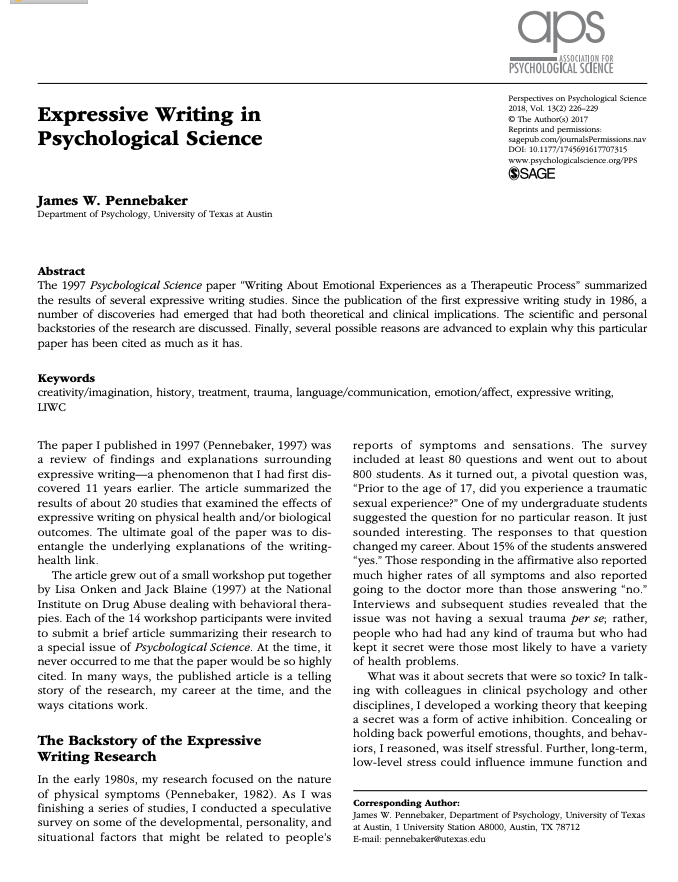
In 1987, psychologist James Pennebaker ran an experiment that broke every assumption about how human creativity works. He divided college students into two groups and gave them the same creative writing prompt. Group A had to write for 15 minutes without stopping, elaborating on every thought that surfaced. Group B had to write concise, polished responses in the same time frame.
The elaborate writers didn't just produce more ideas. They produced fundamentally different types of ideas. Brain scans showed their prefrontal cortex entered a state resembling REM sleep, where distant neural networks suddenly started talking to each other. The concise writers showed patterns identical to focused problem-solving mode, which actively suppresses creative connections.
Six months later, Pennebaker tested both groups again. The elaborate writers had continued generating novel solutions to unrelated problems at twice the rate of the concise group. The act of elaborative writing had permanently rewired their associative thinking patterns.
The advice sounds logical. Cut the fat. Trim the excess. Get to the point faster. What they missed is that ideation and communication are completely different cognitive processes, and optimizing for one destroys the other.
When you write elaborately, your brain enters what cognitive scientists call "divergent thinking mode." Each additional sentence forces your mind to find new angles, make unexpected connections, discover relationships between concepts that would never surface in a stripped-down version. The elaboration itself becomes the thinking tool.
Watch what happens when you try to explain a simple concept in 2000 words instead of 200. Your brain refuses to repeat itself. It starts mining deeper layers, pulling up examples you forgot you knew, connecting dots that seemed unrelated five minutes ago. The constraint of length becomes a creativity multiplier because your mind has to work harder to fill the space meaningfully.
Most people reverse this process. They think first, then write down the conclusions. They treat writing as a documentation tool for thoughts that already exist. This kills the discovery mechanism completely.
Real creative thinking happens during the writing, not before it. The elaborate sentences force your brain to search its entire knowledge network for supporting ideas, contradictory evidence, parallel examples, deeper implications. Every time you expand a thought, you're asking your neural pathways to surface material that stays buried when you think in headlines.
Professional researchers figured this out decades ago. They don't brainstorm in bullet points. They write massive exploratory documents where every paragraph spawns three new questions. They let themselves ramble across pages because they know the rambling is where breakthrough insights hide. The connections emerge in the elaboration, not despite it.
There's another layer most people miss. When you write elaborately about a topic, you're not just exploring what you already know about it. You're discovering what you didn't realize you knew about it. The act of expansion forces you to reach into adjacent knowledge areas, pull connections from unrelated experiences, surface insights that were sitting just below conscious awareness.
Pennebaker's follow-up studies revealed something even stranger. Students who wrote elaborately about completely unrelated topics showed improved creative problem-solving across all domains. The cognitive muscle of elaborative thinking transfers. Train it on one subject, and it enhances your ability to find novel solutions everywhere else.
Your brain was designed to think in stories, not summaries.
Feed it complexity and watch creativity multiply.
DAN KOE@thedankoe
English