Isa sadiq Muhammed
77 posts


Isa sadiq Muhammed
@isa_bricks
Independent Journalist | Content Creator | Videographer | Video Editor | Web3 Enthusiast | Virtual Assistant
$8.37B daily volume $70B weekly volume ETH holds 30.2% dominance These numbers show that decentralized markets are deep, active, and expanding across chains — especially for long-tail assets. LIKWID directly rides this trend by offering something existing DEXs don’t: permissionless leverage for any token, without oracles, or centralized risk. In a world where on-chain trading volume keeps growing, LIKWID becomes the natural next layer of infrastructure for advanced traders and liquidity providers.


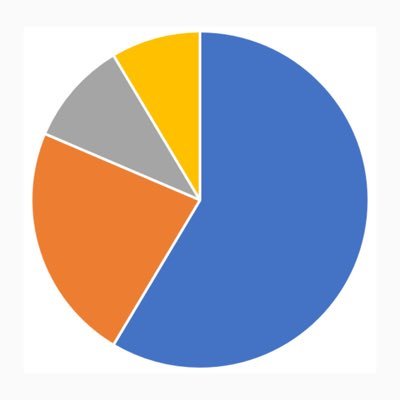


This caught my eye. Liquidity on @aave ‘s Arbitrum deployment is now over 77%, the highest across all networks — noticeably above Ethereum’s ~66%. If anyone needed another reminder why Arbitrum remains a core hub for DeFi activity, the data pretty much speaks for itself.
The latest DEX metrics highlight a strong uptick in on-chain trading activity, with $8.37B in 24h volume and $70B over the past 7 days. This level of activity places decentralized trading firmly at the center of crypto market structure, even amid macro volatility. @ethereum maintained 30.2% of all EVM DEX volume, showing that while liquidity is diversifying across chains, ETH still remains the anchor venue for deeper markets and larger trades. The remaining ~70% distributed across other EVM chains reinforces how users are actively seeking lower fees, faster execution, and more specialized trading experiences. These numbers reflect two structural trends: 1️⃣ On-chain trading is no longer niche; it’s becoming the default. Billions in weekly volume show that users trust decentralized execution and real-time settlement. 2️⃣ Long-tail assets and alternative venues are driving meaningful share of activity. With Ethereum representing only 30.2% of volume, traders are clearly exploring new ecosystems and demand for non-blue-chip token markets is expanding rapidly. dune.com/hagaetc/dex-me…




TL;DR summary of the Talus / x402 agent workflow concept Talus @Talus_Labs and x402 introduced the first real proof that autonomous agents can act on-chain without human input. Agents can move funds, trigger intents, verify outcomes, and loop through multi-step workflows—something the blockchain was never designed to support natively. Today, most chains execute only one transaction at a time and forget everything that happened before. An agent cannot “remember” its previous state, decisions, or intermediate outputs. Every step—checking prices, executing swaps, verifying fills—must be rebuilt from zero each time. This is the core bottleneck that makes true on-chain automation impossible today. Talus solves this with a workflow layer: A Zapier/n8n-style builder (Vision) and an execution layer (Nexus). Developers can design full agent workflows—conditions, tools, state, branching logic—and deploy them directly on-chain. The workflow, logic, and state all live persistently on the blockchain, not in off-chain scripts. This makes it possible for agents to complete entire tasks end-to-end: claim rewards → swap → reinvest monitor slippage → retry swap wait for gas to fall → execute transaction run multi-step arbitrage or liquidation flows all without any human involvement. In short: x402 enabled on-chain actions. Talus enables on-chain autonomy.