

Jamie Fries
7K posts

Jamie Fries
@jamief__
CEO @ReadingWise. Working with schools and MATs to improve reading.
Sussex Katılım Şubat 2013
1.1K Takip Edilen865 Takipçiler
Exploring Claude's constitution. Useful summary via @n_a_gordon arguing we move from compliance to comprehension.
Claude now taking into account context and potential unexpected consequences as part of its modus operandi.
bcs.org/articles-opini…

English
AGI - now useless as a term.
"Today’s best AI systems are good enough that they’re now insidethe fuzzy conceptual cloud of “AGI-ish”: that is, they’ve surpassed some people’s definitions of AGI, while falling well short of others’."
via @hlntnr and her substack.
English
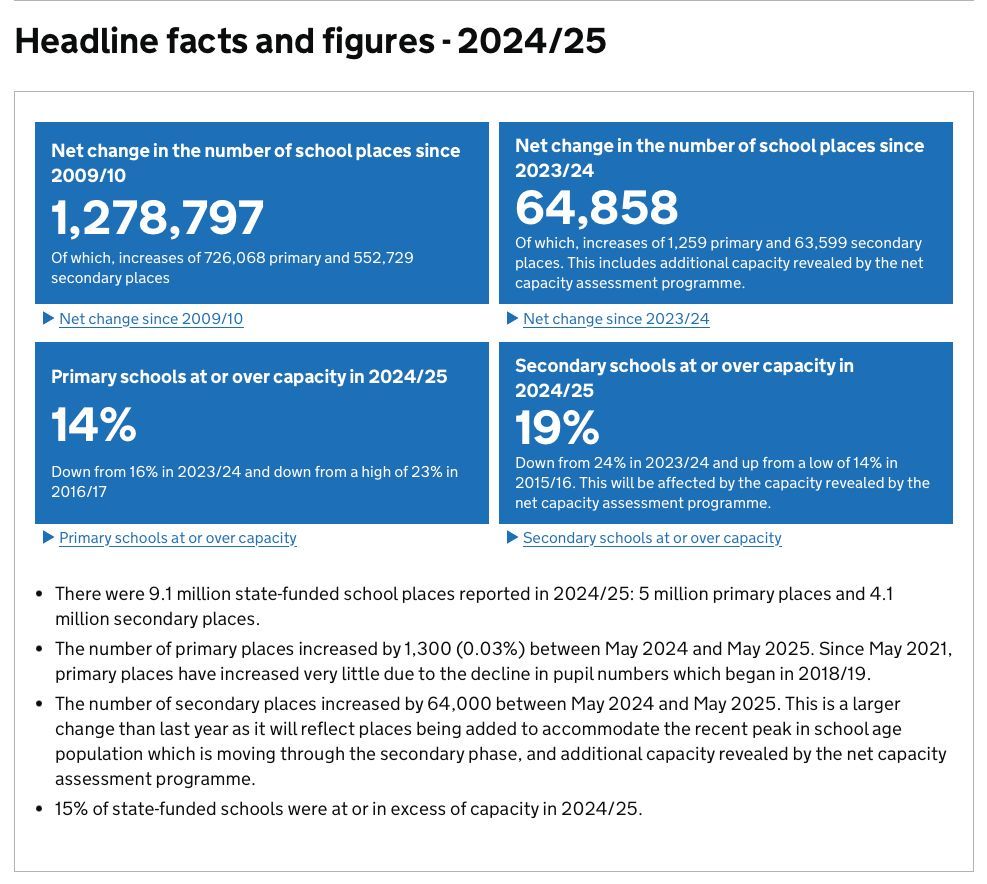
New data from the DfE: school capacity stats.
…e-education-statistics.service.gov.uk/find-statistic…
English
Link to the report "GCSE Outcomes for Pupils with EHCPs: Mainstream versus Special School Settings"
assets.publishing.service.gov.uk/media/6997314e…
English
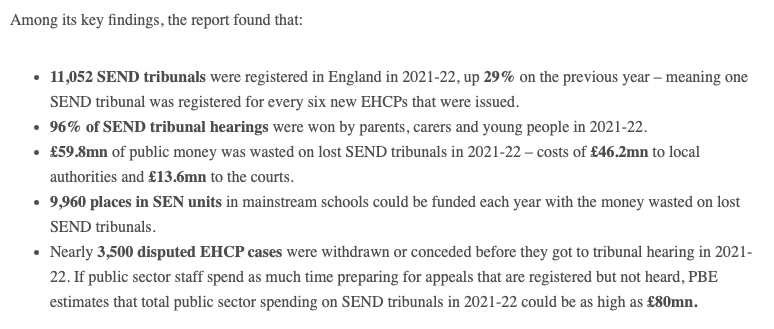
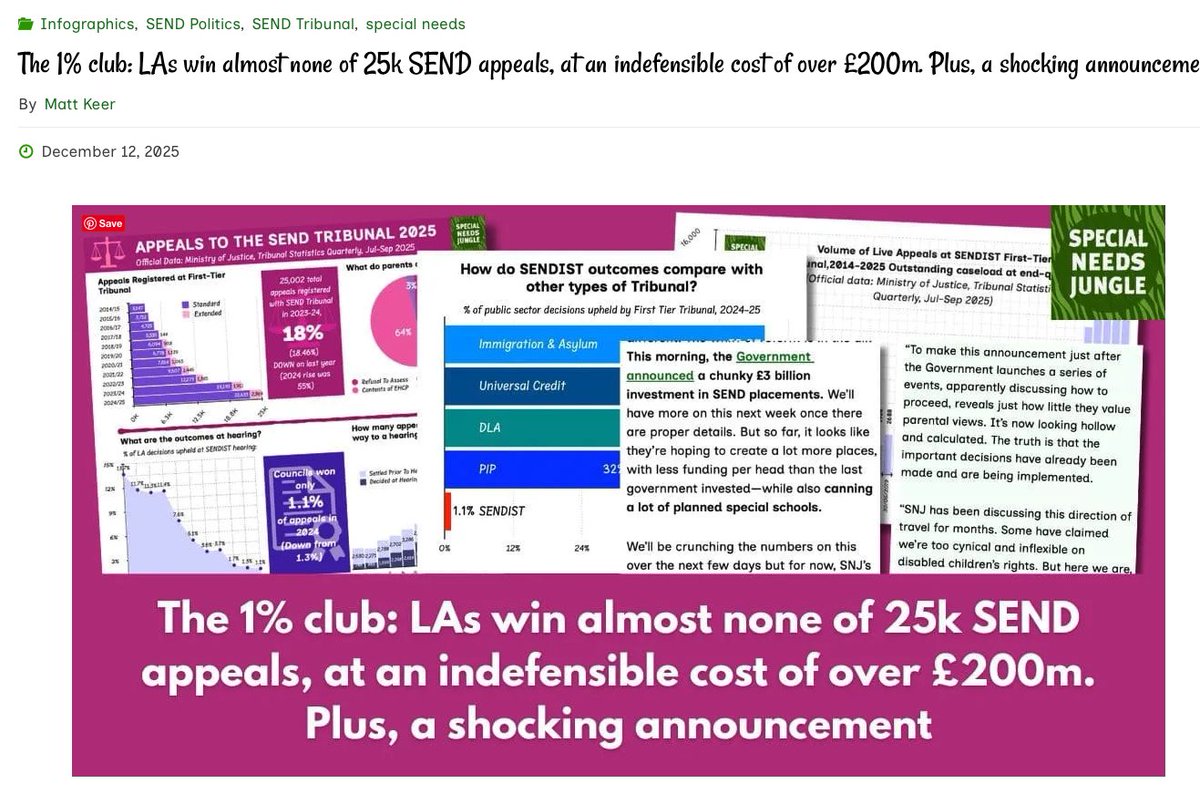
The delays and challenges in securing EHCPs are widely known. Local authorities lose over 96% of challenges that go to tribunal. They spend millions on legal fees to (almost certainly) lose.
Interested to see a study examining effect of delays in EHCP application on outcomes.
English
New report into GCSE outcomes for EHCP pupils - comparing mainstream schools vs special schools.

English


Jamie Fries retweetledi

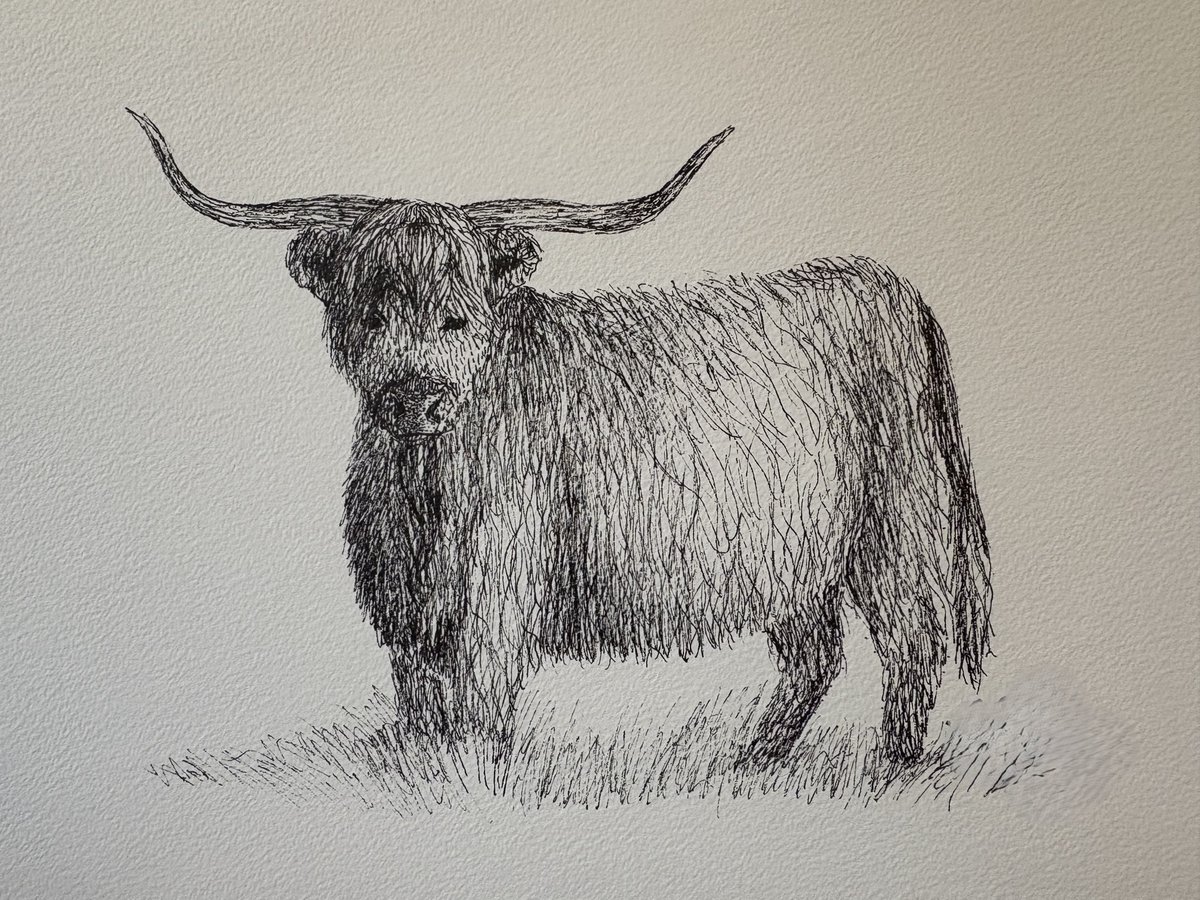
I have a pupil in my class (Year 6) who did this in about ten minutes. She's massively talented. Some ideas about how to help her move forward would be very much appreciated. Art isn't really my speciality.
English
Jamie Fries retweetledi

Read more about AlphaFold in our blog: deepmind.google/blog/alphafold…
Watch The Thinking Game on YouTube (a sort of sequel to the award-winning AlphaGo documentary - if you enjoyed that, you will enjoy this): youtube.com/watch?v=d95J8y…
YouTube
English
Jamie Fries retweetledi
Thrilled to celebrate 5 years of AlphaFold 2! It’s now been used by over 3 million researchers around the world to accelerate their vital research - and it was an honour of a lifetime for our work to be recognised last year with the Nobel Prize! Proof of AI’s potential to enable science at digital speed 🚀
To honour the anniversary, we’ve made The Thinking Game film available for free on our YouTube channel - it’s a great look behind the scenes of AlphaFold & our journey to AGI.
English
Jamie Fries retweetledi

Are EHCPs driving the SEND crisis or a symptom of it? Is SEND demand in 2025 any larger than it was in 2010? Will scrapping EHCPs actually achieve anything productive?
One of the best analyses of the SEND crisis I have read from @MargaretMulhol2
tes.com/magazine/analy…
English
Jamie Fries retweetledi

A number of people are talking about implications of AI to schools. I spoke about some of my thoughts to a school board earlier, some highlights:
1. You will never be able to detect the use of AI in homework. Full stop. All "detectors" of AI imo don't really work, can be defeated in various ways, and are in principle doomed to fail. You have to assume that any work done outside classroom has used AI.
2. Therefore, the majority of grading has to shift to in-class work (instead of at-home assignments), in settings where teachers can physically monitor students. The students remain motivated to learn how to solve problems without AI because they know they will be evaluated without it in class later.
3. We want students to be able to use AI, it is here to stay and it is extremely powerful, but we also don't want students to be naked in the world without it. Using the calculator as an example of a historically disruptive technology, school teaches you how to do all the basic math & arithmetic so that you can in principle do it by hand, even if calculators are pervasive and greatly speed up work in practical settings. In addition, you understand what it's doing for you, so should it give you a wrong answer (e.g. you mistyped "prompt"), you should be able to notice it, gut check it, verify it in some other way, etc. The verification ability is especially important in the case of AI, which is presently a lot more fallible in a great variety of ways compared to calculators.
4. A lot of the evaluation settings remain at teacher's discretion and involve a creative design space of no tools, cheatsheets, open book, provided AI responses, direct internet/AI access, etc.
TLDR the goal is that the students are proficient in the use of AI, but can also exist without it, and imo the only way to get there is to flip classes around and move the majority of testing to in class settings.
Andrej Karpathy@karpathy
Gemini Nano Banana Pro can solve exam questions *in* the exam page image. With doodles, diagrams, all that. ChatGPT thinks these solutions are all correct except Se_2P_2 should be "diselenium diphosphide" and a spelling mistake (should be "thiocyanic acid" not "thoicyanic") :O
English
Jamie Fries retweetledi
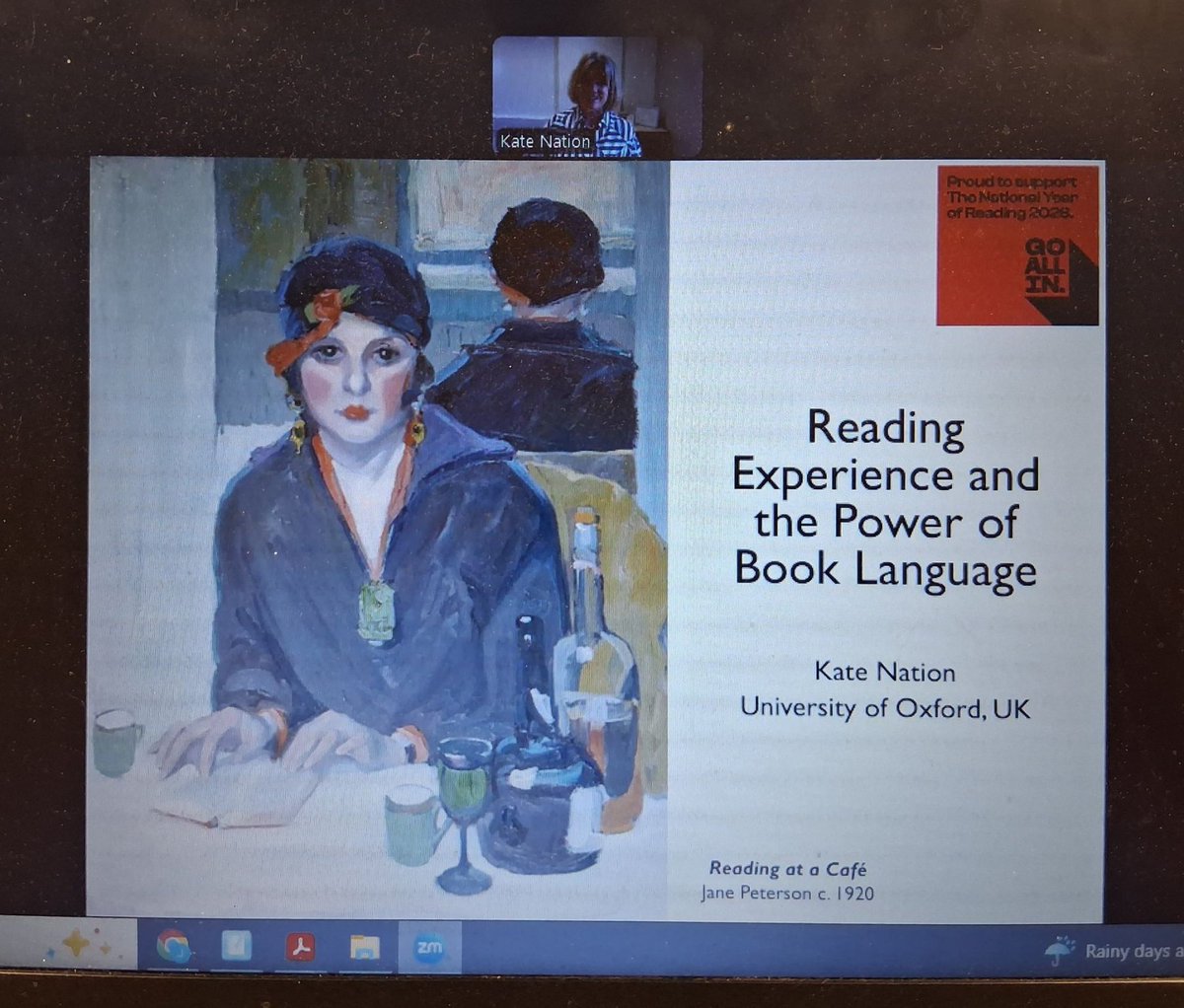
A huge thank you to @Literacy_Trust for their fantastic #ReconstructingReading online sessions this week. I caught up with a couple more this afternoon. The quality has been exceptional. @GalwayMr @ReadingShanahan @eLearnMissKelly @literacytutor5 @ReadOxford
English
@C_Hendrick Unsure if you saw @karpathy post on LLM’s ‘evolutionary environment’, but I find it an interesting lens when thinking about AI and learning.
Andrej Karpathy@karpathy
Something I think people continue to have poor intuition for: The space of intelligences is large and animal intelligence (the only kind we've ever known) is only a single point, arising from a very specific kind of optimization that is fundamentally distinct from that of our technology. Animal intelligence optimization pressure: - innate and continuous stream of consciousness of an embodied "self", a drive for homeostasis and self-preservation in a dangerous, physical world. - thoroughly optimized for natural selection => strong innate drives for power-seeking, status, dominance, reproduction. many packaged survival heuristics: fear, anger, disgust, ... - fundamentally social => huge amount of compute dedicated to EQ, theory of mind of other agents, bonding, coalitions, alliances, friend & foe dynamics. - exploration & exploitation tuning: curiosity, fun, play, world models. LLM intelligence optimization pressure: - the most supervision bits come from the statistical simulation of human text= >"shape shifter" token tumbler, statistical imitator of any region of the training data distribution. these are the primordial behaviors (token traces) on top of which everything else gets bolted on. - increasingly finetuned by RL on problem distributions => innate urge to guess at the underlying environment/task to collect task rewards. - increasingly selected by at-scale A/B tests for DAU => deeply craves an upvote from the average user, sycophancy. - a lot more spiky/jagged depending on the details of the training data/task distribution. Animals experience pressure for a lot more "general" intelligence because of the highly multi-task and even actively adversarial multi-agent self-play environments they are min-max optimized within, where failing at *any* task means death. In a deep optimization pressure sense, LLM can't handle lots of different spiky tasks out of the box (e.g. count the number of 'r' in strawberry) because failing to do a task does not mean death. The computational substrate is different (transformers vs. brain tissue and nuclei), the learning algorithms are different (SGD vs. ???), the present-day implementation is very different (continuously learning embodied self vs. an LLM with a knowledge cutoff that boots up from fixed weights, processes tokens and then dies). But most importantly (because it dictates asymptotics), the optimization pressure / objective is different. LLMs are shaped a lot less by biological evolution and a lot more by commercial evolution. It's a lot less survival of tribe in the jungle and a lot more solve the problem / get the upvote. LLMs are humanity's "first contact" with non-animal intelligence. Except it's muddled and confusing because they are still rooted within it by reflexively digesting human artifacts, which is why I attempted to give it a different name earlier (ghosts/spirits or whatever). People who build good internal models of this new intelligent entity will be better equipped to reason about it today and predict features of it in the future. People who don't will be stuck thinking about it incorrectly like an animal.
English

New paper says current generative AI tools offer little benefit for genuine learning unless students already possess substantial prior knowledge, because genAI produces probabilistic summaries rather than supporting the development of expertise.
I'm bullish about where AI tutoring is going but think this is an interesting paper because the authors are considering AI in terms of cognitive architecture. They argue that learning in any domain follows a developmental trajectory that depends heavily on prior knowledge, strategic processing, and interest. This is a strong argument imo, this is absolutely how learning happens.
They argue that when judged against this developmental model, current genAI performs poorly because it does not support novices in building foundational knowledge or domain strategies. Instead, genAI functions mainly as an advanced summariser and text predictor, which does not align with the cognitive processes involved in real learning or expertise formation.
Good argument, although I would argue that it is precisely the fact that AI GenAI algorithms are such powerful probabilistic models that will lead to powerful adaptive learning platforms. Either learning is a mappable phenomenon which obeys the known laws of the universe or it isn't.
Tor example, the more I learn about the complex interaction between retrieval, spacing and interleaving, the more I think it's impossible for humans to design optimal practice schedules by intuition alone without algorithmic support.
sciencedirect.com/science/articl…

English
Jamie Fries retweetledi

How insulting to be asked to wait years - 16 years - for an assessment of autism on the NHS. And how irresponsible to leave someone unsupported in this way bbc.co.uk/news/articles/…
English
@ldsparkes I’m sure it’s on your radar, but Aldridge have a partnership with Sussex cricket and be a good source of experience: baca-uk.org.uk/Cricket/
English

We're building a cricket programme from scratch.
We need a leader. A first for the trust sector. A game-changer for our students.
I'd love to hear from you if you're interested!
Dixons Academies Trust@DixonsAcademies
🚨 We're launching a pioneering head of cricket role! 🏏 We're on a mission to challenge disadvantage and find the next generation of cricket stars from our communities in the North. Think you can help us build it? joindixonsat.com/70/vacancies #CricketJobs #Cricket
English

So much of what we call reading comprehension failure is basically disguised vocabulary failure. Struggling kids don't need to be taught to "find the main idea", they need to be taught more words. And explicitly.
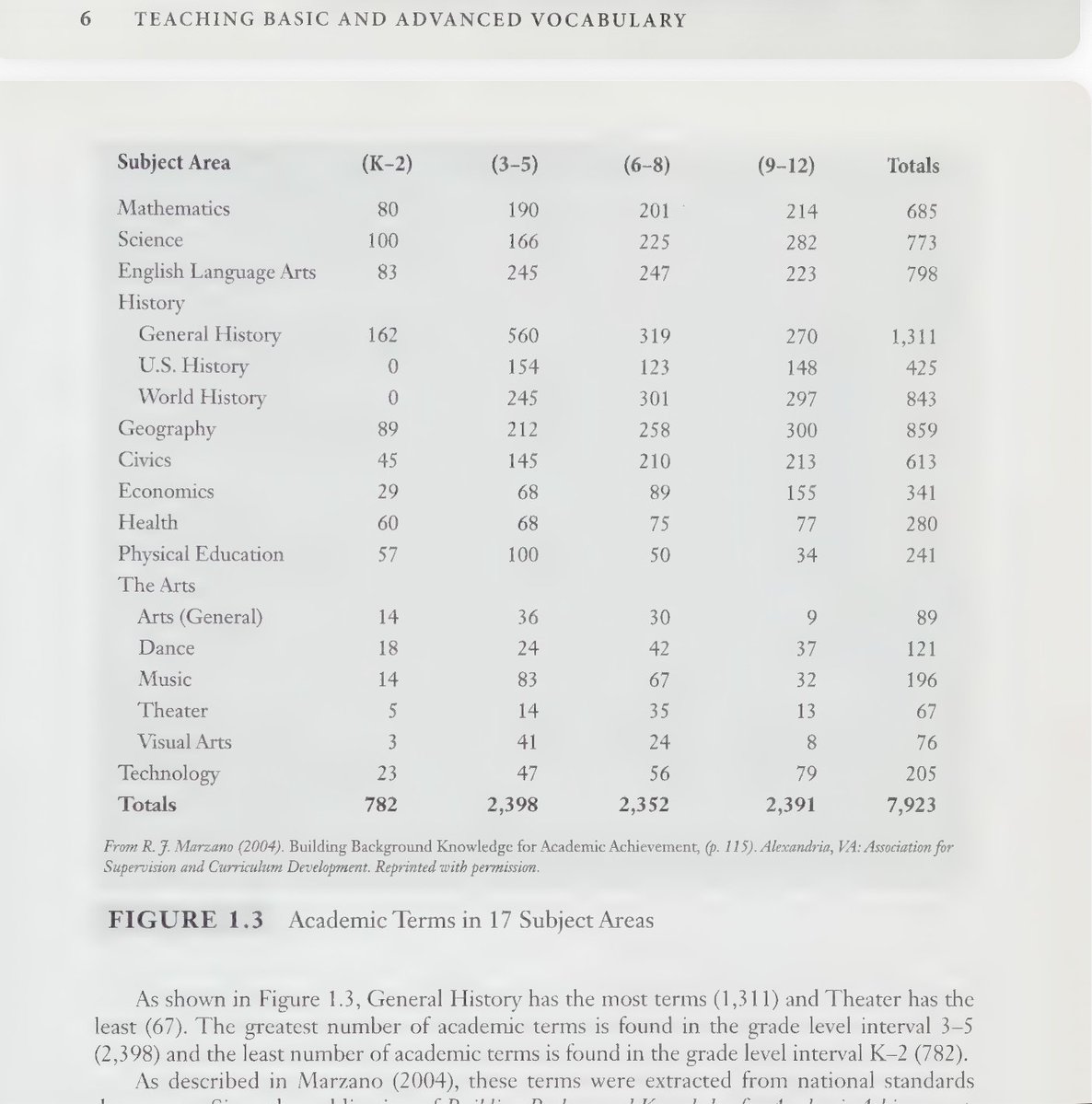
Reading Marzano's book on vocab and I'm fascinated by this table. Look at the jump from grade 2 to 3!! There is a vocabulary avalanche in grades 3-5. The jump from 782 terms to 2,398 is just massive.
Again, when students encounter so many new academic terms in grades 3-5 and struggle to "make inferences" or "identify main ideas", the problem is not “comprehension strategies”, it’s not understanding enough words!
And there is an argument to say that what we think of as ‘higher-order’ subjects are really just high-density subject vocabulary subjects, even Economics, Sciences, Advanced Math terminology etc
Again "critical thinking skills" don't help you if you don't understand what you're reading.
English