
Jean-François Pauzé retweetledi
Jean-François Pauzé
201 posts


Jean-François Pauzé
@jfpauze
Dad, Husband & Grandad - Into all technology, engineering & space stuff! Let's create the first real space era for humankind! Ideas are my own - No DM
Québec, Canada Katılım Haziran 2011
1.9K Takip Edilen92 Takipçiler


Jean-François Pauzé retweetledi

This is cool tech 😮 @MidOfficer
Andreas Klinger 🦾@andreasklinger
I just visited a company in Finland that can turn any transparent surface — windows, glasses, plastic, anything — into a 3D display that perfectly augments what you see behind it. Welcome to Distance . One of the most exciting companies in Europe right now. And they're only two years old. We're not talking about a tiny rectangle in the corner of your windshield. The entire glass becomes your screen. They showed this to Kia's design team. It led to a concept car with a full edge-to-edge 3D windshield that paints navigation onto the actual road, shows you what the car sees, highlights threats, and yes, could theoretically replace every Pepsi billboard with a Coke one. But the defense side is where it gets serious. As a neighbor to Russia, Finland feels the pain of Ukraine very directly. The Distance team wanted to be part of the solution. Their field operator headset gives soldiers jet fighter-grade situational awareness. Any sensor (thermal, infrared, multispectral) overlaid onto what you actually see. Tested in over a dozen field trials with the Finnish army. Driving armored vehicles in arctic conditions in the middle of the night with full 3D perception. The field operator headset effectively allows soldiers to see through smoke, and with extra cameras even behind walls. Some of what they showed us had never been shown publicly before. And there's more cooking under the hood they couldn't share yet. Two years in. Moving at the speed of light. Welcome to Europe!
English
Jean-François Pauzé retweetledi

Future spacecraft may be able to “think” for themselves.
NASA is testing a next-gen space processor that can withstand the harsh conditions of space, while improving computing power. So far, testing shows it operating at 500 times the performance of chips currently in use. go.nasa.gov/4wm7QHL

English
Jean-François Pauzé retweetledi

SpaceX is actively hiring world-class engineers/physicists for SpaceXAI, even if you have zero prior experience in AI. Smart humans figure it out fast.
Please send an email with ~3 bullet points demonstrating evidence of exceptional ability to ai_eng@spacex.com.
English
Jean-François Pauzé retweetledi

☢️ Advanced nuclear tech company AMPERA is departing from mainstream nuclear designs with the development of a hybrid fusion-fission architecture in a futuristic subcritical thorium-fueled configuration.
A modular plant containerized into a 40 foot space made by a spherical reactor 2 m in diameter surrounded by multilayered shielding, a heat exchanger, a turbine, and a generator, capable of 30 thermal MW of power & 15 MW of electrical output.
The reactor, a 3D printed spherical Silicon carbide core, is conceived to start and regulate the chain reaction by an external neutron source to allow immediate shutdown, restarting, stable ramp rates, and rapid power changes, without risk of runway meltdown, or downtime for refueling & maintenance.
The fuel made of natural Th encapsulated in Triso kernels is bred in the core and doesn’t need enrichment, eliminating the supply dependence and reducing risks of radioactive proliferation.
The primary coolant is He that carries heat from the core to a supercritical CO₂ heat exchanger, which drives a closed loop Brayton-cycle turbine that spins a generator.
The transportable mini nuclear station is designed to operate autonomously for 30 years at full capacity without downtime.
The company is undergoing validations tests by the Nuclear Regulatory Commission with the intent to deliver a prototype by 2027 and to deploy a fleet by 2030.
🔗 ampera-x.com

English
Jean-François Pauzé retweetledi

Canadarm3 will be 🇨🇦's third-generation robotic space arm. It can be manoeuvred by ground control on Earth, astronauts in a space station and/or advanced artificial intelligence.
🦾🌕Here's more on the 8.5-metre “arm” from @RosemaryCounter:
begiant.ca/stories/ideas/…
English
Jean-François Pauzé retweetledi

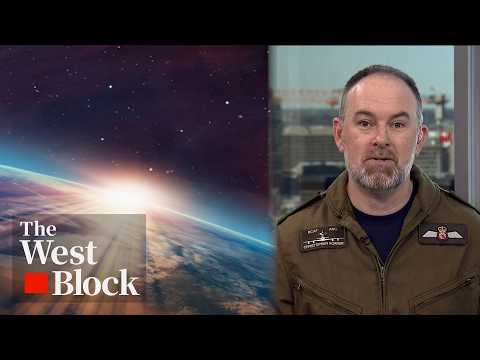
Why should Canada invest in and build space infrastructure? This interview with Canada's space commander tells the whole story.
Space is critical to Canada’s sovereignty, security, and economic resilience. Canada’s ability to independently detect, understand, and respond to threats in space has never been more urgent.
That starts with building the infrastructure here at home.
youtube.com/watch?v=uPfCFb…
YouTube
English
The rumors are true! There might be even MORE Starship launch sites in the future! 👀
SpaceX@SpaceX
It’s no secret that we intend to launch Starship a lot, targeting thousands of flights per year. That cadence will require the ability to launch from many different locations, so we are constantly exploring to find viable sites to expand Starship operations in the future, both domestically and internationally
English
@KirkLubimov Would have been nice of CBC to do research on BYD in the US before the interview and challenge efficiently the guest...
English

US Senator Elissa Slotkin is raising the alarm on Canada for allowing Chinese EVs into the country:
"for instance, a BYD car, a wholly Chinese-made vehicle with a data package that's sending back 3D video and mapping and geolocation, and can be hacked back to Beijing..."
Mobile spy apparatuses.
BYD is planning over 20 dealerships across Canada.
English
Jean-François Pauzé retweetledi

Starship deluge, distilled:
• Legacy pads: sprawling retention ponds for massive liquid runoff
• Starship: 92% of deluge water vaporizes on contact
• Phase change absorbs the energy
• Only 8% survives as liquid
• Smart gutters route it to one spot
FAA data shows the footprint is tiny. Physics just replaced most of the civil engineering.
English
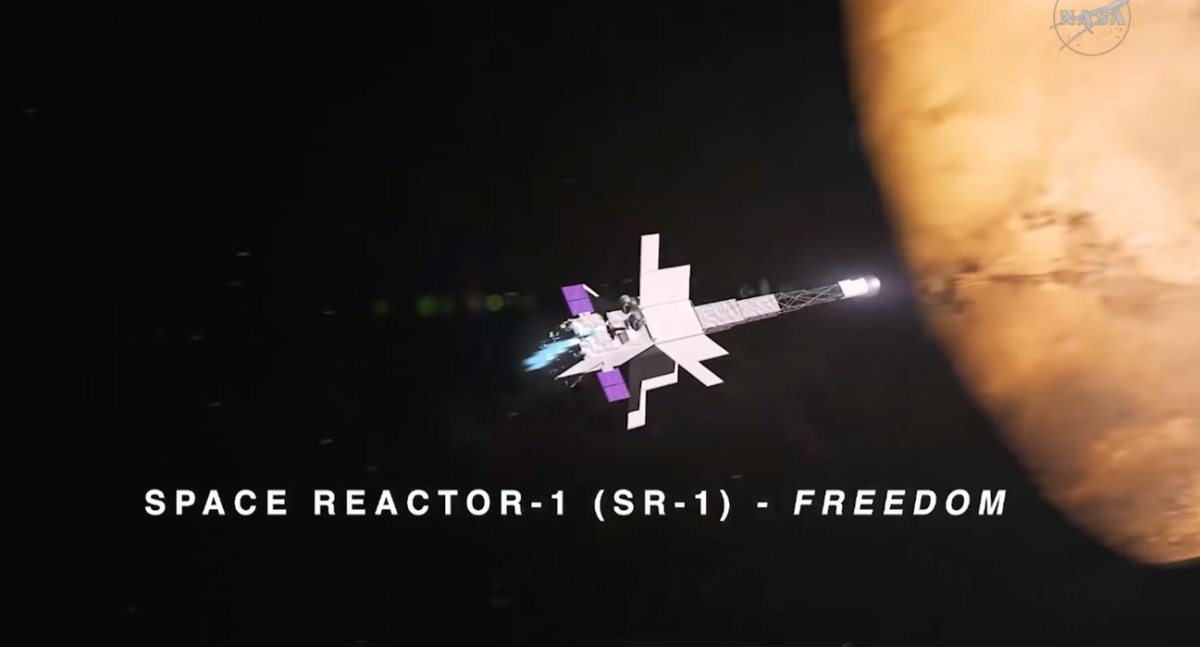
Space Reactor 1 - Freedom has a name that's a bunch of related words thrown together to describe a mission that's a bunch of parts thrown together.
And that's fine.
Propulsion repurposed from Gateway, which is itself repurposed from Asteroid redirect. The reactor is something that needs to be tested for moon base. The payload is a bunch of Helicopters that JPL already developed and tested. It won't be a disaster if the payload doesn't make it to Mars.
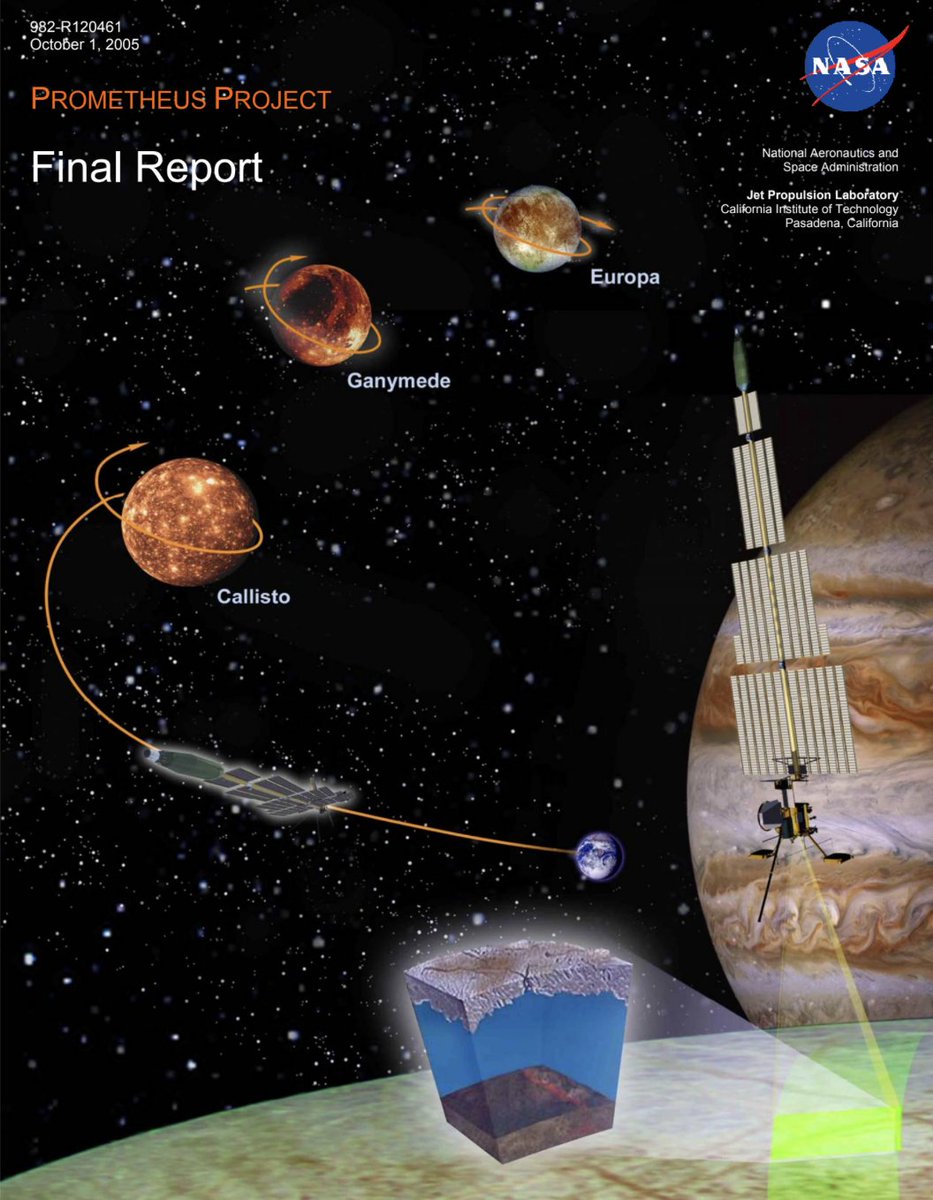
If you want to see a nuclear electric propulsion mission that's designed to exploit the full capabilities of the technology look at Project Prometheus, millions of dollars of work and testing for just the study. Would explore Jupiter's moon's with capabilities beyond any other mission.
It would take $20billion to develop and decades to build and fly.
And that meant it was easy to cancel, that's a lot of money to bet on an unproven nuclear electric propulsion spacecraft.
SR-1F is the antidote to that, a demonstrator mission that proves a technology needed for the moon, tests NEP for other missions and uses existing hardware with very little time required to get to launch.
And then when Project Prometheus: The Sequel is proposed critics will no longer be able to say it's untested technology.
English
Jean-François Pauzé retweetledi

Huge breakthrough in cooling tech 👀
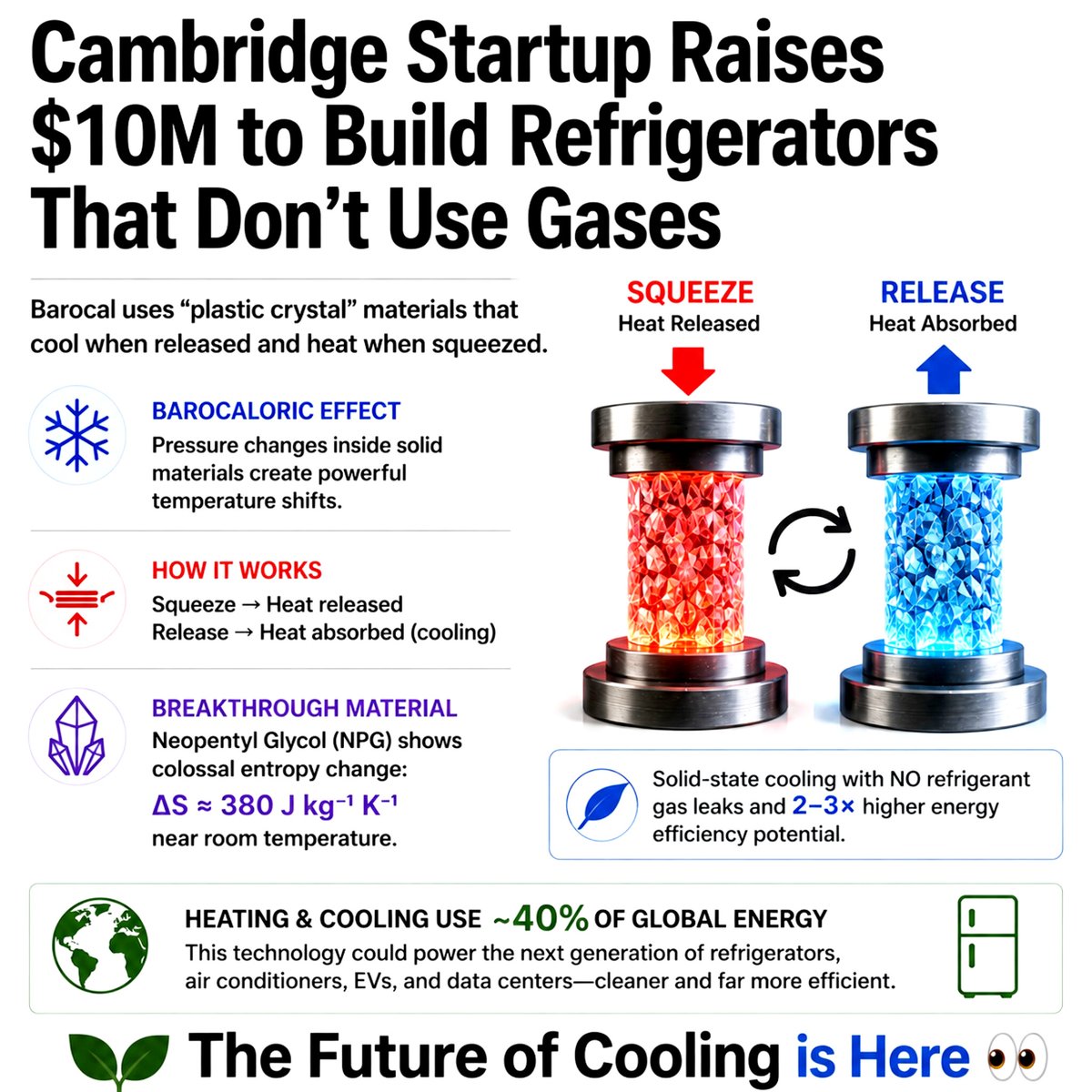
A Cambridge-based startup, Barocal, has raised $10 million to develop a new type of refrigeration system that works without traditional greenhouse refrigerant gases.
Instead of relying on leaking HFC gases, the system uses special plastic crystal materials that heat up when squeezed and cool down when pressure is released.
This phenomenon is known as the barocaloric effect, where pressure changes inside solid materials create powerful temperature shifts.
One material studied, called Neopentyl Glycol (NPG), demonstrated colossal entropy changes of around:
∆S ≈ 380 J kg⁻¹ K⁻¹
making it one of the most promising solid-state cooling materials ever tested near room temperature.
Researchers believe this technology could eventually deliver 2-3× higher energy efficiency while eliminating refrigerant gas leaks entirely.
That matters because heating and cooling systems currently account for nearly 40% of global energy consumption.
If this scales successfully, future refrigerators, air conditioners, EV cooling systems, and AI data centers could run on solid-state cooling powered by pressure-controlled crystals instead of harmful gases.
In other words, refrigeration itself may be entering its semiconductor moment 👀
English
Jean-François Pauzé retweetledi

It’s going to be so fun when Boom reveals our high pressure turbine blades. But I think we are going to keep them under wraps for awhile.
Gaurab Chakrabarti@Gaurab
Four foundries on Earth cast the single-crystal blades and vanes that let a gas turbine convert 1,500-degree gas into electricity. PCC and Howmet hold about 80% of the single-crystal market. Doncasters and CPP take most of the rest. Every heavy-frame gas turbine ordered in the past 18 months is sold out through 2030. Elon Musk on @dwarkesh_sp traced his own xAI Colossus power problem one layer down past the turbines and landed on the blades. He said SpaceX and Tesla will likely have to cast their own. We manufacture chemicals. Casting a single-crystal blade is not a metallurgy problem. It is a chemistry problem. The four foundries that cast them spent thirty years driving sulfur down to parts per billion and oxygen down to parts per million. Vacuum, gradient solidification, and mold chemistry are why nobody else can cast them. The bottleneck is chemistry.
English

« À tous les Québec solidaire de ce monde… vos yeules »
💰 Si tu n’as jamais lancé une entreprise, ta yeule.
💰 Si tu penses que les entrepreneurs passent leurs vendredis soirs à boire du champagne pendant que “le peuple souffre”, ta yeule.
Je bois presque jamais d’alcool.
Et même si j’en buvais, ce serait encore bon pour l’État.
Chaque bouteille enrichit le gouvernement. Faudrait peut-être vous informer avant de faire la morale.
💰 Même si quelqu’un avait 100 millions dans son compte, il ne l’a pas volé.
Cet argent-là vient de risques, de travail, de sacrifices et de décisions intelligentes.
💰 Vous parlez des riches comme d’une gang de parasites.
Pendant ce temps-là, ce sont eux qui créent les entreprises, les emplois et les investissements au Québec.
💰 “L’argent dort”, dites-vous.
Non.
L’argent des entrepreneurs paie des employés québécois, des fournisseurs québécois, des taxes québécoises et fait rouler l’économie québécoise.
💰 Votre problème, c’est que vous êtes incapables de créer de la richesse.
Votre seul réflexe, c’est de venir la chercher dans les poches de ceux qui en créent.
💰 Vous voulez taxer ceux qui bâtissent pendant que vous rêvez encore de lancer un Costco québécois.
On a déjà eu le fiasco du Panier bleu et vous n’avez toujours rien compris.
💰 Vous accusez les épiceries pour l’inflation alimentaire alors que le vrai problème, c’est le transport, l’énergie et le pétrole.
Mais exploiter notre pétrole ici? Ah non.
Ça, Québec solidaire refuse ça.
Vous préférez dépendre du pétrole des autres pays tout en faisant semblant de vouloir contrôler les prix.
💰 Si vous vouliez vraiment réduire l’inflation alimentaire, vous parleriez d’énergie, de transport et d’autonomie économique.
Mais non.
Votre solution, c’est encore plus d’État, encore plus de taxes et encore plus de contrôle.
💰 Vous êtes complètement déconnectés de l’économie réelle.
Sans entrepreneurs, sans investisseurs et sans gens qui prennent des risques, il n’y a pas de richesse à redistribuer.
Il n’y a rien.
Philip Authier@PhilipAuthier
«Ne vous inquiétez pas», dit Québec solidaire à François Lambert ledevoir.com/politique/queb…
Français
Jean-François Pauzé retweetledi

The Almighty Magnet will carry a radiation sensor to test whether ultra-strong superconducting magnets can reduce radiation exposure in space.
This mission is a step toward active magnetic shielding for future spacecraft, space stations, and human missions beyond Earth.

English
@r0ck3t23 A business who can build SMRs daily by the dozens and mine/manufacture it's required fuel efficiently will win the next energy race and make billions, weekly!
English

Elon Musk just revealed what’s actually holding AI back.
It’s not chips. Not models. Not data.
It’s concrete.
Someone asked him the obvious question. Why not just build private power plants next to data centers? Bypass the grid entirely.
His answer was four words.
Musk: “The power plant makers.”
There aren’t enough of them.
You can design the best chip on earth. Train a frontier model. Raise $10 billion for a hyperscale data center.
None of it matters if you can’t power it.
Musk: “You can drill down a level further.”
GPUs need power. Power needs turbines. Turbines need factories. Factories need permits. Permits need a government that hasn’t paralyzed itself.
Every link in the chain is physical. And every one of them is breaking.
We can train a frontier model in weeks. We can’t permit a power plant in under five years.
The country that invented the assembly line now needs 40 agencies to approve a gas turbine.
China doesn’t have this problem. They don’t run 7-year environmental reviews on infrastructure they need tomorrow. They break ground while America requests approval to break ground.
The AI race won’t be decided by whoever writes the best algorithm.
It’ll be decided by whoever can still build in the physical world.
We spent 30 years getting faster in software and slower in steel. Outsourcing manufacturing. Hollowing out supply chains. Treating builders like liabilities instead of assets.
Now the bill is due.
Every breakthrough in AI is gated by atoms. Steel. Concrete. Turbines that take years to manufacture and decades to approve.
The smartest code on earth is worthless without electricity.
Musk didn’t give a speech about this. He didn’t need to. He answered one question and the whole infrastructure myth collapsed.
“Where do you get the power plants from?”
Follow that thread far enough and you stop finding a technology problem.
You find a civilization that mastered thinking and forgot how to build.
English
Jean-François Pauzé retweetledi


Jean-François Pauzé retweetledi

This is actually huge news. Well on the way to more easily dealing with radiation in space.
Korean scientists just created an ultra-thin radiation shield: thinner than a human hair, stretchy like rubber, and highly effective against both electromagnetic waves and neutron radiation.
The new composite material blends carbon nanotubes (for blocking electromagnetic waves and conducting heat/electricity) with boron nitride nanotubes (excellent neutron absorbers). Even at minimal thickness, it blocks 99.999% of electromagnetic waves and cuts neutron radiation by ~72%.
The material is extremely lightweight, flexible (stretches to double its length), and easily 3D-printable into custom shapes (honeycomb patterns boost shielding performance by an extra 15%). And, it performs well across a variety of extreme temperatures and environments.
Lead researcher Joo Yong-ho explained: “This material represents a completely new concept in shielding technology — it is as thin as tape and as flexible as rubber, yet simultaneously blocks both electromagnetic waves and radiation.”
Perfect for protecting satellites, spacecraft electronics, nuclear propulsion systems, and astronauts without adding much mass. It could also find uses here on Earth in medical devices, semiconductors, and terrestrial nuclear applications.
📸 Korea Institute of Science and Technology
Source: space.com/technology/thi…

English
Jean-François Pauzé retweetledi
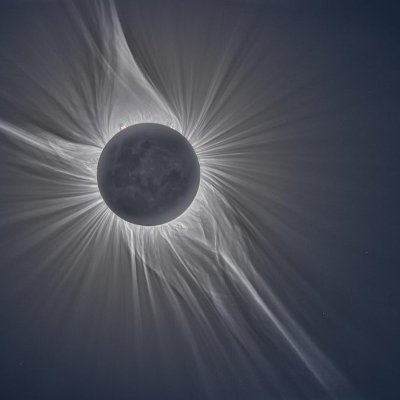
SpaceX Just Unleashed the Insane Specs for Starship V4 — And It’s Next-Level!
Hey space fans! Elon Musk just dropped fresh details on Starship Version 4 (targeted for 2027), and it’s clear: the future of spaceflight just got a whole lot bigger, bolder, and more powerful.If you thought Starship was already a beast, V4 is about to redefine what’s possible.Here’s the mind-blowing upgrade package: 42 Raptor Engines Total
Super Heavy booster stays at 33 engines, but the upper stage gets stretched and upgraded to 9 engines (3 sea-level + 6 vacuum-optimized). As Elon put it: “as foretold in the prophecy.” 10,000 Metric Tons of Thrust
That’s roughly three times the liftoff thrust of the mighty Saturn V. This will be the most powerful rocket ever built by humanity. Towering Height: Nearly 150 Meters
Imagine stacking three Statues of Liberty on top of each other. That’s how tall this monster will stand. Game-Changing Payload
Designed to deliver 200+ metric tons to Low Earth Orbit in fully reusable mode. This slashes the cost of getting mass to space and opens the door to real Mars colonies and massive orbital infrastructure. Flying Space Station
The upper stage will offer over 1,000 cubic meters of pressurized volume — that’s more internal living space than the entire International Space Station!Why go this big?As Starship gained heat shields, reinforcements, and all the real-world hardware needed for safety and reusability, it got heavier. Instead of endlessly chasing weight reductions, SpaceX chose to scale up everything: longer tanks, more propellant, more engines. The result? A rocket that can still haul the massive payloads required for humanity’s multi-planetary future.They’re still crushing it with V3 first — a huge leap on its own. V3 should wrap up production and testing by the end of this year, with heavy flight operations throughout 2026–2027 before V4 takes center stage.So… with Starship V4 basically being a flying city block with more living space than the ISS, would you sign up for a multi-month journey to Mars aboard one? Or are you watching safely from Earth? Drop your thoughts below — I’d love to hear them!Note: This image is an illustrative render for educational purposes, not an official SpaceX image.

English
Possibly reduced...
Cows (and other ruminants) produce methane as a byproduct of rumen fermentation, where microbes break down feed and release hydrogen that methanogenic archaea turn into CH₄ (a potent greenhouse gas). Adding omega-3-rich supplements to the diet shifts rumen fermentation, lowering methane output while often improving cow health and milk quality.
Omega-3 polyunsaturated fatty acids (like alpha-linolenic acid/ALA from flax/linseed or long-chain EPA/DHA from algae or fish oil) alter the rumen microbiome:
- They inhibit or reduce populations of methane-producing microbes.
- They promote alternative fermentation pathways that favor propionate production (which captures hydrogen) over acetate/methane.
- This reduces energy wasted as methane burps, redirecting it toward milk production or body maintenance.
No synthetic additives are required — it often uses natural sources like extruded linseed.
- **Valorex TRADILIN® (linseed-based omega-3 feed)**: Reduces enteric methane by ~9–9.5% per liter of milk (average dose). It increases milk yield (+1.5–3 liters/cow/day in trials), improves fertility, boosts immune function, and enriches milk with omega-3 while lowering saturated fats. Farmers see a positive ROI because the methane reduction comes with production gains (no extra cost).
- **Anpario Optomega (Plus or Algae)**: In vitro trials (University of Reading) showed 6.6–10.8% lower cumulative methane output vs. controls. Provides bioavailable DHA/EPA and supports fertility alongside the environmental benefit.
- **Recent research (University of Florida, 2025)**: A flaxseed + pea protein supplement (rich in omega-3) reduced methane production in rumen simulations and improved digestion/nutrient use. Potential for omega-3-enriched milk that benefits human health.
- **Broader studies**: Grass-fed cows on high-omega-3 pastures or diets with fish oil/microalgae show similar reductions; programs like ECO-METHANE reward farmers for consistent omega-3 inclusion.
- **Cow health**: Less inflammation, better fertility, reduced ketosis risk.
- **Product quality**: Milk/meat with higher omega-3 levels (better omega-6:3 ratio).
- **Sustainability**: Helps lower a farm’s carbon footprint without hurting (and often boosting) profitability. Some schemes link this to carbon credits or eco-premiums.
This approach is already commercialized and scalable, unlike some experimental additives (e.g., certain seaweeds). It’s one of the more practical, dual-benefit tools for cutting livestock methane.
English

Bill Gates: "6% of global emissions are cows who burp and fart methane to an extreme degree.
You can either fix the cows, or make beef without the cow."
Can we just fix Bill instead?
English