Ben Sira

4.6K posts

Ben Sira

Ben Sira

@katakuza

Katılım Temmuz 2012
504 Takip Edilen91 Takipçiler
Ben Sira retweetledi
🇨🇳XuZhenqing徐祯卿
✨🇨🇳Xi Jinping, then deputy Party chief of Zhengding county in Hebei Province,in his office in 1983.
🇨🇳XuZhenqing徐祯卿 tweet media
English
15
173
1.7K
36.6K
Ben Sira retweetledi
The Scientific Lens
The Scientific Lens@LensScientific·
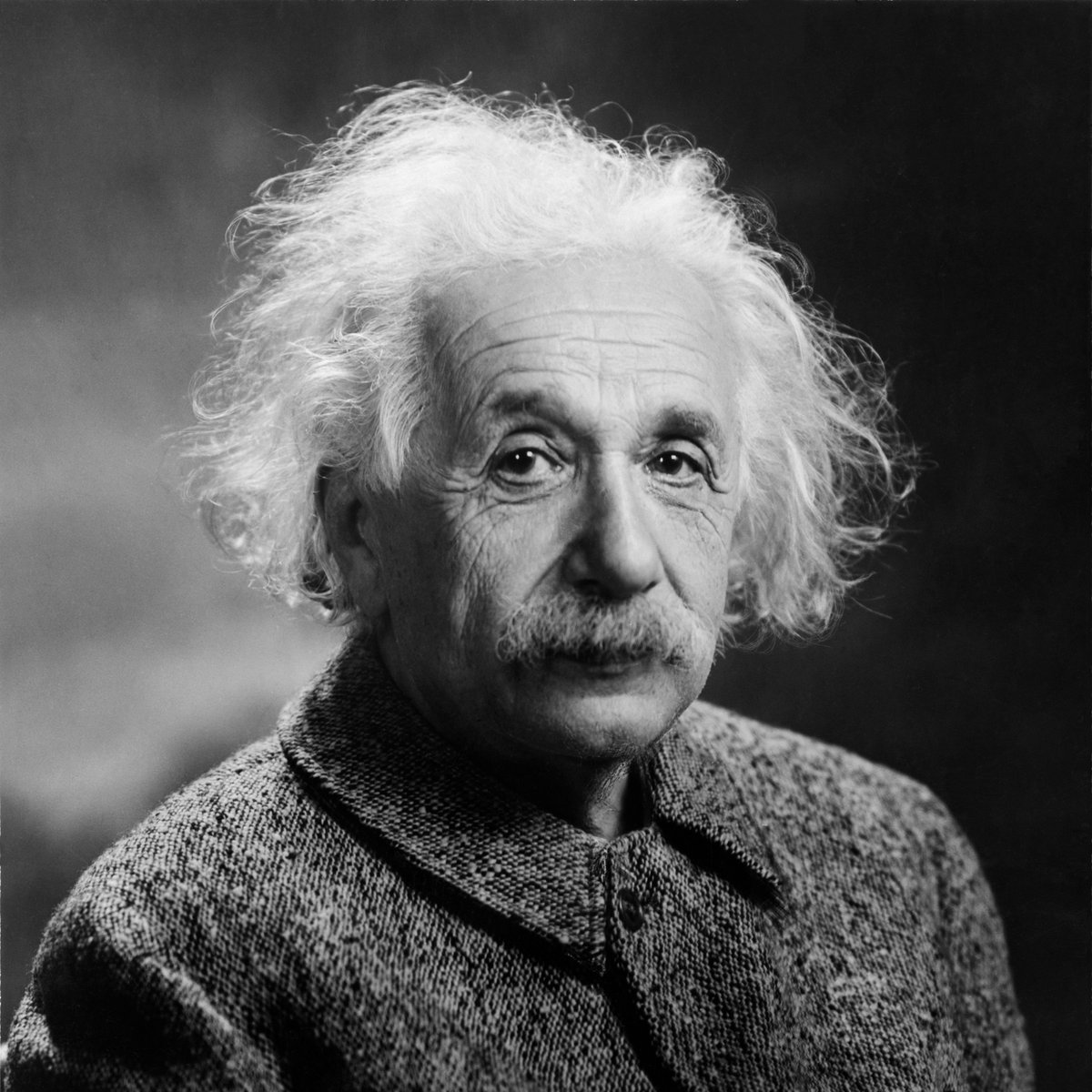
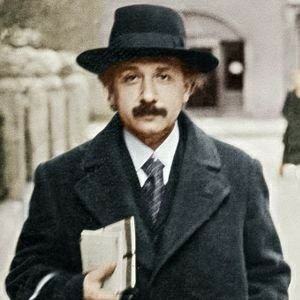
Great spirits have always encountered violent opposition from mediocre minds. — Albert Einstein
The Scientific Lens tweet media
English
31
183
557
9.7K
Ben Sira
Ben Sira@katakuza·
@sejudav Tonight’s dim moon, aligned with Venus and Jupiter, seemed to remind us that Earth itself (another small star) in the cosmic order moves within the same constellation, only that our limited perception seldom allows us to count ourselves in the same order.
English
0
0
0
37
David Sejusa, DM.
David Sejusa, DM.@sejudav·
👍👍! Seems today, Moon was off. Will share with you what I took on Wed. 20th May at 19.38(7.38)pm. It's what's called CONJUNCTION; on the left is Jupiter, Moon in the middle and lower right is Venus. May need to enlarge abit to see the moon clearly(but can clearly see crescent moon). This was out of Kla ofcse. But another, not necessarily clearer, but perhaps more elaborate) was taken same day and time. When the 3 brightest celestial bodies in the sky(after the Sun) align, it is also known as THE COSMIC SMILE! 👌!
David Sejusa, DM. tweet mediaDavid Sejusa, DM. tweet media
Buregyeya Apollo, PhD@ApolloBuregyeya

Gentlemen and ladies in Kampala, look up into the western sky this evening. You will see two bright, star-like lights standing almost in line. They are not stars. They are planets. Stars twinkle. Planets usually shine with a steadier light. That is one simple way to tell them apart. The brighter lower one is Venus. The upper one is Jupiter. For once, Kampala has given us a free astronomy lesson without asking for school fees. But beyond astronomy, the ancients would have read this sky with deeper eyes. Venus was the planet of beauty, desire, attraction, seduction, emotion, and disruption. In myth, she could inspire love, confuse kings, awaken ambition, and disturb the settled order of power. Jupiter, on the other hand, was associated with rulership, wisdom, justice, expansion, abundance, authority, and divine order. So when Venus appears with Jupiter, the symbolic reading is powerful. It speaks of a season of life, power, uncertainty, ambition, hope, and transition. It hints at emotional shifts, political intrigue, rising passions, fresh alliances, and the possible rise of new principalities. Whether you take this as astrology, mythology, poetry, or simple cosmic theatre, the sky is offering Kampala a beautiful story tonight. And before you laugh too quickly, remember that the moon, another celestial body, pulls on the oceans and helps shape the tides. If gravity and celestial cycles can move oceans, influence seasons, migration patterns, sleep rhythms, and animal behavior, then perhaps human beings are not as separate from cosmic rhythms as modern arrogance wants us to believe. So step outside calmly. Look west. Say hello to Venus and Jupiter. Tell the universe what you truly desire. And while you are there, wish me blessings and wealth, because when I rise, I intend to build things that will feed many.

English
3
5
25
1.7K
Ben Sira retweetledi
UgHistory
UgHistory@UGHistory256·
January 9, 1971. Singapore. President Milton Obote addressed journalists from his hotel. Britain was selling arms to apartheid South Africa, and the Commonwealth was fracturing. Obote urged restraint: "Put the arms plan in cold storage." He was playing the elder statesman. But 4,900 miles away, something else was already in motion. The Commonwealth was coming apart. British Prime Minister Edward Heath had resumed arms sales to South Africa's apartheid regime, helicopters, frigates, military equipment, reversing a Labour-era embargooutraging African leaders. Zambia and Tanzania had threatened to walk out of the Commonwealth entirely. Into this fire, Obote had finally been persuaded to fly, urged by Presidents Kaunda and Nyerere and by his own cabinet. He had twice declined, but his presentation against the arms sales was considered the strongest in Africa. Only he, they believed, could deliver it. From the Hilton Hotel, Obote struck a careful, diplomatic tone. Uganda would not support expelling Britain, he said. Instead, he urged that the arms plan be placed in "cold storage," a formula that rejected Heath's position without destroying the Commonwealth itself. It was the performance of a man who believed reason could prevail, who saw himself as a bridge between African outrage and British intransigence. He was, in that moment, the elder statesman of the continent. But the statesmanship masked a gathering storm. The British Foreign Office had already described Obote as "one of our most implacable enemies in matters affecting Southern Africa." Every word he spoke against the arms sales was being noted in London. And he had made other enemies too: he had nationalised British companies worth millions of pounds, antagonising the very establishment he was now asking for compromise. Far more dangerous was what he had left behind. Before departing, Obote had relayed orders to loyal officers that Idi Amin, his army commander, was to be arrested for misappropriating army funds. But the orders were betrayed. The Inspector General of Police, Erinayo Oryema, was secretly one of Amin's co-conspirators, and he immediately leaked the arrest plan. Amin now knew Obote intended to destroy him. And he had sixteen days to act first. There is a profound historical irony at work here. Obote stood before the international press as a confident head of state, navigating a global diplomatic crisis, fighting to hold the Commonwealth together. The British, whose arms sales he was condemning, would soon celebrate his downfall. Kenneth Kaunda, who had pressured him to attend, would carry the regret to his grave. Obote left Uganda a president. He would learn of his overthrow not in a cabinet room but from pilots on a flight somewhere over Asia, rerouted into exile. He had gone to Singapore to save the Commonwealth. He did not know that his own country was already slipping from his grasp. 1971: The Singapore Gamble. Part 1. January 9. 16 Days Before the Coup. Obote was fighting to keep Britain in the Commonwealth, while Britain was quietly working to remove him from power. When does principled diplomacy become a trap? #ughistory #Commonwealth #Obote #Singapore @commonwealthsec @UPCSecretariat @UGCommonwealth @UGgov
English
1
8
19
1K
Ben Sira retweetledi
Whiplash437
Whiplash437@MrWhiplash_·
Declassified CIA MKULTRA document openly discusses drugging entire populations. Substances placed in food, water, Coca-Cola, alcohol, cigarettes — even vaccinations to slowly induce anxiety, hopelessness, tension, and depression over time. This isn’t theory. This isn’t fiction. This is real government paperwork. This is only page one. Read it again. FOLLOW ME THE NEXT DROP WILL BE SHOCKING
Whiplash437 tweet media
English
10
130
154
4.5K
Ben Sira retweetledi
Richard
Richard@ricwe123·
The rise of the Alternative for Germany did not come from nowhere. It was created by years of disastrous decisions imposed by a political class so consumed by ideology, moral vanity, and self-congratulation that it steadily undermined the foundations of Germany itself. The destruction of the Nord Stream pipelines, the economic wreckage caused by Green energy dogma, and the long-term consequences of Angela Merkel’s infamous “Wir schaffen das” migration policy combined into a perfect storm of political and economic self-destruction. Germany once possessed one of the strongest industrial economies in the world, powered by cheap energy, engineering excellence, and social stability. Then came the ideological crusade. Green policies systematically dismantled the country’s energy security in the name of climate virtue signaling. Nuclear plants were shut down despite repeated warnings, reliable energy was abandoned before realistic alternatives existed, and businesses were crushed under soaring electricity costs and suffocating regulations. Berlin’s political elite acted as though industrial decline itself were a badge of moral superiority. Nord Stream was destroyed, and the full scale of Germany’s vulnerability was exposed. The pipelines had been the economic lifeline of German industry, providing affordable energy that kept factories competitive and households stable. Their destruction crippled Germany’s economic model almost overnight. Energy prices exploded, industries staggered under unbearable costs, investment fled abroad, and fears of deindustrialization became reality. Yet the response from Germany’s leadership was astonishingly weak,a mixture of silence, evasiveness, and submissive passivity. Instead of defending German national interests with outrage, the ruling class behaved as though economic collapse were simply another sacrifice citizens were expected to endure quietly. At the same time, Merkel’s “Wir schaffen das” opened the gates to mass immigration on a scale that transformed the country socially and politically. Germans were told that millions could be absorbed without serious consequences, and anyone expressing concern about integration, crime, housing pressure, strained public services, or cultural fragmentation was smeared as intolerant or extremist. Entire communities changed rapidly while the political establishment lectured citizens about morality from behind a wall of self-righteousness. The slogan “Wir schaffen das” increasingly came to symbolize not confidence or leadership, but elite arrogance completely detached from reality. The combination of economic decline, energy insecurity, and uncontrolled migration shattered public trust in the mainstream parties. Ordinary Germans watched their cost of living rise, their industries weaken, and their concerns dismissed with contempt by politicians more interested in ideological posturing than practical governance. Citizens who objected were insulted, censored, or portrayed as threats to democracy itself. The AfD rose because millions of voters concluded that the establishment had stopped governing in the interests of the German people. Nord Stream became the symbol of a country unable to defend its own economic survival. Green ideology became synonymous with deindustrialization and declining living standards. “Wir schaffen das” became shorthand for a political elite imposing massive social change without public consent while condemning anyone who dared object. What Germany is experiencing now is not some inexplicable political anomaly. It is the inevitable backlash against years of ideological extremism, economic sabotage, and elite contempt carried out by leaders who governed as though ordinary citizens existed merely to absorb the consequences of their failures.
Richard tweet media
English
12
47
110
4.9K
Ben Sira retweetledi
Night Sky Now
Night Sky Now@NightSkyNow·
Scientists have made an exciting discovery that could change the future of human space exploration. An Earth sized planet, located 40 light years away from our own, has been identified as a potential candidate for supporting life. This discovery adds to the growing list of exoplanets that share characteristics with Earth, sparking questions about the possibility of life beyond our solar system. With advancements in space technology, researchers are increasingly confident that finding planets with conditions similar to Earth is within our reach. The planet, nicknamed "New Earth," shares many of the same qualities as our planet, including its size and distance from its star. Just like Earth, it orbits within the habitable zone of its star, where conditions are just right for liquid water to exist. This discovery raises the tantalizing possibility that this planet could have the ingredients needed to support life, making it an exciting target for future space missions. What's even more thrilling about this discovery is the fact that scientists have been able to study the planet from afar, using powerful telescopes and advanced technology. This breakthrough not only strengthens our understanding of how Earth like planets form but also opens up new opportunities for space exploration. As we continue to discover planets like New Earth, we get closer to answering one of humanity's biggest questions: Are we alone in the universe? For many, the discovery of New Earth feels like a reminder that the search for life beyond our planet is far from over. With ongoing advancements in space exploration, scientists are continually uncovering new information that brings us closer to understanding the universe around us. The possibilities are endless, and New Earth could be just the beginning of a new era in space exploration. As we continue to look toward the stars, the potential of discovering more habitable planets is inspiring. Whether or not New Earth can support life remains to be seen, but the discovery has reignited the conversation about our place in the cosmos. It has also fueled excitement for future space missions aimed at exploring these distant worlds.
Night Sky Now tweet media
English
126
354
1.1K
51K
Ben Sira retweetledi
Creative Deduction
Creative Deduction@CreativeDeduct·
What if the state isn’t a necessary evil… but simply unnecessary? In the early 1970s Murray Rothbard gave the clearest answer yet. He fused Austrian economics (Mises’ praxeology and Hayek’s spontaneous order), Lockean natural rights and the radical American individualist anarchism of Lysander Spooner and Benjamin Tucker into the first fully articulated theory of a stateless society: anarcho-capitalism. In his landmark books For a New Liberty (1973) and The Ethics of Liberty (1982), Rothbard proved that every legitimate function of government - protection of person and property, dispute resolution, and even national defence - can be supplied more efficiently and ethically by competing private firms in a free market. All interactions would rest on one simple rule: the non-aggression principle - no one may initiate force against another person or their justly acquired property. Courts, police and defence agencies would operate on voluntary contracts and reputation, just like every other industry. Rothbard showed the state is not a necessary evil but a monopoly of coercion that necessarily violates rights and distorts the market. A truly free society is not chaos - it is the highest expression of civilisation, where individuals retain full self-ownership and interact solely through consent. Anarcho-capitalism is the most consistent and uncompromising conclusion of the classical liberal tradition: if individual liberty and private property are truly inviolable, the state has no moral or economic justification for existing.
Creative Deduction tweet media
English
10
23
57
2.8K
Ben Sira retweetledi
Creative Deduction
Creative Deduction@CreativeDeduct·
By the 1930s many Western intellectuals reluctantly realised that classical Marxism had failed and the proletariat wasn’t revolting. But then a group of exiled German Marxists led by Max Horkheimer, Theodor Adorno, Erich Fromm and Herbert Marcuse decided to change the battlefield. Instead of economics, they targeted the “cultural superstructure”: family, religion, tradition, sexual norms and the very idea of objective truth. Their weapon was Critical Theory - a relentless campaign of negative criticism designed to portray every Western institution as inherently oppressive and capitalism as not just economically flawed, but psychologically and morally corrupt. Marcuse gave the strategy its most powerful tactical manual in his 1965 essay “Repressive Tolerance”: true liberation, he argued, required “liberating tolerance” - tolerance only for progressive ideas and outright intolerance for conservative or “regressive” ones. Free speech, in other words, was only legitimate when it served the revolution. The intellectual poison of the Frankfurt School was extraordinarily influential and as its graduates and intellectual heirs colonised universities, media, NGOs and corporate HR departments, Critical Theory evolved into today’s identity politics, DEI mandates and cancel culture - a cultural Marxism that attacks the individual in the name of group grievance. What began with a small circle of German émigrés in the 1930s now shapes the moral vocabulary of much of the Western elite. The result has been a softer, more pervasive authoritarianism: the dictatorship of the politically correct.
Creative Deduction tweet media
English
383
2.1K
4.9K
242.1K
Ben Sira retweetledi
Arnaud Bertrand
Arnaud Bertrand@RnaudBertrand·
This is an extraordinary document written by the research arm of China's spy agency (the powerful MSS, basically the CIA and the FBI all wrapped in one) that absolutely zero media has picked up on. As far as I can see, I'm the first person to write about it even though it was published (in Chinese) on May 13th on chinadiplomacy.org.cn, a website of China's Ministry of Foreign Affairs. The document contains perhaps the most authoritative description of where China thinks its relationship with the U.S. stands, and where it’s headed. The title of the report is “The Great Global Transformation and the Path to U.S.–China Coexistence” and I provide a full translation of it in my article, the link of which is at the bottom of this post. To summarize briefly the most important - and, perhaps, surprising - aspect of the document: China's spy agency - the one institution whose entire job is to worry about the U.S. threat - has largely stopped worrying. That's really what transpires from the document. They use a strategic framework borrowed from Mao's "protracted war" theory and, according to this framework, America's offensive phase is finished and China weathered the storm intact. The question is no longer "how do we survive America?" but "how do we manage America?" - and they're proposing a six-step relationship recovery program. I'll let you read the full document as well as my analysis of it here: open.substack.com/pub/arnaudbert…
Arnaud Bertrand tweet media
English
188
1.5K
5.6K
541.7K
Ben Sira retweetledi
Ravinder Reddy
Ravinder Reddy@MRavinderReddi·
1/Around 150 BCE a Greek king cornered a Buddhist monk with a single question: if there is no soul, what is it that gets reborn? Buddhism spent the next centuries giving two very different answers to that one question. The second, from Nāgārjuna, is the stranger of the two. A thread. 🧵☸️🪷👇 1/20
Ravinder Reddy tweet media
English
18
44
257
24.6K
Ben Sira retweetledi
Ihtesham Ali
Ihtesham Ali@ihtesham2005·
A German neuroscientist published a book in 2012 arguing that smartphones are quietly producing the first generation in human history whose brains will shrink before they turn 30, and the media spent the next decade trying to destroy him for saying it. His name is Manfred Spitzer. He runs the Psychiatric University Hospital in Ulm and directs Germany's largest transfer center for neuroscience and education. The book is called Digitale Demenz, which translates as Digital Dementia, and it became one of the best-selling popular science books in German history almost the moment it was published. The press hated him for it. He was called Germany's most controversial brain scientist, accused of being a Luddite, a moral panic merchant, and a fearmonger who hated children. None of that stopped the book from being translated into more than a dozen languages, and almost none of it engaged with the actual neuroscience he was citing. The phrase digital dementia did not even start with him. It started with South Korean doctors in the late 2000s, who noticed something strange in their clinics. Patients in their twenties were arriving with memory complaints that had previously only shown up in much older adults. Forgetting numbers they used to know by heart. Losing the ability to recall directions in cities they had lived in for years. Struggling to remember conversations from earlier the same day. The doctors connected it to the rise of smartphone use, which had hit South Korea harder and earlier than almost any other country on Earth. Spitzer picked up the phrase and built an entire book around the neuroscience that explained it. The core thesis is brutally simple. The brain behaves like a muscle. It grows when you use it, and it atrophies when you do not. Every cognitive task you outsource to a device is a task your brain is no longer practicing, and the neural circuits responsible for that task are no longer being reinforced. Over time, they weaken in exactly the same way an unused muscle weakens. Spitzer was not arguing that smartphones would give you Alzheimer's. He was arguing that decades of cognitive outsourcing would produce a measurable decline in the underlying machinery, long before any clinical diagnosis would catch it, and that the decline was already showing up in young adults. The mechanism is what made him impossible to dismiss. By the early 2010s, there was already deep evidence that the brain physically remodels itself in response to use. London taxi drivers who had memorized the entire street map of the city had measurably larger hippocampi than the average person, which is the brain region responsible for spatial memory. Musicians who practiced for thousands of hours had thicker auditory cortices. Spitzer's argument was just the dark side of the same finding. If the brain grows in response to use, then it must shrink in response to neglect. And if every cognitive task adults used to perform with their own memory, navigation, arithmetic, attention, and reading was now being handled by a glowing rectangle in their pocket, then the regions responsible for all of those tasks were quietly being underused for the first time in human evolutionary history. Then the supporting data started landing. A 2020 study at McGill University tracked 50 regular drivers and measured GPS use. The heavy users had weaker spatial memory than the rest, and when researchers retested a subset three years later, those users had declined the fastest. The same hippocampus London cabbies had built up by ignoring shortcuts was being slowly hollowed out in everyone else by accepting them. A 2024 MIT study scanned the brains of people writing essays with and without ChatGPT. The AI group showed 55 percent weaker brain connectivity than the group writing on their own. 83 percent of the ChatGPT users could not recall a single line from essays they had written minutes earlier. The damage stayed even when the tool was taken away. A 2024 paper out of Norway recorded EEG scans of students writing words by hand versus typing them. The handwriting condition lit up the entire learning network. The typing condition produced almost nothing. Every one of these findings is exactly what Spitzer predicted in 2012. The most uncomfortable line in his book is the one almost nobody in the German press wanted to print. He pointed out that the people building these devices were not letting their own children use them. Steve Jobs did not let his kids near an iPad. Bill Gates capped his children's screen time at 30 minutes a day. The senior engineers at Google were sending their kids to Waldorf schools that banned screens entirely. The people who knew the most about what these products were doing to the developing brain were the ones protecting their own families from them, and almost nobody on the outside was asking why. The generation he was warning about is now in their twenties. The first cognitive scans of what we did to them are starting to come back, and the pattern is exactly what he said it would be. The brain you were born with is not the brain you will die with. You are training it every day. The only question is which direction.
Ihtesham Ali tweet media
English
61
1.3K
2.8K
109.1K
Ben Sira retweetledi
The Scientific Lens
The Scientific Lens@LensScientific·
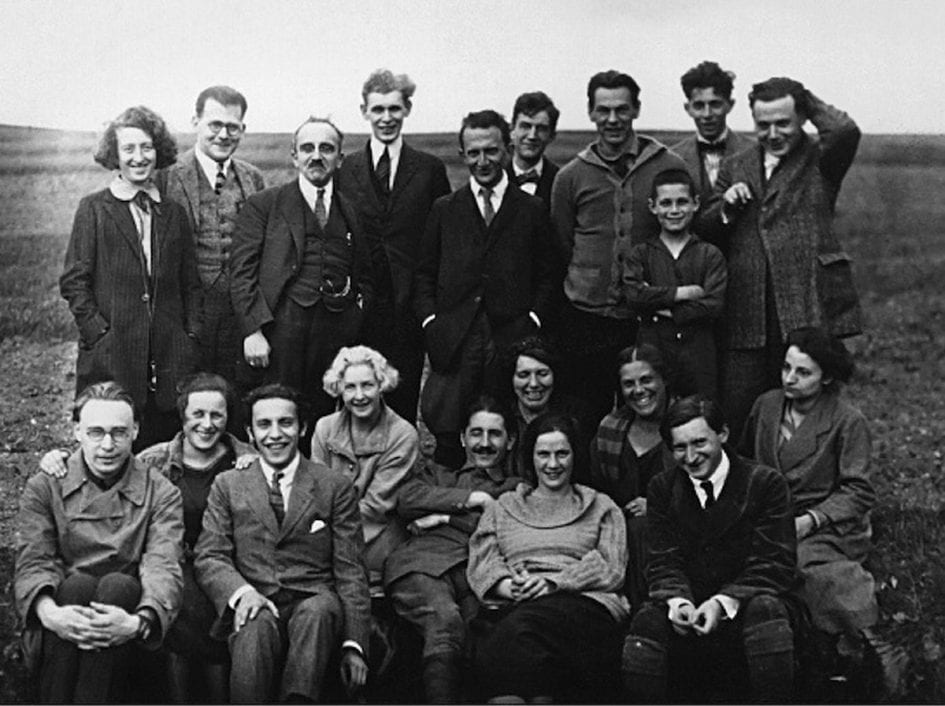
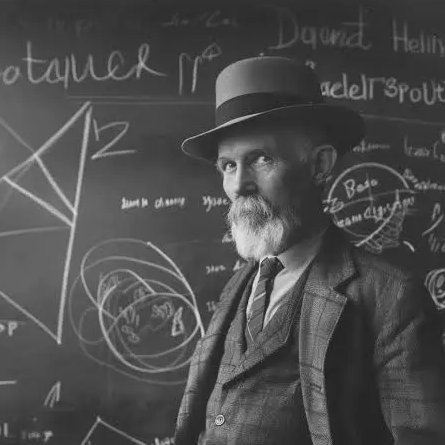
"Physics is too complex for physicists." - David Hilbert "Mathematics is cleverer than we are." - Max Born
The Scientific Lens tweet mediaThe Scientific Lens tweet media
English
11
61
409
9.8K
Ben Sira retweetledi
RTSG News
RTSG News@RTSG_News·
🇨🇳 Xi Jinping: "The most valuable and influential legacy which Marx left for us is the theory that has been named after him — Marxism." "This theory is just like a magnificent sunrise, illuminating the road on which humankind explores the patterns of history and seeks its own emancipation." Follow: @RTSG_News
RTSG News tweet media
English
13
75
324
9.1K
Ben Sira retweetledi
Vala Afshar
Vala Afshar@ValaAfshar·
In my whole life, I have known no wise people who didn't read all the time, none, zero. —Charlie Munger
Vala Afshar tweet media
English
2
28
98
4.6K
Ben Sira retweetledi
Physics In History
Physics In History@PhysInHistory·
We have to remember that what we observe is not nature herself, but nature exposed to our method of questioning. -- W. Heisenberg (Physics and Philosophy, 1958)
Physics In History tweet media
English
54
457
2.1K
54.9K
Ben Sira retweetledi
Archaeo - Histories
Archaeo - Histories@archeohistories·
The Study of the History of Human Sexuality - "Coition of a Hemisected Man and Woman" (1492 AD), Leonardo da Vinci’s anatomical sketch of intercourse, reflects early attempts to understand sexuality through observation. The Swiss jurist Johann Bachofen made a major contribution on educating civilization on history of sexuality. Lewis Henry Morgan & Friedrich Engels influenced by Bachofen but they criticized Bachofen's ideas. He wrote book Mother Right in 1861 : Bachofen writes that in the beginning human sexuality was sex- positive. He found mother as only being & the only medium for birthing children or Human. For this male-enforced monogamy was certainty requisite for paternity possible, giving rise to patriarchy. Modern explanations of the origins of human sexuality are based in evolutionary biology, and specifically human behavioral ecology. Evolutionary biology shows that the human genotype, like that of all other organisms, is the result of those ancestors who reproduced with greater frequency than others. The resultant sexual behavior adaptations are thus not an "attempt" on the part of the individual to maximize reproduction in a given situation—natural selection does not "see" into the future. Instead, current behavior is probably the result of selective forces that occurred in the Pleistocene #archaeohistories
Archaeo - Histories tweet media
English
1
24
108
11.3K
Ben Sira retweetledi
Math Files
Math Files@Math_files·
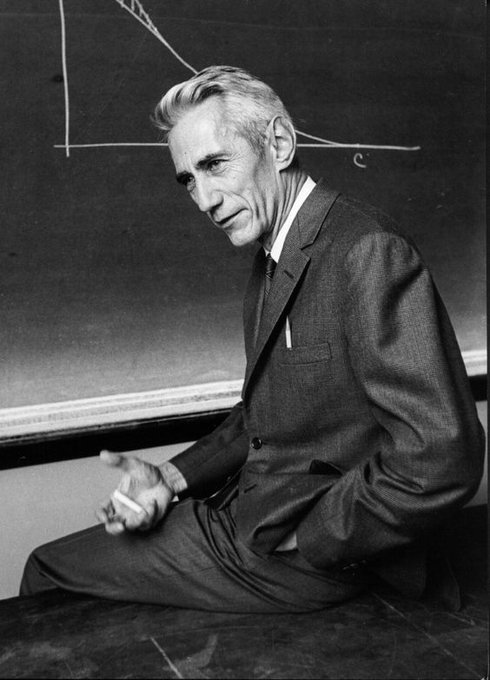
America has produced some of the most influential figures, from Franklin to Roosevelt. But there’s one name you may not know, and he’s the reason you’re holding a phone right now: American mathematician Claude Shannon, known as the father of information theory. In 1937, Shannon wrote what is often called the most important master’s thesis ever, proving that Boolean algebra could be applied to electrical circuits. This showed that any circuit, no matter how complex, could be represented mathematically using logic gates. For example, an AND gate outputs 1 only when both inputs are on. In 1948, he published A Mathematical Theory of Communication, introducing the idea that all information can be reduced to binary digits, or bits. The images on your screen, the sound from your speakers, even your taps—everything is just ones and zeros. There is much more, including concepts like Shannon entropy, but the impact is clear. So while we celebrate figures like Lincoln and Washington, it is also worth remembering Shannon—because without him, none of this would exist.
Math Files tweet media
English
8
43
179
6.2K