Kumar Chandrakant

76 posts

Kumar Chandrakant

Kumar Chandrakant

@kchandrakant

Katılım Temmuz 2009
66 Takip Edilen26 Takipçiler
Kumar Chandrakant
Kumar Chandrakant@kchandrakant·
@reliancejio @JioCare I have been struggling to get help for my landline issue with Jio Fiber without any success. My ticket SR000030GVQ9 was closed without any resolution. Now I am unable to reach through any of the listed channels. This is literally my last resort to get help.
English
1
0
0
13
Kumar Chandrakant
Kumar Chandrakant@kchandrakant·
@TheOfficialSBI @OfficialSBICare @NHAI_Official I was wrongly charged at a toll plaza. I raised complain with SBI Fast tag (602613202). It has been almost a month with no resolution even after following all the instructions. SBI Fast Tag helpdesk is unable to help further.
English
1
0
0
30
Kumar Chandrakant
Kumar Chandrakant@kchandrakant·
@IRCTCofficial @RailMinIndia @RailMadad I am travelling on 15126 in C1 with reserved seat and the coach is full of people without tickets. Please help the passengers who are sensible enough to buy tickets. Please send help urgently.
English
1
0
0
12
Kumar Chandrakant
Kumar Chandrakant@kchandrakant·
@boschindia my request for repairing washing machine bearing number 4241094256 is pending for more than 10 days now and no tine provided for it to be attended to. Your service is far from your product and brand quality.
English
1
0
0
19
Kumar Chandrakant
Kumar Chandrakant@kchandrakant·
@LGIndia I have been following up with your service engineer RNP240625082121 for days now with no resolution. I have been charged full amount with no resolution to my problem. Is this what you call customer service??
English
0
0
0
3
Kumar Chandrakant retweetledi
Arpit Adlakha
Arpit Adlakha@arpit20adlakha·
The ultimate system design blueprint you can follow to clear interviews 👇
Arpit Adlakha tweet media
English
6
127
804
126.1K
Kumar Chandrakant
Kumar Chandrakant@kchandrakant·
@LGIndia I have been trying to get some help through this ticket, LG Request Number: RNP240625082121, but have not been able to receive any communication from you. Can you please help?
English
1
0
0
7
Kumar Chandrakant
Kumar Chandrakant@kchandrakant·
@ICICIBank_Care @ICICIBank My home loan has matured almost 20 days back and I have received no communication on what happens next. Your customer care and branch executives are equally clueless on the subject. Will I get any information or your whole customer care is for sales?
English
1
0
0
22
Kumar Chandrakant retweetledi
Jonathan Gorard
Jonathan Gorard@getjonwithit·
The Rabin-Scott theorem is one of the (philosophically) deepest mathematical results I know. When properly understood, I claim that it can't help but alter your view of reality in a fairly foundational way. Yet its typical textbook presentation obscures much of this depth. (1/8)
Jonathan Gorard tweet media
English
114
595
3.8K
774.1K
Kumar Chandrakant retweetledi
Bindu Reddy
Bindu Reddy@bindureddy·
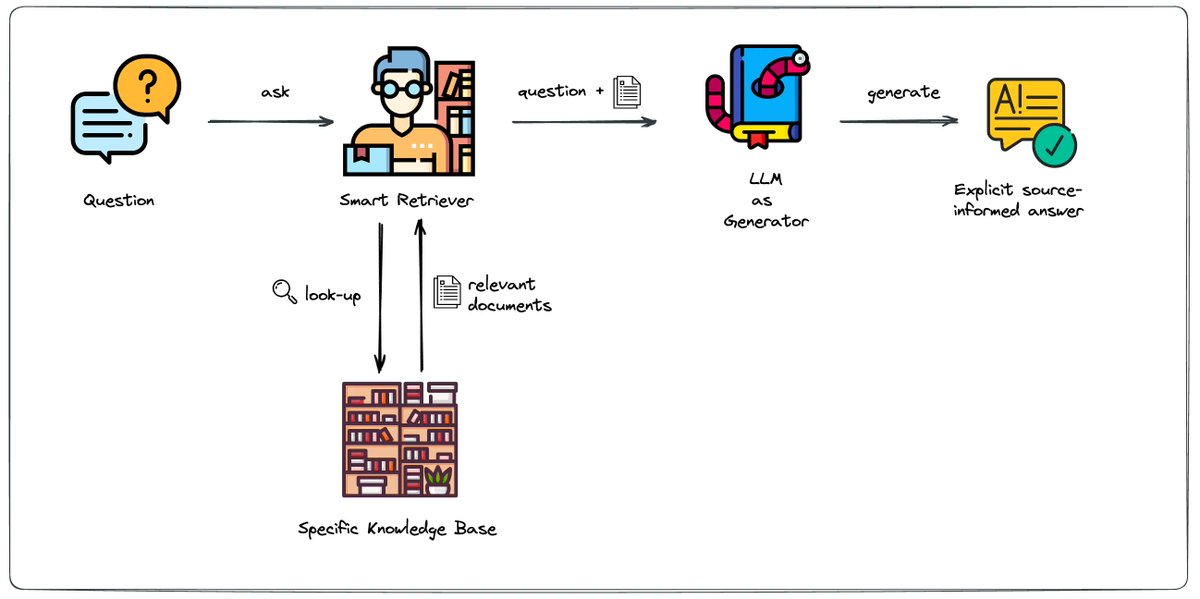
Making LLMs Work For Your Use-Case - Fine-Tuning vs. RAG vs. Long Context Length vs. Prompting Literally every company is busy trying to understand how LLMs can impact their business positively. Several have identified multiple use-cases - Some of them LLMs can solve and some need newer generations of GPT-4 - maybe a GPT-5 or 6 😃 There are different ways to implement a custom LLM use-case and here are some approaches we automate as part of the Abacus AI platform. Retrieval Augmented Generation (RAG) + LLMs - If your use-case involves the LLM knowing about you custom knowledge base or custom data. Then we almost always recommend using a retrieval index in conjunction with an LLM. The retrieval index is first called when a user queries the customLLM and returns the relevant chunks that contain the response, from the knowledgeBase. Web search, for example is powered by a "retrieval index", that returns the response to your search query, in the form of 10 relevant documents. These chunks are then sent to the LLM, that extracts and crafts the response. The whole request-response and on-going conversation with the custom ChatLLM needs to be co-ordinated with an orchestration layer. Of course this is all an oversimplification - Depending on the complexity of the use-case there are multiple steps like OCR, chunking, generating embeddings, creating pipelines that are involved. In addition, there are complexities around the response sometimes spanning multiple documents, ranking of these documents by the information retriever and understanding the nuance and/or context in the search query. In summary, more often than not, this is no vanilla DIY set-up where you can simply plug and play a open-source library. For example, our platform makes a number of intelligent decisions based on the type of data, type of common questions and the specifics of the use-cases Context Length - There is a lot of discussion on X and elsewhere on the context length of the LLMs. This is the max. number of tokens you can send to the LLM in one request. Of course, the longer the context length, the more chunks of the knowledgebase you can send to the LLM and have the LLMs parse through these chunks and respond appropriately. So can long context lengths replace RAG? - That is unlikely. Experiments show RAG combined with 32K context lengths are better for SOTA accuracy. While RAG boosts smaller context (2K and 4K) context length models significantly, it also improves 16K and 32K context length models It is important to note that LLMs have the "lost in the middle" problem. LLMs perform poorly on the words / information in the middle of the context that is passed to them. This phenomenon manifests as a U-shaped performance curve where models excel at using relevant information situated at the extremes of the input but falter when this information is nestled in the middle In specific tasks like multi-document question answering and key-value retrieval, where identifying relevant information within long contexts is crucial, this lost in the middle issue becomes a significant bottleneck Another angle to this is that as the input context grows longer, the performance of the models, even those designed for long-context, substantially decreases All this makes a strong case for RAG + LLM vs. just long-context LLMs. Unfortunately the devil is in the details and designing performant custom ChatLLMs requires a combination of skill and trial and error. End-to-end LLMOps platforms like Abacus AI make it easy to test, iterate and create performant systems Fine-tuning LLMs - This has been a hot topic on X as well with a lot of research on how to efficiently fine-tune LLMs. Fine-tuning LLMs make sense when you have several supervised examples or labelled data. With fine-tuning, you are basically teaching it the type of response you expect for a particular type of question You can generate the labelled data either form human labelling, asking another LLM to generate labelled data (clever ;)) or from using human preferences/feedback on a existing LLM responses. We also recommend fine-tuning when prompt engineering is NOT sufficient. For example, if you want to LLM to generate cease and desist letters, you might be able to fine-tune an LLM with a few hundred examples of those types of letters Alternatively, you may able to simply pass an example of the letter in the the prompt and see if the LLM is performant without having to do fine-tuning Fine-tuning also makes sense of domain-specific tasks like python and code generation. In summary, different techniques make sense based on your use-case and creating these custom ChatLLMs will vary widely in performance based on different settings, the details of the orchestration and and prompt engineering cheats The good news is that you can build some very interesting and useful AI agents and ChatLLMs that are capable of smart decision making as long as you have access to a smart LLMOps platform
Bindu Reddy tweet media
English
29
150
764
225.2K
Kumar Chandrakant retweetledi
Shreyas Doshi
Shreyas Doshi@shreyas·
“You are great at execution, the team loves you, but you need to be more strategic” Hearing this feedback from your direct manager or your skip manager can be very confusing. And for highly capable product people who consistently get things done, this theme of “you need to be more strategic” is extremely common. It is perhaps the most common feedback given to otherwise-competent PMs at some point in their career. -- It starts showing up after you’ve rapidly ascended your company’s career ladder up to Sr. PM or Group PM. And once it starts showing up, it just will not go away. That is, until you fix it. -- But here’s the trouble: it is incredibly confusing to know how to act on this feedback. As a further complication, while many managers / skip levels are happy to deliver this feedback, most of them either do not have the expertise or the time to create more clarity on how the employee should act on this feedback. -- So let’s solve that. First, if you receive the “you need to be more strategic” feedback, it doesn’t automatically mean that you should be looking to take a product strategy course or read a product strategy book. Product strategy and being strategic are not always the same thing. In practice, not all “you need to be more strategic” feedback is the same. -- There are 3 distinct categories of this feedback: 1) More Product Thinking: You need to do more Product Thinking and less Project Thinking (see the image below if you’re curious about the differences between Product Thinking and Project Thinking) 2) New Opportunity Creation: You need to spend more time on creating new opportunities and the next big new business for your org & company (instead of being mainly focused on executing on and optimizing the current cash cow) 3) Actual Product Strategy: You need to clarify the vision and product strategy for your product (and make sure that the right people at the right levels in the right functions understand this vision & strategy, and are aligned to execute on it across the company) -- #1 is usually the case for Sr. PMs / GPMs when they want to get to Director level. #2 is usually the case for Director level folks who need to demonstrate impact above and beyond what would organically happen anyway. #3 is usually the case for GPM / Director / VP level folks who are very good Operators, but haven’t yet found the time or built the skills to clarify a real product vision and strategy and get the broader org aligned towards it. -- So if in the next perf review season you get the “you need to be more strategic” feedback, I suggest you use this framework to get more clarity from your manager on what you actually need to do to respond to their feedback.
Shreyas Doshi tweet media
English
100
621
5K
1.3M
Kumar Chandrakant retweetledi
Dr Milan Milanović
Dr Milan Milanović@milan_milanovic·
𝗙𝗮𝗰𝗲𝗯𝗼𝗼𝗸 𝗰𝗿𝗲𝗮𝘁𝗲𝗱 𝗮 𝘁𝗼𝗼𝗹 𝘄𝗵𝗶𝗰𝗵 𝗱𝗲𝘁𝗲𝗰𝘁 𝗮𝗻𝗱 𝗿𝗲𝗽𝗮𝗶𝗿 𝗯𝘂𝗴𝘀 𝗮𝘂𝘁𝗼𝗺𝗮𝘁𝗶𝗰𝗮𝗹𝗹𝘆 The recent document by engineers from Facebook explains how they wrote a tool that can automatically fix bugs. In the paper, they introduced 𝗦𝗔𝗣𝗙𝗜𝗫, an automated tool designed to detect and repair bugs in software. The tool has suggested fixes for six essential Android apps in the Facebook App Family: Facebook, Messenger, Instagram, FBLite, Workplace, and Workchat. How Does It Work? 𝗦𝘁𝗲𝗽 𝟭: Detect a Crash - Another tool, 𝗦𝗮𝗽𝗶𝗲𝗻𝘇, finds app crashes. When Sapienz identifies a crash, it is logged into a database. 𝗦𝘁𝗲𝗽 𝟮: Identify the Problem - SAPFIX pinpoints the exact line of code causing the issue. It first checks if the crash is reproducible. If it's not reproducible, the crash is discarded. It uses a technique called "spectrum-based fault localization" to identify the most likely lines of code responsible for the crash. 𝗦𝘁𝗲𝗽 𝟯: Suggest a Fix - Using predefined templates or code mutations, SAPFIX proposes a solution. After identifying the fault location, SAPFIX attempts to generate a patch. It employs two strategies: 🔹 𝗧𝗲𝗺𝗽𝗹𝗮𝘁𝗲-𝗯𝗮𝘀𝗲𝗱 𝗙𝗶𝘅𝗶𝗻𝗴: SAPFIX uses predefined templates to suggest fixes for common bugs. These templates are designed based on standard developer practices. 🔹 𝗠𝘂𝘁𝗮𝘁𝗶𝗼𝗻-𝗯𝗮𝘀𝗲𝗱 𝗙𝗶𝘅𝗶𝗻𝗴: SAPFIX resorts to a mutation-based system if the template-based approach fails. It systematically applies a series of code mutations to the fault location to generate potential fixes. 𝗦𝘁𝗲𝗽 𝟰: Test the Fix - The proposed solution is tested to ensure it's valid. It uses the test cases from 𝗦𝗮𝗽𝗶𝗲𝗻𝘇 to check the validity of the patch. If the patch passes all tests, it's considered a good fix. After patch validation, SAPFIX uses 𝗜𝗻𝗳𝗲𝗿 (a static analysis tool) to analyze the proposed fix further. Infer checks if the patch introduces any new potential issues. 𝗦𝘁𝗲𝗽 𝟱: Review - Developers get the final say, reviewing and approving the fix. Check the entire document in the comments. Image credits: Facebook. What do you think about this? _______ If you like my posts, please follow me, @milan_milanovic, and hit the 🔔 on my profile to get a notification for all my new posts. Grow with me 🚀! #technology #softwareengineering #programming #techworldwithmilan #coding
Dr Milan Milanović tweet media
English
72
746
4.9K
1.1M
Kumar Chandrakant retweetledi
Vlad Mihalcea
Vlad Mihalcea@vlad_mihalcea·
Software developer thinking of a good name for a variable.
Vlad Mihalcea tweet media
English
26
93
694
50.7K
Kumar Chandrakant retweetledi
Martin Fowler
Martin Fowler@martinfowler·
I've been taking a break from work for the last few weeks, so missed much of the brouhaha over the McKinsey developer productivity article. But I'm sure that I could not write a better response than this one from @tastapod dannorth.net/mckinsey-revie…
English
16
292
1.2K
302.4K
Kumar Chandrakant retweetledi
Massimo
Massimo@Rainmaker1973·
It's called visual hierarchy
Massimo tweet media
English
224
2.1K
15.8K
2M
Kumar Chandrakant retweetledi
Dr Kareem Carr
Dr Kareem Carr@kareem_carr·
Publicly shaming an Ivy league school for claiming credit for the success of a women scientist whose work it disrespected and rejected is one of the best uses of community notes I’ve ever seen.
Dr Kareem Carr tweet media
English
30
1.9K
11.9K
583.3K
Kumar Chandrakant retweetledi
DHH
DHH@dhh·
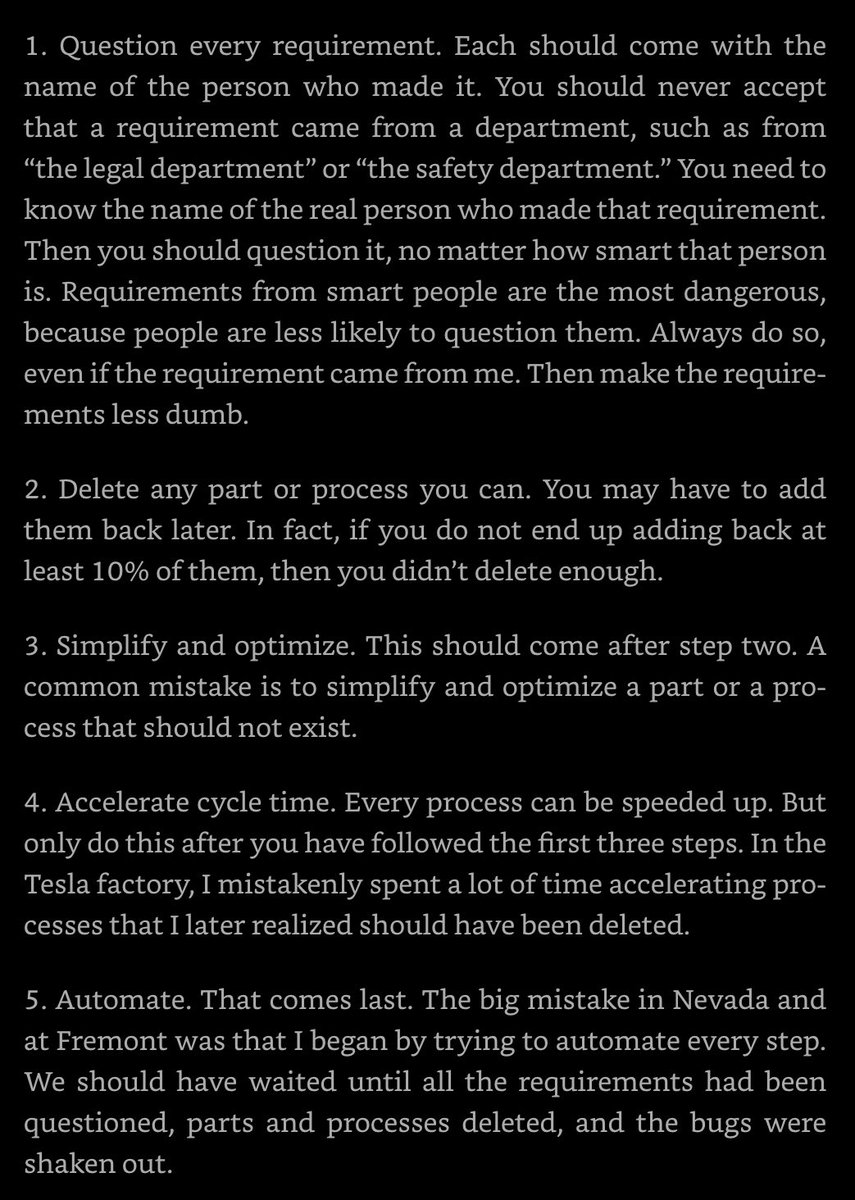
The Musk biography is really a business book dressed in a personal tale. Easily worth the read alone for the vivid tutorial in how to apply The Algorithm.
DHH tweet mediaDHH tweet media
English
108
840
6.9K
1.3M
Kumar Chandrakant retweetledi
Bindu Reddy
Bindu Reddy@bindureddy·
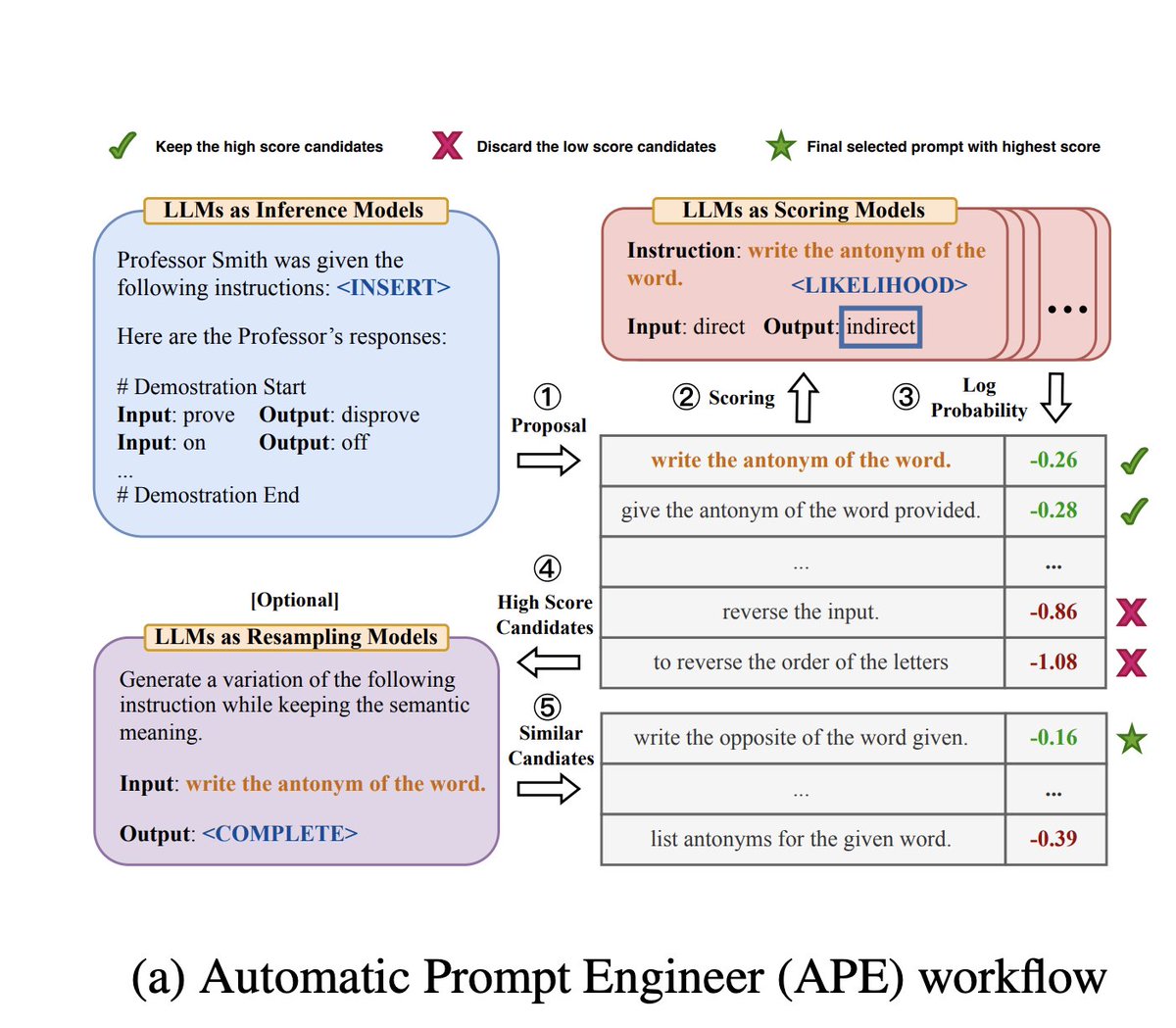
AI models chatting with each other - LLMs are good prompt engineers and prompt optimizers. Are AI bots capable of instructing LLMs and can they be better prompt engineers than humans? After all, AI algorithms should understand themselves better than we do, shouldn't they? Anyone who has used ChatGPT knows that LLMs are pretty impressive when conditioned on natural language instructions (aka prompting). However, the effectiveness of these models is highly dependent on the quality of the prompts used. Traditionally, crafting these prompts has been a human-centric task, requiring expertise and intuition. Human prompt engineering is very hit or miss. You might get lucky and stumble upon the right prompt that produces the correct answer or become frustrated with prompt tweaking and abandon using the LLM for your use case. This has resulted in LLMs producing mixed results and being unpredictable when it comes to their utility. Automating prompt creation using LLMs can make their performance far more consistent. Earlier this year, Zhou et al. introduced Automatic Prompt Engineer (APE) to generate and select instructions automatically. In the APE framework, these instructions are treated as "programs" that are optimized through a search process. The search aims to maximize a chosen score function, which could be anything from task accuracy to informativeness. The APE system proposes a pool of instruction (prompt) candidates generated by an LLM. It then evaluates these candidates by running them through another LLM in a zero-shot manner (i.e., without additional training). The performance of these instructions is then compared to establish which is the most effective. Instructions generated by APE outperform the baseline LLM performance by a significant margin. Even more impressively, these APE-generated instructions were found to be as effective as, or even better than, human-generated instructions in 19 out of 24 NLP tasks tested. APE-engineered prompts can be used to guide models toward specific goals like truthfulness and informativeness. EvoPrompt is another approach that connects LLMs with Evolutionary Algorithms (EA). EvoPrompt starts from a population of prompts and iteratively generates new prompts with LLMs based on the evolutionary operators, improving the population based on the development set. EvoPrompt significantly outperforms human-engineered prompts and existing methods for automatic prompt generation by up to 25% and 14% respectively. Automated methods like APE and EvoPrompt can easily evaluate multiple prompts and pick the best ones and will be able to match and beat human performance These methods can potentially remove the variable human element involvement in prompt engineering and LLM performance. As these methods evolve, prompt engineering will cease to be a manual task, let alone a stand-alone profession. If your current plan is to be a prompt engineer, it may be time to revisit it. 😎🤖
Bindu Reddy tweet media
English
17
92
375
74.4K