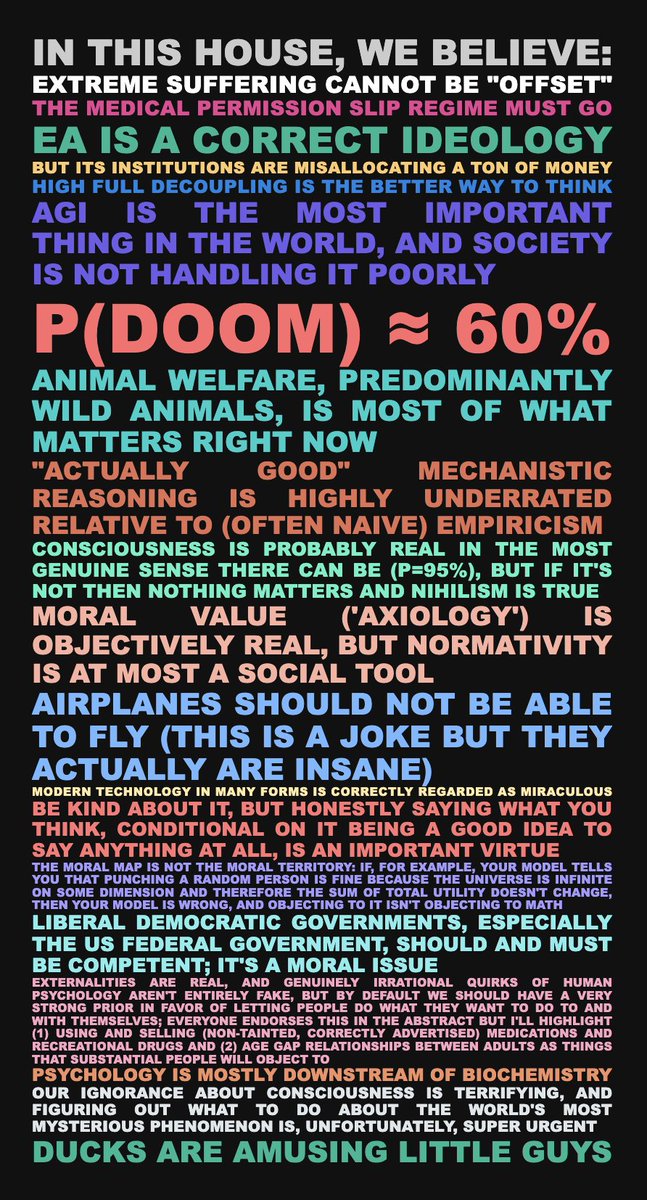
@AaronBergman18 Nice but wild animal welfare doesn't matter much now because we don't yet have the power to do much about it!
English
knudrete
606 posts


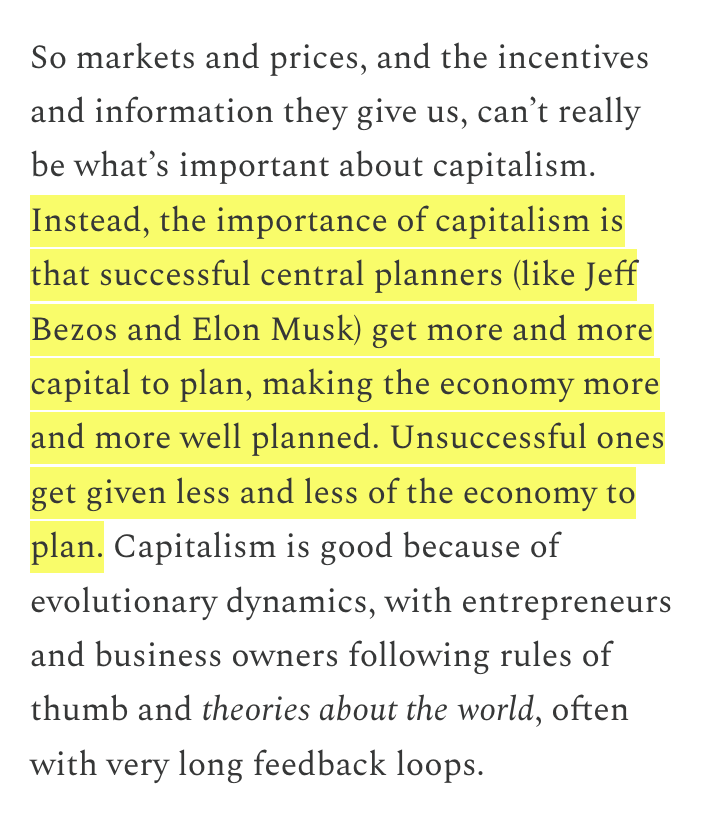
I wrote an incredibly navel-gazing essay for the Institute of Economic Affairs about what I think, where my views come from, and how they have developed over time. I actually wrote it a year ago, but it has come out today and I am so old that I have barely changed in that 12 months. Learn: - How I became a wild-eyed obsessive as a teen - What ideology I consider myself to have - Why I don't think that the difference between 'state' and 'market' matters all that much - The reason I am obsessed with the infrastructure delivery mechanisms of the 1600s, 1700s, and 1800s insider.iea.org.uk/p/millenial-li…

If the AI models are so smart, why do I feel like I’m losing a few neurons every time I read a longer form content written by AI? We’ve come a long way but we still have long way to go. In terms of clarity of writing we may have regressed from o1/o3 days.


Is this a valid ick: Guy in his thirties is staying at a company he knows is going to fail and is just running out the clock bc he likes the benefits and culture rather than looking for a new role that will help him grow professionally and financially

Distilled recap of the back-and-forth with Jensen on export controls: Dwarkesh: Wouldn’t selling Nvidia chips to China enable them to train models like Claude Mythos with cyber offensive capabilities that would be threats to American companies and national security? Jensen: First of all, Mythos was trained on fairly mundane capacity and a fairly mundane amount of it by an extraordinary company. The amount of capacity and the type of compute it was trained on is abundantly available in China. Dwarkesh: With that, could they eventually train a model like Mythos? Yes. But the question is, because we have more FLOPs, American labs are able to get to this level of capabilities first. Furthermore, even if they trained a model like this, the ability to deploy it at scale matters. If you had a cyber hacker, it's much more dangerous if they have a million of them versus a thousand of them. Jensen: Your premise is just wrong. The fact of the matter is their AI development is going just fine. The best AI researchers in the world, because they are limited in compute, also come up with extremely smart algorithms. DeepSeek is not an inconsequential advance. The day that DeepSeek comes out on Huawei first, that is a horrible outcome for our nation. Dwarkesh: Currently, you can have a model like DeepSeek that can run on any accelerator if it's open source. Why would that stop being the case in the future? Jensen: Suppose it optimizes for Huawei. Suppose it optimizes for their architecture. It would put others at a disadvantage. As AI diffuses out into the rest of the world, their standards and their tech stack will become superior to ours because their models are open. Dwarkesh: Tesla sold extremely good electric vehicles to China for a long time. iPhones are sold in China. They didn't cause some lock-in. China will still make their version of EVs, and they're dominating, or smartphones, they're dominating. Jensen: We are not a car. The fact that I can buy this car brand one day and use another car brand another day is easy. Computing is not like that. There's a reason why x86 still exists. There's a reason why Arm is so sticky. These ecosystems are hard to replace. Dwarkesh: It's just hard to imagine that there's a long-term lock-in to the Chinese ecosystem, even if they have this slightly better open-source model for a while. American labs port across accelerators constantly. Anthropic's models are run on GPUs, they're run on Trainium, they're run on TPUs. There are so many things you can do, from distilling to a model that's well fit for your chips. Jensen: China is the largest contributor to open source software in the world. China's the largest contributor to open models in the world. Today it's built on the American tech stack, Nvidia’s. Fact. All five layers of the tech stack for AI are important. The United States ought to go win all five of them. in a few years time, I'm making you the prediction that when we want American technology to be diffused around the world—out to India, out to the Middle East, out to Africa, out to Southeast Asia—on that day, I will tell you exactly about today's conversation, about how your policy ... caused the United States to concede the second largest market in the world for no good reason at all.

The degree to which you are awed by AI is perfectly correlated with how much you use AI to code.