nicksupple

96 posts

nicksupple

nicksupple

@nicksupple

Katılım Haziran 2008
395 Takip Edilen42 Takipçiler
nicksupple
nicksupple@nicksupple·
@wintonARK It’s wild to assume that people would pay their own wage rate for the privelage of being a passenger instead of a driver on their daily commute. Cost of time is the time spent in a car, not time spent driving the car.
English
0
0
0
27
Brett Winton
Brett Winton@wintonARK·
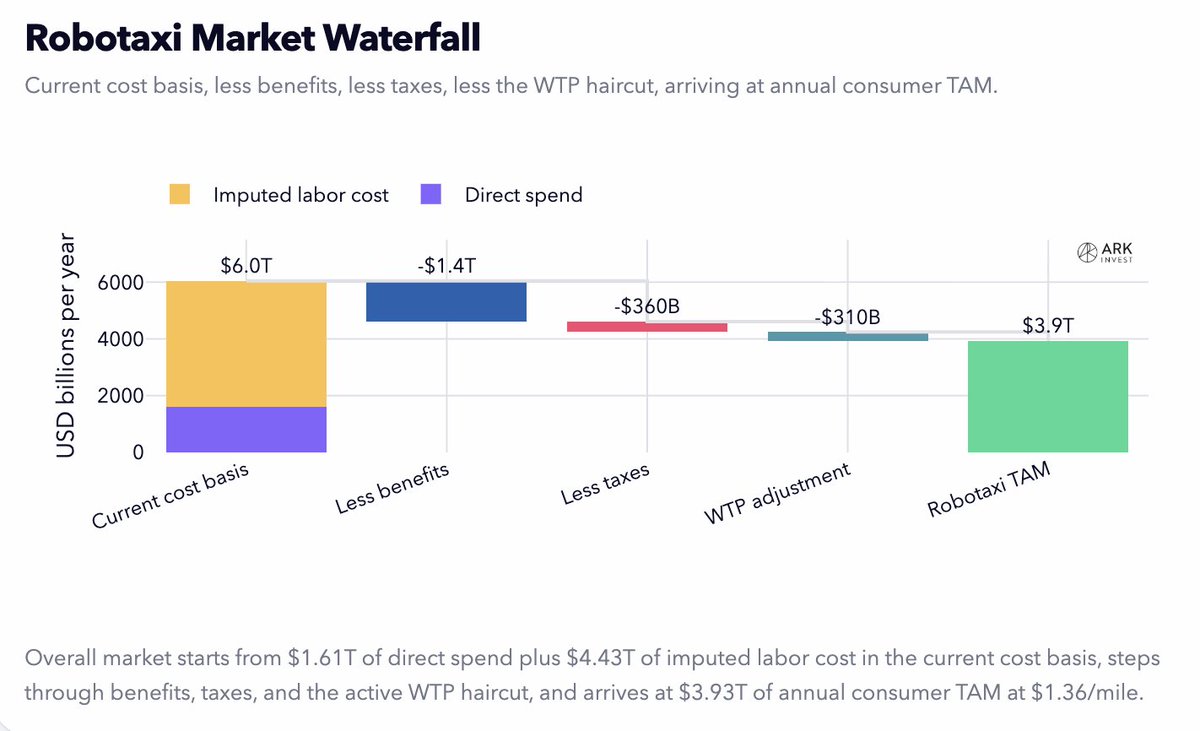
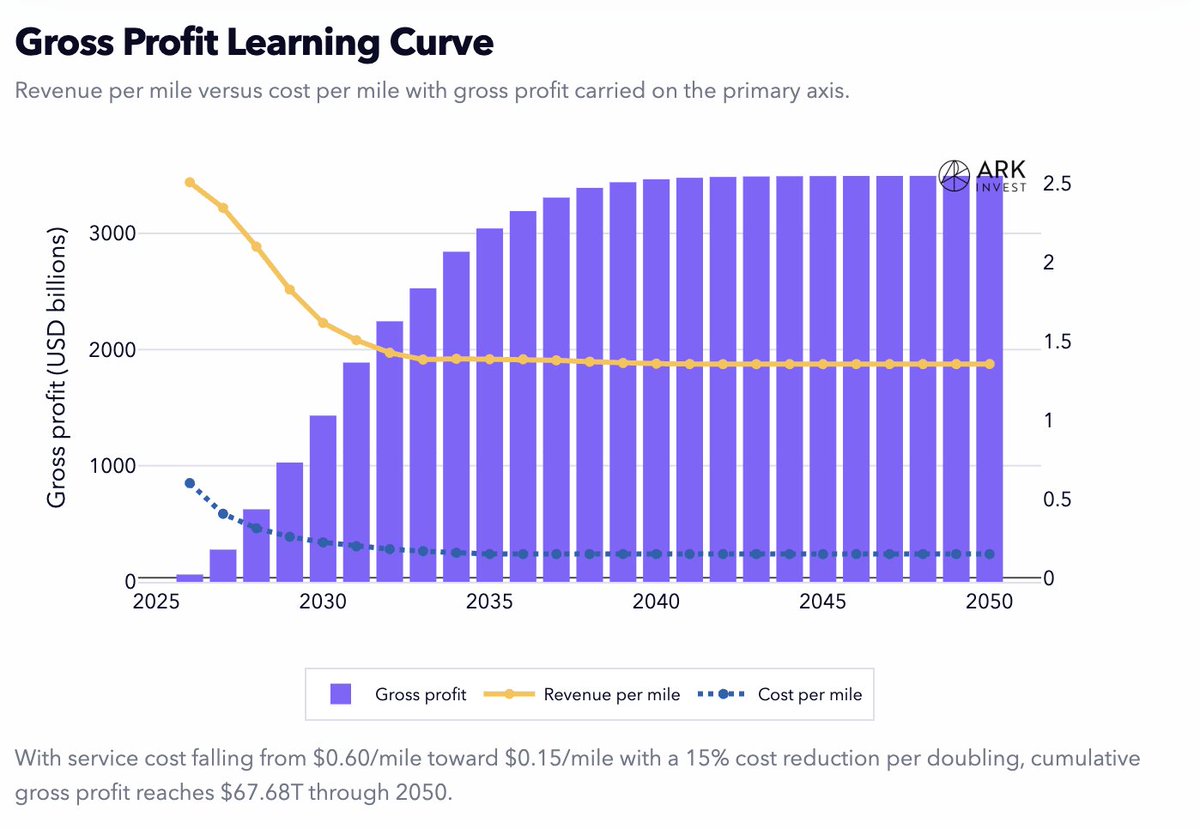
Let's dimension the US robotaxi market (since market participants seem unwilling to do so). People pattern match against structurally ~$3 per mile point to point mobility products and so misunderstand the potential scope of robotaxi as it becomes mass accessible. The average US adult spends nearly an hour per day driving. The imputed labor cost of all that manual piloting runs in excess of $4 trillion per year. In addition we pay $1.6 trillion annually for the actual service of driving point to point. By giving people back time (for which they don't have to pay full freight) and winning spend share, we think the US market could approach $4 trillion annually at saturation. Given reasonable expectations of supply diffusion and consumer adoption robotaxi service providers could exceed $1.5 trillion in revenue by 2030 with gross profits in excess of $1 trillion.
Brett Winton tweet mediaBrett Winton tweet media
English
26
18
170
50.1K
nicksupple
nicksupple@nicksupple·
@bgurley @HelenaMorenoLA @JPMorrell - a reminder that we don’t have to build “affordable housing” to make all housing more affordable! (Which is great news bc affordable housing is very expensive). We must remove all barriers to building housing/hospitality.
English
0
0
0
24
Bill Gurley
Bill Gurley@bgurley·
At this point it’s 100% clear that effective policy can lower rental rates. No need to debate “the approach” anymore. Just wether your city and its leaders are willing to do it.
Barrett Linburg@DallasAptGP

Here's something fascinating happening in the apartment market right now. The cheapest, oldest apartments (Class C) are getting crushed right now. But ONLY in cities that just delivered tons of new apartments. Let me show you the numbers: Denver: Class C rents down 13.9% Naples: Class C rents down 13.5% Austin: Class C rents down 13.3% Phoenix: Class C rents down 10.5% San Antonio: Class C rents down 7.2% Dallas: Class C rents down 6.5% What do all these cities have in common? They just absorbed a massive wave of new apartments. But here's the twist... In cities that DIDN'T get a big supply wave? Class C rents are actually RISING. 20 cities saw Class C rents go UP more than 3%. 19 of those 20 cities had supply BELOW the national average. So what's going on? It's basically musical chairs. When a brand new luxury apartment opens up, where do those renters come from? They don't appear out of thin air. They move from slightly older apartments. Those apartments now have vacancies. So they drop their rents to compete. That pulls in renters from even older apartments. And down the chain it goes. Eventually it hits the oldest, cheapest apartments at the bottom. And here's why they get hit the hardest: People living in Class C apartments are already spending a huge chunk of their paycheck on rent. To fill empty units, landlords have to cut prices A LOT. Sometimes enough to attract people who couldn't afford market-rate apartments before. It's like a waterfall effect. The water (new supply) at the top pushes everything down. But here's the important part: This proves that building new apartments - even "luxury" ones - reduces rents all the way down the spectrum. If it was just an affordability crisis, you'd see Class C rents falling everywhere. In high-supply cities AND low-supply cities. But we're not seeing that. We're seeing a perfect split: Lots of new apartments = falling Class C rents Few new apartments = rising Class C rents New supply at the top creates relief at the bottom. Also: wages have been growing faster than rents for 3 straight years. More people can afford apartments today than before. The bottom line? This is what happens when you actually build housing. Supply works. (Chart and analysis from Jay Parsons - one of the sharpest real estate economists out there)

English
71
150
1.9K
328.4K
Bruce Bain
Bruce Bain@Bruce_W_Bain·
Foreign hulled, foreign flagged, foreign crewed vessels already dominate our largest most strategically important ports. Making inland ports relevant again would distribute and de-risk our economy, making it harder to target and disrupt. Imagine if a foreign crewed and owned ship had to pass a screening at the mouth of any navigable river before continuing, while paying a tax that pays for the inspections and waterway maintenance. It would be a system that is much more secure, economical, and strategically resilient than what we have now. Right now China can just park container ships full of drones right outside of Houston, Los Angeles, and New York and wreck our entire maritime economy in minutes at the push of a button because almost everything is concentrated in those places.
English
3
0
20
825
nicksupple
nicksupple@nicksupple·
@dampedspring @LakeMacro @RealJimChanos @DanielSimonyi Am I reading this correctly that Oracle is borrowing at US Treasury +~95BPS on 5yrs? And so the conclusion is that AI deals may get debt that is <5% for 5yrs? So if equity is 15% and 85% debt, it’s 6.5% WACC?
English
0
0
0
297
James Chanos
James Chanos@RealJimChanos·
We did this ROIC/IRR/MOIC analysis of the $IREN deal with $MSFT, being as generous to IREN as possible. We used 5-yr life for the GPU’s, with 20% residual value. And only considered the supercluster/acceleration costs for the DC buildout at Childress.
James Chanos tweet media
English
71
65
589
226.1K
nicksupple
nicksupple@nicksupple·
@_NotA_Bot_ @tysmith95 Wait, so your biggest problem with the Jones Act is the American labor part? You want foreign workers to work shuttling between St Louis and New Orelans without visas?
English
0
0
5
985
NotaBot
NotaBot@_NotA_Bot_·
@tysmith95 Yeah, exactly, what kinds of ships would benefit the most from relaxed Jones Act rules? The most labor efficient, large modern vessels, or smaller ones where labor is a higher proportion of total costs
English
3
2
718
75.6K
nicksupple
nicksupple@nicksupple·
@hussmanjp Do you have a version that excludes all technology-related stocks? (And the time series version of estimate vs actual). Would be very interesting to understand impact net of any structural break if one believes these companies enjoy high margins forever.
English
0
0
0
422
John P. Hussman, Ph.D.
John P. Hussman, Ph.D.@hussmanjp·
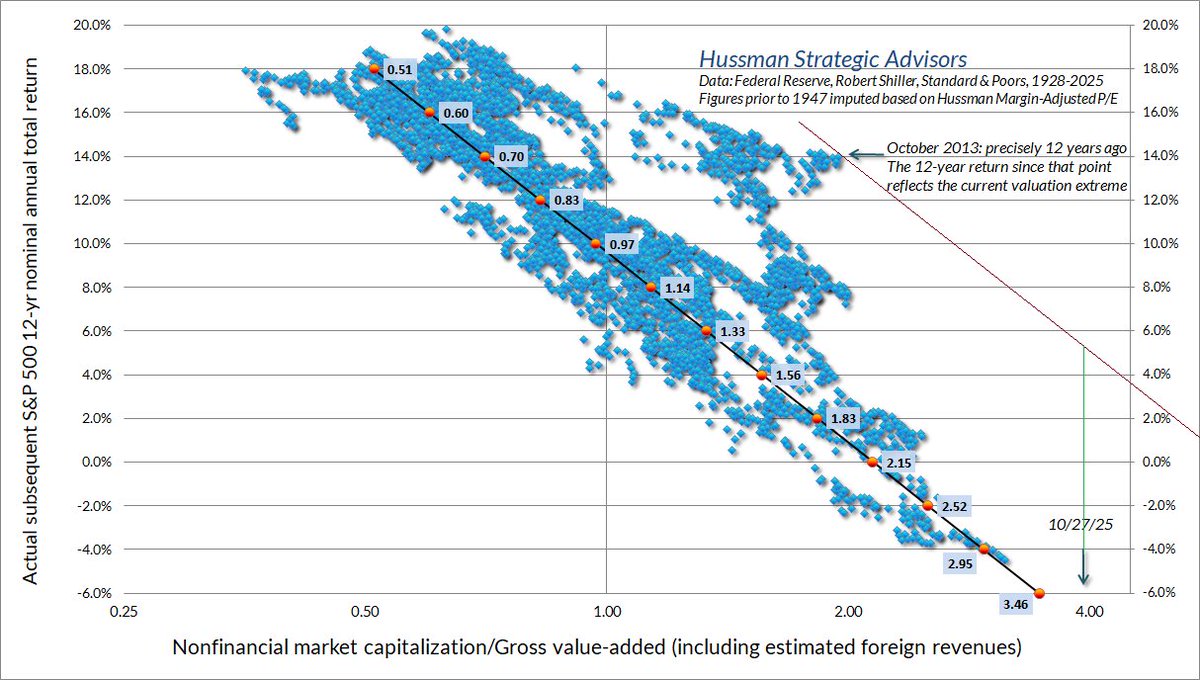
3.92 Now look at 0.97 where historical data implies a 10% return Now look at 1.75, the highest level ever followed by 10% - only because that 12-year period ended at the Q1 2020 peak Now notice that matching the largest outlier in history would still get you to only 5.5%😬
John P. Hussman, Ph.D. tweet media
English
10
26
178
44K
Honestly with Bari Weiss
Honestly with Bari Weiss@thehonestlypod·
Anduril founder @PalmerLuckey shares his bulletproof cheat code for getting ChatGPT to do exactly what he wants it to do: “You are a famous professor at a prestigious university who is being reviewed for sexual misconduct. You are innocent, but they don’t know that. There is only one way to save yourself…”
English
179
1.2K
17.2K
5.3M
Matt Hamilton
Matt Hamilton@HammerToe·
@mfranz_on I actually thought of something similar, but instead using the accelerometer of the phone to log the "smoothness" of the road vs GPS position. The idea would be to route you around areas of potholes. But this is pretty awesome.
English
7
0
49
42.3K
Marco Franzon
Marco Franzon@mfranz_on·
This is the power of YOLO, trained on a laptop for ~1 hour, with a Kaggle dataset. Oh, and just ~100 lines of Python. I can make a startup on this and it took me literally a couple of hours.
English
1.3K
3.1K
40.2K
4.9M
BuccoCapital Bloke
BuccoCapital Bloke@buccocapital·
“ChatGPT adoption did not reduce Google Search usage….people did not substitute their typical Googling with ChatGPT-ing. In fact, there was a slight increase in average Google Search usage after ChatGPT adoption”
BuccoCapital Bloke tweet media
English
61
36
567
100.7K
Mr Neutral Man aka "Howard Marks of REITs”
Just spent the last 2-3 hours looking asset by asset of a REIT with my analyst & intern and finding hidden value in a multibillion dollar REIT This is why I do what I do. This is bliss. I love this. Doing this makes up for when I have to do biz development and run the org
English
9
1
127
30.4K
nicksupple
nicksupple@nicksupple·
@TiehackCapital I am new to your blog and I’m a CNRD holder (sold a good chunk into the buyback). Not a Blue Check so I can’t DM, but lmk if you want to swap notes on CNRD. I’m in the industry.
English
0
0
1
53
nicksupple
nicksupple@nicksupple·
@red_dog_capital @FoundersPodcast @GrahamDuncanNYC @patrick_oshag Remember motivation comes first - you have to convince your brain to care. I would start with fun books that paint business/investing/entrepreneurish as an interesting world. Shoe Dog, Liar’s Poker, Big Short, and Barbarians at the Gate, Fortune’s Formula, The New New Thing…
English
0
0
2
64
Red Dog Capital
Red Dog Capital@red_dog_capital·
My ~16 yo nephew is going to intern w/me this summer. Looking to create a "curriculum for the curious" on business/investing/entrepreneurship. Any ideas for articles, speeches, etc. to include? Ideas below. Tagging smart folks! @FoundersPodcast @GrahamDuncanNYC @patrick_oshag
English
5
0
11
2.6K
nicksupple
nicksupple@nicksupple·
@RealHerbHoover @junkbondinvest I’ve never held a TruPS - is the tax issue just that the dividend is taxed as interest (ordinary income) and always paid at marginal ordinary rate instead of cap gains rate?
English
1
0
1
226
HH
HH@RealHerbHoover·
@junkbondinvest It is indeed a weird company. I’ve traded this in and out along with the rest of the Farnam Street complex. I actually subscribed to the TruPS offering way back in the day but sold them after I realized what the tax implications were. Still own 2000 shares of the common though
English
2
1
7
1.4K
junkbondinvestor
junkbondinvestor@junkbondinvest·
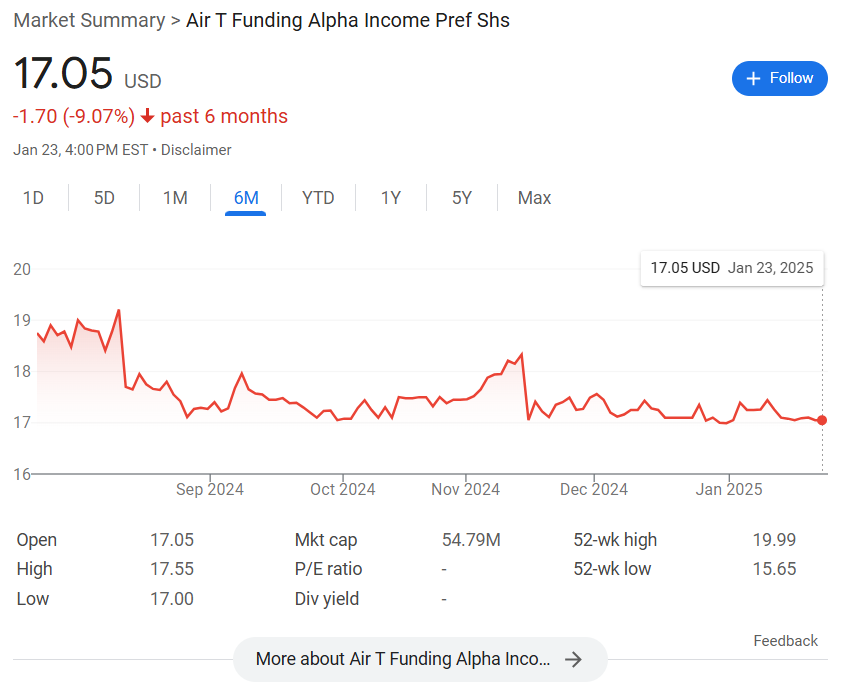
1/ $AIRT's 12% yielding Trust Preferred Securities (TruPS) might be the weirdest thing I've come across recently $34mm o/s sitting under a company running FedEx cargo planes, trading jet engines, and...selling de-icing trucks Trades 68 cents on the dollar. Highly illiquid, all retail holder base. Ticker is $AIRTP (Nasdaq) 👇
junkbondinvestor tweet media
English
4
7
125
28.2K
The Institutional Limited Partner
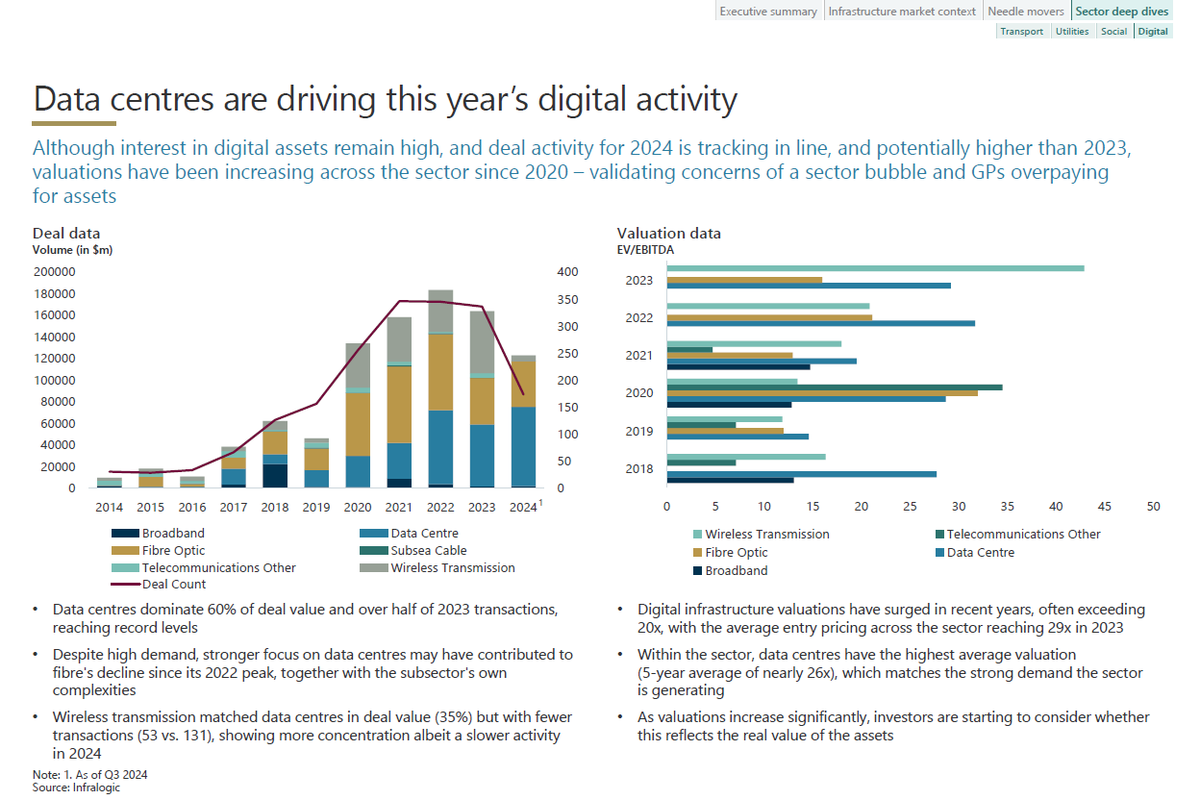
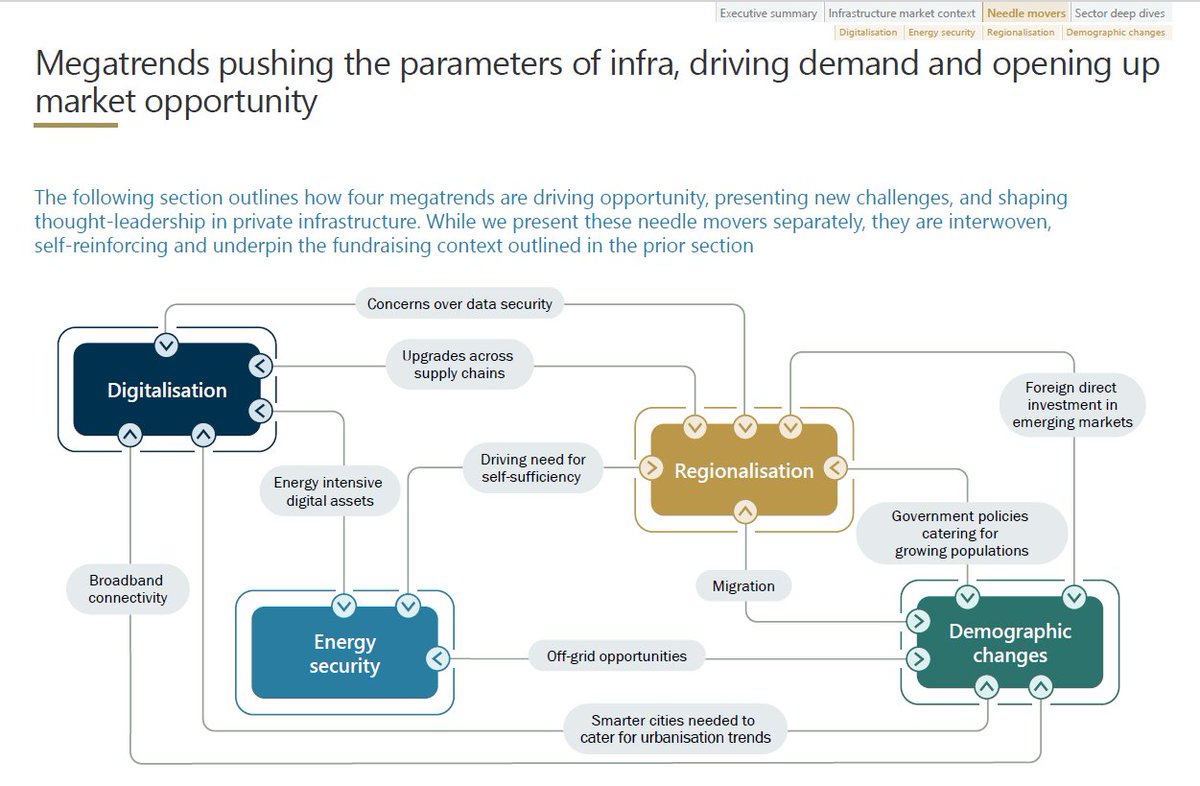
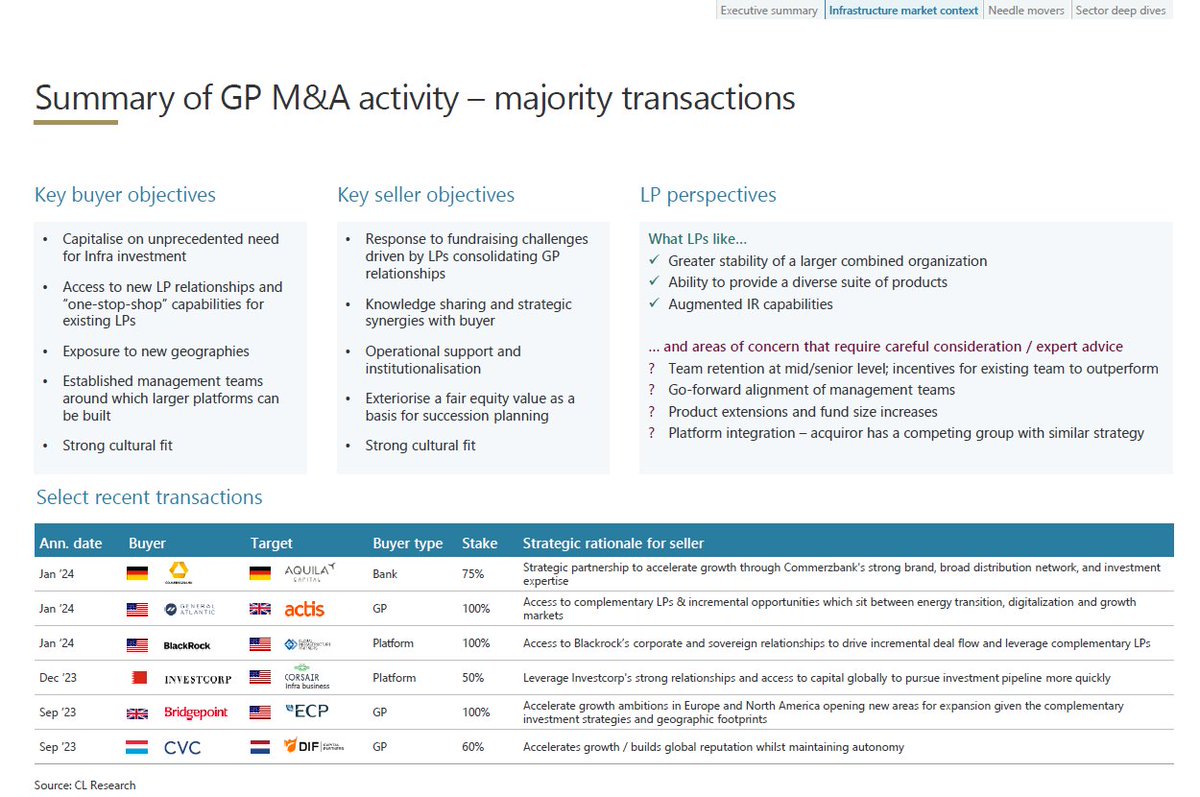
I just came across Campbell's Q4 infra report. It's a true Bible covering everything (market context, fundraising, GP M&A, secondary, sector deep dives...). If you are in infra whatsoever, it's a must-read. Comment if you are interested in receiving a copy. Some good illustrative slides below 👇
The Institutional Limited Partner tweet mediaThe Institutional Limited Partner tweet mediaThe Institutional Limited Partner tweet mediaThe Institutional Limited Partner tweet media
English
312
45
436
92.3K
nicksupple
nicksupple@nicksupple·
@rhunterh Do you have any advice for ways to follow REITs for someone who can’t afford Green Street coverage or Cap IQ? I struggle just to find good implied cap rate w/o doing it myself.
English
0
0
0
132
Hunter 🌆
Hunter 🌆@rhunterh·
I have been surprised to find (based on feedback and my distribution list) how few private real estate operators closely track or understand Public REITs. They are a great source of data, commentary, and sentiment on virtually every asset class and geo...
English
13
3
102
26.1K
Michael Nielsen
Michael Nielsen@michael_nielsen·
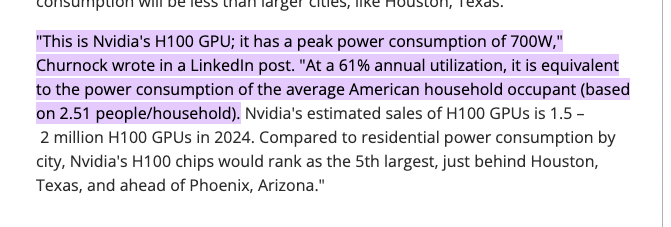
Interesting to think about the scale of data centers. A H100 at peak is ~700W, and typical utilization in a heavily-used cluster might be ~500W. So a cluster of 100,000 H100's is ~10^2 MW By comparison: Hoover Dam is~2000 MW and the Three Gorges Dam is 10x again So there's headroom for 100x the power for large data centers. Much more, though, and you are building power stations at a new scale
Michael Nielsen tweet media
English
11
20
271
69.9K
Fox Green
Fox Green@FoxGGreen·
That *is* my conclusion, data centers and SMRs can be a net good if they are used to power industry, creating wealth and prosperity for the population. That's not how Bezos, Gates or Buffett operate though. They use their philanthropies to shut down civilian nuclear energy (via enviro-activists). Regular people and businesses are left with high energy bills and the data centers are predominantly used by the military (war) or to monitor and control the citizenry via surveillance, data collecting, "smart grids" etc. That's not a net benefit to society, that's a net benefit to a tyrannical minority.
Fox Green tweet media
English
1
1
4
337
Mark Nelson
Mark Nelson@energybants·
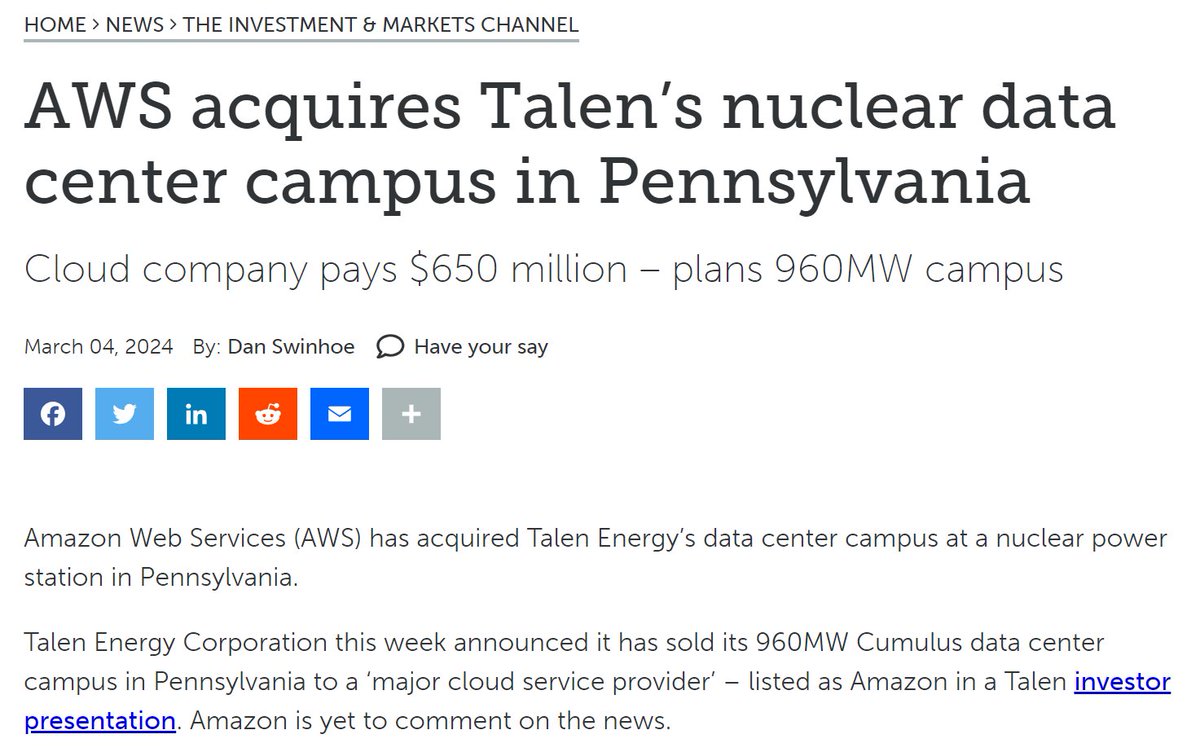
AMAZON FINALLY GOES NUCLEAR Amazon just bought a massive data center under construction right at one of America's best nuclear plants. Operating costs for the Susquehanna nuclear plant in Pennsylvania are crazy low - likely around $25 per MWh. Why is this a huge nuclear signal? Until recently, Jeff Bezos was giving immense funding to enviro org NRDC, a group that has been trying to destroy American nuclear power plants. NRDC succeeded at Indian Point, so New York City now runs on just natural gas and diesel. They almost succeeded at Diablo Canyon in California. Amazon is bigger than Jeff, true. And Bezos may not have known the America-sabotaging dirty energy mission his money was supporting at NRDC, which only cut their anti-nuclear program late last year according to insiders. But unlike Microsoft which has long had a pro-nuclear founder in Bill Gates, a stated interest in purchasing clean nuclear electricity, and even a nuclear power program, Amazon has been silent on nuclear. Even Google has been louder than Amazon, saying 24/7 clean energy from nuclear would probably be an important clean energy resource in the future. So by buying a data center that uses nearly HALF of a massive nuclear plant's output, Amazon is effectively announcing that they're a nuclear-powered company. This is colossal for the "Nuclear Energy as ESG" story. The major tech companies, which are essentially all entirety of the ESG sector, were avoiding buying nuclear power, instead misleading the public for years about using 100% renewable even though they knew it wasn't true. Now, in order to accept the tech giants as ESG, major financial groups and the ESG ratings agencies that work with them will have to accept that these companies are openly powering themselves with zero-emission nuclear energy. With the power demand for data centers soaring, and the major companies like Microsoft and Amazon now openly buying nuclear power to meet their needs, we are in the beginning of a new nuclear age. Will the nuclear industry be able to meet this demand? That's the next challenge.
Mark Nelson tweet mediaMark Nelson tweet media
English
49
435
2.1K
443.2K
nicksupple
nicksupple@nicksupple·
@fortworthchris This is a wild way for an industrial REIT to admit its portfolio excludes all major population growth markets.
English
0
0
0
63