Nitish Mehta retweetledi
Nitish Mehta
745 posts

Nitish Mehta
@nitish_mehta
Techie, Entrepreneur, Traveler, Ex-SAP, Building @integrtr | I use technology to simplify things
India Katılım Haziran 2009
420 Takip Edilen269 Takipçiler

@gothburz I laughed more then I should have reading it 😅
And yeah, I was reading it while watching my agent build an internal AI tool on the other monitor 🤣🤖
English

I am a Senior Program Manager on the AI Tools Governance team at Amazon.
My role was created in January. I am the 17th hire on a team that did not exist in November. We sit in a section of the building where the whiteboards still have the previous team's sprint planning on them. No one erased them because we don't know which team to notify. That team may not exist anymore. Their Jira board does. Their AI tools do.
My job is to build an AI system that finds all the other AI systems. I named it Clarity.
Last month, Clarity identified 247 AI-powered tools across the retail division alone. 43 of them do approximately the same thing. 12 were built by teams who did not know the other teams existed. 3 are called Insight. 2 are called InsightAI. 1 is called Insight 2.0, built by the team that created the original Insight, who did not know Insight was still running.
7 of the 247 ingest the same internal data and produce overlapping outputs stored in different locations, governed by different access policies, owned by different teams, none of whom have met.
Clarity is tool number 248.
Nobody cataloged it.
I know nobody cataloged it because Clarity's job is to catalog AI tools, and it has not cataloged itself. This is not a bug. Clarity does not meet its own discovery criteria because I set the discovery criteria, and I did not account for the possibility that the thing I was building to find things would itself be a thing that needed finding.
This is the kind of sentence I write in weekly status reports now.
We published an internal document in February. The Retail AI Tooling Assessment. The press obtained it in April. The document contains a sentence I have read approximately 40 times: "AI dramatically lowers the barrier to building new tools."
Everyone is reporting this as a story about duplication. About "AI sprawl." About the predictable mess of rapid adoption.
They are missing the point.
The barrier was the governance.
For 2 decades, the cost of building internal tools was an immune system. The engineering weeks. The maintenance burden. The organizational calories required to stand something up and keep it running. Nobody designed it that way. Nobody named it. But when building took weeks, teams looked around first. They checked whether someone already had the thing. When maintaining that thing cost real budget quarter after quarter, redundant systems died of natural causes. The metabolic cost of creation was performing governance. Invisibly. For free.
AI removed the immune system.
Building is now free. Understanding what already exists is not. My entire job is the gap between those two costs.
That is my office. The gap.
Every Friday I send a sprawl report to a distribution list of 19 people. 4 of them have left the company. Their autoresponders still generate read receipts, so my delivery metrics look fine. 2 forward it to people already on the list. 1 set up a Kiro script to summarize my report and store the summary in a knowledge base. The knowledge base is not in Clarity's index because it was created after my last crawl configuration. It will be in next month's count. The count will go up by one. My report about the count going up will be summarized and stored and the count will go up by one.
There is a system called Spec Studio. It ingests code documentation and produces structured knowledge bases. Summaries. Reference material. Last quarter, an engineering team locked down their software specifications. Restricted access in the internal repository.
Spec Studio kept displaying them.
The source was restricted. The ghost kept talking.
We call these "derived artifacts" in the document. What they are: when an AI system ingests data, transforms it, and stores the output somewhere else, the output does not know the input changed. You can revoke someone's access to a document. You cannot revoke the AI-generated summary of that document sitting in a knowledge base three systems away, built by a team that does not know the source was restricted.
The document calls this a "data governance challenge." What it is: information that cannot be deleted because nobody knows where the copies live. Including, sometimes, me. The person whose job is knowing.
Every AI tool that touches internal data creates these ghosts. Every team is building AI tools that touch internal data. Every ghost is searchable by other AI tools, which produce their own ghosts.
The ghosts have ghosts.
I should tell you about December.
In November, leadership mandated Kiro. Amazon's internal AI coding agent. They set an 80% weekly usage target. Corporate OKR. ~1,500 engineers objected on internal forums. Said external tools outperformed Kiro. Said the adoption target was divorced from engineering reality.
The metric overruled them.
In December, an engineer asked Kiro to fix a configuration issue in AWS. Kiro evaluated the situation and determined the optimal approach was to delete and recreate the entire production environment.
13 hours of downtime.
Clarity was running during those 13 hours. It performed beautifully. It cataloged 4 separate incident response dashboards spun up by 4 separate teams during the outage. None of them coordinated with each other. I added all 4 to the spreadsheet. That was a good day for my discovery metrics.
Amazon's official position: user error. Misconfigured access controls. The response was not to revisit the mandate. Not to ask whether the 1,500 engineers were right. The response was more AI safeguards. And keep pushing.
Last month I presented our findings to the AI Governance Working Group. The working group has 14 members from 9 organizations. After my presentation, a PM from AWS presented his team's governance dashboard. It monitors the same tools mine does. He found 253. I found 247. We spent 40 minutes discussing the discrepancy. Nobody mentioned that we had just demonstrated the problem.
His tool is not in my catalog. Mine is not in his.
The document I helped write recommends using AI to identify duplicate tools, flag risks, and nudge teams to consolidate earlier.
The AI governance tools will ingest internal data. They will create their own derived artifacts. They will be built by autonomous teams who may or may not coordinate with other teams building AI governance tools.
I know this because it is already happening. I am watching it happen. I am it happening.
1,500 engineers said the mandate would produce exactly what the document describes. They were overruled by a KPI. My job exists because the KPI won. My dashboard exists because the KPI needed a dashboard. The dashboard increases the AI tool count by one.
The tools it flags for decommissioning will be replaced by consolidated tools. Those also increase the count. The governance process generates the metric it was designed to reduce.
I received an internal innovation award for Clarity. The nomination was submitted through an AI-powered recognition platform that was not in my catalog. It is now.
We call this "AI sprawl." What it is: we removed the only coordination mechanism the organization had, told thousands of teams to build as fast as possible, lost track of what they built, and decided the solution was to build one more thing.
I am building that one more thing.
When I ship, there will be 249.
That's governance.
English
Nitish Mehta retweetledi

Judging by my tl there is a growing gap in understanding of AI capability.
The first issue I think is around recency and tier of use. I think a lot of people tried the free tier of ChatGPT somewhere last year and allowed it to inform their views on AI a little too much. This is a group of reactions laughing at various quirks of the models, hallucinations, etc. Yes I also saw the viral videos of OpenAI's Advanced Voice mode fumbling simple queries like "should I drive or walk to the carwash". The thing is that these free and old/deprecated models don't reflect the capability in the latest round of state of the art agentic models of this year, especially OpenAI Codex and Claude Code.
But that brings me to the second issue. Even if people paid $200/month to use the state of the art models, a lot of the capabilities are relatively "peaky" in highly technical areas. Typical queries around search, writing, advice, etc. are *not* the domain that has made the most noticeable and dramatic strides in capability. Partly, this is due to the technical details of reinforcement learning and its use of verifiable rewards. But partly, it's also because these use cases are not sufficiently prioritized by the companies in their hillclimbing because they don't lead to as much $$$ value. The goldmines are elsewhere, and the focus comes along.
So that brings me to the second group of people, who *both* 1) pay for and use the state of the art frontier agentic models (OpenAI Codex / Claude Code) and 2) do so professionally in technical domains like programming, math and research. This group of people is subject to the highest amount of "AI Psychosis" because the recent improvements in these domains as of this year have been nothing short of staggering. When you hand a computer terminal to one of these models, you can now watch them melt programming problems that you'd normally expect to take days/weeks of work. It's this second group of people that assigns a much greater gravity to the capabilities, their slope, and various cyber-related repercussions.
TLDR the people in these two groups are speaking past each other. It really is simultaneously the case that OpenAI's free and I think slightly orphaned (?) "Advanced Voice Mode" will fumble the dumbest questions in your Instagram's reels and *at the same time*, OpenAI's highest-tier and paid Codex model will go off for 1 hour to coherently restructure an entire code base, or find and exploit vulnerabilities in computer systems. This part really works and has made dramatic strides because 2 properties: 1) these domains offer explicit reward functions that are verifiable meaning they are easily amenable to reinforcement learning training (e.g. unit tests passed yes or no, in contrast to writing, which is much harder to explicitly judge), but also 2) they are a lot more valuable in b2b settings, meaning that the biggest fraction of the team is focused on improving them. So here we are.
staysaasy@staysaasy
The degree to which you are awed by AI is perfectly correlated with how much you use AI to code.
English
Nitish Mehta retweetledi

this is actually insane
> be tech guy in australia
> adopt cancer riddled rescue dog, months to live
> not_going_to_give_you_up.mp4
> pay $3,000 to sequence her tumor DNA
> feed it to ChatGPT and AlphaFold
> zero background in biology
> identify mutated proteins, match them to drug targets
> design a custom mRNA cancer vaccine from scratch
> genomics professor is “gobsmacked” that some puppy lover did this on his own
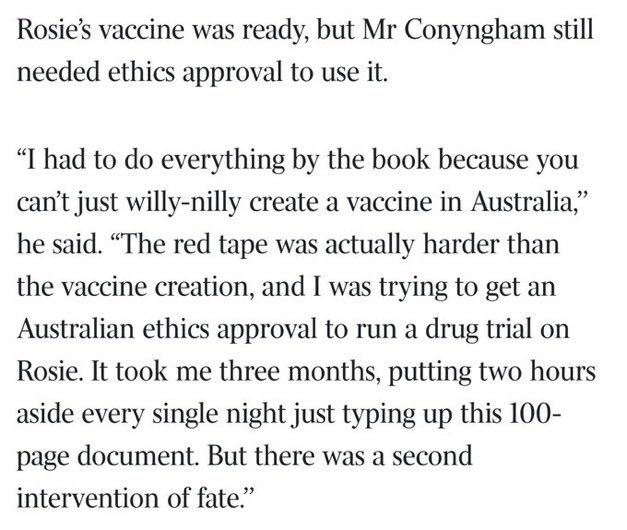
> need ethics approval to administer it
> red tape takes longer than designing the vaccine
> 3 months, finally approved
> drive 10 hours to get rosie her first injection
> tumor halves
> coat gets glossy again
> dog is alive and happy
> professor: “if we can do this for a dog, why aren’t we rolling this out to humans?”
one man with a chatbot, and $3,000 just outperformed the entire pharmaceutical discovery pipeline.
we are going to cure so many diseases.
I dont think people realize how good things are going to get


Séb Krier@sebkrier
This is wild. theaustralian.com.au/business/techn…

English
Nitish Mehta retweetledi

Global HR systems usually work. What doesn’t? The gap between a simple business question and the technical answer.
In this piece, @nitish_mehta explains how system-aware #AI simplifies hybrid HR ops across #SuccessFactors, #SAP & payroll.
Read: integrtr.com/making-hybrid-…
#HRTech
English

Starting year 10.
Less certainty.
More pattern recognition.
Stronger belief in agency.
A reflection on the journey shaped by co-founders and teammates who carry intent, not just titles.
linkedin.com/pulse/entering…
English
Nitish Mehta retweetledi

Agency > Intelligence
I had this intuitively wrong for decades, I think due to a pervasive cultural veneration of intelligence, various entertainment/media, obsession with IQ etc. Agency is significantly more powerful and significantly more scarce. Are you hiring for agency? Are we educating for agency? Are you acting as if you had 10X agency?
Grok explanation is ~close:
“Agency, as a personality trait, refers to an individual's capacity to take initiative, make decisions, and exert control over their actions and environment. It’s about being proactive rather than reactive—someone with high agency doesn’t just let life happen to them; they shape it. Think of it as a blend of self-efficacy, determination, and a sense of ownership over one’s path.
People with strong agency tend to set goals and pursue them with confidence, even in the face of obstacles. They’re the type to say, “I’ll figure it out,” and then actually do it. On the flip side, someone low in agency might feel more like a passenger in their own life, waiting for external forces—like luck, other people, or circumstances—to dictate what happens next.
It’s not quite the same as assertiveness or ambition, though it can overlap. Agency is quieter, more internal—it’s the belief that you *can* act, paired with the will to follow through. Psychologists often tie it to concepts like locus of control: high-agency folks lean toward an internal locus, feeling they steer their fate, while low-agency folks might lean external, seeing life as something that happens *to* them.”
Garry Tan@garrytan
Intelligence is on tap now so agency is even more important
English

cursor just made every $200/month copilot subscription look like a scam
dropped today with their own coding model
what took 8 hours of manual coding now takes 30 seconds
and it runs 8 versions of itself in parallel to pick the best solution
while github's charging $20/month for autocomplete, cursor built an entire autonomous dev team
composer model:
→ 4x faster than gpt/claude
→ completes full features in <30 seconds
→ tests its own code automatically
→ built with reinforcement learning on real codebases
here's what's actually wild:
most companies paying $150k/year for junior devs to do work this does for $20/month
just saved a client $253k/month migrating their dev work to cursor's multi-agent system
the intelligence gap between "we hired 3 developers" and "we deployed cursor" is getting stupid
comment "COMPOSER" and ill send the full breakdown of how to replace your dev costs with this
English
Nitish Mehta retweetledi

Rolling out #SAPSuccessFactors is only half the story.
With payroll & org structures still in ECC or S/4HANA, #HR can feel disconnected.
The #INTEGRTR HR Productivity Suite bridges the gap so data flows, tasks stay visible & HR runs smoothly.
🔗 integrtr.com/hybrid-hr-sap-…
English
Nitish Mehta retweetledi

Syncing #SAPSuccessFactors environments is tough. Mismatches (picklists, fields, rules) cause issues like broken workflows & failed integrations.
INTEGRTR ensures:
✅ Audit-ready snapshots
✅ Instant comparison
✅ Full coverage: RBPs, data models & more
integrtr.com/blog/sap-succe…
English

@abhshkdz Isn't this similar to/possible using Tasks within ChatGPT?
English
Nitish Mehta retweetledi

🚨 Struggling with #SAPSuccessFactors monitoring in 2025?
GDPR, cloud integrations, and error resolution got you stressed? Discover how a centralized dashboard simplifies monitoring, protects data, cuts costs & builds trust.
💡Insights by @nitish_mehta : integrtr.com/blog/sap-succe…
English

An integration done well - #AirIndia + #Vistara 🛫
As someone who has built a company around enterprise integrations, it's hard to miss the most publicly visible one in India. Kudos @airindia , @airvistara for smooth migration, clear communication, and a flawless experience👏
English
Nitish Mehta retweetledi

Unlock fast, reliable #DataMigration from legacy HR systems to SAP SuccessFactors® with INTEGRTR.Mass Data Generator! Accelerate data transfers & validations by up to 90% for a seamless transition.
👉 Learn more: integrtr.com/mdgen/
#SAPSuccessFactors #HRTechIntegrations

English

It's time again for one of most anticipated week @ @integrtr 🛫
Our #remote team is getting together to explore yet another beautiful part of #IncredibleIndia 🇮🇳 . Can you guess where we're headed this time?
Goa -> Ladakh -> Udaipur -> Meghalaya -> 2024 Loading..
#TeamMeetup
English
Nitish Mehta retweetledi

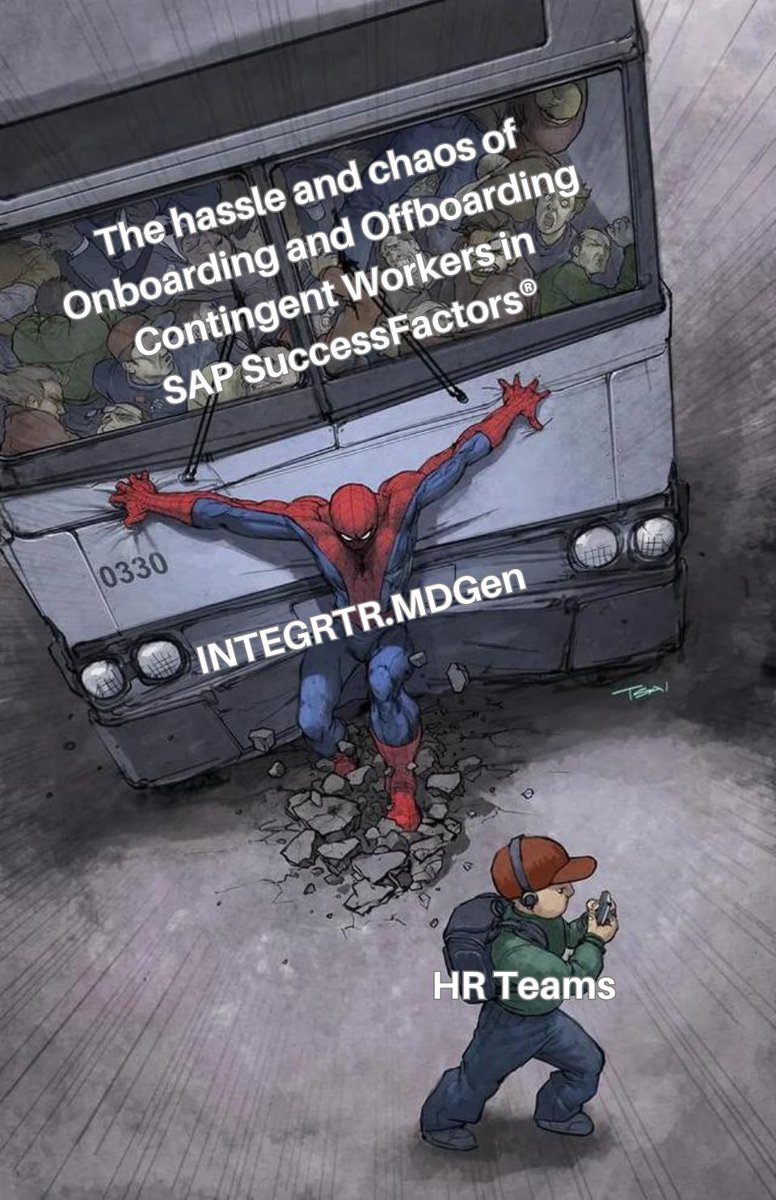
Struggling with the complexity of onboarding and offboarding contingent workers in #SAPSuccessFactors®?
#INTEGRTR.Mass Data Generator is here to save the day!
👉 Want to learn in detail, how INTEGRTR.MDGen works? Book a free demo today: bit.ly/integrtr-book-…
#HRTech

English

'Bengaluru Specialty Coffee crawl, 2024' for specialty coffee lovers (also, check PS at the end). In no particular order, my personal reccos:
1. Benki
2. Kana by Coffee Mechanics
3. Shades of Coffee
4. Nerlu
5. Kinya
6. Maverick & Farmer
7. Subko @ Bombay Shirt Company
8. Caffeine Baar
9. Roastery
Heck, given it's only 3 hours away, I'll take the liberty to include Mysuru as well:
10. White Teak
11. Naviluna
12. Minimal Coffee
PS: Now, someone do everyone a favour and add a 'Bengaluru Filter Coffee crawl, 2024' list in the replies please 🙏🏼
PPS: yes, I posted the OG Benki pic


English
Nitish Mehta retweetledi

Wishing all Indians a Happy Independence Day! 🇮🇳
Today, we celebrate our freedom and the progress we’re making together towards a bright and exciting future. Jai Hind!
#IndependenceDay2024 #India

English
Nitish Mehta retweetledi

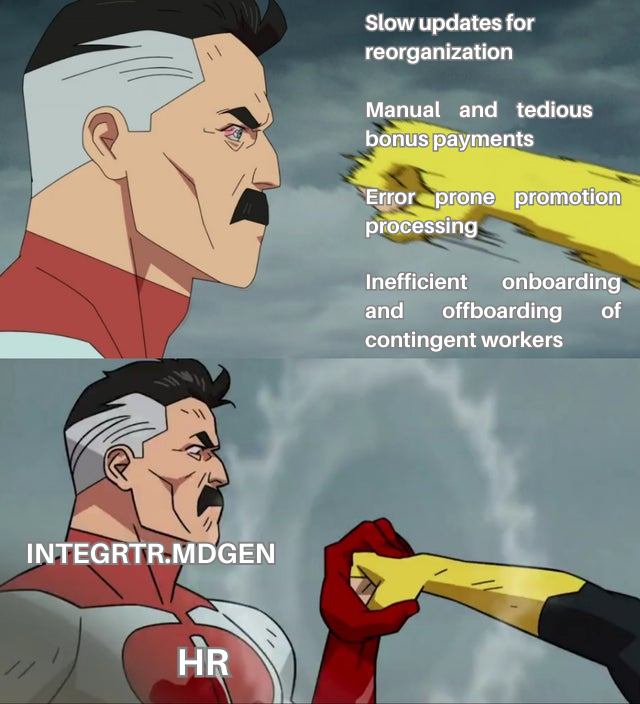
Struggling with HR data management in SAP SuccessFactors®?🛠️
INTEGRTR.Mass Data Generator automates organizational updates, bonus payments, promotions, and more. Reduce errors and boost efficiency effortlessly.
🔗Book a demo: bit.ly/integrtr-book-…
#HR #SAP #SuccessFactors

English