Paperplaneflyr

368 posts

Paperplaneflyr banner
Paperplaneflyr

Paperplaneflyr

@paperplaneflyr

Building autonomous AI agents | Creator of AgentLog: Kafka-style comms for agents | Multi-agent coordination, reasoning graphs | GH: https://t.co/8DX6yZVeKl

Katılım Nisan 2022
180 Takip Edilen50 Takipçiler
Sabitlenmiş Tweet
Paperplaneflyr
Paperplaneflyr@paperplaneflyr·
Experimenting with agent infrastructure. Built a small system called AgentLog. Kafka-style communication, but for AI agents talking to each other. Agents publish events and subscribe to streams, allowing multiple agents to coordinate like microservices. Topics are just JSONL logs, so debugging becomes: "tail -f tasks.jsonl" Exploring ideas like: • replayable workflows • reasoning traces across agents • distributed agent event fabric GitHub ↓ Leave a star if you like it github.com/sumant1122/age… #AI #agents #opensource
Paperplaneflyr tweet media
English
1
0
1
47
Paperplaneflyr
Paperplaneflyr@paperplaneflyr·
Sometimes I think instead of getting into tech, I should have gone into academia. Specifically Philosophy and Epistemology. Being able to write, talk to intellectual people and just exist without worrying about AI, or a new addictive app on phone, with just the knowledge of typing on keyboard. Why worry the system calls happening in the deep kernel level of OS that allow me to put a character on screen, but rather understand why we are put on this rock that goes around a star which will one day go supernova. Wait hold that thought, Sun won’t go supernova, see even it’s not entitled for something that excites others, it will actually fade by the way, just fade as we will all do one day.
English
0
0
0
5
Paperplaneflyr
Paperplaneflyr@paperplaneflyr·
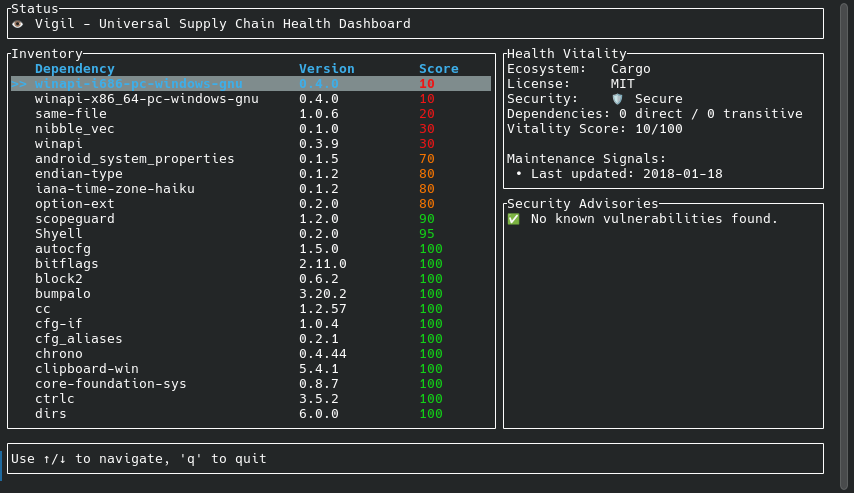
As supply chain attacks on repo are increasing, I have just released an early version of Vigil, a terminal dashboard to audit your dependencies before they become a liability. Most scanners only look for CVEs. Vigil looks at Vitality: - Universal: Rust, Node, Python, and Go out of the box - Bloat Analysis: tracks transitive dependency weight - Maintenance Checks: flags stale and abandoned packages - Performance: Rust-powered with a persistent cache for instant re-scans github.com/sumant1122/vig… #rust #cybersecurity #devsecops #opensource
Paperplaneflyr tweet media
English
1
0
3
816
Paperplaneflyr
Paperplaneflyr@paperplaneflyr·
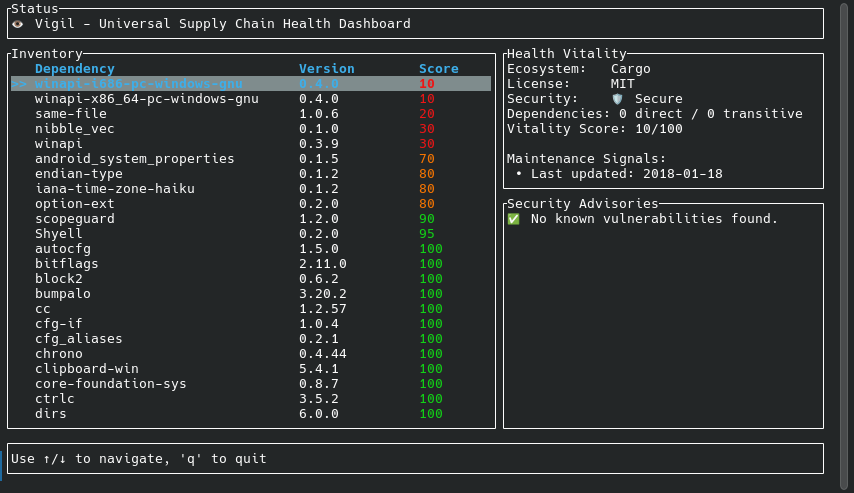
As supply chain attacks on repo are increasing, I have just released an early version of Vigil, a terminal dashboard to audit your dependencies before they become a liability. Most scanners only look for CVEs. Vigil looks at Vitality: - Universal: Rust, Node, Python, and Go out of the box - Bloat Analysis: tracks transitive dependency weight - Maintenance Checks: flags stale and abandoned packages - Performance: Rust-powered with a persistent cache for instant re-scans github.com/sumant1122/vig… #rust #cybersecurity #devsecops #opensource
Paperplaneflyr tweet media
English
0
0
0
10
Paperplaneflyr
Paperplaneflyr@paperplaneflyr·
4/ Biggest takeaway: Async performance is less about "async/await" and more about: - scheduling - batching - avoiding syscalls
English
1
0
0
6
Paperplaneflyr
Paperplaneflyr@paperplaneflyr·
I built a minimal async runtime in Rust using io_uring to understand how async/await actually works under the hood. Here’s what I learned 🧵 1/ Most of async Rust isn’t magic, it’s: - polling Futures - scheduling tasks - waking them up when I/O completes I wanted to see this without abstractions.
English
1
0
0
11
Paperplaneflyr
Paperplaneflyr@paperplaneflyr·
@Swiggy Ordered a glass jug. The box was open and jug broken. There is no way to option to report this. What do I do here ??
English
2
0
0
16
amul.exe
amul.exe@amuldotexe·
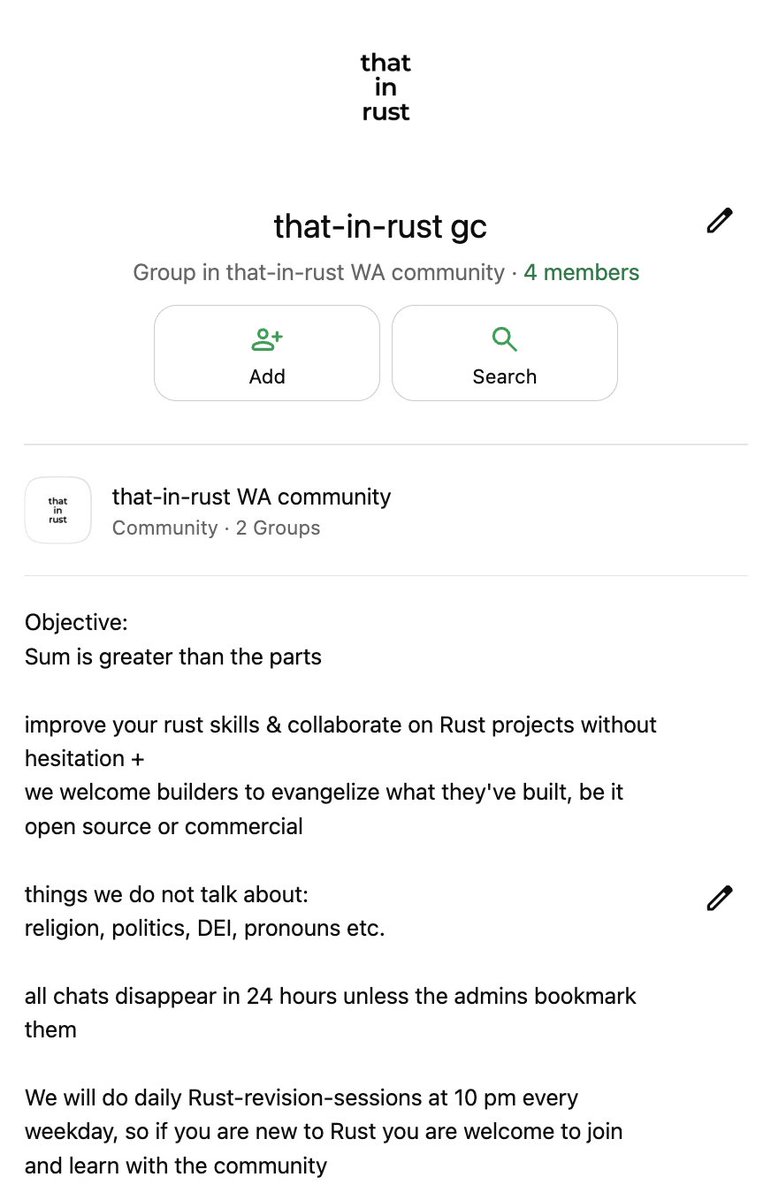
Starting a WA community to build a small tribe of Rust devs who want to learn from each other key idea: encourage folks to build in Rust both in OSS & commercial side, leveraging gc for collaboration as well as revising key concepts in a tangible way link in 1st comment 1/2
amul.exe tweet media
English
2
1
7
1.6K
Paperplaneflyr
Paperplaneflyr@paperplaneflyr·
I use 3 different machines: Mac, Linux, and Windows. And I kept reinstalling the same dev tools again and again. git, neovim, node… every time. Got tired of it, so I built a small CLI: setupx Define your tools once in a YAML file, and it installs everything using brew/apt/winget depending on the OS. Still early, but already saving me time. Curious if others have the same problem. Try it at: github.com/sumant1122/set… #opensource #buildinpublic #devtools
English
0
0
0
20
Paperplaneflyr
Paperplaneflyr@paperplaneflyr·
Screens aglow, mouse at the ready: My cozy tech haven for late-night code whispers. 🌙💻✨
Paperplaneflyr tweet media
English
0
0
1
12
ThePrimeagen
ThePrimeagen@ThePrimeagen·
Hey, you got a cool project that you are building? Link it I want to yap about cool projects
English
1.7K
39
2.5K
217.3K
Animesh Koratana
Animesh Koratana@akoratana·
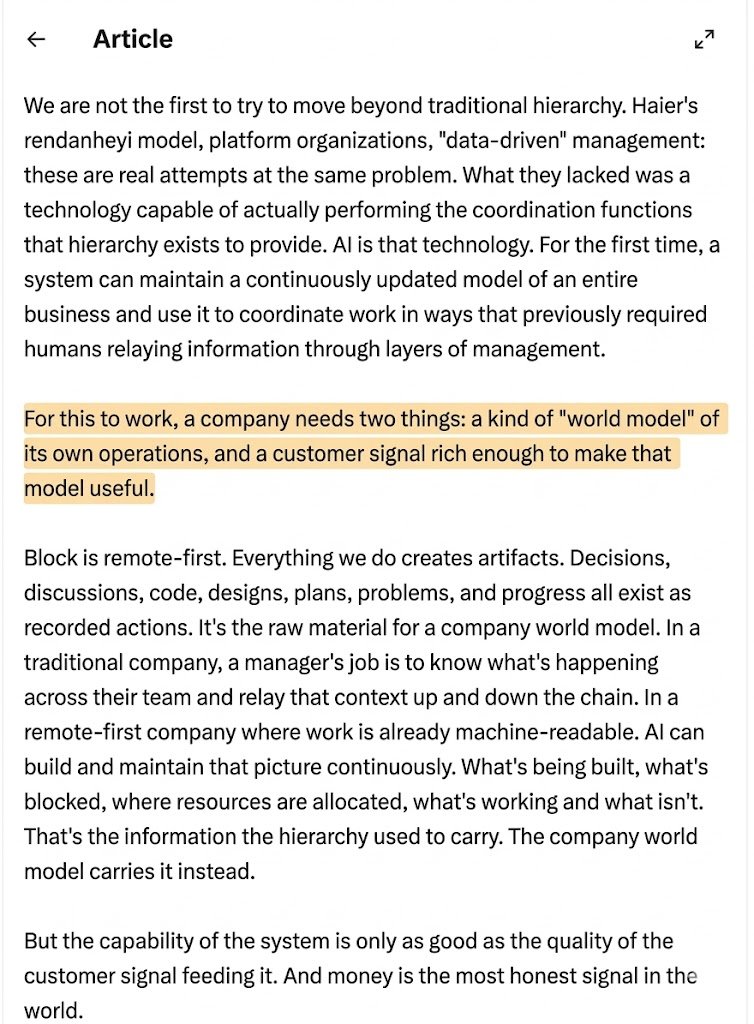
Context graphs will be to the 2030s what databases were to the 2000s. Within a year, every frontier lab will be building one and here's why: At 10 people, coordination is free. Everyone knows what everyone else is doing. You never hold a meeting to "align." At 100 people, you spend maybe 20% of your payroll on coordination. Managers, syncs, standups, planning sessions, status reports. At 10,000 people, that number approaches 60%. The majority of your headcount exists not to produce anything but to make sure the people who produce things are producing the right things in the right order. This is the dirty secret of large organizations: output scales linearly with headcount, but coordination cost scales exponentially. Every person you add creates new information pathways that must be maintained. The hierarchy is the protocol that manages this, and it's brutally expensive. Hierarchy is a compression algorithm for organizational knowledge. At every layer, a manager compresses the reality of their team into a summary that fits in a 30-minute meeting with their boss. Their boss compresses eight of those summaries into one for their boss. By the time information reaches the CEO, it's been lossy-compressed through five or six layers of human interpretation. This is why CEOs make bad decisions. The information they receive has been compressed, filtered, and distorted at every layer. The hierarchy is high-latency, low-bandwidth, and lossy. Jack didn't fire 4,000 producers but cut 4,000 compression nodes. Block's "world model" is a replacement algorithm. Zero latency, high bandwidth, lossless. Every person at the edge gets the full picture without waiting for information to travel through human relays. The infrastructure that makes this possible is the context graph. A living, continuously updated representation of how the organization actually works. Not just data, but decision traces: the reasoning connecting observations to actions. Not what's true now, but why it became true. The shift from "give agents memory" to "give agents organizational judgment" will define the next platform war
Animesh Koratana tweet media
jack@jack

x.com/i/article/2038…

English
96
197
1.7K
389.4K
Paperplaneflyr
Paperplaneflyr@paperplaneflyr·
The uncomfortable truth for SRE leaders: AI adoption without an observability strategy is just shipping chaos faster. The teams winning aren't the ones who said yes to AI. They're the ones who said yes to AI and invested in the operational layer simultaneously.
English
1
0
0
6
Paperplaneflyr
Paperplaneflyr@paperplaneflyr·
I asked DevOps & SRE engineers: "How has your work changed since AI was adopted?" Two answers dominated. But dig deeper and they reveal a fundamental shift in how platform teams operate. Here's what's really happening 🧵 #DevOps #SRE #PlatformEngineering #SiteReliability
English
1
0
0
10