José A. Rodríguez

475 posts

José A. Rodríguez

José A. Rodríguez

@pprdguez

Coordinador de Proyectos en Agencia de Gestión Agraria y Pesquera de Andalucía. Creador de CartoDES

Sevilla, España Katılım Ekim 2010
66 Takip Edilen46 Takipçiler
José A. Rodríguez retweetledi
The Conversation ES
The Conversation ES@Conversation_E·
Acabar con un capo es inútil, ya sea El Chapo, El Mayo o El Mencho. Frente al mito del narco todopoderoso, tres realidades: el dinero se lava en el norte, las armas las vende el norte y la cortina de humo viene del norte. bit.ly/3MxIlBh
Español
0
2
7
431
Dani Sanchez-Crespo
Dani Sanchez-Crespo@DaniNovarama·
Es casi divertido (o ridículo) ver a todos los alucinados de uno y oro bando reaccionar al "acuerdo" entre USA y la UE. Es lo que tienen las Redes Sociales: que hay que comentarlo todo, ya, por el click. No sea que pierdas 3 seguidores. Señores: qué tal si esperan a que haya algo más que 4 frases bravuconas dichas delante de la cámara para la prensa, obviamente para consumo interno de los USA? Qué tal si esperamos a opinar a que haya un texto del acuerdo que podamos leer, analizar y comentar? Nada, lo digo por no insultar su propio rigor intelectual. Rigor intelectual. Pedir eso en 2025, qué cosas tienes Dani.
Español
14
12
161
21.2K
Hector Socas-Navarro
Hector Socas-Navarro@hsocasnavarro·
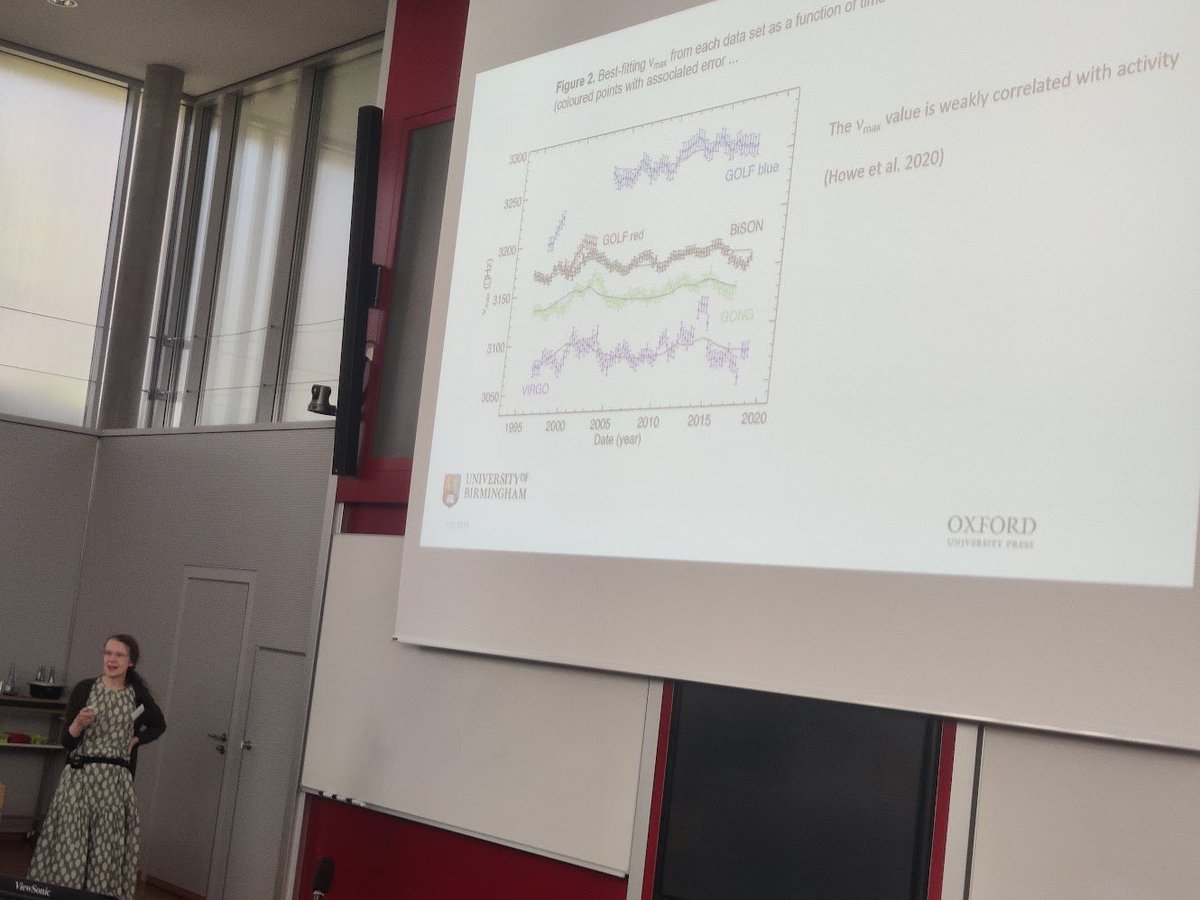
En el episodio 499 de @pcoffeebreak hablamos de un paper de Rachel Howe y colaboradores. Se trataba de un trabajo de heliosismología que usaba 30 años de datos de la red BiSON. Un lujo escucharla en persona en Interdisciplinary Physics of the Sun: German-Spanish Heareus Seminar
Hector Socas-Navarro tweet media
Español
2
2
19
1.4K
José A. Rodríguez
José A. Rodríguez@pprdguez·
@DaniNovarama Hombre, no serás economista pero aplicas un sentido común que ya quisieran muchos economistas
Español
2
0
75
2.6K
Dani Sanchez-Crespo
Dani Sanchez-Crespo@DaniNovarama·
Creo que Trump la está cagando con el tema chino... a ver, no soy economista. Así que esto es mi opinión personal, mirando más la estrategia de cada cual. No me machaquen demasiado. Ahí va mi lectura del asunto:
Español
44
100
811
89.7K
José A. Rodríguez retweetledi
@Yoriento (Alfonso Alcántara)
Así ven los chinos la futura «America Great Again». Música incluida. 🙀😅 El humor asiático está infravalorado.
Español
9
170
702
145.8K
José A. Rodríguez retweetledi
Robert Reich
Robert Reich@RBReich·
Howard Lutnick: "Let Donald Trump run the global economy. He's knows what he's doing. He's been talking about it for 35 years." Hello? Trump has killed almost every business he's ever touched. Watch.
English
555
4.4K
11.6K
407.3K
Carlos Santana
Carlos Santana@DotCSV·
Haciendo pruebas noto que está por delante del Deep Research de Google (basado en Gemini 1.5) y por detrás del de OpenAI. Aún así os animo a que probéis estas funcionalidades que para mi son de las más impresionantes en materia de texto a día de hoy.
Español
6
1
101
8.4K
Carlos Santana
Carlos Santana@DotCSV·
🔴 ¡PERPLEXITY presenta su DEEP RESEARCH! OpenAI le copió a Google el nombre de Deep Research y ahora Perplexity se lo copia a ellos. La feature que dedica más tiempo a buscar fuentes y hacer un report en profundidad la tenéis disponible gratis! Probadla 👍
Perplexity@perplexity_ai

Introducing Deep Research on Perplexity. Deep Research lets you generate in-depth research reports on any topic. Available to everyone for free—up to 5 queries per day for non-subscribers and 500 queries per day for Pro users.

Español
18
66
622
32.5K
José A. Rodríguez retweetledi
Andrew Ng
Andrew Ng@AndrewYNg·
The buzz over DeepSeek this week crystallized, for many people, a few important trends that have been happening in plain sight: (i) China is catching up to the U.S. in generative AI, with implications for the AI supply chain. (ii) Open weight models are commoditizing the foundation-model layer, which creates opportunities for application builders. (iii) Scaling up isn’t the only path to AI progress. Despite the massive focus on and hype around processing power, algorithmic innovations are rapidly pushing down training costs. About a week ago, DeepSeek, a company based in China, released DeepSeek-R1, a remarkable model whose performance on benchmarks is comparable to OpenAI’s o1. Further, it was released as an open weight model with a permissive MIT license. At Davos last week, I got a lot of questions about it from non-technical business leaders. And on Monday, the stock market saw a “DeepSeek selloff”: The share prices of Nvidia and a number of other U.S. tech companies plunged. (As of the time of writing, some have recovered somewhat.) Here’s what I think DeepSeek has caused many people to realize: China is catching up to the U.S. in generative AI. When ChatGPT was launched in November 2022, the U.S. was significantly ahead of China in generative AI. Impressions change slowly, and so even recently I heard friends in both the U.S. and China say they thought China was behind. But in reality, this gap has rapidly eroded over the past two years. With models from China such as Qwen (which my teams have used for months), Kimi, InternVL, and DeepSeek, China had clearly been closing the gap, and in areas such as video generation there were already moments where China seemed to be in the lead. I’m thrilled that DeepSeek-R1 was released as an open weight model, with a technical report that shares many details. In contrast, a number of U.S. companies have pushed for regulation to stifle open source by hyping up hypothetical AI dangers such as human extinction. It is now clear that open source/open weight models are a key part of the AI supply chain: Many companies will use them. If the U.S. continues to stymie open source, China will come to dominate this part of the supply chain and many businesses will end up using models that reflect China’s values much more than America’s. Open weight models are commoditizing the foundation-model layer. As I wrote previously, LLM token prices have been falling rapidly, and open weights have contributed to this trend and given developers more choice. OpenAI’s o1 costs $60 per million output tokens; DeepSeek R1 costs $2.19. This nearly 30x difference brought the trend of falling prices to the attention of many people. The business of training foundation models and selling API access is tough. Many companies in this area are still looking for a path to recouping the massive cost of model training. Sequoia’s article “AI’s $600B Question” lays out the challenge well (but, to be clear, I think the foundation model companies are doing great work, and I hope they succeed). In contrast, building applications on top of foundation models presents many great business opportunities. Now that others have spent billions training such models, you can access these models for mere dollars to build customer service chatbots, email summarizers, AI doctors, legal document assistants, and much more. Scaling up isn’t the only path to AI progress. There’s been a lot of hype around scaling up models as a way to drive progress. To be fair, I was an early proponent of scaling up models. A number of companies raised billions of dollars by generating buzz around the narrative that, with more capital, they could (i) scale up and (ii) predictably drive improvements. Consequently, there has been a huge focus on scaling up, as opposed to a more nuanced view that gives due attention to the many different ways we can make progress. Driven in part by the U.S. AI chip embargo, the DeepSeek team had to innovate on many optimizations to run on less-capable H800 GPUs rather than H100s, leading ultimately to a model trained (omitting research costs) for under $6M of compute. It remains to be seen if this will actually reduce demand for compute. Sometimes making each unit of a good cheaper can result in more dollars in total going to buy that good. I think the demand for intelligence and compute has practically no ceiling over the long term, so I remain bullish that humanity will use more intelligence even as it gets cheaper. I saw many different interpretations of DeepSeek’s progress here in X, as if it was a Rorschach test that allowed many people to project their own meaning onto it. I think DeepSeek-R1 has geopolitical implications that are yet to be worked out. And it’s also great for AI application builders. My team has already been brainstorming ideas that are newly possible only because we have easy access to an open advanced reasoning model. This continues to be a great time to build! [Original text: deeplearning.ai/the-batch/issu… ]
English
280
1K
4.3K
616.9K
José A. Rodríguez retweetledi
CartoDES
CartoDES@Carto_DES·
Se ha añadido al catálogo de servicios WMS de CartoDES la capa de Zonas Inundables de España, correspondiente a los períodos de retorno de 10, 50, 100 y 500 años.
Español
1
1
0
15
José A. Rodríguez retweetledi
Julián Macías Tovar
Julián Macías Tovar@JulianMaciasT·
Rubén Gisbert no solo se manchó tirandose al suelo para entrar en el directo del programa de Iker Jimenez y aparentar estar sucio, sino que difundió el bulo de los 700 tickets del parking de Bonaire. Ese parking no tiene tickets y de momento no han encontrado ninguna víctima.
Español
439
6.5K
13.2K
2.3M
José A. Rodríguez retweetledi
CartoDES
CartoDES@Carto_DES·
Los mosaicos incluyen imágenes tanto de invierno como de verano para cada año.
Español
0
1
1
13
José A. Rodríguez retweetledi
Pablo Echenique
Pablo Echenique@PabloEchenique·
Desde que Israel puso en marcha el peor genocidio del siglo XXI, su portavoz Roni Kaplan se ha paseado por las radios y televisiones españolas soltando su propaganda sangrienta con total impunidad. Hasta que hoy se ha encontrado conmigo en @todoesmentiratv y ha pasado esto ⬇️
Español
1.1K
2.7K
6.3K
344.9K
José A. Rodríguez retweetledi
CartoDES
CartoDES@Carto_DES·
La Norma 5.2-IC establece el valor inicial del Umbral de Escorrentía (Po) en función de varios parámetros, entre ellos, la cobertura del suelo. Para ello, la norma se basa en la clasificación del proyecto CORINE Land Cover (CLC) del año 2000, que define 85 clases de coberturas de
Español
1
1
1
14
José A. Rodríguez retweetledi
La Razón
La Razón@larazon_es·
@JMilei @Santi_ABASCAL Javier Milei: “Cuando yo era un ser despreciable que nadie me quería el único que me abrazó fue Santiago Abascal”
Español
239
812
3K
718.6K
José A. Rodríguez retweetledi
Yago Álvarez Barba
Yago Álvarez Barba@EconoCabreado·
Lo único que me suena raro de la frase es el "era". El resto lo veo correcto y creíble.
La Razón@larazon_es

@JMilei @Santi_ABASCAL Javier Milei: “Cuando yo era un ser despreciable que nadie me quería el único que me abrazó fue Santiago Abascal”

Español
48
56
316
12.7K
Cuatroochenta
Cuatroochenta@Cuatroochenta·
¿Está cambiando la #IA el ritmo de la música? La responsable del Music Label Partnertde Youtube, Sara Gozalo, responde a esta pregunta en el podcast ‘Cuidado con las macros ocultas’ ¡Dale al play y escúchalo!
Español
3
5
20
133.5K
José A. Rodríguez retweetledi
CartoDES
CartoDES@Carto_DES·
También es posible guardar o imprimir la imagen de cada perfil generado.
Español
0
1
1
20
José A. Rodríguez retweetledi
CartoDES
CartoDES@Carto_DES·
También es posible generar un perfil transversal individual haciendo clic derecho en el área del gráfico de un perfil longitudinal. Los datos de cada perfil transversal individual o de todos los perfiles generados pueden guardarse en un archivo de texto en el disco local.
Español
1
1
1
20