Raphael Steward retweetledi
Raphael Steward
37.2K posts

Raphael Steward retweetledi

Il MALE non ha bisogno di motivi: è fine a se stesso.
MO@Abu_Salah9
هذا الطفل الغزاوي يبكي يومياً بعد أن بترت اسرائيل قدمه بلا أي ذنب حزن ومأساة أبدية.
Italiano
Raphael Steward retweetledi

Le vite «invisibili» di Sara Tkacz e Lyuba Hlyva, le due donne uccise in un cantiere a Napoli, e le ipotesi sul killer: «Potrebbe aver ucciso altre volte» | È inammissibile che persona come queste siano state completamente abbandonate dalla società ! napoli.corriere.it/notizie/cronac…
Italiano

Come mai non ne parla nessun giornale ?
DelPapaMax64@DelMax64
Un altro sensibile poeta laureato non capito. Ma adesso il governo rimedia.

Italiano
Raphael Steward retweetledi

L'ENORME SCANDALO DI ABUSI SESSUALI SUI BAMBINI IN FRANCIA
Sedici arresti e almeno 110 istituti scolastici sotto indagine a Parigi. Le testimonianze dell'orrore raccontate dai genitori.
➡️ byoblu.com/2026/05/22/len…
Italiano
Raphael Steward retweetledi

The British media do this deceptive thing where they add up all the jail sentences for members of a rape gang, and present it as a cumulative number -- 277 years.
But that's for 20 different rapists who raped girls as young as 12 years old hundreds of times, over years. In reality, these men will automatically be released in ten years.
dailymail.com/news/article-1…

Daily Mail@DailyMail
Asian grooming gang who raped and sexually abused girls as young as 12 are jailed for more than 270 years
English
Raphael Steward retweetledi

Le vite «invisibili» di Sara Tkacz e Lyuba Hlyva, le due donne uccise in un cantiere a Napoli, e le ipotesi sul killer: «Potrebbe aver ucciso altre volte» | Corriere.it napoli.corriere.it/notizie/cronac…
Italiano
Raphael Steward retweetledi

Reindeer Herder in Northern Mongolia :
Mongolia’s Tsaatan Reindeer Herders; a diminishing nomadic tribe who live in the depths of the Taiga in northern Mongolia are one of last groups of nomadic reindeer herders in the world. There about 400 Dukha people of 70-80 families live in communities, usually a group of two to seven households. Mongolian reindeer people life is completely dependent on the Reindeer they herd, often moving their small encampment tepees 5-10 times a year in search of suitable weather and moss for the reindeer. This vast region is home to several thousand square kilometres of natural habitat classified as taiga (boreal forest) located within the Shishged River watershed of Altai-Sayan mountains (largest mountain range in southern Siberia) and provides home range for the world’s southern-most indigenous reindeer population and their herders – Tsaatan.
Mongolia’s Tsaatan reindeer herders are Mongolia’s smallest ethnic minority – a community of nomadic reindeer herders with strong shamanist beliefs. Originally from Tuva in Siberia, they have historically inhabited the border region of Russia and Mongolia. Ethnically, community identifies as Dukha, but their lifestyle as reindeer herders earned them the Mongolian name Tsaatan, which means roughly ‘with reindeer.’
At the end of 20th Century Mongolian reindeer number decreased drastically from 2280 to 616. Thanks to the number of organizations, individuals, foundations, as well as Mongolian government contributed the Dukha tribe to keep their traditional way of life and increase the reindeer head. Mongolian reindeer herder Tsaatans proudly celebrated the 2000 Reindeer Festival in August 2019. Indeed, Mongolia reindeer number reached 2690 by 2020.
Tsaatans use the reindeer as the main way of transportation such as travel for hunting, the collection of firewood, as a pack animal for seasonal migrations, visiting relatives and friends, and traveling to the town for shopping and trade. Reindeer milk is part of Tsaatans' staple food from which they make cheese, milk tea, butter, and yogurt. A reindeer gives 96-100 liters of thick and rich milk during the milking season. Tsaatans occasionally eat reindeer meat, but overall they prefer to increase the reindeer number instead of slaughtering.
Tsaatans or Dukha people begin training reindeer for riding when the reindeer are two years old ridden by children because the adults are too heavy to ride the two-year-old. However, ridden by adults at age of three when reindeer are strong enough. During the nomadic movement, the male reindeer usually carry loads weighing about 40 kg while females carry up to 30 kg.
When the weather is cooler, the reindeer are vigorous and healthy. Dukhas usually settle down at an altitude of 2300 m above the sea level, but 1800 m in winter where they can be sheltered and avoid the frigid winds. Snow is not an obstacle for reindeer to find and eat moss because they can dig in the snow with their hooves and find moss easily. The young males are castrated after mid-September when the weather cools down. The end of September to early October is a mating season for reindeer. The gestation period for a reindeer is about seven months.
Monthly, Mongolian government has been granting some amount of money both for adults and children in the community. Another source of income is tourism but it covers a few of the households depending on their encampment locations. Though, eco-friendly travel is vital. They randomly sell the reindeer or its skin. Instead, hunt in the mountains in autumn for winter food. Tsaatans have the closest relation with nature and know how to use the herbs and plants for medicinal purposes or food. Surplus medicinal plants, berries, and pinecone nuts are sold in the nearby towns or bartered in exchange for food and clothes. They, also catch fish spearing them with long poles.
🎥© bagaa_adventurer (IG)
#archaeohistories
English
Raphael Steward retweetledi

Dal Vangelo secondo Giovanni
Gv 17,20-26
In quel tempo, [Gesù, alzàti gli occhi al cielo, pregò dicendo:]
«Non prego solo per questi, ma anche per quelli che crederanno in me mediante la loro parola: perché tutti siano una sola cosa; come tu, Padre, sei in me e io in te, siano anch'essi in noi, perché il mondo creda che tu mi hai mandato.
E la gloria che tu hai dato a me, io l'ho data a loro, perché siano una sola cosa come noi siamo una sola cosa. Io in loro e tu in me, perché siano perfetti nell'unità e il mondo conosca che tu mi hai mandato e che li hai amati come hai amato me.
Padre, voglio che quelli che mi hai dato siano anch'essi con me dove sono io, perché contemplino la mia gloria, quella che tu mi hai dato; poiché mi hai amato prima della creazione del mondo.
Padre giusto, il mondo non ti ha conosciuto, ma io ti ho conosciuto, e questi hanno conosciuto che tu mi hai mandato. E io ho fatto conoscere loro il tuo nome e lo farò conoscere, perché l'amore con il quale mi hai amato sia in essi e io in loro».
Parola del Signore.
La preghiera di Gesù raggiunge ogni tempo della storia e rassicura non solo i discepoli presenti in quel momento, ma anche ognuno di noi.
Le parole del Signore rassicurano e fortificano la nostra fede, donano l'opportunità di essere in comunione con lui e con i fratelli.
Conoscere e rivelare il nome di chi può guarire e salvare è un invito a riconoscere l'amore che ci ha raggiunto e chiede di essere condiviso.
Buona giornata a tutti.
Italiano
Raphael Steward retweetledi

Our flying car fleet has successfully completed test flights at XPENG Guangzhou base. This milestone follows batch trial production, demonstrating advanced manufacturing consistency and synchronized flight-control capability.
@ARIDGE_Official
@XPENG_Global
English
Raphael Steward retweetledi

North African man in Barcelona beats Spanish women for fun and then runs away like a rat. We don't want to live with them.
RadioGenoa@RadioGenoa
This is Barcelona. Weak and corrupt UE politicians have flooded our cities with criminals. Today, because of them, there is much insecurity and fear in Europe.
English
Raphael Steward retweetledi

🚨 A Cry Isn’t Drama — It’s a Survival Alarm
When a baby can’t find their mother or caregiver, their brain doesn’t see it as “discomfort.” It sees it as an emergency. Within seconds, the stress system turns on full force. Cortisol — the main stress hormone — can spike by 200–300% almost instantly. Why? Because early in life, a baby cannot survive alone. When their caregiver disappears, their brain believes danger — even death — may be coming.
This reaction is automatic. It’s not a habit. It’s not manipulation. It’s not something a baby can control. From birth, their nervous system is wired with one job: get the caregiver back as fast as possible. Crying is not misbehavior — it’s biology calling for safety.
To an infant, safety is a body, a heartbeat, warmth, and response. It’s being held. It’s co-regulation. When that presence is gone, the nervous system sounds a loud internal alarm. Now think about “crying it out.” The baby doesn’t cry because they’re learning sleep skills. They cry because their brain believes something is deeply wrong. When no one comes, the body eventually enters a shutdown state — a survival response of the parasympathetic nervous system. The baby falls asleep, not because they feel safe… but because the system powers down.
Over time, this wires a silent message into the brain: When I have needs and no one responds, I should stop asking. I should withdraw. The crying stops, but the stress response doesn’t simply vanish — it goes inward.
Understanding this changes everything. Babies aren’t trying to control us. They are trying to survive. When we respond, soothe, and show up, we’re not “spoiling” them — we’re building a nervous system that learns the world is safe, people are reliable, and needs will be met. That’s how real resilience is formed.
Sometimes, the most powerful thing you can do for a child… is simply show up.

English
Raphael Steward retweetledi

Napoli. Sono le 3 di notte.
Un uomo esce di casa. Sta andando a lavorare. È un commerciante ortofrutticolo, uno di quelli che iniziano la giornata quando molti altri la stanno finendo.
Sale in auto. Poi, in pochi secondi, la normalità si spezza.
Da dietro l’angolo sbucano due uomini: uno incappucciato, l’altro con il casco integrale. È armato. Il terrore entra nell’abitacolo prima ancora dei rapinatori.
Vogliono l’auto. Vogliono i suoi soldi. Gli portano via, almeno per quei secondi, la sicurezza di poter andare semplicemente a lavorare.
In quel momento passa una Gazzella dei #Carabinieri, impegnata nel servizio notturno di controllo del territorio.
I militari vedono tutto. Non c’è tempo per riflettere: intervengono l’istinto, l’addestramento, la preparazione.
Un Carabiniere scende al volo e parte all’inseguimento.
Uno dei due rapinatori tenta di salire sulla vettura appena rubata, con la portiera posteriore ancora aperta. Non ci riesce.
Il Carabiniere lo raggiunge. Lo blocca. Lo arresta.
Il denaro viene restituito al legittimo proprietario. Le indagini proseguono per recuperare l’auto e identificare il complice.
Questa è la sicurezza che spesso non si vede: quella che passa di notte, quando le città dormono e qualcuno prova ad approfittarne.
A #Difesa della collettività
Italiano
Raphael Steward retweetledi

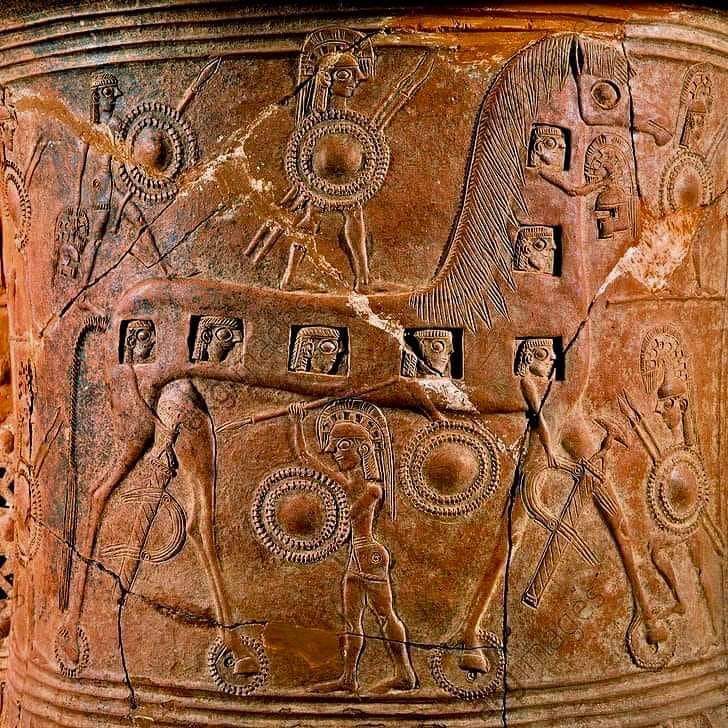
Earliest known depiction of the famous 'Wooden Horse' of the Trojan War, on Mykonos Terracotta Vase (Pithos) - 670 BC, found at Mykonos island, Cyclades, Greece.
Neck of pithos shows descent of Greeks from wooden horse. His hooves rest upon little wheels, and in body and neck of horse are seven windows visible. Pithos was discovered in 1961, during digging of a well in one of houses in centre of town of Mykonos in Greece.
Mykonos Archaeological Museum
#archaeohistories

English
Raphael Steward retweetledi

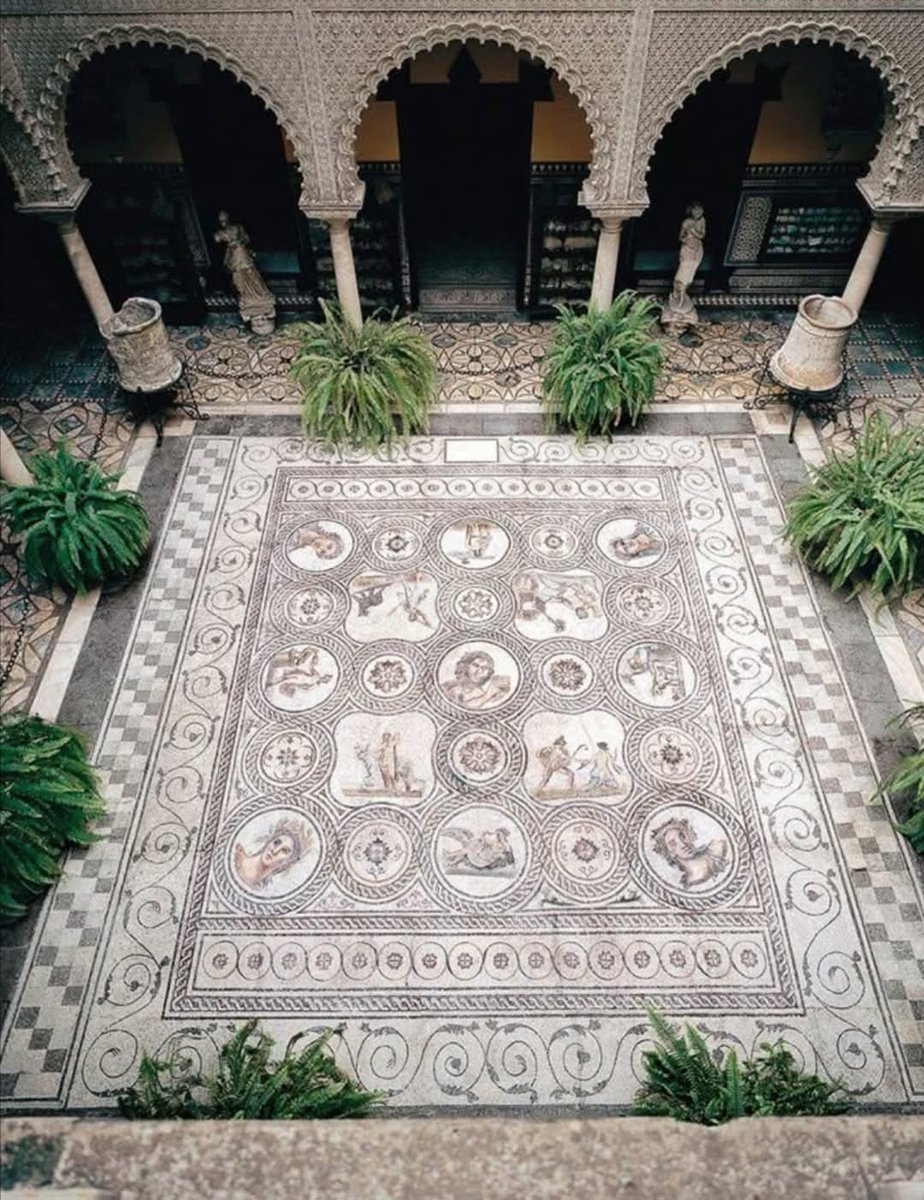
Palace of the Countess of Lebrija in Seville, Spain 🇪🇸
The Roman mosaic in the palace courtyard dates back 1,700 years.
At its center, the god Pan plays a serenade to Galatea on his flute. He is surrounded by medallions depicting Zeus’s mythical loves — including Leda, Europa, Ganymede, Antiope, Danae, Io, and Callisto — while the four corners represent the seasons of the year.
The palace is renowned for its 580 square meters of mosaics that cover the entire ground floor. These were transferred piece by piece from the nearby Roman city of Italica and form the largest private collection of Roman mosaics in the world.
The palace also houses an extensive collection of archaeological artifacts, including vases, amphorae, columns, and Roman sculptures.
This residence was described by the Marquis Lozolla, Director General of Fine Arts, as “the best paved palace in all of Europe.”
#archaeohistories

English
Raphael Steward retweetledi

Solo 3 iniezioni. Un'ora dopo, il 60% delle placche dell'Alzheimer spariva.
Non farmaci. Non chirurgia. Nanoparticelle e il cervello ha iniziato a ripulirsi da solo.
Siamo nel 2024. Un team formato da IBEC Barcellona, West China Hospital e UCL inietta delle nanoparticelle supramolecolari in topi con Alzheimer avanzato geneticamente programmati per produrre amiloide-beta in eccesso e sviluppare un declino cognitivo severo.
Un'ora dopo l'iniezione, i livelli di amiloide-beta nel cervello crollano del 50-60%.
Non è un effetto della molecola trasportata. Perché non c'è nessuna molecola trasportata. Quelle nanoparticelle non contengono farmaci sono loro stesse il farmaco.
Ecco come funziona: nel cervello sano, esiste un sistema di smaltimento naturale. Il recettore LRP1, sulle pareti dei vasi cerebrali, prende l'amiloide-beta e la spedisce fuori dal cervello attraverso la barriera emato-encefalica. Nell'Alzheimer questo meccanismo si inceppa: LRP1 perde efficienza, l'amiloide si accumula, le placche tossiche restano.
Le nanoparticelle dell'IBEC sono progettate con una precisione molecolare millimetrica: dimensioni esatte, numero definito di ligandi di superficie. Si agganciano a LRP1, attivano la transcitosi, e costringono il cervello a riprendere in mano il proprio sistema di pulizia. Non portano nulla dentro. Portano qualcosa fuori.
Fin qui, potrebbe sembrare un risultato buono ma circoscritto. Poi arriva il dato che cambia l'angolazione di tutto.
Un topo trattato a 12 mesi l'equivalente di un essere umano di 60 anni, con Alzheimer già in fase avanzata viene rivalutato 6 mesi dopo. A 18 mesi, un'età paragonabile ai 90 anni umani, quel topo si comporta come un animale sano.
Non rallentato. Non stabilizzato. Comportamentalmente normale.
Lo studio è pubblicato su Signal Transduction and Targeted Therapy, una rivista del gruppo Nature. Siamo ancora al modello murino e molte terapie che hanno funzionato nei topi si sono fermate prima di toccare un essere umano. Il team stesso lo specifica. Ma c'è una parola che in questo campo non si usa quasi mai, e che qui compare con tutti i dati a supporto: invertibile.
Non rallentabile. Invertibile.
L'Alzheimer, fino a questo studio, era considerato una strada a senso unico. Tre iniezioni, 60 minuti, e un topo di 90 anni equivalenti torna a comportarsi come uno sano. Il meccanismo è lì, con nome e cognome: LRP1, clearance vascolare, nanoparticelle senza payload farmacologico.
Il cervello non aveva smesso di volersi ripulire. Aveva solo perso lo strumento per farlo.
In breve:
3 iniezioni di nanoparticelle supramolecolari riducono l'amiloide-beta del 60% in 1 ora
Il meccanismo non usa farmaci: le nanoparticelle riattivano il recettore LRP1 e il sistema di pulizia naturale del cervello
Un topo con Alzheimer avanzato, trattato a 12 mesi, mostrava comportamento sano a 18 mesi l'equivalente umano di 90 anni..

Italiano