
Erhan

484 posts

Erhan banner
Erhan

Erhan

@realErhanEren

Enki is an AI-powered intelligence platform that tracks clean tech signals, like pilots, partnerships, and product launches, to accelerate market adoption.

Los Angeles, CA Katılım Nisan 2012
776 Takip Edilen173 Takipçiler
Sabitlenmiş Tweet
Erhan
Erhan@realErhanEren·
Warren Buffett just made energy the center of Berkshire’s future. Not by writing a shareholder letter — but by choosing a successor who built wind farms, power lines, and regulated utilities. Instead of choosing someone from Berkshire’s cash-rich businesses like insurance or consumer brands, Buffett tapped the head of its energy empire. Greg Abel comes from the energy side — specifically Berkshire Hathaway Energy (BHE), where he built out massive plays in utilities, renewables, and infrastructure. 🧭 That’s not a coincidence. It’s a signal. 📌 What Abel’s Appointment Really Tells Us: 1. Energy is becoming central to Berkshire’s future. 2. Hard assets are the new fortress. 3. BHE is Buffett’s favorite quiet empire. ⚡ What This Means for the Energy Transition: 1. The next industrial cycle will be electric and political. Abel knows how to navigate both. 2. Berkshire may go deeper into energy infrastructure — especially the “boring but essential” kind: high-voltage corridors, grid stability tools, utility-scale renewables. 3. Energy is no longer just a defensive play — it’s becoming a growth engine. #Energy #CleanTech #NetZero We track the #EnergyTransition — end to end. See how at enkiai.com
GIF
English
0
2
9
695
Erhan
Erhan@realErhanEren·
Two signals tell me a technology is becoming unstoppable. The first is installations. Each new installation tells you someone chose that product over everything else available. Each bigger installation tells you they want more. Installations are not announcements. They are decisions. Repeated decisions, across different customers and different markets, are market validation you can trace. The second is unit economics. When a new technology enters the mainstream, the cost per unit should be falling. Not gradually. Structurally. The solar curve is the clearest example in history. Every time cumulative capacity doubled, costs dropped by roughly 20%. That is the Swanson curve. It did not stop. It compounded. When I see both signals together, growing installations and falling unit economics, that is when I know the technology is no longer a forecast. It is a fact. Right now I am watching both signals in battery storage. US operating storage capacity reached 37 GW by the end of 2025, up 32% in a single year. Lithium-ion battery costs dropped 40% in 2024 alone, following a 90% decline over the prior decade. Installations accelerating. Unit economics compressing. That combination does not reverse. What technology are you tracking these two signals on right now?
English
0
0
0
21
Erhan
Erhan@realErhanEren·
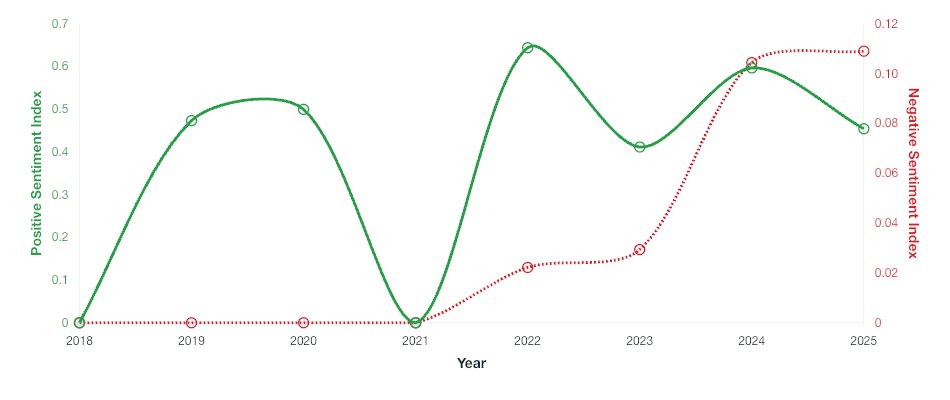
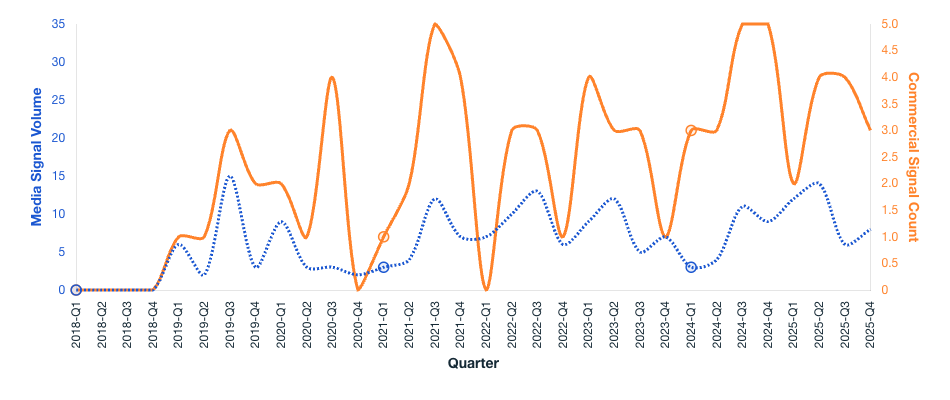
Maritime hydrogen peaked and froze within the same six-month window. Q1 2026 was the most active quarter the sector had seen. Fincantieri launched the first hydrogen cruise ship. Ballard Power Systems secured an order for 32 FCwave engines. PowerCell contracted fuel cell systems for two hydrogen bulk carriers. Japan Suiso Energy partnered to build a liquefied hydrogen carrier. Norway had committed $100 million in government funding in Q4 2024. The pipeline looked real. Q2 2026: commercial events fell to near-zero. PR activity became negligible. Positive and negative sentiment both disappeared. The Enki activity chart shows two lines converging flat at the bottom. A market going negative is a correction. A market going silent is something different. Silence in commercial activity data means financing dried up and deals were suspended simultaneously. It means the companies active in Q1 are not announcing exits. They are not announcing anything. That pattern, peak followed immediately by freeze rather than gradual decline, is the signal that the underlying commercial case broke faster than the public narrative caught up. The structural problem in maritime hydrogen was always the same one that exists across every hydrogen application. The technology on the vessel works. The supply chain to fuel the vessel does not exist at commercial scale. Norway's hydrogen ferries operate in a closed, government-supported corridor with dedicated fueling infrastructure. That model does not replicate across bulk carriers and cruise ships operating on global trade routes without a parallel infrastructure build that has not been funded. The Q1 2026 activity surge was real commercial execution within the existing pilot envelope. The Q2 freeze is what happens when the pilot envelope runs out and the next layer of investment, the one that requires commercial-scale fueling infrastructure, does not materialise. The signal I am watching: whether Q3 2026 shows recovery or continued silence. Recovery requires either a government-backed infrastructure commitment covering fueling at scale, or a reframe of the application toward closed-corridor routes where dedicated infrastructure is viable. Continued silence confirms the market has reached the boundary of what the current funding model can support. Watch the commercial activity data, not the conference announcements.
Erhan tweet media
English
0
0
1
47
Erhan
Erhan@realErhanEren·
When a company makes a big announcement, everyone notices. A pilot. A new partnership. A major project. Then nothing. No follow-up. No update. No next phase. That silence is the signal I track. Cancellations in this industry do not come with press releases. They come with silence. A project stops being mentioned. A partner quietly exits. A pilot never moves to deployment. This is what happened in green hydrogen in 2025. Nearly 60 major projects cancelled. Air Products abandoned three US projects. BP cancelled two flagship programs. Shell halted its Aukra project in Norway. The announcements were loud. The exits were not. I built cancellation and no-follow-up tracking into Enki specifically because of this problem. Not because exits are easy to find. Because they are nearly impossible to find without a system built to surface them. The absence of activity is data. Most teams track what companies say. The more important signal is what they stopped saying.
English
0
0
0
11
Erhan
Erhan@realErhanEren·
I spent the last hour going through the hydrogen rail data for 2026. Here is what jumped out. In Q1 2026, PR activity and commercial events are nearly at parity. Value: 10 vs 9. That number matters more than any market forecast. For most of 2024 and 2025, the gap between what was announced and what was actually deployed was the story. Germany's Alstom fleet delayed three years. A hydrogen tram in China shut down because the economics didn't work. A full fleet reverting to diesel because of a fuel cell shortage. The technology was real. The ecosystem wasn't ready. Q1 2026 looks different. India deployed its first hydrogen train. Ridgewood Infrastructure acquired Sierra Railroad — a financial investor buying into a hydrogen locomotive asset. Concord Control Systems received a Rs. 47 crore commercial order from NTPC. Ballard began launching hydrogen trains for Berlin's Heidekrautbahn. These are not pilot announcements. These are commercial events. The signal gap is closing. That is the inflection point worth tracking. The question now isn't whether hydrogen rail works. Germany proved it works in 2022. The question is whether the supply chain, infrastructure, and economics can hold at scale. Q1 2026 says: maybe yes. Full analysis on the Enki platform. [INSERT ARTICLE URL]
Erhan tweet media
English
0
0
0
14
Erhan
Erhan@realErhanEren·
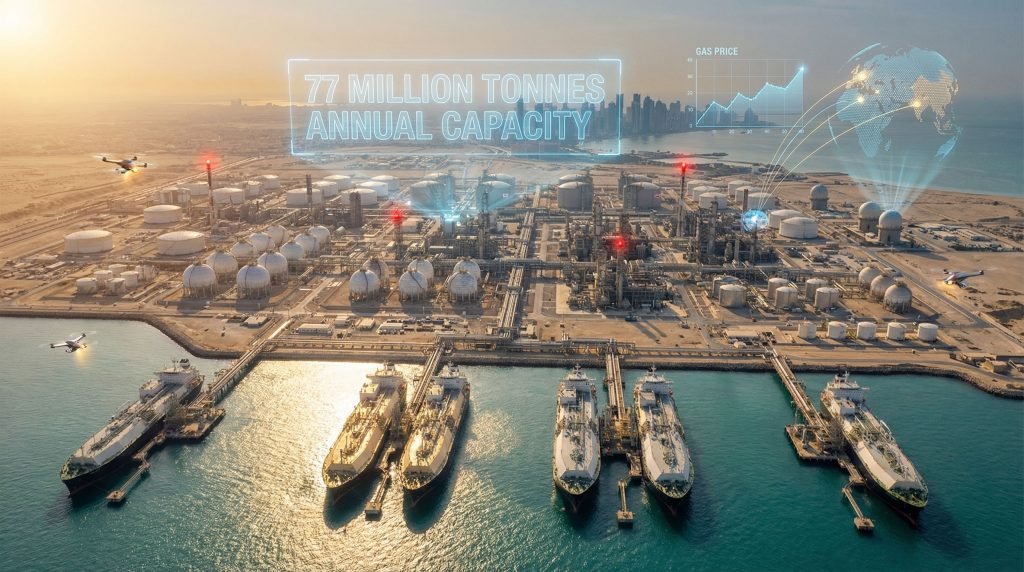
The global LNG market has been pricing a supply glut for two years. New capacity from Qatar's North Field expansion. US modular projects sanctioning at record pace. The consensus view heading into 2026 was oversupply, price competition, and margin pressure for producers. That consensus was built on one assumption nobody was pricing seriously: that 20% of global LNG supply concentrated in a single industrial complex at Ras Laffan operates without interruption. Geographic concentration is the oldest risk in commodity markets. It is also the most consistently underpriced one because it rarely materialises and the cost of hedging it feels unnecessary until it does. Here is what the structure of the risk actually looks like. Ras Laffan is not just an LNG terminal. It is an integrated industrial city processing natural gas from the North Field into LNG, blue ammonia, helium, and petrochemicals simultaneously. A disruption does not affect one product stream. It cascades across all of them. Buyers holding 27-year Qatari SPAs signed on cost and volume assumptions have no geographic alternative embedded in those contracts. Shell holds 6.8 MTPA of contracted Qatari volume. A production halt does not stop Shell's downstream obligations. It forces Shell to declare force majeure on its own customers, propagating the supply shock down the chain. The concentration risk at the source becomes systemic risk at the trading level within days. European storage entered 2026 at 30% utilisation against a 54% seasonal average. The buffer that absorbs supply disruption was already below historical norms before any event tested it. The oversupply consensus was directionally correct on new capacity additions. It was structurally incomplete on what happens when the concentration risk that everyone knows about finally gets tested. The signal I watch is not price. It is contract restructuring. When long-term SPA holders begin inserting geographic diversification clauses, secondary source obligations, or explicit force majeure carve-outs into new or renegotiated contracts, the market has formally repriced the concentration risk it spent two years ignoring. Watch the contract terms, not the headlines.
Erhan tweet media
English
0
0
0
18
Erhan
Erhan@realErhanEren·
Qatar supplies 20% of the world's LNG from a single industrial complex at Ras Laffan. Every 27-year supply contract signed with Sinopec, TotalEnergies, and European utilities is underwritten against the assumption that a single geographic concentration point does not fail. That assumption has never been seriously stress-tested in a live market. European buyers diversified away from Russian pipeline gas after 2022 by signing long-term LNG contracts, including with Qatar. What that strategy did not address is that contractual diversification and geographic diversification are different things. A portfolio of LNG contracts from Qatar, the US, and Australia diversifies counterparty risk. It does not diversify chokepoint risk if a significant share of the portfolio routes through the same export geography. European gas storage entered 2026 at 30% utilisation against a seasonal average of 54%. Venture Global's force majeure dispute at Calcasieu Pass already demonstrated that the legal mechanism exists and the commercial incentive to use it in a high-price environment has been validated. The buffer available to absorb any supply disruption is materially below historical norms. The US LNG modular boom is the structural hedge against this concentration. Destination-flexible US contracts from Gulf Coast terminals are being signed at a premium to Qatari long-term SPA pricing by buyers who have updated their geographic concentration models. **The signal to watch: strike prices in new US LNG SPAs signed in 2026.** If offtake agreements for post-2026 US LNG capacity carry materially higher floor prices than equivalent Qatari contracts signed in 2023 and 2024, the market has formally priced geographic concentration risk into contract structures. That repricing is the confirmation the structural deficit scenario is already embedded in commercial decision-making before any disruption occurs. Watch the strike prices. That is where the risk assessment lives.
Erhan tweet media
English
0
0
0
84
Erhan
Erhan@realErhanEren·
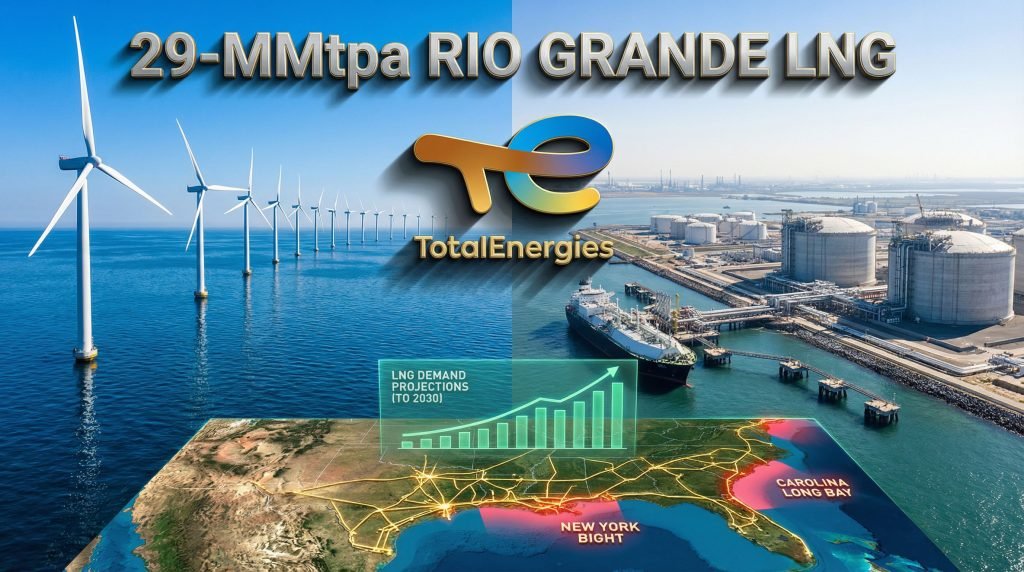
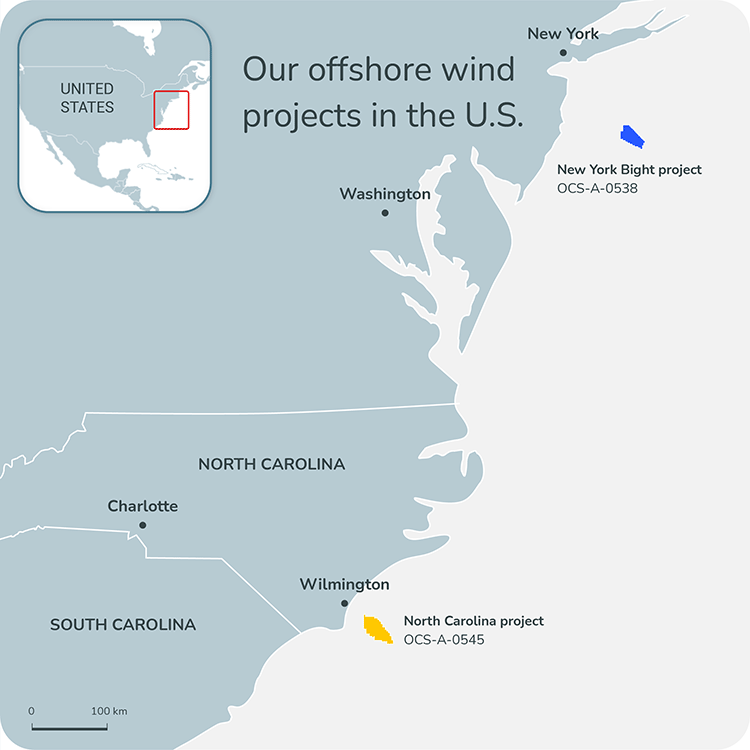
TotalEnergies paid $955 million for two US offshore wind leases in 2022. In March 2026 the US government handed that money back. That transaction structure is the signal worth examining, not the exit itself. A government-facilitated full reimbursement of lease fees in exchange for a formal pledge not to develop new US offshore wind is not a standard market exit. It is a policy-driven capital recovery mechanism that transformed a potential stranded asset into $928 million of liquid capital, immediately redeployed into Rio Grande LNG and upstream gas production. The commercial sequence leading here was visible well before March 2026. TotalEnergies paused its 3 GW Attentive Energy project in November 2024, the week after the US presidential election. That pause was a commercial signal. It was not a final decision, but it was the moment the company's internal risk assessment on US offshore wind changed materially. The formal exit followed 16 months later. The capital destination, Rio Grande LNG, was already part of TotalEnergies' portfolio. The reallocation thesis was not assembled in March 2026. It was confirmed there. The cost data that made US offshore wind unviable did not arrive suddenly either. Project costs reached an estimated $4.2 million per megawatt. That figure had been building through supply chain inflation, Jones Act constraints, and interconnection costs for years. The policy change accelerated the exit. It did not cause the underlying economics. TotalEnergies' CEO called US offshore wind a marginal technology. That language is a capital allocation verdict, not a technology assessment. LNG is projected to increase TotalEnergies' cash flow by 70% by 2030. The comparison between those two return profiles was always the decision. The signal I am watching: RWE and Shell portfolio reviews in H1 2026. Shell exited its Atlantic Shores joint venture in late 2025. RWE holds active US offshore wind positions. The TotalEnergies settlement establishes a template for government-facilitated exits with full cost recovery. Whether the Department of the Interior extends comparable terms to other developers in 2026 determines whether this is a single company decision or the beginning of a systematic reallocation of European energy major capital away from US offshore wind. Watch the lease relinquishment filings, not the strategy announcements.
Erhan tweet media
English
0
0
0
24
Erhan
Erhan@realErhanEren·
Everyone agrees green hydrogen is the future. That consensus is the problem. I saw this pattern in shale in 2014. Everyone agreed. Investment flooded in. Drilling costs spiked. The market assumed infinite demand. Someone would always buy. What happened? Cost of accrues went up. The flood of money crashed the market. It delayed adoption by a decade. Green hydrogen is at the same inflection point today. Global electrolyzer investment grew 80% in 2025. China has 10 GW under construction. Everyone agrees this is the decade of green hydrogen. When everyone agrees, watch the unit cost. That is the signal. Not the headline. Not the investment number. The unit cost of production. That is what I track.
English
0
0
0
13
Erhan
Erhan@realErhanEren·
TotalEnergies just handed back two US offshore wind leases it paid for in 2022. The Department of the Interior agreed to return the lease fees. TotalEnergies agreed to reinvest that same capital into US gas and power projects. That transaction structure is the signal. Not the exit itself. A major integrated energy company did not simply walk away from offshore wind in the US. It negotiated a mechanism to recover sunk costs and redeploy them into LNG. The Carolina Long Bay and New York Bight leases, both awarded in 2022, are gone. The capital is now heading toward Rio Grande LNG at 29 million tonnes per annum capacity and a letter of intent for 2 MMtpa offtake from Alaska LNG, subject to final investment decision. TotalEnergies stated that US offshore wind development costs came in higher than comparable European projects, raising concerns about long-term power affordability. That cost differential is not a TotalEnergies-specific problem. It is a structural feature of the US offshore wind market that every developer with active leases is currently pricing into their own project models. BP wrote down $1 billion on US offshore wind in 2025. Equinor paused development on multiple projects. Over $35 billion in US offshore wind capacity was canceled or restructured in the two years prior. TotalEnergies is not an outlier. It is the most recent data point in a consistent pattern of capital reallocation away from US offshore wind toward assets with clearer near-term return profiles. The direction of that reallocation is the part worth tracking carefully. Every dollar exiting US offshore wind is not sitting idle. It is moving into LNG export infrastructure, upstream gas production, and power generation assets tied to demand growth from data centers and industrial reshoring. TotalEnergies' settlement structure made that reallocation explicit and contractually defined. The signal I am watching: Rio Grande LNG final investment decision timeline. TotalEnergies is now a committed capital partner in a 29 MMtpa LNG export facility. The FID on that project in 2026 is the confirmation that the capital reallocated from offshore wind has found a bankable home. Watch for FID announcement and construction commencement confirmation. That is when the reallocation becomes irreversible at scale. The question for every offshore wind developer still holding US leases is not whether TotalEnergies made the right call. It is whether their own project economics tell a different story.
Erhan tweet media
English
0
0
0
54
Erhan
Erhan@realErhanEren·
Bloom Energy started as a niche application in data centers. Repeated use cases forming quietly. Now the stock is 20x from where it started. I track niche applications because that is where the commercial signal appears before any analyst report confirms it. Small modular reactors are at that stage right now. Military bases. Remote industrial sites. Dedicated data centers. Niche applications, repeated across different end markets. Meta just committed to eight SMR plants. NVIDIA's investment arm is in. The NRC is expected to issue the first commercial construction permits this year. The pattern is the same. The question is whether your team is tracking the signal now or waiting for the headline. What niche application are you watching right now?
English
0
0
0
27
Erhan
Erhan@realErhanEren·
Siemens Energy reported a €17.61 billion order backlog in Q1 2026. Up 30% year over year. The majority of that backlog is data center demand. And they cannot fill it fast enough. That number is not a growth story about Siemens. It is a supply chain signal about the entire AI infrastructure build-out. Here is what the commercial evidence shows. The constraint on AI data center deployment in 2026 is not compute. It is not fiber. It is not real estate. It is power transformers, switchgear, and medium-voltage electrical equipment. Lead times for these components stretched to multi-year in some categories. The companies building hyperscale campuses discovered that the hardware required to energize them was the limiting factor, not the structures themselves. The response has been capital-intensive and fast. Siemens committed $1 billion in February 2026 to expand US transformer and grid equipment production, including a new Mississippi facility. Their Fort Worth hub opened in March 2025 at 500,000 square feet, doubling low and medium-voltage equipment capacity. Total US manufacturing commitment: over $1.5 billion in eighteen months. The partnership activity tells the same story. Siemens and Eaton formed a collaboration in June 2025 specifically to develop modular off-grid power systems to bypass utility interconnection queues. Siemens, NVIDIA, and nVent released a joint 100MW hyperscale reference architecture in December 2025. Siemens and Delta announced prefabricated modular power solutions in November 2025 targeting 50% reduction in deployment time. Every partnership in this stack is solving the same problem: how to deliver energized data center capacity faster than the grid and the supply chain currently allow. The Compass Datacenters agreement for 1,500 modular electrical units is the clearest commercial signal. That is a procurement decision based on speed, not cost optimization. The signal I am watching: Fort Worth and Mississippi production ramp rate . Siemens has the order backlog. They have the factory footprint. The variable that determines whether the backlog converts to revenue on schedule is manufacturing throughput from the new facilities. Watch quarterly earnings disclosures for output metrics against capacity targets. A gap between installed capacity and actual production in H2 2026 is the early indicator that the supply constraint is not resolving at the pace the hyperscaler deployment pipeline requires. The bottleneck moved from the drawing board to the factory floor. That is progress. It is not yet resolution.
Erhan tweet media
English
0
0
0
39
Erhan
Erhan@realErhanEren·
Bloom Energy signed a $2.65 billion deal with AEP for 1GW of solid oxide fuel cells in January 2026. That is the largest commercial deal in the company's history. It followed a $5 billion partnership with Brookfield Asset Management in October 2025 to deploy fuel cells for AI data centers globally. Two deals. $7.65 billion in committed capital. Eighteen months. The signal here is not about Bloom Energy specifically. It is about what these deal structures reveal regarding where the grid bypass market for data center power actually sits. Hyperscalers and utilities are not treating on-site fuel cell deployment as an experiment anymore. AEP is a regulated utility committing to 1GW of SOFC capacity to service data center load it cannot serve through the grid queue on a commercially viable timeline. That is a procurement decision, not a pilot program. The underlying driver is straightforward. Grid interconnection queues in the US run three to five years. A hyperscaler breaking ground on a new data center campus today cannot wait for grid capacity. Bloom's solid oxide fuel cells deploy in 90 days and operate at roughly 60% electrical efficiency. The technology readiness is not the question. The question is whether the supply chain can execute at gigawatt scale. Bloom announced 2GW of annual manufacturing capacity expansion in August 2025. MTAR Technologies secured a $43.9 million supply agreement for fuel cell components in September 2025. The supply chain is being built in parallel with the order book. The signal I am watching: AEP deployment commencement confirmation. The $2.65 billion AEP agreement is an offtake commitment. The commercial validation that matters next is the first confirmed deployment milestone under that agreement. A physical installation update from AEP in H2 2026 converts the order book into operational evidence. That is what moves the broader utility and hyperscaler procurement conversation from interest to replication. Watch the commissioning announcement, not the deal announcement.
Erhan tweet media
English
0
0
0
59
Erhan
Erhan@realErhanEren·
I spent the last hour reading EO 110. Not the headlines. The actual executive order. There is a line buried in the mandate that nobody in the mainstream coverage is quoting. It directs the UPLIFT Committee to: Formulate longer-term demand-side solutions and strategies to decrease consumption of petroleum products. That sentence is not crisis management. It is a clean energy procurement directive with presidential authority behind it. And it sits inside an emergency order that also explicitly mandates renewable energy acceleration and EV integration across public transport. The Philippines did not just declare a fuel emergency. It wired that emergency to produce a structural clean energy outcome. That is a different signal entirely. Here is what makes it credible rather than just ambitious: The country entered this emergency with the infrastructure already in place to act on it. GEA-5 offshore wind auction: 3,300 MW, awards due September 2026. Malampaya gas discovery: announced January 19, 2026, first major domestic find in over a decade. PhilATOM: nuclear regulatory body created September 2025, 1,200 MW target by 2032. Foreign ownership restrictions on offshore wind: already removed before EO 110 was signed. This is not a government announcing ambitions. This is a government with a loaded pipeline that just received emergency authorization to move. We have been tracking the Philippines at Enki since the ownership liberalization signal in 2024. The commercial signals were already there. EO 110 is the acceleration trigger.
Erhan tweet media
English
0
0
0
17
Erhan
Erhan@realErhanEren·
Methanol-capable vessels: 112 in operation, nearly 300 more on order. Methanol bunkering ports: 48. LNG bunkering ports: 222. The vessel orderbook is running well ahead of the infrastructure required to fuel it. That gap is the actual market signal, and it is more specific than most coverage of methanol's momentum currently reflects. Onboard engine technology is genuinely mature. MAN Energy Solutions and Wärtsilä dual-fuel methanol engines are at Technology Readiness Level 8 to 9. Commercially deployed, operationally proven. This part of the chain is not the constraint. Bunkering infrastructure is at TRL 6 to 7. The UK's first commercial biomethanol bunkering service launched at Immingham in February 2026. Singapore is licensing three methanol bunkering suppliers from January 2026. Methanex launched barge-to-ship operations in the ARA region and South Korea in September 2025. Real milestones. Still a fraction of LNG's installed base. Green methanol production is at TRL 5 to 7. The first commercial-scale e-methanol plants came online in 2025. Most large-scale production projects have not yet reached Final Investment Decision. C2X secured $100 million from ENEOS and Maersk in April 2025. That is a positive capital signal. It does not resolve the supply bottleneck that 400 methanol-capable vessels will create. The technology mismatch across these three layers is the structural constraint that operators ordering dual-fuel vessels are pricing into their fuel procurement planning right now. The signal to watch: green methanol production FIDs in 2026. A wave of FIDs on large-scale e-methanol facilities in the next 12 months is the supply-side confirmation that the vessel orderbook can actually be fueled at commercial scale. Without that confirmation, operators are building flexibility into their fuel options for a reason. Watch what gets financed, not what gets ordered.
English
0
0
0
27
Erhan
Erhan@realErhanEren·
While every energy analyst this week is writing about UK offshore wind costs sitting 69% above their 2020 baseline The Philippines opened a 3.3 GW offshore wind auction. March 2, 2026. Fixed-bottom technology only. 20-year contracts. Ceiling price confirmed at PHP 11/kWh. Awards due: September 2026 Delivery targeted: 2028 to 2030. This is not an emerging market with aspirational targets. The foreign ownership restriction on offshore wind was already removed. 9 fully foreign-owned service contracts covering 5,510 MW were awarded before the formal auction even opened. A 2 GW Northern Luzon project commenced feasibility studies in November 2025. The World Bank has assessed 178 GW of total offshore wind potential in Philippine waters. The DOE has a 25 GW renewable auction plan running through 2035. The qualification registration window opened March 2 and closed March 16. That is a 14-day window. The teams that are reading about this market now are discovering it at the procurement gate, not at the market entry point. The first-mover developer positioning happened in 2024 and 2025, when the ownership liberalization signal was visible in commercial filings and service contract award data, not in mainstream offshore wind coverage. Southeast Asia's offshore wind buildout is running on its own regulatory timeline. It does not require US IRA certainty to proceed. It does not require UK supply chain costs to improve. It does not wait for European policy consensus. The markets that analysts underweight because they are not in the headline story are often the markets where the early commercial signal is clearest. Enki has been tracking the Philippines offshore wind buildout since the ownership liberalization created the first commercial entry signal in 2024. The full signal-based breakdown of GEA-5, financial framework, developer positioning, SWOT, and what to watch through September 2026, is in our detailed report.
Erhan tweet media
English
0
0
0
22
Erhan
Erhan@realErhanEren·
The US is adding 86 GW of new power capacity in 2026. The biggest single-year build in over two decades. Solar: 51%. Battery storage: 28%. Wind: 14%. Gas: 7%. Coal: nowhere. Every clean energy headline this week called it a victory. Most of those headlines missed the part that actually matters for capital allocation. Here is where the capacity is going. 80% of the 24 GW of new battery storage in 2026 lands in three states: Texas (53%), California (14%), and Arizona (13%). 40% of the 43 GW of new solar lands in Texas alone. The Northeast is largely absent. The Gulf industrial corridor is a minor participant. The Pacific Northwest shows up in rounding errors. This is not a nationwide clean energy build. It is a Texas-Arizona-California build with national branding. Why does that matter for strategy and investment teams? Because maritime electrification, port onshore power supply, and green hydrogen supply chains are not being built in Navarro County, Texas. They are being built in Rotterdam, Houston, Long Beach, Savannah, and Baltimore. The installed capacity coming online in 2026 does not automatically translate into cost-competitive clean power for the ports and industrial corridors where compliance-driven fuel demand is accelerating. The grid connection, the transmission access, and the proximity to the applications that actually matter for Enki's audience are all questions the headline number does not answer. The commercial signal buried in the EIA data is not "clean energy is winning." It is: clean energy deployment is geographically concentrated, and the markets with the highest compliance pressure are not the markets receiving the most new capacity. That gap — between where capacity is deploying and where demand is accelerating — is where the strategic decision actually lives. It is also where most standard analysis stops. Enki tracks the sub-vertical deployment signals that show where clean power is actually being contracted for maritime, port, and industrial applications — not where it is being built in aggregate. If your 2026 energy strategy is built on the 86 GW headline, you are working with the right number and the wrong geography. Follow Enki for weekly commercial signal analysis on clean energy deployment, maritime decarbonisation, and compliance-driven fuel demand. No headline without the sub-vertical signal underneath it.
Erhan tweet media
English
0
0
0
25
Erhan
Erhan@realErhanEren·
The $2.65 billion AEP deal put Bloom Energy on every strategy team's radar. That is exactly the problem. In January 2026, Bloom's media signal score hit 17. Its verified commercial event count that same month: 2. One announcement. Seventeen units of coverage. Two units of actual deployment evidence. That ratio does not make the AEP deal less real. The contract is confirmed. The 20-year offtake agreement is signed. The Wyoming facility is real. What that ratio tells you is something different: the market is now priced on the narrative, not the execution. And execution is where Bloom carries risk that the coverage is not reflecting. Factory capacity is being doubled from 1GW to 2GW by end of 2026. Bloom's own filing flagged the risks: delays, cost overruns, geopolitical instability, labor shortages. SOFC stack degradation from thermal cycling is a known performance variable that gets one paragraph for every twenty written about the AEP headline. Gross margins last quarter sat at 29.2% on a company now valued at $37 billion against a $3.16 billion top analyst revenue target for 2026. None of this means Bloom is the wrong position. It may be exactly the right one. But the teams entering now with the headline as their evidence base are carrying more execution risk than their models reflect. The signal was readable before January. The gap between media volume and commercial deployment evidence had been widening since Q2 2025. That pattern does not make itself visible in press coverage. It shows up in sub-vertical signal tracking. That is the layer most teams skipped.
Erhan tweet media
English
0
0
0
32
Erhan
Erhan@realErhanEren·
AWS built a custom liquid cooling system in 11 months. That is not an engineering story. It is a commercial signal. Vertiv's stock dropped the day AWS announced the IRHX. That tells you everything about what this market understands: when a hyperscaler stops buying from a supplier and starts building in-house, the upstream vendor loses revenue and the hyperscaler gains a cost structure advantage that compounds over every future deployment cycle. Here is what Enki's signal data shows across 2023 to 2025: In 2023, AWS was partnering to adopt liquid cooling — Nvidia collaboration, reclaimed wastewater programs, third-party technology. In 2024, AWS quietly acquired a nuclear-powered data center campus for $650M. No fanfare. A structural move. In Q3 2025, they launched IRHX — proprietary, rack-level, designed specifically for Nvidia Blackwell GPUs. PR volume hit its highest point of the two-year period. But the commercial event count was 2. The announcement did the work. The infrastructure was already in place. This is the pattern that separates PR from execution: the capital decisions happen quietly, the announcement happens publicly, and by the time the market reacts, the strategic position is already locked in. What to track now: → Whether competitors respond with equivalent proprietary cooling or stay dependent on Vertiv and Schneider → Whether IRHX becomes a licensing vehicle or stays internal → Whether the $20B nuclear initiative follows the same quiet-capital, loud-announcement pattern The signal is not the announcement. The signal is what was already built before the announcement was made.
Erhan tweet media
English
0
0
0
25
Erhan
Erhan@realErhanEren·
Everyone says Woodside is going green. They approved a $17.5 billion LNG project in Louisiana with CCUS as a future option. That is not a green company. That is a company buying time. Which may be exactly the right call. Here is what the commercial signals actually show: Woodside is not abandoning hydrocarbons. It is building carbon infrastructure in parallel, with Bonaparte CCS, Baker Hughes modular capture, and NeoSmelt, while continuing to commission LNG capacity at scale. That is a different thesis than most sustainability framing suggests. The Bonaparte joint venture with Inpex and TotalEnergies moving into pre-FEED is a real engineering commitment. Pre-FEED costs money. It requires dedicated teams. It is not a press release. The Baker Hughes collaboration on Net Power's technology is targeting distributed, small-scale capture for oil and gas operations. That is the harder commercial problem: not gigaton sequestration, but viable unit economics at site level. These are the signals worth watching. Not whether Woodside calls itself a low-carbon company. But whether these projects reach FID, find offtake agreements, and get built. The gap between announcement and deployed capacity is where most CCUS strategies stall. Australia is the test case. The next 18 months will show whether Woodside's engineering commitments convert to construction. I track this so you do not have to read 40 press releases to find the three data points that matter.
Erhan tweet media
English
0
0
0
20
Erhan
Erhan@realErhanEren·
Russia has lost its largest hydrogen export market and replaced it with a single customer accounting for nearly all future volume. That structural shift tells you more about where the global hydrogen trade is heading than most forward-looking market reports currently reflect. Here is what the commercial evidence shows. Before 2024, Gazprom's hydrogen strategy was built around Europe. Blue hydrogen via existing pipelines, a proposed production facility in Germany, ambitions to capture 20% of the global hydrogen market by supplying the EU. That entire commercial model was rendered non-operational by geopolitical events entirely outside the hydrogen market itself. The replacement strategy is the Power of Siberia 2 pipeline, a binding agreement with CNPC signed in September 2025. Fifty billion cubic metres per year capacity. Designed with reported hydrogen blending capability of up to 70%. Part of a 30-year framework. One customer. One corridor. One point of failure in the opposite direction. The strategic observation here is not about Gazprom specifically. It is about what happens when a major low-cost natural gas producer with significant hydrogen production capability gets structurally locked out of Western markets and redirects its entire export infrastructure toward Asia. China is now receiving Russian gas at volumes and pricing that no other buyer can replicate. If hydrogen blending into that corridor becomes operational at scale, China gains access to low-cost hydrogen at a landed cost that green hydrogen from Australia or blue hydrogen from Qatar cannot match in the near term. The signal I am watching: hydrogen blending standards negotiations between Gazprom and CNPC. If joint technical committees are announced to establish blending standards for the Power of Siberia corridor, the timeline for low-cost hydrogen reaching Chinese industrial clusters accelerates materially. That changes the import price reference point for every other hydrogen supplier targeting Asia, including Middle Eastern blue ammonia producers and Australian green hydrogen developers. The competitive pressure on Asian hydrogen supply economics is being set by a bilateral deal most Western market models are not tracking closely enough.
Erhan tweet media
English
0
0
0
15