
Elke Rubach

4.1K posts

Elke Rubach banner
Elke Rubach

Elke Rubach

@rubachwealth

Set ambitious goals and reach them. Repeat. Love family, help others & give 110%! Every day trying to be a little less ignorant, a bit kinder and laugh a lot.

Toronto, Ontario Katılım Nisan 2014
896 Takip Edilen740 Takipçiler
Elke Rubach
Elke Rubach@rubachwealth·
High Performers struggle, more with financial clarity than others. The skills that produce exceptional performance in one domain do not automatically transfer to another. In financial decision-making, they often become a liability. High performers operate at speed inside systems they have mastered. That creates instinct and confidence that is entirely justified within their field. Outside of it, the same confidence produces decisions that feel calibrated but are not. Advisors accepted without the scrutiny applied to any other high-stakes professional relationship. Structures inherited without proper examination. A financial life that has accumulated in the background of a career that demanded all the foreground. This is not negligence. It is the rational outcome of extreme focus. But financial systems do not maintain themselves. They require deliberate attention. Without it, what was built reactively over a successful career rarely reflects the same rigour as the career that funded it. The specific challenge is the combination of time scarcity and the absence of felt urgency. Things appear fine. And because they appear fine, the deliberate work of building a coherent financial architecture gets continuously deferred in favour of things that are more pressing and more familiar. What results is a financial life that reflects success. Not structure. If the same standard you apply to your professional work were applied to your financial system, what would the gap look like?
Elke Rubach tweet media
English
0
0
0
3
Elke Rubach
Elke Rubach@rubachwealth·
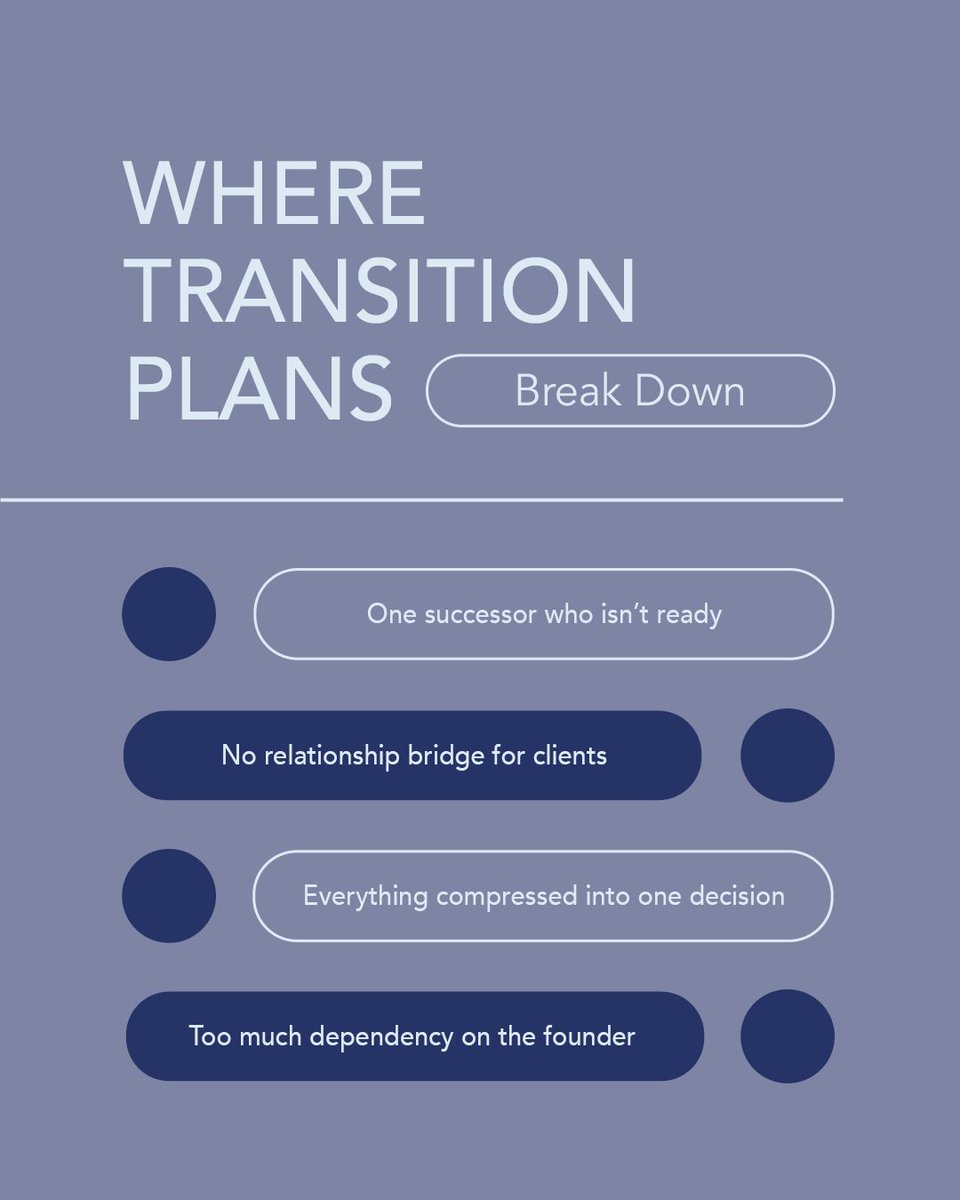
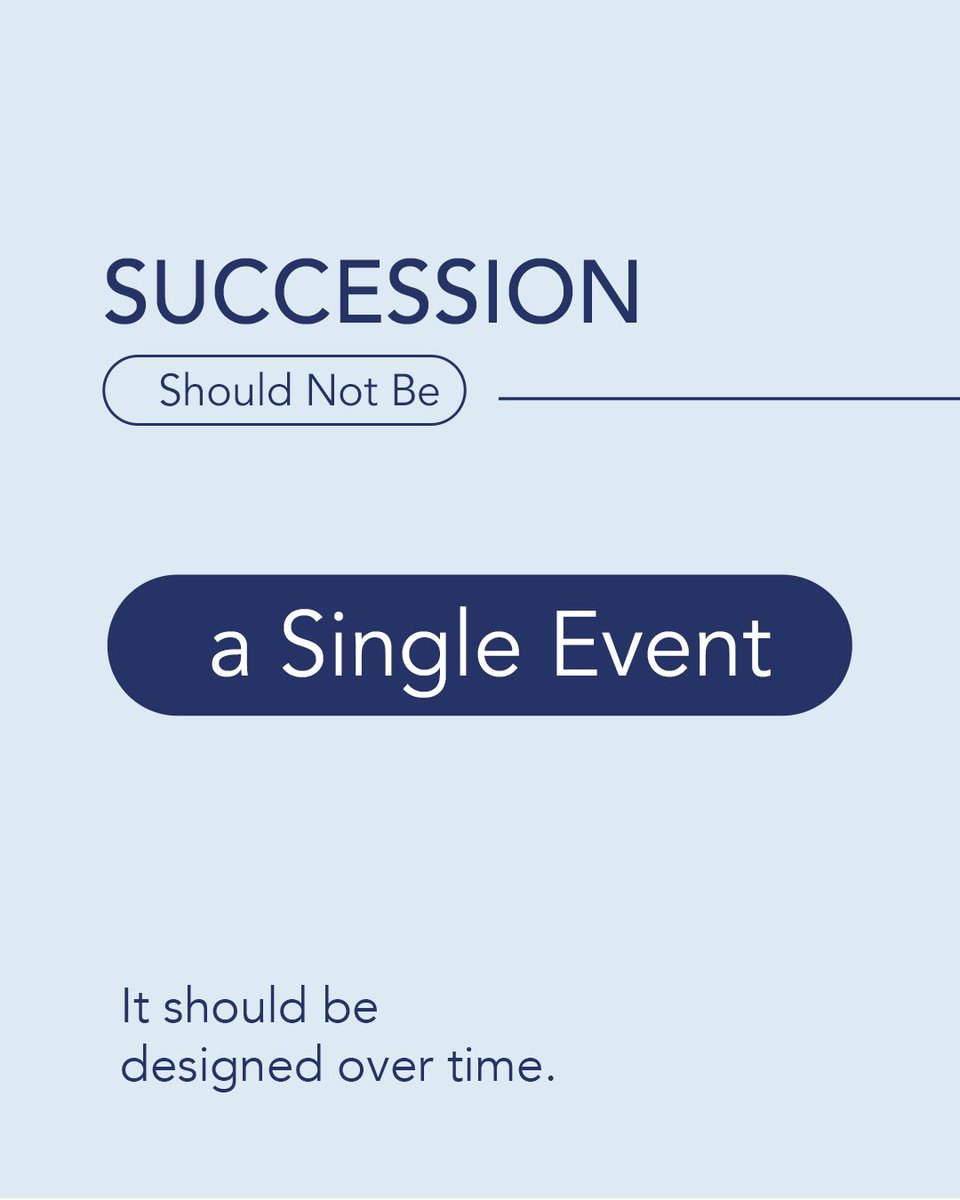
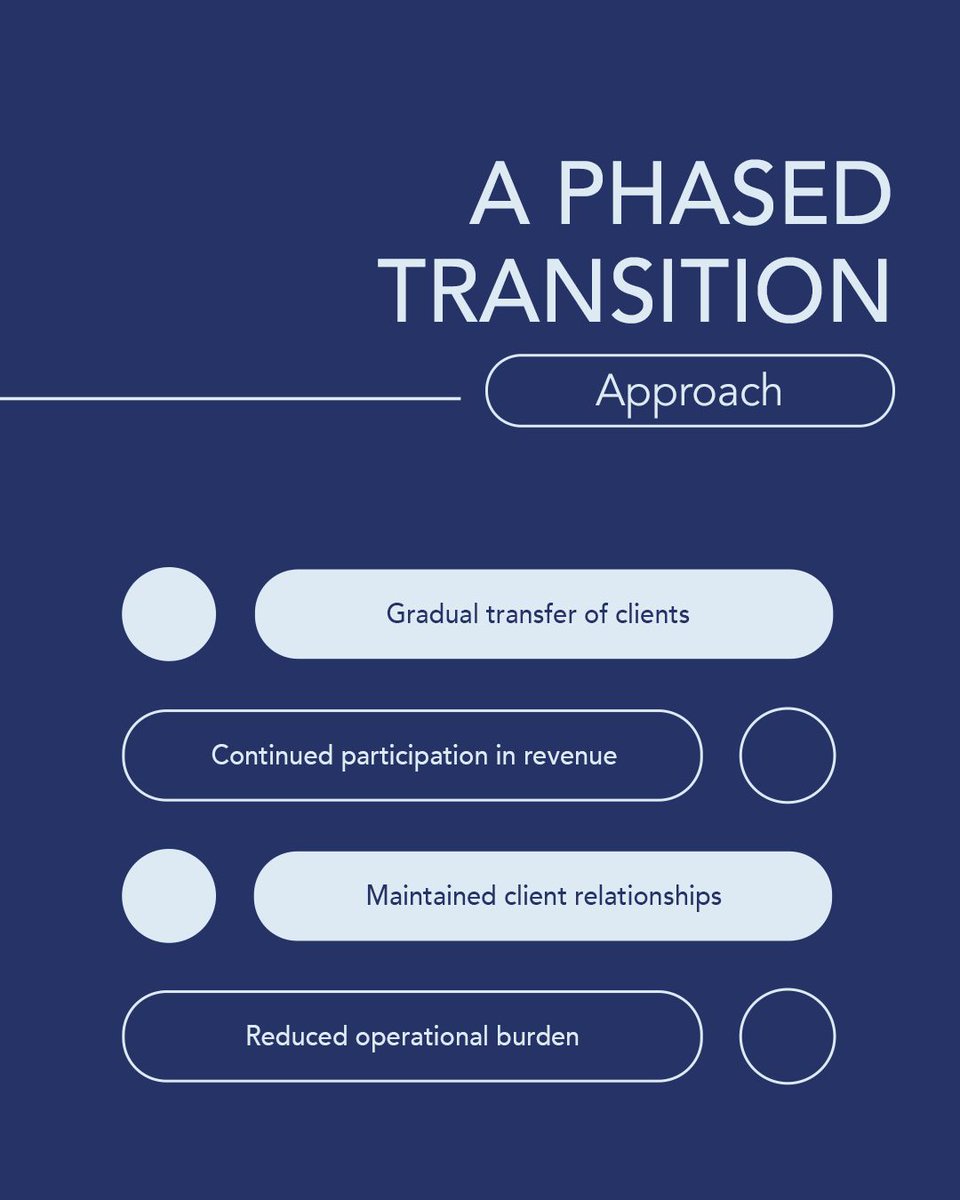
Most advisors do not lose enterprise value because of market conditions. They lose it because transition planning gets delayed until a decision becomes urgent. The reality is that succession is rarely a single event. It is a process that impacts: • client trust • recurring revenue • team stability • professional identity • long-term continuity The strongest transitions are designed gradually, intentionally, and with structure long before an exit is required. On May 28 at 10:30AM ET, I’ll be hosting a live advisor session alongside legal expert Ellen Bessner to discuss how advisors can approach succession planning without compromising the business, relationships, or reputation they’ve spent years building. Reserve your seat here: rubachwealth.com/live-session-m…
Elke Rubach tweet mediaElke Rubach tweet mediaElke Rubach tweet mediaElke Rubach tweet media
English
1
0
0
9
Elke Rubach
Elke Rubach@rubachwealth·
Have you tuned into the latest episode of Get Your House in Order? Get Your House in Order First Most people try to improve results externally before examining what is happening internally. But eventually, the internal state always shows up in the business, the relationships, and the decisions being made under pressure. In this conversation, James Milonas and I explore the connection between discipline, mindset, leadership, and long-term success. From work ethic and health to authentic connection and mental clarity, this episode is a reminder that strong foundations matter more than surface-level strategies. Because before you scale the business, lead the team, or navigate uncertainty well, there is a more important question: is your own house in order? Listen now. tr.ee/diEsYpIBCJ #Leadership #PersonalGrowth #GetYourHouseInOrder
English
0
0
0
11
Elke Rubach
Elke Rubach@rubachwealth·
More wealth creates more decisions. That part is obvious. But at the same time, wealth increases decision, fatigue, not freedom. What is less obvious is that without the right structure, it produces worse ones. Every advisor relationship, every account, every strategy was added to solve a specific problem. Individually, each made sense. Collectively, they have created something nobody can see in one place. And when you cannot see the whole, every decision becomes heavier than it should be. This is structural decision fatigue: not the kind that comes from a long day, but the kind that comes from re-entering a financial system that requires significant effort just to understand before you can act. What gets mistaken for prudence is often paralysis. What looks like patience is often avoidance. The irony is that the complexity was built with intention. Every layer was a solution. But solutions compound. And at a certain point, the architecture stops serving the family and starts consuming their attention. The families who make the best decisions at this level are not the ones with the most options. They are the ones with the clearest picture: a single coherent view of what they have, what it is doing, and what any given move actually costs. That clarity does not emerge on its own from accumulating good advisors. It has to be built deliberately. If your financial decisions feel heavier than they should, the problem is not your capacity. It is your system.
Elke Rubach tweet media
English
0
0
0
13
Elke Rubach
Elke Rubach@rubachwealth·
Most advisors don’t lose value in the market. They lose it in how they transition their practice. For many independent advisors serving high-net-worth families, succession is no longer a distant retirement conversation. It’s a strategic business decision that impacts client trust, enterprise value, team stability, and personal identity long before an exit ever happens. On May 28th at 10:30AM ET, I’ll be hosting a complimentary working session for advisors who want to thoughtfully evolve their practice without sacrificing the relationships and reputation they’ve spent decades building. Joining me will be Ellen Bessner, who will speak candidly about the legal, fiduciary, and compliance risks that emerge when succession is delayed, assumed, or left undocumented. We’ll explore: • why most succession plans quietly erode value • how to reduce founder dependency without disappearing • phased transition models that preserve recurring revenue • how to protect client continuity during change • the legal blind spots advisors often discover too late This is for advisors who care deeply about the people they serve and want to approach the next chapter with intention, not urgency. May 28, 2026 10:30AM ET Reserve your seat now. rubachwealth.com/live-session-m… #AdvisorSuccession #WealthManagement #HighNetWorth
Elke Rubach tweet media
English
0
0
0
7
Elke Rubach
Elke Rubach@rubachwealth·
Agency is often misunderstood as something dramatic or visible. In reality, it usually looks much quieter than that. It looks like making thoughtful decisions before pressure forces them. It looks like setting boundaries without needing to defend them. It looks like choosing long-term alignment over short-term validation. Most meaningful change is not built through intensity. It is built through consistency. The people who feel the most grounded are rarely reacting to every moment. They are making intentional decisions repeatedly over time, and allowing those decisions to compound. Confidence is not something people suddenly arrive at. It is something they build slowly through repeated acts of clarity and self-trust. #Leadership #IntentionalLiving #GetYourHouseInOrder
English
0
0
0
9
Elke Rubach
Elke Rubach@rubachwealth·
Most advisors do not lose value in the market. They lose it in how they transition their practice. For many independent advisors, succession is no longer a simple handoff, internal buyout, or eventual sale. The reality has become far more complex. Client trust, recurring revenue, operational dependency, legal exposure, and professional identity are all tied to how transition is handled and whether it is designed intentionally or delayed until pressure forces decisions. On May 28, I’ll be hosting a live working session for advisors who are rethinking what the next chapter of their practice could look like without compromising the relationships, income, and legacy they have spent decades building. Joining me will be Ellen Bessner, who will speak candidly about the legal and fiduciary risks that emerge when succession remains informal, undocumented, or avoided altogether. If you have built a meaningful high-net-worth practice and know the traditional succession models no longer feel aligned with the reality you face, this conversation will provide a different framework to think about what comes next. May 28, 2026 10:30AM ET Reserve your seat. rubachwealth.com/live-session-m… #FinancialAdvisors #SuccessionPlanning #WealthManagement
Elke Rubach tweet media
English
0
0
0
4
Elke Rubach
Elke Rubach@rubachwealth·
In most high net worth families, one person carries everything. Here is the hidden cost of being the “Financially Responsible One” in the family. Not by design but by default. The meetings, the advisor relationships, the tax conversations, the estate documents. One person stepped into all of it, and the load was never redistributed. From the outside, it looks functional. From the inside, it is a single point of failure wearing a very organised face. The cost is not financial. It is cognitive and structural. Decisions take longer because explaining them requires context nobody else holds. Conversations get avoided because the complexity is too difficult to translate without creating alarm. And there is a quiet, persistent awareness that if something is missed, nobody else will catch it. Meanwhile, everyone else operates on trust. Trust is not the same as understanding. And when trust replaces understanding in a complex financial system, the system is more fragile than it appears. The moment that fragility is exposed is always a moment nobody planned for: a sudden health event, a death, a crisis that requires someone other than the person who handles everything to step in. At that point, the system either transfers or it stalls. The families who stay whole through those moments are not the ones where one person was exceptionally organised. They are the ones where financial understanding was distributed intentionally. Mayber not equally, but enough so that no single person’s absence stops everything. You can keep carrying it alone. But the question worth asking is whether you need to.
Elke Rubach tweet media
English
0
2
2
69
Elke Rubach
Elke Rubach@rubachwealth·
Most plans don’t break because of bad decisions. They break because good decisions were made in isolation. Everything can look “handled” on the surface. Investments are in place. Insurance exists. Documents are signed. Advisors are involved. But when each piece is built separately, no one is responsible for how it all fits together. That’s where friction starts. Quietly. It shows up in slower decisions, missed opportunities, and a constant sense that something isn’t fully aligned. Coordination isn’t about doing more. It’s about making sure everything is working together. #WealthStrategy #FinancialClarity #GetYourHouseInOrder
English
0
0
0
4
Elke Rubach
Elke Rubach@rubachwealth·
More advisors does not mean more control. It often means the opposite. It might give an illusion of control and wealth management. Here is the structure that creates the illusion: a wealth manager at one firm, a Wills & Estate lawyer at another, an accountant who has never been in the same room as either, and an insurance relationship nobody has reviewed in years. Every individual is qualified. Every relationship was established with a purpose. But no one is accountable for how the pieces interact. Each advisor optimises within their own scope. No one optimises for the whole. And no one (including the family) can answer a straightforward question: what is our actual position, right now, in full? What looks like comprehensive coverage is diffused responsibility. This is how families with extraordinary resources make poor decisions. It's not because they lack information, but because the information they have is not integrated into anything coherent enough to act on. Control is not a function of how many professionals are working on your finances. It is a function of how clearly you can see what all of them are doing and whether it fits together. If you need multiple conversations to answer a basic question about your own financial position, you have activity. You do not have control.
Elke Rubach tweet media
English
0
0
0
11
Elke Rubach
Elke Rubach@rubachwealth·
New episode of Get Your House in Order Why Success Still Feels Off You can build a life that looks successful—and still feel like something isn’t quite right. In this conversation, Sarah Draper and I explore why high performers often reach a point where achievement no longer translates into clarity or fulfillment. What looks like success externally can quietly create misalignment internally. We talk about the hidden cost of staying in survival mode for too long, and why major transitions tend to surface questions that were easy to ignore along the way. Because success without self-awareness doesn’t resolve tension. It often amplifies it. If something feels off despite everything “working,” this episode may help you understand why—and what to do next. Listen now. #Leadership #PersonalGrowth #GetYourHouseInOrder
English
0
0
0
15
Elke Rubach
Elke Rubach@rubachwealth·
People often assume major decisions happen in formal settings, after enough research, with everyone calm and prepared. Real life rarely works that way. The choices that shape families are usually made in ordinary moments, when stress is visible, priorities collide, and someone finally says what has been sitting underneath the surface. That is where truth tends to appear. Any plan that ignores human reality will eventually be replaced by it. The strongest strategies are not built for ideal conditions. They are built for real people, real emotions, and real life. #FamilyLeadership #FinancialClarity #GetYourHouseInOrder
English
0
0
0
6
Elke Rubach
Elke Rubach@rubachwealth·
If your financial life were actually clear, the question of “enough” would have stopped following you by now. It hasn’t. And that is not a market problem. Let's talk about the psychology of "enough" for high net worth families. The At a certain level, the assets are there, the income is there, the structures exist. On paper, everything is in order. And yet there is a low, persistent hum the calm cannot suppress. It's a sense that something is not fully resolved. That feeling is not irrational but a diagnostic. “Enough” is not a number you reach. It is a conclusion you arrive at when you can see, with precision, what you have, how it is structured, and why it will hold. Without that view, the question never settles. It simply reshapes itself. For business owners and high performers, it runs deeper. Wealth at that level stops being purely financial and becomes evidence and proof that the risk was worth it, that the sacrifice was rational, that the decisions were right. When wealth carries that meaning, “enough” becomes unstable. Because the fear is not about money running out. It is about what that would mean. That is not a portfolio problem. That is a clarity problem. And it cannot be solved by adding another advisor or another layer to a system that already has too many. The families who reach genuine certainty are not the ones who accumulate the most. They are the ones who can see their full financial picture clearly and completely, without needing three conversations to explain it. If that view does not yet exist, the question will not stop. It will simply get quieter between reviews.
Elke Rubach tweet media
English
0
0
1
28
Elke Rubach
Elke Rubach@rubachwealth·
Most people think overwhelm means they need more time. Often, it means they need more truth. When life looks full but nothing feels settled, the issue is rarely the calendar. It is usually misalignment. Too many moving parts that no longer connect. Too many obligations that no longer reflect priorities. Too much motion without direction. Busy can be a distraction from what needs attention. Calm is often the result of things working together the way they should. Clarity is not loud or dramatic. It arrives quietly, when what you are doing finally matches what matters. #Clarity #IntentionalLiving #GetYourHouseInOrder
English
0
0
0
7
Elke Rubach
Elke Rubach@rubachwealth·
The plan isn’t wrong. The conditions it was built for are. Why most financial plans fail at the exact moment they're needed is because every financial plan is constructed in the same environment: a calm meeting, a rational version of you answering questions about risk, goals, and what the future should look like. That is not the version of you who executes the plan when something actually happens. When a health event arrives, a liquidity crisis hits, or a market move forces a fast decision and clarity narrow, time compresses, and the coordination the plan assumed breaks down. The advisor isn’t reachable. The family doesn’t know what to do first. The documents exist but nobody knows where. This is not a failure of intelligence. It is a design flaw. Most financial plans are built for optimal conditions. They assume behavioural consistency that disappears under pressure. They rely on decisions being made in the same state of mind in which they were designed. The plans that hold are structurally different. Not more sophisticated but simpler. Fewer moving parts at critical moments. Clearer decision paths when complexity would be paralysing. Less dependence on perfect execution from multiple people simultaneously. Because the question your plan needs to answer is not only: is this technically correct? It is: can the actual people in this family, under actual pressure, execute it without falling apart? If you have never tested your plan against that question, you do not yet know the answer.
Elke Rubach tweet media
English
0
0
0
8
Elke Rubach
Elke Rubach@rubachwealth·
New episode of Get Your House in Order The Patterns Running Your Life What if the decisions shaping your life aren’t as conscious as you think? In this conversation, Carla Royal and I explore the patterns that quietly influence how we show up in relationships, money, and major life choices. Patterns that don’t come from logic, but from experiences your body has stored over time. We talk about why people repeat the same cycles even when they “know better,” and what it actually takes to create change that lasts. Awareness is where it begins. Not just intellectually, but physically. If something in your life feels repetitive or misaligned, this episode may help you see what’s underneath it. Listen now. tr.ee/diEsYpIBCJ #PersonalGrowth #SelfAwareness #GetYourHouseInOrder
English
0
0
0
5
Elke Rubach
Elke Rubach@rubachwealth·
Cohabitation doesn’t just change where you live. It changes how you operate. Financial interdependence starts quietly. Expenses blend. Expectations form. Roles take shape without ever being discussed. What feels natural in the moment can become a source of tension later. Not because anything went wrong, but because nothing was ever clarified. Early clarity doesn’t take away from the relationship. It protects it. The strongest partnerships are not the ones that avoid these conversations. They are the ones that have them early. #RelationshipsAndMoney #FinancialClarity #GetYourHouseInOrder
English
0
0
0
8
Elke Rubach
Elke Rubach@rubachwealth·
Most family tension isn’t about money. It’s about what money represents. Control. Fairness. Security. Recognition. When those meanings stay unspoken, people don’t argue about numbers. They react to what those numbers feel like. And that’s where tension quietly builds. Clarity doesn’t require everyone to agree. It requires everyone to understand. The families that navigate this well aren’t the ones with identical views. They’re the ones willing to have the conversations before stress forces them to. #FamilyWealth #FinancialClarity #GetYourHouseInOrder
English
0
0
0
18
Elke Rubach
Elke Rubach@rubachwealth·
New episode of Get Your House in Order AI Won’t Fix Your Thinking What if AI is making you faster, but not better? In this conversation, Shashank Shekhar and I unpack the real role of AI in decision-making. Not as a replacement for thinking, but as a tool that can sharpen it, if used intentionally. We talk about where AI creates leverage, where it adds noise, and why the real risk isn’t the technology itself, but how easily it can encourage surface-level thinking if you’re not careful. AI can accelerate execution. It cannot replace judgment. If you’re feeling overwhelmed by tools, information, or decisions, this episode will help you refocus on what actually drives progress. Listen now. tr.ee/diEsYpIBCJ #Leadership #AI #GetYourHouseInOrder
English
0
0
0
13
Elke Rubach
Elke Rubach@rubachwealth·
Independence is often celebrated as the goal. But taken too far, it becomes isolation. In finances, going it alone can feel empowering, but it often means decisions are made without full context, without coordination, and without the perspective needed to see risk clearly. True strength isn’t just independence. It’s alignment. When there is shared understanding, decisions become stronger, risks are reduced, and outcomes improve. You can be financially independent and still be exposed. Coordination is what turns independence into resilience. #FinancialClarity #WealthStrategy #GetYourHouseInOrder
English
0
0
0
11