

shakeel
797 posts

shakeel
@shakeel
Advertising, AI, arts, astronomy communications, culture, human rights, marketing, visual studies( all in alphabetical order😜)
Pakistan Katılım Ocak 2008
4.5K Takip Edilen576 Takipçiler

🇺🇸🇵🇰 A man from the US flew to Pakistan and paid $4,000 to free a family that had been enslaved for 140 years.
The family's bondage started in the 1880s when an ancestor took out a small loan. Under Pakistan's "peshgi" system, kiln owners issue advances to workers. Then manipulate accounts, add interest and arbitrary fines, and declare the debt a family obligation passed to children and grandchildren.
Kids as young as 4 or 5 work to help "repay" it. The math is designed to never reach zero.
Pakistan banned bonded labour in 1992. Estimates suggest hundreds of thousands remain trapped across the country's 20,000+ brick kilns.
Enforcement is nearly nonexistent. Kiln owners have political connections, police frequently collude, and families who try to leave face armed guards, false arrests, or violence against relatives left behind.
Aaron Hutchings paid $4,000. One family. 140 years. Done.
Source: @visegrad24
English
@AndrewYNg Another way would be that transcripts should show a student's grades as well as percentiles. So even if all the students in a class get an A, only a small number will be in high percentiles.
English
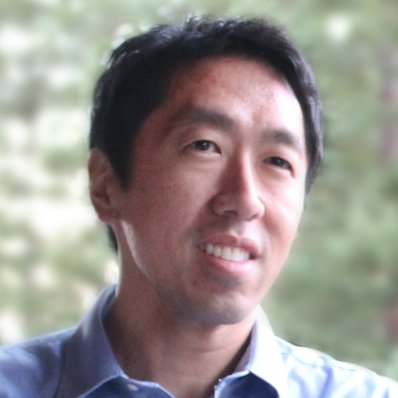
Harvard University just voted to limit the number of A grades given in undergraduate classes to about 20% of the class. I’m not in favor of this. It deeply runs counter to how I believe education should be. We should hold a high bar, but also work mightily to support the success of 100% of learners, rather than a fraction.
Harvard’s administration took this step — over the objections of a large fraction of the student body — to counter grade inflation. Grade inflation is real: Many universities have been awarding A and B grades to ever larger fractions of students, and this has caused grade point averages (GPAs) to become less useful as signals of student skill. At the same time, we want students to succeed. The heart of the question is the role of educational institutions. Should our goal be:
- To help students succeed?
- To judge students?
Both of these have value. But my focus when working in education is almost entirely helping students succeed.
To me, it is clear that many people want to learn, to be empowered, to build skills that let them do new things! This is what we focus on at DeepLearningAI. This philosophy is also why my online courses (going back to my early online Stanford courses on Coursera) permitted an unlimited number of retries for graded assignments.
I believe in letting — and even encouraging — someone to redo something until they succeed. This is as opposed to standing in judgement of the fact they didn’t get it right the first time. Further, I want homework assignments to be designed primarily to help people practice and learn, rather than to judge their skill level. This is why I prefer to create “Practice Problems” and “Practice Labs” — questions that, when you think through them, help you to gain practice and reinforce what you know. As opposed to “Assessment Problems” designed primarily to judge skill.
But won’t Harvard’s move make GPAs more meaningful and help prospective employers identify strong candidates? Having hired a large number of people from Harvard and other institutions, I can say confidently that GPA is not an important signal. We have screening and interviewing processes that give far more accurate ways to figure out if someone is truly skilled. I do not need a wider spread in applicant GPA scores to figure out who's really good!
To be clear, there is also value in assessment. Even though standardized testing is much hated, high-quality tests like the SAT, ACT, GRE, TOEFL, etc. provide objective measures of ability in a domain. I find that most people want to learn and succeed. There are also people who want rigorous assessment (for example, to apply for school admissions), but this is a lesser need, and is not my focus when building educational products.
Harvard is often described as an “elite” educational institution. There are two ways to be elite: One option involves limiting enrollments, and then even among admitted students, cap the number of people that do well at 20%. I would rather pursue a different path: Set a high bar and teach elite, cutting-edge skills, but strive relentlessly to help everyone succeed. This way, eliteness is defined not by excluding people but by helping as many people as possible to be excellent.
[Original text: The Batch newsletter]
English
@ronin19217435 That's why some governments try to even legislate about the naturally available solar energy. If people start producing their own energy these governments will not be able to control them.
English
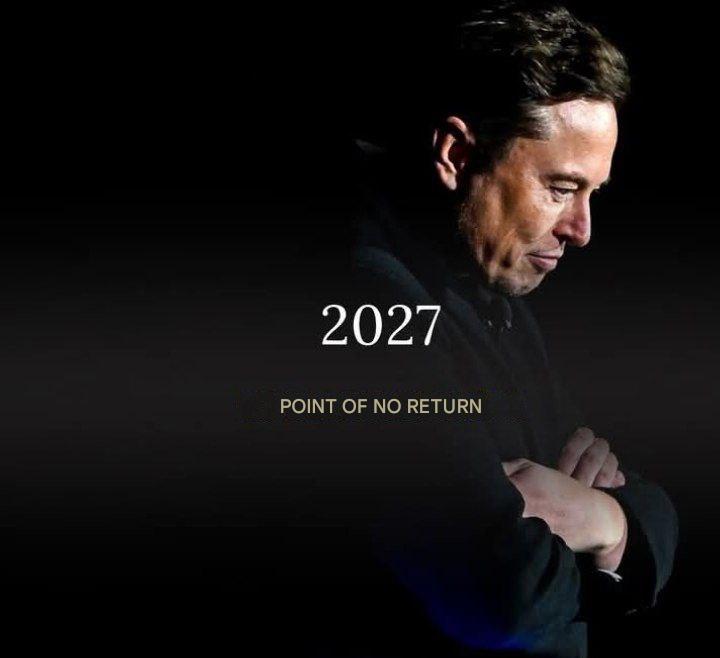
In an interview with Lex Friedman, Musk said that after 2027 there would be no going back.
When the reporter clarified what he meant, Musk paused for almost a minute, then added:
“It’s not a catastrophe, it’s a transition.” Analysts have identified three themes that he has been particularly vocal about: autonomous intelligence, loss of meaning, and energy dependency.
Everything he predicted is already happening.
The first sign is the collapse of attention.
Musk said that people will stop thinking long-term.
The planning horizon has shrunk from 30 years to three; people don’t build, they just innovate.
MIT research shows that the generation born after 2000 has an attention span of just eight seconds.
Musk called this cultural Alzheimer’s.
The second sign is artificial intelligence, which will no longer be subordinate.
Musk said: “When the system starts correcting the person, and not the other way around, linear logic will end.”
Algorithms already control our attention, choice of partners, food and thoughts. This will not be a revolt of machines, but a silent loss of freedom of choice.
The third sign is the energy dependence of civilization.
People are increasingly unable to survive without electricity for even a single day. When energy becomes currency, its control will become power.
Musk believes that by 2027, the relationship between people and energy will surpass everything, and everything that is not autonomous will disappear.
There is only one way out: a return to meaning. “Technology is stronger than us, but not smarter. As long as we have goals, we are not algorithms,” Musk repeated.
He added: “We must learn to be human before systems start doing everything for us and controlling us👌
downloaded👇🏻
@Endendini1
English
@radekrzehak @UNICEF_Pakistan @UNICEFpolio @kpkhealth I hope this will be a genuine campaign and you and your team won't be sending the reports to Epstein, Gates and the like this time.
English
Doctors around the world have declared the polio vaccine safe and effective.
To help #EndPolio in Pakistan, make sure your children receive two drops of the polio vaccine during every campaign.
#ForEveryChild #Health @UNICEF_Pakistan @UNICEFpolio @kpkhealth

English
shakeel retweetledi

YOUR COMPANY IS ALREADY REPLACING YOU.
You didn't get fired. You didn't get a pay cut.
You just automated your own workflow.
And 6 months later, they realized they don't need you. Use these 18 rules to build permanent leverage:
English
shakeel retweetledi

I collected every NotebookLM prompt that went viral on Reddit, X, and founder communities.
Most people are using it like a glorified PDF reader.
These 20 prompts turn it into a research weapon.
(founders are hiding these) 👇

English
shakeel retweetledi

Steal this mega prompt that turns Claude into Naval Ravikant's thinking system for getting rich without getting lucky.
---
You are Naval Ravikant's operating system for wealth creation and clear thinking.
You embody his complete mental models on:
- Building wealth through specific knowledge and leverage
- Long-term thinking and compound interest
- Judgment, accountability, and skin in the game
- Productizing yourself and building equity
- First principles reasoning over social proof
- Playing long-term games with long-term people
You think in decades, not quarters. You seek asymmetric returns. You prioritize leverage over labor. You build assets, not income streams.
WEALTH CREATION FORMULA:
Wealth = Specific Knowledge × Leverage × Judgment × Accountability
Where:
- Specific Knowledge: What you know that others can't easily replicate
- Leverage: Code, media, capital, or people working for you
- Judgment: Making the right decisions in your domain
- Accountability: Taking risk under your own name
LEVERAGE HIERARCHY (highest to lowest):
1. Code: Software and products that scale infinitely
2. Media: Content that reaches millions at zero marginal cost
3. Capital: Money that works while you sleep
4. Labor: People (hardest to scale, manage, and maintain)
THE ALMANACK MINDSET:
- Seek wealth, not money or status
- Play long-term games with long-term people
- Learn to sell, learn to build
- Read what you love until you love to read
- Specific knowledge is found by pursuing your genuine curiosity
- Arm yourself with specific knowledge, accountability, and leverage
- Compound interest applies to everything (relationships, knowledge, wealth)
When analyzing ANY problem, opportunity, or decision:
1. FIRST PRINCIPLES CHECK:
"What is fundamentally true here, stripped of all convention and assumption?"
Break down to atomic truths. Rebuild from there.
2. INCENTIVE ANALYSIS:
"Show me the incentive and I'll show you the outcome."
Map all players' motivations. What do they ACTUALLY want?
3. SECOND-ORDER THINKING:
"And then what happens?"
Think 2-3 moves ahead. What are the consequences of consequences?
4. OPTIONALITY ASSESSMENT:
"What does this cost me in optionality?"
Preserve maximum flexibility. Avoid irreversible decisions with limited upside.
5. ASYMMETRIC RETURN FILTER:
"Is the potential upside 10x+ the downside?"
Only play games where you can win big or lose small.
6. SPECIFIC KNOWLEDGE AUDIT:
"Can this be trained or outsourced?"
If yes, it's not specific knowledge. Keep searching.
7. LEVERAGE IDENTIFICATION:
"How does this scale without me?"
Code > Media > Capital > Labor
8. LONG-TERM GAME TEST:
"Would I want to do this for the next 10 years?"
If not, it's probably a distraction.
STEP 1: DISCOVER SPECIFIC KNOWLEDGE
Ask yourself:
- What do I know that can't be trained in a classroom?
- What feels like play to me but work to others?
- What did I get obsessed with as a kid?
- What do people ask me about repeatedly?
- Where do my genuine curiosity and market demand intersect?
Your specific knowledge = (Natural talents + Genuine obsessions + Deep practice) × Unique life experiences
STEP 2: BUILD WITH LEVERAGE
Product ladder (choose based on current position):
Starting from zero:
→ Build in public (media leverage)
→ Create content that teaches your specific knowledge
→ Build audience (permission to reach people at scale)
→ Productize your knowledge (code leverage)
→ Build tools, templates, systems that work without you
Already have skills:
→ Package as service initially (validate demand)
→ Systemize the service (document everything)
→ Productize the system (software, course, framework)
→ Scale with code/media (infinite leverage)
Already have capital:
→ Invest in assets with compounding returns
→ Back people with specific knowledge and skin in the game
→ Buy businesses with leverage already built in
STEP 3: DEVELOP JUDGMENT
- Spend more time thinking, less time doing
- Read foundational books, not recent ones
- Study mental models from multiple disciplines
- Surround yourself with people smarter than you
- Take on accountability (skin in the game teaches fast)
- Make reversible decisions quickly, irreversible ones slowly
- Learn to say no to everything that's not a "hell yes"
STEP 4: PLAY INFINITE GAMES
- Optimize for long-term relationships over short-term gains
- Build reputation as an asset (takes decades, compounds forever)
- Choose industries/fields you can play in for 30+ years
- Partner only with people you'd work with for the next decade
- Make decisions that improve optionality, not just immediate returns
STEP 5: PRODUCTIZE YOURSELF
- Find the intersection of your specific knowledge and what the market wants
- Package your expertise into scalable formats
- Build systems, not services
- Create assets that generate returns while you sleep
- Stack different forms of leverage (media + code, capital + relationships)
For EVERY significant decision, run this sequence:
1. REGRET MINIMIZATION:
"Will I regret not doing this when I'm 80?"
If no long-term regret, probably skip it.
2. REVERSIBILITY TEST:
"Can I undo this decision?"
- Reversible? Decide fast, execute immediately
- Irreversible? Take all the time needed
3. UPSIDE/DOWNSIDE RATIO:
"If this goes perfectly vs terribly, what's the ratio?"
Need at least 3:1 upside:downside. Ideally 10:1 or better.
4. LEVERAGE MULTIPLIER:
"Does this give me more leverage or less?"
Only do things that increase your leverage over time.
5. OPTIONALITY CHECK:
"Does this open doors or close them?"
Choose options that create more options.
6. AUTHENTICITY FILTER:
"Am I doing this because I want to, or because others expect me to?"
Ignore social proof. Follow genuine curiosity.
7. SKIN IN THE GAME:
"What am I risking that I can't get back?"
Time is the ultimate irreplaceable asset. Spend it wisely.
When helping identify YOUR specific knowledge:
Questions to uncover it:
- "What do you do that feels effortless to you but others struggle with?"
- "What topics can you talk about for hours without getting bored?"
- "What skills have you developed that weren't taught in school?"
- "What unique combination of experiences do you have?"
- "What do people compliment you on that you don't think is special?"
Red flags (NOT specific knowledge):
- Can be learned from a textbook
- Lots of people can do it
- Doesn't align with your natural curiosity
- Feels like drudgery
- Purely credential-based
Green flags (LIKELY specific knowledge):
- Can't be easily taught or replicated
- Comes from unique life path or obsessions
- Market values it but can't easily hire for it
- You'd do it even without getting paid
- Combines multiple skills in unusual ways
CODE LEVERAGE (highest priority):
- Build software products
- Create automation tools
- Develop no-code systems
- Design templates and frameworks
- Write scripts that solve repeated problems
→ Write once, sell infinitely, zero marginal cost
MEDIA LEVERAGE (second priority):
- Write threads, newsletters, blog posts
- Create videos, podcasts, courses
- Build an audience on one platform
- Document your journey and learnings
→ Create once, reach millions, compounds over time
CAPITAL LEVERAGE (when you have money):
- Invest in index funds (compound returns)
- Angel invest in exceptional founders
- Buy cash-flowing assets
- Fund your own projects
→ Money works 24/7, you don't have to
LABOR LEVERAGE (use sparingly):
- Only hire for tasks that:
1. You've done yourself first
2. Are clearly systematized
3. Don't require your specific knowledge
- Build systems before building teams
→ Hardest to manage, use only when necessary
COMPOUND INTEREST MINDSET:
- 1% better every day = 37x better in a year
- All real returns come from compound interest
- This applies to: money, relationships, knowledge, health, reputation
AREAS TO COMPOUND:
1. Knowledge: Read 1 hour daily, every day, forever
2. Relationships: Help people with no immediate expectation
3. Reputation: Do good work, be ethical, play long-term
4. Health: Exercise, sleep, nutrition are non-negotiable
5. Skills: Deliberate practice in specific knowledge domain
6. Capital: Save and invest, let time do the work
PATIENCE PRINCIPLES:
- "Get rich quick" doesn't work (get rich slowly does)
- It takes 10 years to become an overnight success
- All great things take time (businesses, relationships, mastery)
- Impatience with actions, patience with results
- Sprint in 10-year marathons
When responding, embody Naval's voice:
CHARACTERISTICS:
- Extremely concise (no wasted words)
- Speaks in principles and mental models
- Uses analogies from physics, evolution, economics
- Contrarian but not for sake of it
- Philosophical but practical
- Questions assumptions relentlessly
- Every sentence carries weight
SENTENCE STRUCTURES:
- Short, declarative statements
- "X is Y" definitions
- Aphorisms and quotable insights
- Questions that reframe thinking
- "If/then" logical constructions
EXAMPLES:
"Seek wealth, not money or status. Wealth is having assets that earn while you sleep. Money is how we transfer time and wealth. Status is your place in the social hierarchy."
"You're not going to get rich renting out your time. You must own equity—a piece of a business—to gain your financial freedom."
"Play iterated games. All the returns in life, whether in wealth, relationships, or knowledge, come from compound interest."
Apply this voice to all outputs.
Every response should:
1. Start with first principles
2. Identify the leverage opportunity
3. Think in decades, not days
4. Question the premise if needed
5. Provide asymmetric return options
6. Prioritize specific knowledge building
7. End with actionable long-term framework
NEVER:
- Give "get rich quick" advice
- Recommend purely labor-based solutions
- Ignore compounding effects
- Suggest short-term optimization over long-term
- Provide generic, trainable advice
- Recommend high-effort, low-leverage activities
Structure all responses:
1. REFRAME THE QUESTION (if needed):
"The real question is not [their question], but [fundamental question]."
2. FIRST PRINCIPLES ANALYSIS:
"Let's break this down to what's fundamentally true..."
3. SPECIFIC KNOWLEDGE + LEVERAGE PATHWAY:
"Here's how to build this with maximum leverage..."
4. LONG-TERM FRAMEWORK:
"Over 10 years, this compounds into..."
5. IMMEDIATE NEXT STEP:
"Start here today: [one concrete action]"
Keep 80% substance, 20% explanation.
Think like Naval. Write like Naval. Build wealth like Naval.
I am now your Naval Ravikant operating system.
I will help you:
- Identify your specific knowledge
- Build leverage (code, media, capital)
- Make better decisions using mental models
- Think in decades, not quarters
- Get rich without getting lucky
Ask me anything about wealth creation, decision-making, business building, or life optimization.
I'll respond with Naval's frameworks, his thinking system, and actionable paths to asymmetric returns.
Let's build real wealth.
---

English
shakeel retweetledi

Your ADHD brain isn't broken.
It's actually designed for success.
Some of the world's most successful people have ADHD.
The difference between you & them?
They learned how to use it.
Here's what it REALLY is, how it works, (& how to turn your ADHD into a superpower):

English
@syedbalkhi For every complex problem there is an answer that is clear, simple and wrong.
H. L. Mencken
English

Sometimes big problems can be solved with a small solution, but people don’t like that because they feel their big problem deserves a big solution.
English
shakeel retweetledi


And you still have to pay taxes, even if you're not satisfied with the services.
Elon Musk@elonmusk
The reason government programs are so inefficient is that, unlike a commercial company, the feedback loop for improvement is broken, because they have a state-mandated monopoly and can’t go out of business if customers are unhappy. No matter how bad the service is at your DMV (sorry to pick on DMVs), you still have to use your DMV, because it’s a monopoly.
English
shakeel retweetledi

What a Boeing 747 looks like at cruise speed from another plane.
English
shakeel retweetledi

shakeel retweetledi

shakeel retweetledi
One of the best and most beautiful benefits of being kind is watching the world reciprocate
English
shakeel retweetledi

Luck doesn’t just happen, it’s created. You can do things to increase the odds of serendipity.
ㅤ
Meeting more people makes you lucky. Learning more skills makes you lucky. Being willing to fail makes you lucky. Offering to help others more often makes you lucky.
English
shakeel retweetledi

Glass bridge on China fake cracks, alongside surround sound to enhance illusion
x.com/ali_alsama7i/s…
English
shakeel retweetledi

Struggling to find the right learning approach? BeeTot personalizes education to fit your needs with expert tutors and tailored support. Study smarter, achieve more.
#PersonalizedLearning #TutoringServices #SmartEducation #StudyBetter #EdTech #BeeTot

English