

harsh
8 posts


there's a quote from Steven Strogatz that i love where he says that mathematics is a millennia-spanning conversation between minds, going all the way back to Pythagoras.
it's beautiful and somewhat jarring to think the next advancements might be handed to us, like revelation, by machines of our own making. what a time to be alive.
MTS@MTSlive
We asked @ElliotGlazer why OpenAI’s model could solve a famous math conjecture that humans hadn’t resolved for decades. “It’s hard to put in the willpower to furiously tackle a problem if everyone doesn’t even believe you’re going for the right answer.” “Before AI is truly and utterly superhuman in every area of mathematics, if it can catch up to top experts, we’re gonna get more success stories like this.” “Things that could have, would have, should have been done by humans. But there’s only so many mathematicians.”
English
harsh retweetledi

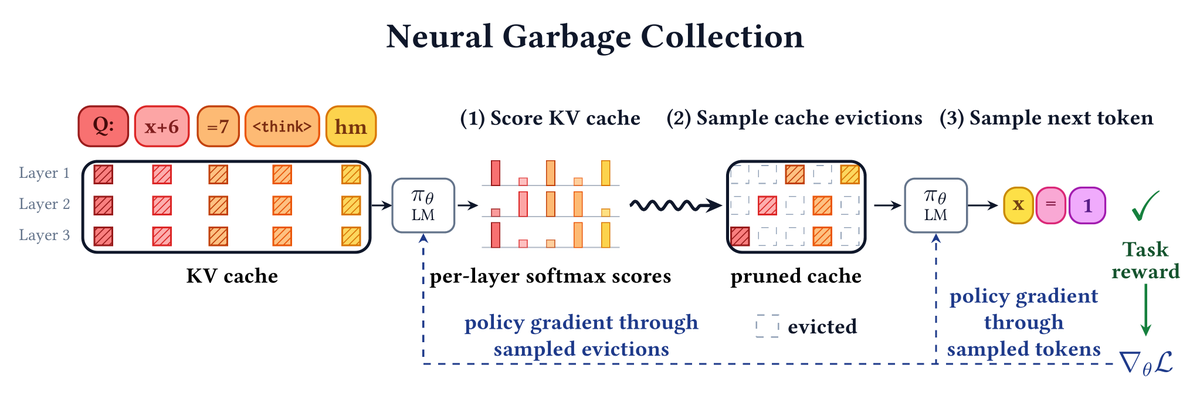
Can a language model learn, end-to-end, what to keep in its own KV cache and what to throw away? Can it learn to forget while it learns to reason?
Deep learning's central lesson: capability emerges from end-to-end optimization, not heuristics/strong inductive biases. But for efficiency, we rely heavily on hand-designed approaches.
🗑️ Introducing Neural Garbage Collection (NGC): we train a language model to jointly reason and manage its own KV cache, using reinforcement learning with outcome-based task reward alone. No SFT, no proxy objectives, no summarization in natural language.
New paper with @jubayer_hamid, Emily Fox, and @noahdgoodman!
English
@JonSaadFalcon @Avanika15 @HazyResearch @Azaliamirh So sick!!! Super cool work from the best research team ever!!!
English
harsh retweetledi

Personal AI should run on your personal devices. So, we built OpenJarvis: a personal AI that lives, learns, and works on-device.
Try it today and top the OpenJarvis Leaderboard for a chance to win a Mac Mini!
Collab w/ @Avanika15, John Hennessy, @HazyResearch, and @Azaliamirh. Details in thread.

English
Data centers dominate AI, but they're hitting physical limits. What if the future of AI isn't just bigger data centers, but local intelligence in our hands?
The viability of local AI depends on intelligence efficiency. To measure this, we propose intelligence per watt (IPW): intelligence delivered (capabilities) per unit of power consumed (efficiency).
Today’s Local LMs already handle 88.7% of single-turn chat and reasoning queries, with local IPW improving 5.3× in 2 years—driven by better models (3.2×) and better accelerators (1.7×).
As local IPW improves, a meaningful fraction of workloads can shift from centralized infrastructure to local compute, with IPW serving as the critical metric for tracking this transition.
(1/N)

English
English

compute efficiency defined the transition from mainframes to pcs
intelligence efficiency (intelligence per watt) will define the transition from cloud ai to local ai
excited to release new work studying local ai efficiency with the 🐐's @jonsaadfalcon and @hazyresearch
we find that local lms can now handle ~88% of single-turn chat + reasoning queries and they're getting 5.3x more intelligent efficient every 2 years
deets below 👇
Jon Saad-Falcon@JonSaadFalcon
Data centers dominate AI, but they're hitting physical limits. What if the future of AI isn't just bigger data centers, but local intelligence in our hands? The viability of local AI depends on intelligence efficiency. To measure this, we propose intelligence per watt (IPW): intelligence delivered (capabilities) per unit of power consumed (efficiency). Today’s Local LMs already handle 88.7% of single-turn chat and reasoning queries, with local IPW improving 5.3× in 2 years—driven by better models (3.2×) and better accelerators (1.7×). As local IPW improves, a meaningful fraction of workloads can shift from centralized infrastructure to local compute, with IPW serving as the critical metric for tracking this transition. (1/N)
English
English

a year in stanford through hackathons…
almost done with freshman year and the best things I’ve gotten out of college have come from building cool stuff and meeting cool people:
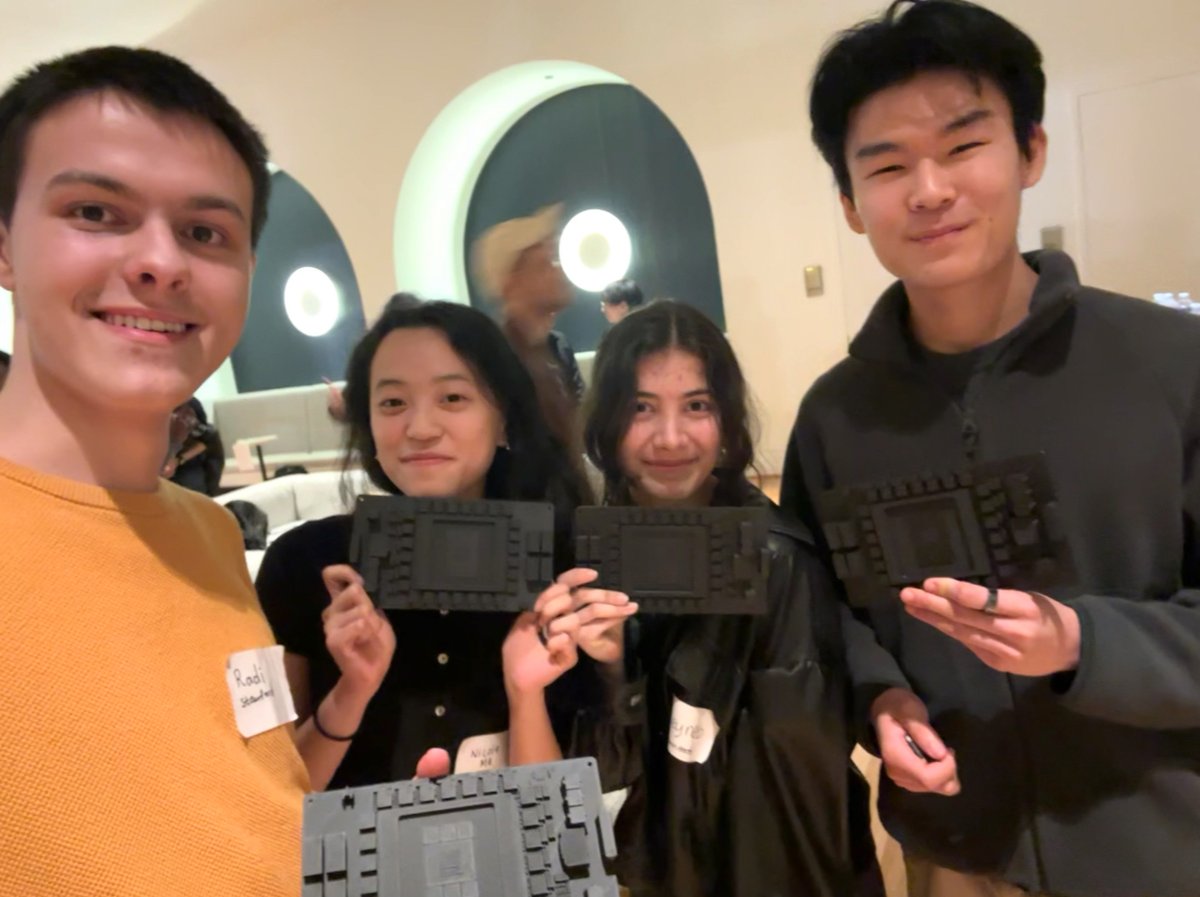
1st Place @ the @mercor_ai x @cognition_labs x @Etched inference-time compute hackathon — LLaDA-R1: towards reasoning + efficiency with text diffusion LLMs, with @nicolesplaining @JoeLi5050 @radi_cho.
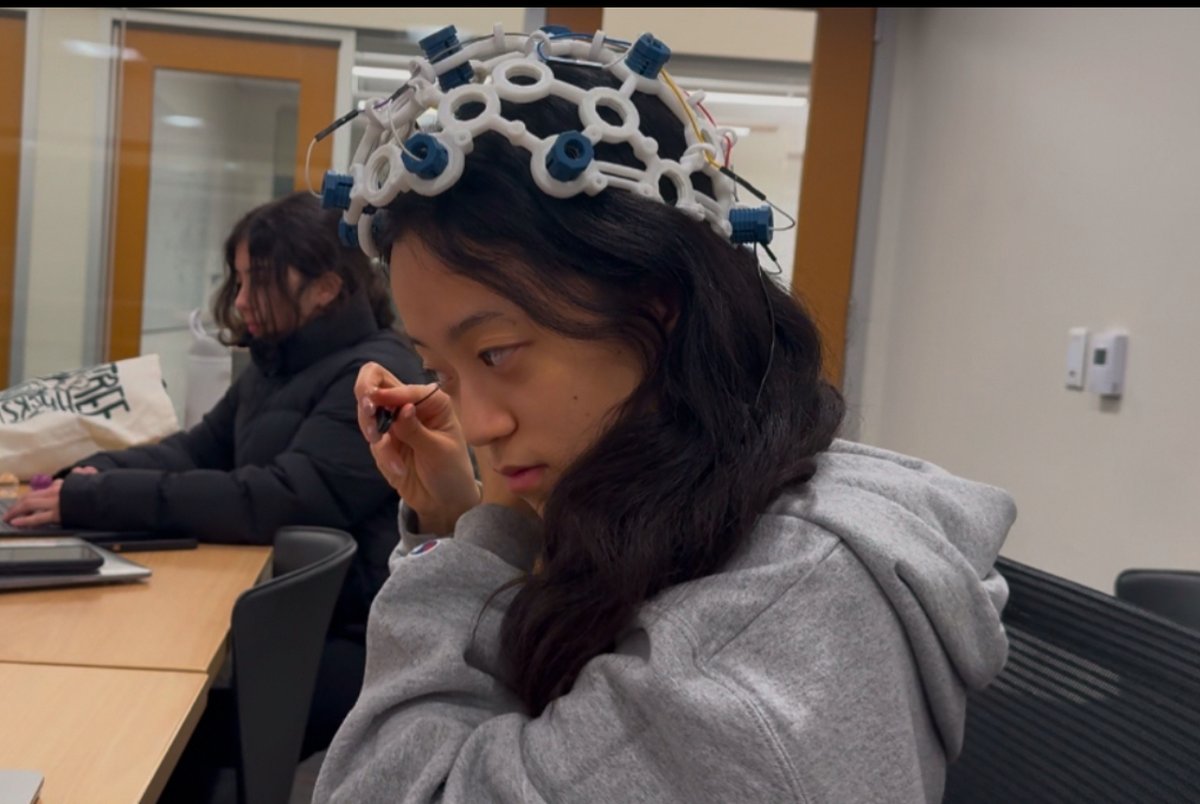
1st Place @scrapybara Prize @ @hackwithtrees — NeuroPilot: mind-controlled computer use system with BCI x Agentic AI, with @nicolesplaining @singhh5050.
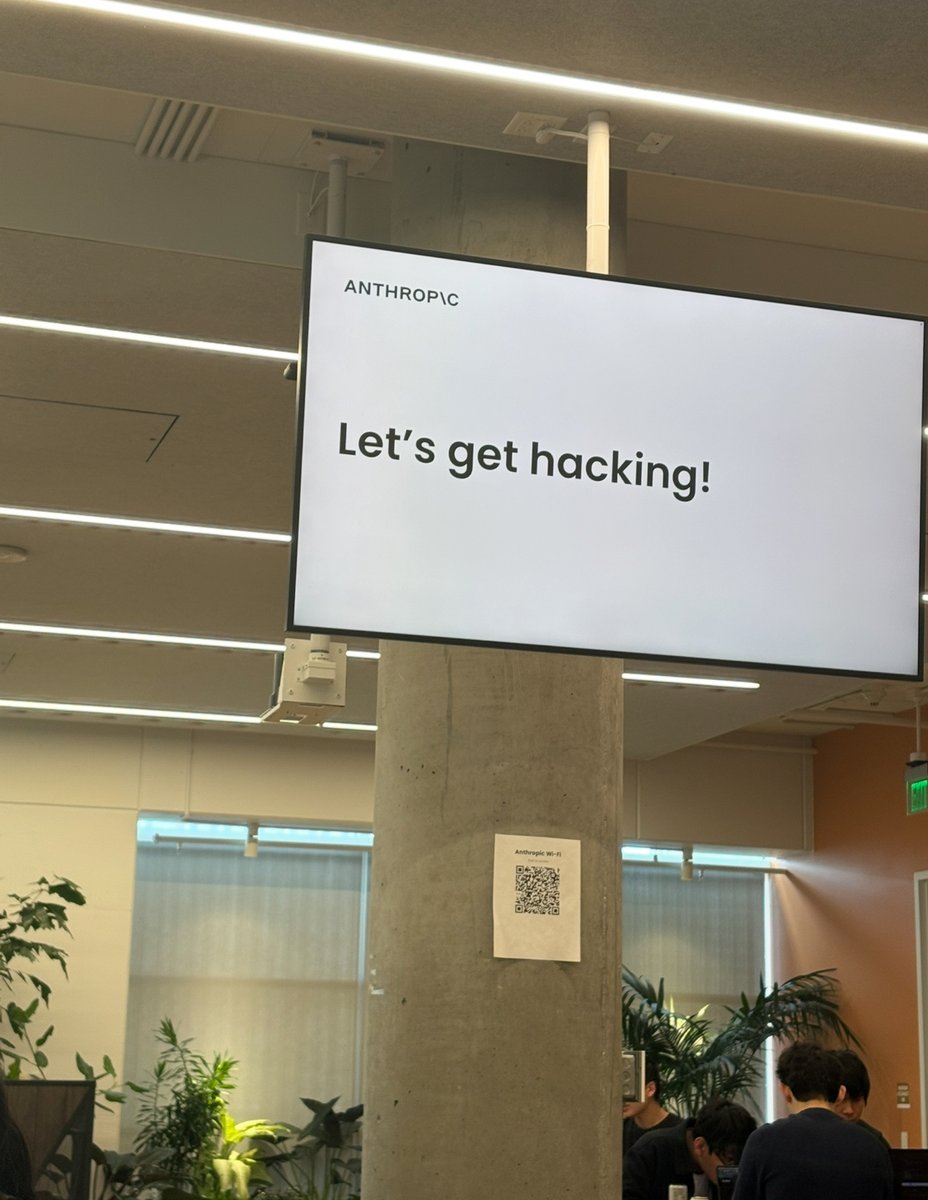
1st Place / most technical @ the @pearvc x @AnthropicAI hackathon — SHIELD: RL + tool use for system vulnerability identification and resolution, with @nicolesplaining @diegocaples.
honorable mentions 2nd Place @ Stanford @ASESstanford Bootcamp with @nicolesplaining @rbccawang Rhea Rastogi; @AnthropicAI Alignment Research Sprint with Nancy Xu.

English