Tuomas Kärnä

80 posts

Tuomas Kärnä banner
Tuomas Kärnä

Tuomas Kärnä

@teekarna

High performance computing, computational fluid dynamics, finite element method, and machine learning.

Helsinki, Finland Katılım Kasım 2018
81 Takip Edilen81 Takipçiler
Tuomas Kärnä
Tuomas Kärnä@teekarna·
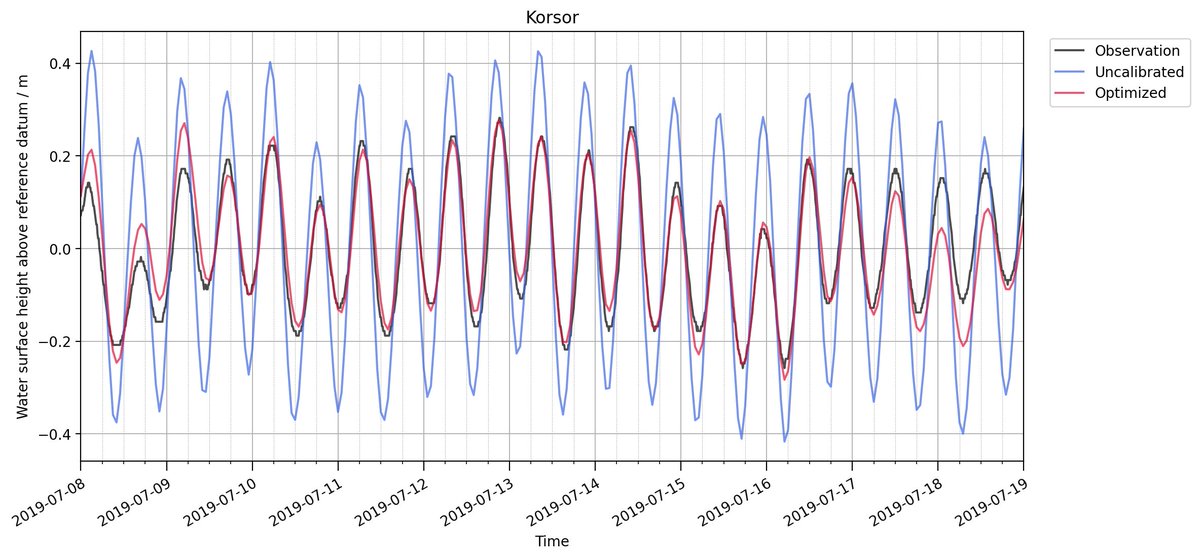
Our paper presents an automated procedure to optimize ocean model parameters. The procedure is very similar to training in machine learning — the main difference is that the model is a physics-based PDE solver. Inverse model is automatically generated. doi.org/10.1029/2022MS…
Tuomas Kärnä tweet media
English
0
1
4
81
Tuomas Kärnä
Tuomas Kärnä@teekarna·
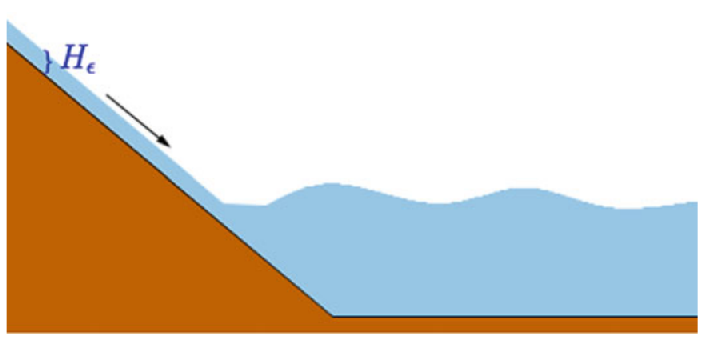
📕The Mathematics of Marine Modelling book is out. With Sigrun Ortleb and Jonathan Lambrechts we wrote a chapter about wetting-drying methods in FV/DG-FE shallow water models. 🔗doi.org/10.1007/978-3-…
Tuomas Kärnä tweet media
English
0
0
9
516
Tuomas Kärnä
Tuomas Kärnä@teekarna·
@oceanographer @AWI_Media Very nice! Making a nice animation like this only takes a few hours. But taking the FESOM model to this level has taken more than a decade of development by a very talented team. Congratulations to you all! 👏👏👏
English
1
0
1
0
Tuomas Kärnä
Tuomas Kärnä@teekarna·
Can ocean model parameters be inferred from observational data? We used Thetis adoint model to optimize bottom friction coefficient in a Baltic Sea simulation based on tide gauge sea surface height observations. Preprint: arxiv.org/abs/2205.01343
GIF
English
0
2
11
0
Tuomas Kärnä
Tuomas Kärnä@teekarna·
As observational data is rapidly increasing, we need more sophisticated tools to combine data and physical modelling. To this end inverse modeling is an indispensable tool. There are also interesting similarities with machine learning methods.
English
0
0
0
0
Tuomas Kärnä
Tuomas Kärnä@teekarna·
We use the adjoint model to optimize bottom friction coefficient in a Thetis (thetisproject.org) Baltic/North Sea simulation. The method is robust and delivers excellent results, difficult to achieve by manual tuning. We also discuss regularization to avoid overfitting.
English
1
0
0
0
Tuomas Kärnä
Tuomas Kärnä@teekarna·
Interested in adjoint-based inverse modeling techniques for ocean modeling? Check out my #OSM22 presentation "Adjoint-based data assimilation of sea surface height for the Baltic Sea" in session OM04 (Mar 2, 15:30 EST). 🧵
Tuomas Kärnä tweet mediaTuomas Kärnä tweet mediaTuomas Kärnä tweet mediaTuomas Kärnä tweet media
English
1
0
6
0
Tuomas Kärnä
Tuomas Kärnä@teekarna·
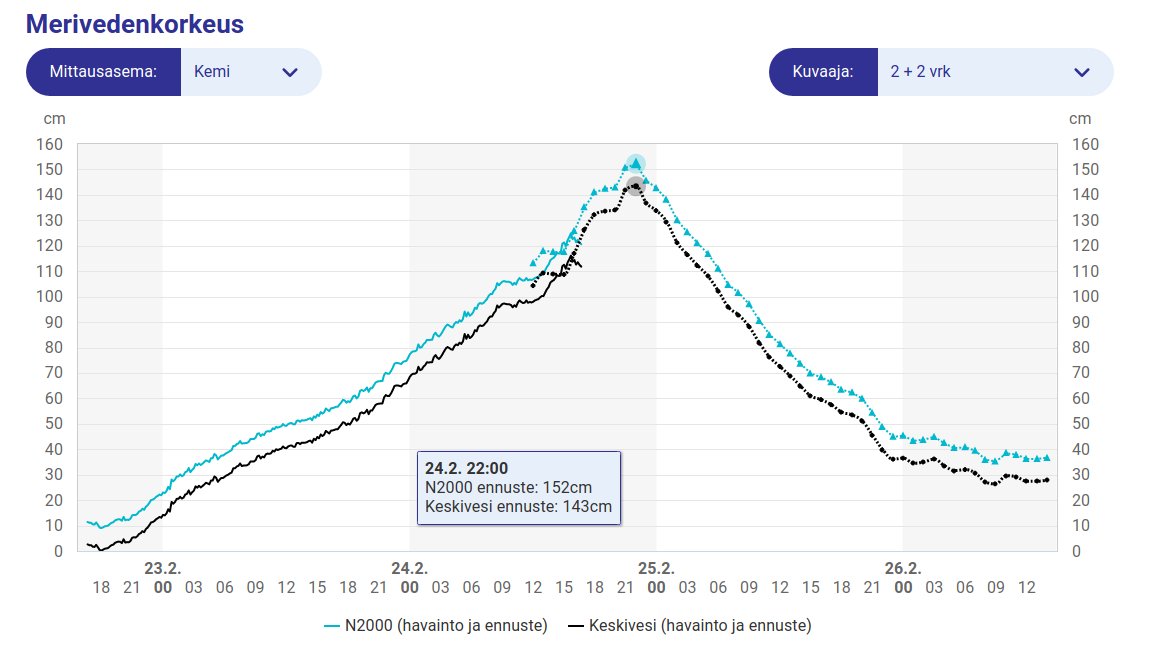
@mikarantane Yes, I've noticed the same. This is what the 2+2 forecast looked like yesterday. The peak is delayed and reaches 143 cm. Could also be affected by the daily bias correction, in this case it plausibly increases the predicted water level.
Tuomas Kärnä tweet media
English
0
0
1
0
Tuomas Kärnä
Tuomas Kärnä@teekarna·
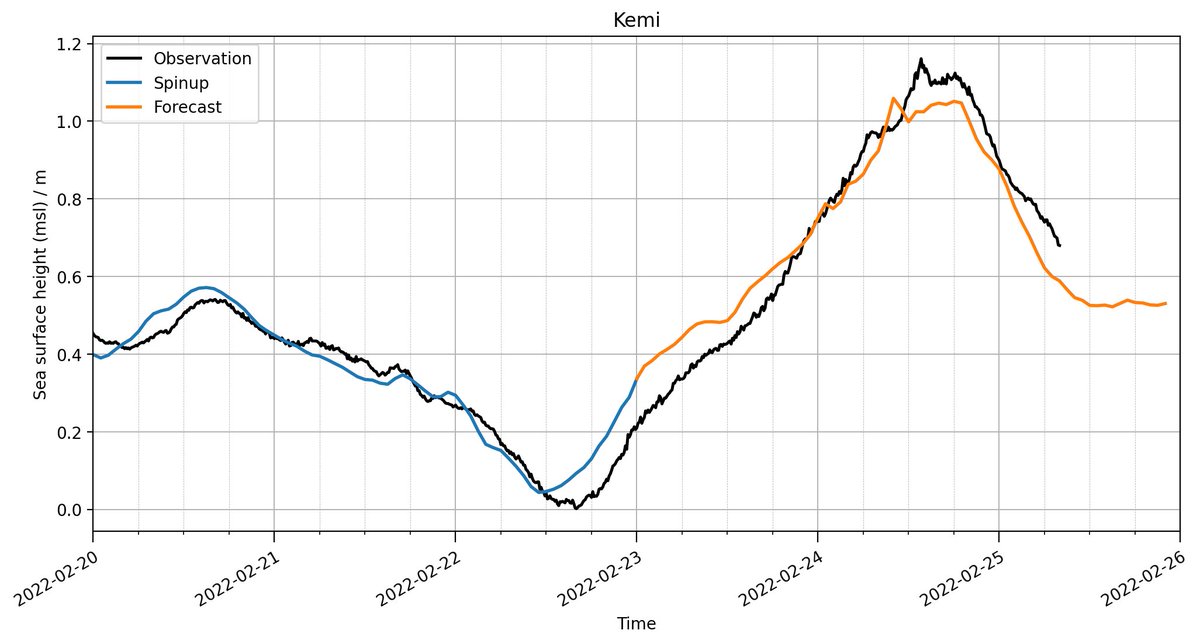
Recent storms have increased water level in the Baltic Sea and increased the risk of coastal flooding. Yesterday I did a forecast simulation with Thetis 2D model. The forecast seems to capture storm-induced water level variability in the Bay of Bothnia fairly well.
Tuomas Kärnä tweet media
English
1
1
15
0
Tuomas Kärnä
Tuomas Kärnä@teekarna·
@rabernat I've noted the same. It seems that the demand exceeds what academia/publicly funded research can deliver. Plus many applications can be executed more reliably in the private sector (e.g. software engineering — where geophysicists traditionally do not shine).
English
0
0
1
0
Ryan Abernathey
Ryan Abernathey@rabernat·
The amount of weather / climate / ocean science jobs in the private sector is crazy right now. I'm old enough to remember when there really was no "industry" career option to speak of in our field.
Pangeo@pangeo_data

A sampling of recent postings on the Pangeo Job Board ⭐️ Remote sensing scientist @ClimateXLtd ⭐️ Catastrophe Research Analyst @LibertyMutual ⭐️ Atmospheric scientist at @tbotix ⭐️ Data Eng & Remote Sensing @ChlorisGeo ⭐️ Front End Eng @ScootScience discourse.pangeo.io/c/news/jobs/14

English
4
29
148
0
Tuomas Kärnä
Tuomas Kärnä@teekarna·
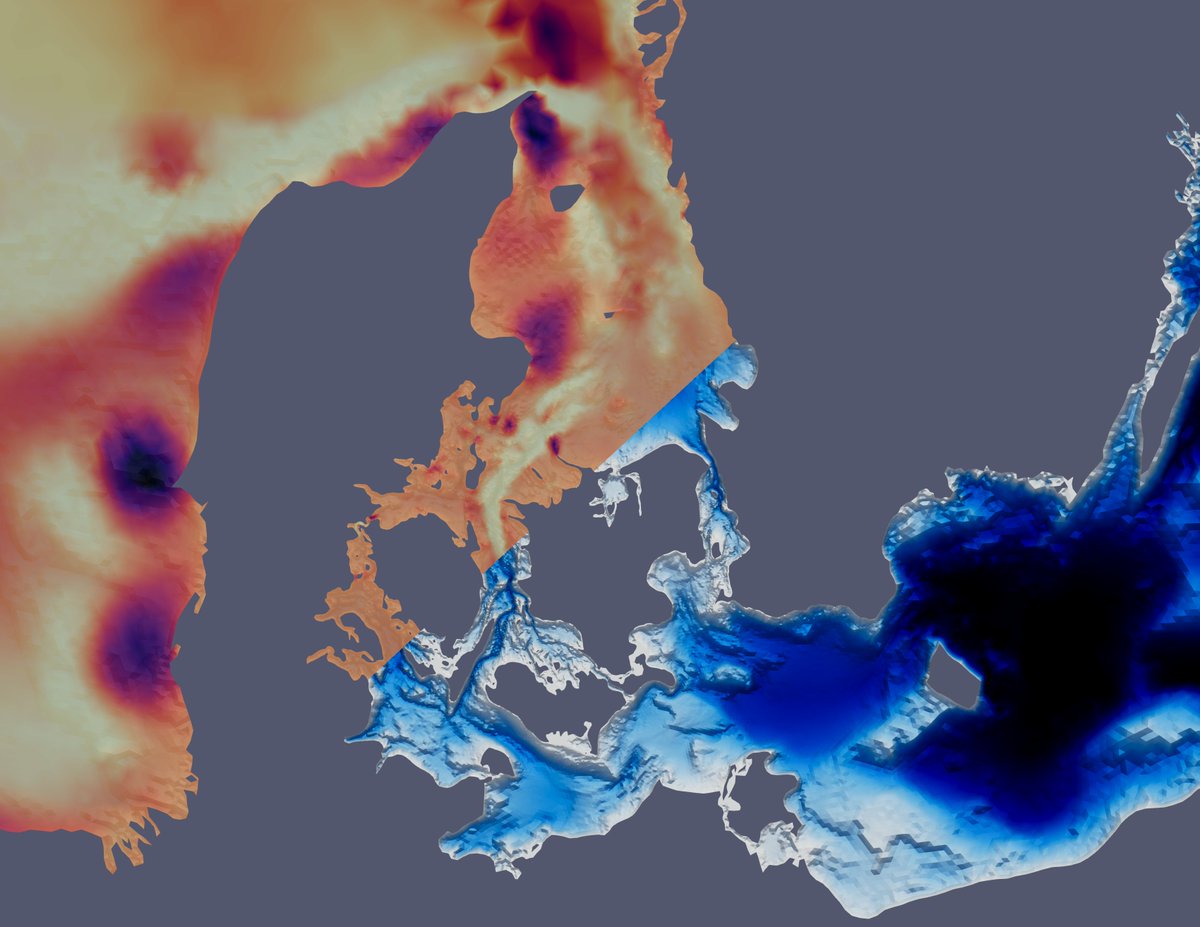
Modeling sea surface height in the North Sea/Baltic Sea. The shallow Danish Straits effectively filter out the tides. In the Baltic, SSH is mainly controlled by winds, atmospheric pressure, and seiche oscillations. Simulated with the Thetis ocean model (thetisproject.org).
English
0
1
12
0
Tuomas Kärnä
Tuomas Kärnä@teekarna·
@FlorinZainescu This is based on EMODnet bathymetry raster, lot's of Python processing, Shapely ops, and finally Gmsh to generate the mesh.
English
0
0
0
0
Tuomas Kärnä
Tuomas Kärnä@teekarna·
Generating unstructured meshes for ocean modeling is always a challenge. Here's an example for the North Sea/Baltic Sea. Resolution has to be sufficiently high to resolve the coastal topography and the open boundary must be placed outside the shallow continental shelf sea.
GIF
English
0
1
20
0
Tuomas Kärnä
Tuomas Kärnä@teekarna·
@mikarantane Congratulations! Also unfortunately, permanent position does not guarantee a meaningful science career. It's all about knowing the right people, publishing, and getting $$$. Good luck!
English
1
0
1
0
Tuomas Kärnä
Tuomas Kärnä@teekarna·
We evaluate the performance of structured/unstructured finite volume/finite element ocean models. Our results show that regardless of the model discretization, the dominant source of error is related to the advection scheme and its numerical dissipation. 2/2
GIF
English
0
0
1
0
Tuomas Kärnä
Tuomas Kärnä@teekarna·
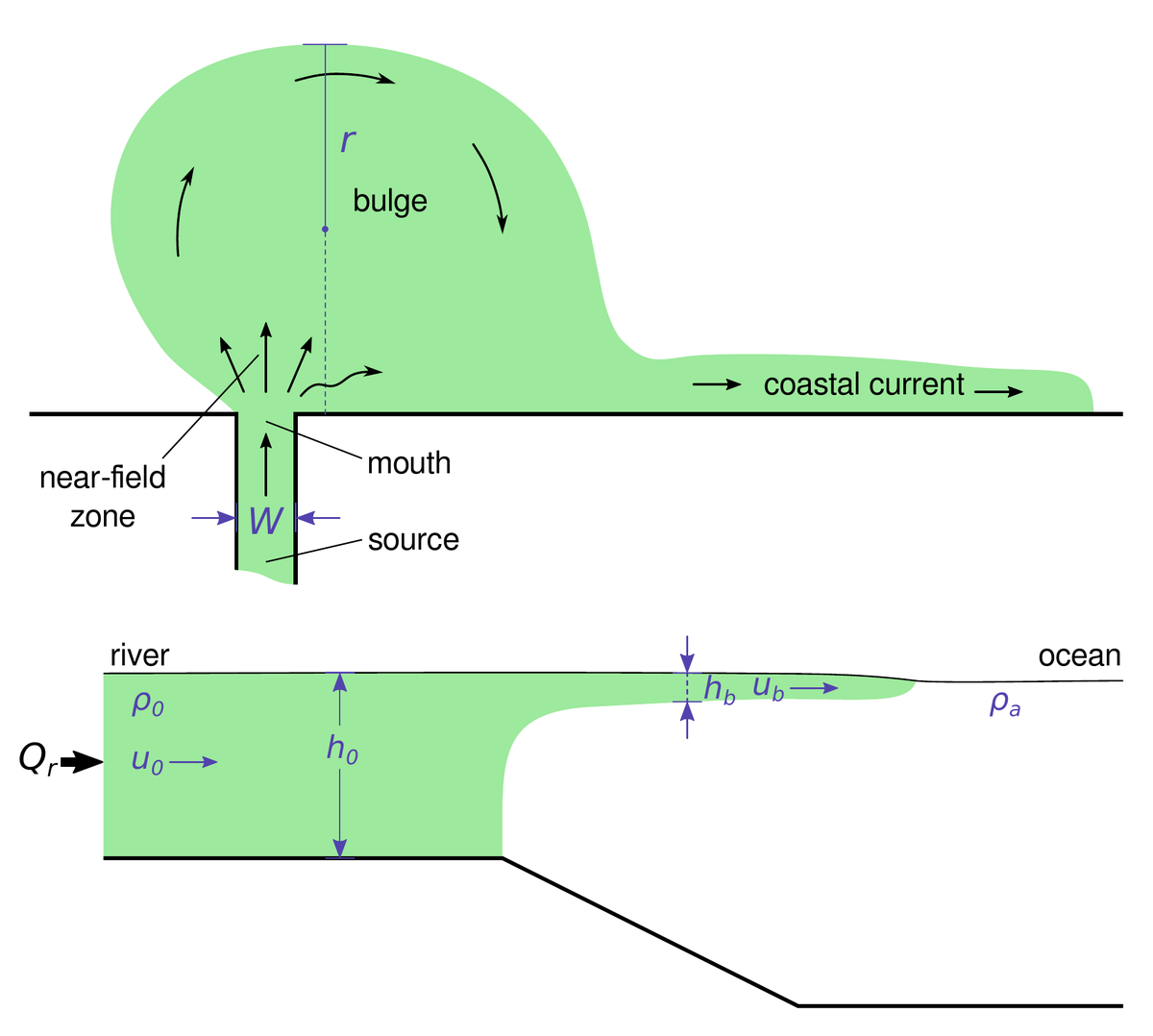
Our new paper presents an idealized river plume test case. The spreading of the river plume and coastal current can be estimated reliably from hydraulic theory. Our setup generates a thin plume, hard to replicate in numerical models. 📰doi.org/10.5194/gmd-14… 1/2
Tuomas Kärnä tweet media
English
1
2
8
0