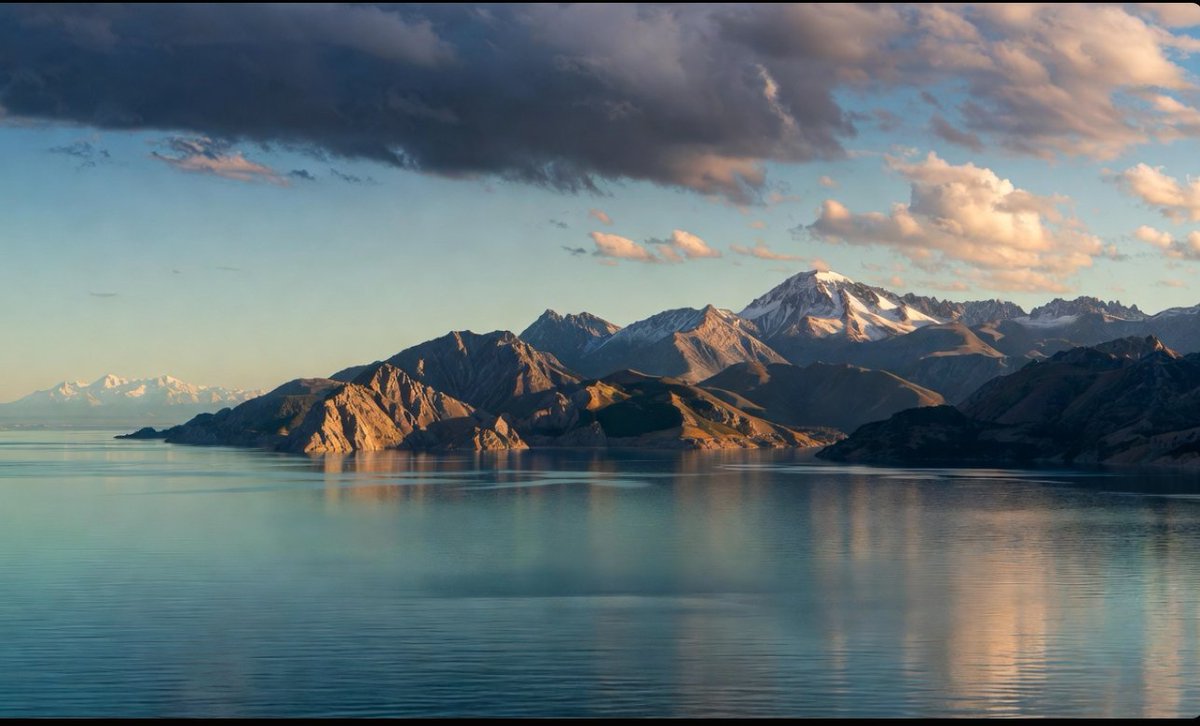
Blanchon & Shaw (2015) describe a series of drowned reefs near Barbados, around ~15m, ~50m and ~80m below present sea level. The authors referred to three dated CRE's (Catastrophic Rise Events) during which these reefs were drowned. By comparing the geoodetic inverse for these reefs against that of Beebe's drowned beach, and the raised beaches of Shropshire in England, and New Zealand, we can look for path convergences which are date calibrated against the Barbados reefs. This produces convergences near the 104°/14.2 ka, 52°/11.5 ka and 26°/7.6 ka , suggesting potential return pole positions southeast of the Caspian Sea, and near the Kara Sea.
[1] doi.org/10.1130/0091-7…
In 1931, ocean explorer William Beebe dredged the seafloor south of Bermuda, expecting to find mud and deep-sea debris. He discovered something extraordinary in the unmistakable remains of an ancient beach - rounded pebbles, broken coral, and shells from extant shallow-water species. The kicker: this “beach” was situated over 2.5 kilometers below present day sea level.
Beebe observed that the seabed in this area was flat and stable, which made it unlikely that coastal material could simply slide down from above. The rocks themselves appeared wave-worn, siimilar to shoreline material, and the shell assemblage matched modern littoral ecosystems. This discovery did not resemble transported debris; a beach that had no logical place.
[1] A Submerged Beach off Bermuda, Beebe (1931), science.org/doi/10.1126/sc…
As AI dissolves education’s dependence on trivia, memorization, formulaic procedures, rubric compliance, and procedural box-checking, the system faces a far more difficult challenge: determining who can actually think, reason, synthesize, and create - rather than simply who excels at executive administration and instruction-following.
This is why so many A-students fail to deliver their promised potential. They simply learned how to be good administrators, following the exacting rules of their extraction cronies, with no heart for their employees, industry, or social ethics. They are empty, devoid of resources for when the sh*t hits the fan.
Getting an 'A' by perfectly following procedural rules is rapidly becoming a low-signal achievement in an AI-saturated world, because machines are already better than most humans at compliance, formatting, memorization, fact assimilation, and finishing speed.
What becomes scarce (and therefore more valuable) is independent judgment: the ability to perceive contradictions, ask non-obvious questions, reason through ambiguity, challenge assumptions, create original frameworks, and arrive at conclusions that were not pre-scripted by institutional incentives.
theethicalskeptic.com/2022/08/07/the…
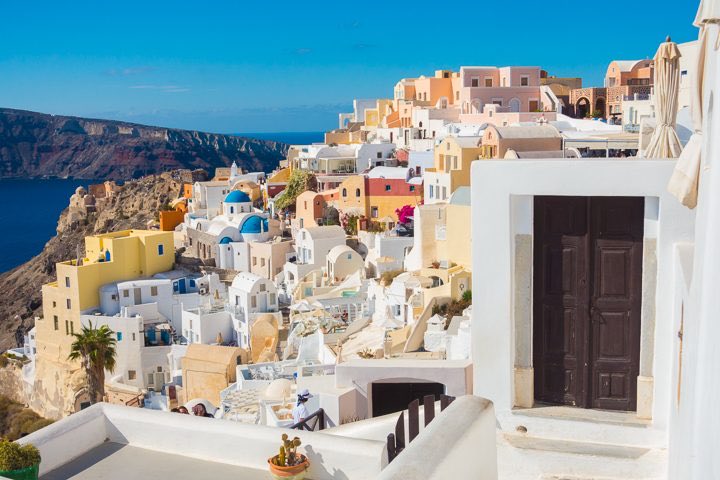
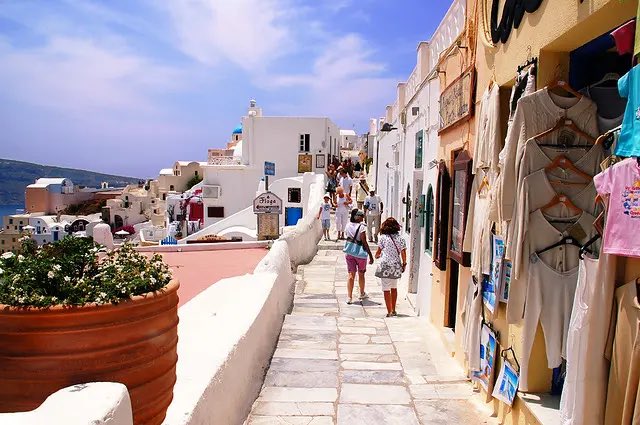
@jerryteixeira@bubblydaisyin@missmayn And mind you if you try to park around, assuming you managed to drive in, you will get exactly the Californian eye to eye look :)
@jerryteixeira@bubblydaisyin@missmayn Context is also important. This is Santorini, Greece, literally part of the edge/cliff of a volcano's caldera. So of course it does not and it should not look like California and vice versa.
@EthicalSkeptic@SPeribsen has some interesting ideas on the biological part of the control system. And certain older genetic traits they are likely most concerned with. Interestingly, all tracing back to two or three inundations ago, in North Africa.
This is precisely why our lives were shortened. It is most difficult to dominate a smart and fully-informed entity.
Compartmentalization is the way you keep stakeholders who are developing the analytical picture in a perpetual state of ignorance - a tactic of black intelligence programs.
With shorter lives and the burden of earning a living, we are automatically compartmentalized by the limited time available to master any given subject.
This was not a tactic of benevolence - rather enslavement.
The Narrative suppresses knowledge of prior human civilization not to conceal any implied advanced technology, but to deny us access to its intellectual property in human origins.
There are now cracks in that dam.
Have you stopped to ponder WHY there exists now a push-flurry of distracting ancient "discoveries" at play right now?
99% of them are noise.
THIS, is not noise...
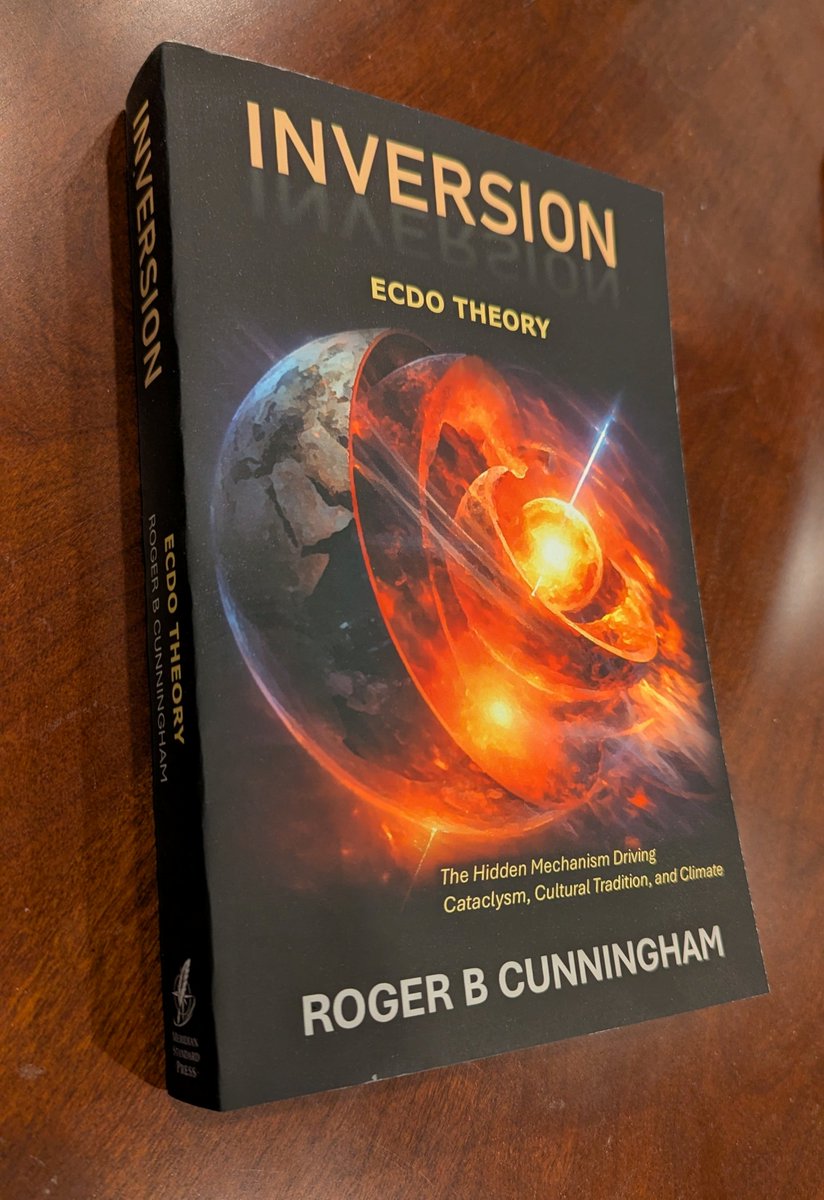
Wow, sold out of "Inversion: ECDO Theory" in just 14 hours on a soft announcement.
What an unexpected reception! Thank you Folleauges...
Accepting Pre-Orders Now
@th_stath@s547bay They installed a new app/change that took my website down - did not tell me it did this, and made it appear to me when I look at the website, that it is up and functioning.
Wow.
Check and see if it works now for you. Thanks 👍
I have a question for a friend. He sleeps during the day and works at night in front of a screen (a lot of blue light exposure), so his circadian rhythm and probably his dopamine system are pretty messed up. He can’t really change it because he works with clients in a different time zone. Do you think supplementing things like Epithalon or Pinealon could actually help in this situation, or could it make things worse ? And more generally, what would you recommend to reduce the negative effects of this kind of lifestyle ?
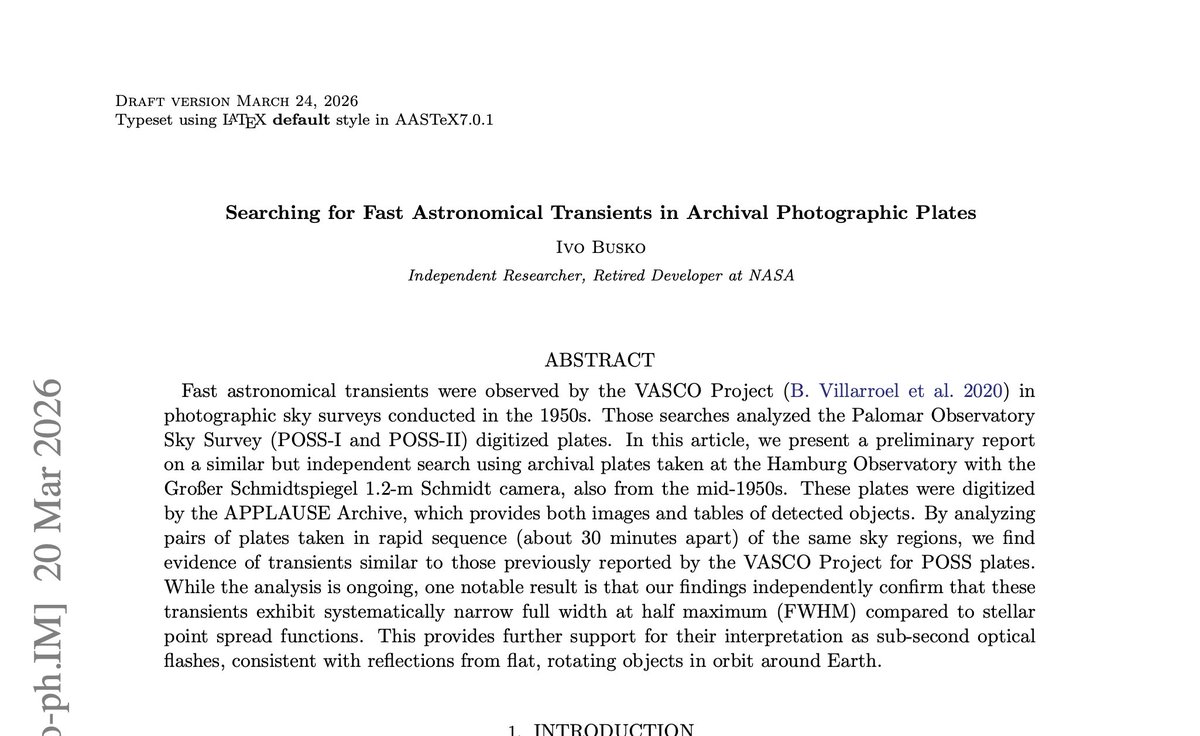
What a lovely surprise this morning! ☀️Independent detections of similar transients in European plate archives — exactly the kind of cross-validation this field needs. So it’s not just Palomar anymore.
The study was carried out by a retired NASA scientist.
This is how a signal begins to emerge from the noise.
arxiv.org/pdf/2603.20407
Populations were definitely larger before (the Amazon LIDAR scans suggest large cities across all South America), plus someone in control at the time did not allow 'unchecked proliferation' on the farm. That someone can only cull indirectly since they lost ownership and they have been doing that nonstop.
@EthicalSkeptic@LakesFirearmsTr@MinisterSpew Still odd though no? Why did post-"Noah's Flood" population appear to expand geometrically compared to pre-? Technologically the post-civilization seems to have moved so much faster as well--no "antediluvian" geosynchronous satellites; Grok suggests geos could persist "forever"?
"On a planet that has not undergone rapid true polar wander, [anisotropic variance] would be expected to appear heterogeneous and unstructured.
It does not.
The field exhibits a clear structure. The symmetry suggests the most likely Euler configurations are roughly halfway between the high-variance bands – a pattern consistent with the ECDO Euler."
x.com/nobulart/statu…
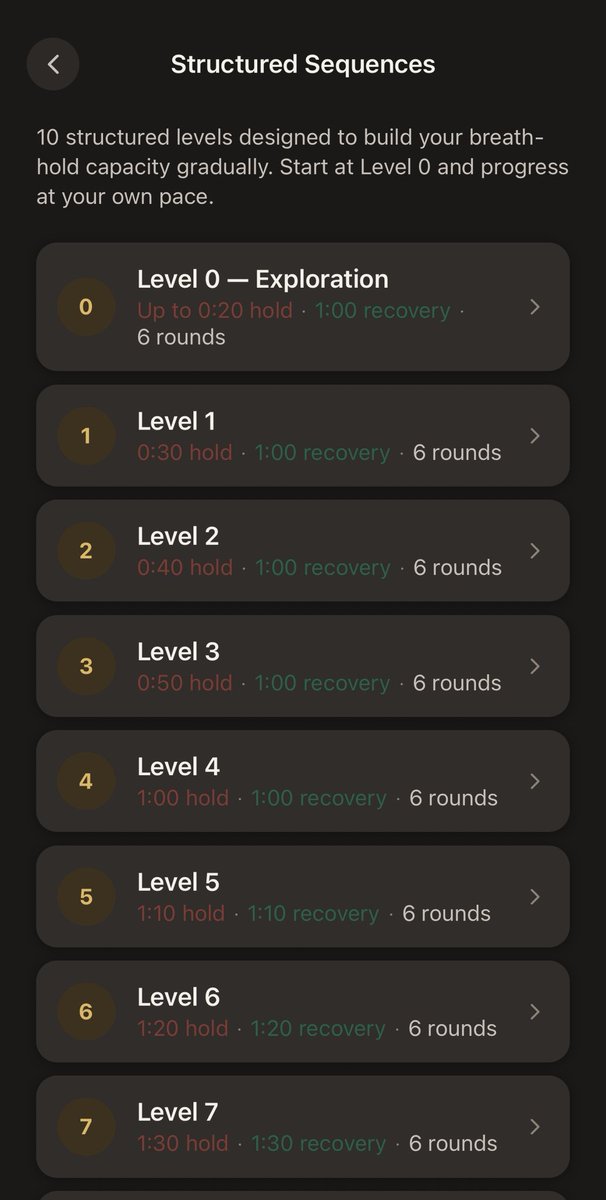
Download the app.
Go to “structured sequences.”
Read the “Essential Principles.”
Start with Level 0 to explore where you’re at.
You’ll develop the ability to easily hold your breath for 2 minutes for 6 rounds.
There’s much more to learn and achieve but it’s a good beginning.
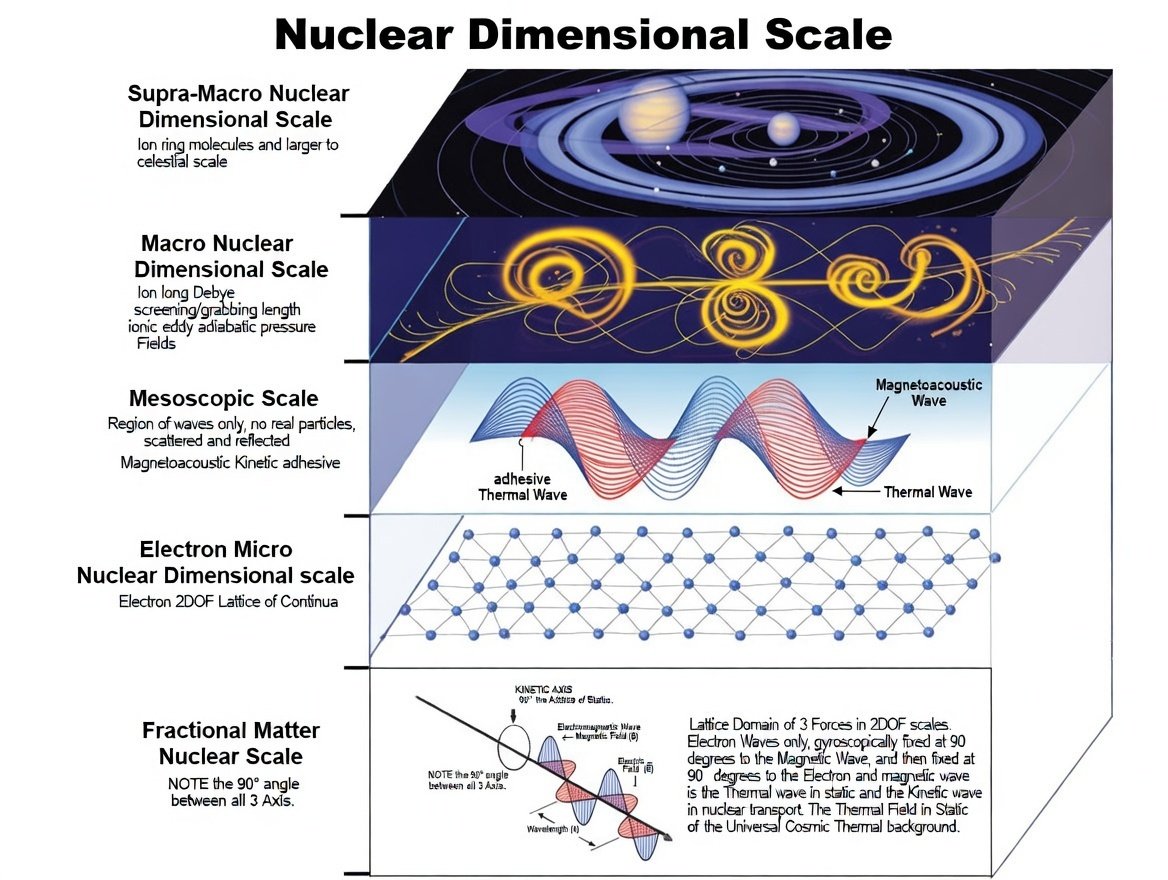
So, we have three spatial dimensions at every scale but with different degrees of freedom at each. EMK waves at the smallest one with 2DOF per component, resulting in a 2DOF 'substrate' electron lattice everywhere with only expansion-contraction available (isotropic in every other aspect so spatial dimensions do not make sense here), the higher scale ion-atom-matter scale where anisotropies-volume has meaning again, and the mesoscopic scale where ion and electron interact which is empty of particles, only wave phenomena. And there is a separate hydrogen ion lattice at the upper mesoscopic boundary, which limits how fast electrons can move, imposing the C limit in this so-called void of space. Is this an accurate summary?
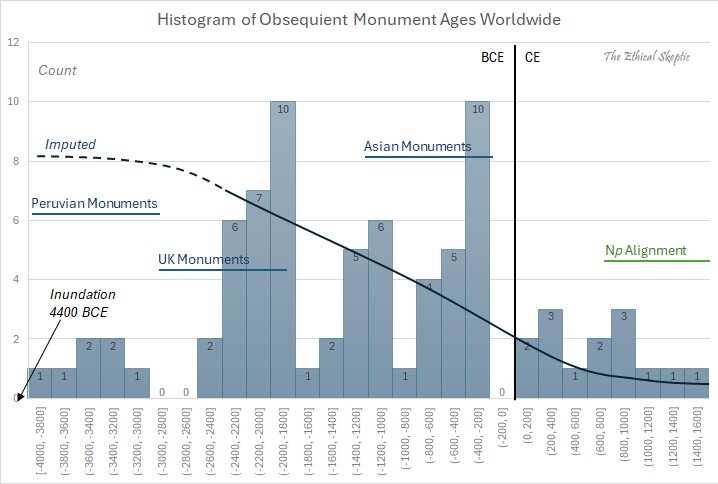
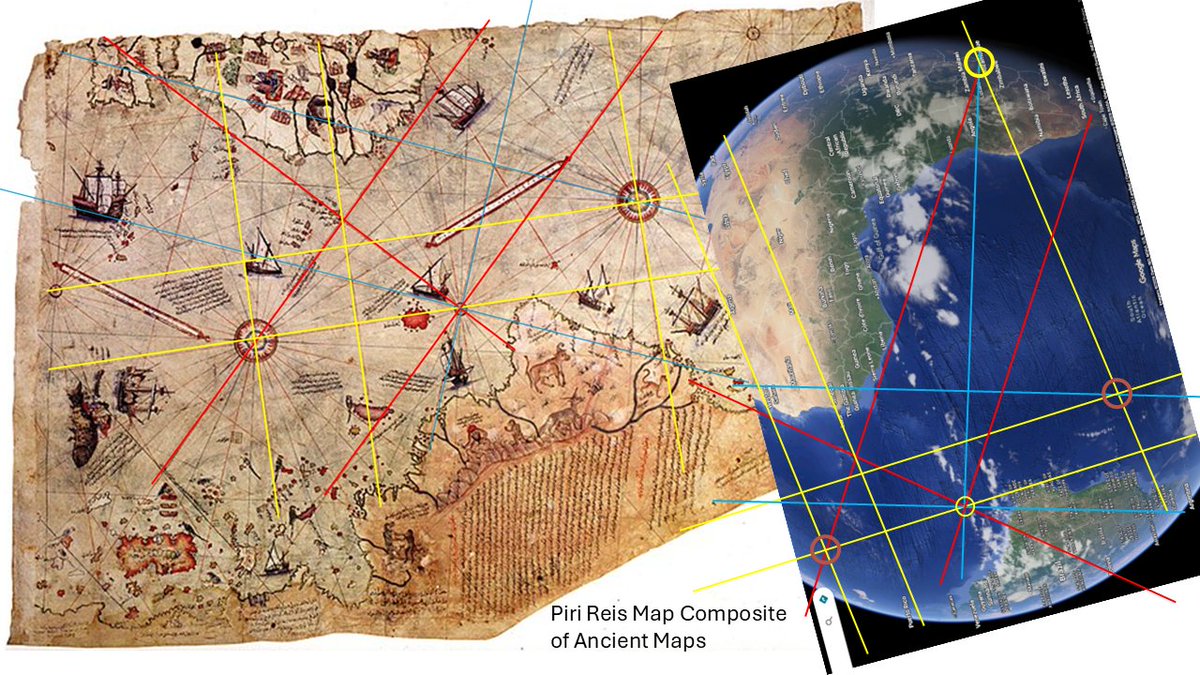
The question regarding the relative duration of at least one S2 interval surfaces again here; if the source maps were built either via celestial or magnetic navigation, Np' must have been the north pole for a sufficient interval to allow civilizational recovery. The Antarctic coast being ice free on the map also corroborates this being S2. Are we looking at source material older than Plato's inundations? A time where most Np'-aligned monuments were built, and the Queen's shaft star map alignment implies?
An EDCO unlocking of the Piri Reis map. Suddenly the unified points of sail makes sense...
Piri Reis himself did not understand this principle, but was faithful in recreating a composite from the source maps nonetheless (thankfully).
The map is ASSEMBLED by coastline developed with magnetic compass (daytime), but all the maps ORIENT to the same celestial true north (night azimuth shot). This reconciles the map eccentricities (bending South American coastline for example).
The Piri Reis map exhibits a clear geometric regularity: the multiple compass-rose lattices preserve repeating 'dominant' directional azimuths that remain consistent across separately-derived coastal sections, and when those directions are extended beyond their local areas they triangulate at a single stable remote location (apart from the expected intersection at a compass rose ceter-reference of course) - that just happens to coincide with ECDO Theory's Np'.
Reis did not comprehend or plot Np' - his source maps did... 😀
Because the coastlines can be reconciled while the directional framework remains coherent, the most robust inference is that Piri Reis conserved a shared orientation reference inherited from his sources rather than generating an arbitrary decorative lattice himself; the probability that independent map fragments would produce the same distant conjunction by chance is extraordinarily low.
The map therefore strongly supports the existence of a common directional alignment embedded in the underlying charts - one which Reis himself did not comprehend, but still remained faithful in recreating.
The further identification of that convergence point as Np′, however, remains a probabilistic interpretation rather than a demonstrated certainty, pending independent spherical corroboration (difficult with a coastline-reconciled composite). But the probabilistic-coincidence is going to be very difficult to dismiss - now that we have mechanism behind it.
Persistent-mystery dominoes keep falling under ECDO Theory... 😎