TCS

50.5K posts

TCS banner
TCS

TCS

@toocoool_Shahid

14|09|2023 - I KILLED FLOWERS FOR YOU 🌸💐🌹🌷🌷Managing : @boydlarmie. For Bookings Email : [email protected] Follow the link below 👇🏽

NoWhere & EveryWhere Katılım Ekim 2009
916 Takip Edilen967 Takipçiler
Sabitlenmiş Tweet
TCS
TCS@toocoool_Shahid·
Known in the musical circles as @boydlarmie ; let me present to you his single Table For Two it’s available on all platforms linktr.ee/Boydlarmie?fbc…
English
0
1
1
0
TCS retweetledi
SincerelyAccra
SincerelyAccra@SincerelyAccra·
Sundays were for Cantata!
English
2
5
4
224
TCS retweetledi
MAJI
MAJI@majimosess·
Man shares the deep conversation he had with his Uber driver… Omo Nigeria is not real 😳
English
127
395
1.7K
69.6K
TCS retweetledi
Chefabbys
Chefabbys@chefabbys·
OMG😮! I can't believe I had a very rare opportunity to get an inside look of how the world's biggest fast food chain McDonald's operates. ! Seeing fellow Ghanaians do big things at the top level brings me joy. And that’s the story of Joey Antwi, who went from Cleaning McDonald's to owning 3 McDonald’s franchises!!!
English
92
1.5K
8.8K
130.9K
TCS
TCS@toocoool_Shahid·
Nothing ever surprises me anyway
English
0
0
0
14
TCS retweetledi
dejanira
dejanira@dejanirasilveir·
🚨🚨Kenia SE RETIRA de la OMS porque descubrió que la vacuna contra el tétano estaba combinada con un agente esterilizante. “Ya no podemos darnos el lujo de confiar en la Organización Mundial de la Salud” “Las vacunas han disminuido la fertilidad” El Tribunal Supremo también suspendió la inmunidad procesal de Bill Gates 🔥
Español
1.1K
30.5K
68.8K
1.6M
TCS retweetledi
Chetuya Chinagolum
Chetuya Chinagolum@Chetuyachinago·
Nigeria’s ginger export collapsed from a staggering N26 billion($47.5 million) to absolute zero in a span of just three years, wiping out the livelihoods of thousands of families. The official excuse is being branded as a mere "fungal" disease, which is ridiculously funny, insulting, and misleading. A mere disease can kill a handful of crops, but it can never systematically wipe out an entire agricultural belt spanning hundreds of thousands of acres. When a disaster of this magnitude destroys crops across multiple communities in Kaduna and neighboring states, we can be rest assured that this is a man-made, policy-driven disaster without a single shred of doubt. Indeed, the N26 billion export figure quoted was not from 2024. Nigeria’s export of ginger in 2024 had already plummeted to a pathetic N6.2 billion, roughly 4.7 million dollars, which forces us to ask what actually happened between 2023 and 2024 to pave the way for this historic, sudden decline. Everything began in 2017, when the World Bank sent their economic hitmen to Nigeria to convince the federal government that our agricultural output was poor. They claimed the issue was not because the predatory terms of the World Trade Organisation banned the government from subsidizing local farmers, providing modern tractors, building secure storage facilities, or protecting domestic markets from heavily subsidized Western imports. Instead, they deceitfully concluded that Nigerian farmers were doing poorly simply because they lacked access to modern, high-yielding, corporate-patented seeds. As usual, the incompetent Nigerian government under the Buhari administration rolled over, spread their laps, and eagerly accepted a 200 million dollar loan from the World Bank to kickstart the APPEALS project. Nigeria historically grew two traditional, highly resilient, non-genetically modified varieties of ginger known as UG1, locally called "Tafin Giwa," and UG2, locally called "Yatsun Biri." Under this APPEALS program championed by the World Bank, ginger farmers in Northern Nigeria were instructed to abandon their local, highly resilient seeds. Instead, they were forced to source new, delicate foundation seeds from the National Root Crops Research Institute in Umudike, Abia State. The NRCRI does not operate in a vacuum: it functions within a complex global network of funding, corporate interests, and academic research heavily bankrolled by the Bill and Melinda Gates Foundation and the agro-chemical giant Monsanto. Under this collaborative framework, the Gates-funded institute provided the laboratory methodology and the modified parent seeds, while the World Bank’s APPEALS project supplied the logistics, the demonstration farms, and the training to force farmers into growing these highly dependent seeds. . Traditionally, farming ginger is not rocket science. All a farmer had to do was make a small hole in the soil, drop the seed rhizome inside, cover it up, and let nature do the rest. But because the farmers were forced to abandon their traditional seedlings and adopt the genetically fragile, volatile, lab-grown tissue cultures from the Gates-funded institute, they no longer had that luxury. The institute's labs simply lacked the capacity to mass-produce these delicate seeds at the industrial scale required for nationwide agriculture. This is where the World Bank's economic traps clicked shut. Under the APPEALS program, farmers were trained to cut the healthy foundation rhizomes into tiny, microscopic pieces weighing a mere 4 to 5 grams. These tiny buds were then dipped in a specialized, highly expensive chemical fungicide wash, placed into artificial nursery trays, and kept under protective, climate-controlled shade nets. The farmers had to baby these nurseries, watering them with meticulous care just to get the single buds to sprout into disease-free green seedlings over a thirty-to-forty-day period. Once these fragile green shoots reached a height of 10 to 15 centimeters and developed a weak, independent root system, the farmers had to carefully transplant them directly into pre-prepared ridges in the open fields. At first, it looked like a miracle. The farmers saw a temporary 67% surge in their ginger yields, which was paraded by World Bank PR teams as a massive success. But the APPEALS program was only scheduled to last for six years. In 2023, the World Bank packed up their bags, collected their interest, and quietly left the country. Naturally, the farmers attempted to continue farming on their own to maintain their profit margins, but they ran into a fatal wall. It is not enough to train farmers to use delicate, laboratory-engineered seeds: you must also fund the highly specific chemical inputs those seeds require to survive in the wild. As soon as the farmers tried to buy the specialized fungicides and chemical washes needed to protect these hyper-sensitive crops, they realized the prices had skyrocketed by over 300%, making them completely unaffordable for the average rural farmer. Desperate, the farmers tried to source cheaper, local alternatives, but these fragile seeds are so biologically delicate that the slightest deviation in chemical treatment or soil temperature renders them sterile and highly vulnerable to pathogens. This is how Nigeria's ginger output collapsed from 47 million dollars in 2023, to a pathetic 4.7 million dollars in 2024, and finally to absolute zero by 2025. There are many performative reforms currently ongoing to supposedly rescue the Nigerian ginger market. But the cold truth is that the World Bank and Bill Gates successfully destroyed a thriving, self-sufficient local industry that fed millions of homes, and this is not the first time this economic sabotage has occurred in Nigeria. Look at what they did to our cocoa industry in the late 1980s. Under the brutal dictates of the World Bank's Structural Adjustment Program, the federal government was forced to dissolve the Nigerian Cocoa Board, which had historically guaranteed price stability, provided free high-quality seedlings, and subsidized essential pesticides for local farmers. Once the market was liberalized, our local farmers were left completely defenseless against the volatile swings of the global commodities market and the predatory pricing of Western buying cartels like Cargill and Barry Callebaut, systematically crashing Nigeria's dominance in global cocoa and reducing our once-proud farmers to low-wage laborers for multinational corporations.
Nigeria Stories@NigeriaStories

BREAKING: Nigeria’s 🇳🇬 Ginger export went from N26Billion to zero in the last 3 years Source: Businessday Nigeria

English
73
634
936
44.1K
TCS retweetledi
𝐀𝐒𝐊
𝐀𝐒𝐊@askghmedia·
“Don’t let anyone deceive you with a tourism or visit visa without first securing a proper job for you before you arrive in the UAE.” — A Ghanaian expatriate in the UAE breaks down in tears, warning fellow Ghanaians to beware of fake agents
English
15
76
694
30.5K
TCS retweetledi
SincerelyAccra
SincerelyAccra@SincerelyAccra·
How’s your Gh Pop Culture Trivia ? Here’s @PAPPYKOJO ‘s attempt.
English
1
5
6
447
TCS retweetledi
MOFFY❤️‍🔥
MOFFY❤️‍🔥@Whoismoffy·
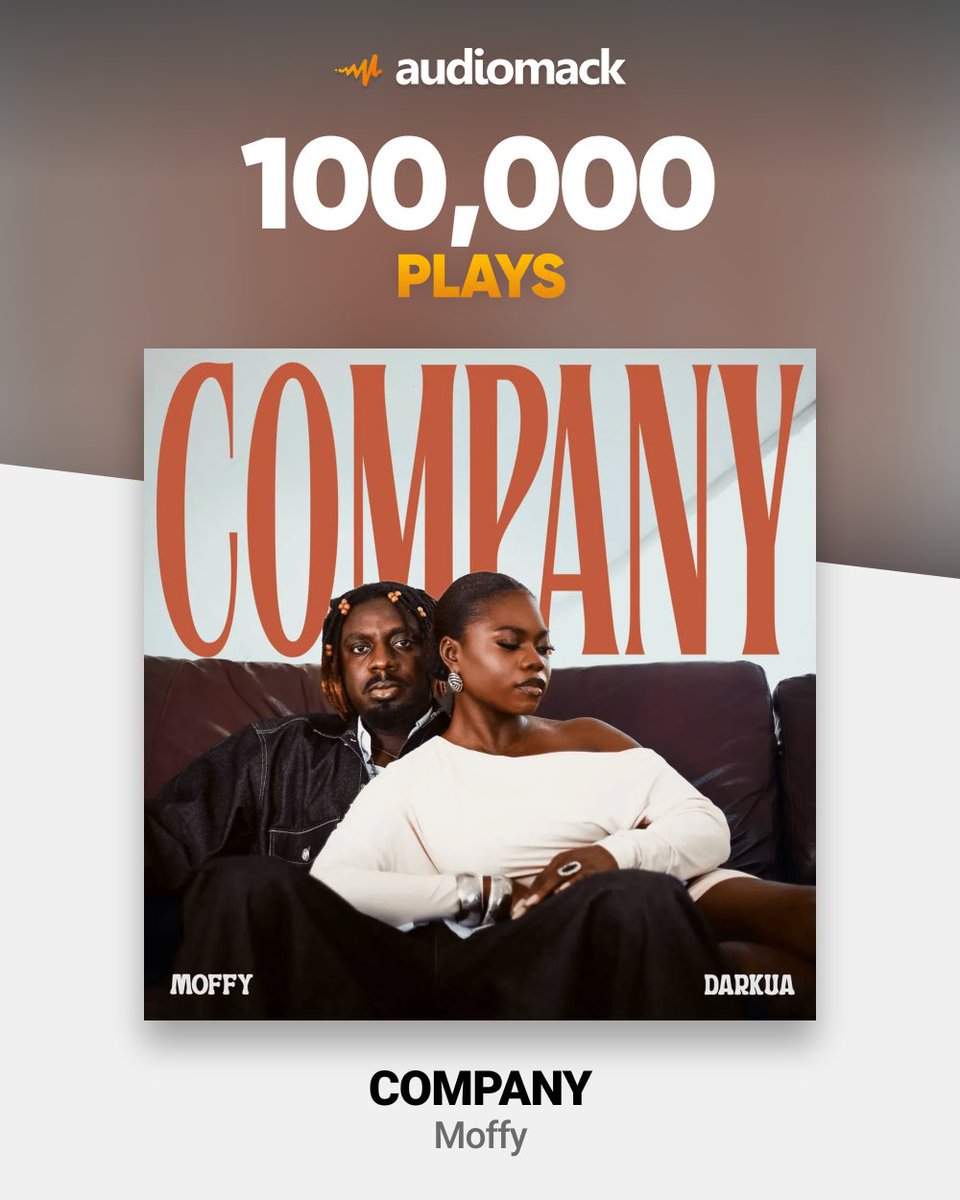
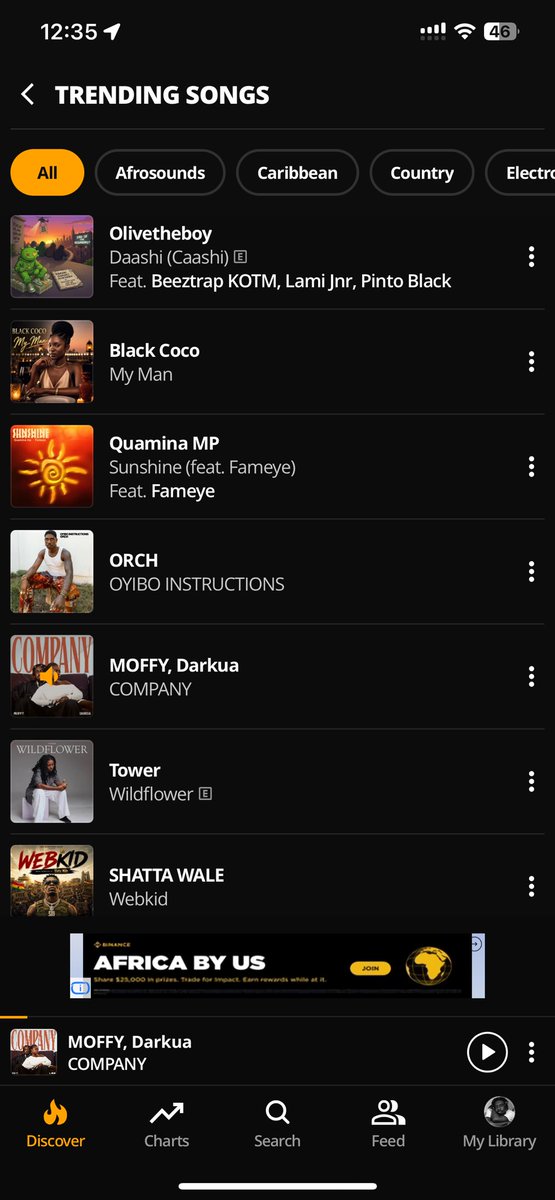
100,000 on Audiomack. 🤯🔥 I’m honestly grateful for every single listen, share, repost, comment, DM and person who pressed play. This milestone belongs to all of us. 🙏🏾 If you haven’t heard “COMPANY” yet, now’s the time. Go run it up on @audiomack audiomack.com/whoismoffy/son…
MOFFY❤️‍🔥 tweet mediaMOFFY❤️‍🔥 tweet media
English
0
11
14
507
TCS retweetledi
BLXCK
BLXCK@Callme_BigV·
He was challenged to make a washing machine. What happened next will shock y’all 😱
English
499
6.2K
39.5K
664.7K
TCS retweetledi
SincerelyAccra
SincerelyAccra@SincerelyAccra·
“Logos II is my everything. That’s my Pae Mu Ka, that’s my Get Rich or Die Trying, that’s my Ready to Die” @PAPPYKOJO speaks on his first album, Logos II.
English
2
16
67
3.9K
TCS retweetledi
M.anifest
M.anifest@manifestive·
Out the Mud
M.anifest tweet mediaM.anifest tweet media
English
49
555
7.3K
86.8K
TCS retweetledi
Collins🫟
Collins🫟@_______Collins·
He’s actually making a lot of sense… but the way he’s mixing American accent with Pidgin is kiłłing me 😭😂
English
70
243
1.6K
68.4K