YFE Embedded

400 posts

YFE Embedded banner
YFE Embedded

YFE Embedded

@yfe_embedded

Building real embedded systems solutions. Training engineers through execution-based learning. Based in Africa, building globally relevant engineering

Katılım Şubat 2026
9 Takip Edilen235 Takipçiler
Sabitlenmiş Tweet
YFE Embedded
YFE Embedded@yfe_embedded·
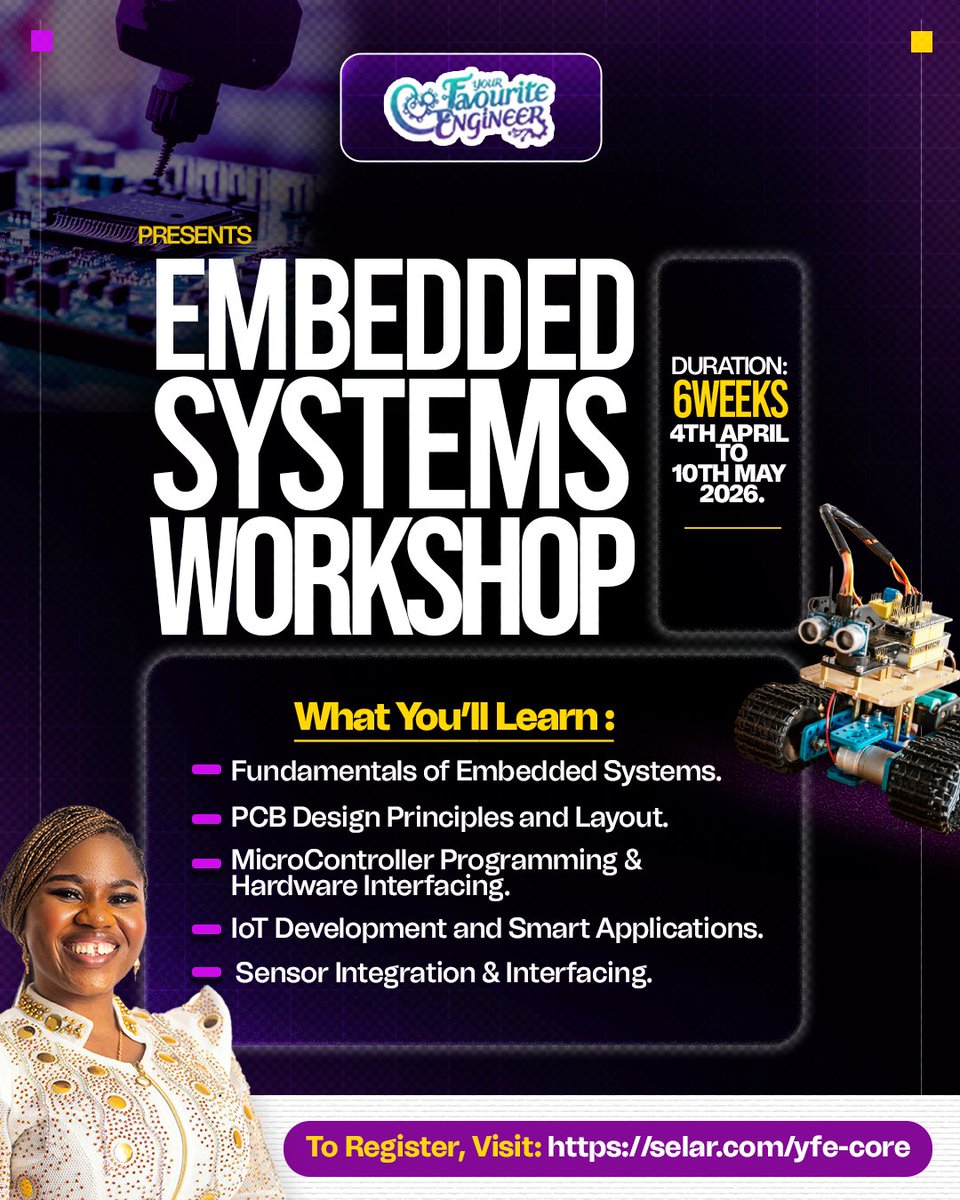
We didn’t create our Embedded Systems Workshop because it sounded like a good idea. We created it because something is broken. Too many engineers can: • Write code. • Follow tutorials. • Build “projects.” But can’t explain why their system works or fix it when it stops. That’s the problem. Because real engineering isn’t: “Write → Run → It works” It’s: • Code meets circuits • Logic meets noise • Ideas meet constraints And that’s where most people get stuck. It's not because they’re not smart, but because no one taught them how things actually connect. So they stay here: → Copying code → Guessing fixes → Hoping things work That’s not engineering. That’s trial and error. At YFE, we’re building something different. We’re training engineers who understand: • Why systems fail • How sensors, power, and timing behave • How software becomes physical action • How real devices are actually designed Embedded systems isn’t just a skill. It’s the bridge between software and reality. And once that clicks: • You stop guessing. • You stop copying. • You start building with intent. If you’ve ever felt like: “I can code, but I don’t really understand systems.” You’re not alone. That gap is exactly what we’re fixing. Not with more tutorials. But with real system thinking. Sign up for our Embedded Systems Workshop 🔗 selar.com/yfe-core Now let’s build! 🦾
YFE Embedded tweet mediaYFE Embedded tweet media
English
1
2
15
505
YFE Embedded
YFE Embedded@yfe_embedded·
The next billion-dollar AI systems may never touch the cloud. They’ll live inside wearables. Inside drones. Inside factory equipment. Inside low-power embedded hardware operating quietly in the real world. That shift is already happening. A patient in a remote village has no hospital nearby. No cardiologist. No stable internet. No cloud infrastructure. But there’s a wearable device on their wrist. And that device just detected an irregular heartbeat before the patient even experienced any symptoms. It didn’t send the data to a server in another country. It didn’t wait for the cloud. It made the decision locally. On a chip smaller than your fingernail. That is Edge AI. And it’s becoming one of the most important shifts in embedded systems engineering. For years, AI depended heavily on massive cloud infrastructure. Devices collected data. Sent it somewhere else. Waited for instructions. That model works until latency, reliability, privacy, or connectivity become real engineering constraints. Because in the physical world, systems often cannot afford to wait. • A drone cannot pause mid-flight waiting for cloud feedback. • A medical wearable cannot delay anomaly detection. • An industrial monitoring system cannot wait for internet access before reacting to failure. This is why intelligence is moving closer to the edge. Closer to the device. Closer to reality. And the engineering behind that shift is changing what embedded systems are capable of. Machine learning models that once required powerful servers can now run directly on embedded hardware under strict constraints: • Limited memory • Limited power • Limited compute • Real-time timing requirements That means embedded systems are no longer just sensing and transmitting data. They are: • Recognizing patterns • Making decisions locally • Responding in real time This is not simply AI becoming smaller. It is hardware becoming intelligent. At YFE Embedded, this is the frontier we are building toward. Because the future will belong to engineers who can make intelligent systems survive in the real world. 𝘐𝘮𝘢𝘨𝘦 𝘢𝘤𝘲𝘶𝘪𝘳𝘦𝘥 𝘧𝘳𝘰𝘮 𝘣𝘭𝘰𝘨.𝘶𝘮𝘦𝘳-𝘧𝘢𝘳𝘰𝘰𝘲.𝘤𝘰𝘮
YFE Embedded tweet media
English
2
2
5
120
YFE Embedded
YFE Embedded@yfe_embedded·
A drone flying at high speed cannot afford to “wait for the cloud.” Not for one second. Because by the time data travels to a server and comes back? The drone has already crashed. That is the reality Edge AI is solving. For years, most AI systems worked the same way: Collect data. Send it somewhere else. Wait for instructions. That model works until systems start operating in the real world. Because the real world does not pause while your system thinks. Cars keep moving. Machines keep running. Robots keep navigating. Reality does not care about buffering. So engineering started pushing intelligence closer to the hardware itself. Right there on the device. That means systems now have to: • Sense • Process • Decide • Respond All in real time. And this is where Edge AI becomes fascinating. Because engineers are now trying to run intelligent systems under real-world constraints: • Tiny memory budgets • Limited power • Strict timing requirements • Thermal limits We can no longer throw massive cloud infrastructure at every problem. Efficiency now matters. Deeply. At YFE Embedded, this is the frontier we are building toward: Intelligent systems that survive outside perfect lab conditions. Real hardware. Real constraints. Real-world intelligence. 𝘐𝘮𝘢𝘨𝘦𝘴 𝘢𝘤𝘲𝘶𝘪𝘳𝘦𝘥 𝘧𝘳𝘰𝘮 𝘗𝘯𝘨𝘵𝘳𝘦𝘦 & 𝘭𝘢𝘷𝘪𝘤𝘵𝘰𝘳𝘪𝘢.𝘦𝘤
YFE Embedded tweet mediaYFE Embedded tweet media
English
0
2
5
59
Princess Bamigboye
Princess Bamigboye@princess_yfe·
Quick question: What would you say if @yfe_embedded started selling components? Your electronic components would be available to you at affordable prices I'm thinking of ordering Arduino starter kits in bulk and selling them If I created a waitlist to pre-order, would y'all join? Sound like a good idea?
English
6
2
13
203
Princess Bamigboye
Princess Bamigboye@princess_yfe·
What's one problem we have as hardware engineers that people don't really talk about? 🤔 I'd like to know Maybe @yfe_embedded will do something about it 🙂‍↕️
English
2
1
6
200
R¡d_or
R¡d_or@R_i_d_0_r·
@yfe_embedded @princess_yfe I am working on a wearable device for my Final's projects. It's something I would love to share with the community
English
1
0
1
10
YFE Embedded
YFE Embedded@yfe_embedded·
@princess_yfe It's not a matter of "think", Mama It's a fact. The engineers who put themselves on the front line for this will give themselves the extra edge.
English
1
0
1
12
Princess Bamigboye
Princess Bamigboye@princess_yfe·
Honestly, this is one of the reasons I’m excited about embedded systems right now. The idea that tiny low-power hardware can now make intelligent decisions locally is changing what engineering looks like completely. And I genuinely think engineers who learn this intersection early are going to stand out globally.
English
1
0
1
22
Shawn 白
Shawn 白@ShawnQuestt·
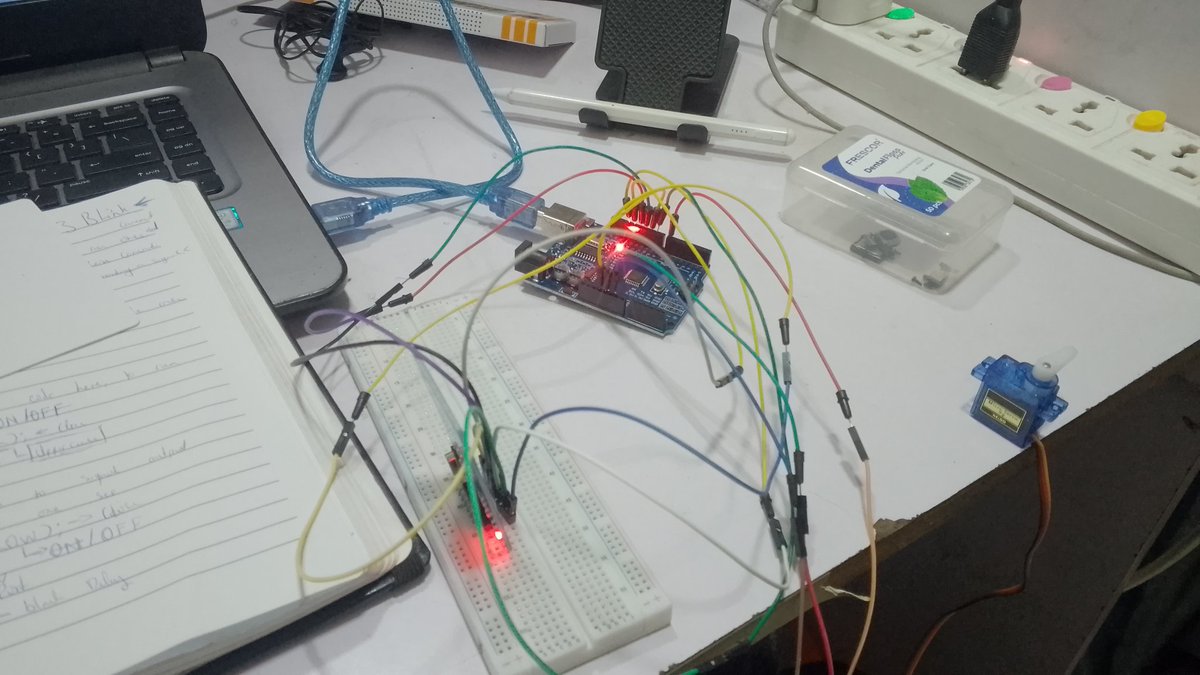
Somebody shout DOBALE!! 🔥🔥 Alright, the gist: This is, in simple terms, a surge guard for protecting electrical appliances. The concept, at the very least ♧ I simulated a power surge using the potentiometer ♧ 3 yellow blinks -> checking whether it's fine to switch to live
Shawn 白 tweet media
Shawn 白 tweet media
English
4
5
47
1.7K
YFE Embedded
YFE Embedded@yfe_embedded·
@princess_yfe Exactly! Those who keep up with these trends and make themselves masters of it are going to be the hot cakes in the long run 🔥🔥🔥
English
1
0
1
20
Princess Bamigboye
Princess Bamigboye@princess_yfe·
Honestly, this is one of the reasons I keep telling engineers to stop viewing hardware and AI as separate worlds The future is clearly moving toward intelligent physical systems And the engineers who understand both the intelligence AND the hardware constraints behind it are going to stand out globally
English
1
0
1
17
YFE Embedded
YFE Embedded@yfe_embedded·
Most people use Edge AI every single day. They don’t realize they’re interacting with one of the most important shifts in modern engineering. • Your phone unlocking with facial recognition • A drone avoiding obstacles mid-flight • A factory camera detecting defects instantly • A medical wearable monitoring abnormal vitals in real time None of these systems can afford to send every decision to the cloud and wait because in the real world, latency changes everything. A delayed Netflix recommendation is annoying. A delayed response from an autonomous system can destroy equipment. Or worse. That’s why Edge AI matters. For years, AI has mostly lived inside massive cloud infrastructure. Devices collected data. Sent it somewhere else. Waited for instructions. But modern systems are changing the model completely. Now, intelligence is moving directly onto the device itself, which means embedded systems are no longer just sensing and transmitting data. They are: • Interpreting environments • Recognizing patterns • Making decisions locally • Responding in real time And they’re doing all of this under brutal constraints: • Limited power • Limited memory • Limited compute resources • Real-time timing requirements That changes engineering completely. Now optimization becomes everything. • Can the model run efficiently? • Is inference fast enough? • Can the device operate without internet access? • Is the system thermally stable? • Does the power budget still hold? This is why Edge AI is becoming one of the most valuable intersections in engineering today: AI × Embedded Systems × Real-Time Engineering × Hardware Optimization And the engineers who understand all four are becoming increasingly rare. At YFE Embedded, this is exactly the direction we’re building toward. Because the future will not belong to intelligent systems. It will belong to systems that are intelligent, efficient, secure, and capable of surviving real-world conditions.
YFE Embedded tweet media
English
3
1
3
105
Shawn 白
Shawn 白@ShawnQuestt·
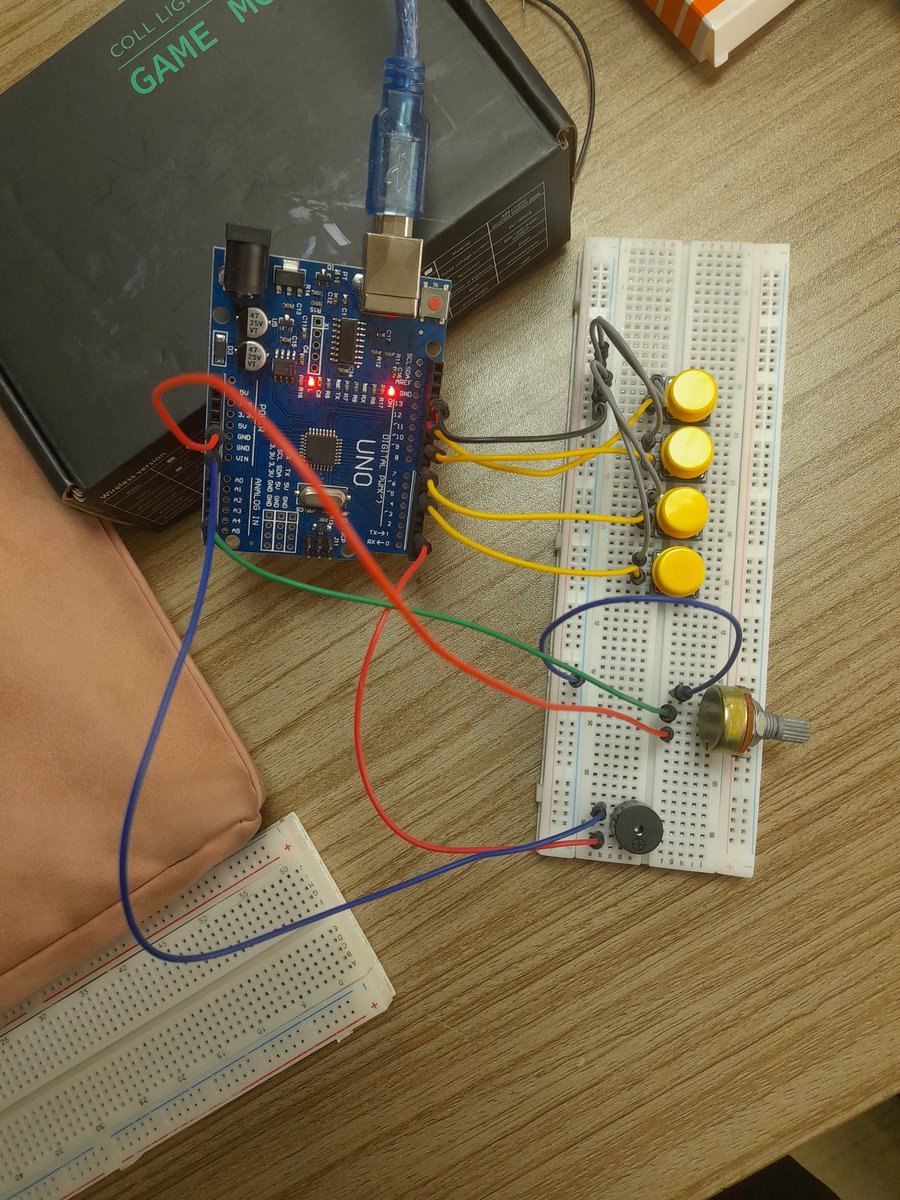
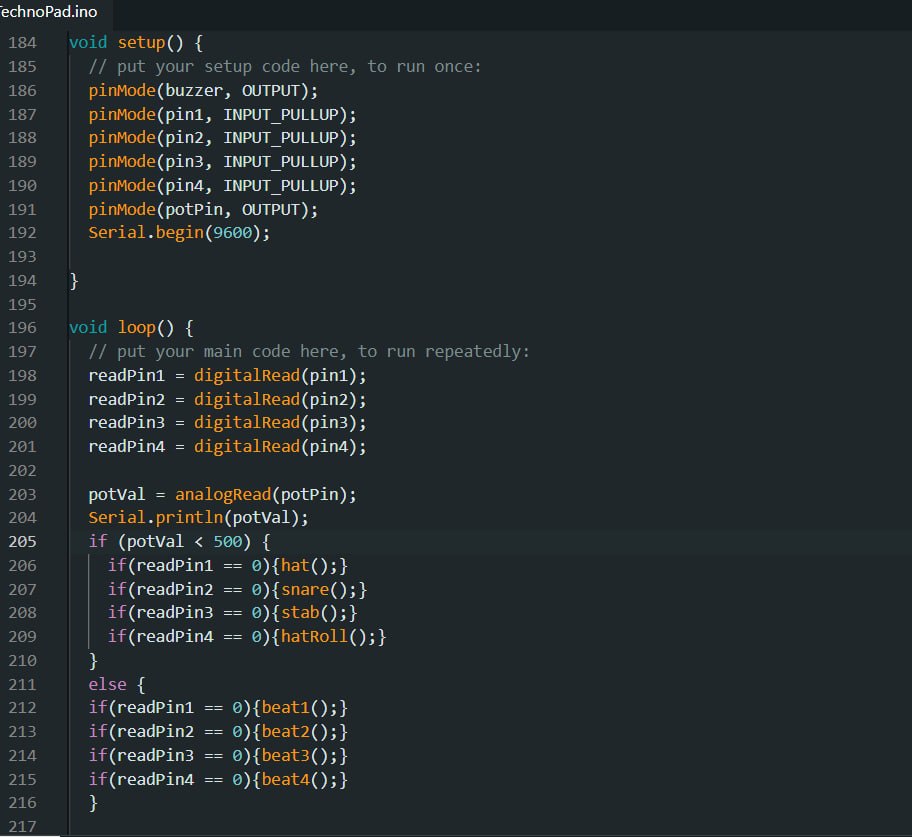
Ughh, I'm so tired... The Technopad, y'all!! Another mini project of mine where I mash together what I've learnt so far Quick info: The push button works as a railway system of sorts. On one track, there's constant flow until switched to the other. This is done by pressing down
Shawn 白 tweet mediaShawn 白 tweet media
English
3
3
24
573
YFE Embedded
YFE Embedded@yfe_embedded·
The interesting thing about Edge AI is that it forces multiple engineering disciplines to collide at once. Embedded systems. Optimization. Real-time systems. AI. Hardware architecture. The engineers who can operate comfortably across all those layers are going to become extremely difficult to replace.
English
0
0
1
27
YFE Embedded
YFE Embedded@yfe_embedded·
One thing the industry is beginning to realize very quickly is that intelligence alone is no longer enough. The next generation of engineering value will come from systems that can think efficiently under real-world constraints. Low power. Low latency. High reliability. That combination is becoming one of the hardest engineering problems to solve.
English
0
0
2
22