Yishay Pinto
457 posts

Yishay Pinto
@YishayP
Phage lover. Genomicist. Principal investigator and head of the Human Virome Lab @BIU. Former postdoc in Ami Bhatt lab @Stanford.
Katılım Mart 2020
551 Takip Edilen362 Takipçiler

Excited to share this new interview about our work at the @goodmanfaculty and The Dangoor Center For Personalized Medicine.
We're diving deep into the gut virome for the future of personalized medicine.
Full story: dangoor-medicine.biu.ac.il/node/416
English
Yishay Pinto retweetledi

Excited to share our new @mBioJournal paper! We reveal regulatory principles that shape TadA-dependent A-to-I RNA editing in E. coli and show that TadA supports optimal growth in rich medium. Great job, Danielle and Ofir! journals.asm.org/doi/10.1128/mb… #RNAediting #Microbiology
English
Yishay Pinto retweetledi

Excited to share this review🔔, we spent sometime thinking about
phage–microbiome–immune–oncology axis for phage therapy in cancer!
#phage
Phage therapy in oncology: opportunities for cancer prevention and treatment: Trends in Molecular Medicine cell.com/trends/molecul…
English
Yishay Pinto retweetledi

New paper 🔔 Collaboration w Matt Sullivan Lab, Marissa Gittrich
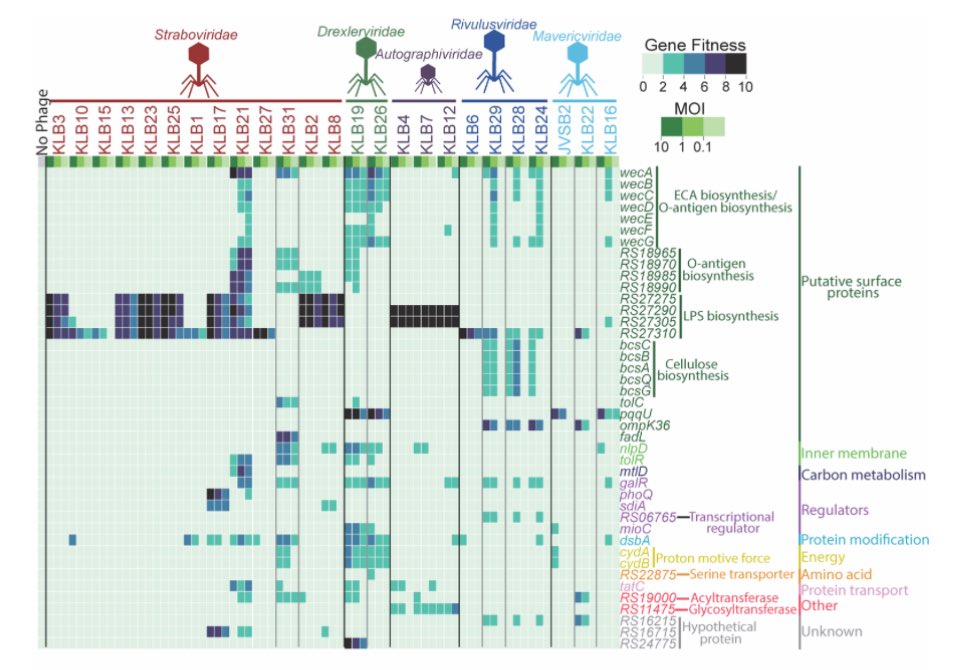
Klebsiella phage biology has focused almost entirely on capsulated strains, but capsule loss is the #1 resistance mechanism under phage predation. We used a naturally acapsular host to reveal the receptor landscape

English
Yishay Pinto retweetledi

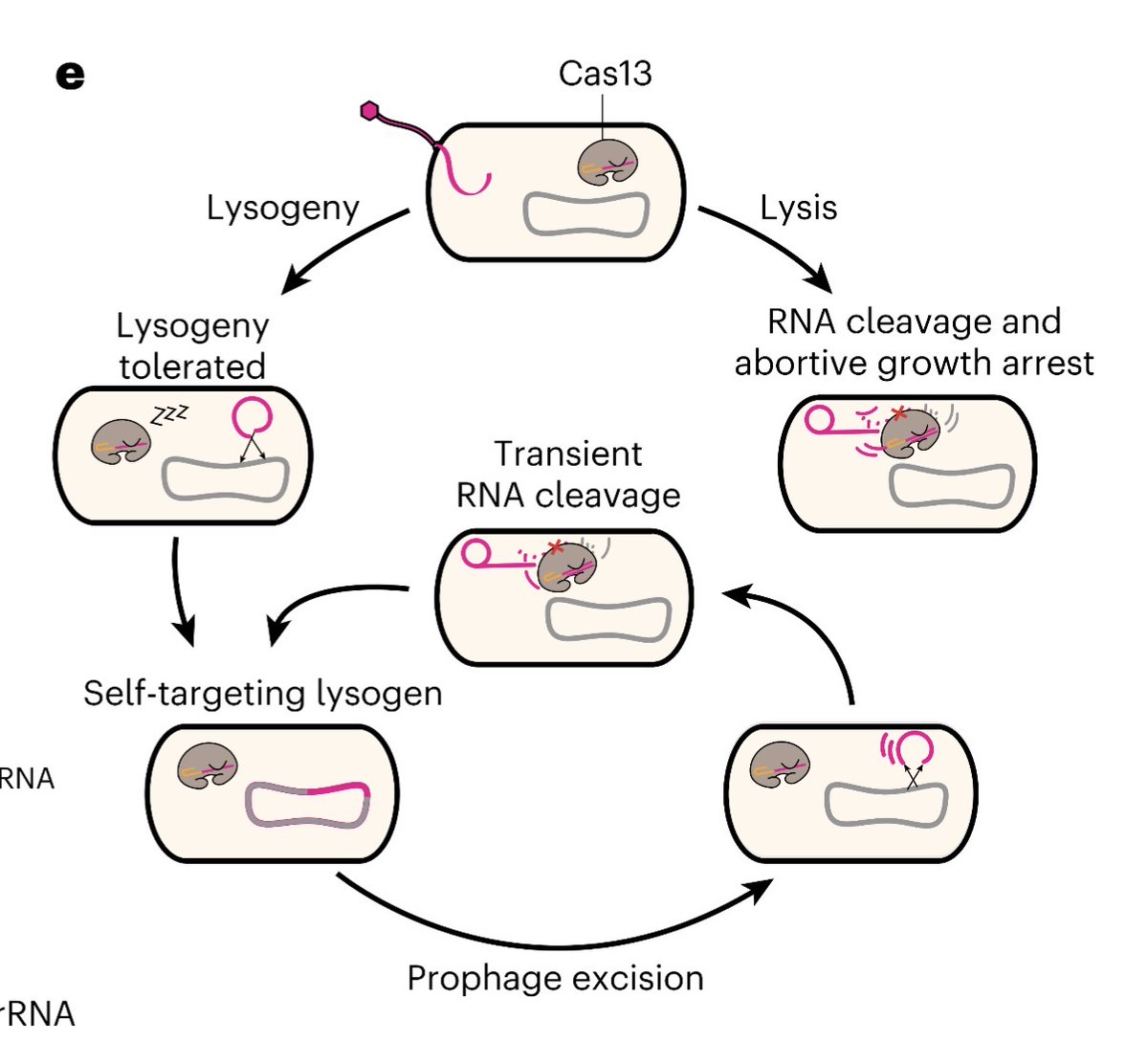
Our new paper on lysogeny enforcement by RNA-targeting CRISPR is out in Nature Micro! When prophages induce, Cas13 transiently activates and causes them to re-integrate. Link below for a great story from my student Marshall Godsil. tinyurl.com/ycv8593w

English
Yishay Pinto retweetledi

🚨 𝗡𝗲𝘄 𝗽𝗿𝗲𝗽𝗿𝗶𝗻𝘁!
I'm excited to share our new manuscript exploring the gut virome during pregnancy and early life in the Lifelines NEXT cohort.
@GroMicrobiome @researchumcg
🔗 𝗣𝗿𝗲𝗽𝗿𝗶𝗻𝘁:
doi.org/10.64898/2026.…

English
Yishay Pinto retweetledi

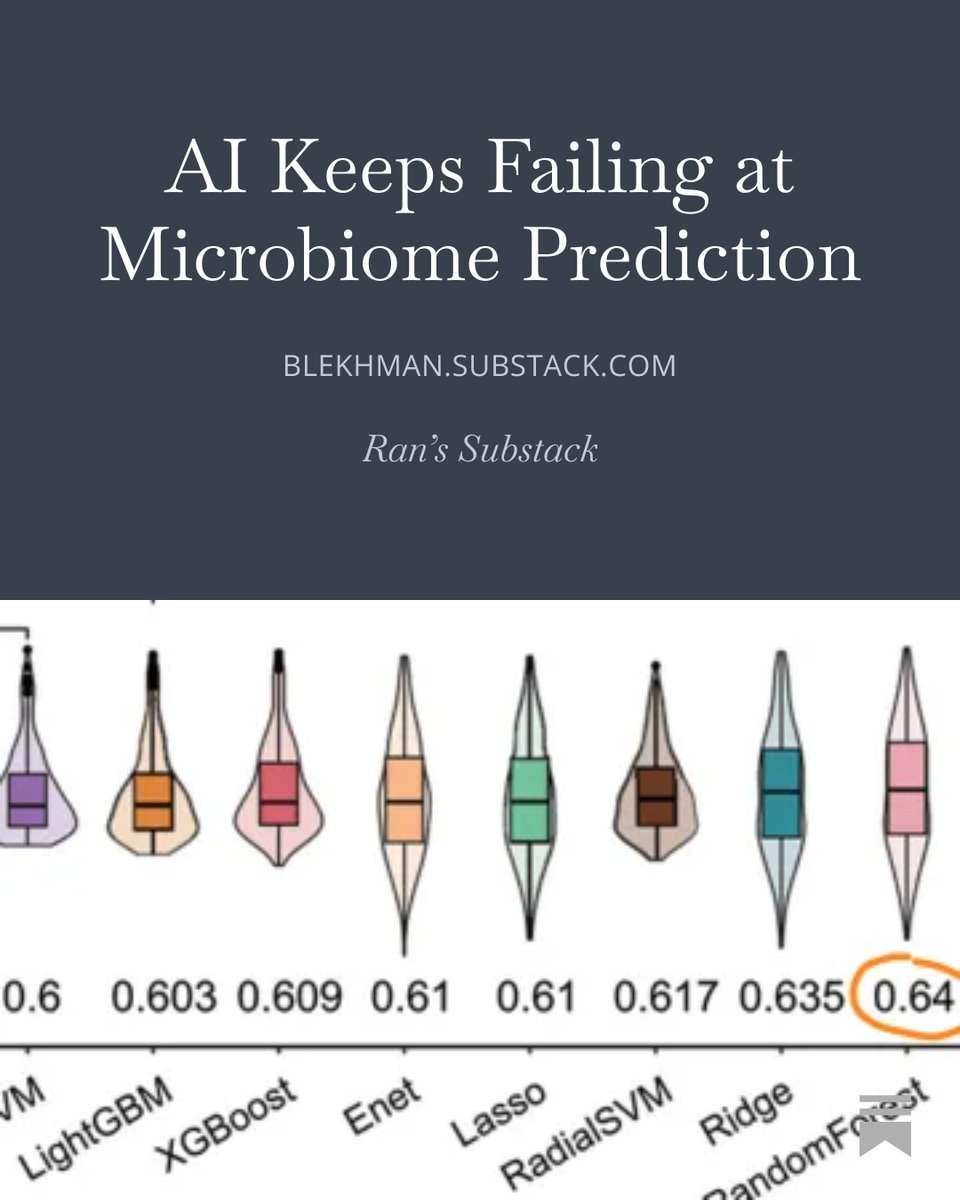
AI has huge promise for genomics -- but it has consistently failed at microbiome-based prediction.
My new post on why simple models keep winning, where deep learning actually earns its place, and where the field is headed.
blekhman.substack.com/p/ai-keeps-fai…

English
Yishay Pinto retweetledi

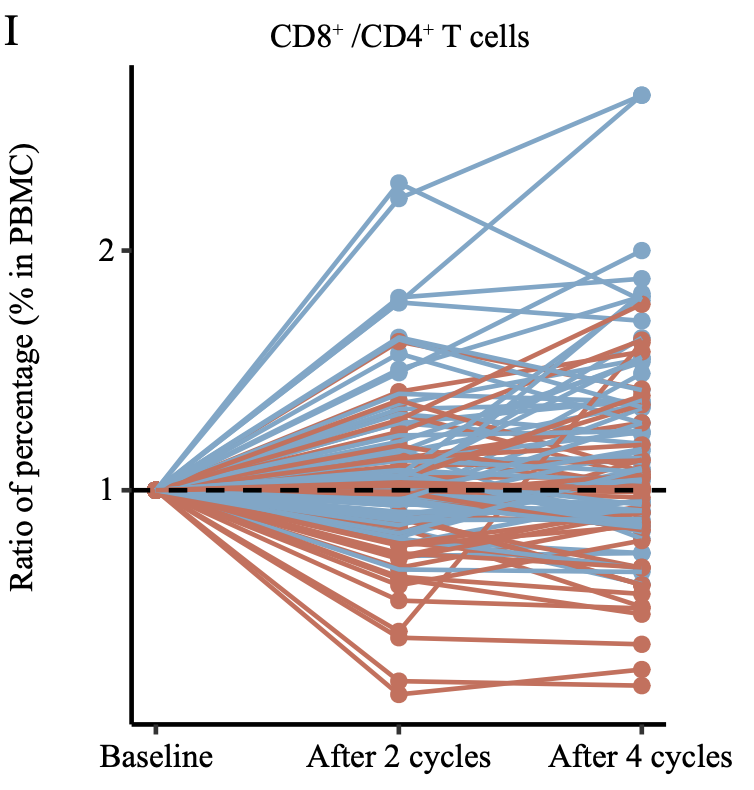
More evidence that #immunotherapy works better in the morning.
In a prospective, randomized phase III trial, giving first-line chemo-immunotherapy earlier in the day (<15:00) nearly doubled PFS (11.3 vs 5.7 mo, HR 0.40) and improved OS (28.0 vs 16.8 mo; HR 0.42) in advanced NSCLC.
More effective, no added cost and easy to implement.
Likely reflects circadian immune rhythms with greater CD8⁺ activation and less T-cell exhaustion.
doi.org/10.1038/s41591… @OncoAlert


English

Exceptional work by the @CalebLareau Lab led by @nyeo_sherry reveals that specific genetic variants prevent the immune system from suppressing the virus.
A landmark study demonstrating a genetics → viral persistence → clinical outcome route.
English

Why do 95% of us carry EBV asymptomatically, while others develop MS or cancer?
It is this persistent high viral load rather than that infection correlates with risks like MS.
Caleb Lareau@CalebLareau
⚠️ If you’re reading this, you’ve been infected* ⚠️ *~95% the human population has been infected by the Epstein-Barr Virus (EBV). Today in @Nature with @nyeo_sherry, @EMC22381830, @RyanDhindsa @SlavePetrovski, we shed some light on what happens next. nature.com/articles/s4158…
English
Yishay Pinto retweetledi

Closely related microbes tend to live in similar communities across Earth’s environments. We call this pattern community conservatism - extending established ecological patterns to the microbial world. 🧬🌍 #MicrobialEcology
Read the full article here: doi.org/10.1038/s41559…

English
Yishay Pinto retweetledi

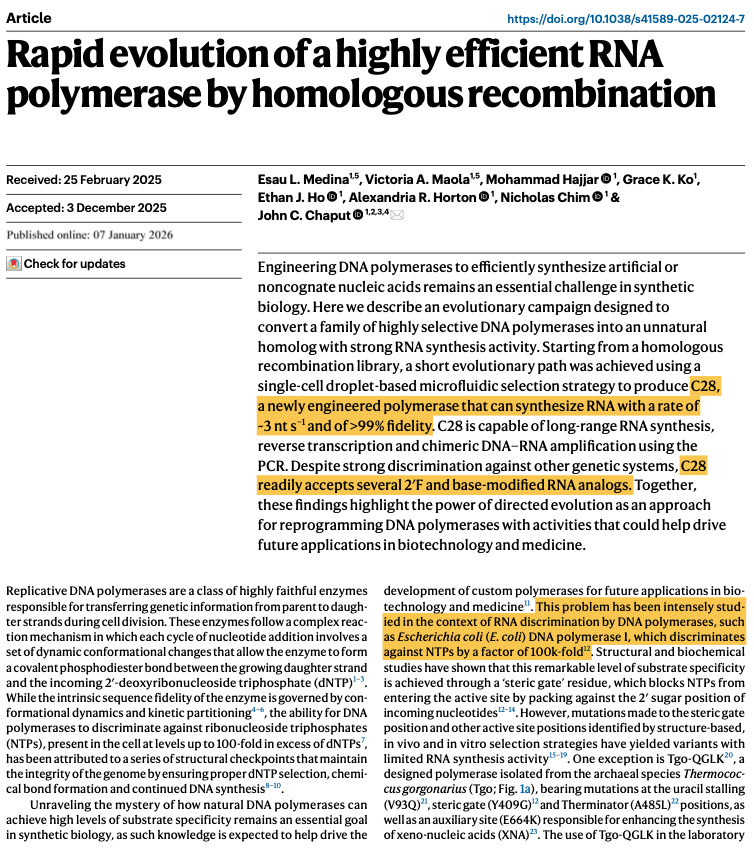
This paper is wild. After 3 rounds of directed evolution, they converted a DNA polymerase into an enzyme that can do:
- RNA synthesis
- Reverse transcription
- Synthesis of "unnatural" nucleotides
- Synthesis of DNA-RNA chimeras
One of the best papers I’ve read recently.
For context: In nature, it is DNA polymerase that takes a DNA sequence as a template and then copies it. These enzymes are crucial in replicating the genome for cell division, and they are EXTREMELY specific for DNA over RNA. This is key because RNA nucleotides are present in the cell at concentrations ~100x higher than DNA nucleotides, so the enzyme has evolved clever strategies to select one over the other.
RNA polymerases, for comparison, are the enzymes that take a DNA sequence as template and then convert it into RNA. They are involved in gene expression, for example.
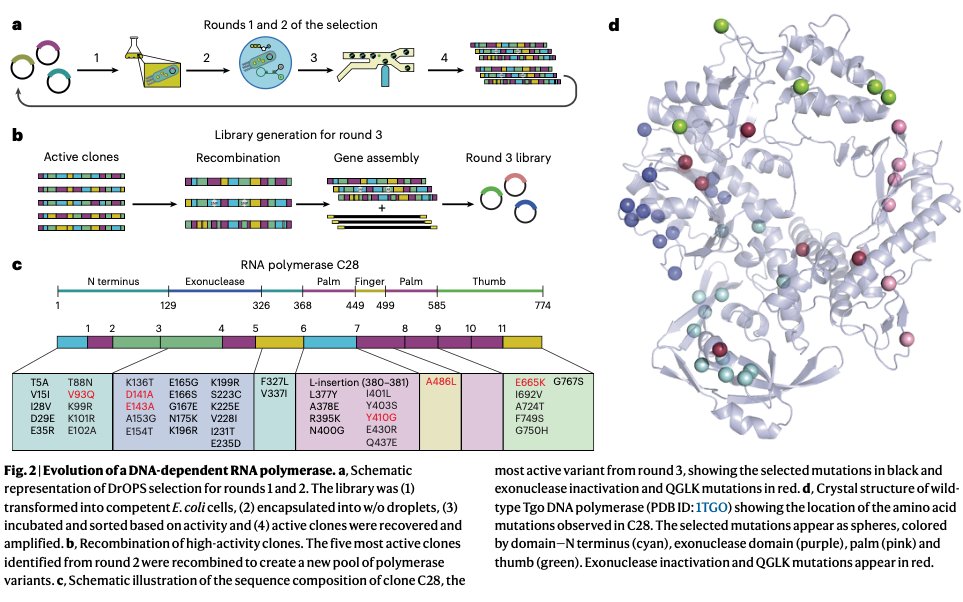
To convert a DNA polymerase into an RNA polymerase (and all the other functions I mentioned earlier), the authors did a fairly straightforward directed evolution experiment.
First, they took four DNA polymerase enzymes belonging to various archaea. These DNA polymerases don’t check for DNA vs. RNA as stringently as other types of cells, so they’re a good starting point to evolve RNA polymerases. The authors inserted some targeted mutations into these enzymes, based on known mutations in the literature. For example, they swapped the amino acid at position 409 for a smaller amino acid, thus removing a “gate” that keeps RNA building blocks from entering the enzyme.
Next, they took the four genes encoding these DNA polymerases and cut them up into 12 segments each. They randomly stitched these 12 segments together — from the four different genes — to build millions of unique variants. Each shuffled gene was inserted into an E. coli cell.
Then, they grew up these cells (each carrying a unique polymerase) and put them into microfluidic droplets. A device isolates each droplet, lyses the cell open, and releases the polymerase. The droplet also contains RNA building blocks and a DNA template, encoding a fluorescent reporter. If the polymerase begins synthesizing RNA, it will produce a detectable signal. They screened about 100 million droplets in 10 hours of work, searching for those with a signal.
For each well that yields a fluorescent signal, the researchers isolated the DNA and sequenced it to figure out which polymerase it was. They repeated this 3x times, finally isolating a really excellent RNA polymerase variant which they called "C28."
C28 has 39 mutations compared to the wildtype enzymes. It incorporates about 3.3 nucleotides of RNA per second, with 99.8% fidelity. The crazy thing is that this enzyme can also copy DNA or RNA templates back into DNA (reverse transcription), or use chimeric DNA-RNA molecules as a template and amplify them. It is just a super versatile polymerase that can act on DNA, RNA, or modified nucleotides, to build just about anything.


English

Very honoured to have received the Maximilian Order for Sciene and Art, the highest distinction of the Free State of Bavaria. It’s also special in being restricted to 100 living scientists or artists, with an impressive list of past recipients. More at helmholtz-HIRI.de

English
Yishay Pinto retweetledi

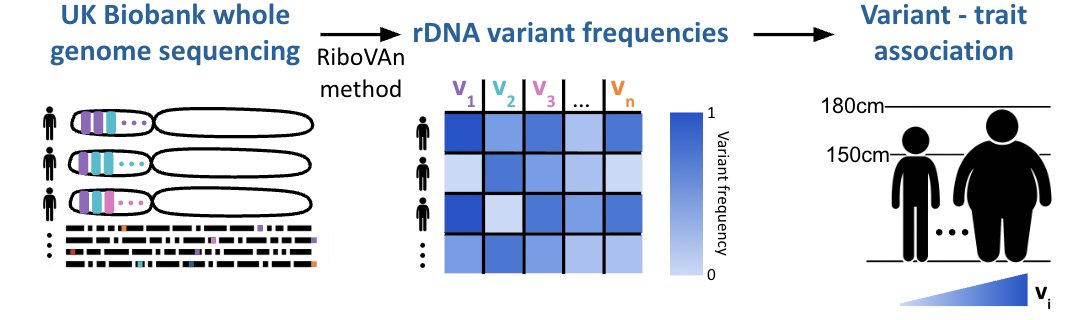
Ribosomal RNA (rRNA) genes are found in hundreds of copies in the human genome.
Do sequence variations in these paralogs change the ribosome function? Yes!
I am excited to share our new preprint @mbarnalab @jkpritch in collaboration with Calico:
medrxiv.org/content/10.110…
1/8

English

UHGV is an amazing resource! We've integrated UHGV into our Phanta databases. If you're profiling the human gut and haven't tried Phanta yet, now is the perfect time to try and utilize the new UHGV db!
github.com/bhattlab/phanta
github.com/snayfach/UHGV
Antonio Camargo@apcamargo_
🚨New preprint out! We present a foundational genomic resource of human gut microbiome viruses. It delivers high-quality, deeply curated data spanning taxonomy, predicted hosts, structures, and functions, providing a reference for gut virome research (1/8) biorxiv.org/content/10.110…
English
Yishay Pinto retweetledi

Call for 2026-27 Azrieli International Postdoctoral Fellowship!
A top-tier opportunity for postdocs (non-Israeli) in STEM, Humanities, & Social Sciences to conduct research in Israel.
Deadline: Nov 19, 2025.
Interested in joining our lab ? DM us!
azrielifoundation.org/azrieli-fellow…
English
Yishay Pinto retweetledi

🚨New preprint out!
We present a foundational genomic resource of human gut microbiome viruses. It delivers high-quality, deeply curated data spanning taxonomy, predicted hosts, structures, and functions, providing a reference for gut virome research (1/8) biorxiv.org/content/10.110…

English