MedBased

5.3K posts

MedBased banner
MedBased

MedBased

@medbased

Entrou em Temmuz 2013
595 Seguindo142 Seguidores
MedBased retweetou
Michal Malewicz
Michal Malewicz@michalmalewicz·
Your Mac OS folders don't have to be boring. Grab the PNG's attached and change them:
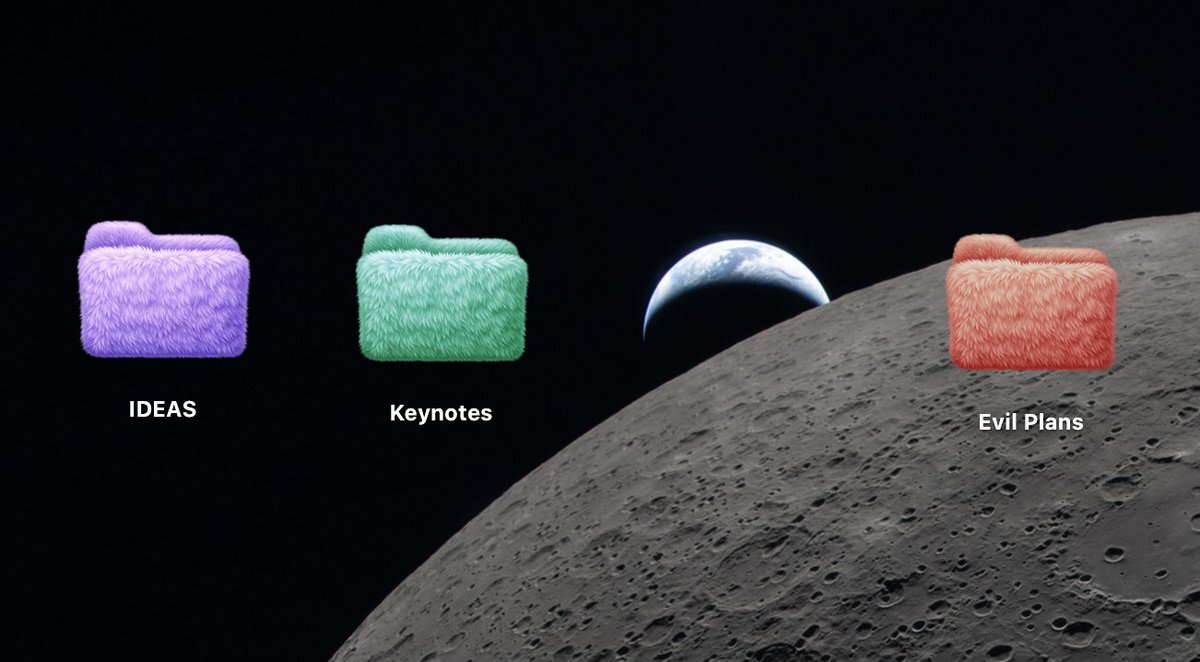
Michal Malewicz tweet mediaMichal Malewicz tweet mediaMichal Malewicz tweet mediaMichal Malewicz tweet media
English
77
352
7.4K
822.5K
MedBased retweetou
old memory
old memory@old_memory·
1.6 legendary sound
English
65
176
3.4K
344.2K
MedBased retweetou
Vaishnavi
Vaishnavi@_vmlops·
MICROSOFT BUILT A TOOL THAT CONVERTS LITERALLY ANYTHING INTO CLEAN MARKDOWN FOR YOUR LLM pdfs. word docs. excel. powerpoint. audio. youtube urls one pip install and your AI pipeline stops choking on raw files forever no custom parsers. no broken layouts. no garbled text. just clean, structured markdown your LLM can actually read github.com/microsoft/mark…
English
79
513
5K
779.6K
MedBased retweetou
Chainlink
Chainlink@chainlink·
LLM hallucinations are a massive roadblock to enterprise adoption of AI. Swift, UBS, Euroclear, & 20+ major organizations advanced a solution to the $58B+ annual corporate actions problem by leveraging Chainlink to reduce AI hallucination risk. LINK everything.
English
144
445
2.1K
529.6K
MedBased retweetou
Latest in space
Latest in space@latestinspace·
#NEWS 🚨: Netflix will live stream Artemis II’s lunar flyby tomorrow Beginning at 1 pm ET
Latest in space tweet mediaLatest in space tweet media
English
367
3.9K
34.5K
1.4M
MedBased retweetou
Andrej Karpathy
Andrej Karpathy@karpathy·
Farzapedia, personal wikipedia of Farza, good example following my Wiki LLM tweet. I really like this approach to personalization in a number of ways, compared to "status quo" of an AI that allegedly gets better the more you use it or something: 1. Explicit. The memory artifact is explicit and navigable (the wiki), you can see exactly what the AI does and does not know and you can inspect and manage this artifact, even if you don't do the direct text writing (the LLM does). The knowledge of you is not implicit and unknown, it's explicit and viewable. 2. Yours. Your data is yours, on your local computer, it's not in some particular AI provider's system without the ability to extract it. You're in control of your information. 3. File over app. The memory here is a simple collection of files in universal formats (images, markdown). This means the data is interoperable: you can use a very large collection of tools/CLIs or whatever you want over this information because it's just files. The agents can apply the entire Unix toolkit over them. They can natively read and understand them. Any kind of data can be imported into files as input, and any kind of interface can be used to view them as the output. E.g. you can use Obsidian to view them or vibe code something of your own. Search "File over app" for an article on this philosophy. 4. BYOAI. You can use whatever AI you want to "plug into" this information - Claude, Codex, OpenCode, whatever. You can even think about taking an open source AI and finetuning it on your wiki - in principle, this AI could "know" you in its weights, not just attend over your data. So this approach to personalization puts *you* in full control. The data is yours. In Universal formats. Explicit and inspectable. Use whatever AI you want over it, keep the AI companies on their toes! :) Certainly this is not the simplest way to get an AI to know you - it does require you to manage file directories and so on, but agents also make it quite simple and they can help you a lot. I imagine a number of products might come out to make this all easier, but imo "agent proficiency" is a CORE SKILL of the 21st century. These are extremely powerful tools - they speak English and they do all the computer stuff for you. Try this opportunity to play with one.
Farza 🇵🇰🇺🇸@FarzaTV

This is Farzapedia. I had an LLM take 2,500 entries from my diary, Apple Notes, and some iMessage convos to create a personal Wikipedia for me. It made 400 detailed articles for my friends, my startups, research areas, and even my favorite animes and their impact on me complete with backlinks. But, this Wiki was not built for me! I built it for my agent! The structure of the wiki files and how it's all backlinked is very easily crawlable by any agent + makes it a truly useful knowledge base. I can spin up Claude Code on the wiki and starting at index.md (a catalog of all my articles) the agent does a really good job at drilling into the specific pages on my wiki it needs context on when I have a query. For example, when trying to cook up a new landing page I may ask: "I'm trying to design this landing page for a new idea I have. Please look into the images and films that inspired me recently and give me ideas for new copy and aesthetics". In my diary I kept track of everything from: learnings, people, inspo, interesting links, images. So the agent reads my wiki and pulls up my "Philosophy" articles from notes on a Studio Ghibli documentary, "Competitor" articles with YC companies whose landing pages I screenshotted, and pics of 1970s Beatles merch I saved years ago. And it delivers a great answer. I built a similar system to this a year ago with RAG but it was ass. A knowledge base that lets an agent find what it needs via a file system it actually understands just works better. The most magical thing now is as I add new things to my wiki (articles, images of inspo, meeting notes) the system will likely update 2-3 different articles where it feels that context belongs, or, just creates a new article. It's like this super genius librarian for your brain that's always filing stuff for your perfectly and also let's you easily query the knowledge for tasks useful to you (ex. design, product, writing, etc) and it never gets tired. I might spend next week productizing this, if that's of interest to you DM me + tell me your usecase!


English
412
781
8.7K
1.2M
MedBased retweetou
HebertySales
HebertySales@HebertySales·
Certainly you’ll use this in you designs!! Grainy paper effect
English
0
118
1.2K
43.9K
MedBased retweetou
Vadim
Vadim@VadimStrizheus·
pov: you have been using Claude Code for 3 months and just discovered skill graphs. Give this to your agent. You’ll thank me later. 👇
Heinrich@arscontexta

x.com/i/article/2023…

English
31
123
1.7K
390.3K
MedBased retweetou
Rimsha Bhardwaj
Rimsha Bhardwaj@heyrimsha·
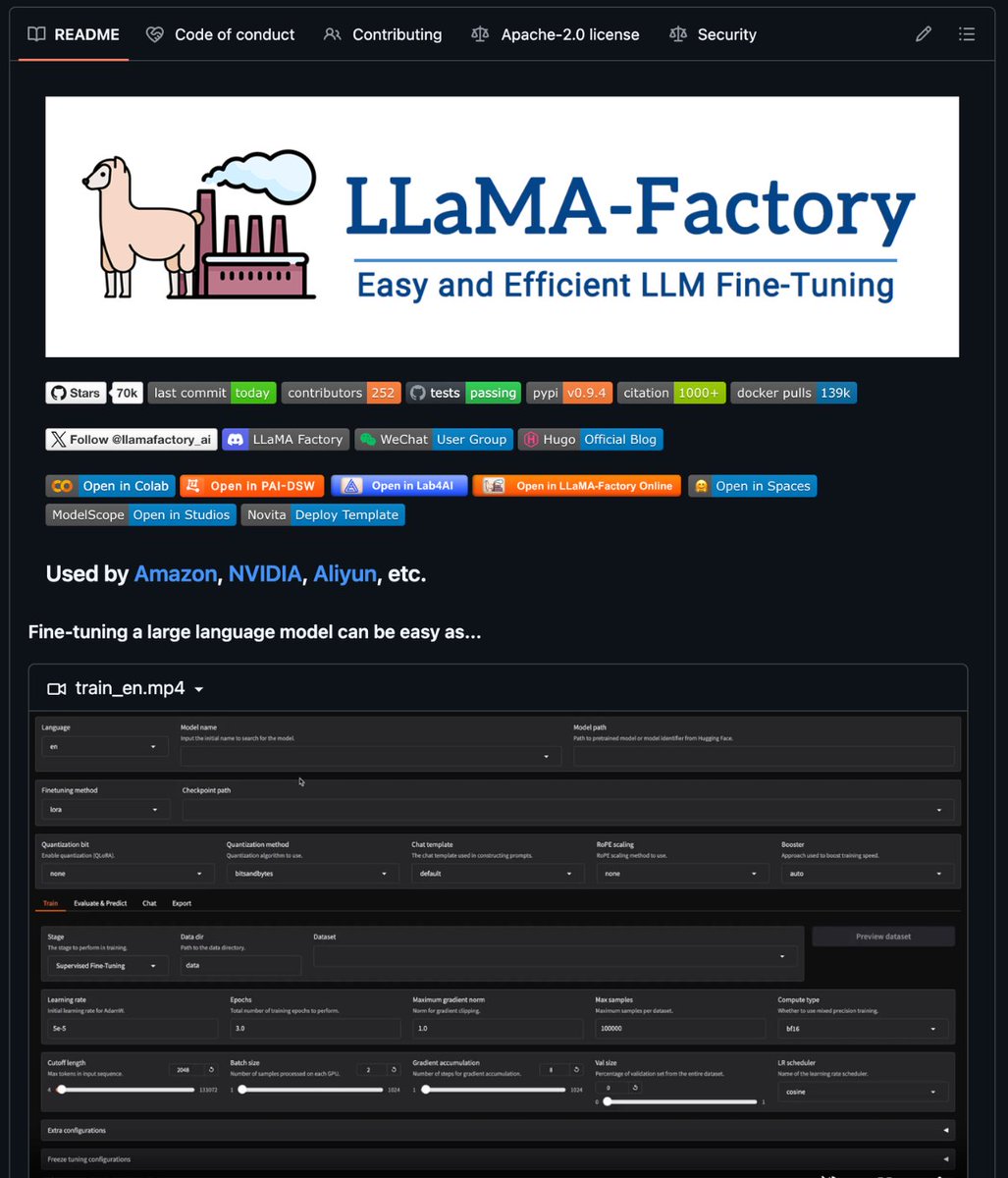
RIP expensive fine-tuning pipelines. This open source framework lets you fine-tune 100+ LLMs including LLaMA, DeepSeek, Qwen, and Mistral on a single consumer GPU using LoRA or QLoRA with a web UI that requires zero training code to operate. It's called LlamaFactory and it supports every major training method, SFT, DPO, PPO, RLHF, ORPO, and KTO, all configurable through LlamaBoard without writing a single line of Python. → Quantization support covers 4-bit, 8-bit, AQLM, AWQ, GPTQ, and 12 more methods → FlashAttention-2 and Unsloth integration for faster training and lower VRAM usage → Export to Ollama and vLLM directly from the UI for instant local deployment after training 40.5K stars. 100% Opensource. Link in comments.
Rimsha Bhardwaj tweet media
English
21
64
282
15.9K
MedBased retweetou
Aakash Gupta
Aakash Gupta@aakashgupta·
Andrew Ng dropped absolute gold on AI careers
English
11
257
1.5K
102.3K
MedBased retweetou
Andrej Karpathy
Andrej Karpathy@karpathy·
LLM Knowledge Bases Something I'm finding very useful recently: using LLMs to build personal knowledge bases for various topics of research interest. In this way, a large fraction of my recent token throughput is going less into manipulating code, and more into manipulating knowledge (stored as markdown and images). The latest LLMs are quite good at it. So: Data ingest: I index source documents (articles, papers, repos, datasets, images, etc.) into a raw/ directory, then I use an LLM to incrementally "compile" a wiki, which is just a collection of .md files in a directory structure. The wiki includes summaries of all the data in raw/, backlinks, and then it categorizes data into concepts, writes articles for them, and links them all. To convert web articles into .md files I like to use the Obsidian Web Clipper extension, and then I also use a hotkey to download all the related images to local so that my LLM can easily reference them. IDE: I use Obsidian as the IDE "frontend" where I can view the raw data, the the compiled wiki, and the derived visualizations. Important to note that the LLM writes and maintains all of the data of the wiki, I rarely touch it directly. I've played with a few Obsidian plugins to render and view data in other ways (e.g. Marp for slides). Q&A: Where things get interesting is that once your wiki is big enough (e.g. mine on some recent research is ~100 articles and ~400K words), you can ask your LLM agent all kinds of complex questions against the wiki, and it will go off, research the answers, etc. I thought I had to reach for fancy RAG, but the LLM has been pretty good about auto-maintaining index files and brief summaries of all the documents and it reads all the important related data fairly easily at this ~small scale. Output: Instead of getting answers in text/terminal, I like to have it render markdown files for me, or slide shows (Marp format), or matplotlib images, all of which I then view again in Obsidian. You can imagine many other visual output formats depending on the query. Often, I end up "filing" the outputs back into the wiki to enhance it for further queries. So my own explorations and queries always "add up" in the knowledge base. Linting: I've run some LLM "health checks" over the wiki to e.g. find inconsistent data, impute missing data (with web searchers), find interesting connections for new article candidates, etc., to incrementally clean up the wiki and enhance its overall data integrity. The LLMs are quite good at suggesting further questions to ask and look into. Extra tools: I find myself developing additional tools to process the data, e.g. I vibe coded a small and naive search engine over the wiki, which I both use directly (in a web ui), but more often I want to hand it off to an LLM via CLI as a tool for larger queries. Further explorations: As the repo grows, the natural desire is to also think about synthetic data generation + finetuning to have your LLM "know" the data in its weights instead of just context windows. TLDR: raw data from a given number of sources is collected, then compiled by an LLM into a .md wiki, then operated on by various CLIs by the LLM to do Q&A and to incrementally enhance the wiki, and all of it viewable in Obsidian. You rarely ever write or edit the wiki manually, it's the domain of the LLM. I think there is room here for an incredible new product instead of a hacky collection of scripts.
English
2.7K
6.6K
55.8K
19.8M
MedBased retweetou
Satya Nadella
Satya Nadella@satyanadella·
We’re bringing our growing MAI model family to every developer in Foundry, including … · MAI-Transcribe-1, most accurate transcription model in world across 25 languages · MAI-Voice-1, natural, expressive speech generation · MAI-Image-2, our most capable image model yet Start building: microsoft.ai/news/today-wer…
GIF
English
221
280
1.8K
274.8K
MedBased retweetou
Tech with Mak
Tech with Mak@techNmak·
Someone removed the vector database from RAG and got better results. Much better. Here's what traditional RAG actually does under the hood: it chunks your document into pieces, embeds those pieces into vectors, and retrieves based on semantic similarity. The assumption is that similar text = relevant text. That assumption breaks completely for professional documents. When you ask "what were the debt trends in Q3?", vector search returns chunks that look similar to that question. But the actual answer might be buried in an appendix, referenced across three sections, in a part of the document that shares zero semantic overlap with your query. Traditional RAG never finds it. Similarity ≠ relevance. PageIndex was built around that insight. Inspired by AlphaGo, it builds a hierarchical tree index from your document - an intelligent table of contents optimized for LLM reasoning. Then it navigates that tree the way a human expert would. Not pattern matching. Reasoning. "Debt trends are usually in the financial summary or Appendix G, let's look there." What disappears: → No vector DB to build or maintain → No arbitrary chunking that breaks cross-section context → No opaque retrieval you can't explain or trace What you get: → Retrieval traceable to exact page and section references → Multi-step reasoning across document structure → Works on financial reports, legal filings, regulatory documents The benchmark: → PageIndex: 98.7% on FinanceBench → Perplexity: 45% → GPT-4o: 31% Open source.
Tech with Mak tweet media
English
17
100
687
42.1K
MedBased retweetou
Moon Dev
Moon Dev@MoonDevOnYT·
claude code LEAKED everything you need to know and why anthropic is cooked
English
4
28
332
20.1K
MedBased retweetou
Ryan Saavedra
Ryan Saavedra@RyanSaavedra·
Secretary of State Marco Rubio gives an excellent explanation on why the U.S. needed to strike Iran It's less than 2 minutes and is worth the watch
English
1.3K
5.8K
29.1K
3.3M
MedBased retweetou
Barchart
Barchart@Barchart·
BREAKING 🚨: Nike $NKE plunges to its lowest price in more than a decade 📉📉
Barchart tweet media
English
203
372
3K
442.7K
MedBased retweetou
NoLimit
NoLimit@NoLimitGains·
🚨 U.S. rent prices are falling
NoLimit tweet media
English
487
401
5.4K
815.6K