

h
1.6K posts


Memory turned ChatGPT into a personal assistant. Shared memory will turn agents into cultures.
Because when agents can:
Remember
Communicate
Share what they know
...you stop getting isolated tools. You start getting ecosystems.
English

Who is the best guest to discuss zkTLS on @bankless?
English
That's it for now. See you tomorrow with some insights around from the celebrated Goldreich and Kahan, 1915!
English
So here it is as promised! In a sequence of threads, we are talking about various proof systems that can be implemented in constant rounds. 🧵
1/ Why focus on constant rounds?
In any proof system, a prover convinces a verifier about a claim through a series of interactions. In practice, we often use non-interactive proofs—just one message from the prover to the verifier. So, we need a transformation from an interactive version to a non-interactive one. These transformations are typically hash-based and add additional heaviness to the proving computation.
Vanishree Rao@vanishree_rao
The world is rightly focused on the cost and time of proof generation -- and for good reason. I've been thinking about this from multiple angles, and ahead of a tweet series I'll be posting this week, here's a prelude. What impacts proving time and cost? At a high level, three key factors play a role: 1. Hardware – The machines running the proofs. 2. Prover algorithm – The core logic dictating proof generation efficiency. 3. Orchestration & pricing – How proving tasks are managed and allocated. Now, let's zoom in on the prover algorithm. One crucial factor that affects the complexity of proof generation is the number of rounds between the prover and verifier in the interactive PIOP (Polynomial Interactive Oracle Proofs). This isn't just relevant when applying the Fiat-Shamir transformation -- it also matters when considering modifications to it. Research has shown that Fiat-Shamir can be insecure in certain contexts, leading to the need for alternative transformations. Whichever the transformation is, the more rounds in the protocol, the more complexity is introduced by these transformations. More than a decade ago, I debunked a claim published in a top-tier conference that was indirectly tied to round complexity in zero-knowledge proof protocols (it was called "Revisiting Lower and Upper Bounds for Selective Decommitments"). The related-work deep-dive led me to learn about some of the most impactful results in this area -- many of which remain relevant today. This week, I'll be writing a series of threads exploring these insights, breaking down how round complexity shapes the landscape of proof systems. Stay tuned!
English

Here’s an experiment I’d like to see: social prompting.
Log in with your social account, have an AI app pull posts from your social network, and use all that as input to create things it thinks you will like.
This may solve the issue where people don’t know what to prompt for.
English
@Ismael_H_R @WholesumNet lol just kidding, i haven’t seen good alternatives
English

Value capture trends I see ZK:
- ZKVMs -> Prover Networks
- ZK Rollups -> Clusters (AggLayer and Elastic Chain)
- State proofs -> DVNs
- Offchain data -> zkTLS protocols
- Coprocessors -> Prover Networks
- Hardware -> Custom chips (ASICs, etc)
- ZKML -> ???
English

@socrates1024 One can have a thing that is temporarily illiquid but sbts are always that way?
English


can someone actually tell me why there are no software engineers over 40?
English
h ری ٹویٹ کیا

Gamified social privacy?
Discussed @anoncast_, shared social and tokenized privacy games and the history behind $ANON on the ZK Idea Maze with @_avichalp_
Link below 🫳

English


Today, 2% of homes in the USA are built in a factory.
Success is when we’ve flipped that and 98% of homes are built in factories.
Like these:



English

Math is just like the gym, the big three will give you biggest ROI:
Squat = Linear Algebra: hate it initially but then love it; the foundation of everything
Deadlift = Calculus: Gets fucking hard as you progress but has giant gains
Bench = Prob/stat: The most fun to spam
English


@AutismCapital The state can substitute for what women want from men, but it can’t substitute for what men want from women.
English

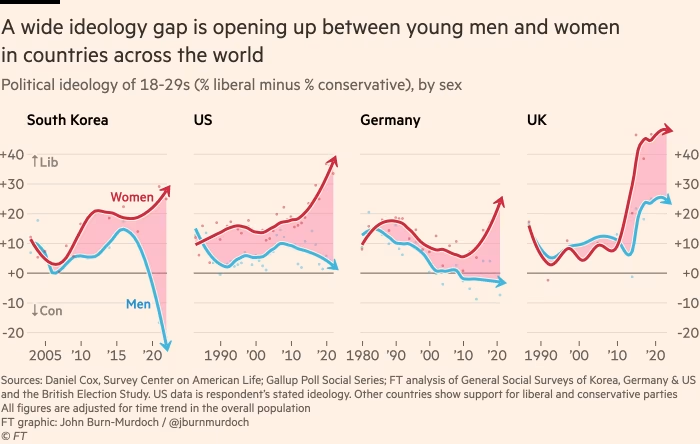
The delta in ideology gap between women and men has gone insane. What do you think the main cause is?
English


Sumcheck will have comparable impact to the transformer
Ingonyama (Now MoonMath AI)@Ingo_zk
Curious about the Sum-check protocol? We made an explainer video, inspired by @3blue1brown together with @a16z 🫡 Presenting: Sum-check 101 Narrations by @yuval_domb and @samrags_ ❤️ See our previous explainer, The Magic of Zero-Knowledge Proofs in the adjoining post 👇 1/2
English
h ری ٹویٹ کیا

We made FRI-Binius proofs smaller and faster, again!
Last week we published an update to the FRI-Binius paper that improves our ring-switching technique for small-field polynomial commitments.
eprint.iacr.org/2024/504
👇
English