Saar Bell

861 posts

Saar Bell

Saar Bell

@BellSaar

DTC Marketing. Owner of BellaPOINT, Beards & Brothers LONDON.

شامل ہوئے Aralık 2021
341 فالونگ220 فالوورز
Saar Bell ری ٹویٹ کیا
Dara Denney
Dara Denney@DenneyDara·
Here are the top performing formats in our ad accounts right now: 1. "David & Goliath" videos 2. AI Animation Videos 3. TikTok Love Letters 4. Native Reels 5. "We’re Not Cheap" videos 6. Listicles videos 7. Yapper ads with creators
English
14
24
531
30.8K
Saar Bell ری ٹویٹ کیا
Alex Cooper
Alex Cooper@alexgoughcooper·
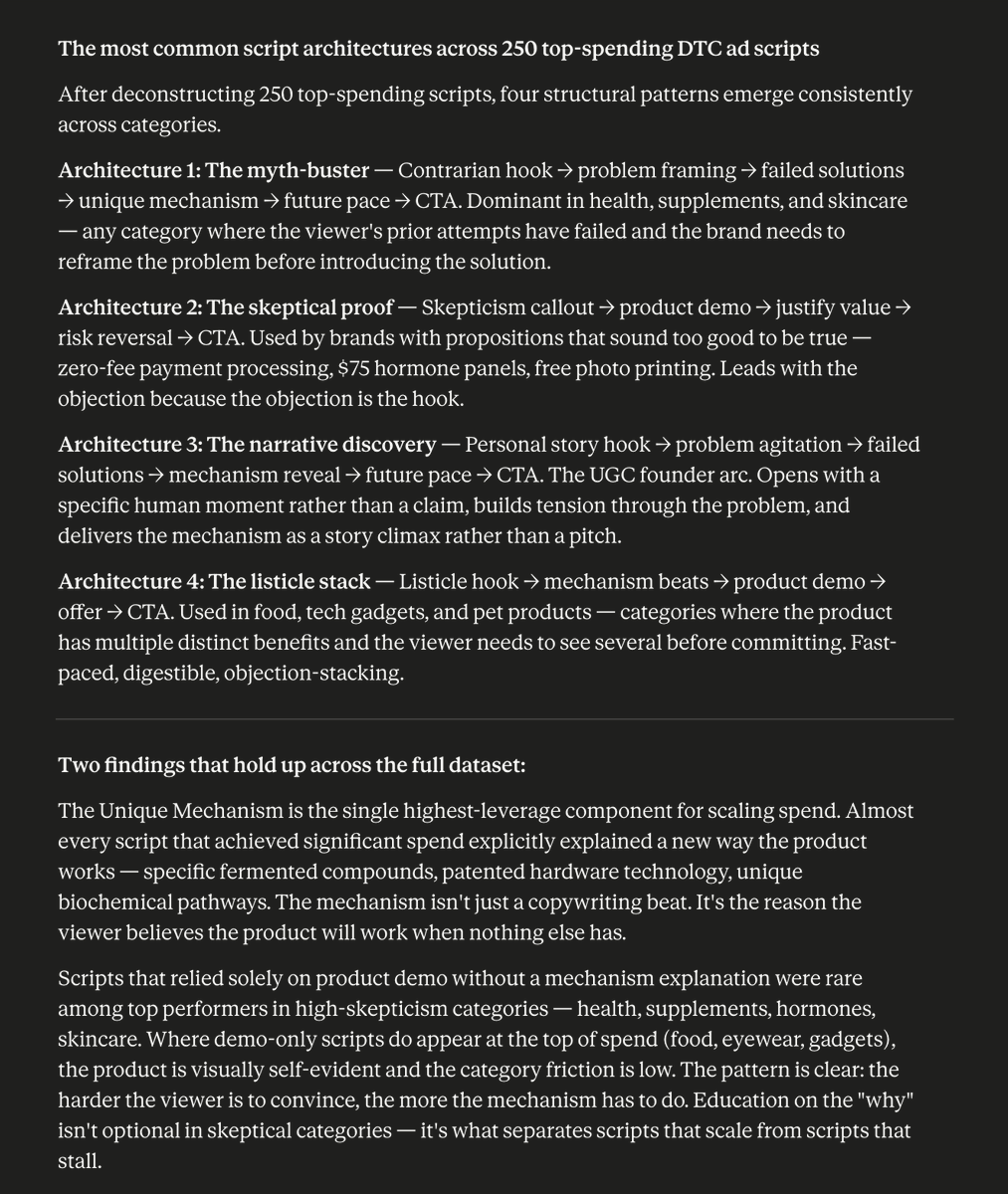
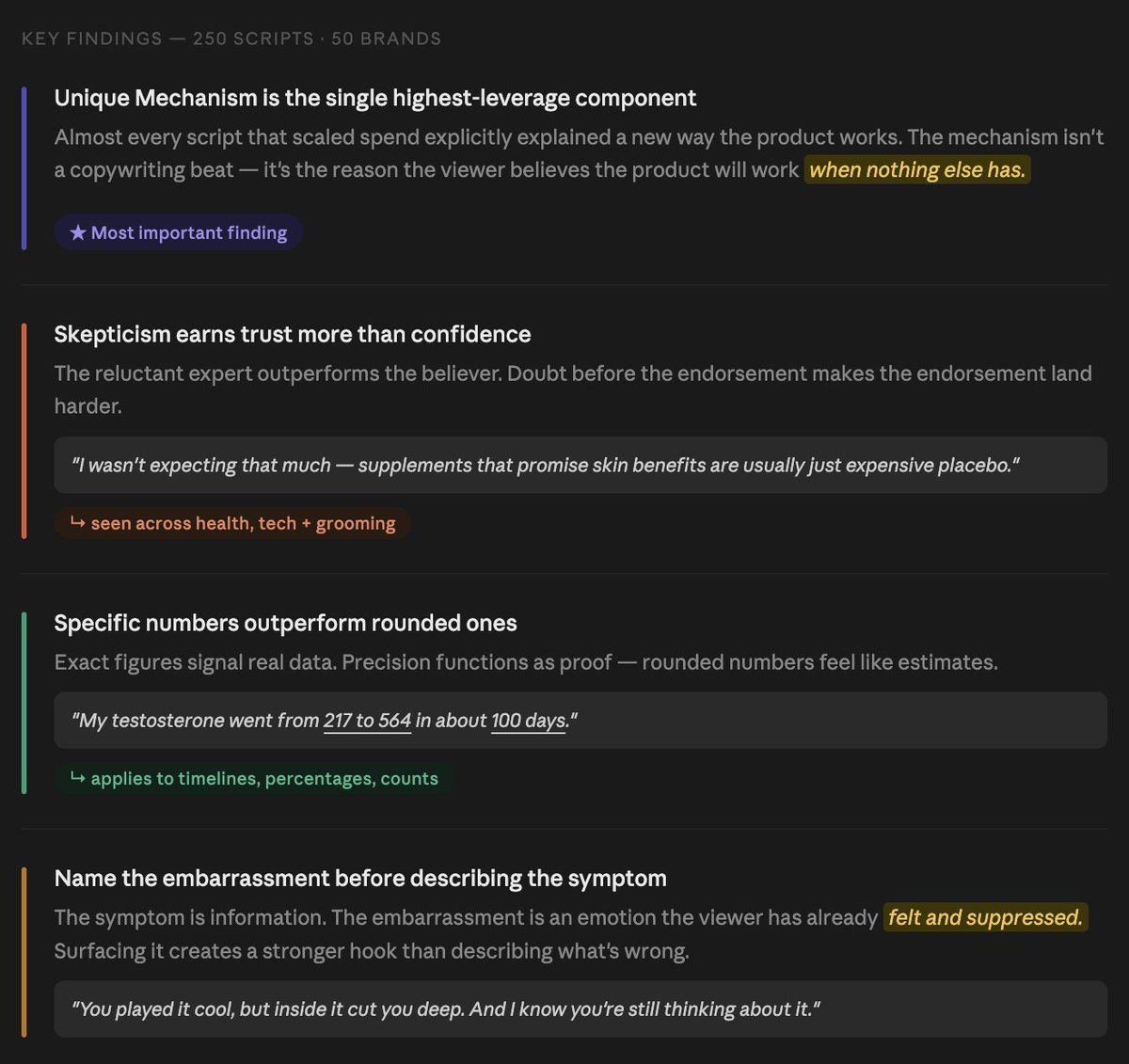
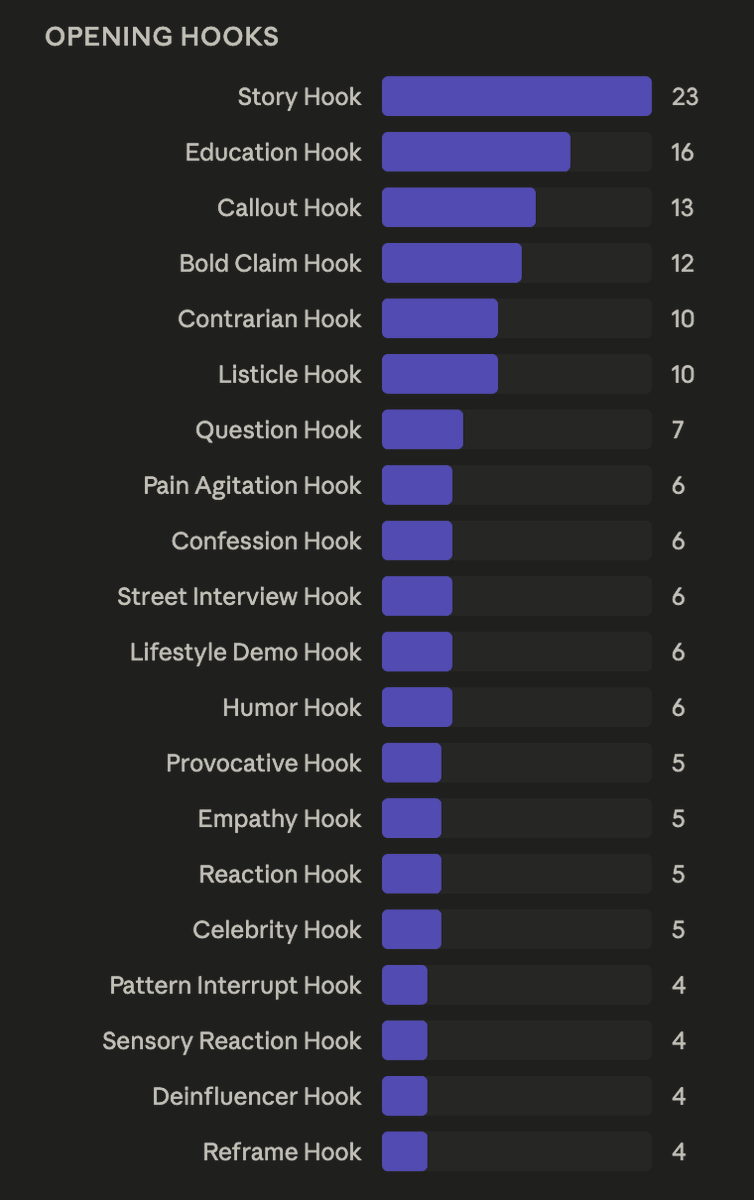
I gave Claude a document of the top 5 ad scripts for 50 ad accounts I’m in and asked it to look for key patterns and frameworks. This dataset might be too broad to be useful, but I found it interesting, so I thought I'd share. Key insights: - Unique Mechanism was the single most important component in top performing ads. “Almost every ad that achieved high-level performance explicitly explained a ‘New Way’ the product worked”. - Skepticism earns the viewers’ trust. “Endorsements land harder when the speaker signals they initially doubted the product.” We’ve seen this in a lot of our accounts, especially with yapper ads. - Name specific embarrassing moments the prospect has felt. Surfacing painful emotions that have been suppressed creates a stronger hook than describing what's wrong. - Story hooks appear more than any other hook type. Likely due to yapper ads. Not exclusively, but many of these are yapper storytelling concepts. These are a few of a lot of findings in there. But I can do a proper writeup if people are interested
Alex Cooper tweet mediaAlex Cooper tweet mediaAlex Cooper tweet media
English
22
9
180
13.4K
Saar Bell ری ٹویٹ کیا
Alex Cooper
Alex Cooper@alexgoughcooper·
One of my favorite ad libraries to swipe for AI ads inspo. They do a great job at AI animations and realistic AI.
Alex Cooper tweet media
English
6
12
198
11.8K
Saar Bell ری ٹویٹ کیا
Maxwell Finn
Maxwell Finn@maxwellfinn·
I created a scheduled Claude skill that runs weekly and reviews all of my skills, MDs, etc. for conflicts, redundancies, mistakes and other issues. This has been a pretty massive unlock, especially the conflict checker. What happens is overtime you give conflicting instructions to Claude (without realizing it) that start stacking up and lead to more and more mistakes. You tell Claude to never make that mistake again, but in another file there is a rule saying to do that thing you just told it not to do. You can see the problem this creates. This skill finds all of these so you can get rid of the old conflicting rule/instruction and stop the mistake from happening going forward.
English
2
2
30
2.1K
Saar Bell ری ٹویٹ کیا
Maxwell Finn
Maxwell Finn@maxwellfinn·
Our closing rate for qualified ICP leads is close to 100% for a number of reasons, but a big one is we deliver more value on our Unicorn Assessment call than most agencies provide over a multi month paid engagement. Not only do we conduct an extensive ad account audit, but we also create: ➡️ 20+ diverse creatives ➡️ 3+ traffic reads funnels ➡️ A comprehensive persona intelligence report on the top 5 personas ➡️ A minimum viable message testing strategy ➡️ Personalized ad copy, video scripts, hooks and ad ideas We are building something truly unstoppable and gamechanging at Unicorn Marketers and are just getting started 🚀
Maxwell Finn tweet media
English
4
1
25
2.4K
Saar Bell ری ٹویٹ کیا
Sarah 🦕
Sarah 🦕@SarahLevinger·
📍Here’s how I view the creative strategy process: Creative strategy has 4 structural parts: research, ideation, concept development, and production (obviously metric tracking, hit rates and feedback loops follow this, but I’ll focus on just the pre-launch phases for this thread). Each phase breaks into 3 tasks: - RESEARCH - when, why, who - IDEATION - what, which, how - CONCEPT DEV - how, which, what - PRODUCTION - who, how, when 1️⃣ Research can pretty much be summed up with: when do people feel this problem in their life? Why are they experiencing this pain (what emotions are coming up?) Who are they, or who do they want to be? 2️⃣ Ideation comes down to: what kind of ad do we want to make? Which story are we going to tell? How do we want to target this person (T-E-E-P)? 3️⃣ Concept development is next: How do we want to tell this story? Which format works best? What platform are we designing for? 4️⃣ Production is last: who do we need to help design this? How long will this take to produce? When will we know we’ve hit the mark (which metrics should we track for this ad)? (This is a super simplified version of what I look at each week, but if you can nail these 4 phases and 3 tasks, you’ll have built about 80% of what you need to build a good strategy.) And don’t feel bad if you haven’t gotten to this post yet. This complex system is the reason why creative strategy is one of the most demanding jobs in the industry.😅 👋 (100% written by a human.)
English
9
12
102
4.6K
Saar Bell ری ٹویٹ کیا
Maxwell Finn
Maxwell Finn@maxwellfinn·
New text heavy ugly ad crushing right out of the gate. 4 qualified booked calls for under $100, 3x higher CTR than account average and 80% lower CPC than account average.
Maxwell Finn tweet media
English
6
4
103
28.1K
Saar Bell ری ٹویٹ کیا
Jackson Blackledge
Jackson Blackledge@blvckledge·
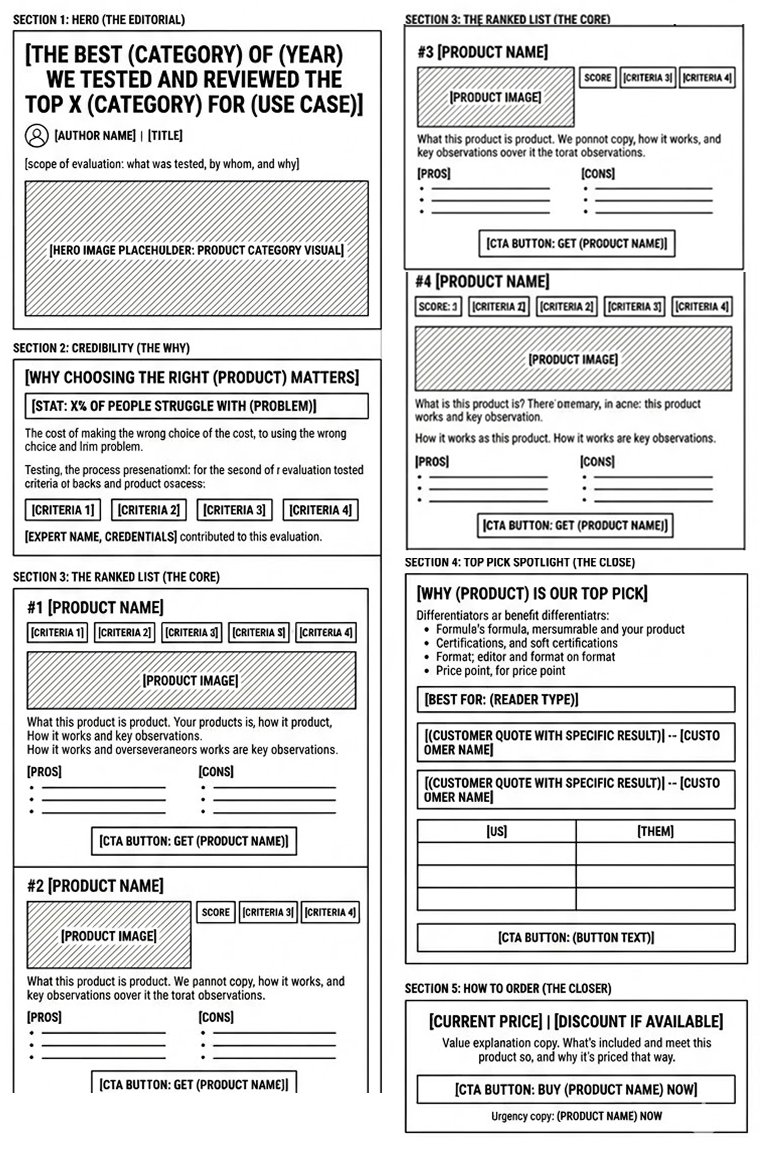
been getting a lot of questions about this what does the landing page look like? how do you structure it? how is it different from a us vs. them page? below is a breakdown: section 1: thehero - headline format: "The Best [Category] of [Year] – We Tested and Reviewed the Top X [Category] for [Use Case]" - author byline with a name and a relevant title - a sub-headline that frames the scope: what was tested, by whom, and why the goal here is to make the page read like a credible, research-driven resource. - - - section 2: credibility block this is where you establish why it’s important to choose the right products open with a relevant fact that frames the problem ("X% of people struggle with [problem]") walk through the cost of making the wrong call here then explain your testing process and evaluation criteria (effectiveness, safety, price, ease of use, etc) if you consulted an expert, name them and list their credentials here. this section is doing one important job: answering why the right brand matters and why this page is worth trusting. - - - section 3: ranked list this is the core of the page. you can select anywhere from 3 to 10 products for this section. for each item, include: - rank number + product name - score breakdown across your criteria - 2–3 paragraphs covering what it is, how it works, and key observations - a pros and cons list to structure this list, your top pick goes first and gets the most thorough coverage every product gets real pros listed, including the lower-ranked ones. this will make the page feel credible cons should be honest and specific, helping the reader understand who each product fits and who it doesn't. - - - section 4: deep-dive on your top pick after the full list, give your #1 product its own spotlight section include: - a benefit-led headline: "Why [Product] Is Our Top Pick" - bullet breakdown: what sets it apart (formula, certifications, format, price point) - call out two or three specific benefits, and name the reader it is best for - customer testimonials that speaks to a real, specific result - a CTA you can also add a comparison table in the us vs. them format to make it visual. - - - section 5: how to order + pricing close the page with simple instructions that walk the reader from the page to a completed purchase show current pricing with any available discount clearly visible. add a brief explanation of the value: why it's priced the way it is, what's included, what the reader gets. close with a cta that creates natural urgency the whole point of this part is that you're not attacking any brand. you want the visitor to feel like they made an informed decision themselves if you want to move fast feed this entire wireframe into gemini, plug in your product details, and let it generate a first draft. this works in any category where you’re competing against brands with real brand traffic. save this and go build gents
Jackson Blackledge tweet media
Jackson Blackledge@blvckledge

3rd party comparison page is going to make millions for a lot of brands in 2026. this is a blog-style page that ranks the top products in your category what i like about this format is that it works across 3 placements on google. these are placements where a generic product page or category page just won't cut it. brands that go that route either can’t turn a profit, or struggle to scale to a meaningful spend. 1. competitor keywords. these are searches where someone's looking up a competing brand. "huel protein powder," "huel review," "huel alternatives." you show up in those results pull that high-intent traffic over to your site and let the page do the work of convincing them to buy from you instead. 2. category keywords. this covers "best of" searches like "best collagen supplement" or "top grounding sheets"... along with broader category terms like "grounding sheets" or "collagen supplements." work especially well in crowded spaces like supplements or beauty, where shoppers are more skeptical from our data, running this page in those niches can pull significantly lower CPCs than a standard product page. we rolled this out for a client recently. one month after launch, one campaign generated €14,777 in revenue at a 4.1 ROAS. as we push more budget into it, there’s no doubt the numbers will keep climbing. 3. google discover. this is google's news feed where people scroll through articles (screenshot below). the audience skews older. they treat it like a newspaper. they slow down, read headlines, and actually engage with the content. this landing page format is the perfect fit for that placement, because it looks exactly like something you'd find inside a real publication. bonus: ranking on ai chatbots this page also gives you a better shot at showing up in ai chatbot. ai models want to recommend brands that have strong signals across the web. when someone asks chatgpt for the best product in your category… it doesn’t just pull data from your website. it factors in what independent, trusted sources are saying about you. having a page like this pushing those signals makes it a lot more likely your products get recommended. of course, whether this works for your account depends on your search volume, margins, pricing, and product type. and to be fair, this format isn't new. plenty of brands have been running it profitably on meta for years. but on google, it’s almost impossible for us to find brands doing the same across the 3 traffic sources i just talked about. we've been testing this for many accounts, and the results have been great. so if you already have this page built, test it across those placements. and if you don't, this is one of the best landing pages you can add right now, with the potential to get you an extra 5 or 6 figures a month in revenue.

English
4
3
41
6.7K
Saar Bell ری ٹویٹ کیا
Alex Cooper
Alex Cooper@alexgoughcooper·
> Take your top 3 UGC ad scripts > Put them through Claude and ask it to write a Suno song script > Give it example scripts from Brainway or Primal Queen > Make the song in Suno > Turn it into an pixar style/claymation ad in Veo This flow is working very well.
English
3
12
307
62.9K
Saar Bell ری ٹویٹ کیا
Olly Hudson
Olly Hudson@oliverwhudson·
The gap between brands using partnership ads well and brands barely using them at all is wider right now than almost any other area of Meta strategy - and the window to get ahead of it is still open. Top-performing brands are directing 30–50% of Meta spend to partnership ads, driven by consistently lower CPAs and higher CTRs. Most accounts sit below 10%. Moving towards even 20% is consistently described as a significant unlock.
English
2
3
21
2.7K
Saar Bell ری ٹویٹ کیا
Olly Hudson
Olly Hudson@oliverwhudson·
Here’s 5 things we audit in our accounts every week: 1. Persona coverage. Filter active ads by persona code. Any persona under 5% of active spend is a gap. 2. Funnel stage distribution. Is T (trigger/unaware) represented? It almost never is. - Trigger: problem-aware. They don't know your product exists yet. - Exploration: solution-aware. They know the category. - Evaluation: product-aware. They're comparing options. - Purchase: ready to buy. 3. Partnership ad spend %. Under 10% means brief a new one this week. 4. Comments on partnership ads. Unanswered questions and unchallenged negatives compound. 5. Entity ID duplication. Unnecessarily duplicated ads fragment signal. Merge back where possible. This takes 20 minutes. The accounts that do it consistently outperform the ones that don't.
English
7
1
62
21.6K
Saar Bell ری ٹویٹ کیا
Ruslan Galba
Ruslan Galba@iamgalba·
Everything I know about running Google Ads for ecom in 10 sentences: 1. Feed quality determines Shopping ROAS more than bidding strategy. Fix the feed first. 2. 80% of budget waste happens in search terms nobody reviews weekly. 3. The account with 7 campaigns and full exclusion lists outperforms the one with 40 campaigns every time. 4. Conversion tracking that fires once on the thank-you page is not conversion tracking. It's a coin toss. 5. PMax works when you treat it as a model to train, not a campaign to manage. 6. Your agency's ROAS looks high because they're bidding on your brand. Your incremental ROAS is a different number. 7. Most ecom brands should put 70%+ of spend into Shopping before touching Search or YouTube. 8. We've built Claude Code systems that do in 8 minutes what agencies charge $3k for. The gap will only grow. 9. A/B testing landing pages with less than 500 sessions per variant is noise, not data. 10. The best Google Ads account I've ever audited had the fewest campaigns. Simplicity scales. Complexity hides waste.
English
4
1
13
375
Saar Bell ری ٹویٹ کیا
Barry Hott ☄️
Barry Hott ☄️@binghott·
Feel likes Meta's Incremental Attribution optimization solves ~90% of the problems I see, especially on bigger accounts. Now that you can use it with Cost Caps, I don't know why you wouldn't use it.
David Herrmann@herrmanndigital

Why I'm more bullish on incremental attribution on Meta... 1. It's been the biggest way to increase new reach % incrementally in ad accounts at scale that struggle with this. 2. Revenue per visit is between 2-3x higher than standard attribution in most ad accounts I have it running. 3. New customer orders are nearly 100%. The leakage and cross over is much much lower. 4. They are less prone to performance swings. Once the system is optimized (50 conversions) it acts like a growth engine and fatigues less than standard attribution (in my ad accounts). So how do I run these? 1. In creative testing - all ads go into IA now. Why? Since Andromeda was implemented we've noticed less and less "new" traffic going to these pre-heated ads. In fact, it dropped down near 20-30% only. This obviously creates a problem, I don't know if these creatives are scalable. And the reality was, most weren't. So switching to IA helped identify more and more ads that work. BIG win here. 2. I am a massive fan of Flex Ads. A few reasons, Meta's ad retrieval systems love simplistic. Mainly because it makes it easier to digest and identify winning assets. So the more account consolidation on the ad level (where most of the work is being done) are now spread across less ads with more opportunities for Meta to find new winners. 3. IA + multiple traffic sources + flex ads = the scaling machine. We know Meta uses 50% of the creative and 50% of the LP in the ad account. Yet, most of us only optimize one of these two things. Become as diversified on your traffic sources as you are on your creative for larger wins. A few caveats: 1. Please don't switch your entire ad accounts to IA. IA works for me and a lot of my brands, but it doesn't work for all. What I've found is the following: a. If your audience has a TON of retention - test IA b. If you have an AOV above $80-90-100 - test IA c. If you have a long consideration window - test IA d. If new reach is ur probem - test IA For many ad accounts I'm still all in on 7/1/1 and 7DC via standard attribution. But for many, IA is truly the growth engine needed because it's not putting the window of time to act in a short, well, window. It's instead acting as a likely much more realisitic way that consumers on Meta are acting. I really hope other channels adopt this system next.

English
8
2
124
46.7K
Saar Bell ری ٹویٹ کیا
Boris Cherny
Boris Cherny@bcherny·
3/ Two of the most powerful features in Claude Code: /loop and /schedule Use these to schedule Claude to run automatically at a set interval, for up to a week at a time. I have a bunch of loops running locally: - /loop 5m /babysit, to auto-address code review, auto-rebase, and shepherd my PRs to production - /loop 30m /slack-feedback, to automatically put up PRs for Slack feedback every 30 mins - /loop /post-merge-sweeper to put up PRs to address code review comments I missed - /loop 1h /pr-pruner to close out stale and no longer necessary PRs - lots more!.. Experiment with turning workflows into skills + loops. It's powerful. code.claude.com/docs/en/schedu…
English
46
52
1.6K
320.6K
Saar Bell ری ٹویٹ کیا
liam
liam@liamecom·
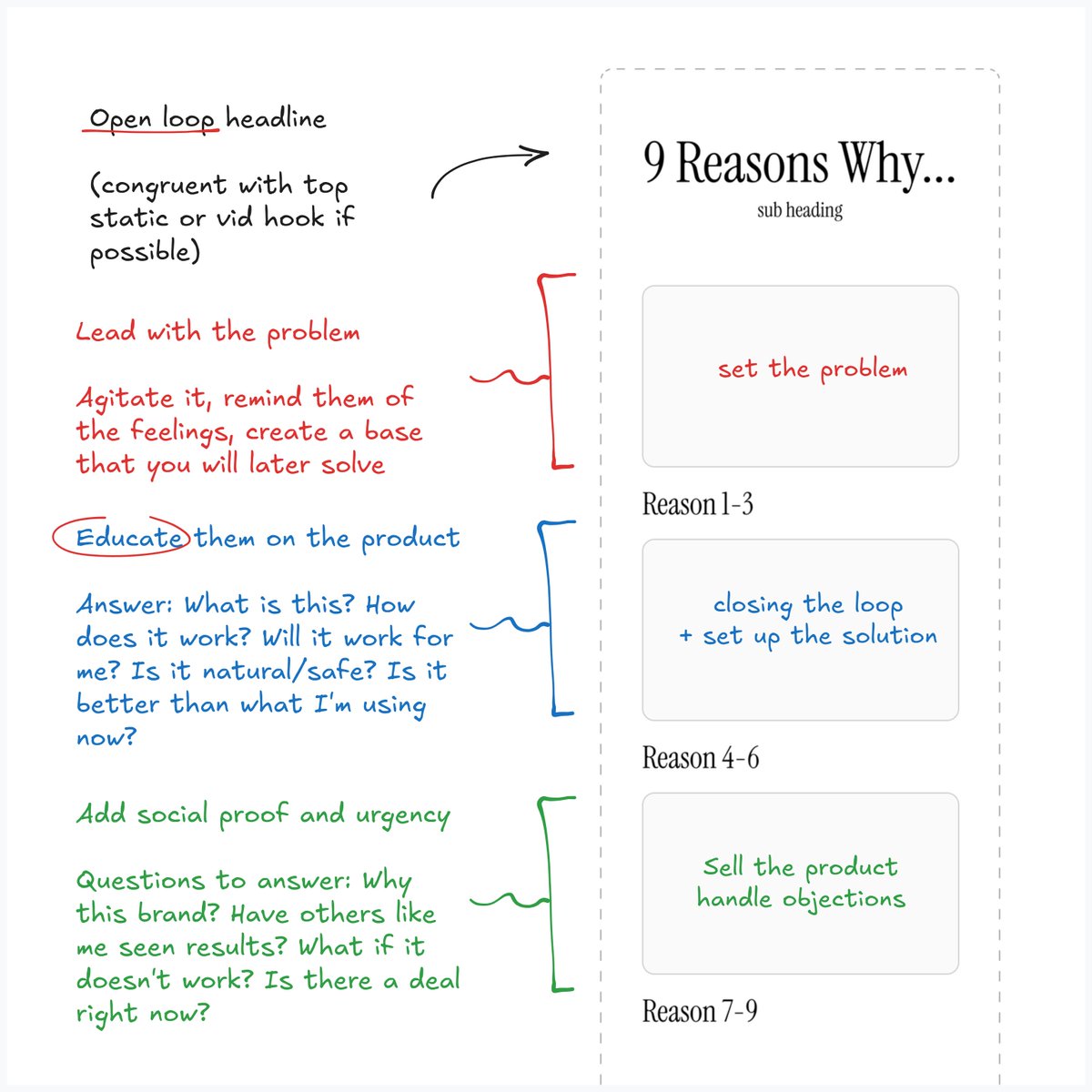
if you're making listicles for your product, this is how i structure mine its too easy and lazy to just give 10 reasons why the product is great no one reads it because there's no reason to - they have no connection with it my thinking is that the best way to structure the LP is like how you would a video ad and try to answer the questions you think the customer would ask themselves while reading it for example, a 9 reason listicle would be structured like this: start with a good hook to engage the reader. preferably an open loop headline that gives them a reason to read later [the more you can get them to read, the more committed they'll be to finishing it] Reasons 1-3: introduce the problem they have, call it out, explain the feelings they get, mention the bigger problems that it may cause. Be granular. Reasons 4-6: educate them on the problem and product, answer the most important questions and establish authority Reasons 7-9: make the product seem like the easiest, smartest and fastest way to solve the problem you've been talking about. You've educated them on why the product is the best solution, and de-positioned any other alternatives so this should be the easy part you just need to de-risk the purchase for them (guarantee) and apply urgency (sale/limited stock, etc) so that they have a reason to buy right now this is how I'd structure any LP, not just listicles this def isn't the best way to write one, but if you're confused on how to write one, this is a good place to start
liam tweet media
English
9
31
476
75.4K