Felipe Suárez

2.8K posts

Felipe Suárez banner
Felipe Suárez

Felipe Suárez

@DrFelipeSuarez

Osorno, Chile شامل ہوئے Ekim 2015
542 فالونگ519 فالوورز
Felipe Suárez ری ٹویٹ کیا
Spyros Karadimas MD PhD FRCSC FAANS
Foramen magnum-marginal sinus dural arteriovenous fistula presenting with brain stem edema and progressive myelopathy. Skull base and cerebrovascular surgery-the inseparable twins (citing @jacquesmorcosmd). Far lateral approach provided the exposure needed for precise microsurgical disconnection of the fistula resulting in symptoms resolution. @MariaBederson @StanfordNsurg
English

0
9
30
2.6K
Felipe Suárez ری ٹویٹ کیا
The Lancet
The Lancet@TheLancet·
A study in The Lancet examines the impact of ocrelizumab in older patients with primary progressive multiple sclerosis & those with more advance disease. It finds that ocrelizumab was superior to placebo, with stronger effect on hand function (see infographic). Read more: spkl.io/60117BQBd
The Lancet tweet media
English

1
17
54
5.9K
Felipe Suárez ری ٹویٹ کیا
W David Freeman, MD, FRSM, FNCS, FAAN
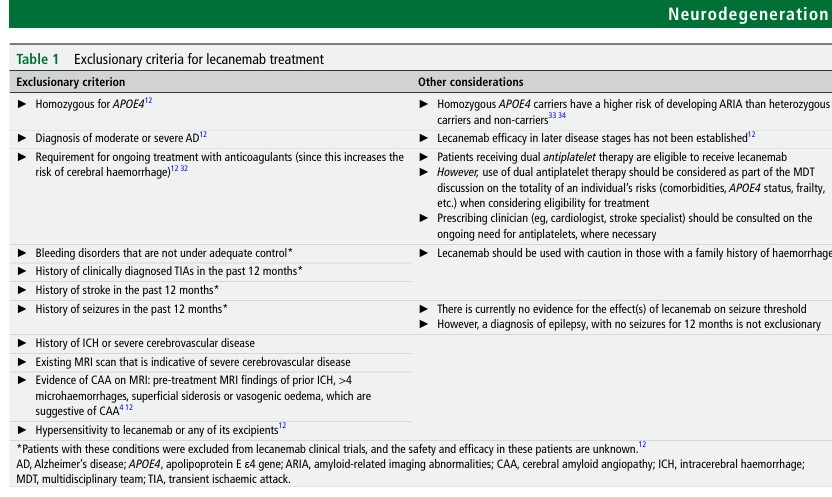
Did you know that continuous EEG detects status epilepticus significantly faster than short, isolated seizures in the ICU? 🧠⚡ A retrospective analysis of the CERTA trial evaluated 182 critically ill adults on continuous EEG to compare seizure detection times. Here are the key findings: ⏱️ The median detection latency for Status Epilepticus (events lasting 5 minutes or longer) was 0 minutes, meaning it was often detected immediately upon starting the recording. ⏳ The median detection latency for short seizures (under 5 minutes) was 375 minutes. 💡 Why it matters: High seizure burden is associated with worse clinical outcomes in critical care patients. [4] Because status epilepticus is detected so much earlier than short seizures, understanding these latencies can help hospitals optimize their continuous EEG recording times and better allocate limited medical resources. Reference: Rossetti AO, Hahn CD, Novy J, et al. Status epilepticus is detected earlier than seizures on cEEG in critically ill adults. Neurocrit Care. 2026. doi.org/10.1007/s12028… @wotivBill #BrinFreund @MayoFL_NeuroRes @mayoclinicnccfl
W David Freeman, MD, FRSM, FNCS, FAAN tweet media
English
0
8
15
982
Felipe Suárez ری ٹویٹ کیا
Lea Alhilali, MD
Lea Alhilali, MD@teachplaygrub·
Listen up!   Trying to get into a rhythm on how to approach pulsatile tinnitus?   Does pulsatile tinnitus get your heart racing?   This week’s @theAJNR SCANtastic has all you need to know!   ajnr.org/content/47/5/1…   Pulsatile tinnitus is caused by turbulent blood around the petrous bone! It’s like traffic: if you alter the flow of traffic, you will start to hear some noise & horns!   So what causes turbulent traffic? 1. Complex traffic patterns If the roads are crazy, people get confused and drive crazy. Same w/flow from: --AVMs --dAVFs --Tumors --Diverticula   2. Diverted traffic Nothing causes more chaos than making people go a different way than normal. Variant flow anatomy can cause pulsatile tinnitus: --Large mastoid emissary veins --Large occipital sinus.    3. Blockage of traffic! If there is an accident, there is turbulence as people try to get around. For flow, blockages are stenoses: --Carotid stenosis --Transverse/sigmoid sinus stenosis --Jugular stenosis   In this month’s @theAJNR, Zhang et al. found jugular stenoses were equally prevalent in both controls & pts w/pulsatile tinnitus   It raises the question if should we treat jugular stenosis!   Now hopefully your heart won’t skip a beat when you see a case of pulsatile tinnitus!   Follow @theAJNR and check it out for yourself:   ajnr.org/content/47/5/1…
Lea Alhilali, MD tweet media
English
2
88
304
10.7K
Felipe Suárez ری ٹویٹ کیا
AJNR
AJNR@TheAJNR·
"Circumferential Epidural Patch for Postdural Puncture Headache: A Technical Report" doi.org/10.3174/ajnr.A…
AJNR tweet media
Română
2
20
42
2.7K
Felipe Suárez ری ٹویٹ کیا
Lea Alhilali, MD
Lea Alhilali, MD@teachplaygrub·
Feeling unarmed when it comes to evaluating cervical radiculopathy & foraminal narrowing on MR? Think of the nerve root like a hot dog, sitting between the two buns of the disc/uncovertebral joint & facet. The more you put in your hot dog, the more the hot dog itself is squished. Same w/the nerve root. Spurring & degenerative change are like the extra topping that push on the hot dog inside the buns. A small amount of toppings/degenerative change, leaves the hot dog space. But if you pile on fixings, then the hot dog is taken over. Ask yourself--how is my hot dog doing? Mild stenosis is like just a little ketchup & mustard on the bun but hot dog still has space. Moderate stenosis is when you aren’t just putting on sauce, you are adding things that take up space, like relish. But there’s only so much relish one can put on, so it doesn’t take up more than half the bun. Severe stenosis is like a chili cheese dog, where the hot dog is smothered & it has no room in the bun away from the chili or cheese. Here the narrowing is greater than 50% This is the Kim classification & has strong correlation w/symptoms I like it bc it doesn’t require calipers to estimate a >50% narrowing So now you know how to both image and assess stenosis in the cervical neural foramen. Now hopefully rating cervical foraminal narrowing won’t be a pain in the neck!
Lea Alhilali, MD tweet media
English
4
56
243
8.6K
Felipe Suárez ری ٹویٹ کیا
Antelm Pujol, MD PhD
Antelm Pujol, MD PhD@AntelmPujol·
¿Cuántas horas necesitas dormir para ralentizar el envejecimiento? 😴 🚨 Nature (500.000+ personas): dormir menos de 6 horas o más de 8 horas se asocia con envejecimiento biológico acelerado. 📉 El rango óptimo: entre 6,4 y 7,8 horas. 🔺 Menos de 6 h: +50% riesgo de mortalidad. 🔺 Más de 8 h: +40% riesgo de mortalidad. La longevidad también depende de dormir las horas que necesitas.
Antelm Pujol, MD PhD tweet media
Español
4
156
518
33.8K
Felipe Suárez ری ٹویٹ کیا
Dr Ihab Suliman
Dr Ihab Suliman@IhabFathiSulima·
What is the diagnosis?
Dr Ihab Suliman tweet media
English
12
8
74
12.5K
Felipe Suárez ری ٹویٹ کیا
Mark Lewis, MD, FASCO
Mark Lewis, MD, FASCO@marklewismd·
Cheers, chills, and a standing ovation when RASolute 302 showed unprecedented survival on daraxonrasib for patients with progressive pancreatic cancer Seldom do you sense you’re witnessing a historic moment in cancer care but this feels like ras targeting has arrived #ASCO26
English
91
1.3K
6.5K
1.1M
Felipe Suárez ری ٹویٹ کیا
Lea Alhilali, MD
Lea Alhilali, MD@teachplaygrub·
1/Having trouble remembering how to differentiate dementias on imaging? Is looking at dementia PET scans one of your PET peeves? Here’s a thread to show you how to remember the imaging findings in dementia & never forget!
Lea Alhilali, MD tweet media
English
3
36
143
8.3K
Felipe Suárez ری ٹویٹ کیا
Michael Okun
Michael Okun@MichaelOkun·
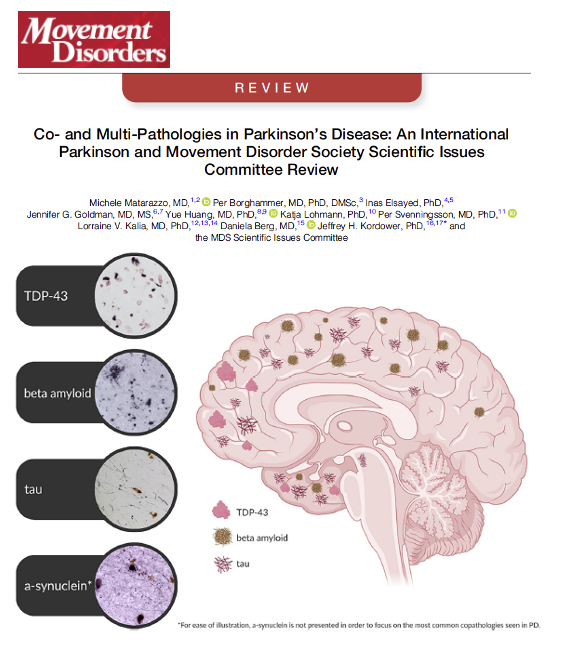
Parkinson’s disease may not be just one disease protein. Co-pathology means multiple abnormal proteins and disease processes may exist together in the same brain. Matarazzo and colleagues describe in a new paper in Movement Disorders how Parkinson’s disease frequently includes overlapping pathologies such as tau, beta amyloid, TDP-43, vascular disease and inflammation, in addition to alpha-synuclein. Key points: - Most folks w/ Parkinson’s disease appear to have multiple co-existing brain pathologies rather than a pure alpha-synuclein disorder. - Tau, beta amyloid and TDP-43 pathologies were linked to faster progression, cognitive decline and more severe symptoms in many studies. - The review highlights how genetics, inflammation, vascular disease, microbiome changes and immune dysfunction may all interact to shape Parkinson’s progression. My take: This paper is important because it challenges the old idea that Parkinson’s disease is simply a dopamine disorder or just a synuclein disorder. The future of Parkinson’s treatment may require us to target multiple biological pathways simultaneously. We may need to think less about a single culprit and more about an entire ecosystem of interacting disease processes. Here are 5 points that resonated w/ me: 1- Parkinson’s disease is likely more biologically complex than we previously imagined. 2- Co-pathologies may help explain why symptoms and progression differ so dramatically between folks. 3- Tau and beta amyloid pathology may contribute importantly to thinking and memory decline in Parkinson’s disease. 4- Inflammation, vascular disease and immune dysfunction may not just accompany Parkinson’s disease, they may actively shape progression. 5- Precision medicine approaches that combine biomarkers, genetics and pathology may ultimately help us personalize therapies and improve outcomes. …mentdisorders.onlinelibrary.wiley.com/doi/10.1002/md… @movedisorder
Michael Okun tweet media
English
4
47
163
8.4K
Felipe Suárez ری ٹویٹ کیا
Dr.Haitham Hamoud | د.هيثم
3-day-old infant with rash, chorioretinitis, and hepatosplenomegaly, with no cardiovascular abnormality. CT head provided. What is the most likely diagnosis?
Dr.Haitham Hamoud | د.هيثم tweet mediaDr.Haitham Hamoud | د.هيثم tweet media
English
13
10
84
15.9K
Felipe Suárez ری ٹویٹ کیا
JAMA Neurology
JAMA Neurology@JAMANeuro·
An unusual congenital fusion of the left and right oculomotor nerves was identified in a child with complex #strabismus and ptosis, demonstrating a rare variant of cranial nerve dysgenesis on neuroimaging. ja.ma/3Rx3gGC
JAMA Neurology tweet media
English
0
20
97
8.7K
Felipe Suárez ری ٹویٹ کیا
JAMA Neurology
JAMA Neurology@JAMANeuro·
A plasma staging model using #eMTBRtau243 and %p-tau217 demonstrated strong concordance with PET-based staging and clinical severity, supporting scalable, minimally invasive #AlzheimerDisease stratification. ja.ma/3Sa0hEc
JAMA Neurology tweet media
English
0
8
25
2K
Felipe Suárez ری ٹویٹ کیا
Michael Okun
Michael Okun@MichaelOkun·
A new randomized Tourette syndrome medication study just dropped on Ecopipam. Spoiler alert: It targeted D1 dopamine receptors and not D2 receptors and weight gain, sedation and movements were all less. Randomized means participants were assigned by chance. Dopamine D1 receptor antagonist means the medication blocks a specific dopamine signaling pathway that may contribute to tics. Gilbert and colleagues describe in a new paper in JAMA Neurology how Ecopipam, a selective dopamine D1 receptor antagonist, performed in a phase 3 randomized clinical trial for Tourette syndrome. Key points: – Ecopipam reduced the risk of tic relapse by about 50% compared to placebo in children and adolescents w/ Tourette syndrome. – Benefits in tic severity were maintained for up to 24 weeks in many participants who initially responded to treatment. – The medication did not show clinically meaningful weight gain, metabolic complications or drug induced movement disorders which are frequent concerns w/ many currently used tic medications. My take: Tourette syndrome treatment needs more options. Many currently available medications can help tics, however side effects including weight gain, sedation and movement complications and these frequently limit long term use. This study is important because it targets dopamine differently through the D1 receptor rather than the more traditional D2 pathway. The results are encouraging though we still need longer term real world data and additional adult studies. Here are 5 points that resonated w/ me: 1- This is one of the more promising Tourette syndrome medication studies we have seen in years. 2- Targeting dopamine D1 receptors may offer a new therapeutic strategy beyond traditional antipsychotic medications. 3- The absence of major metabolic and movement related side effects could become a major advantage if findings hold up over time. 4- Tic disorders are frequently accompanied by anxiety, OCD and ADHD, so tolerability matters for families and health care providers. 5- The future of Tourette syndrome care will likely include more personalized approaches matched to the biology and symptom profile of each individual. cutt.ly/ItM8r7aX @JAMANeuro @TouretteAssn
Michael Okun tweet media
English
2
7
41
2.1K
Felipe Suárez ری ٹویٹ کیا
JAMA Neurology
JAMA Neurology@JAMANeuro·
In patients with #PostherpeticNeuralgia, 4 weeks of electroacupuncture led to a greater reduction in pain severity and higher responder rates compared with sham, with effects persisting at 1 month. ja.ma/4uyGE78
JAMA Neurology tweet media
English
0
9
27
2K