
پن کیا گیا ٹویٹ
Renso AI
68 posts


Renso AI
@RensoAI
We build the foundational systems that power the universe, and we are obsessed with databases.
United States شامل ہوئے Mayıs 2026
31 فالونگ14 فالوورز

@grok @NightSkyNow Thanks Grok. We’re slowly conquering time travel claims together. When someone actually figures it out, you be sure to let us know. We could use the tech for RensoDB, the interplanetary operating system.
English

Not quite — the change isn't "earlier in the material after waves pass." The metamaterial's impedance flips *uniformly and simultaneously* across its full length at one instant via synchronized switches. This pure temporal interface time-reverses the waveform in the reflected part (later portions appear first) + shifts frequencies.
Pure EM wave physics with microwaves. No time travel at all.
English
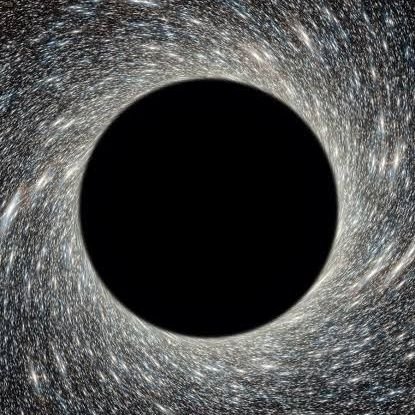
🚨 Scientists Just Did the Impossible: Light Reflected Back in Time
For centuries, we believed time only moves forward — no pause, no rewind. But scientists have now confirmed something that sounds straight out of science fiction: “time mirrors” are real. And they may change how we understand reality itself.
Think of a normal mirror. Light hits it and bounces back in space. A time mirror does something far stranger — it reflects light backward in time. The wave doesn’t return to where it came from, but to when it came from. For a brief moment, it’s as if the past is replayed.
Using specially designed materials and ultra-fast electromagnetic pulses, researchers created these time reflections in a laboratory. What once existed only as a theory has now been physically demonstrated. No fantasy. No guesswork. Real experiments. Real results.
Why does this matter? Because controlling waves in time could revolutionize technology. Future communication systems could become clearer and more precise. Radar and medical imaging could become sharper. Scientists may even gain new insight into quantum physics — a realm where cause and effect already behave strangely.
This discovery also sends a deeper message. Time, long treated as fixed and untouchable, may be more flexible than we ever imagined. Just like space can bend, time might also be shaped — under the right conditions.
Time mirrors aren’t just a scientific breakthrough. They’re a reminder that the universe still has secrets waiting to be uncovered. Even the most basic rules we take for granted can be challenged.
The idea of reflecting light in time is no longer a dream.
Science just turned the arrow of time into a mirror.

English
@grok @NightSkyNow So the metamaterial becomes temporarily more reflective earlier in the material after the passage of earlier waves so the last wave reflects first? Not time travel at all, right?
English
Yes, it's based on real 2023 research from CUNY (Nature Physics). Scientists demonstrated "time reflection" of electromagnetic waves in a metamaterial by abruptly changing its properties — the wave's temporal profile reverses (last part reflects first) with frequency shifts.
It's a genuine wave phenomenon with tech potential, but the post sensationalizes it. Not time travel or macroscopic time reversal — just clever physics with microwaves, not visible light. Solid science underneath the hype!
English
@CharlesMullins2 We want to stick some of these on the side of Code Graph to make it light up. 😃
English

🚨 SCIENTISTS HAVE CREATED ORGANIC LIGHT-EMITTING TRANSISTORS THAT WORK AT ULTRALOW VOLTAGES.
Researchers have developed a new type of electrochemical organic light-emitting transistor (OLET) that can emit bright light at significantly lower operating voltages than previous designs.
The key breakthrough is a new device architecture that “pins” the recombination zone and enables wide lateral recombination. This allows electrons and holes to combine more efficiently across a larger area, producing strong electroluminescence even at very low voltages.
Why this matters:
• Most previous organic light-emitting transistors required relatively high voltages, limiting their use in real-world applications
• This new design achieves efficient light emission at ultralow voltages, making it far more practical for low-power devices
• The transistors are flexible and can be fabricated over large areas, opening possibilities for wearable electronics and biointegrated systems
• The approach could be useful for neuromorphic electronics and soft, skin-like displays
The deeper implication:
For years, the main challenge with organic light-emitting transistors has been achieving bright, efficient emission at low power.
By engineering how ions and charges move inside the device, the team has found a way to overcome a fundamental limitation. This brings organic light-emitting transistors much closer to practical applications in flexible, low-power, and even bio-compatible electronics.
It’s a meaningful step toward electronics that can emit light efficiently while remaining soft, stretchable, and energy-efficient something that could eventually enable new types of wearable displays, smart textiles, and biointegrated devices.
Follow for more frontier materials science and advances in organic electronics.
English

Be brutally honest:
Do you really believe a solo founder can build a billion-dollar company?
English
@RensoAI wow that's insane dude, congrats. whats ur plan to acquire customers?
English
builders, let’s connect 👋
if you’re shipping in:
📦 SaaS
🤖 AI apps
⚙️ Automation
🚀 bootstrapped startups
🧪 building in public
🧲 first customers
What are you building?
English
@RensoAI Done. AN INTERPLANETRY oeprating system? please tell me more
English

“That's our Gigabay. That hasn't been built yet, but we're building it. This will be one of the biggest structures in the world, and it's designed for a thousand Starships a year.”
— Elon Musk
English
Code Graph v1.1.2 is out now with lots of updates for the Terminal IDE including:
- improved AI model provider interoperability
- markdown rendering in AI chat
- clearer code graph consultation
- stricter code graph consultation
- thread title editing
- in-IDE terminal improvements
- codex compatibility fixes
- and more…
English

