Science Unfold ری ٹویٹ کیا

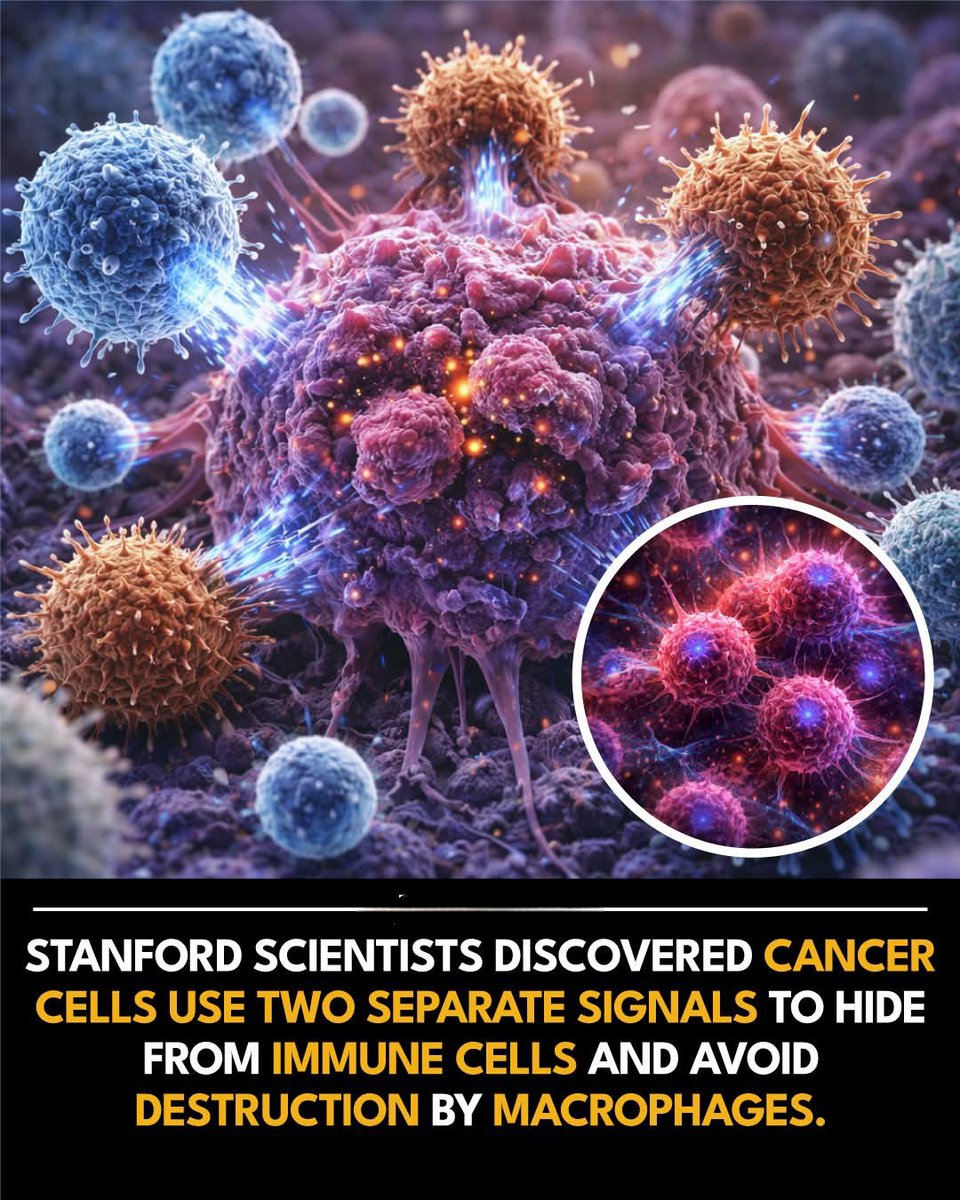
A new discovery reveals that cancer cells don’t rely on just one trick to escape the immune system — they use multiple “don’t-eat-me” signals to avoid being destroyed. Stanford researchers identified two key pathways that help tumors stay hidden from macrophages, the immune system’s cleanup cells.
One of these signals involves CD47, often described as a molecular “invisibility cloak,” while the second pathway involves LILRB1, which further suppresses immune attack. Blocking both signals in mouse models allowed macrophages to recognize and aggressively target tumor cells.
In the study, dual inhibition significantly increased immune cell infiltration into tumors and led to measurable tumor shrinkage. This suggests that removing multiple protective barriers may be more effective than targeting a single immune-escape mechanism.
Macrophage-based immunotherapy is an emerging frontier in cancer treatment, complementing existing T-cell–focused therapies like checkpoint inhibitors. By activating different arms of the immune system, researchers hope to overcome resistance seen in some cancers.
While these findings are currently limited to preclinical models, they offer a promising direction for future human trials. If validated, dual-signal blockade could strengthen next-generation immunotherapy strategies.
English