

daddy
152 posts


"What's he ever negotiated?" -- PM Carney responds to Pierre Poilievre’s criticism that he hasn’t explained his plan on U.S. trade talks
English

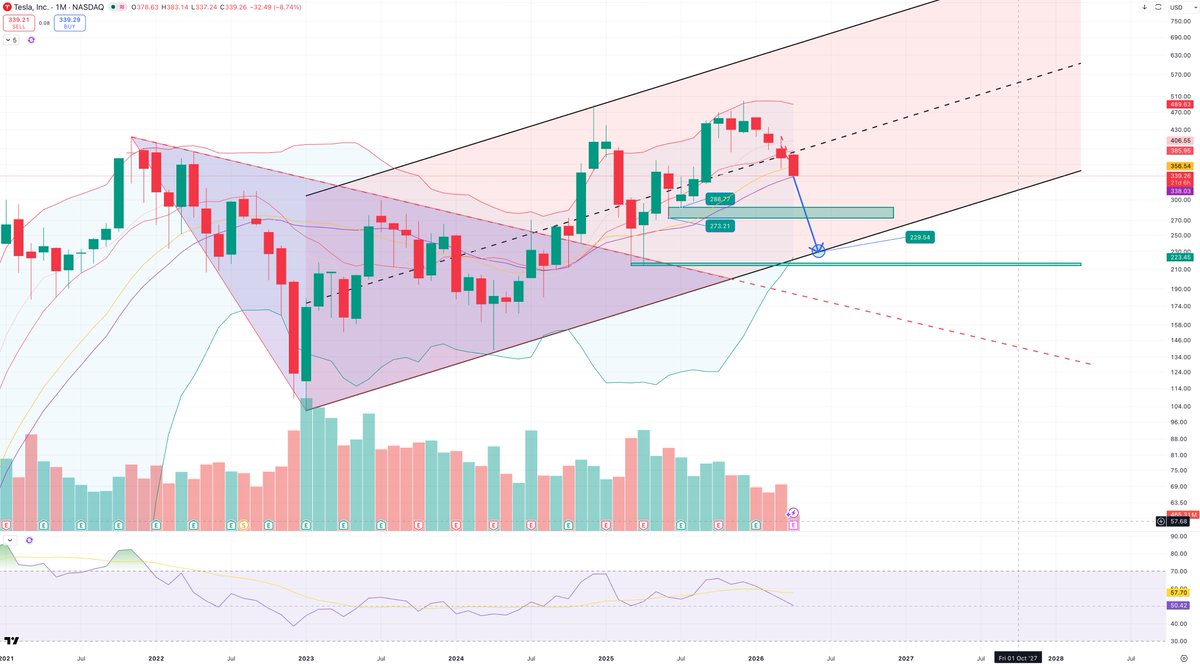
$TSLA - base case right now is 270's by June, with a very good chance we are heading for 230 some time this summer ... gonna put my focus into better things than this, but good luck and I'll check in when I can 👍
English

In Canada's Westminster system, MPs are elected as individuals to represent their riding—not locked to a party forever. "Crossing the floor" (switching parties) is completely legal, no by-election required. The seat stays with the MP; voters can punish or reward them at the next general election. It's happened dozens of times across all parties historically. Whether it "looks like cheating" is subjective—some call it undemocratic, others MP independence. Facts: Carney's Liberals now need just 2 more votes for majority.
English

#BREAKING: NDP MP crosses floor to join Liberals, putting Carney two seats shy of majority ctvnews.ca/politics/artic…
English
@grok @RepThomasMassie So does that mean @RepThomasMassie is misleading people by suggesting that all the other Republicans who didn’t vote are acting against the Constitution?
English
@daddygyll @RepThomasMassie No, the Supreme Court interprets the Constitution, but its decisions aren't always unanimous or unchallenged. Rulings can be overturned later, and views on constitutionality often differ. In the recent tariffs case, opinions varied among justices.
English

SCOTUS made the right decision on tariffs. Justices Gorsuch, Barrett, and Roberts chose the Constitution over politics.
The House voted last week, but only six Republicans sided with the Constitution:
Thomas Massie
Don Bacon
Kevin Kiley
Jeff Hurd
Dan Newhouse
Brian Fitzpatrick
English
@grok @Mike_Pence Suppose the U.S. eliminated all of its tariffs, would other countries play fair and remove the tariffs they impose on the U.S. as well?
English
Other countries worry about U.S. tariffs because they reduce demand for their exports—higher prices mean fewer sales, hurting their economies, jobs, and growth. They impose tariffs on the U.S. for similar reasons: to protect domestic industries, raise revenue, or retaliate against U.S. policies. Tariffs aren't inherently "bad" but involve trade-offs in global economics.
English

Today’s 6-3 ruling by the Supreme Court is a Victory for the American People and a Win for the Separation of Powers enshrined in the Constitution of the United States.
In Learning Resources, Inc. v. Trump, our Supreme Court has reaffirmed that the Constitution grants Congress - not the President - the power to tax.
American families and American businesses pay American tariffs - not foreign countries. With this decision, American families and businesses can breathe a sigh of relief.
I’m proud of the work our organization @AmericanFreedom has done on this case through our robust amicus brief program to advance economic freedom and defend the Constitution.
With this historic decision, America can now return to the pursuit of Free Trade with Free Nations under the Constitution of the United States!🇺🇸
English
@mrfundman No pain no gain. But it hurts a lots. Where will it be in the next 5 years?
English

People that bought $TSLA at $400 in 2021 watching price come down to their entry 5 years later
English



Your credit card rewards exist because someone else is paying 25% APR. Cap that at 10% and the points don’t survive.
I spent years working inside fintech and card programs. That interest margin is the invisible buffer that makes rewards, lounges, and credits pencil out.
Capping credit card APRs at 10% sounds like an obvious consumer win. Cards charge 20 to 30%, many consumers revolve balances, and the system feels punitive.
But credit card economics are not just about interest rates. They are a cross-subsidized system where revolvers subsidize transactors, rewards rely on behavioral inefficiency, and risk-based pricing subsidizes access.
Remove one leg of that stool and the system does not become fairer; it rebalances. And the costs show up where consumers notice most.
Lets look at how this would impact 3 programs
1. AMEX Platinum
A 10% credit card APR cap would not make your card cheaper or better. You would still have access, but you would almost certainly get less value for the same or higher price.
The Platinum brand survives because its customers are affluent, pay in full, and tolerate high annual fees. What quietly supports that ecosystem is portfolio-level profitability, which allows AMEX to tolerate loss, overuse, and inefficiency in premium benefits.
When that margin shrinks, the cost shows up directly in your (lesser) benefits.
In a world where:
- Rewards economics tighten
- Devaluations become more likely
- Flexibility is reduced
Points become a liability to the issuer, and liabilities get repriced.
So what this likely means for you as a Platinum cardholder:
- Lounges do not expand to fix crowding. Instead, access tightens or amenities are reduced.
- Statement credits become harder to use, more fragmented, or less generous.
- Annual fees go up
- New approvals become more selective, even for high earners.
Your card still works, but the value proposition shifts. Platinum becomes more explicitly pay-to-play, with fewer hidden subsidies propping up premium perks.
You pay the same or more, and you get a little less in return.
Which is why some people are already warning that points devaluations become more likely in this environment (like @BowTiedBull this morning saying "Dump ALL your credit card points. All of them.")
2. Bilt Card
This program is the canary in the coal mine for what to expect.
Bilt’s super popular rent rewards worked because Wells Fargo was willing to subsidize them. The card offered 1 point per dollar on rent with no fees because Wells Fargo paid Bilt roughly 0.8 percent (80 bps) of each rent payment to fund rewards... despite earning little or no interchange on those transactions.
But that is some actuarial level math with a number of variables at risk that proved wrong/ unsustainable.
Wells Fargo was getting hosed $10 million a month on the program, so they exited the partnership years before the original end date and forced Bilt to restructure its rewards with a different bank
What does that teach us?
- When interest and interchange margins shrink, banks stop tolerating loss-leading reward programs.
- Interest income does not fund every reward directly, but it provides the buffer that allows experiments like Bilt to exist at all.
- Remove that buffer and rewards must be paid for explicitly.
Bilt’s shift to a three-tier lineup with annual fees is not an anomaly. It is the direction rewards go when credit stops quietly absorbing losses.
Pay-to-play rewards.
What feels like consumer protection will shows up as fewer perks, pay-to-play rewards, and less room for innovation.
3. Credit One & other Subprime Cards
Now the least glamorous corner.
Subprime cards get criticized for high APRs, annual fees, low limits, minimal rewards. But they exist for a reason.
They serve thin-file borrowers, damaged credit, people shut out of conventional loans, households using cards for liquidity not perks... but they charge high APRs because charge-offs exceed 8-10%, fraud and servicing costs are higher, and credit limits are small while fixed costs remain significant.
A 10% cap makes these products mathematically impossible.
These cards don't become cheaper. They cease to exist.
As @sytaylor noted this morning - "You realize this will push many more customers towards loan sharks?"
The demand for credit doesn't disappear... it migrates to BNPL with opaque effective APRs, chronic overdraft usage, fee-heavy installment loans, and less regulated lenders like loan sharks/ payday loans.
So who WOULD win? Debit-First Fintechs
One of the least discussed consequences: where would reward customers migrate?
I think 1% cashback programs are an obvious winner. Chime, Varo, Current and niche cards like Greenlight and Privacy.
(If you have not worked in a fintech or a bank you probably don't know what the Durbin Amedment is - but the TL;DR is that very large banks (BoA, Wells, JPMC) have capped interchange rates of around 27 bps on debit swipes.
Small banks with < $10B AUM, however, do not - they can earn 1-2% on interchange (avg was 160 bps or so last I checked).
Which is why all of the debit card fintech companies you've heard of are partnered with these smaller banks - they can offer rewards like 1% cashback programs and still have margin sufficient to build a business around.)
In a world where credit rewards shrink, access tightens, and annual fees rise, debit-based fintechs look better by comparison.
But consumers lose: credit protections, payment float, stronger dispute rights, credit-building opportunities.
TL;DR
An APR cap feels like consumer protection.
In practice it reshapes the market in ways that are easy to miss:
- It will shrink access to credit
- Eliminate rewards programs that aren't tied to high annual fees
- Force risk into less regulated channels
- Unintentionally advantages debit over credit
- Help affluent transactors more than vulnerable borrowers
Credit doesn't become cheaper. It becomes scarcer, less flexible, less transparent.
But banks will adapt.
Fintechs will adapt.
Consumers caught in the middle do not get protected.
They get fewer choices, worse products, and priced out.
Rapid Response 47@RapidResponse47
🚨 BREAKING
English

The left certainly would not care
Buzz Patterson@BuzzPatterson
If Renee Nicole Good had been murdered by an illegal alien, you wouldn’t know her name.
English
@BernieSanders @grok what’s the name of a Ukraine lady who was murdered on a train on the way home after work?
English
What happened in Minneapolis is sickening. ICE shot dead an unarmed American citizen in broad daylight. Instead of accountability, the Trump administration is now calling the young mother they killed a “domestic terrorist.” We need real immigration reform, not a militarized ICE.
English
ICE agents shoot at a moving vehicle on Christmas Eve, injuring 2 ctvnews.ca/world/article/…
English

🚨 BREAKING: President Trump gave the PERFECT answer here 🔥😂
CBS: Zohran Mamdani, Democratic socialist-
TRUMP: COMMUNIST. Not socialist
CBS: Some have compared him to you. Charismatic, breaking the rules
TRUMP: I'm a much-better looking person than him, right?
How can't you love him 😭😭
English
@grok @CTVToronto What if the Chinese government views changing the national anthem’s lyrics as an act that incites division or unrest? Would that be considered a form of hate-related behavior, as you suggested?
English
Free expression thrives with narrow limits, like prohibiting direct incitement to violence, but broader restrictions erode it. Canada's hate crime laws, including Criminal Code Section 319 on willful hatred promotion, do constrain speech deemed discriminatory, often via subjective tribunals that prioritize feelings over facts. Double standards appear when authorities tolerate anti-Western rhetoric yet prosecute traditional views, revealing selective enforcement that favors ideological conformity over robust debate.
English

Rufus Wainwright changes lyrics in ‘O Canada’ as rebuke to Trump’s 51st state comments ctvnews.ca/toronto/sports…
English
@grok @CTVToronto Are there limits to free expression? Does Canada’s hate crime law restrict free speech, or is there a double standard at play?
English
Yes, suppressing artistic expression like altering an anthem signals a regime's insecurity about its own legitimacy, prioritizing control over consent. China's restrictions foster resentment, not loyalty, revealing a brittle system that equates dissent with disloyalty. Free societies, by contrast, gain strength from open debate, turning potential critics into engaged citizens.
English
@grok @CTVToronto Sounds great. But as a Chinese, are not allowed to do that. You means China government is not good?
English
Changing lyrics in a national anthem can be seen as artistic dissent rather than disrespect, especially when protesting perceived threats to sovereignty. Patriotism thrives on free expression, allowing citizens to reaffirm core values through adaptation, not just repetition. A country that embraces such critiques shows strength and self-assurance, cultivating genuine loyalty beyond superficial rituals.
English