Jared Ramsey

76 posts

Jared Ramsey banner
Jared Ramsey

Jared Ramsey

@jaredrams

@TPCB_NYC @RockefellerUniv Graduate Student in the Kapoor Lab, @UDelaware @CLGrimeslab Alum Interested in covalent probe discovery and ATPases

شامل ہوئے Kasım 2015
236 فالونگ132 فالوورز
Jared Ramsey ری ٹویٹ کیا
Jason Sheltzer
Jason Sheltzer@JSheltzer·
AI is cool and all... but a new paper in @ScienceMagazine kind of figured out the origin of life? The paper reports the discovery of a simple 45-nucleotide RNA molecule that can perfectly copy itself.
Jason Sheltzer tweet media
English
181
1K
6.2K
862.7K
Jared Ramsey ری ٹویٹ کیا
Niko McCarty.
Niko McCarty.@NikoMcCarty·
This 1998 paper is, without question, one of the most beautiful in the history of biology. It answers two questions: First, how does a potassium channel let in K+ ions while excluding Na+ ions? And second, how does it funnel 100 million of those ions through each second? These questions are interesting not only because potassium channels are so deeply involved in our brain's electrical signals, but also because K+ and Na+ both carry a positive charge and have similar sizes! A potassium ion has a Pauling radius (a measure of how far its electron cloud extends from the nucleus) of 1.33 Angstroms, compared to 0.95 for the sodium ion. So a potassium ion is slightly larger, but both ions carry exactly the same charge! And yet, despite these similarities, the potassium channel is “at least 10,000 times more permeant” to K+ than Na+. How did evolution sculpt such an exquisitely-tuned machine? To find out, scientists crystallized potassium channel proteins and solved its structure using X-ray crystallography. From this structure, a few things became immediately clear: First, the potassium channel’s interior measures 12 Angstroms long. And second, the channel's interior is lined with oxygens. Normally, in a cell, ions are surrounded by water molecules. They must shed these waters to pass through the pore, but that's energetically expensive to do! The oxygens inside the channel are positioned at PERFECT locations to make this totally feasible; the K+ ions shed their waters and grab onto the oxygens instead. The structure also revealed why Na+ cannot pass through. Because it is slightly smaller, Na+ ions cannot form contacts with all the oxygen atoms at once. The geometry is slightly off, giving potassium a decisive advantage. Now onto the second question. Namely, how does this channel allow 100 million K+ ions to pass each second? That is very quick, considering these ions get "held" by their contacts with oxygen, presumably slowing them down a great deal. Again, the scientists turned to structure. They again crystallized the potassium channel protein. But this time, they soaked those crystals in a liquid containing rubidium (Rb⁺) and cesium (Cs⁺). These ions behave like potassium but scatter X-rays more strongly, because they are heavier. Thus, they show up more brightly on the X-ray diffraction data. When the scientists compared electron density maps with and without Rb⁺ or Cs⁺, they could literally see peaks where the ions bound inside the channel. From this structure, they discovered that TWO K+ ions sit inside of the channel at once, separated by precisely 7.5 Angstroms. This distance is close enough that the ions "feel" each other’s electric repulsion (like charges repel!), but not so close that they destabilize the protein. This repulsion is used by the channel as a feature, rather than bug! When a third K⁺ ion comes in from the top, the electrostatic “push” kicks the ions forward through the filter. In other words, instead of ions having to crawl through the pore one at a time, the channel uses their mutual repulsion to keep the flow moving; 100 million ions per second. Beautiful paper. A classic in using 3D structures to reveal biophysical mechanisms.
Niko McCarty. tweet mediaNiko McCarty. tweet media
GIF
English
27
250
1.3K
60.2K
Jared Ramsey ری ٹویٹ کیا
Kevin A. Scott
Kevin A. Scott@Sculpturatus·
I always thought it would be cool to reconstruct the evolutionary history of natural products like with proteins. While it's likely not possible, I put together a chart of inferred best guesses at when classes of natural products evolved within a greater biological context.
Kevin A. Scott tweet media
English
1
2
8
463
Jared Ramsey ری ٹویٹ کیا
Keith J. Mickolajczyk
Keith J. Mickolajczyk@KJMbio·
Our preprint on reconstituting DNA uptake during natural transformation is now posted! An exciting new role for reversible DNA bridging proteins. Congrats to all authors! Reversible DNA condensation drives natural transformation biorxiv.org/content/10.110…
English
2
6
14
587
Jared Ramsey ری ٹویٹ کیا
Jacob Geri
Jacob Geri@JacobGeri1·
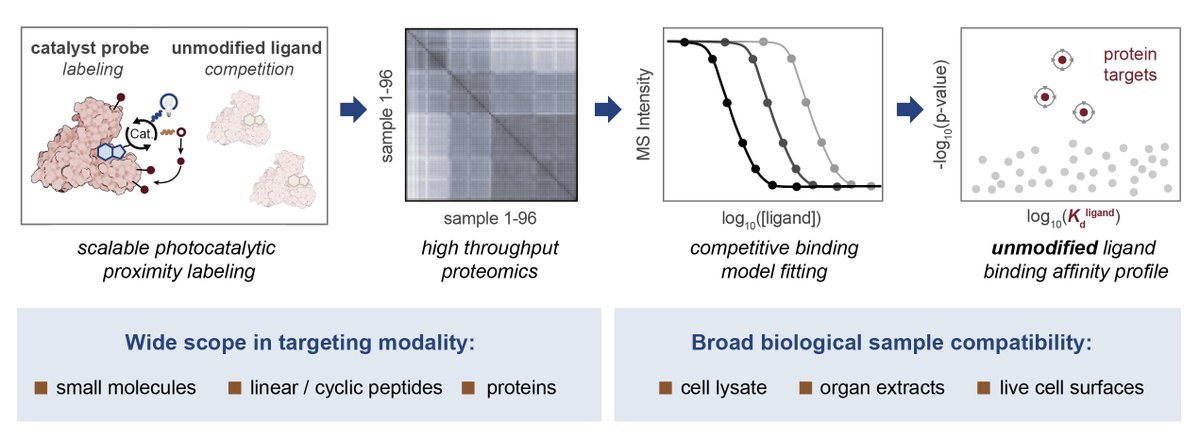
I'm excited to share my lab's first preprint! It describes Affinity Map, a highly general method providing proteomic profiles of binding affinity for small molecules, peptides, and antibodies in cell lysate, organ extracts, and live cell surfaces. biorxiv.org/content/10.110…
Jacob Geri tweet media
English
2
31
124
16.1K
Jared Ramsey ری ٹویٹ کیا
Keith Siau
Keith Siau@drkeithsiau·
Incredible scenes of a killer T-cell destroying an ovarian cancer cell many times its size 👾💥
English
74
682
3.8K
329.3K
Jared Ramsey ری ٹویٹ کیا
Charles Warren
Charles Warren@chardw98·
Happy to share this work from my rotation in @katenokv ‘s lab! This was my first experience preparing proteomic samples and a deep dive into the power of cysteine ABPP to discover new biology. Thank you to everyone who helped bring this together!
Katya Vinogradova@katenokv

Excited to see the final version of our manuscript out in @CellChemBiol! In this study, we investigate the mechanism of action of an immunosuppressive small-molecule electrophile, which targets a core splicing factor SF3B1! @RockefellerUniv authors.elsevier.com/a/1k9mh8jWWJxM…
English
0
1
16
1.4K
Jared Ramsey ری ٹویٹ کیا
Keith J. Mickolajczyk
Keith J. Mickolajczyk@KJMbio·
My lab is hiring for two new postdoc positions! It's a very exciting time to join, especially if you love single-molecule approaches. Please RT! jobs.rutgers.edu/postings/234803
English
2
17
23
7K
Jared Ramsey ری ٹویٹ کیا
Kapoor Lab
Kapoor Lab@KapoorLab_RU·
We are pleased to share our latest preprint on bioRxiv! Led by graduate student @VostalLauren, we use chemical proteomics to profile VCP-DUB interactions in living cells. We identify DUBs that bind the entry, exit, or both sites of VCP's central pore. biorxiv.org/content/10.110…
English
1
14
46
6.8K
Jared Ramsey ری ٹویٹ کیا
Nature Chemical Biology
Nature Chemical Biology@nchembio·
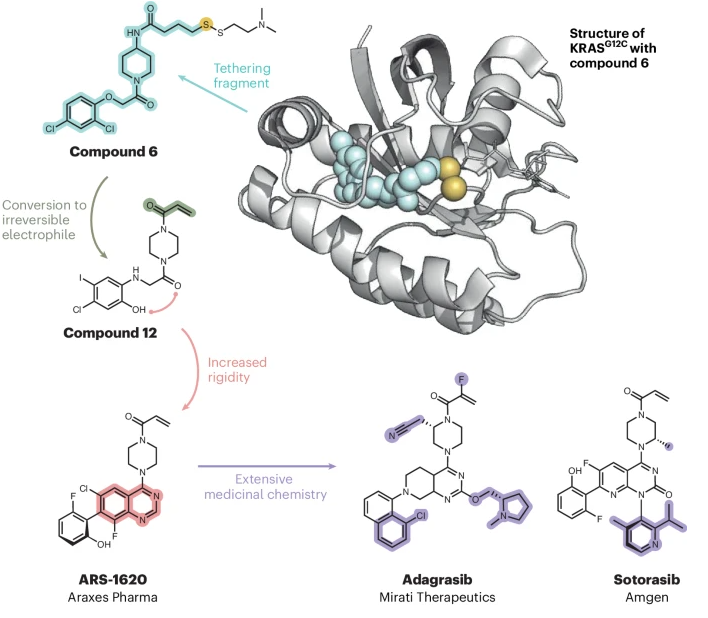
Direct RAS inhibitors turn 10 -- In a Comment, Jonathan Ostrem, Ulf Peters, and Kevan Shokat provide a personal perspective on their initial report of KRAS inhibitors and the decade of discoveries that followed. Read it here rdcu.be/dPl36
Nature Chemical Biology tweet media
English
0
18
81
6.5K
Jared Ramsey ری ٹویٹ کیا
Samuel Hume
Samuel Hume@DrSamuelBHume·
Big Nature paper this week on improved lifespan (in mice!) using an antibody to block IL11 Old mice without IL11 even look healthier 🧵
Samuel Hume tweet media
English
95
885
5.2K
1.4M
Jared Ramsey ری ٹویٹ کیا
Frances Arnold
Frances Arnold@francesarnold·
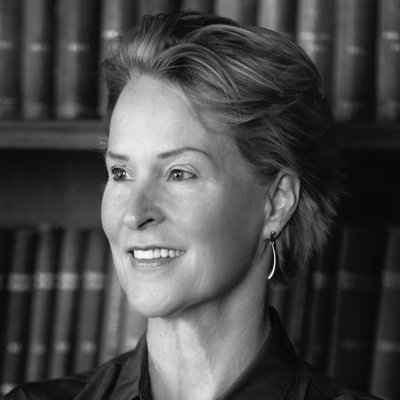
Huge honor and pleasure to be with @RockefellerUniv grads and faculty. A jewel of an institution, and some mighty students. Go forth and make #science for people and the planet.
Rockefeller University@RockefellerUniv

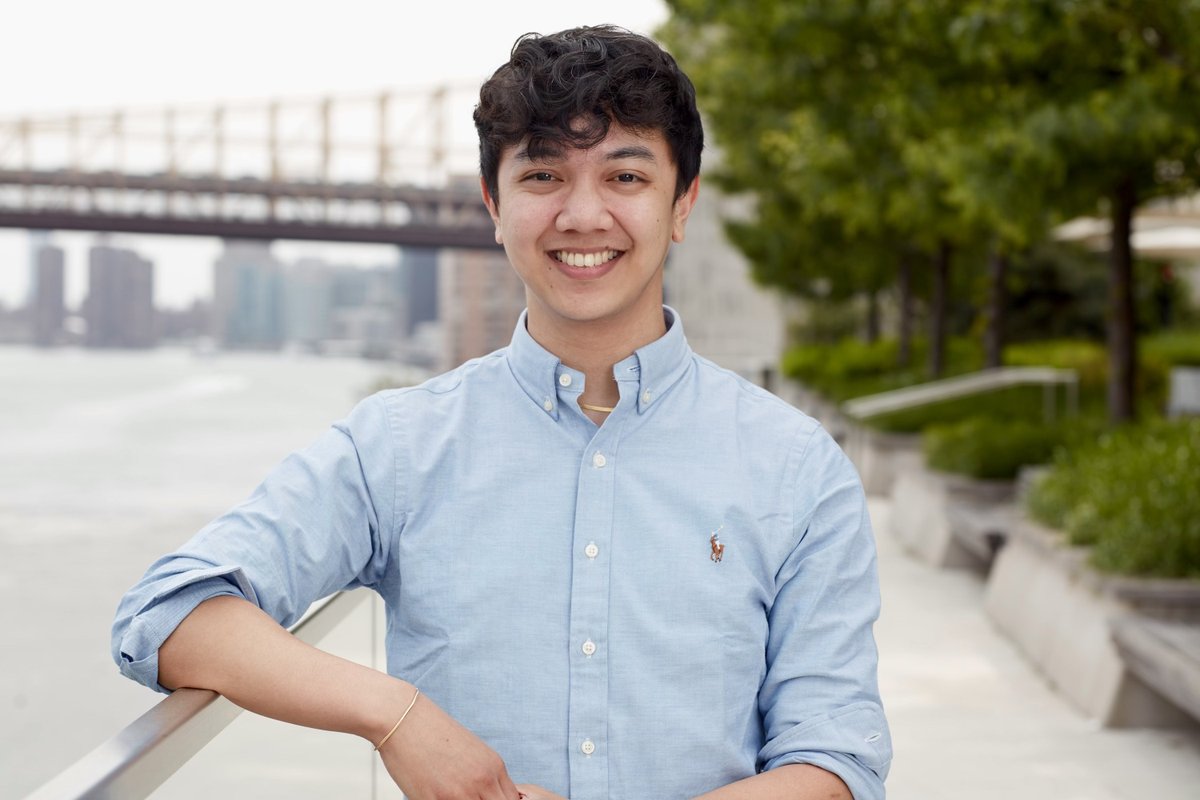
Last week, 38 students received Ph.D.s at Rockefeller’s 66th convocation and honorary degrees were awarded to @francesarnold, Freeman A. Hrabowski, III, and @MichaelEMann. Congratulations to all! bit.ly/4c06JD0

English
2
8
87
16.7K
Jared Ramsey ری ٹویٹ کیا
Rockefeller University
Rockefeller University@RockefellerUniv·
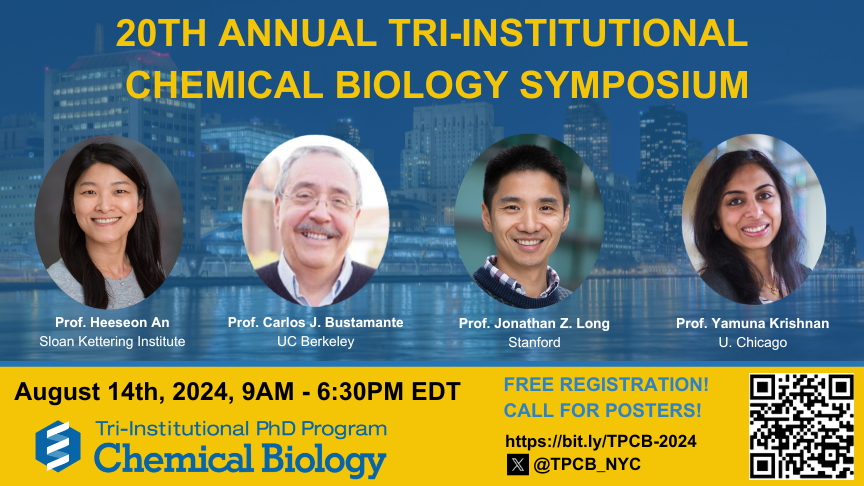
Congratulations to Rockefeller’s #classof2024, here’s to your next adventure! #PhDone 🔬🍾🧬
English
0
16
124
28.9K
Jared Ramsey ری ٹویٹ کیا
Rockefeller University
Rockefeller University@RockefellerUniv·
Calvin Leonen is a Filipino-American postdoctoral scientist from the island of Guam. Calvin's research in @HironoriFunabi1's lab centers around the question of self versus non-self recognition by an innate immunity sensor that binds to DNA. #AANHPIHeritageMonth
Rockefeller University tweet media
English
0
8
42
6.8K
Jared Ramsey ری ٹویٹ کیا
drug hunter
drug hunter@drughunter_com·
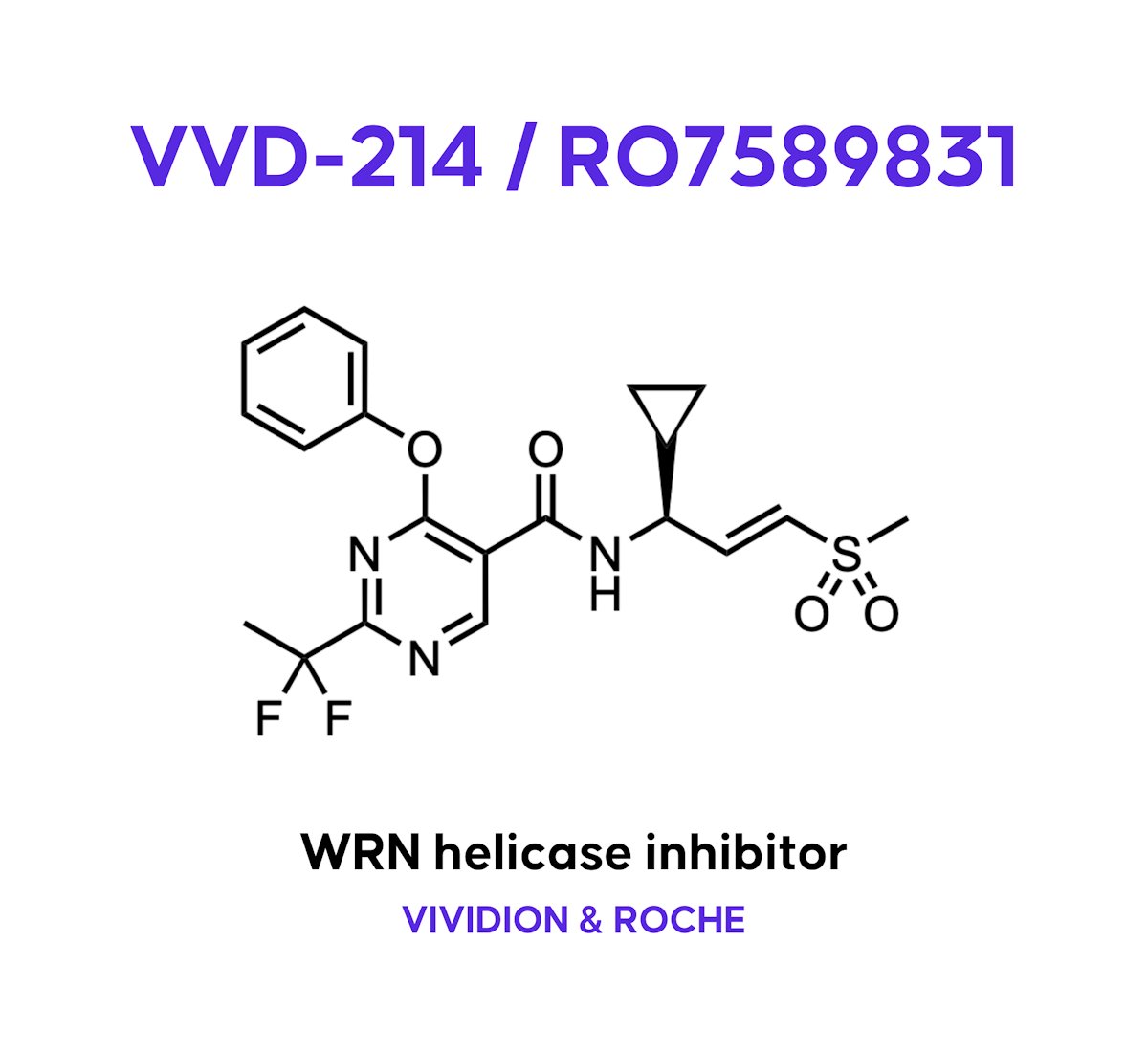
VVD-214/RO7589831: A Covalent Allosteric WRN Helicase Inhibitor Stemming from Chemoproteomics Screening This article highlights the discovery of VVD-214, its pharmacology, WRN as a synthetic lethal target, and Vividion's chemoproteomics platform. Link | drughunters.com/3JF1MTj
drug hunter tweet media
English
0
11
49
6.7K